Free Printable The Watsons Go to Birmingham Worksheets for Class 6
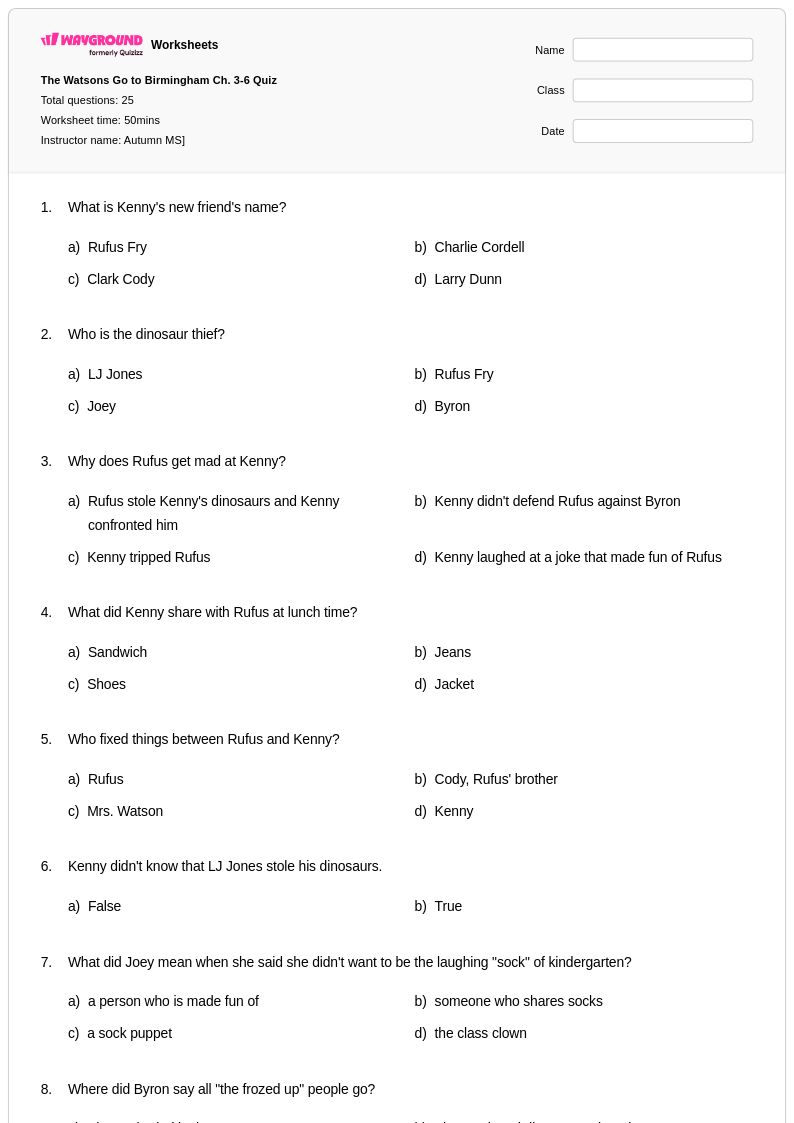
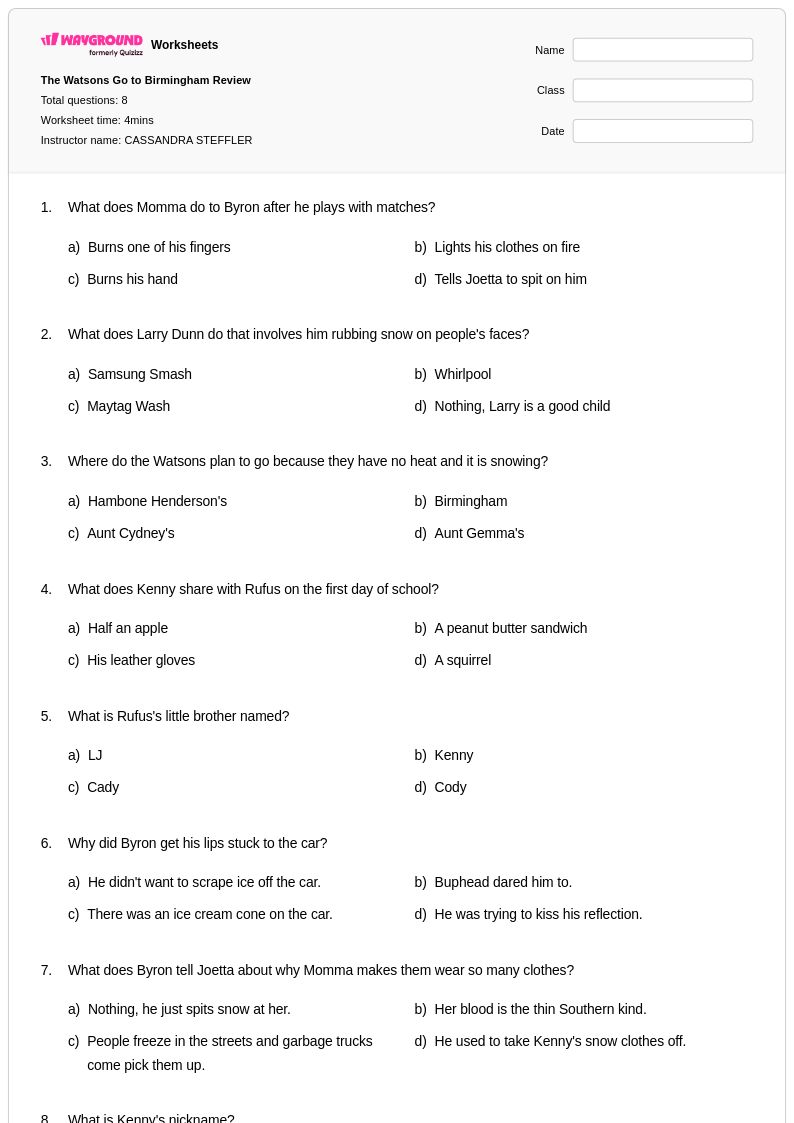
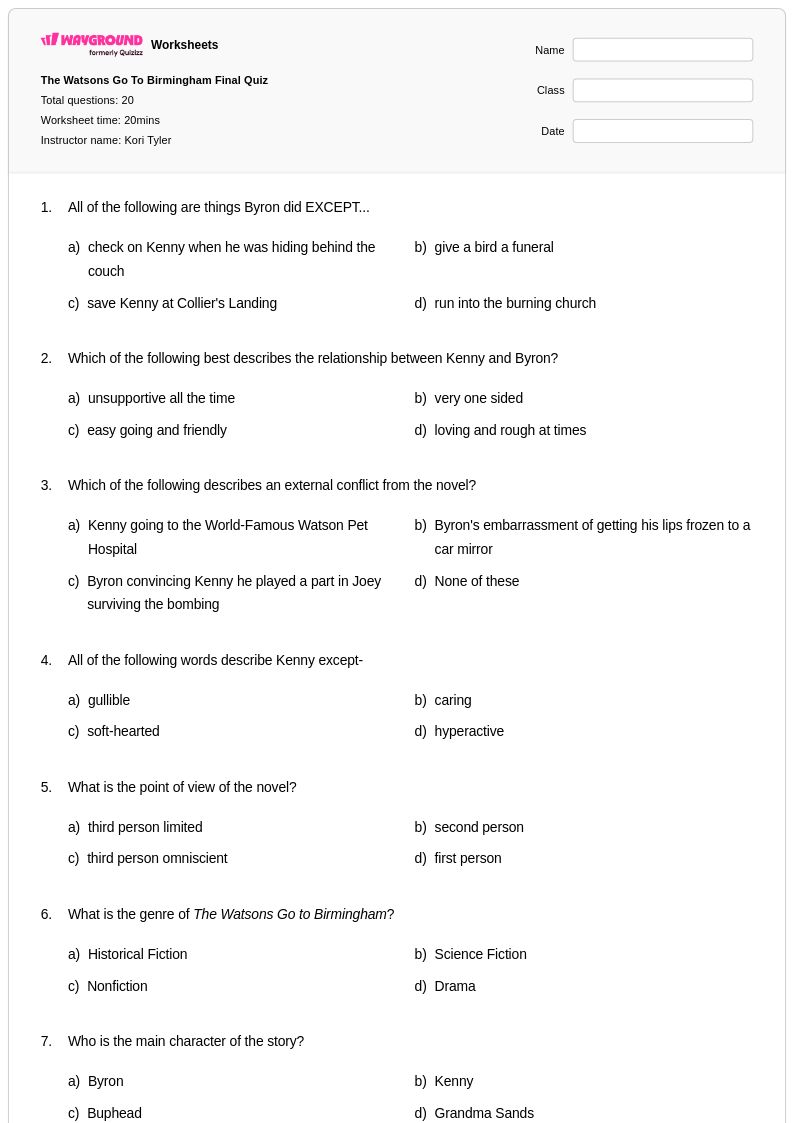
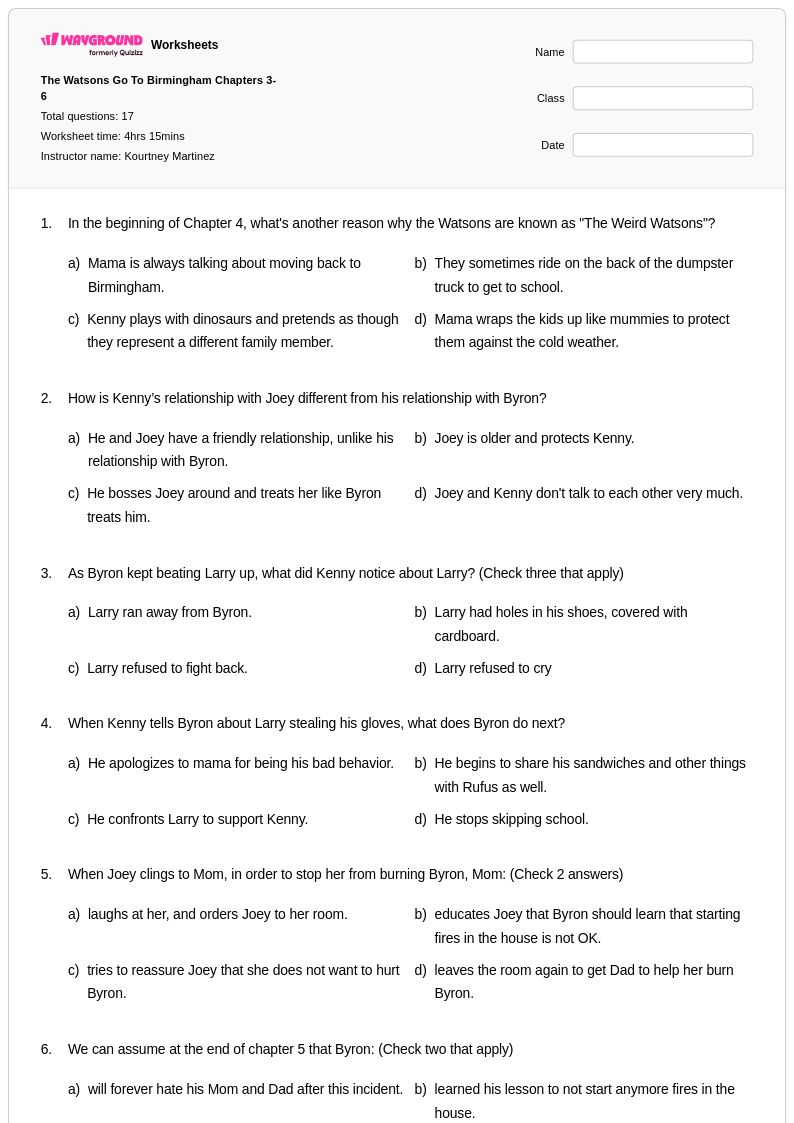
Class 6 students can explore Christopher Paul Curtis's award-winning novel with our free printable worksheets and answer keys for The Watsons Go to Birmingham, featuring engaging practice problems and PDF activities.
Explore printable The Watsons Go to Birmingham worksheets for Class 6
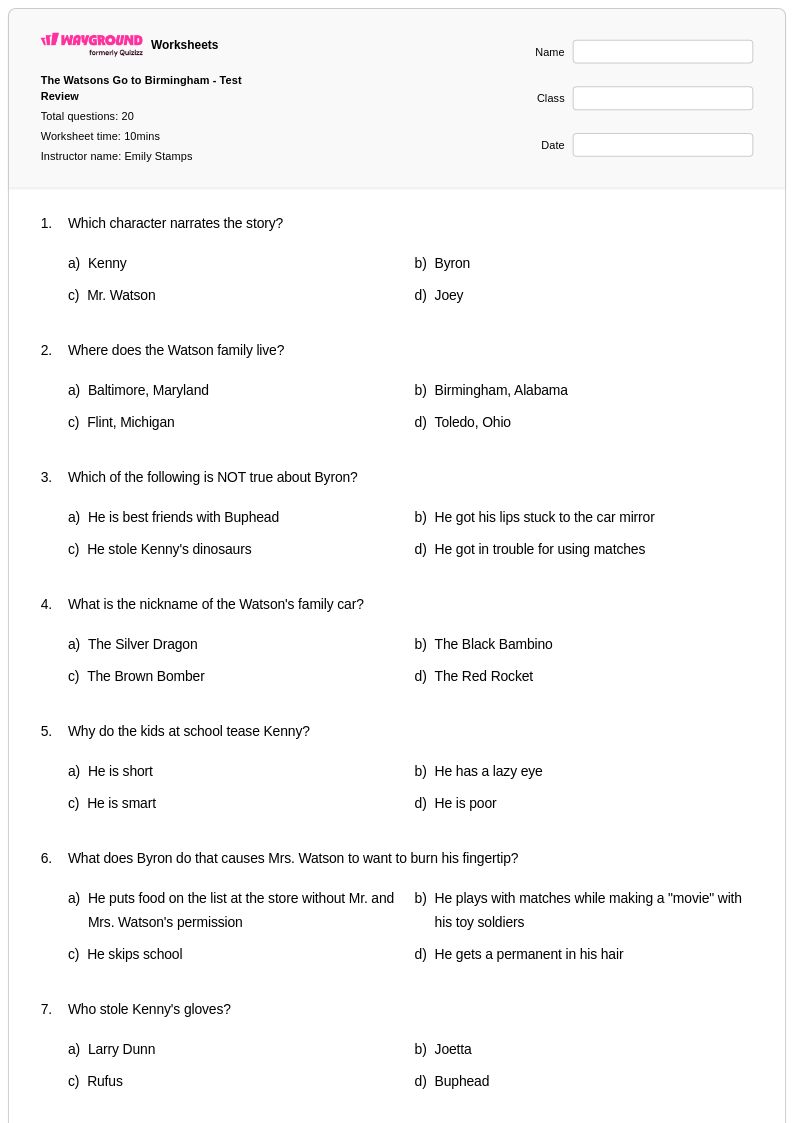
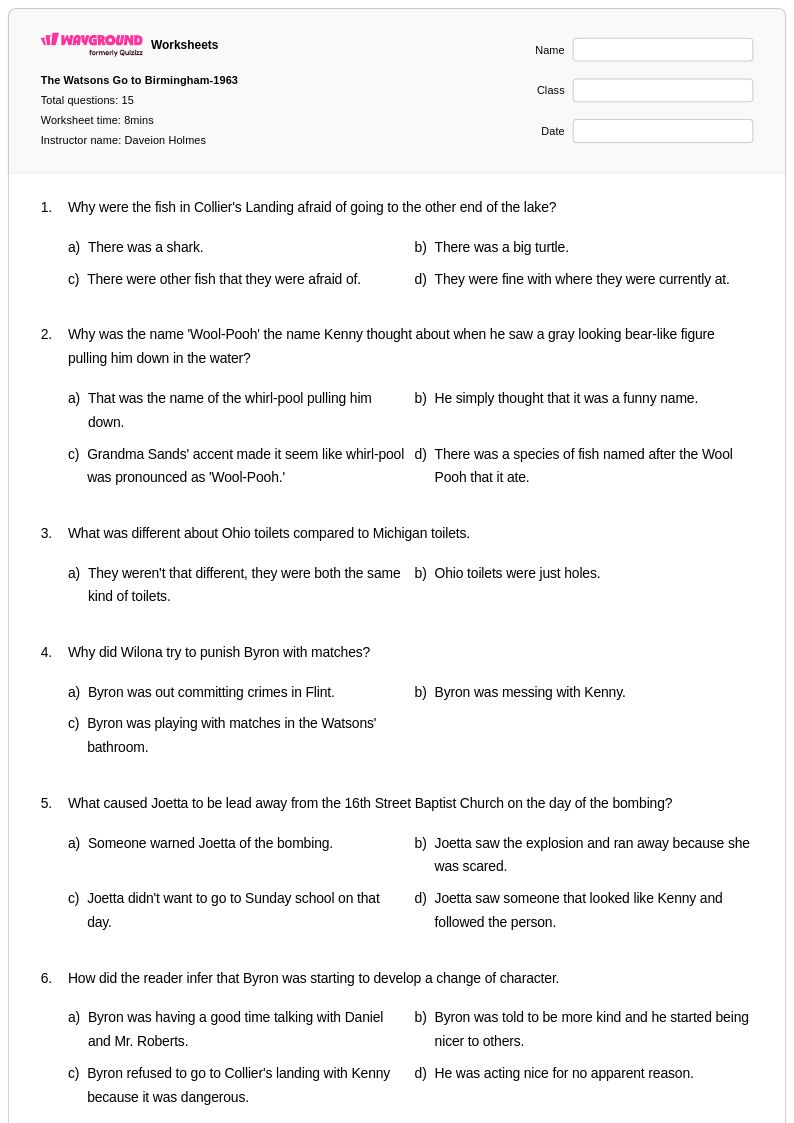
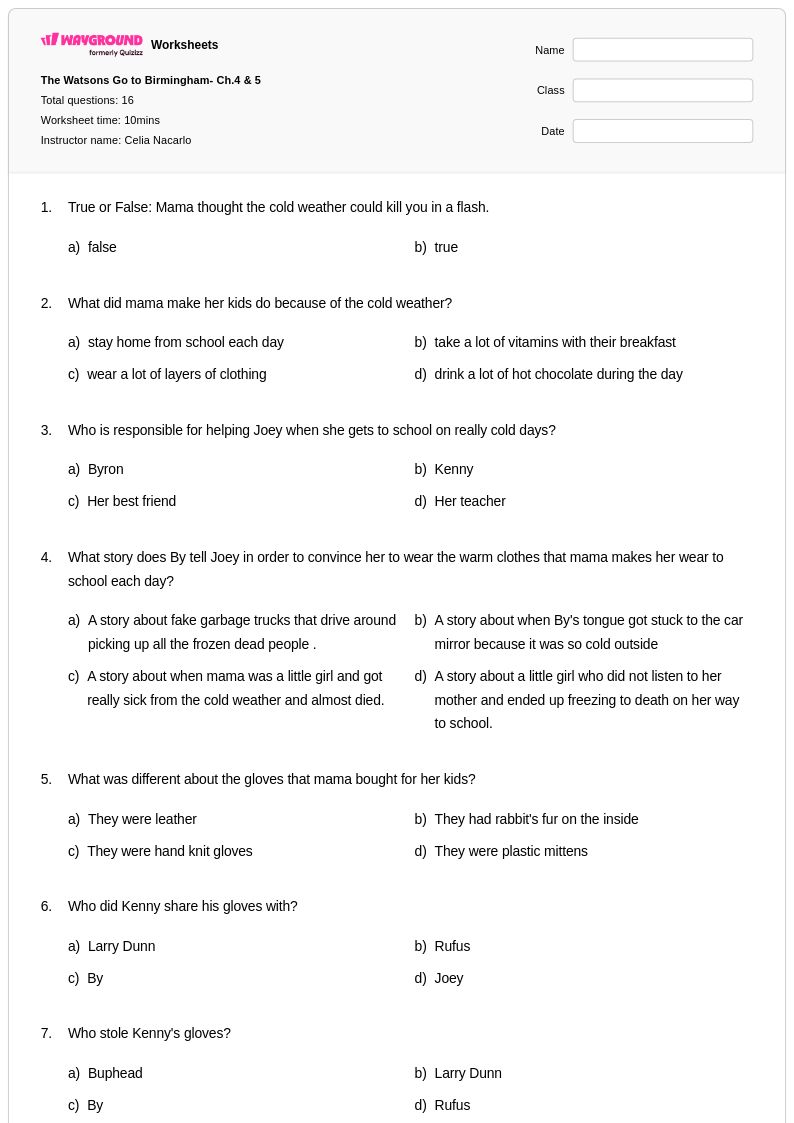
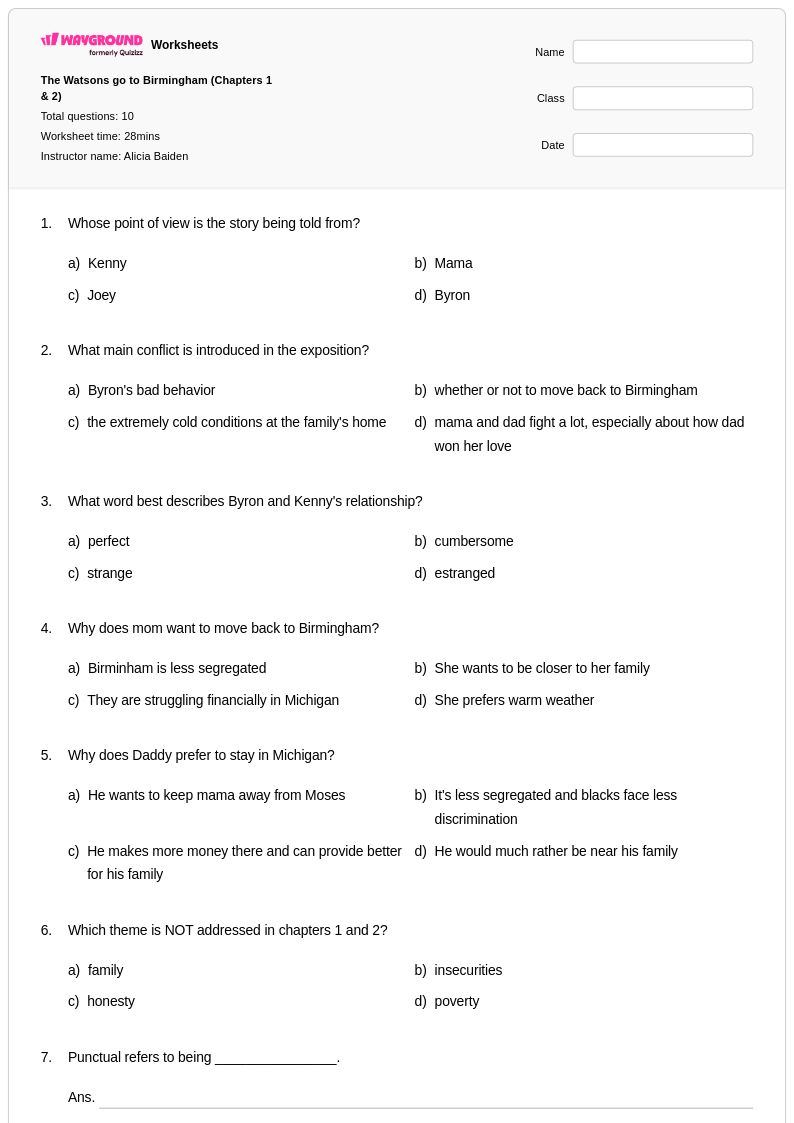
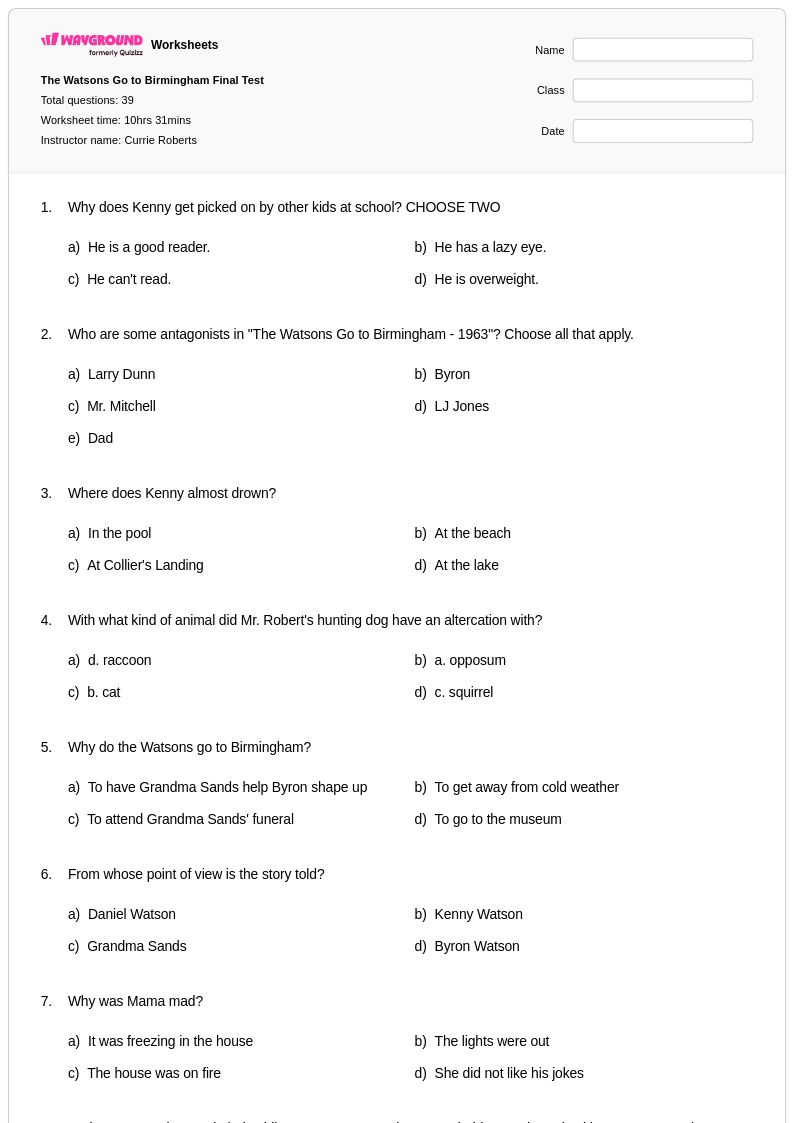
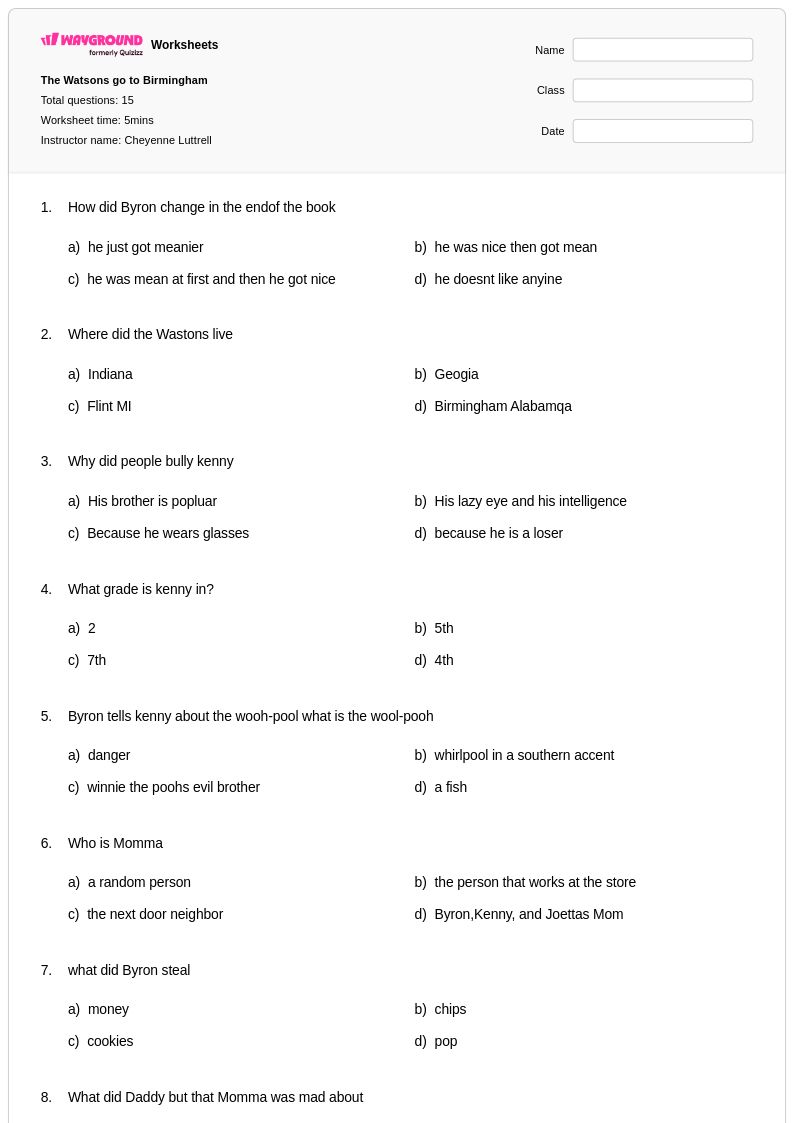
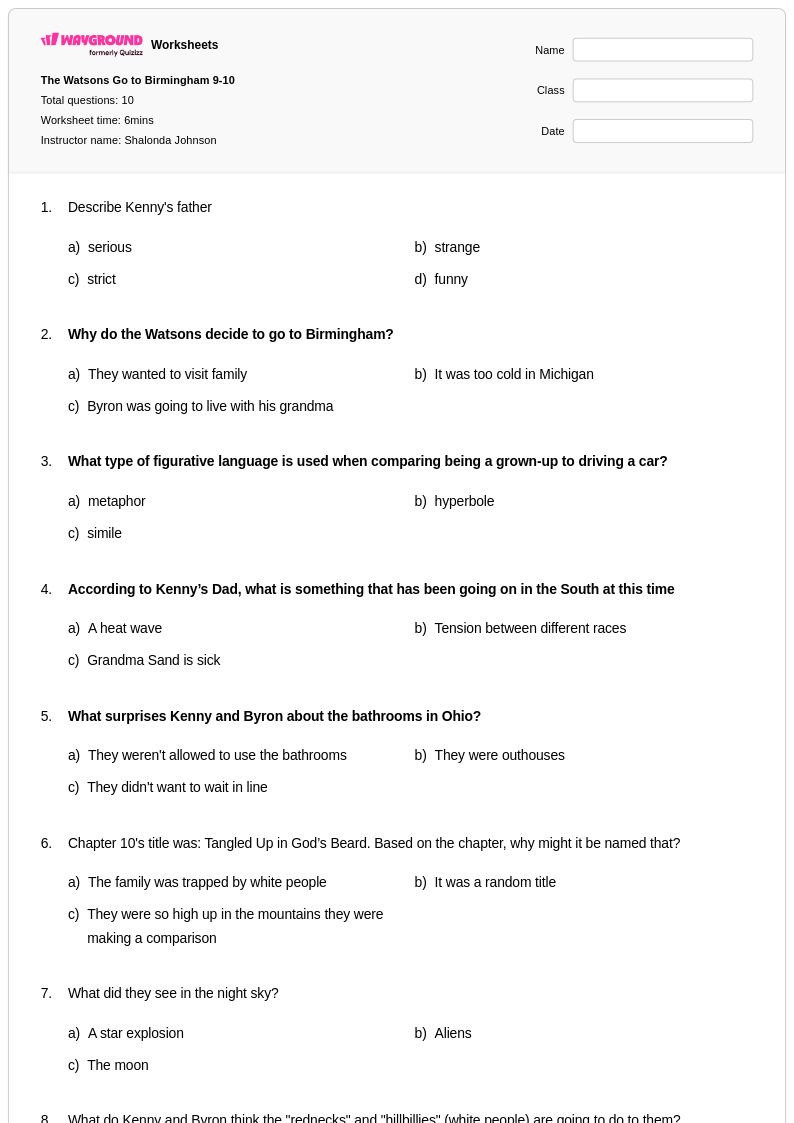
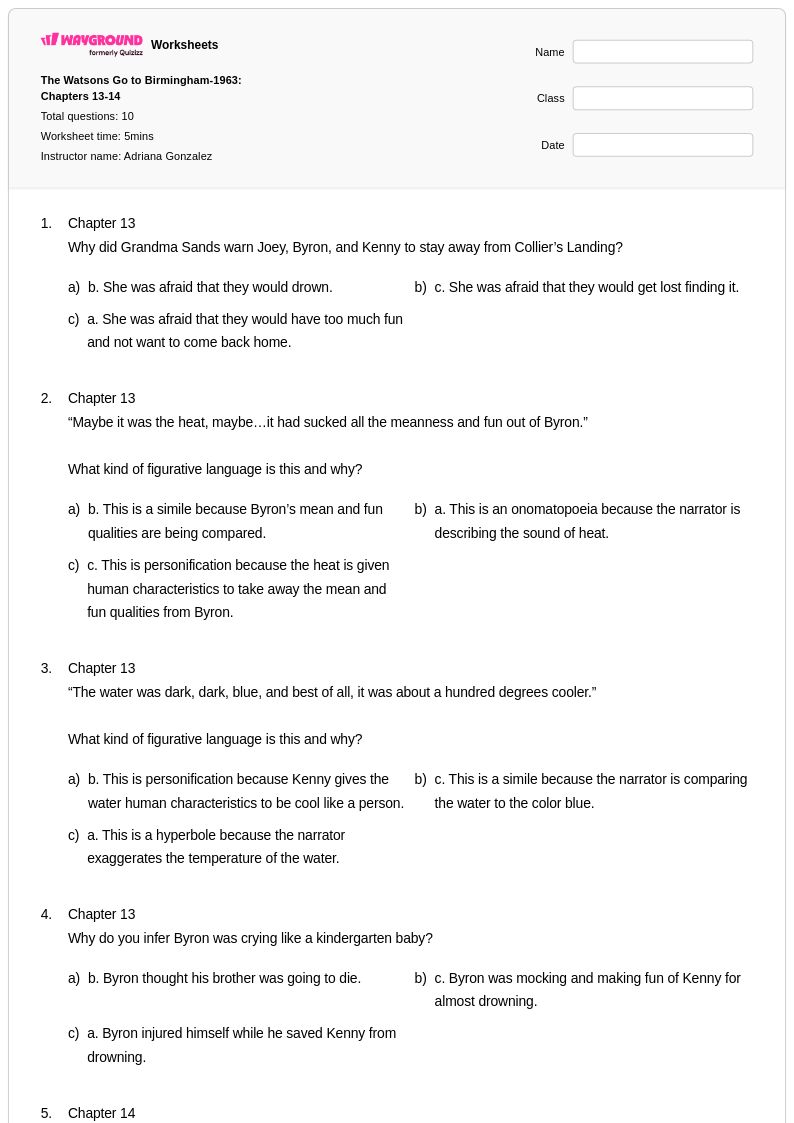
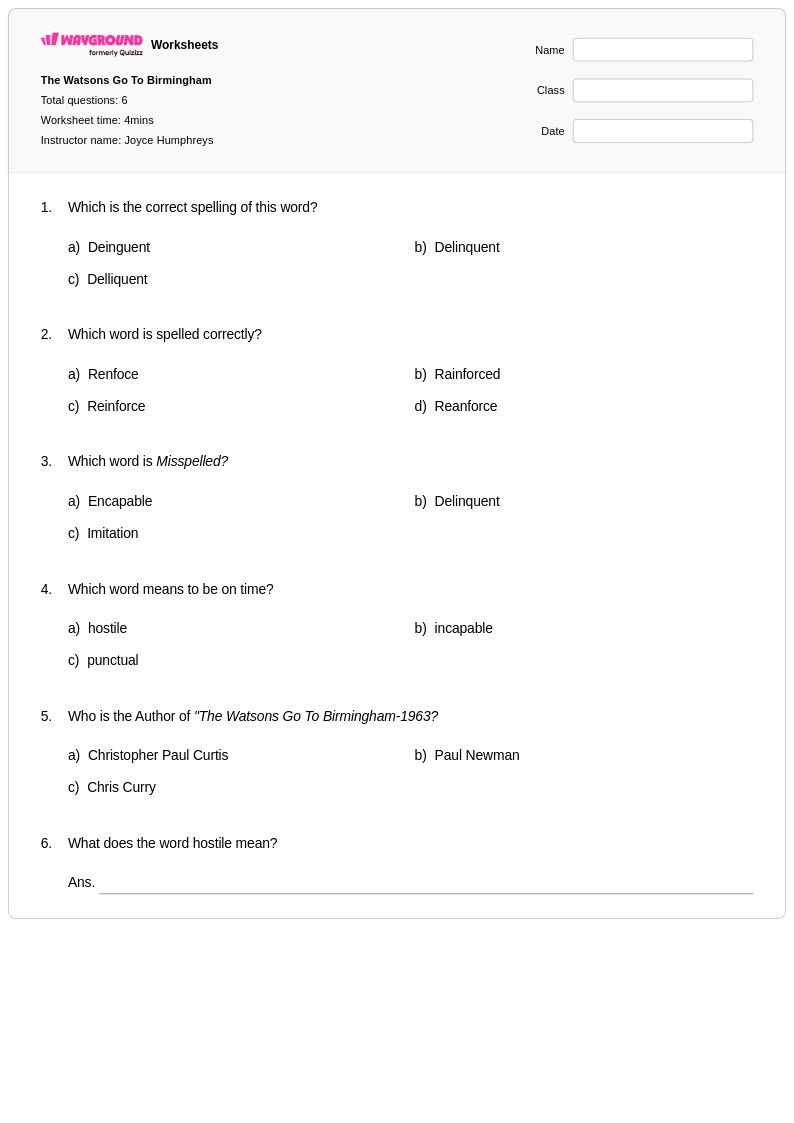
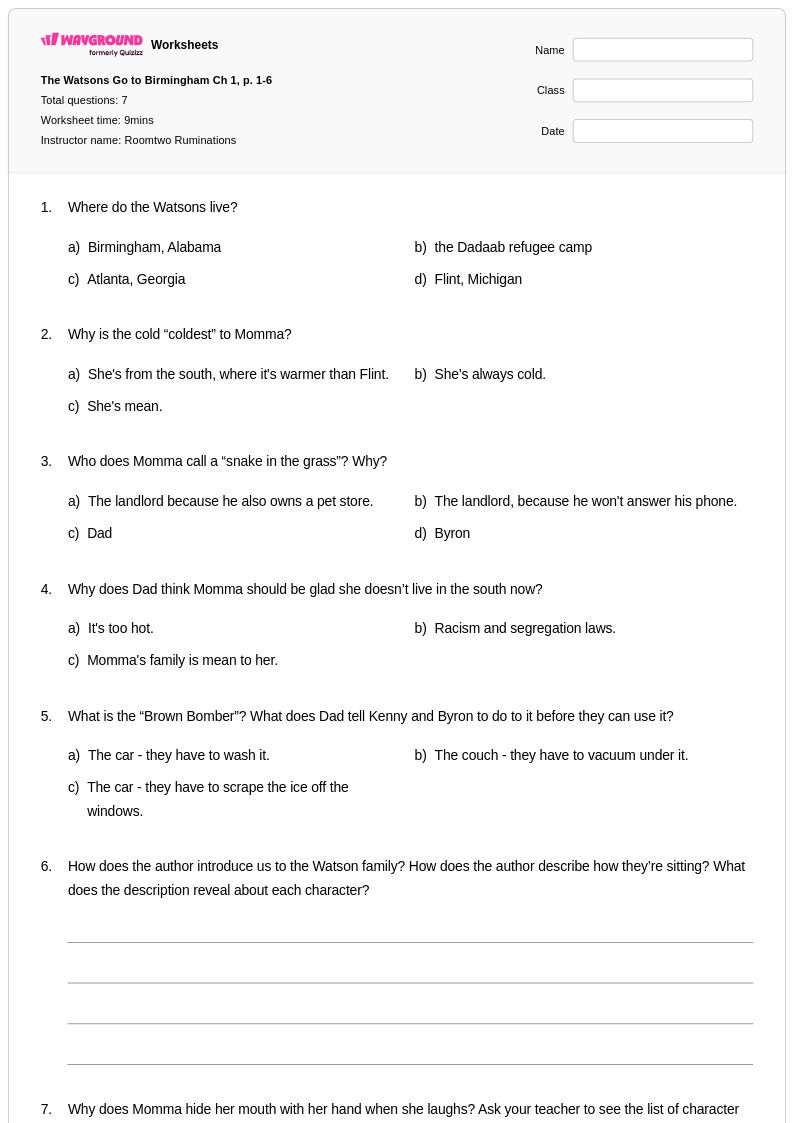
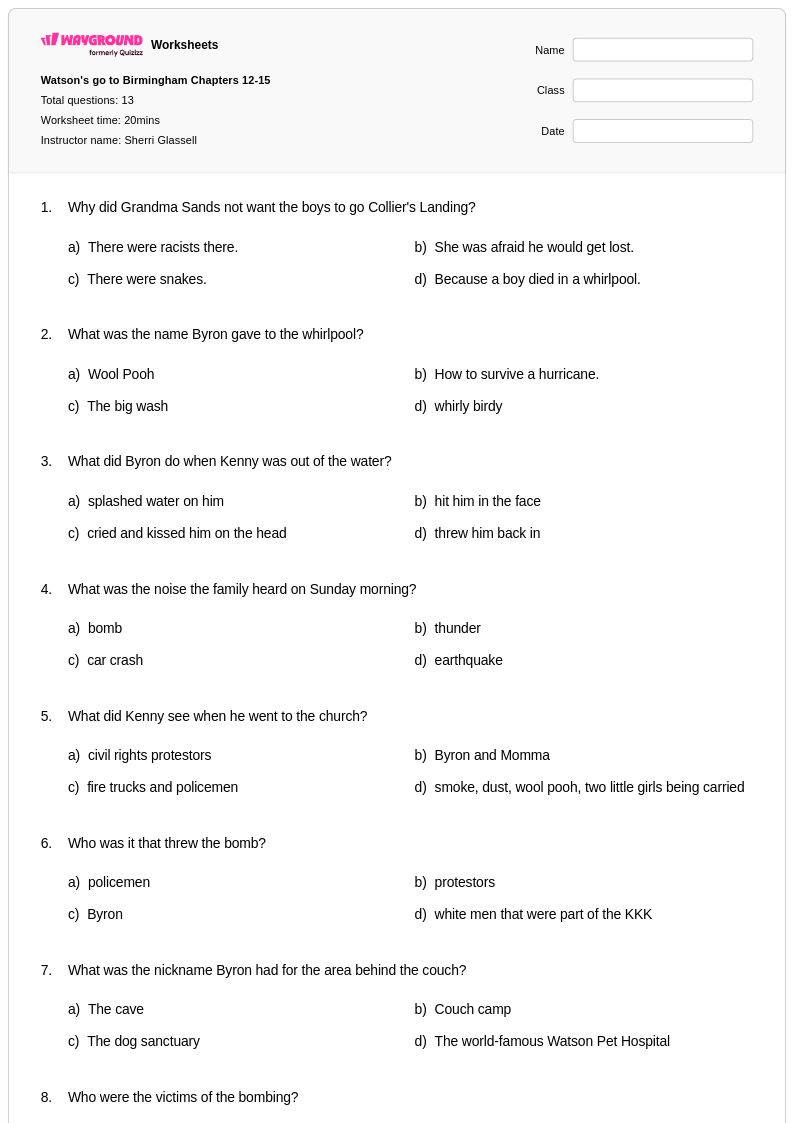
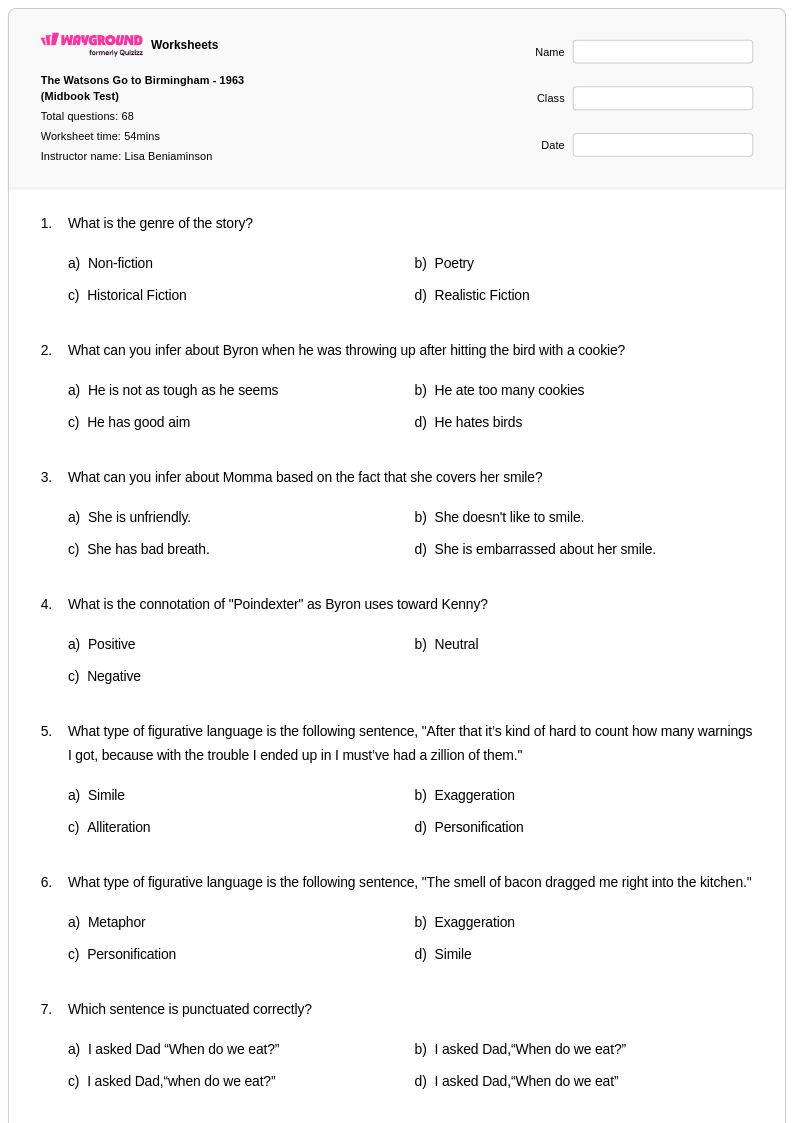
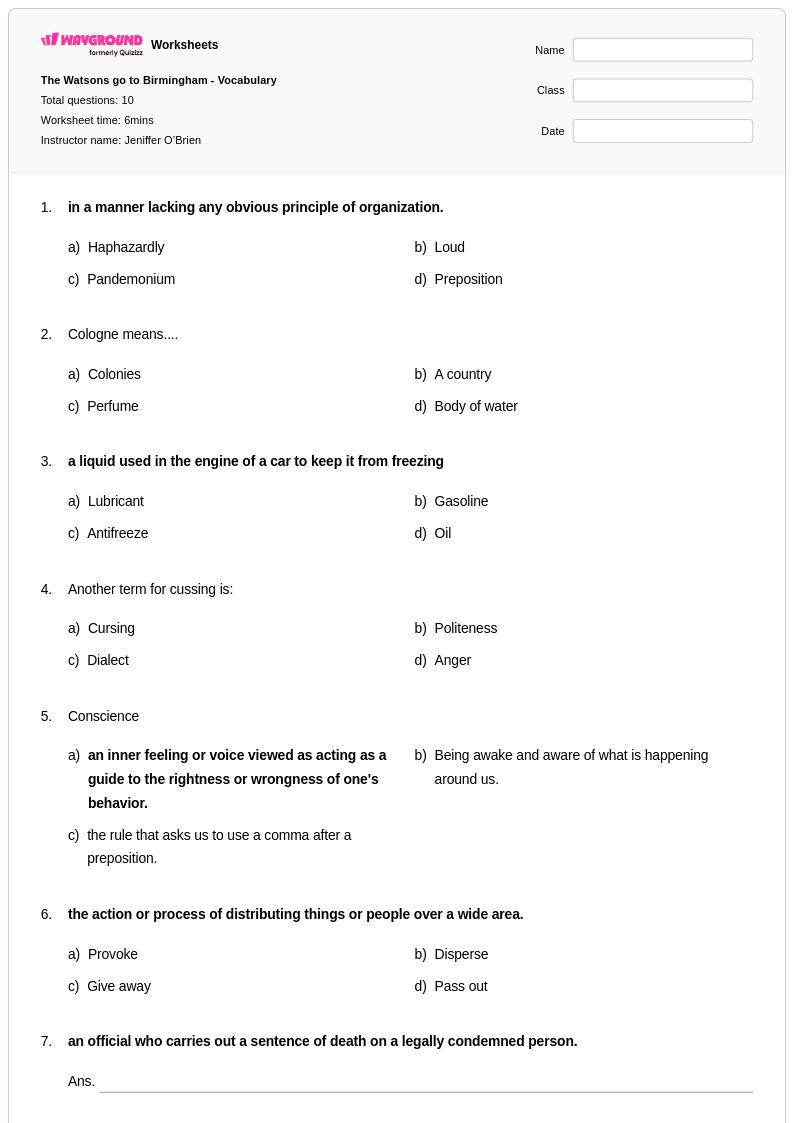
The Watsons Go to Birmingham novel study worksheets for Class 6 students available through Wayground provide comprehensive support for analyzing Christopher Paul Curtis's acclaimed historical fiction work. These carefully crafted educational resources strengthen critical reading skills including character analysis, theme identification, historical context comprehension, and literary device recognition as students follow the Watson family's journey from Michigan to Alabama during the Civil Rights era. Each worksheet collection includes detailed answer keys to facilitate efficient grading and meaningful feedback, while the free printable format ensures accessibility for all classroom environments. Students engage with practice problems that deepen their understanding of plot development, symbolism, and the novel's powerful messages about family, prejudice, and personal growth during this pivotal period in American history.
Wayground's extensive library supports educators with millions of teacher-created resources specifically designed for novel study instruction, offering robust search and filtering capabilities that allow teachers to quickly locate Class 6 appropriate materials for The Watsons Go to Birmingham. The platform's standards alignment features ensure worksheets meet curriculum requirements while differentiation tools enable teachers to customize content for diverse learning needs and reading levels. Available in both printable pdf format and digital versions, these flexible resources streamline lesson planning and provide targeted options for remediation, enrichment, and skill practice. Teachers can efficiently adapt materials to support struggling readers, challenge advanced students, and create meaningful assessments that measure comprehension of this important work's literary elements and historical significance.
FAQs
How do I teach The Watsons Go to Birmingham in a middle school ELA class?
Teaching The Watsons Go to Birmingham works best when instruction balances literary analysis with historical context, helping students understand both the Watson family's personal journey and the civil rights era backdrop of Birmingham, 1963. Effective approaches include close reading of key scenes, guided discussion of how Christopher Paul Curtis uses humor alongside serious themes, and structured activities around character development, particularly Kenny's growth and Byron's transformation. Pairing the novel with primary source documents about the 16th Street Baptist Church bombing deepens historical understanding and supports cross-curricular connections.
What themes are most important to analyze in The Watsons Go to Birmingham?
The central themes in The Watsons Go to Birmingham include family bonds and sibling relationships, the loss of innocence, racial injustice during the civil rights movement, and the tension between childhood and harsh historical reality. Curtis uses the Watson family's road trip as a narrative vehicle to move students from the warmth of Flint, Michigan into direct contact with the violence of the Jim Crow South, making the contrast between tone and subject matter a rich area for literary analysis. Thematic analysis activities that ask students to track how Kenny's perspective shifts across the novel are especially effective for building interpretive writing skills.
What exercises help students practice character analysis for The Watsons Go to Birmingham?
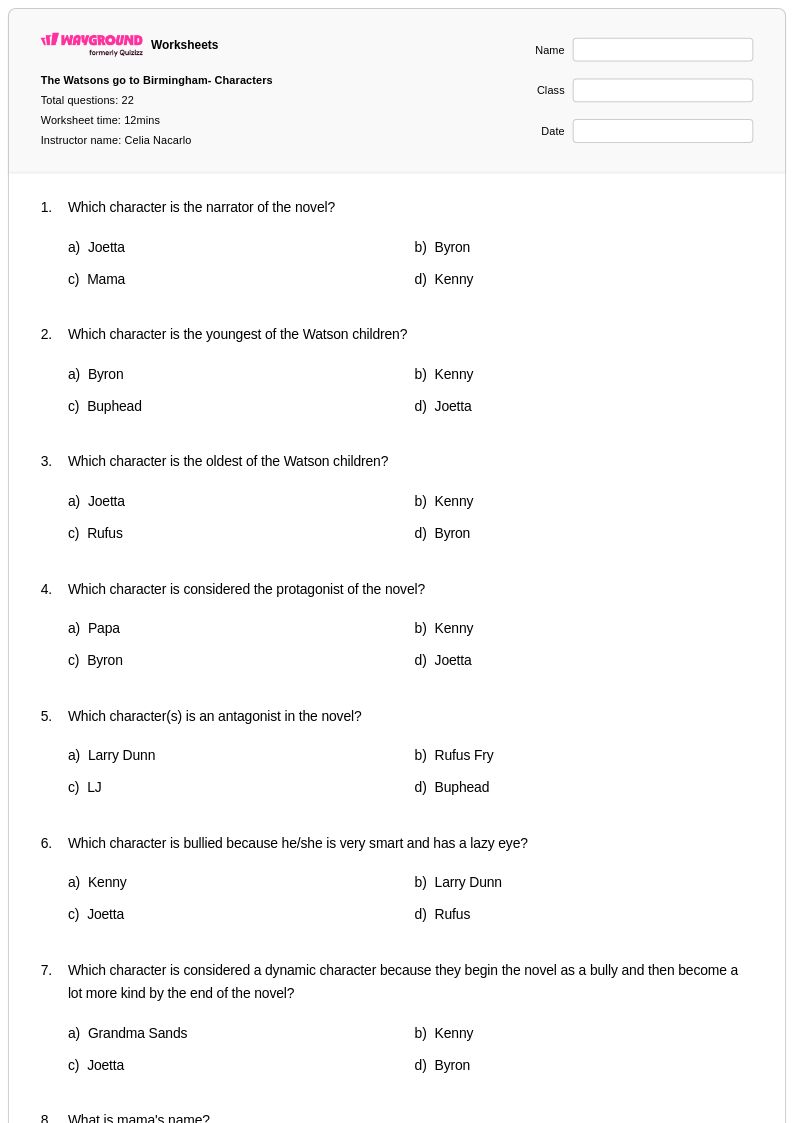
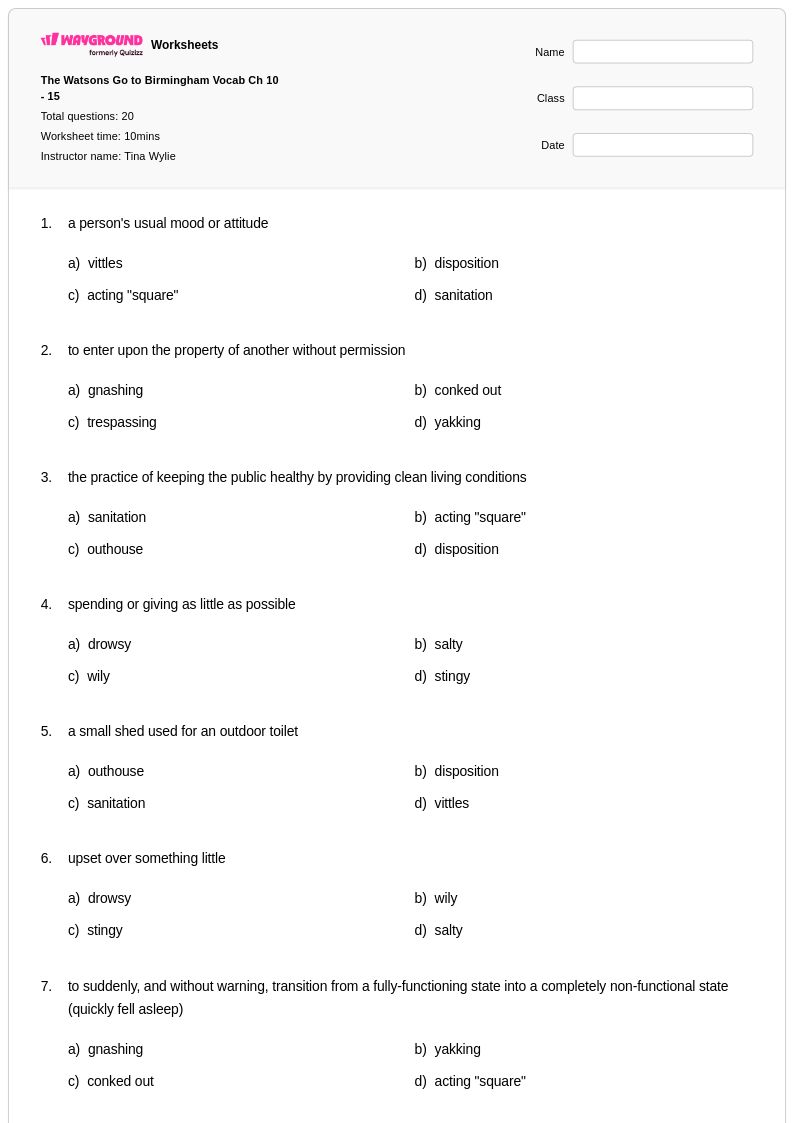
Character analysis worksheets for The Watsons Go to Birmingham are most effective when they ask students to track how specific characters change across chapters rather than describing static traits. Activities like character relationship maps, evidence-based character trait charts focused on Kenny, Byron, and Joetta, and comparative writing prompts that examine how each family member responds to the Birmingham bombing all push students toward deeper analytical thinking. Vocabulary exercises tied to character voice and dialogue also help students notice how Curtis distinguishes each character through language.
What mistakes do students commonly make when analyzing The Watsons Go to Birmingham?
A common error is treating the novel as a lighthearted family story without fully engaging with the gravity of the historical events Curtis depicts, particularly the 16th Street Baptist Church bombing. Students also frequently conflate narrator perspective with author intent, missing the deliberate craft behind Kenny's limited and sometimes unreliable child viewpoint. Another misconception is assuming Byron's early role as the antagonist means he lacks complexity, so guided character arc activities that require textual evidence across multiple chapters help students revise these oversimplified readings.
How do I use Watsons Go to Birmingham worksheets in my classroom?
The Watsons Go to Birmingham worksheets on Wayground are available as printable PDFs for traditional classroom use and in digital formats for technology-integrated environments, so they work whether students are reading independently, in small groups, or in a hybrid setting. Each worksheet includes a complete answer key, which makes them practical for both in-class guided reading and independent practice assignments. Teachers can also host worksheets as a quiz directly on Wayground, giving students an interactive experience while generating immediate performance data.
How can I support struggling readers during a Watsons Go to Birmingham novel study?
Struggling readers benefit most from scaffolded comprehension support that breaks the novel into manageable chunks with targeted questions after each chapter, rather than relying solely on end-of-unit assessments. On Wayground, teachers can apply individual accommodations such as Read Aloud, which delivers audio reading of questions and content, and reduced answer choices, which lowers cognitive load for students who need it. Extended time settings can also be configured per student, and all accommodations are saved and reusable across future sessions without notifying other students, keeping the classroom experience consistent.