Free Printable Three Act Structure Worksheets for Class 6
Class 6 three act structure worksheets help students master story organization through engaging printables and practice problems that teach beginning, middle, and end narrative development with comprehensive answer keys.
Explore printable Three Act Structure worksheets for Class 6
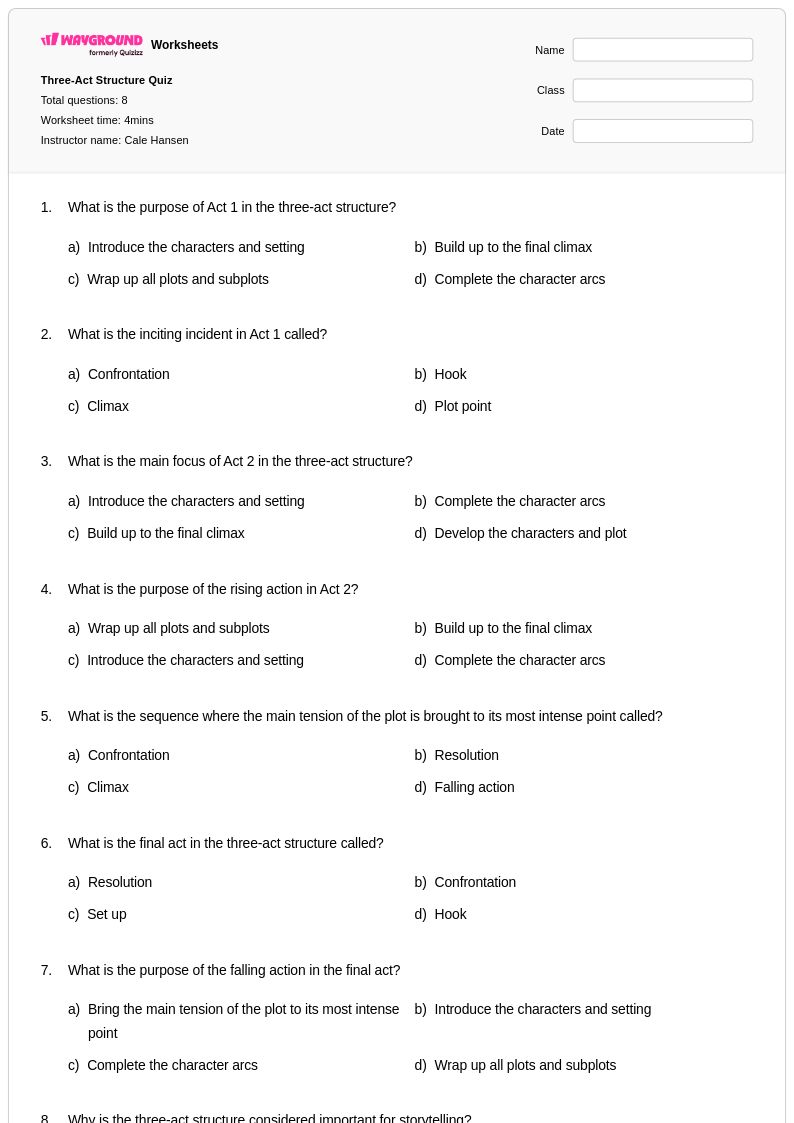
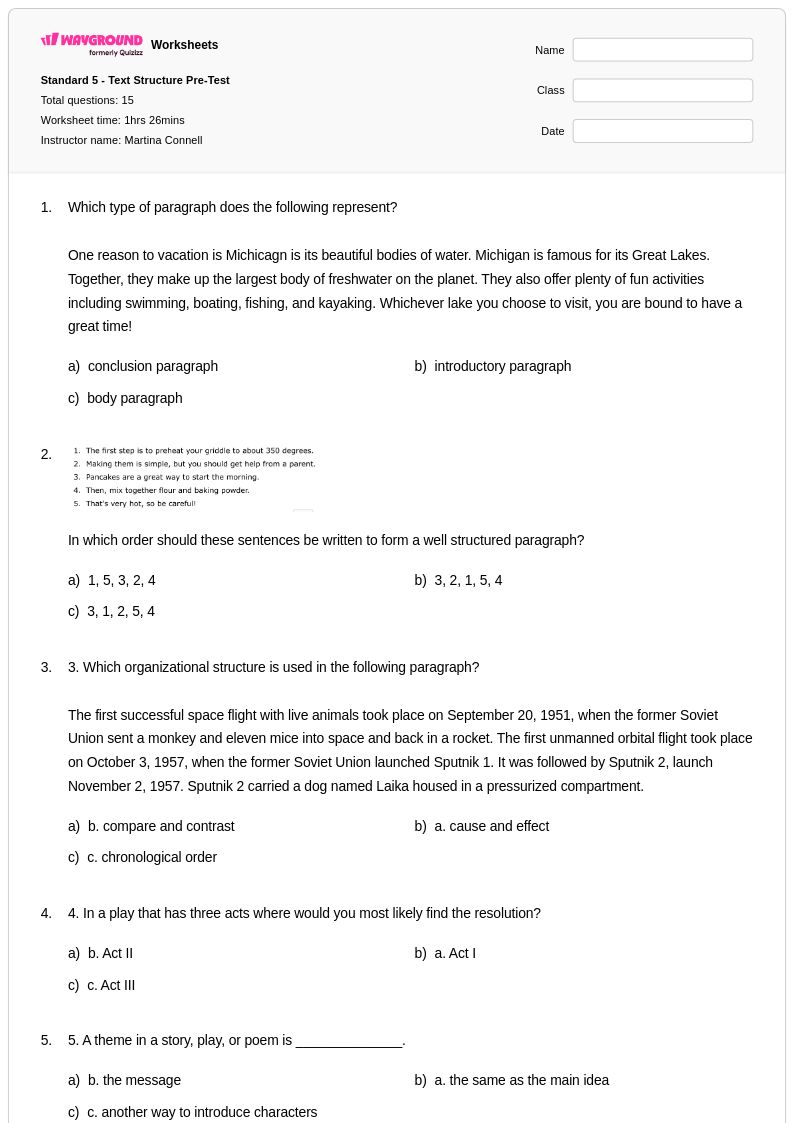
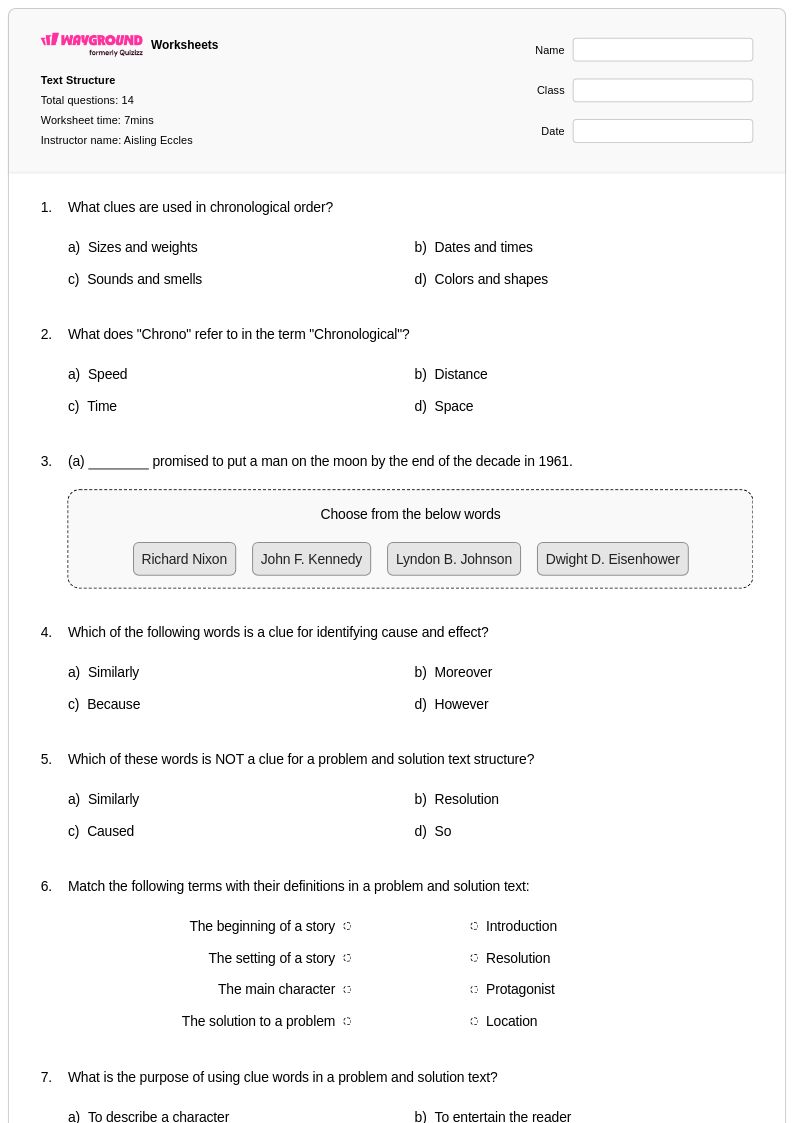
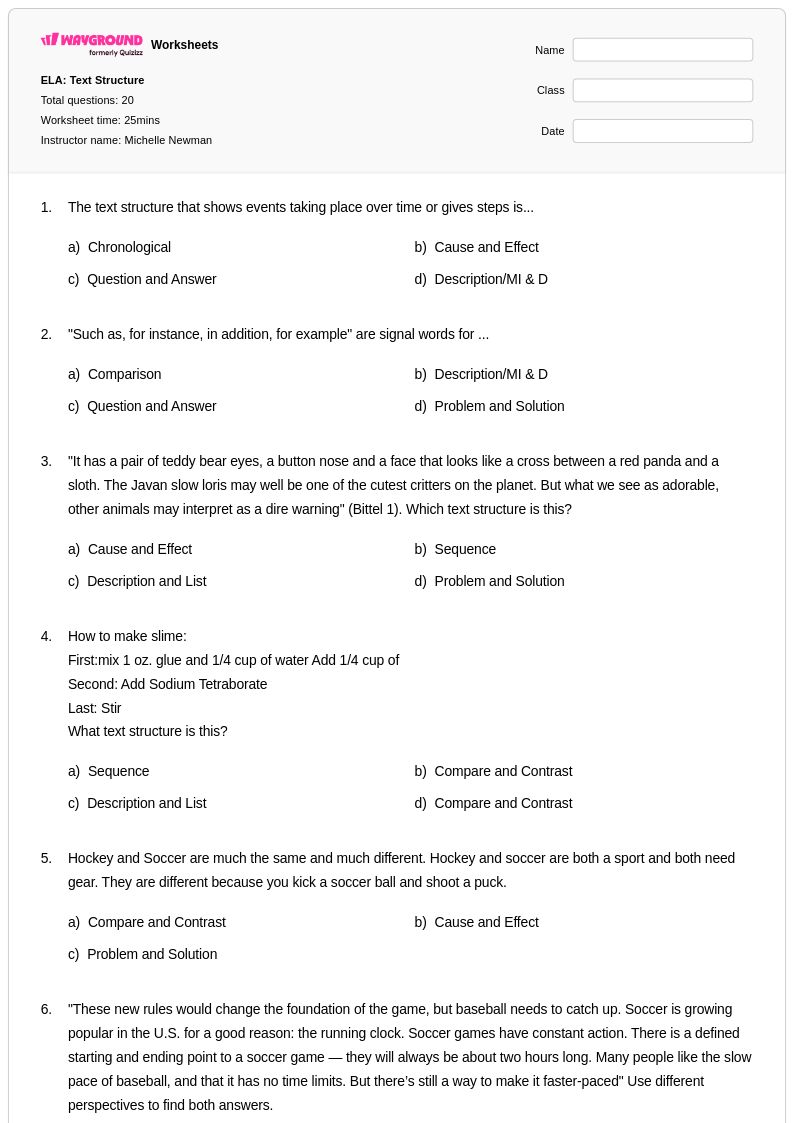
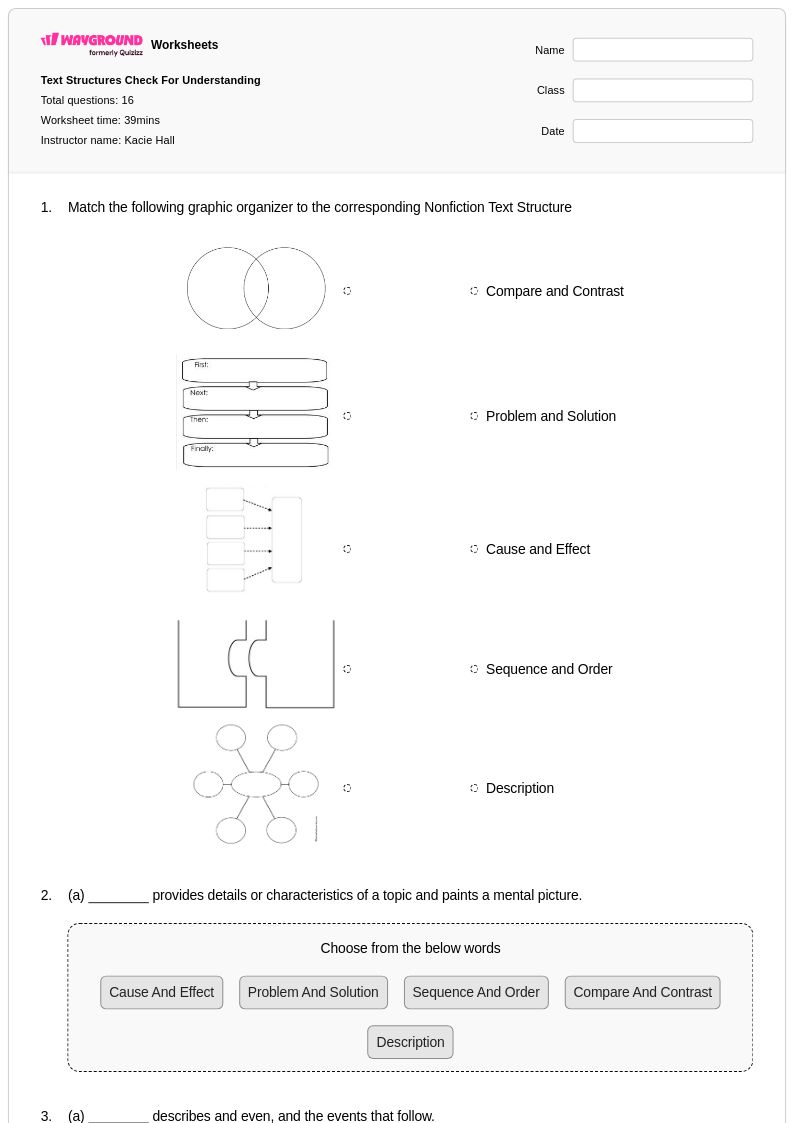
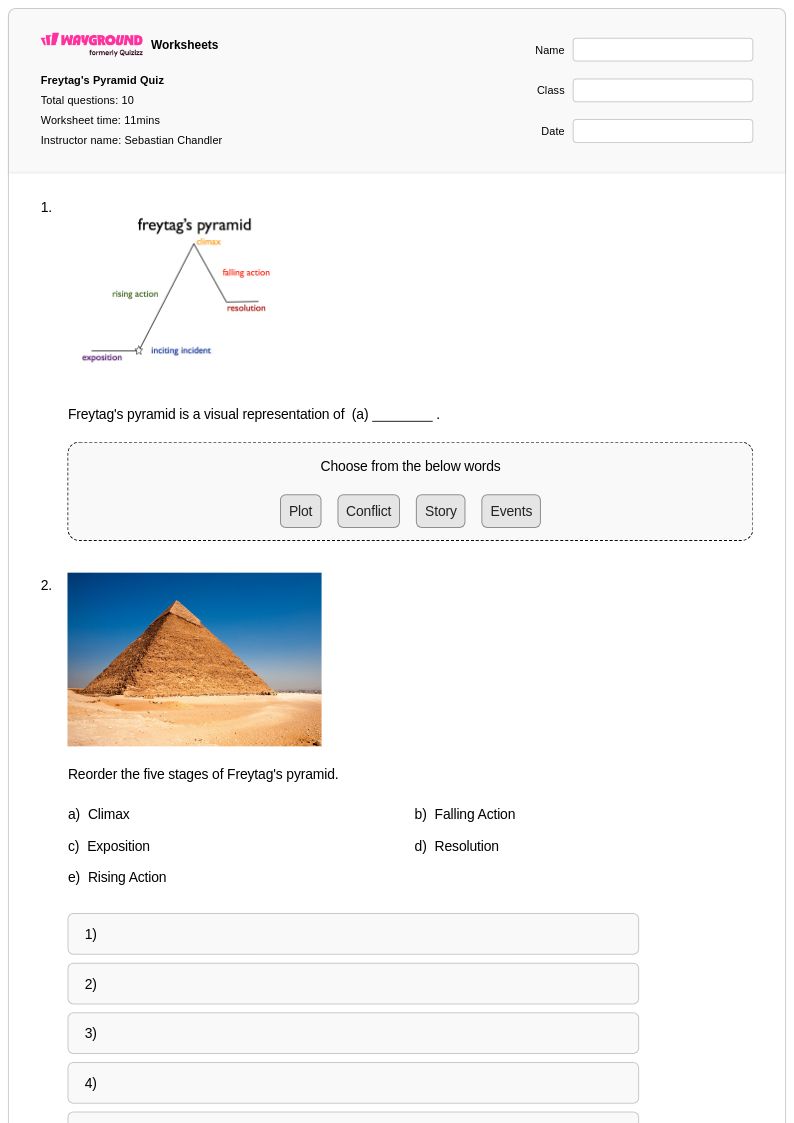
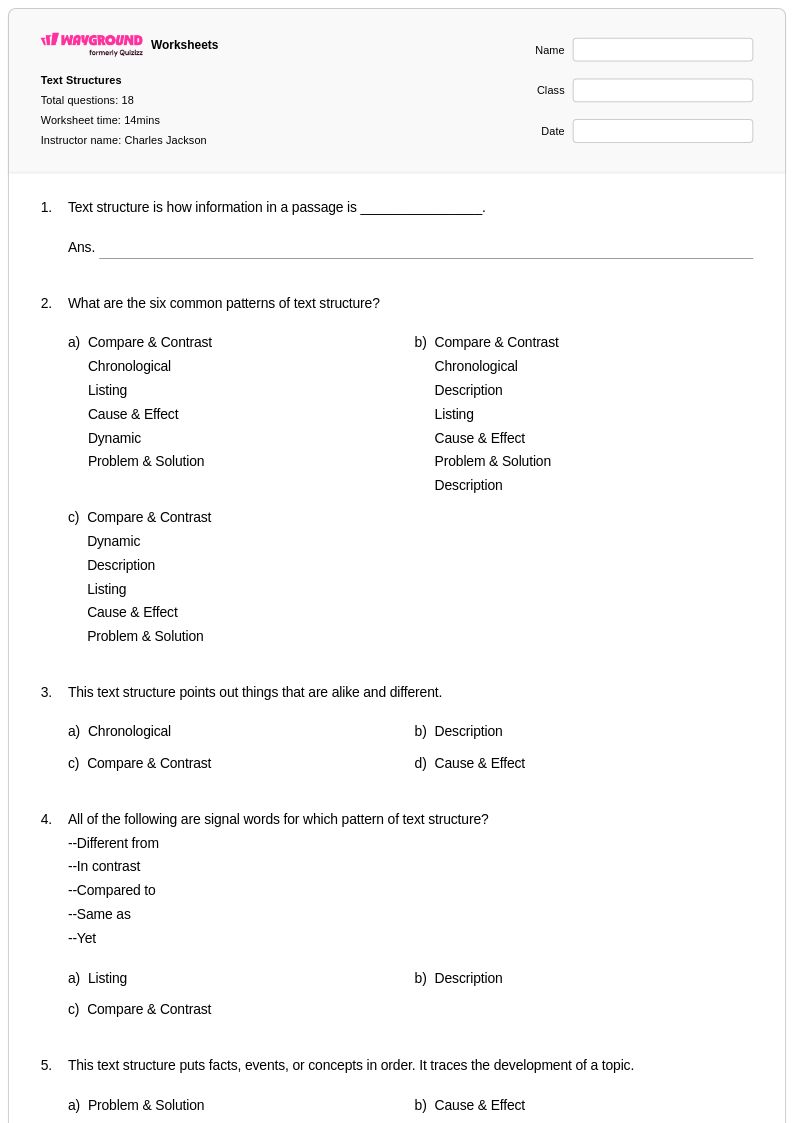
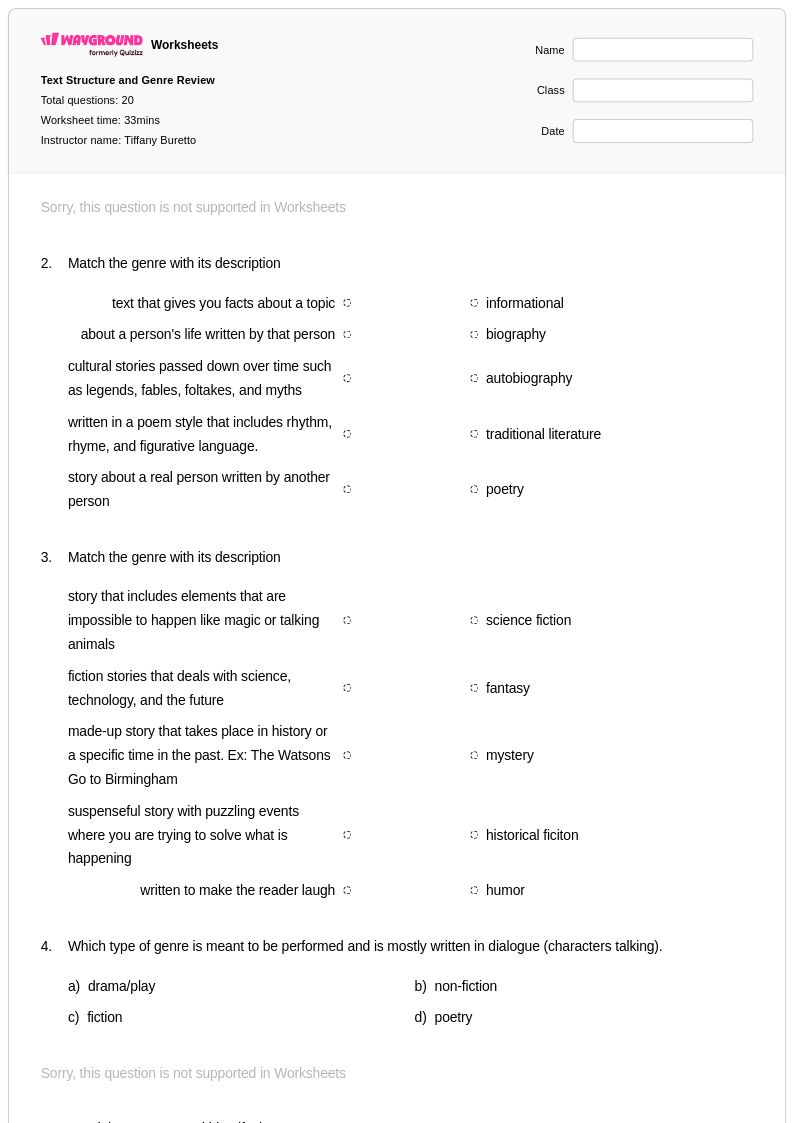
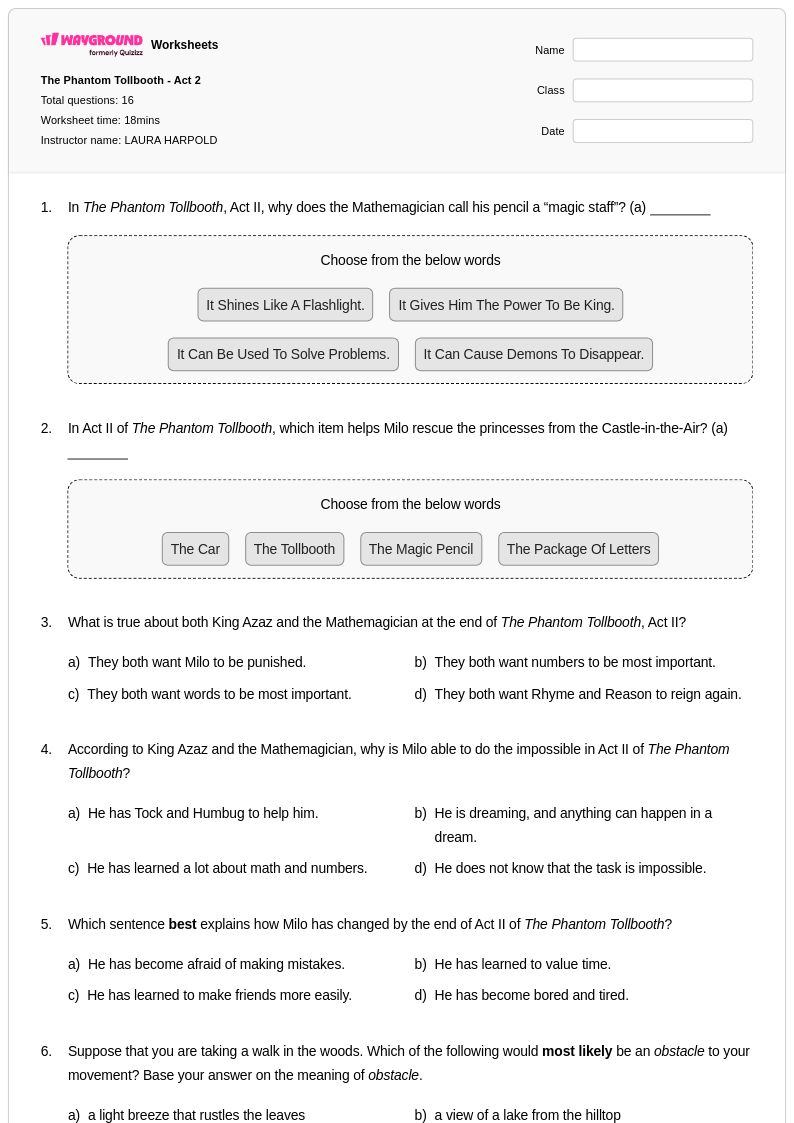
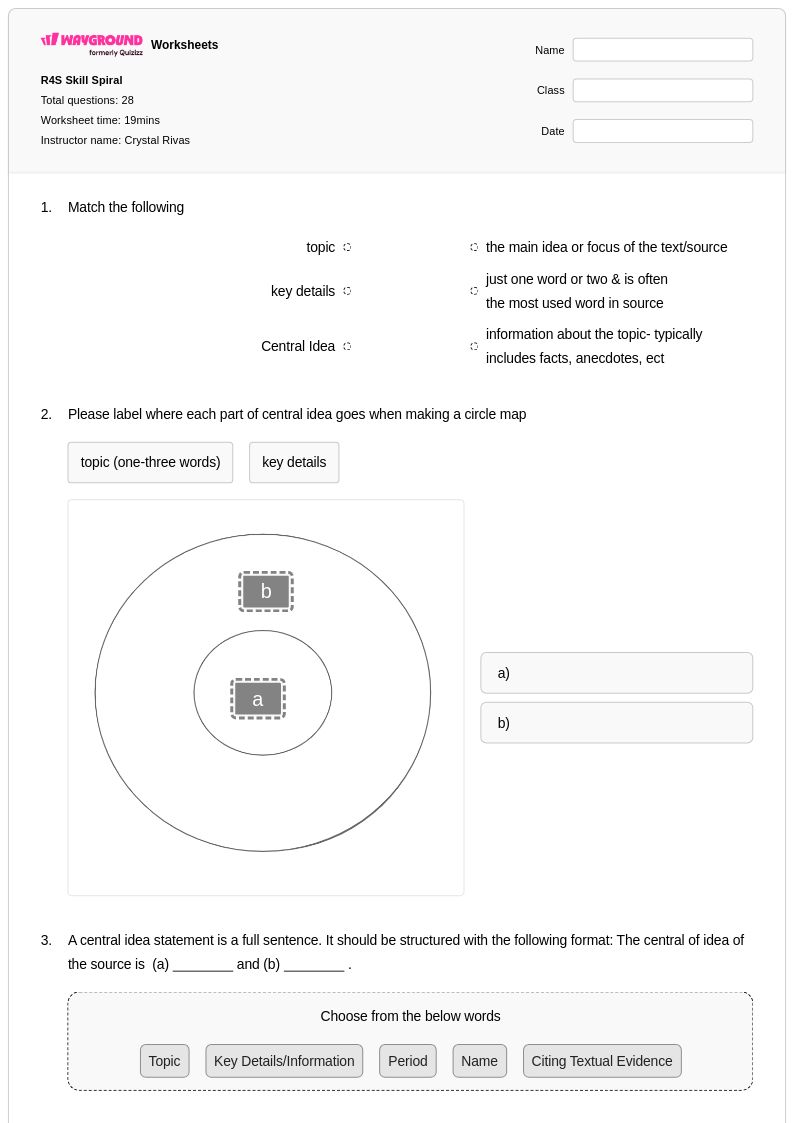
Three Act Structure worksheets for Class 6 students available through Wayground (formerly Quizizz) provide comprehensive practice in understanding and applying this fundamental narrative framework to their own writing. These expertly designed worksheets guide sixth-grade learners through the essential components of storytelling structure: the setup and exposition of Act I, the rising action and climax of Act II, and the falling action and resolution of Act III. Students develop critical organizational skills as they analyze existing stories, identify structural elements, and plan their own narratives using this time-tested format. Each worksheet collection includes detailed answer keys and comes in convenient pdf format, offering free printables that feature engaging practice problems designed to strengthen students' ability to craft well-structured, compelling stories with clear beginnings, middles, and ends.
Wayground (formerly Quizizz) empowers educators with millions of teacher-created Three Act Structure resources that streamline lesson planning and enhance student engagement in Class 6 English instruction. The platform's robust search and filtering capabilities allow teachers to quickly locate worksheets aligned with specific writing standards and learning objectives, while built-in differentiation tools enable customization for diverse learners and skill levels. These comprehensive worksheet collections are available in both printable pdf formats for traditional classroom use and digital formats for seamless integration with online learning environments. Teachers can efficiently plan targeted skill practice sessions, provide remediation for students struggling with narrative organization, and offer enrichment opportunities for advanced writers, all while accessing ready-to-use materials that support systematic instruction in this essential writing structure that forms the foundation of effective storytelling across genres.
FAQs
How do I teach three act structure to students?
Start by using familiar stories students already know, such as fairy tales or popular films, to map out the three acts before introducing the terminology. Teach Act I (exposition and rising action), Act II (conflict development and climax), and Act III (falling action and resolution) as distinct phases, showing how each act serves a specific narrative function. Once students can identify the structure in existing stories, have them apply it to their own writing. Using a visual story arc diagram alongside direct instruction helps concrete and abstract thinkers alike grasp how tension builds and releases across the three acts.
What exercises help students practice three act structure?
Effective practice exercises include identifying and labeling structural elements in short stories or film summaries, reorganizing scrambled plot points into the correct three-act sequence, and using graphic organizers to plan original narratives. Requiring students to justify why a specific plot point belongs in a particular act deepens analytical thinking beyond surface-level identification. These tasks move students from recognition to application, which is the progression needed for genuine mastery of narrative structure.
What mistakes do students commonly make when learning three act structure?
The most common error is treating the climax as the end of the story rather than recognizing it as the turning point within Act II, with falling action and resolution still to follow. Students also frequently conflate exposition with the entire first act, missing the rising action that builds tension before the midpoint. Another common misconception is assuming all three acts are equal in length, when in practice Act II typically carries the most narrative weight. Targeted practice identifying these elements in multiple texts helps correct these patterns.
How can I use three act structure worksheets to support different skill levels in my class?
For struggling learners, begin with worksheets that ask students to match pre-labeled plot events to the correct act, reducing the cognitive load of open-ended analysis. More advanced students can work with worksheets that require them to construct an original narrative outline using the three-act framework from scratch. On Wayground, teachers can apply accommodations such as read aloud support, reduced answer choices, and extended time to individual students, allowing the same worksheet set to serve a range of learners without singling anyone out.
How do I use three act structure worksheets from Wayground in my classroom?
Wayground's three act structure worksheets are available as printable PDFs for traditional classroom use and in digital formats for technology-integrated environments, including the option to host them as a quiz directly on Wayground. Printable versions work well for close-reading annotation tasks, while digital formats allow for immediate feedback and easy assignment tracking. All worksheets include detailed answer keys, so they can also be used for independent practice or self-assessment without requiring additional teacher prep.
How does three act structure connect to broader ELA standards?
Three act structure directly supports standards related to narrative writing, literary analysis, and text structure, which appear across Common Core ELA standards from upper elementary through high school. Understanding how stories are organized helps students both as readers, when analyzing an author's craft, and as writers, when constructing their own narratives with intentional pacing and tension. Teaching this framework also builds transferable skills in logical organization that apply to argumentative and expository writing.