Free Printable To Be Verb Worksheets for Kindergarten
Wayground's free kindergarten "to be" verb worksheets and printables help young learners practice identifying and using am, is, and are through engaging exercises with answer keys included.
Explore printable To Be Verb worksheets for Kindergarten
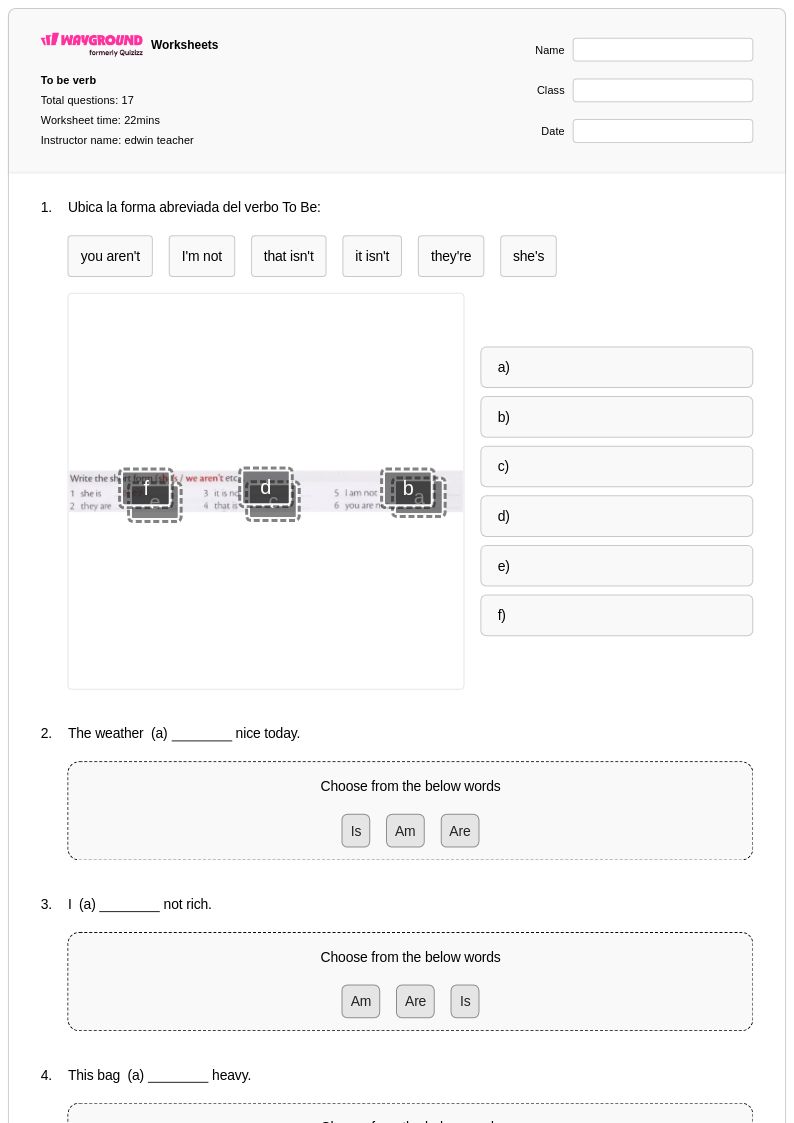
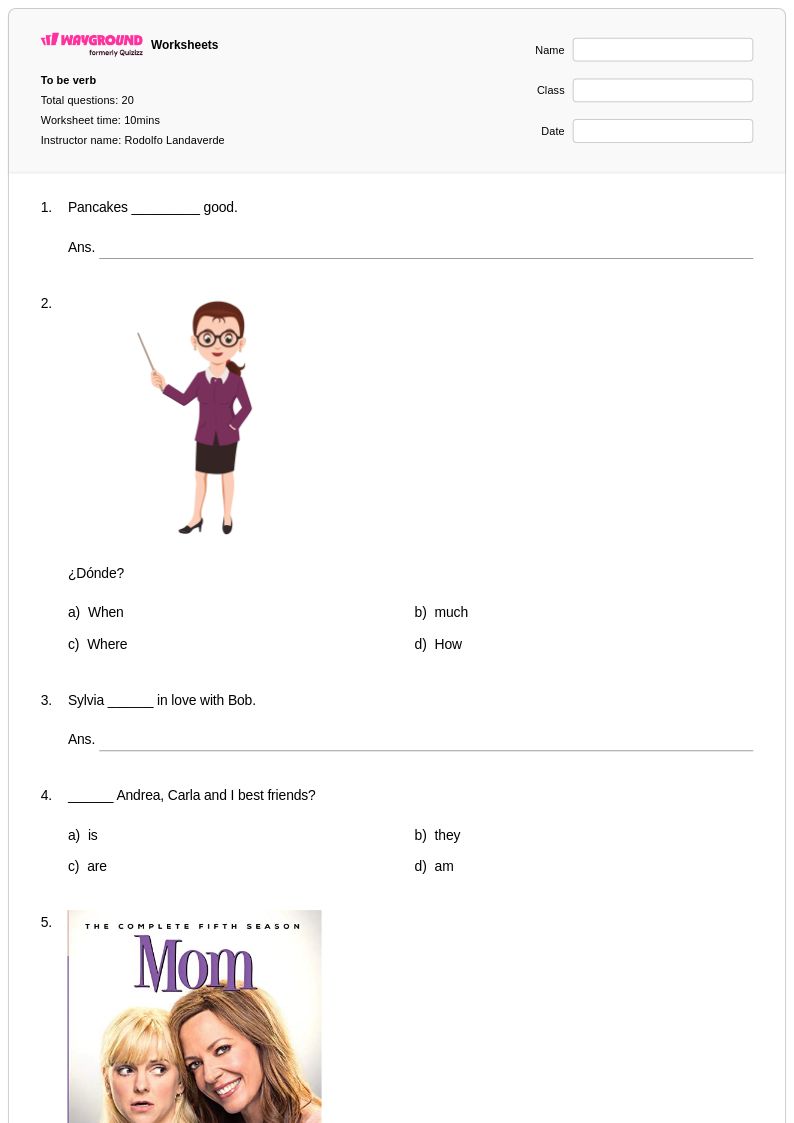
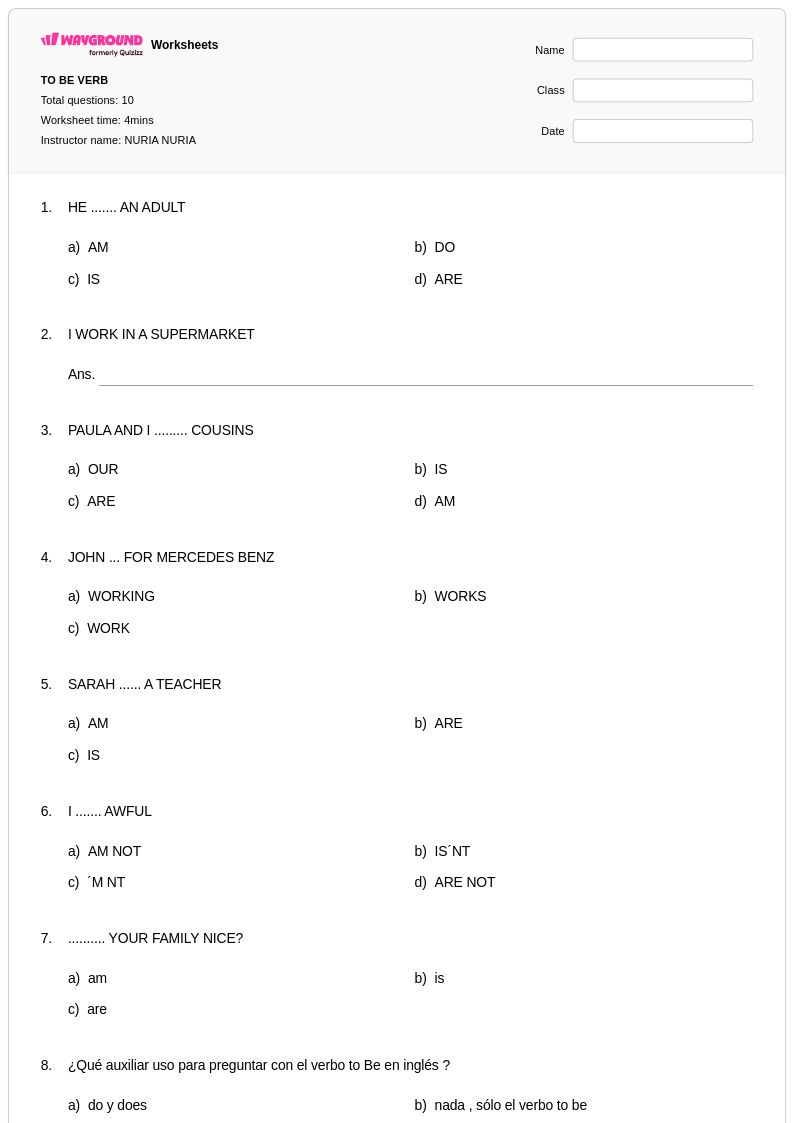
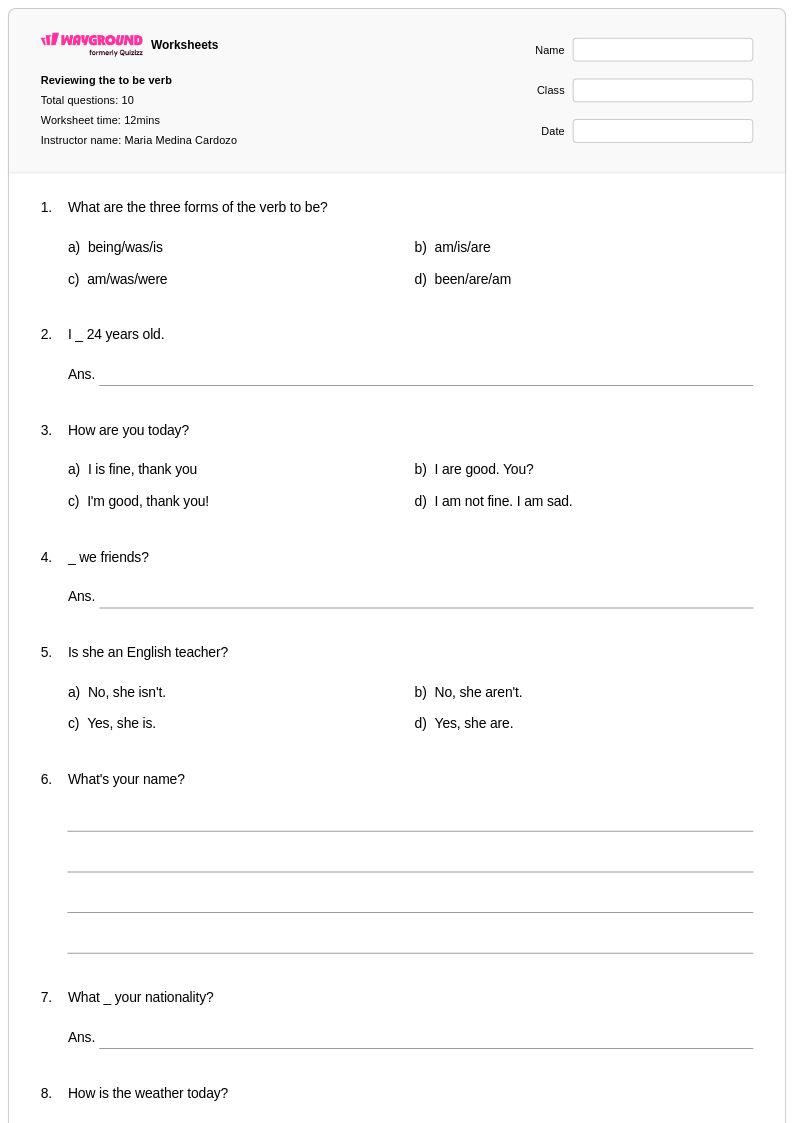
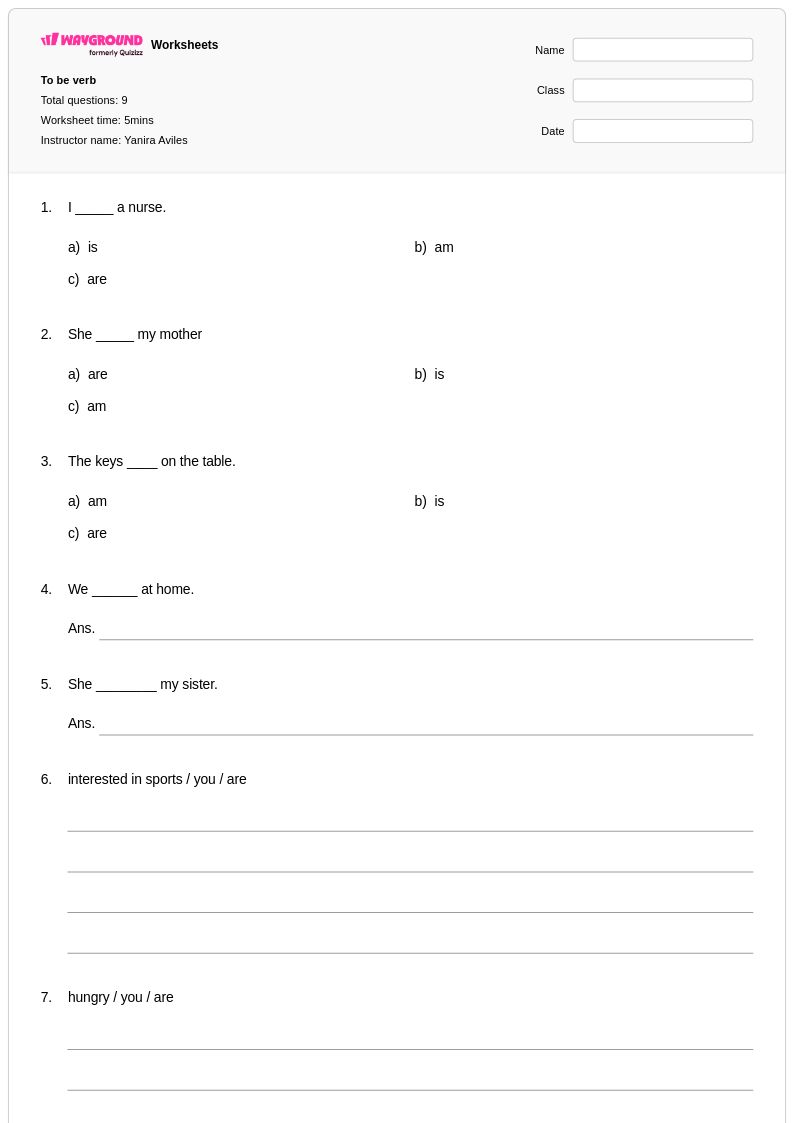
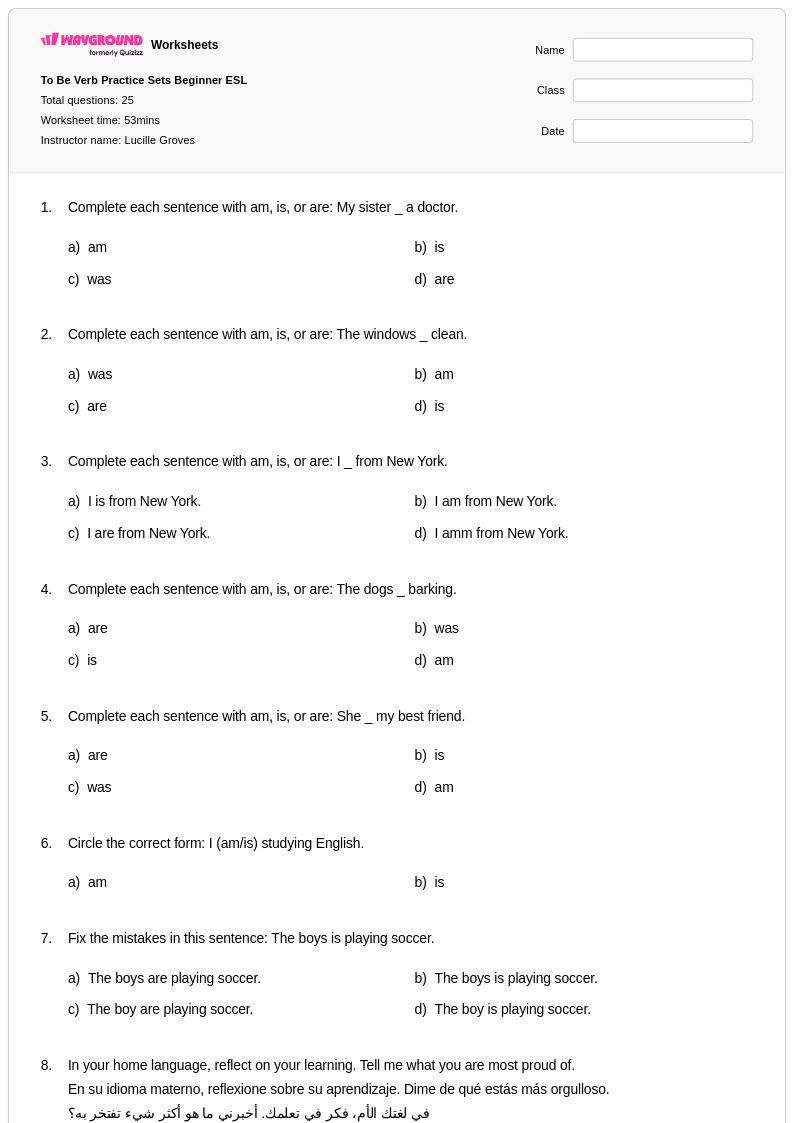
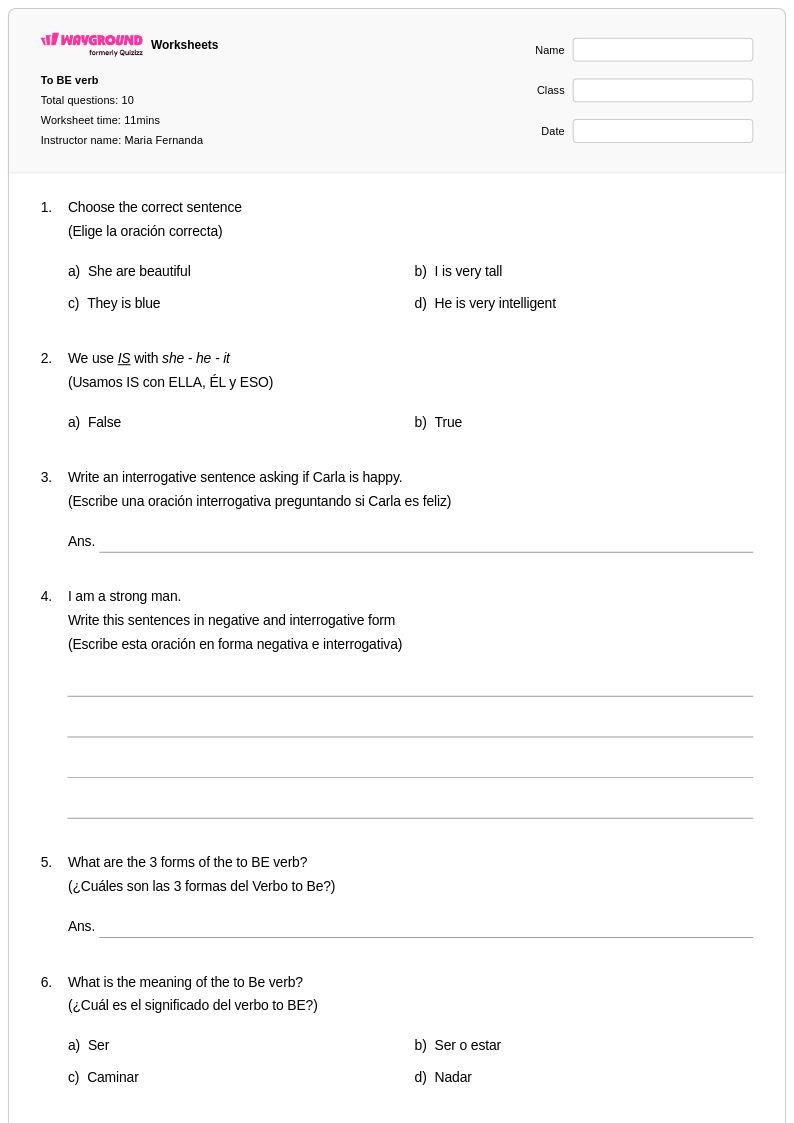
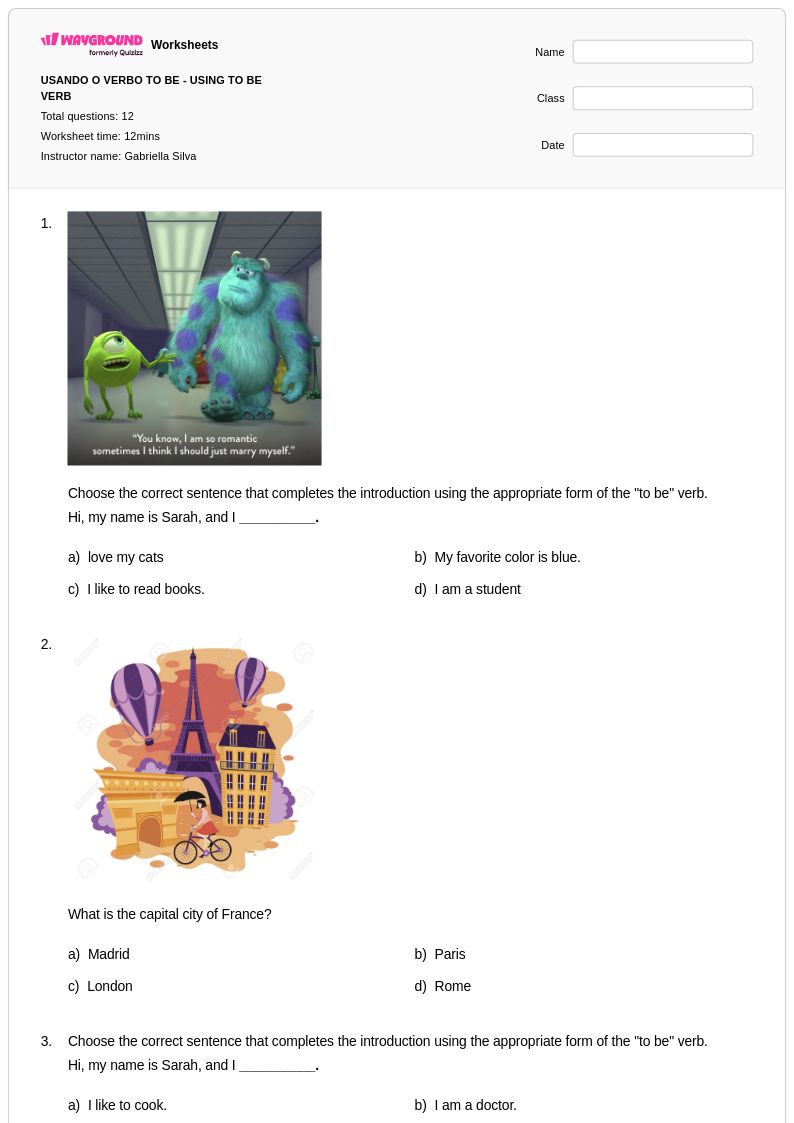
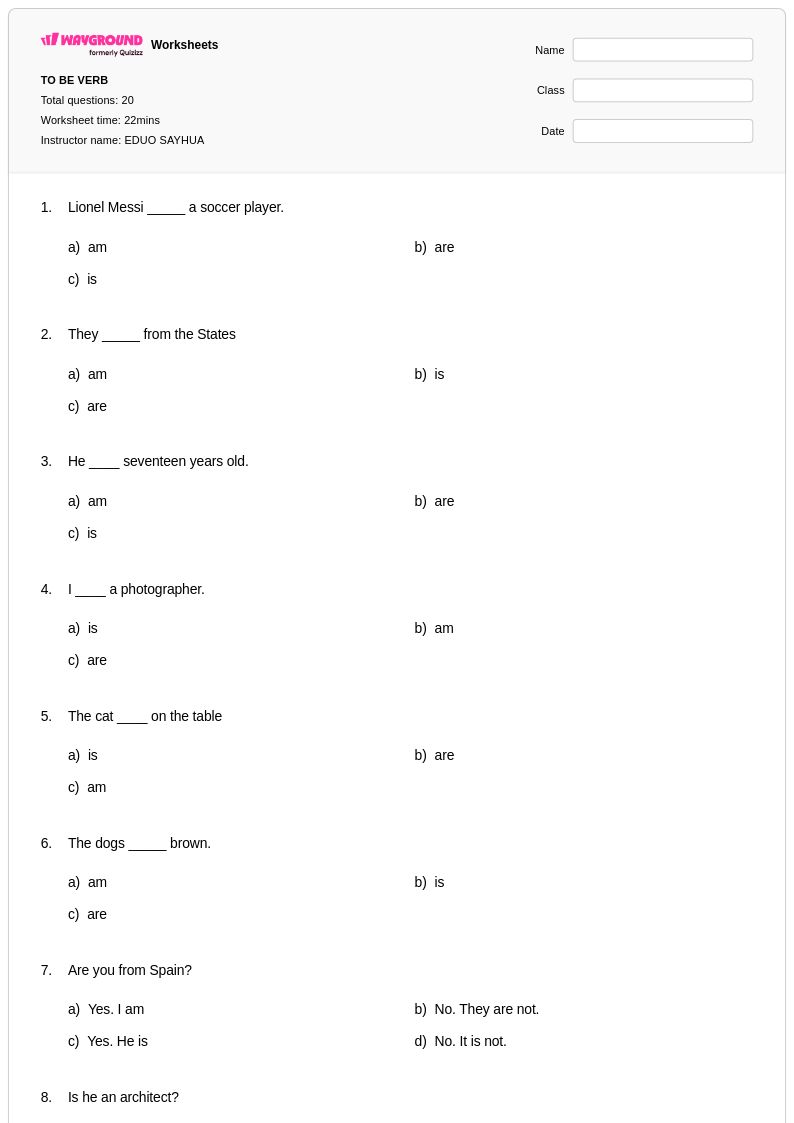
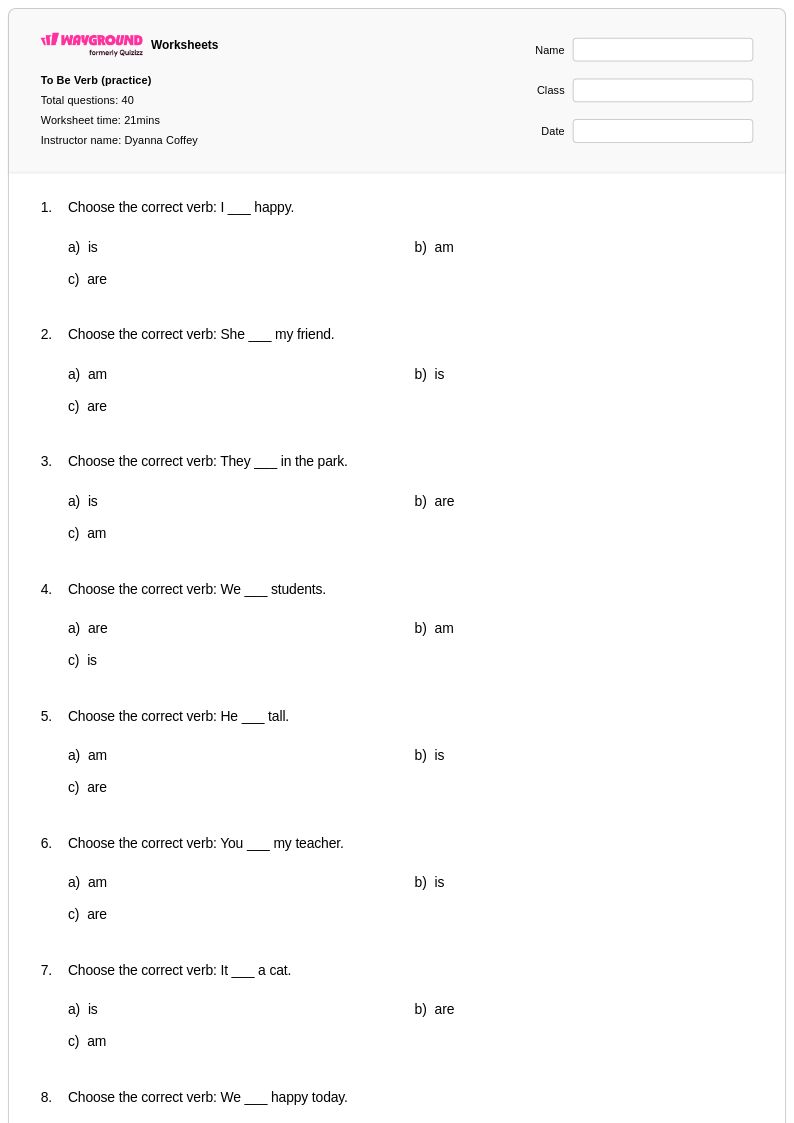
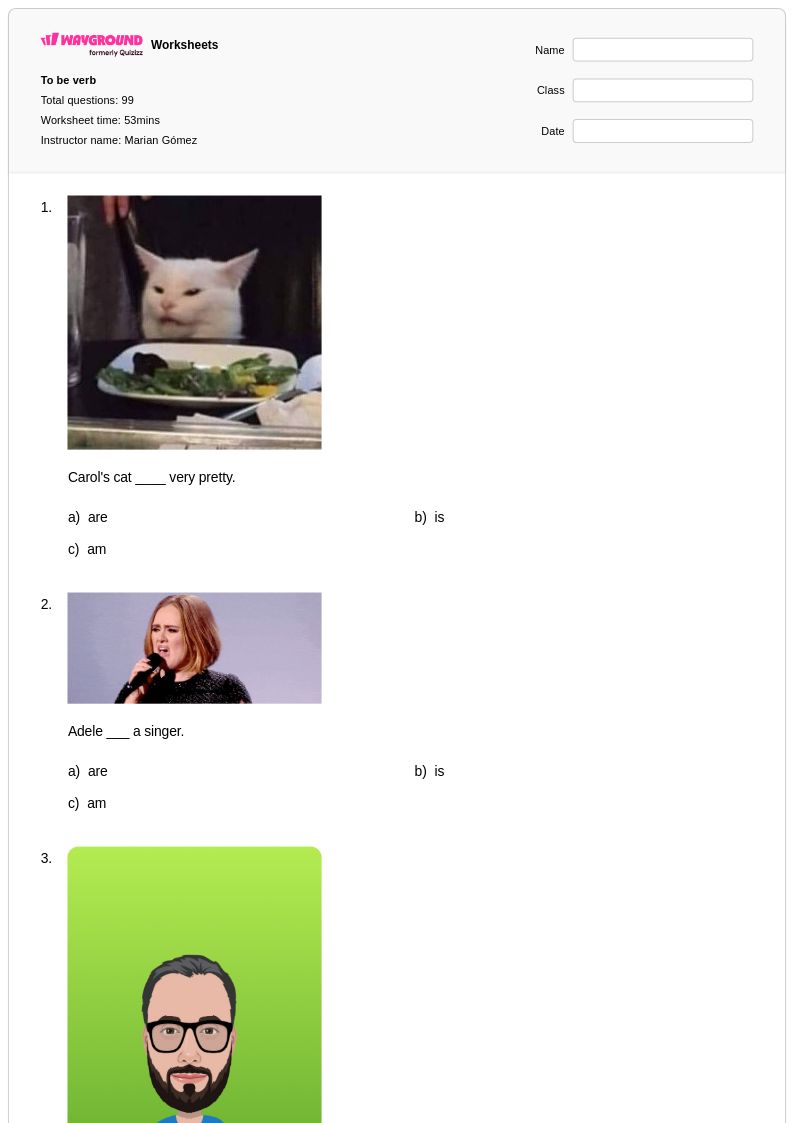
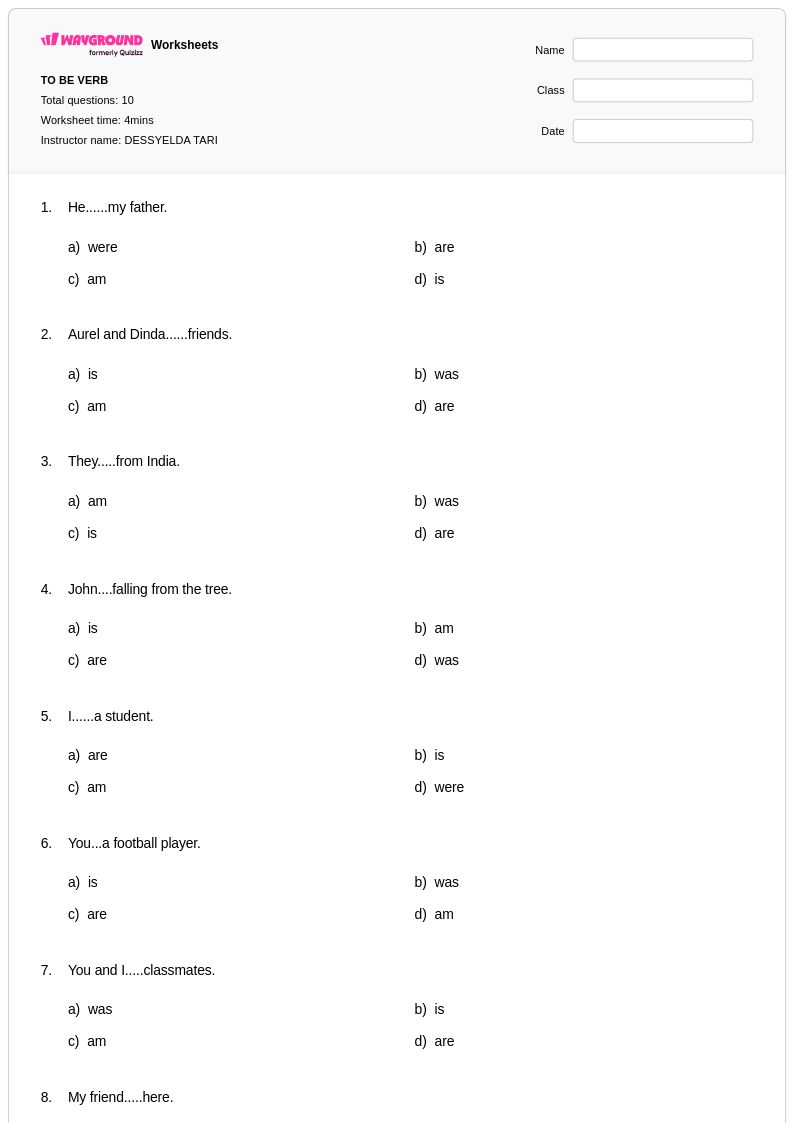
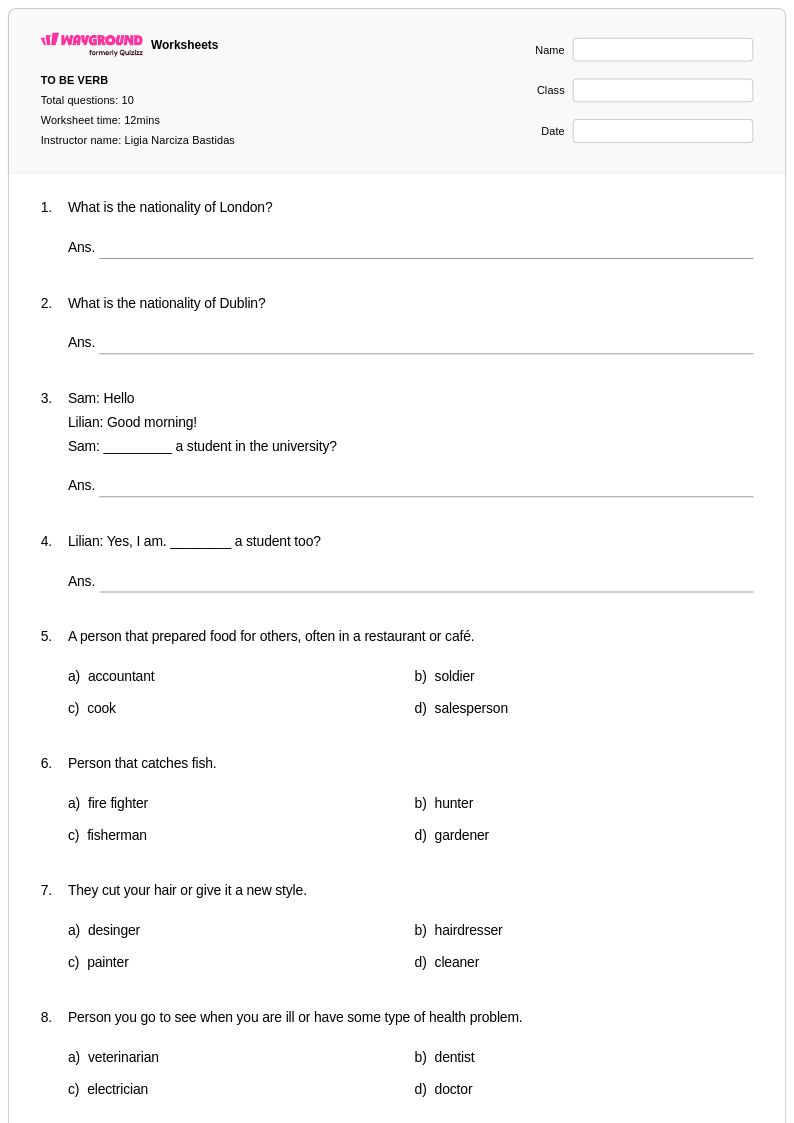
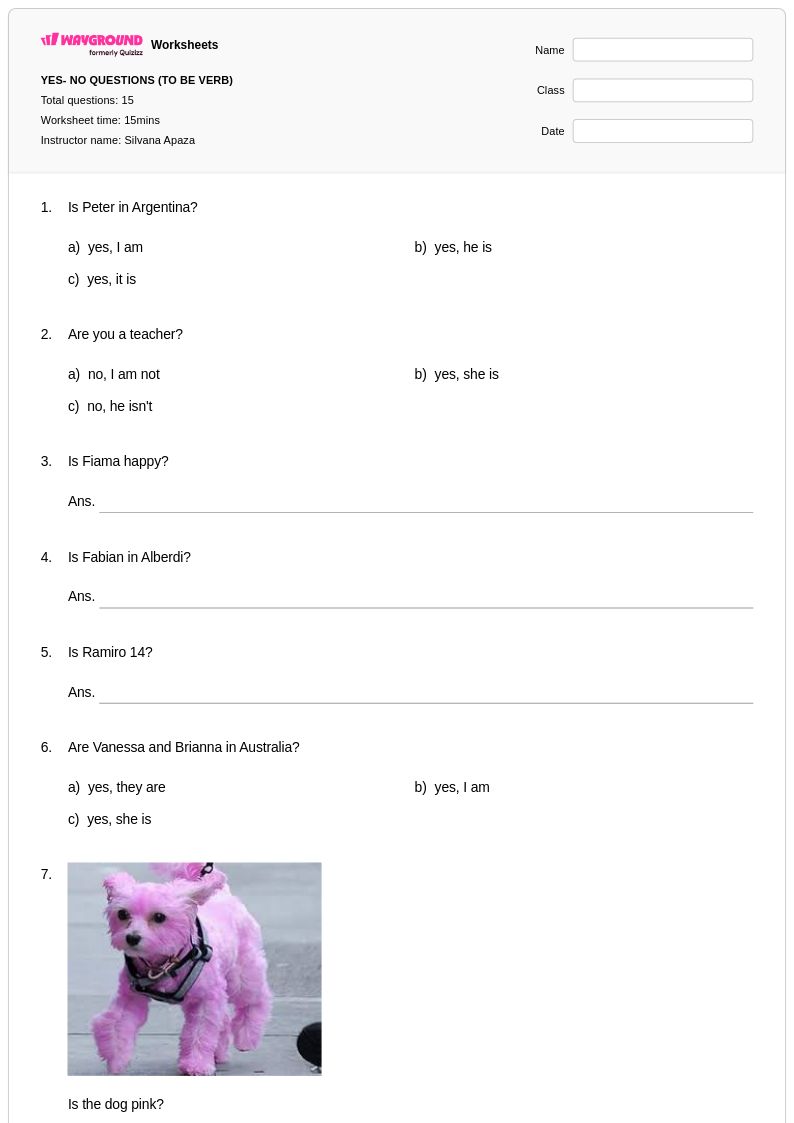
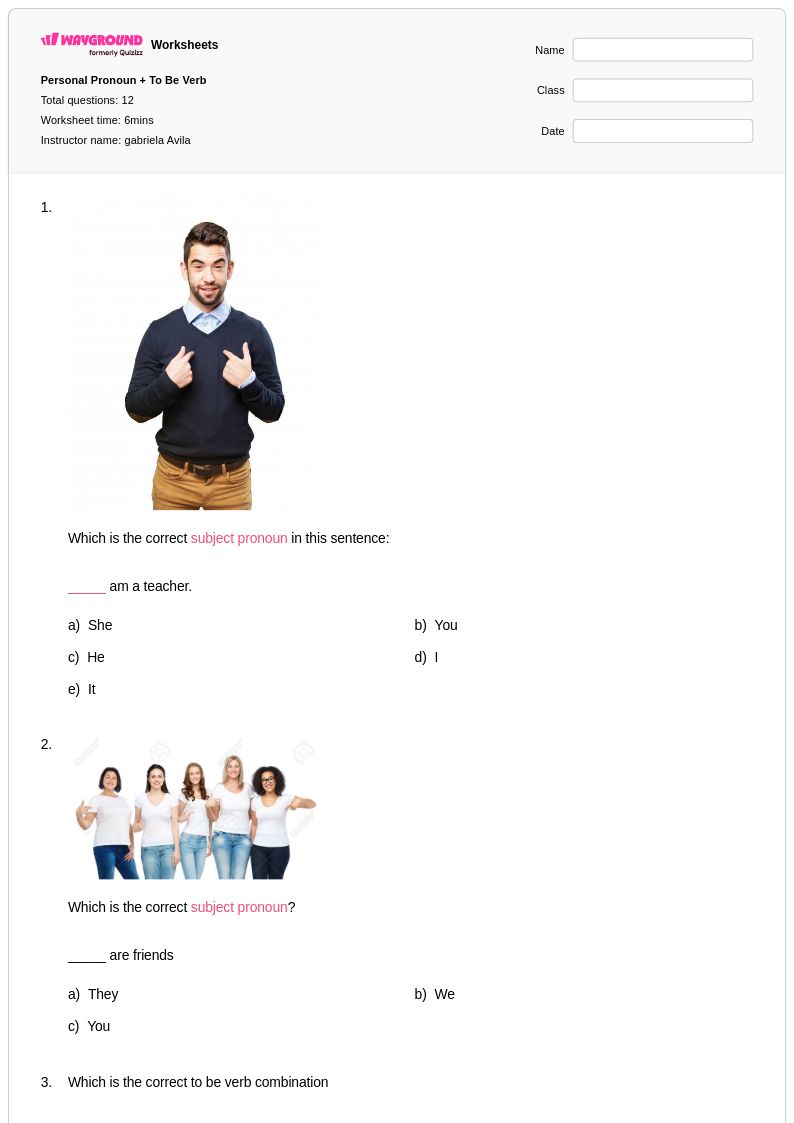
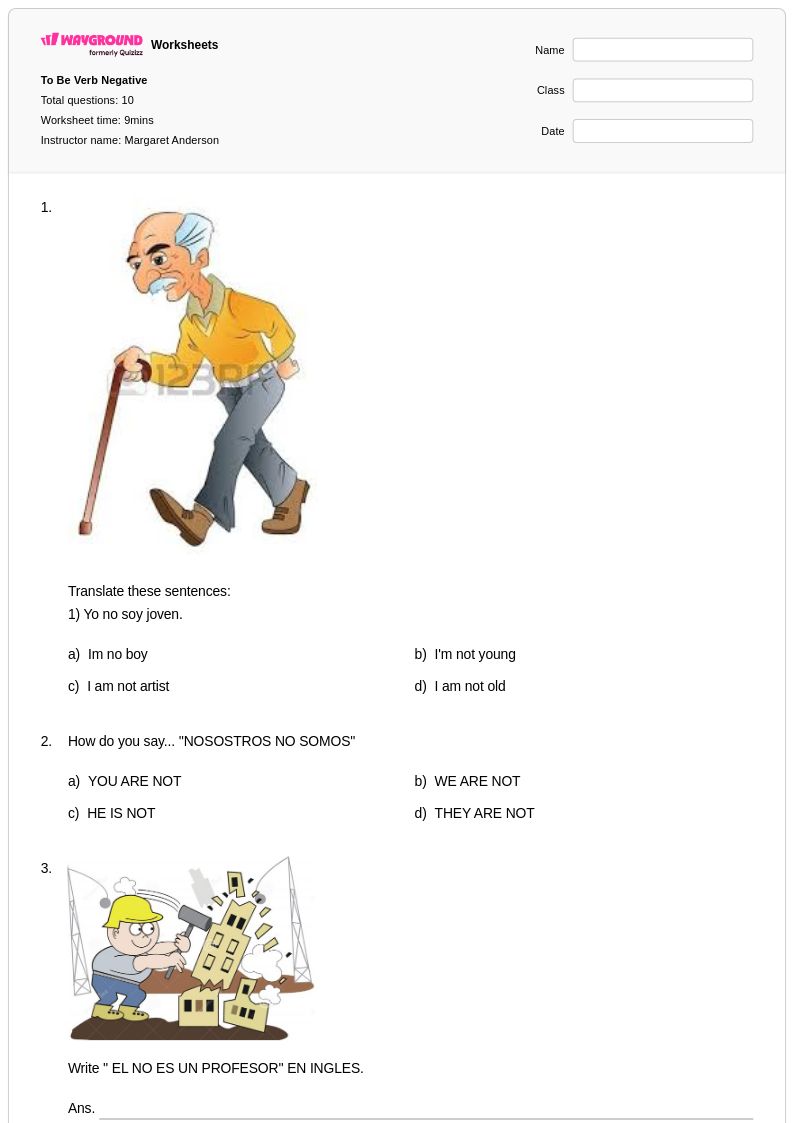
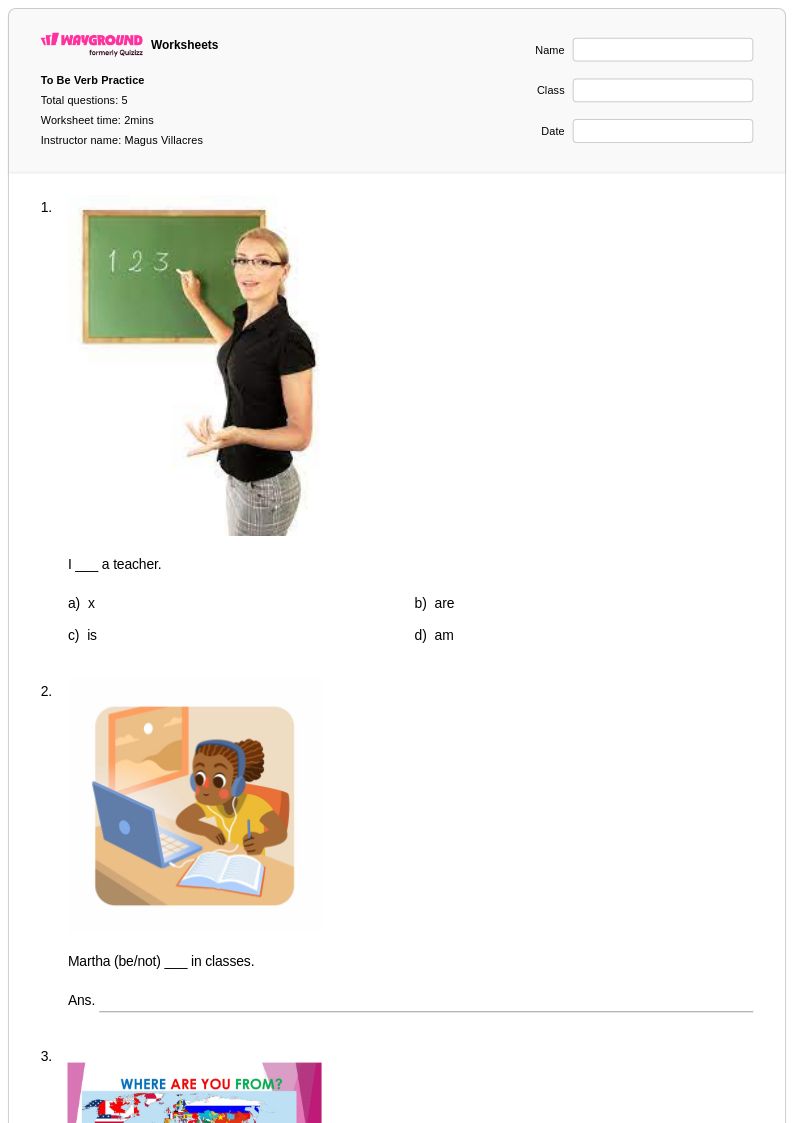
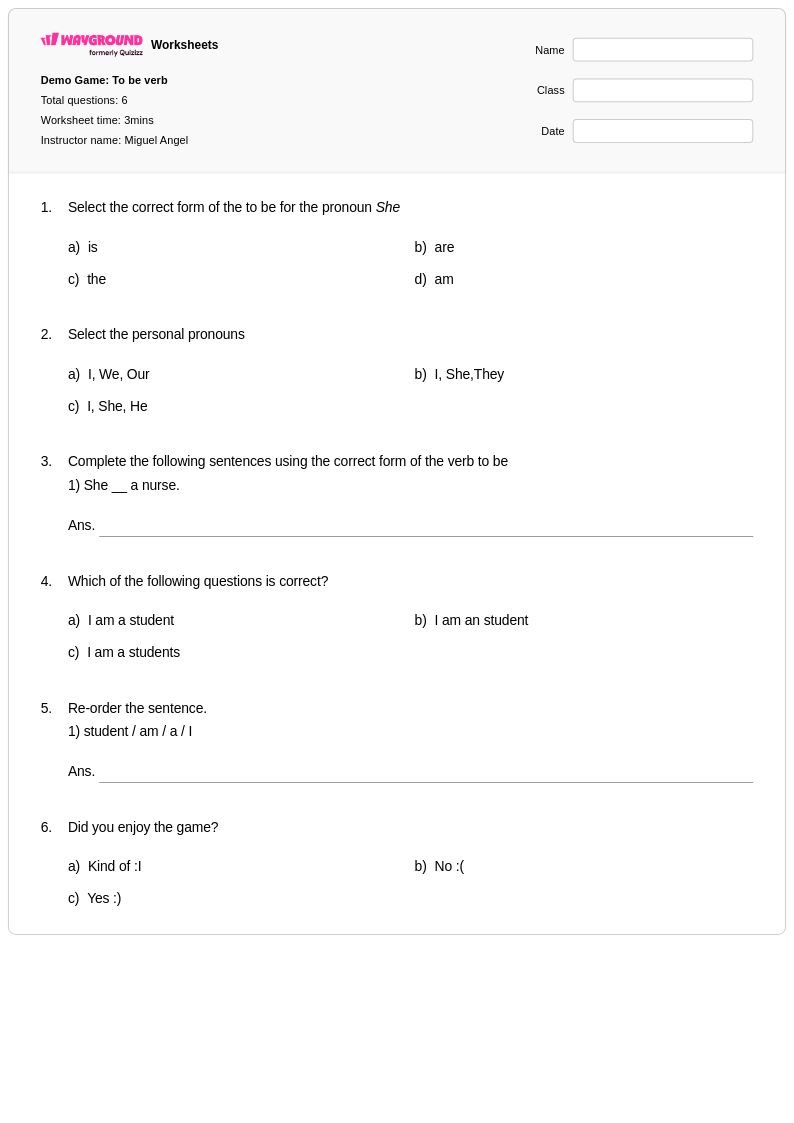
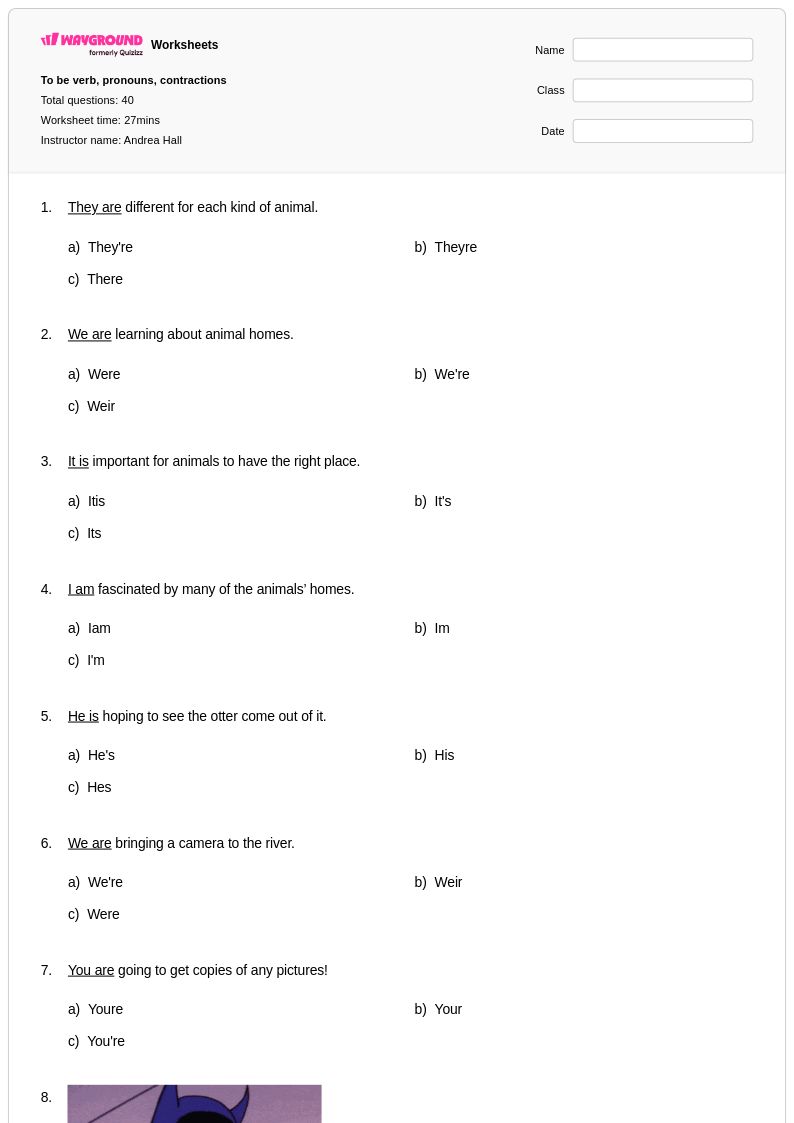
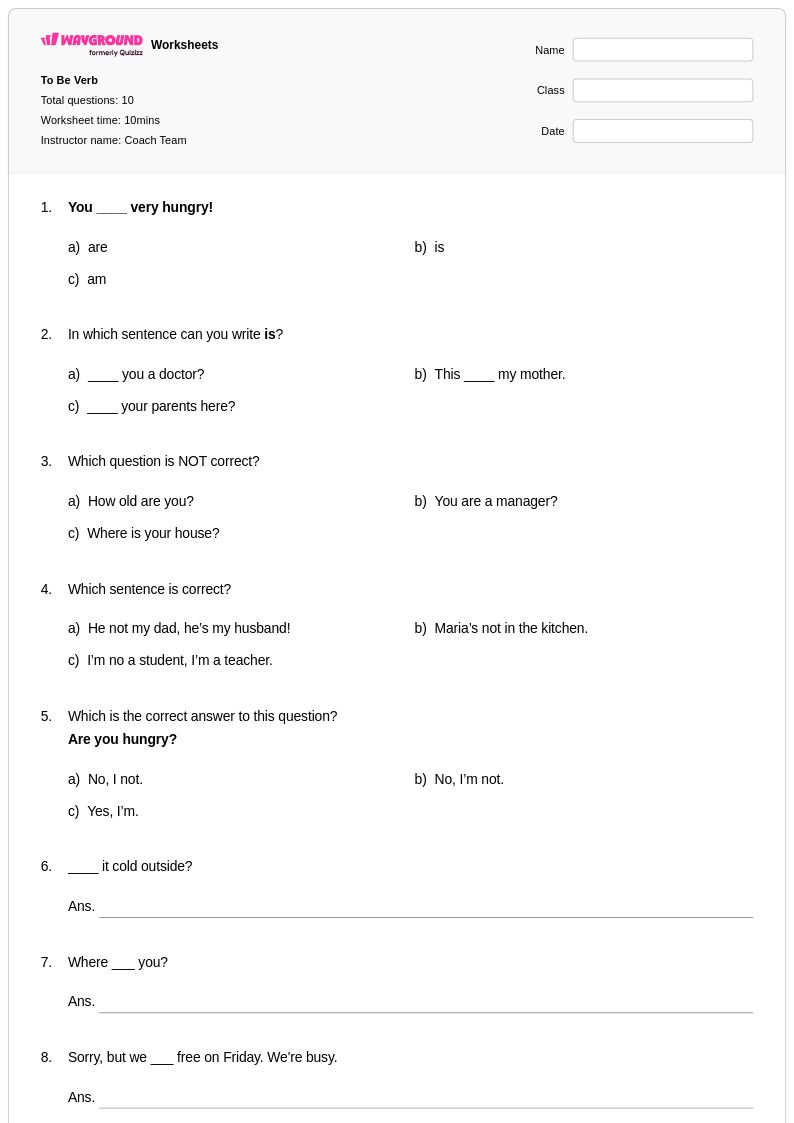
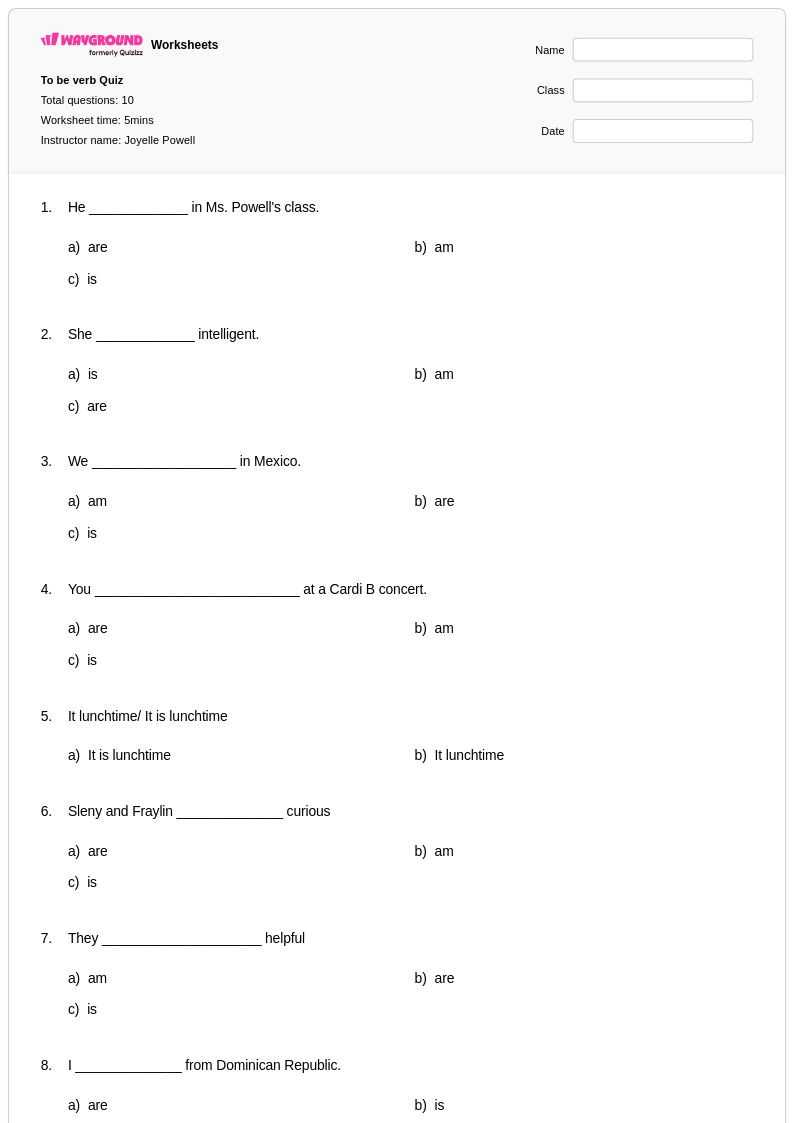
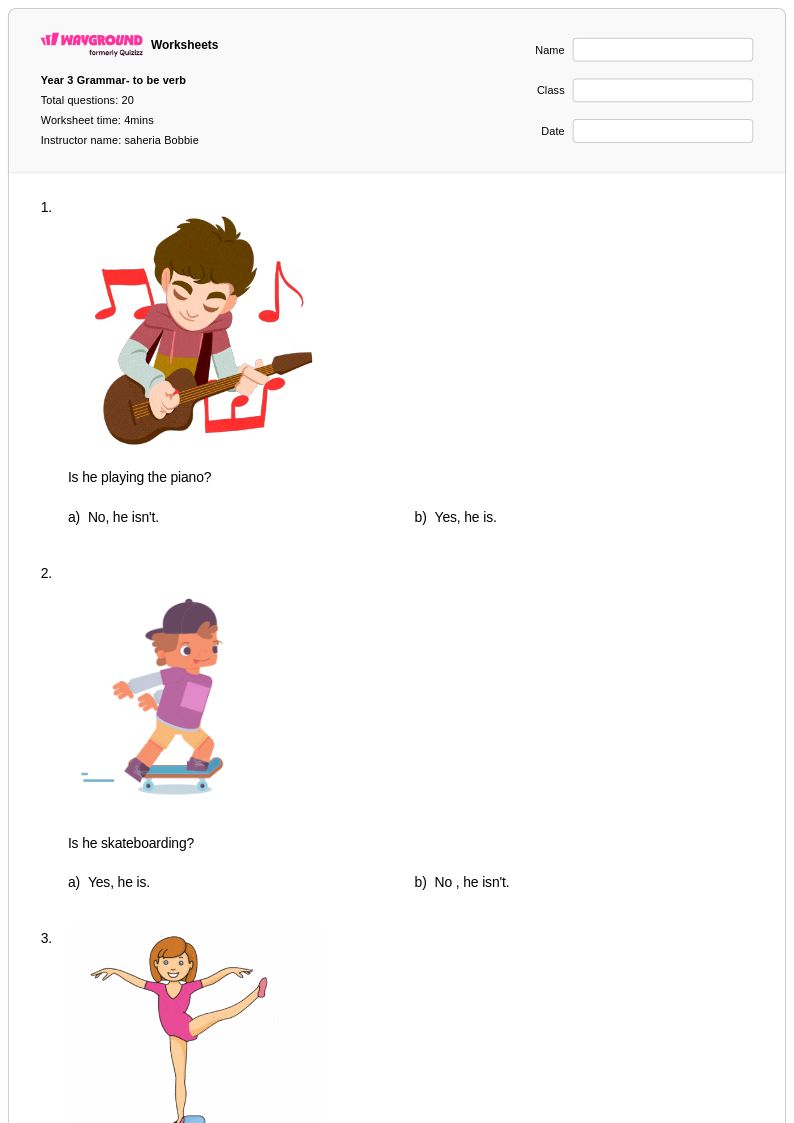
To be verb worksheets for kindergarten students through Wayground (formerly Quizizz) introduce young learners to one of the most fundamental building blocks of English grammar. These carefully crafted printables focus specifically on helping kindergarteners understand and use forms of the verb "to be" including "am," "is," and "are" through engaging, age-appropriate activities. The worksheets strengthen essential language skills by providing systematic practice with sentence completion, picture matching, and simple identification exercises that build confidence with basic verb usage. Each free resource includes comprehensive practice problems designed to reinforce proper subject-verb agreement patterns, while accompanying answer keys enable teachers and parents to provide immediate feedback and support during the learning process.
Wayground's extensive collection of millions of teacher-created resources provides educators with an unparalleled selection of to be verb materials specifically tailored for kindergarten instruction. The platform's robust search and filtering capabilities allow teachers to quickly locate worksheets that align with curriculum standards and match their students' developmental needs. These differentiation tools support effective lesson planning by offering multiple formats including printable pdf versions for traditional classroom use and digital options for interactive learning experiences. Teachers can easily customize materials for remediation with struggling learners or enrichment activities for advanced students, while the flexible format options ensure seamless integration into any kindergarten English curriculum focused on foundational grammar skill development.
FAQs
How do I teach the to be verb to students who are just starting out with English grammar?
Start by introducing the core forms (am, is, are) in the present tense before expanding to past forms (was, were) and more complex constructions like being and been. Use simple, familiar subjects so students can focus on the verb form rather than vocabulary. Anchor each form to a subject pronoun pattern (I am, you are, he/she/it is) and give students repeated exposure through sentence frames and fill-in-the-blank exercises before moving to open-ended writing tasks.
What exercises help students practice conjugating the to be verb correctly?
Fill-in-the-blank exercises are especially effective because they isolate the conjugation decision without requiring students to generate full sentences from scratch. Sentence-completion tasks, subject-verb matching activities, and error-correction exercises all build automaticity with forms like am, is, are, was, and were. Pairing these structured exercises with short writing prompts encourages students to apply correct forms in context, which deepens retention beyond rote practice.
What mistakes do students commonly make when using the to be verb?
The most frequent error is subject-verb agreement failure, particularly confusing is and are with plural or compound subjects (e.g., writing 'they is' instead of 'they are'). Students also commonly conflate past and present forms, using was where were is required or vice versa. For English language learners, omitting the to be verb entirely is another persistent pattern, since several languages do not use an equivalent linking verb in the same constructions.
How do I differentiate to be verb practice for students at different ability levels?
For struggling students, focus on the three present-tense forms (am, is, are) with visual anchor charts and sentence frames before introducing past tense. Advanced learners can work with passive voice constructions and progressive tenses that rely heavily on forms of to be. On Wayground, teachers can apply accommodations such as reduced answer choices and read-aloud support to individual students, so a single worksheet session can serve the whole class while still meeting diverse learner needs.
How do I use Wayground's to be verb worksheets in my classroom?
Wayground's to be verb worksheets are available as printable PDFs for traditional classroom use and in digital formats for technology-integrated learning environments, giving teachers flexibility based on their setup. Teachers can also host worksheets as a quiz directly on Wayground, enabling real-time student responses and built-in answer key support. The search and filtering system makes it straightforward to find worksheets aligned to a specific tense, skill level, or learning objective, so preparation time stays low.
How do I assess whether students have mastered the to be verb before moving on?
Look for consistent, unprompted correct usage across present and past tense forms in both structured exercises and short writing samples. A reliable checkpoint is an error-correction task where students identify and fix incorrect verb forms in context, which reveals whether understanding is surface-level or genuinely internalized. Students who still conflate was and were or default to is with plural subjects need additional targeted practice before moving to more complex verb forms or tenses.