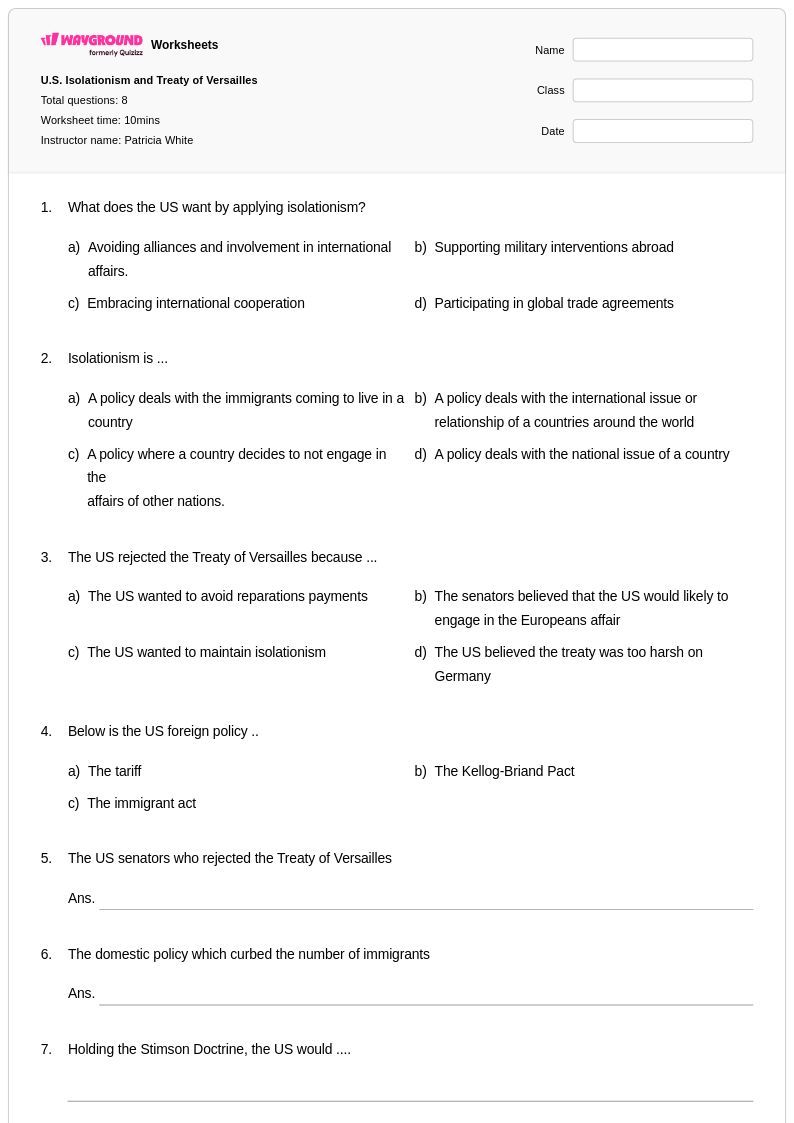
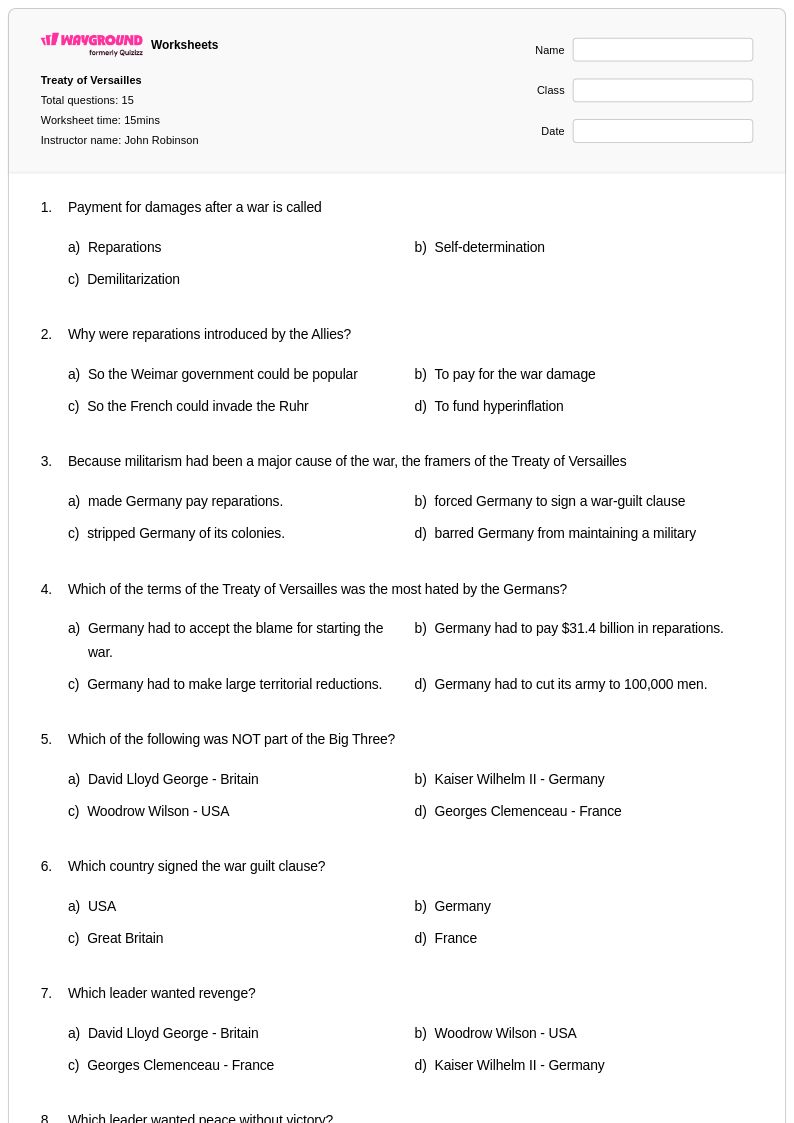
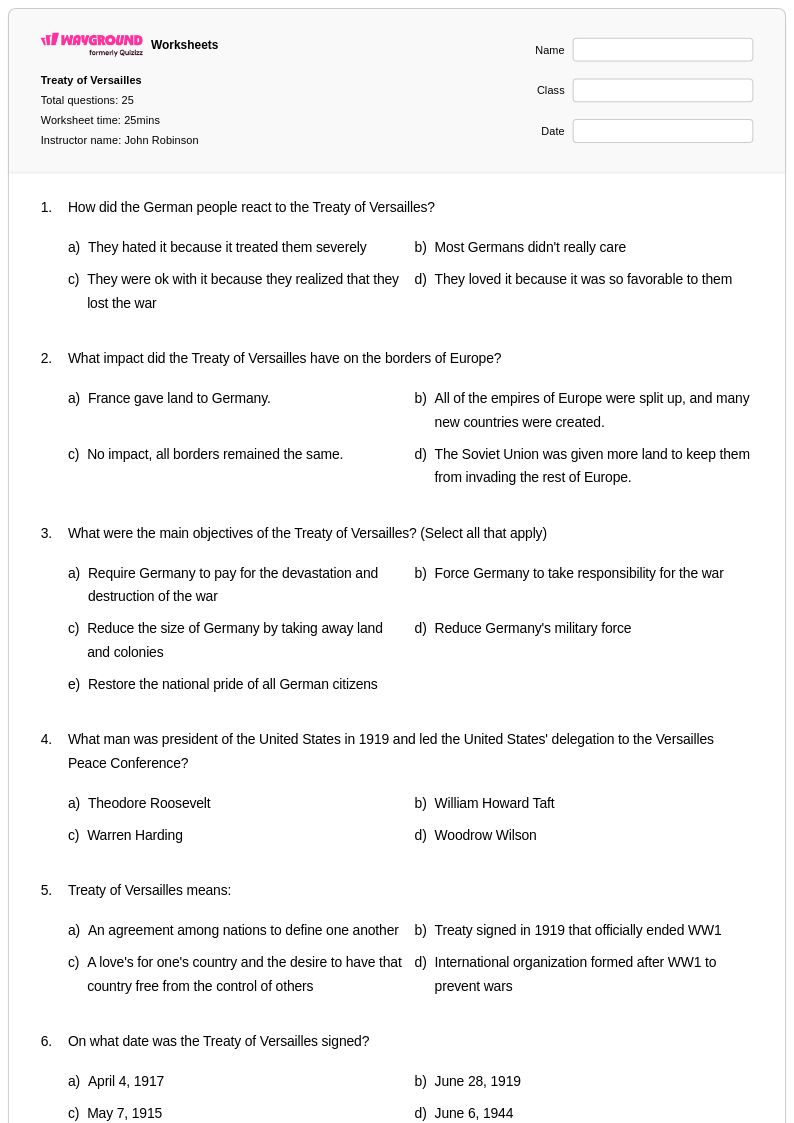
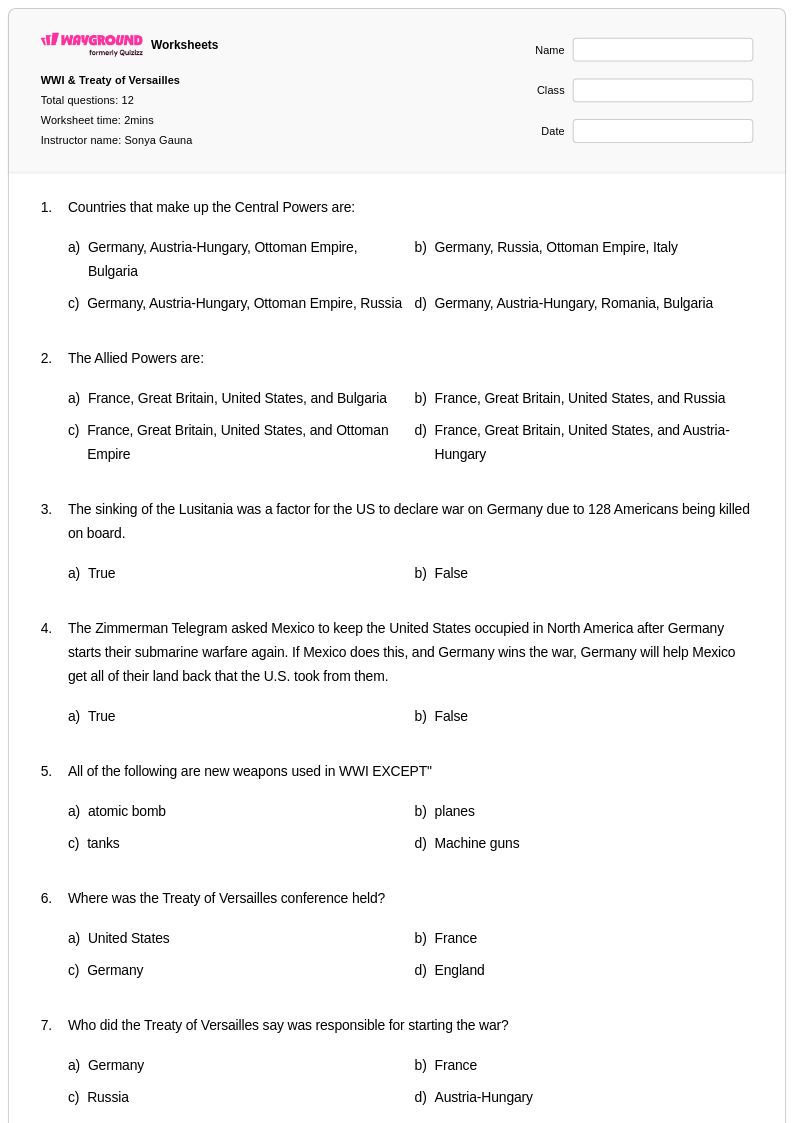
Free Printable Treaty of Versailles Worksheets for Class 11
Explore Class 11 Treaty of Versailles worksheets and printables that help students analyze the peace settlement's terms, consequences, and lasting impact on post-WWI Europe through engaging practice problems with answer keys.
Explore printable Treaty of Versailles worksheets for Class 11
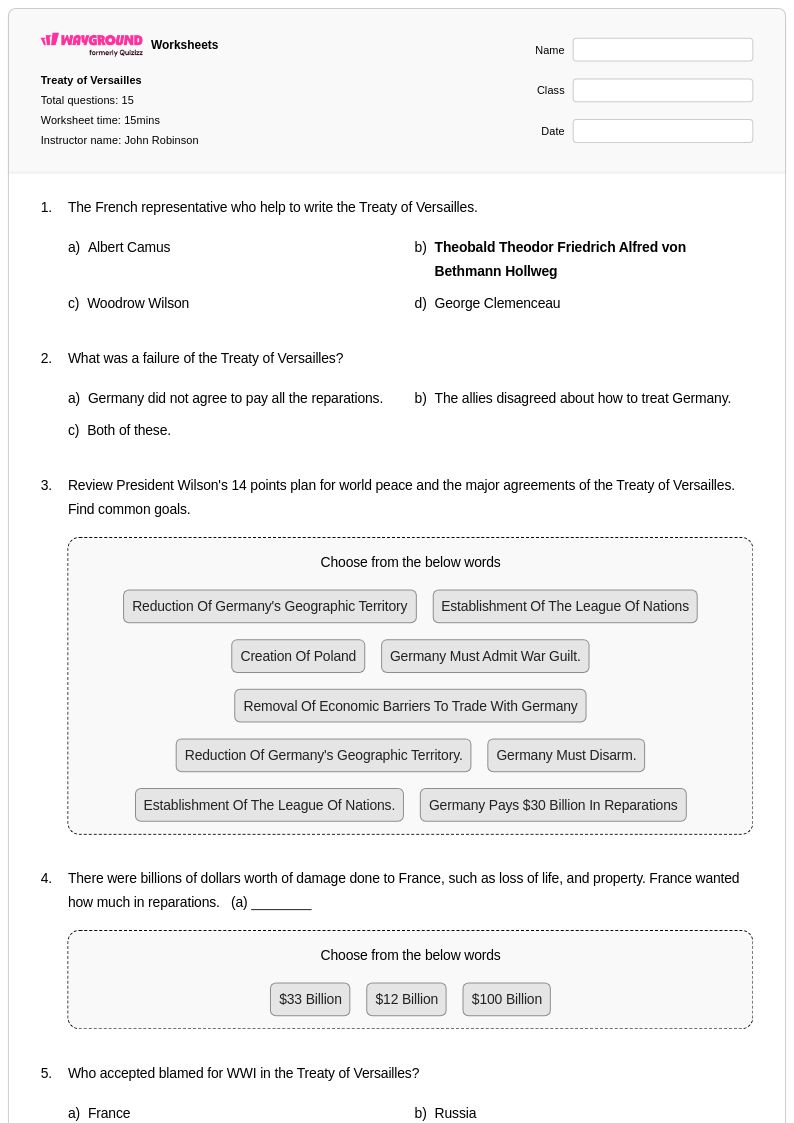
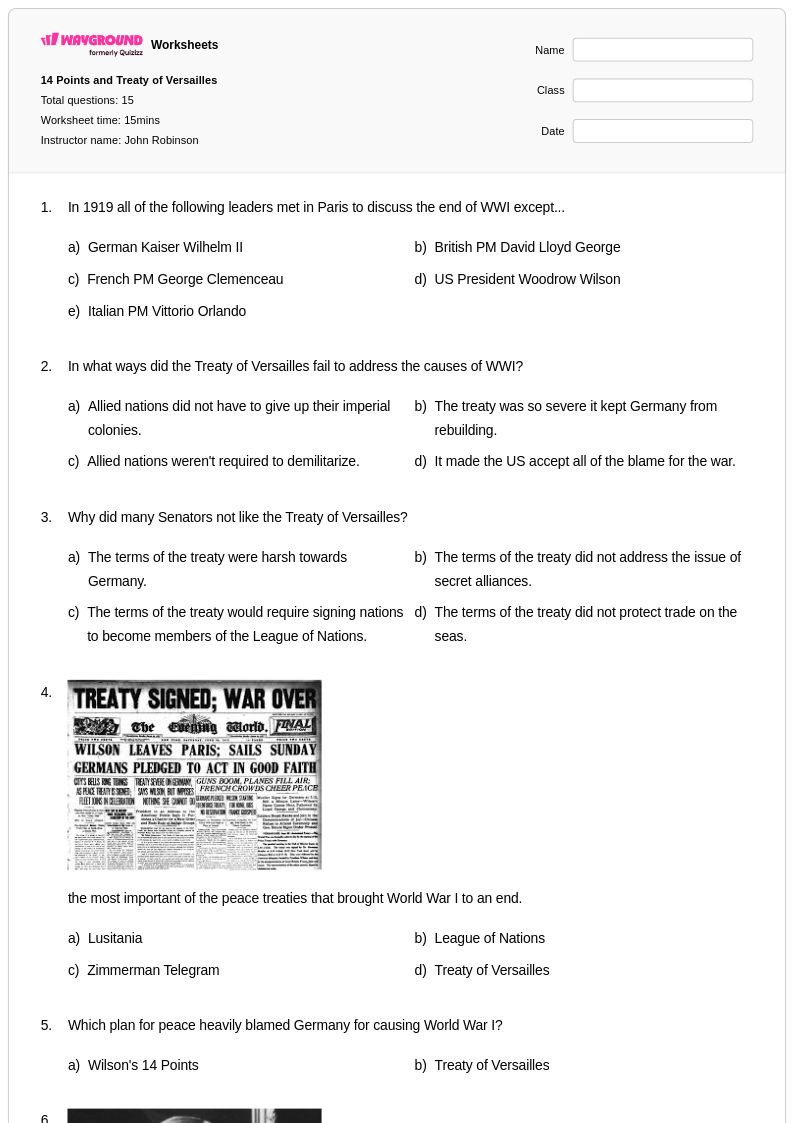
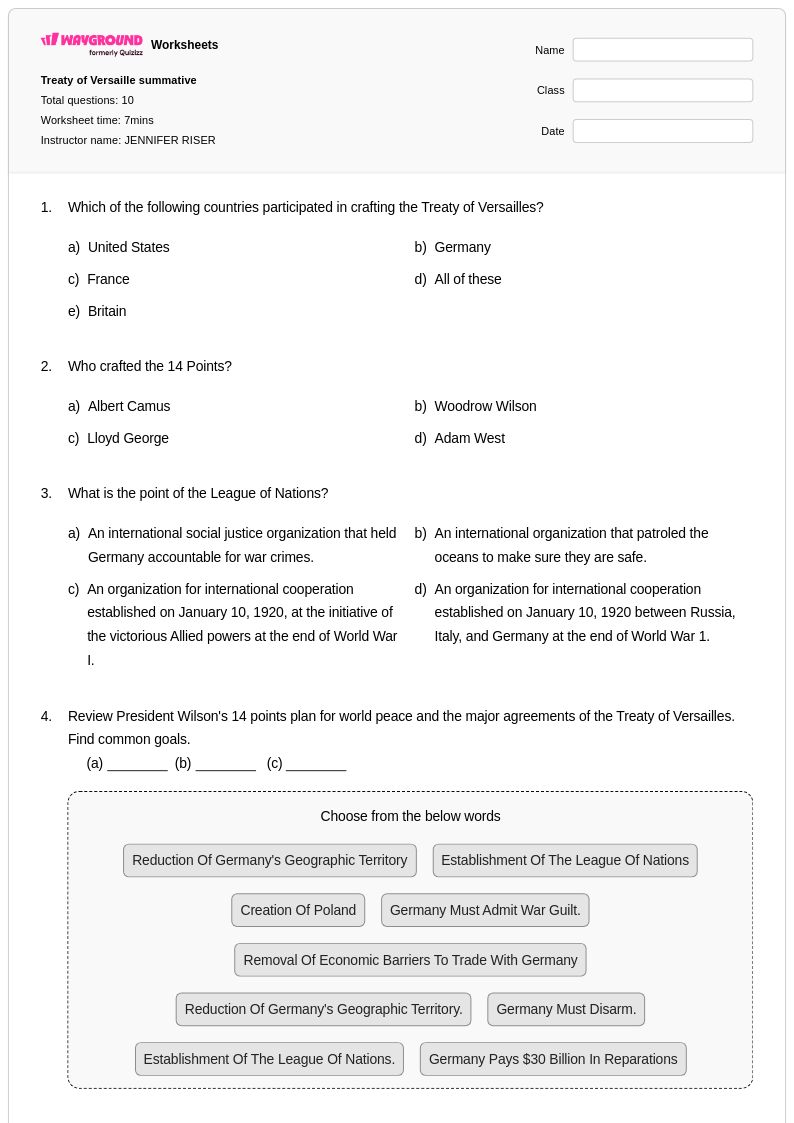
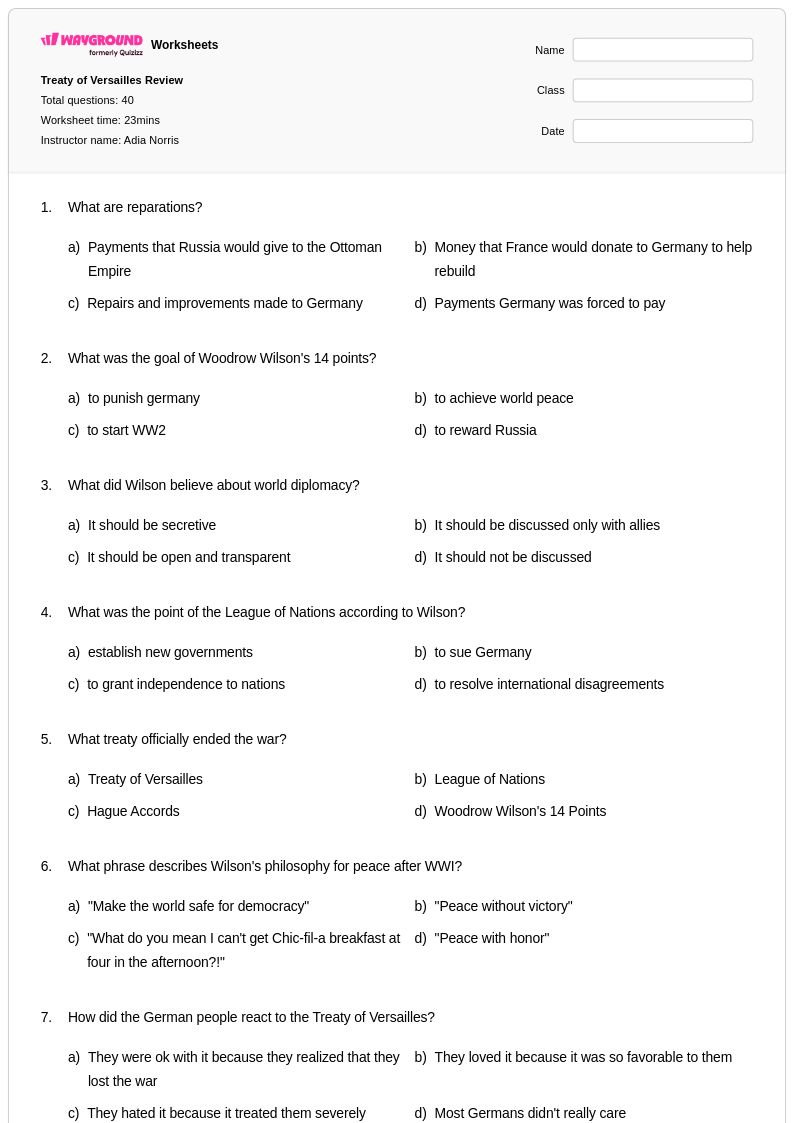
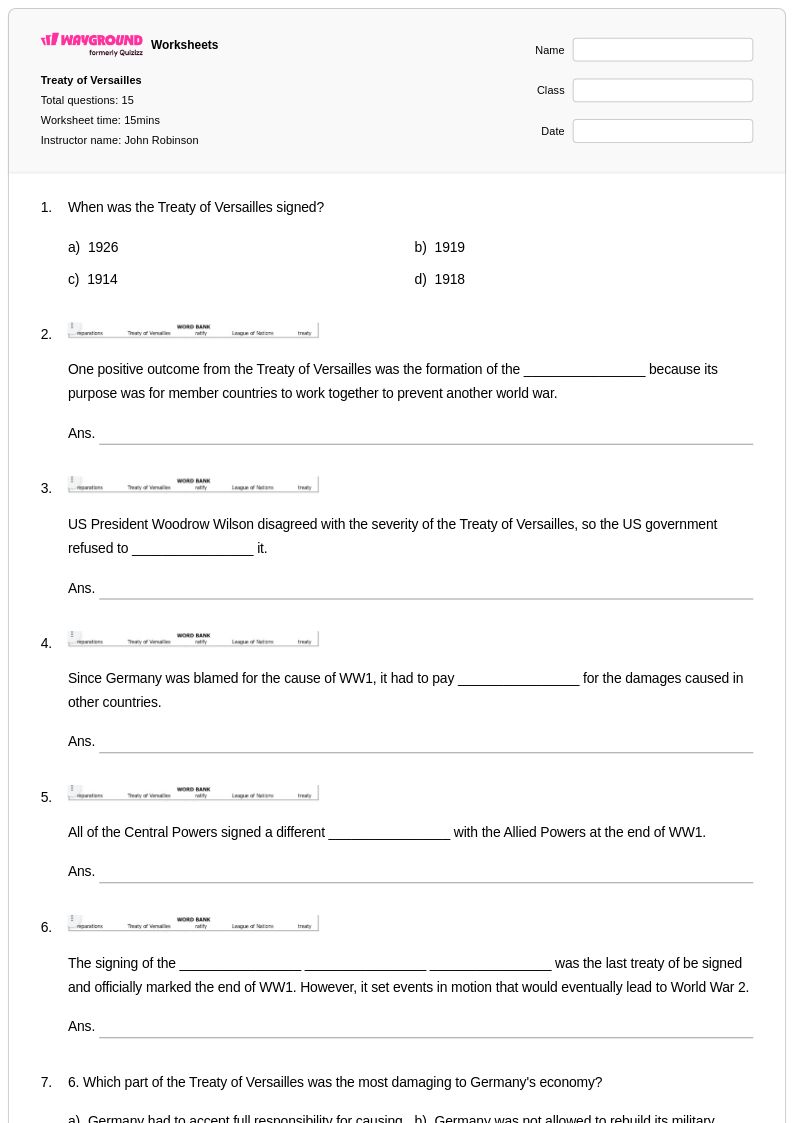
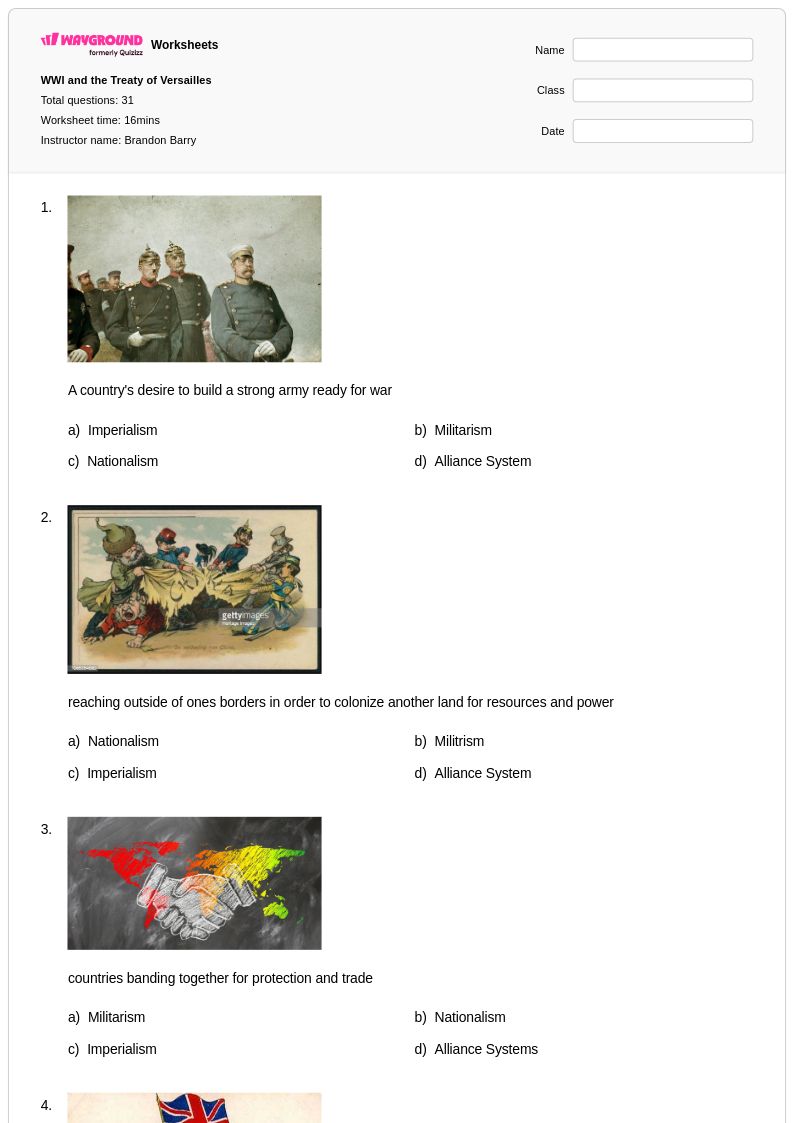
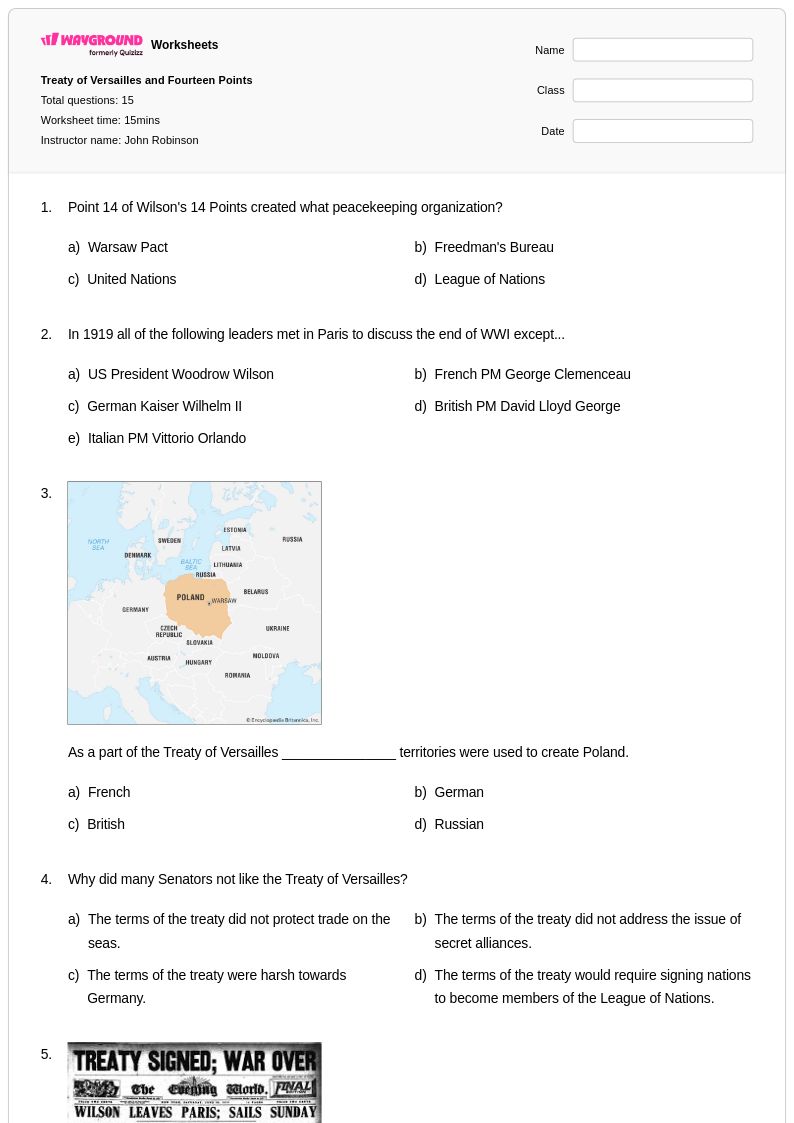
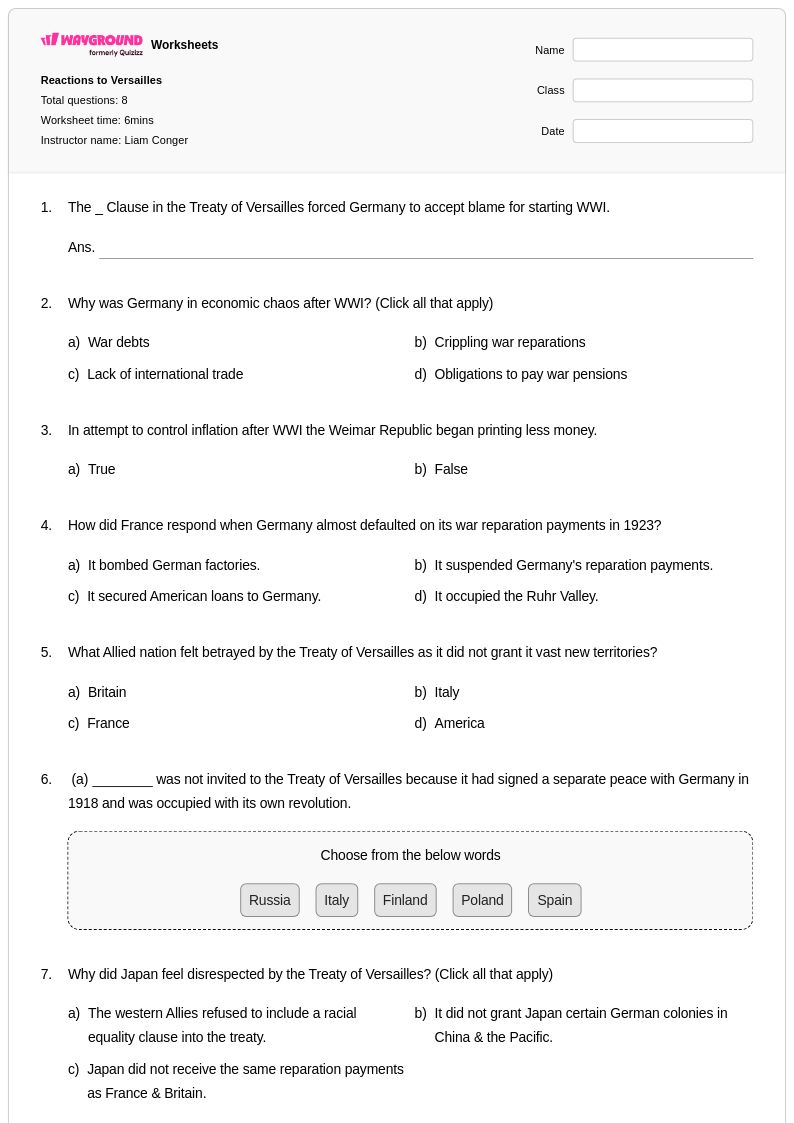
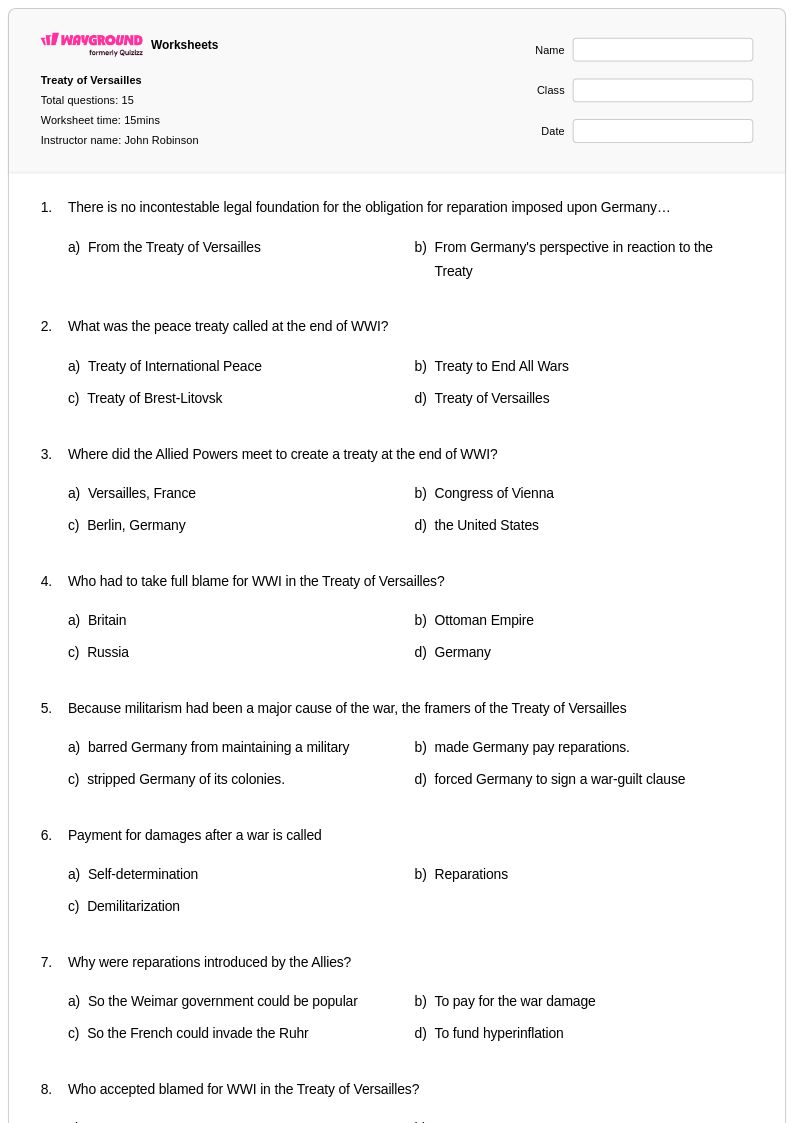
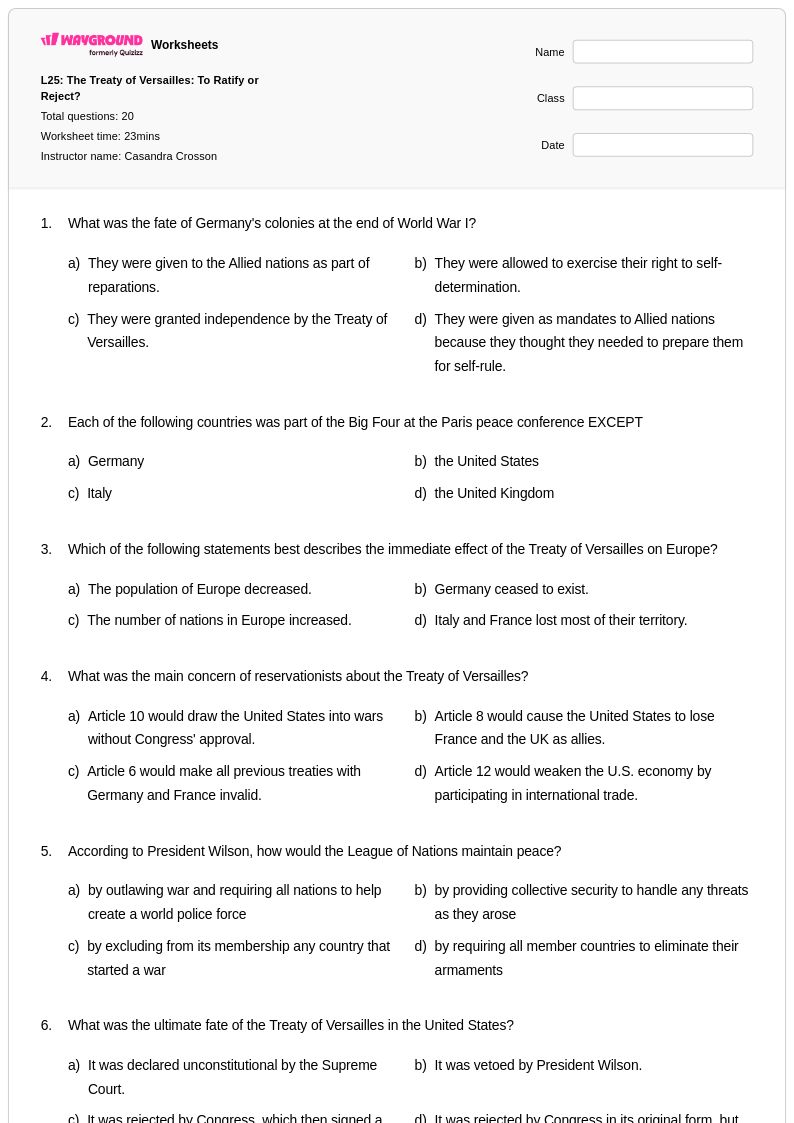
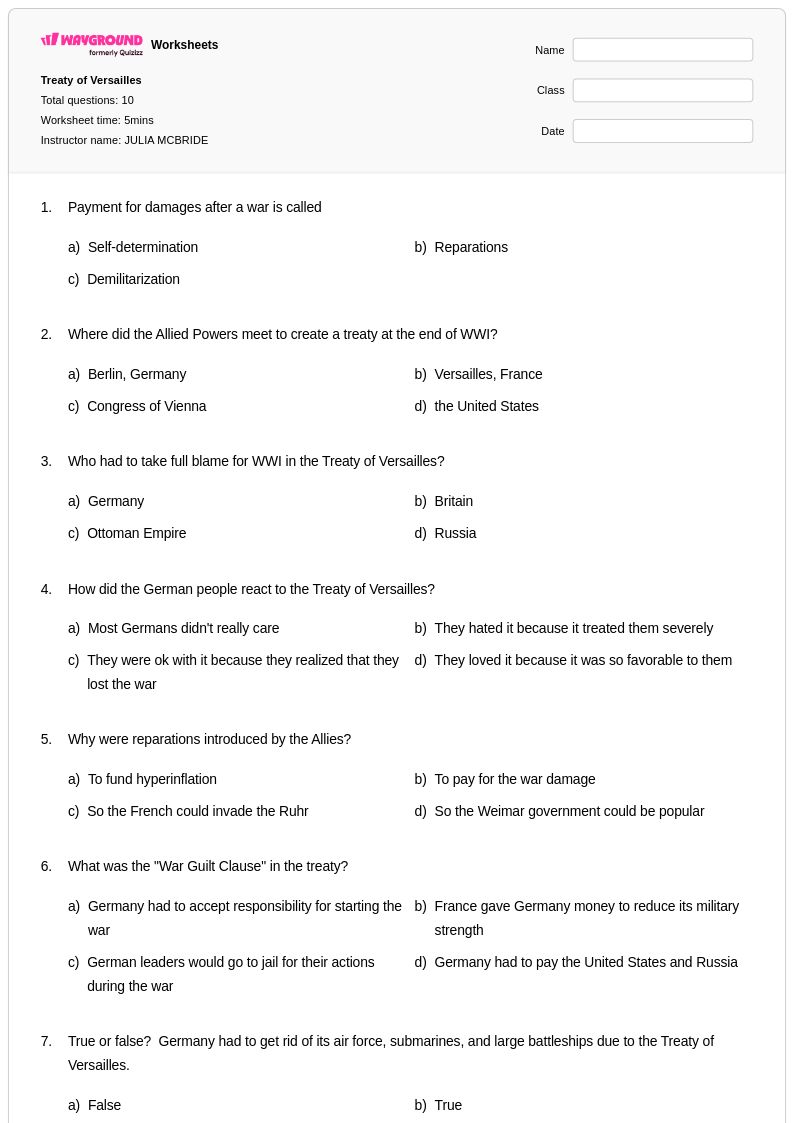
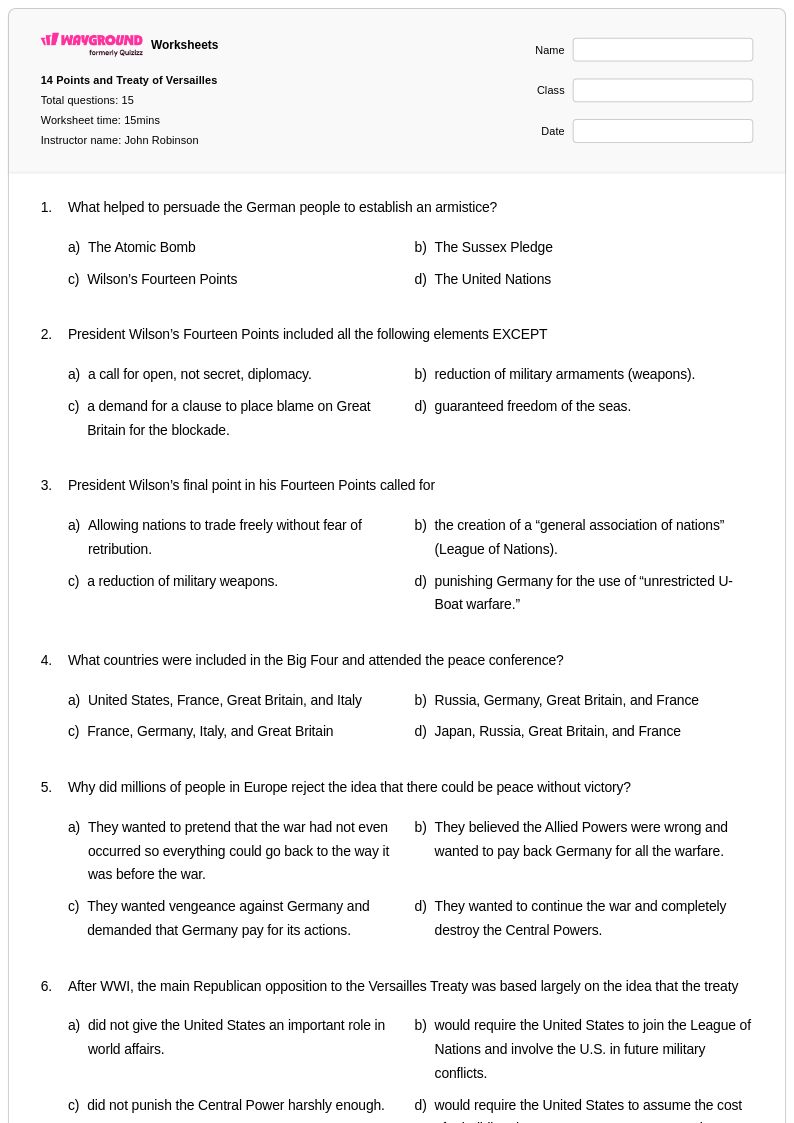
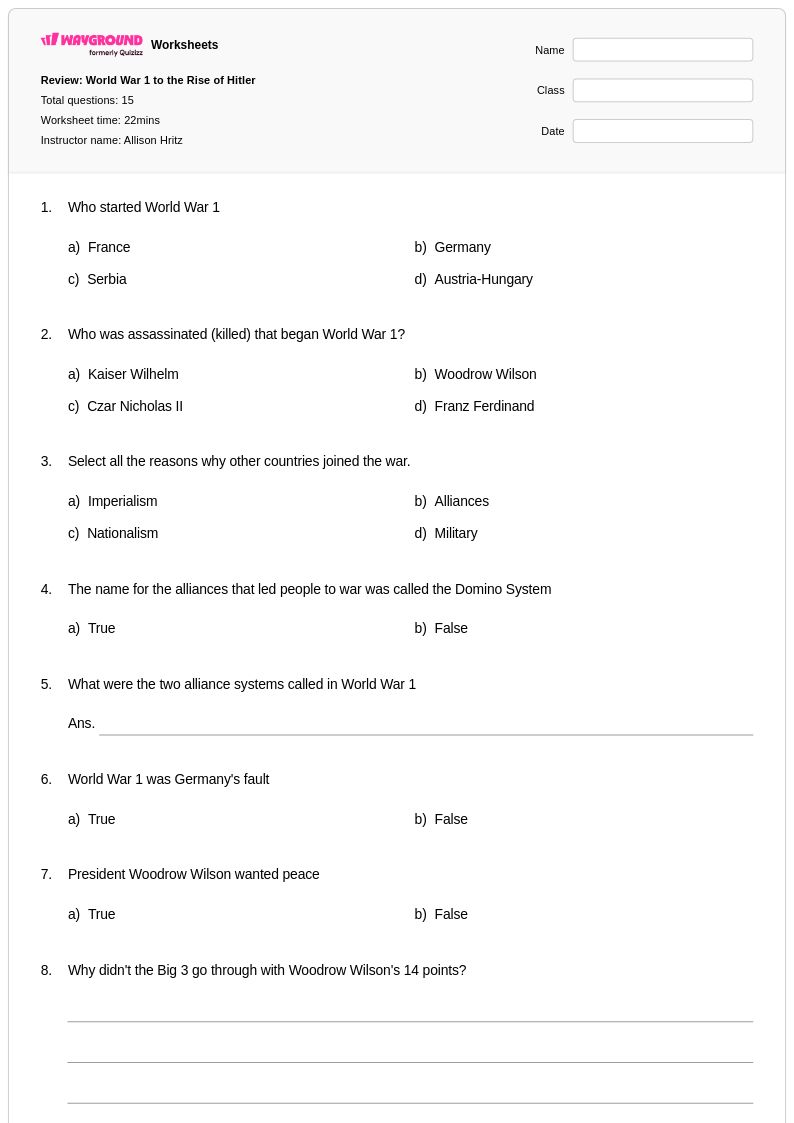
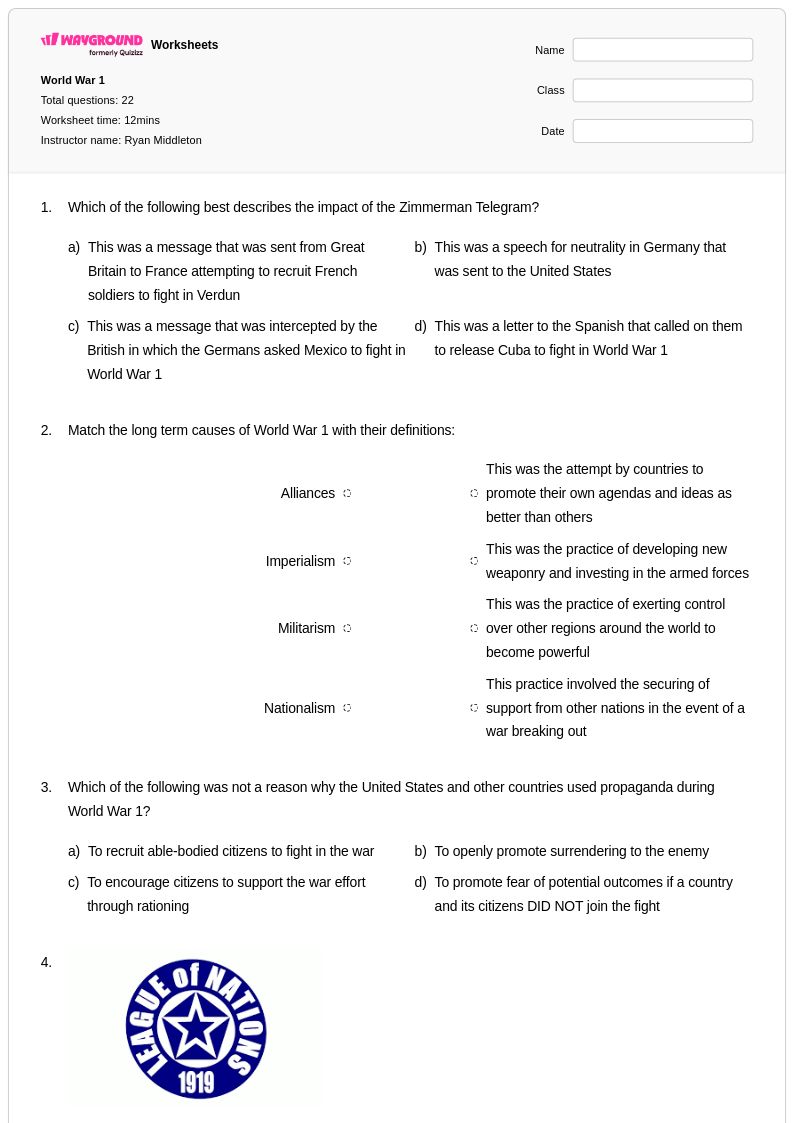
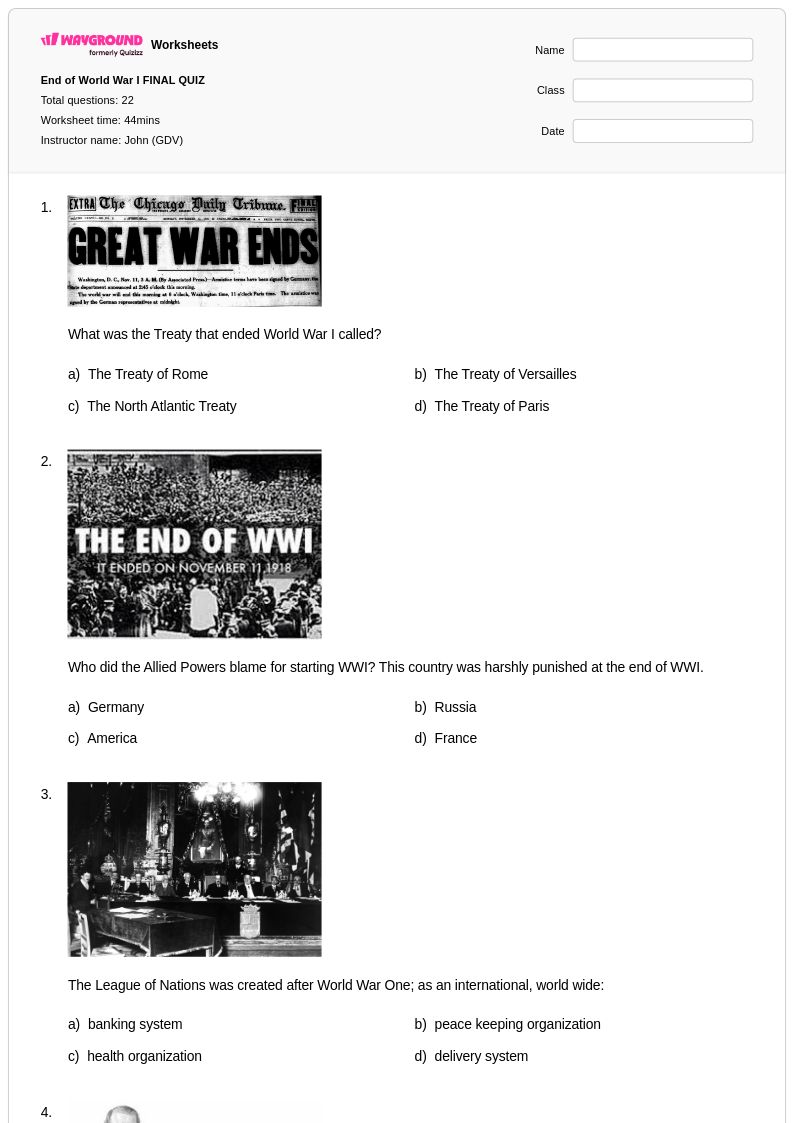
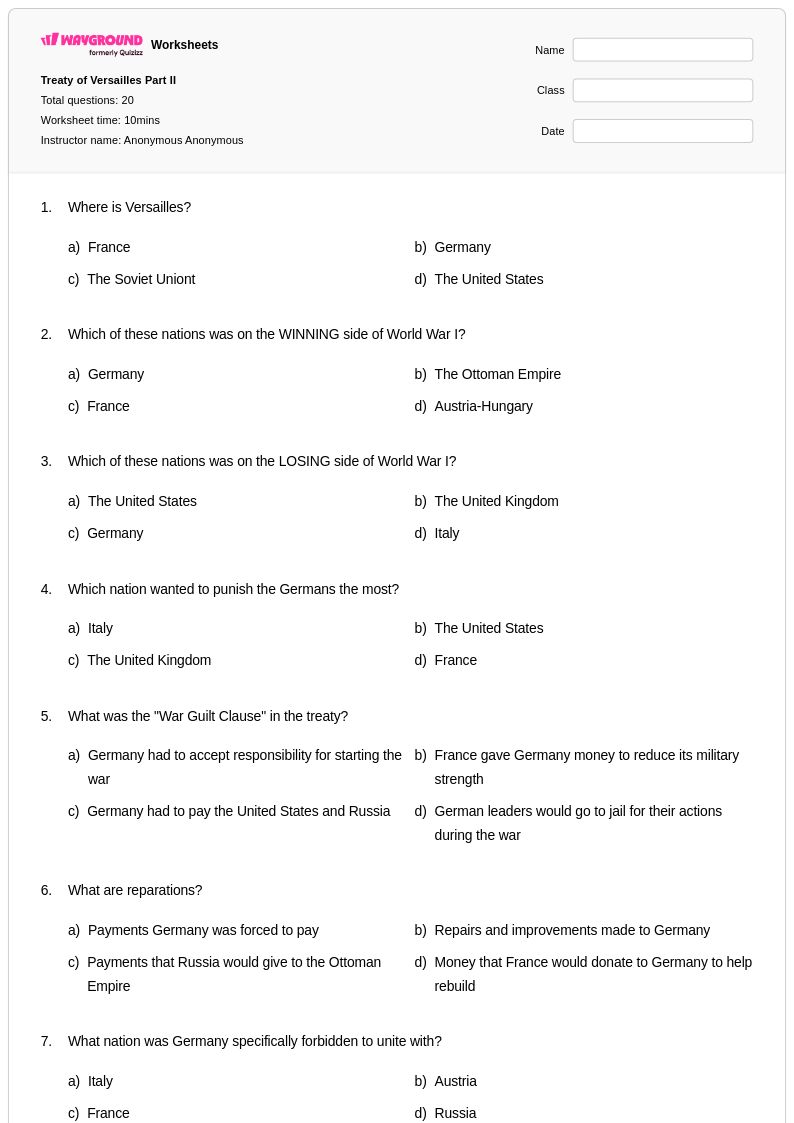
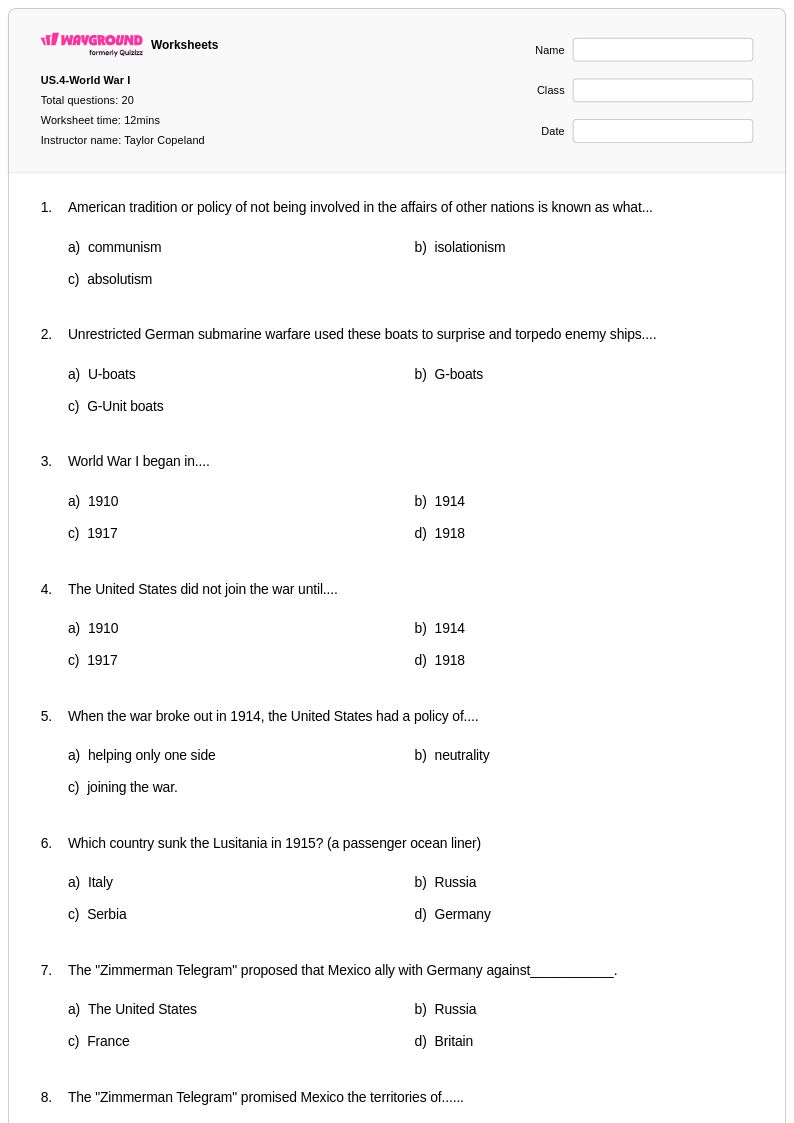
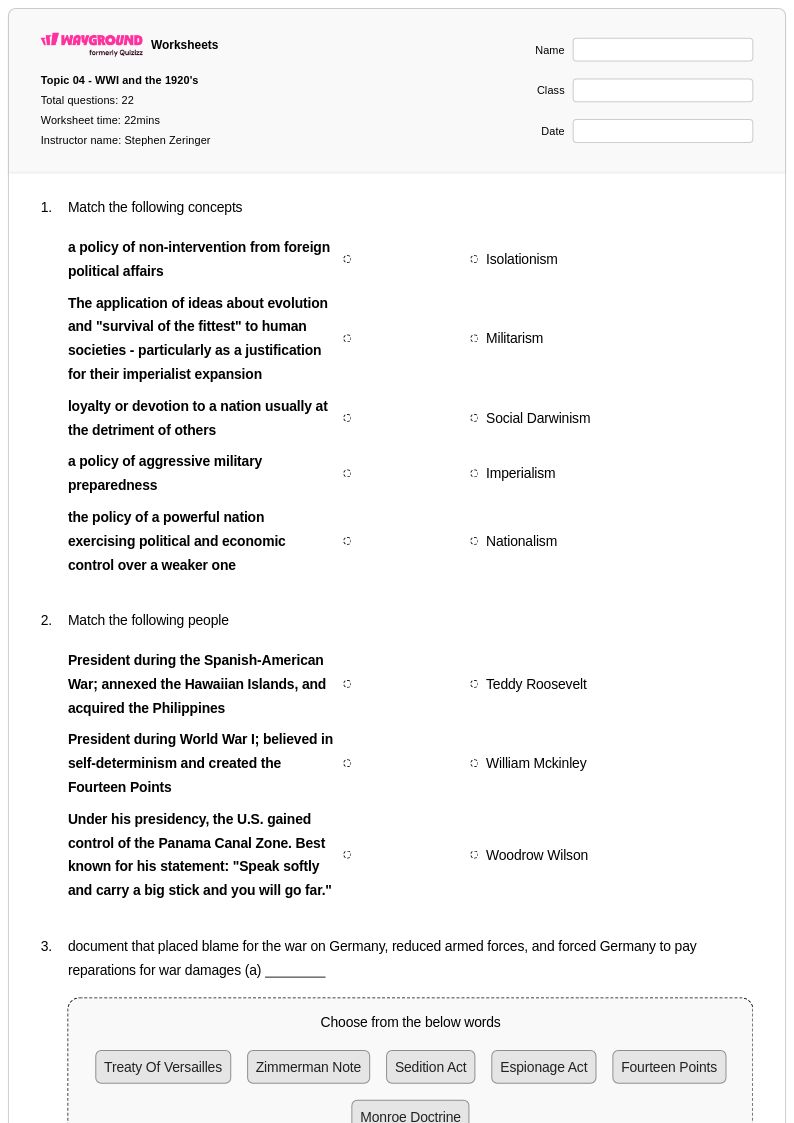
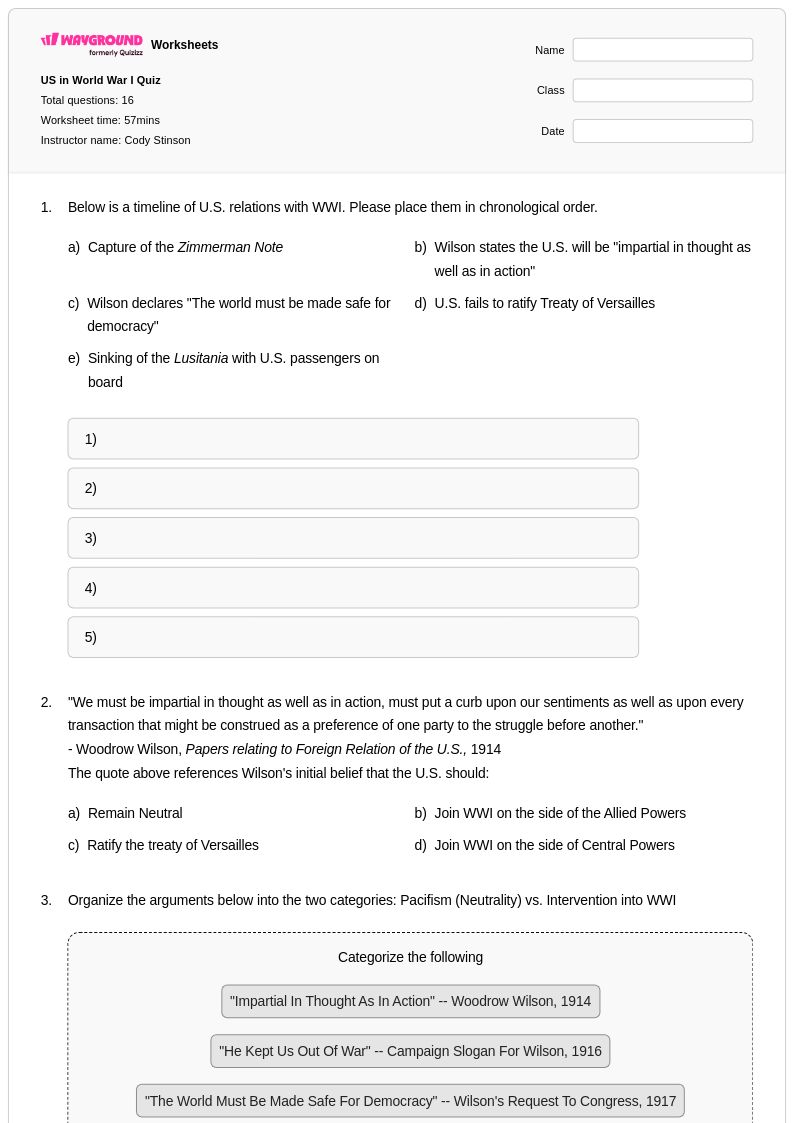
Class 11 students exploring the Treaty of Versailles can access comprehensive worksheet collections through Wayground that examine this pivotal document's complex terms, consequences, and lasting impact on European politics. These expertly crafted worksheets strengthen critical analysis skills by guiding students through primary source excerpts, territorial changes, war guilt clauses, and reparations requirements that shaped post-World War I diplomacy. Students engage with practice problems that challenge them to evaluate competing perspectives on the treaty's fairness, analyze maps showing territorial redistributions, and assess how these provisions contributed to future conflicts. Each worksheet includes detailed answer keys to support independent learning, while printable PDF formats ensure accessibility for both classroom instruction and homework assignments, making these free educational resources invaluable for understanding one of history's most consequential peace settlements.
Wayground's extensive collection draws from millions of teacher-created resources specifically designed to support Class 11 World History instruction on the Treaty of Versailles and related diplomatic developments. The platform's advanced search and filtering capabilities enable educators to locate worksheets aligned with specific learning standards while differentiation tools allow customization based on individual student needs and reading levels. Teachers can seamlessly integrate these materials into lesson planning, utilizing both digital and printable formats to accommodate diverse classroom environments and learning preferences. Whether implementing targeted remediation for students struggling with complex political concepts or providing enrichment opportunities for advanced learners, these flexible worksheet collections support comprehensive skill practice in historical analysis, critical thinking, and document interpretation essential for mastering this transformative period in world history.
FAQs
How do I teach the Treaty of Versailles in a history class?
Teaching the Treaty of Versailles effectively means grounding students in the post-WWI context before introducing the treaty's specific terms. Start with the war guilt clause (Article 231), then move through the territorial losses, military restrictions, and reparations imposed on Germany. Primary source analysis — including excerpts from the treaty itself and reactions from German and Allied leaders — helps students evaluate competing perspectives rather than simply memorizing provisions. Connecting the treaty's harsh terms to the rise of nationalist resentment in the 1920s and 1930s gives students a causal framework for understanding the origins of World War II.
What are the most important concepts students need to understand about the Treaty of Versailles?
Students should understand five core elements: the war guilt clause forcing Germany to accept sole responsibility for WWI, the reparations requirement (initially set at 132 billion gold marks), significant territorial losses including the Rhineland and Alsace-Lorraine, severe military restrictions limiting Germany's armed forces, and the creation of new nations from the dissolved Austro-Hungarian and Ottoman empires. Understanding how these provisions interacted — particularly how reparations combined with territorial and military restrictions destabilized the Weimar Republic — is essential for analyzing the interwar period.
What exercises help students practice analyzing the Treaty of Versailles?
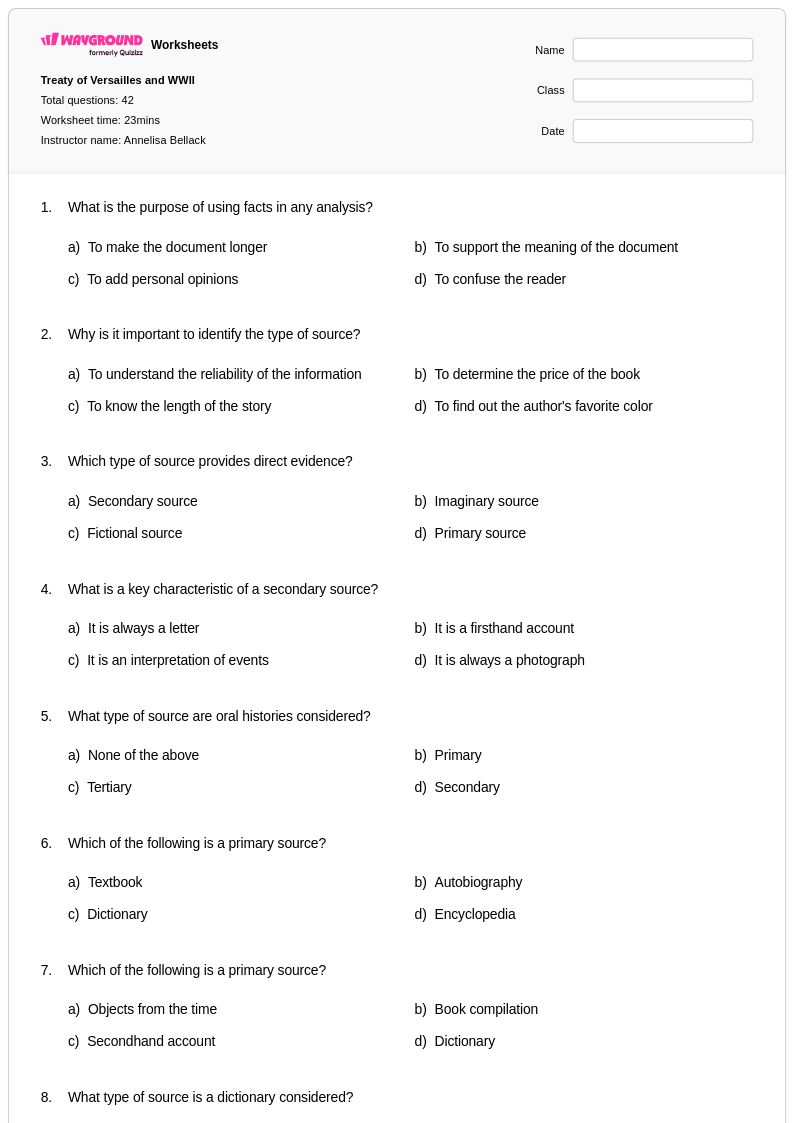
Primary source annotation exercises, where students read and mark up actual treaty excerpts, build the document analysis skills central to history coursework. Cause-and-effect mapping that links specific treaty terms to later events — such as German hyperinflation, the rise of the Nazi Party, or the failure of the League of Nations — deepens analytical thinking. Structured debate activities asking students to argue from the perspective of French, British, American, or German delegates reinforce understanding of why the treaty was both demanded and resented.
What mistakes do students commonly make when learning about the Treaty of Versailles?
The most common misconception is treating the Treaty of Versailles as the single cause of World War II rather than one contributing factor within a broader political and economic context. Students also frequently confuse the League of Nations provision — proposed by Woodrow Wilson but rejected by the U.S. Senate — with U.S. withdrawal from the treaty itself. Another recurring error is overstating German military restrictions without recognizing how quickly they were circumvented under the Weimar Republic and later violated openly under Hitler. Helping students distinguish between correlation and causation is critical when analyzing this treaty's legacy.
How can I use Treaty of Versailles worksheets in my classroom?
Treaty of Versailles worksheets on Wayground are available as printable PDFs for traditional classroom use and in digital formats for technology-integrated environments, making them adaptable for in-person, hybrid, or remote instruction. Teachers can assign digital versions directly to students or host them as a quiz on Wayground for built-in response tracking. Printable versions work well for close-reading annotation, group analysis, or document-based question practice. Both formats include answer keys, so teachers can use these materials for guided instruction, independent practice, or formative assessment within a broader WWI or interwar period unit.
How does the Treaty of Versailles connect to the causes of World War II?
Historians widely regard the Treaty of Versailles as a significant contributing factor to WWII because its punitive terms created lasting economic hardship and political humiliation in Germany without fully dismantling its capacity to rebuild militarily. The reparations burden accelerated the hyperinflation crisis of the early 1920s and the Great Depression's impact on Germany, creating conditions that extremist movements exploited. Adolf Hitler's early political platform explicitly rejected the treaty's legitimacy, and its territorial provisions — particularly the Polish Corridor separating East Prussia from Germany — became direct pretexts for German aggression in 1939. Teaching this connection helps students understand how peace agreements can generate the instability they are designed to prevent.