Free Printable Tuskegee Airmen Worksheets for Class 8
Explore Wayground's comprehensive collection of Class 8 Tuskegee Airmen worksheets and printables that help students learn about these pioneering African American pilots through engaging practice problems, free PDF resources, and detailed answer keys.
Explore printable Tuskegee Airmen worksheets for Class 8
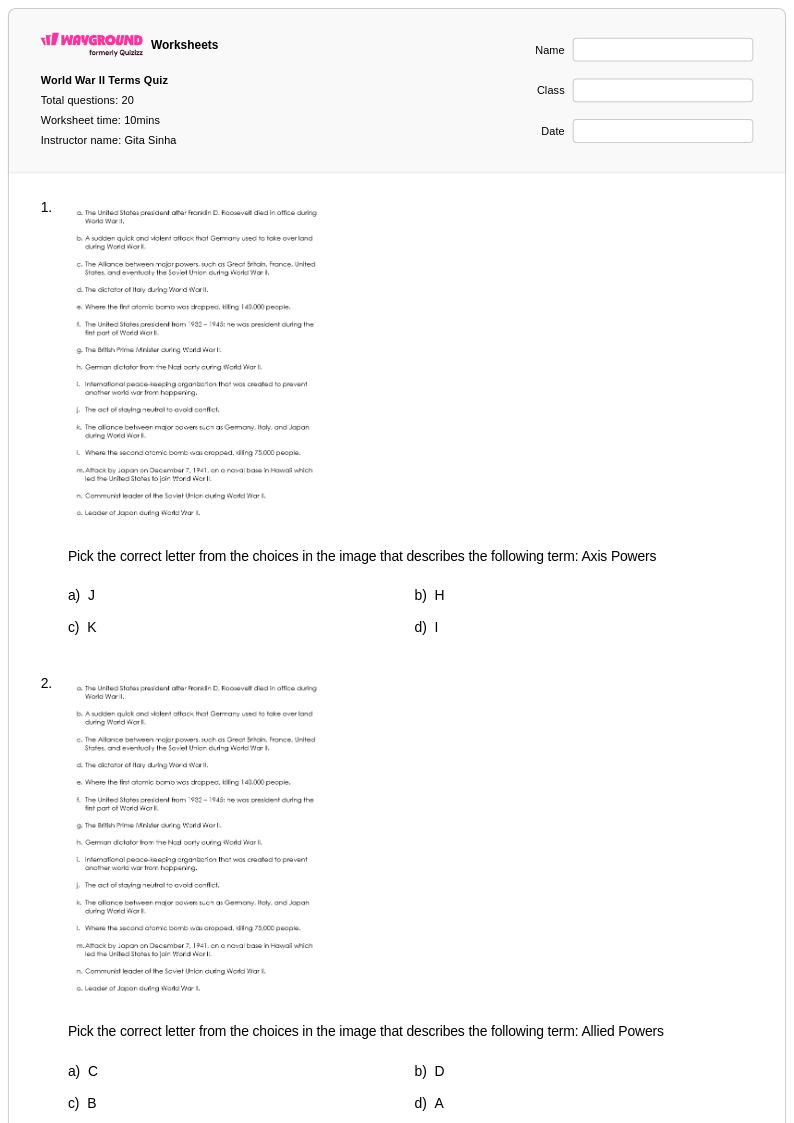
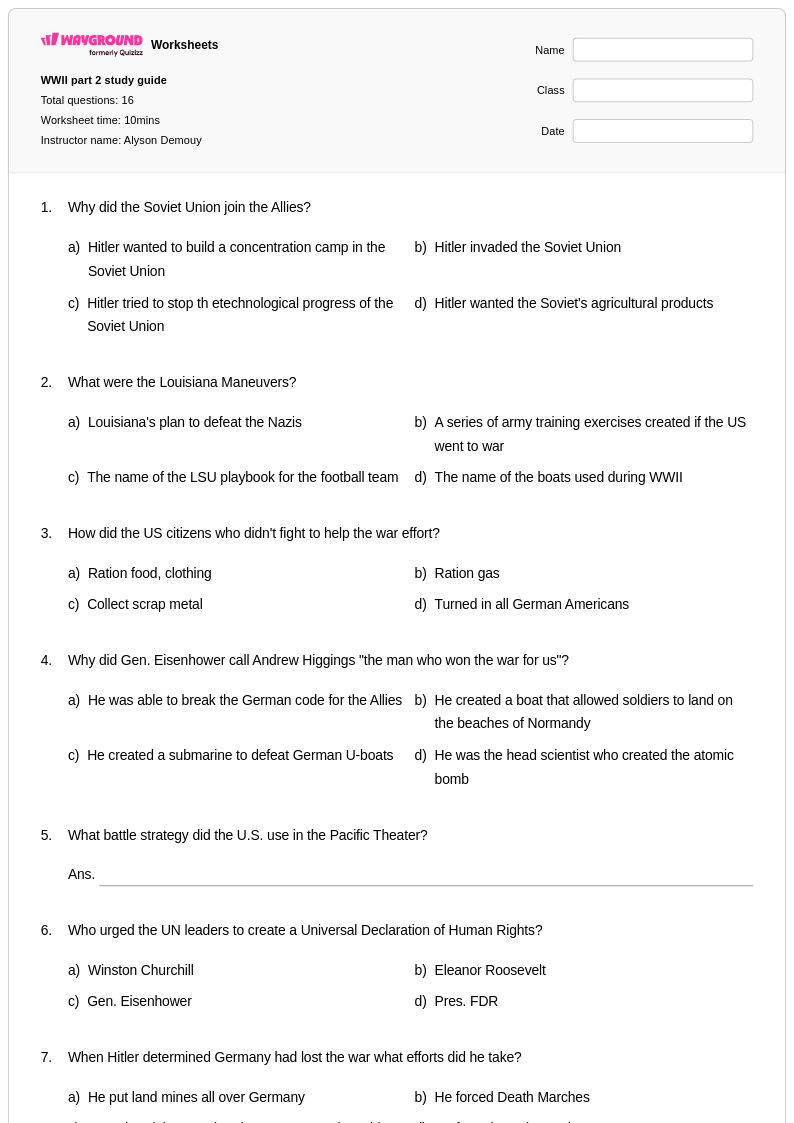
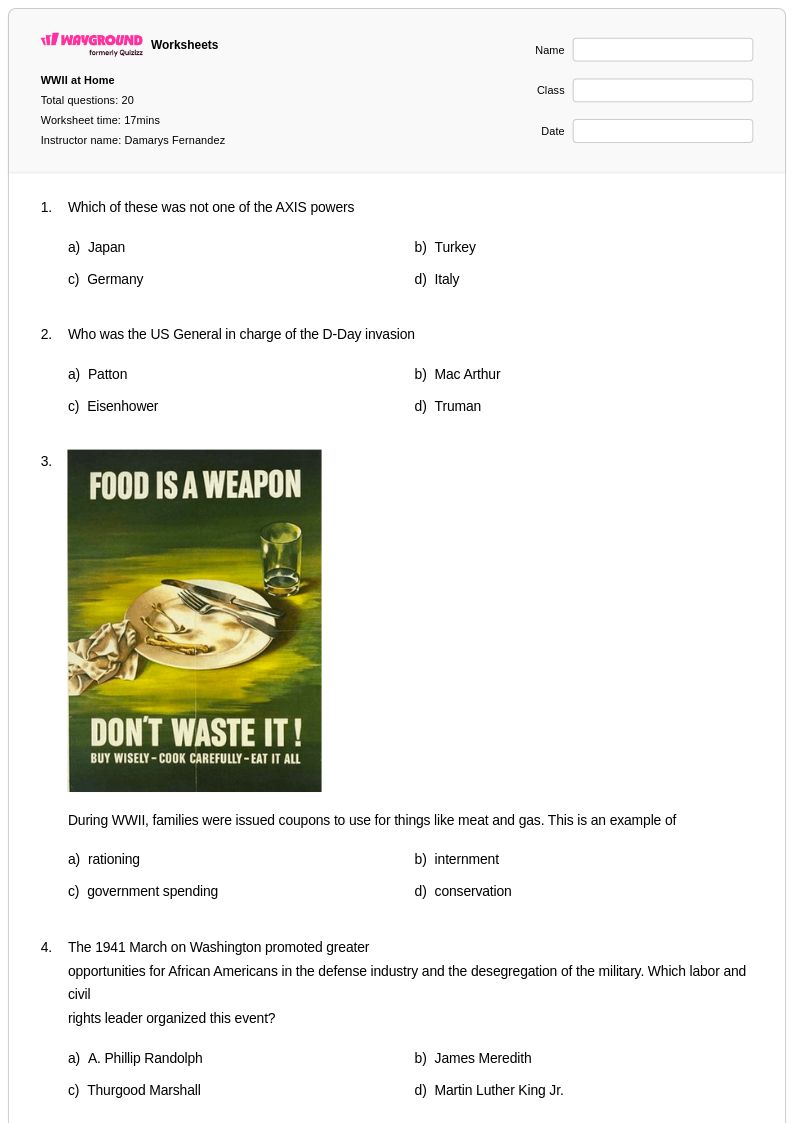
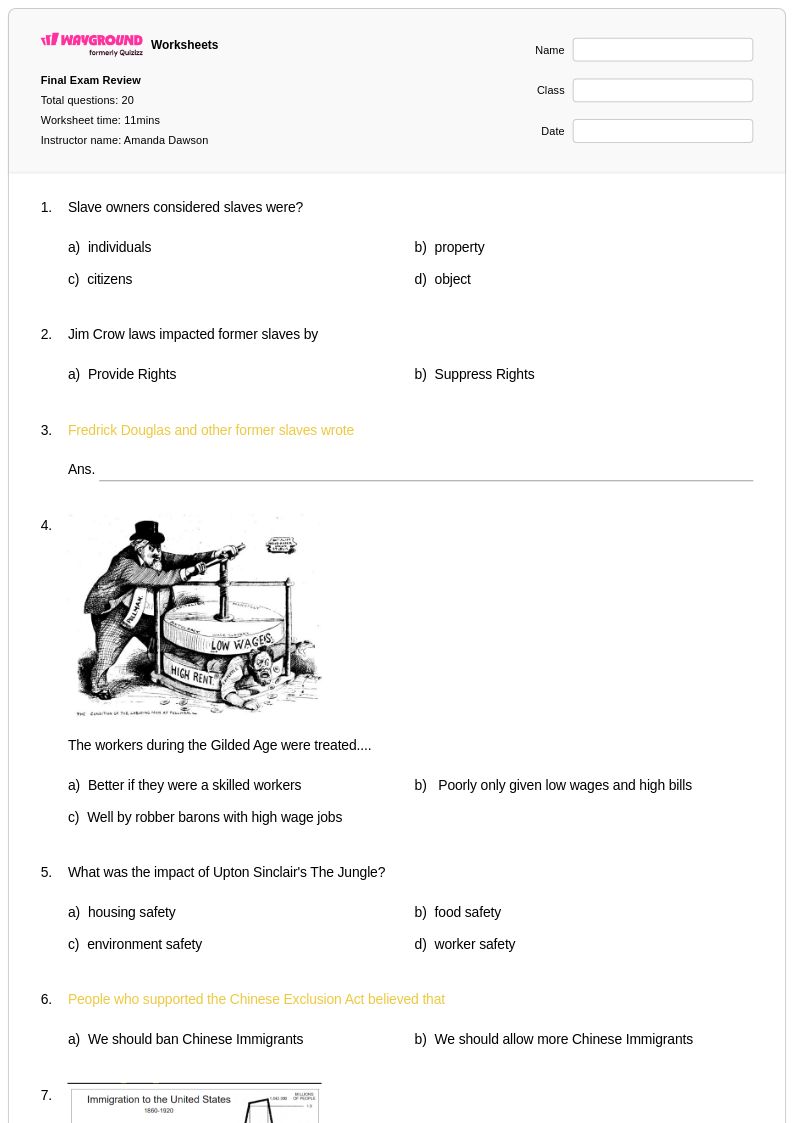
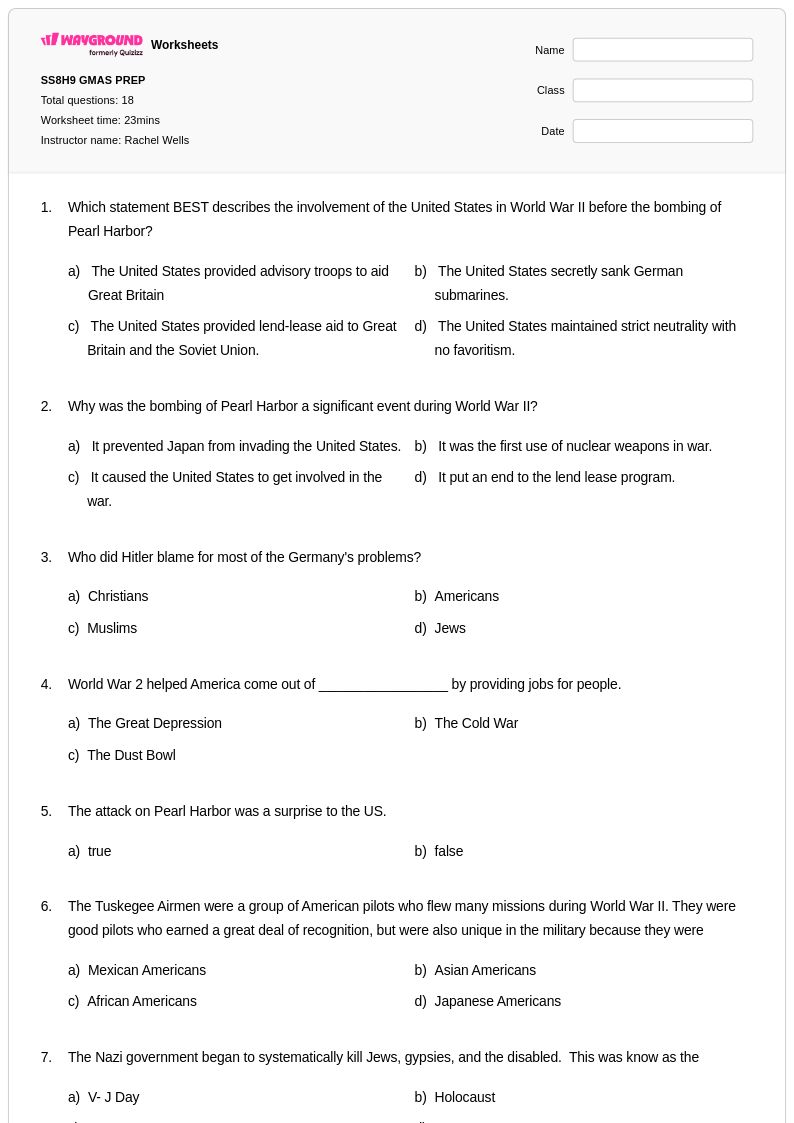
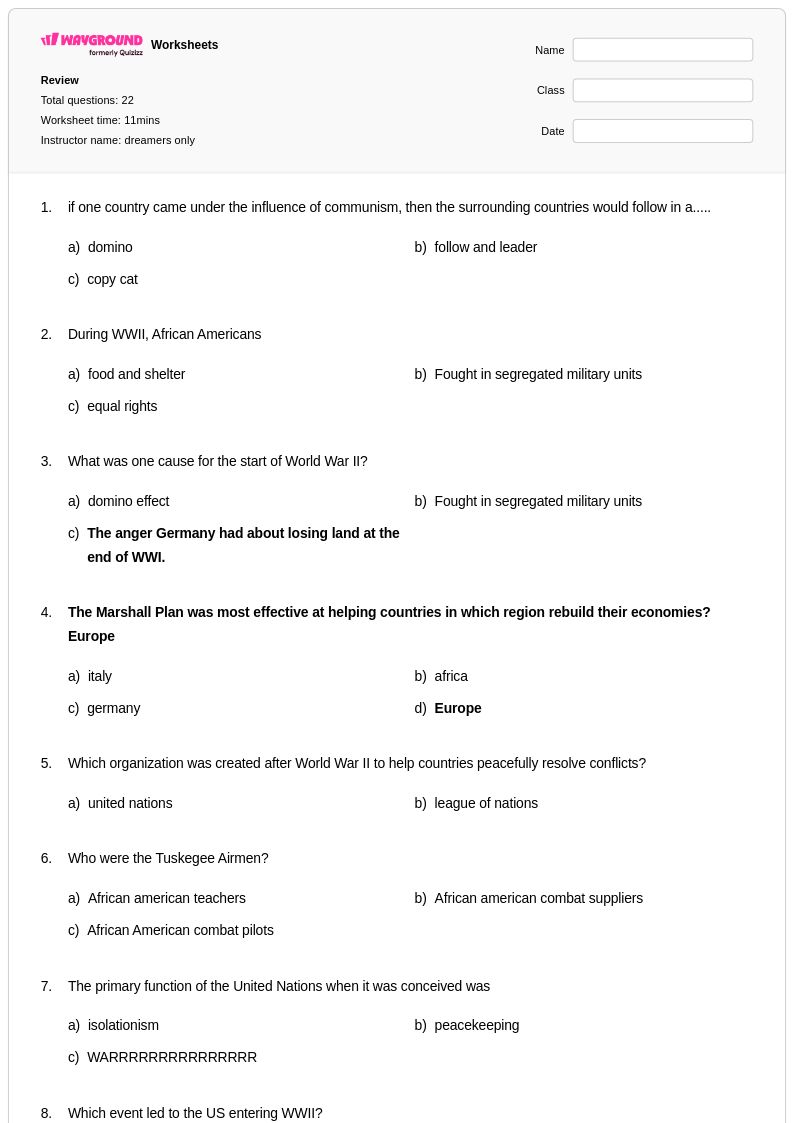
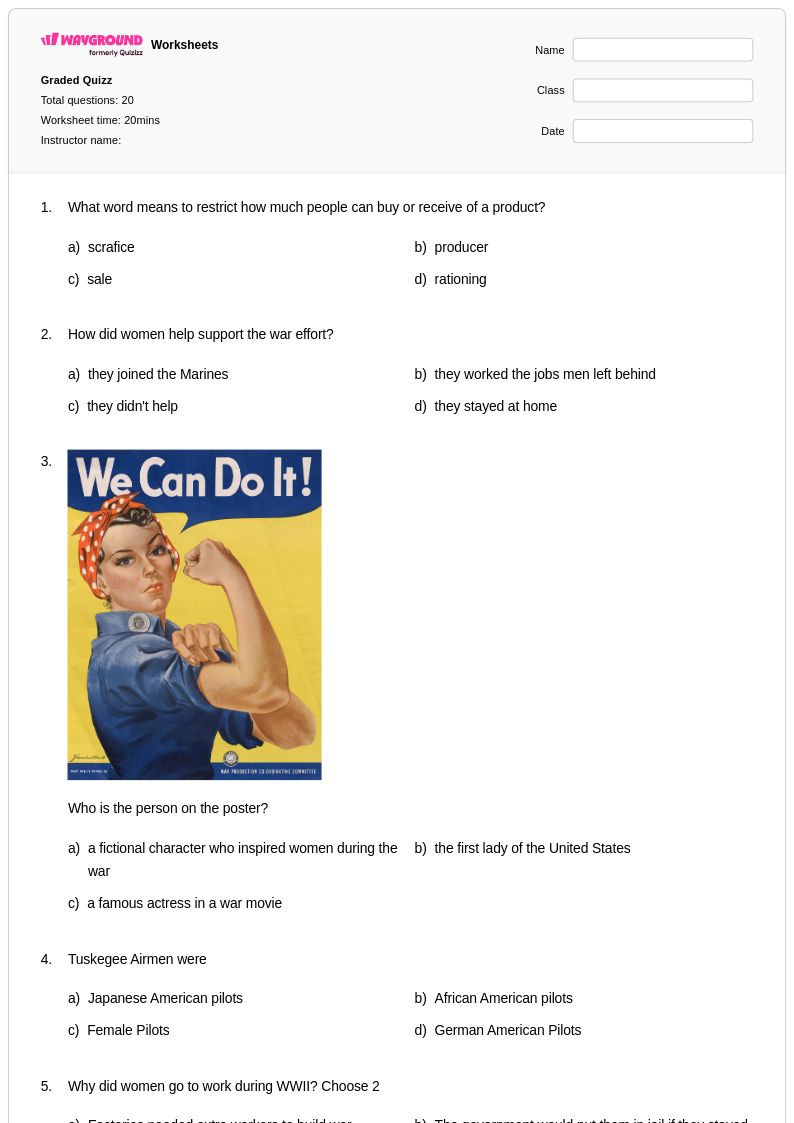
Tuskegee Airmen worksheets for Class 8 students available through Wayground (formerly Quizizz) provide comprehensive learning materials that explore the remarkable story of America's first African American military pilots during World War II. These expertly crafted educational resources strengthen students' analytical thinking skills as they examine primary source documents, timeline activities, and biographical studies that illuminate the courage and perseverance of these pioneering aviators who overcame racial segregation to serve their country with distinction. The collection includes diverse practice problems that challenge students to evaluate the historical significance of the Tuskegee Airmen's contributions to both military aviation and the civil rights movement, with each worksheet featuring detailed answer keys that support independent learning and comprehensive pdf formats that ensure accessibility for all classroom environments. These free printables engage eighth-grade learners through map activities tracing flight missions, comparative essays examining pre-war and wartime racial attitudes, and critical thinking exercises that connect the Tuskegee Airmen's legacy to broader themes of equality and social justice in American history.
Wayground's extensive platform empowers educators with millions of teacher-created resources specifically designed to bring the Tuskegee Airmen's inspiring history to life in Class 8 social studies classrooms. The robust search and filtering capabilities enable teachers to quickly locate materials aligned with state and national history standards, while built-in differentiation tools allow for seamless adaptation of content complexity to meet diverse learning needs within the classroom. Teachers can effortlessly customize these digital and printable worksheet collections to support targeted skill practice, whether implementing remediation strategies for struggling students or providing enrichment opportunities for advanced learners ready to explore deeper historical connections. The platform's flexible pdf download options and digital formatting ensure that Tuskegee Airmen learning materials integrate smoothly into any lesson planning approach, from traditional paper-based activities to modern digital learning environments, giving educators the versatility they need to create meaningful historical learning experiences that honor these American heroes while building essential critical thinking skills.
FAQs
How do I teach students about the Tuskegee Airmen in a meaningful way?
Teaching the Tuskegee Airmen effectively means connecting their military service to the broader context of racial segregation and civil rights in 1940s America. Start by grounding students in the institutional barriers the airmen faced before examining their combat record in Europe. Using primary source analysis alongside structured reading activities helps students understand both the historical facts and the human stakes involved. Framing the Tuskegee Airmen as a pivot point between World War II history and the civil rights movement gives students a coherent narrative thread to follow.
What topics should a Tuskegee Airmen worksheet cover?
A well-designed Tuskegee Airmen worksheet should cover the airmen's training at Tuskegee Institute in Alabama, their combat missions in the European Theater, and the racial segregation policies they fought against within the U.S. military. It should also address their legacy, including their influence on President Truman's 1948 executive order desegregating the armed forces. Connecting their story to the larger arc of the civil rights movement helps students see why this chapter of history remains relevant.
What common misconceptions do students have about the Tuskegee Airmen?
A common misconception is that the Tuskegee Airmen were a small, token unit rather than a substantial force of over 900 pilots who flew thousands of combat missions. Students also sometimes conflate the airmen's military success with immediate social progress, not realizing that discrimination continued both during and after the war. Another frequent error is treating Tuskegee Institute solely as a military training site, when in fact it was already a historically significant institution founded by Booker T. Washington decades before the war.
How can I use Tuskegee Airmen worksheets to build historical thinking skills?
Tuskegee Airmen worksheets support historical thinking by asking students to analyze cause and effect, evaluate primary sources, and distinguish between social and military history. Tasks that ask students to compare the airmen's documented combat record against the discrimination they faced push students beyond recall into genuine historical analysis. These worksheets are especially effective for practicing corroboration and contextualization, two core historical thinking skills commonly assessed in social studies standards.
How do I use Wayground's Tuskegee Airmen worksheets in my classroom?
Wayground's Tuskegee Airmen worksheets are available as printable PDFs for traditional classroom use and in digital formats for technology-integrated learning environments, including the option to host them as a quiz directly on Wayground. Each worksheet comes with a complete answer key, making them practical for both instruction and assessment. Digital versions are well-suited for independent work, homework assignments, or differentiated stations, while printable versions work for guided instruction or close-reading activities.
How can I differentiate Tuskegee Airmen content for students with different learning needs?
When using Wayground's digital worksheets, teachers can apply individual accommodations such as read aloud support for students who need questions read to them, reduced answer choices to lower cognitive load for struggling readers, and extended time for students who need it. These settings can be assigned per student without other students being notified, and they carry over to future sessions automatically. For content differentiation, pairing the same core questions with scaffolded reading passages at different Lexile levels helps ensure all learners engage with the Tuskegee Airmen's story at an appropriate entry point.