Free Printable Types of Sentences Worksheets for Class 3
Class 3 types of sentences worksheets and printables help students practice identifying and writing declarative, interrogative, exclamatory, and imperative sentences with free PDFs and answer keys.
Explore printable Types of Sentences worksheets for Class 3
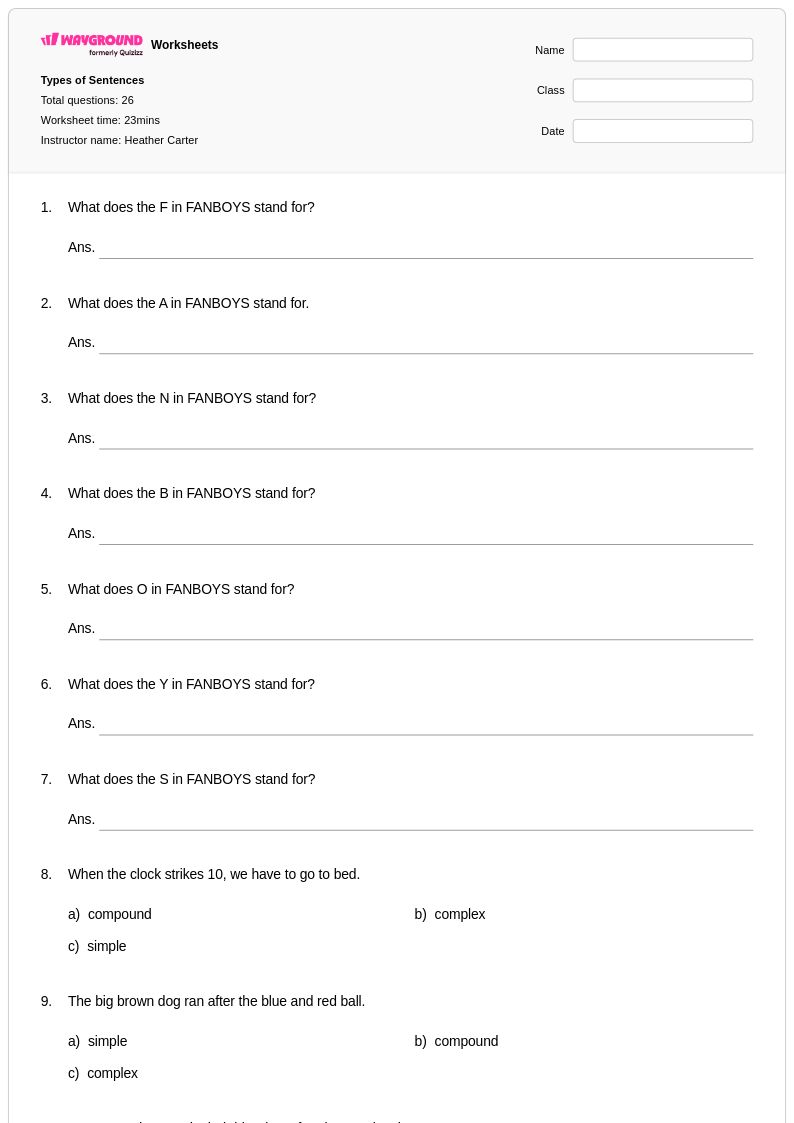
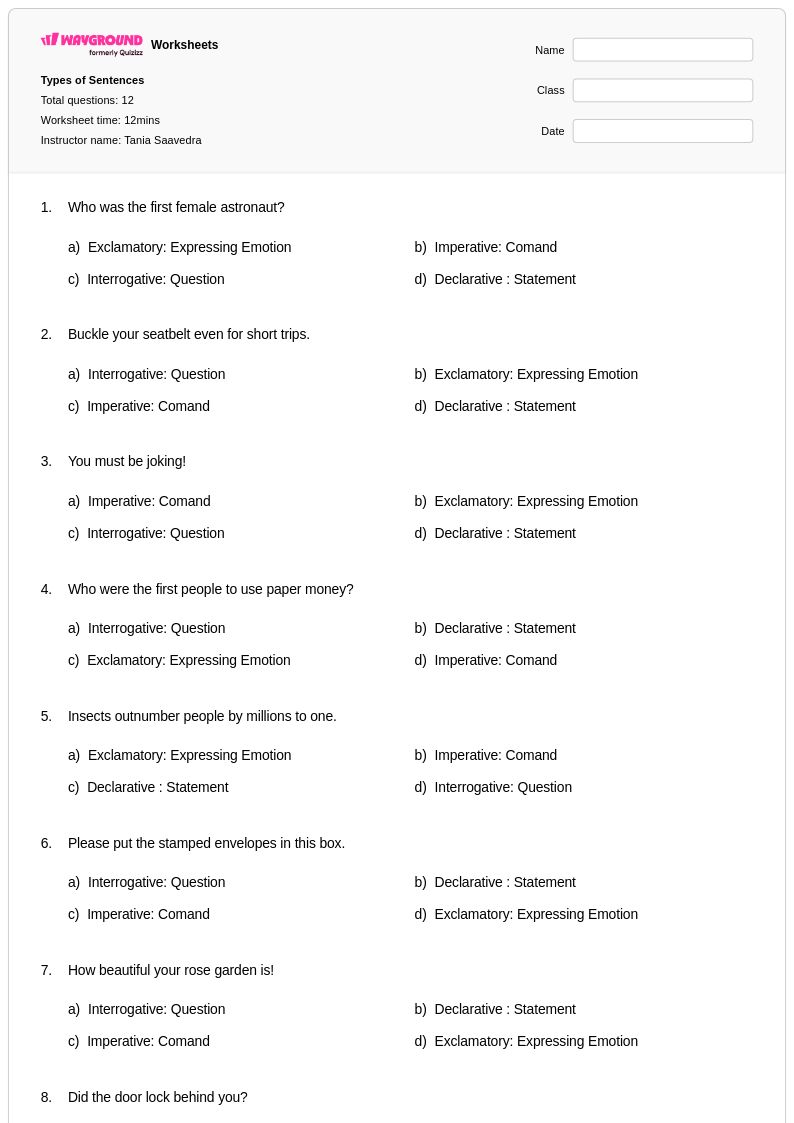
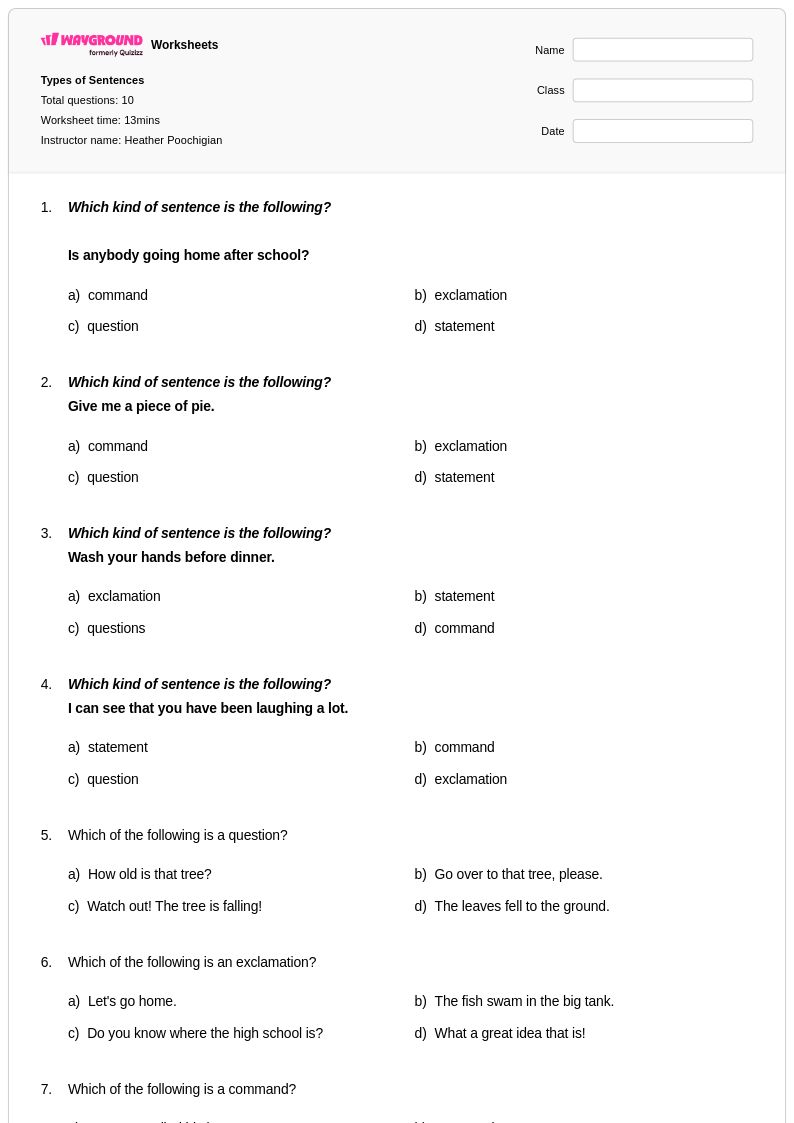
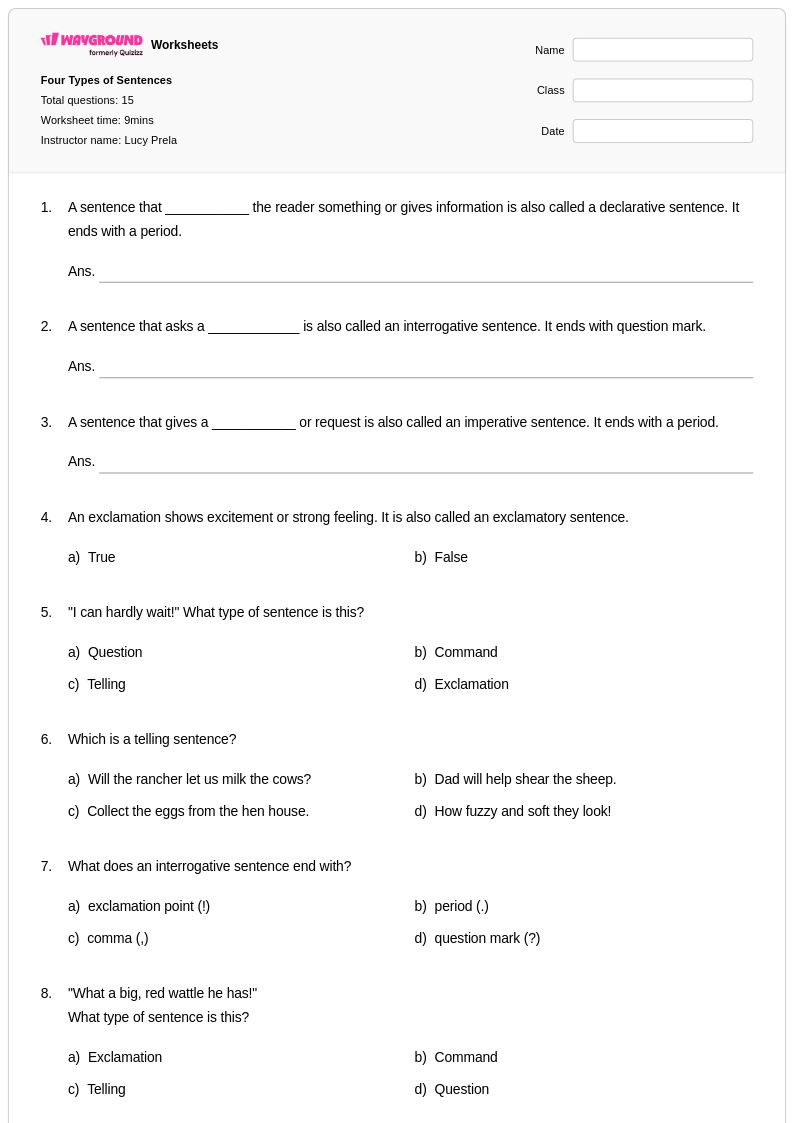
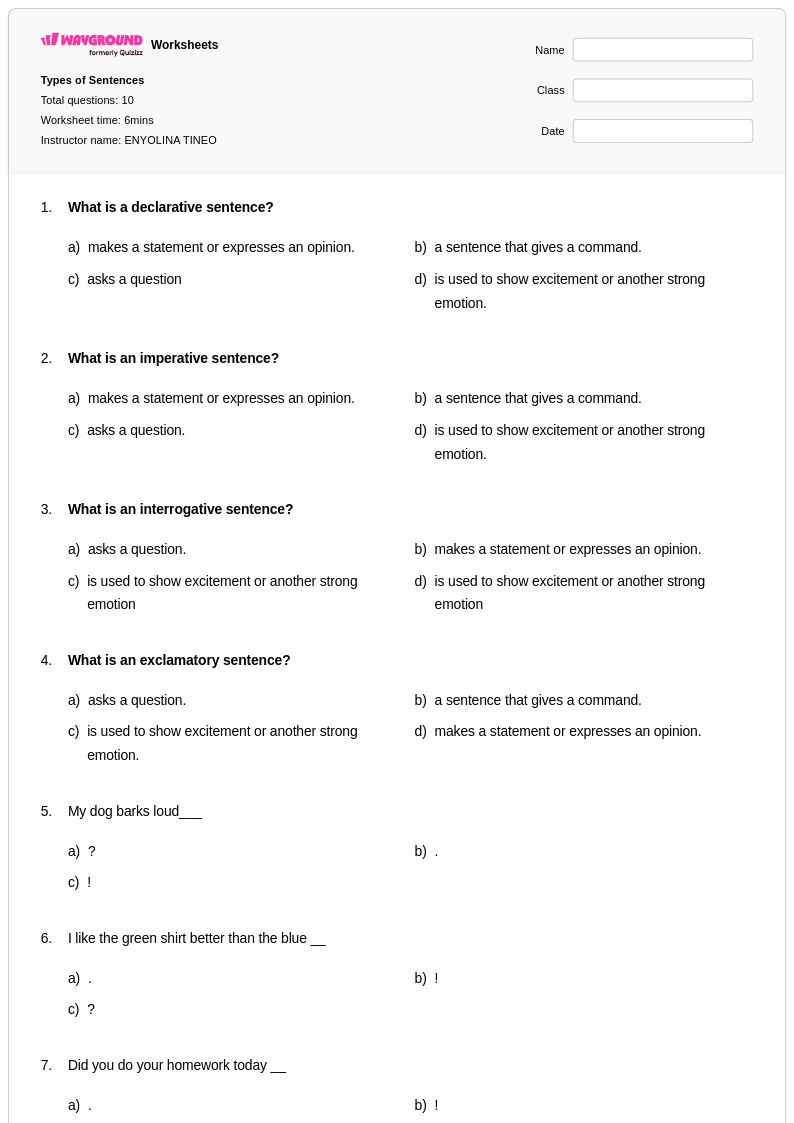
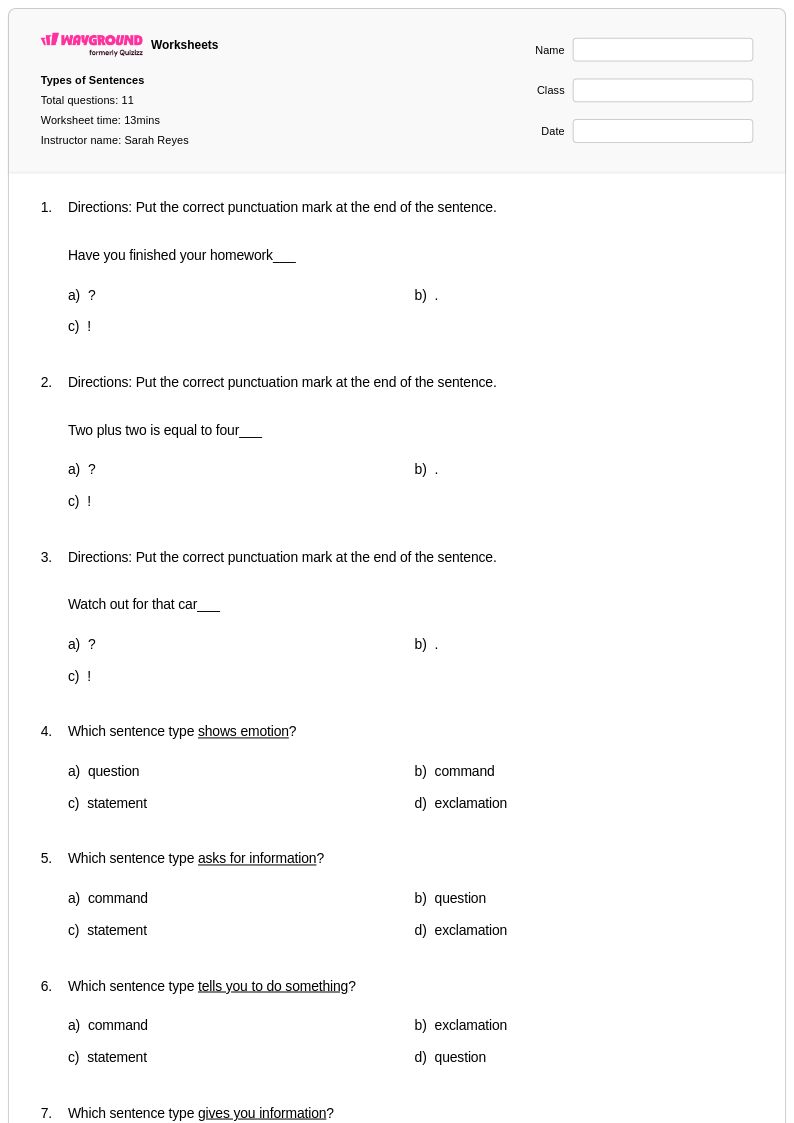
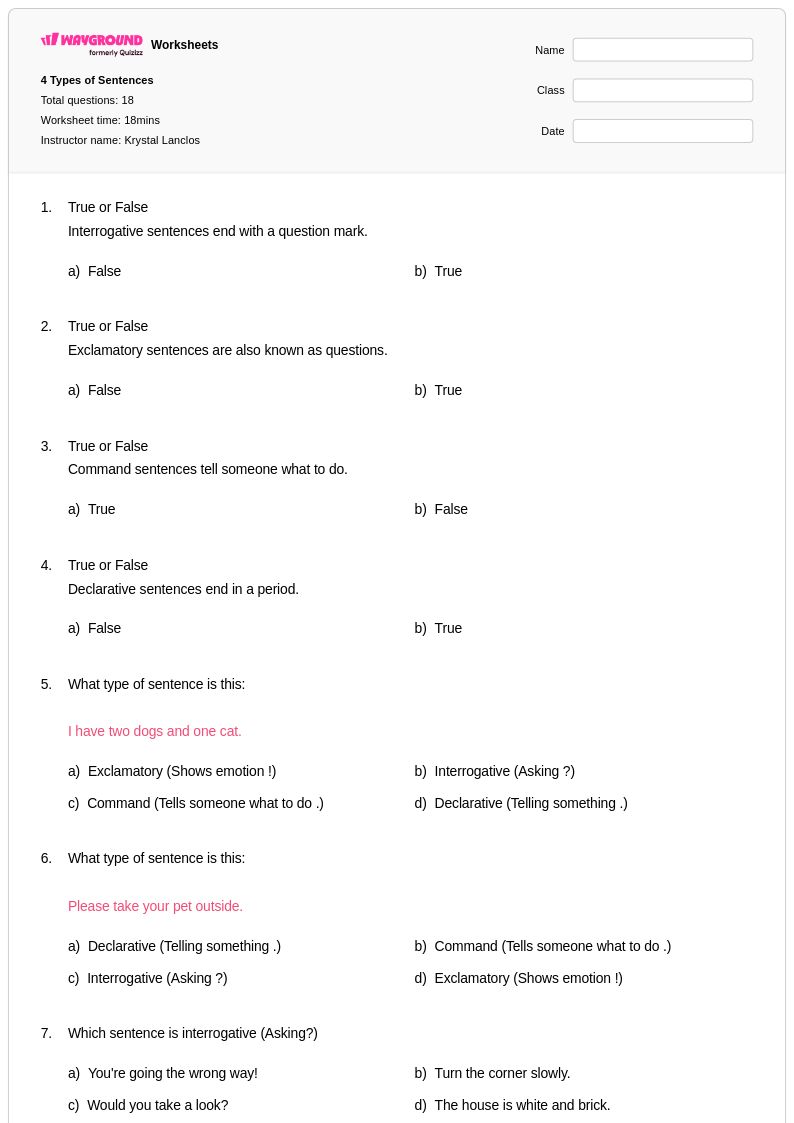
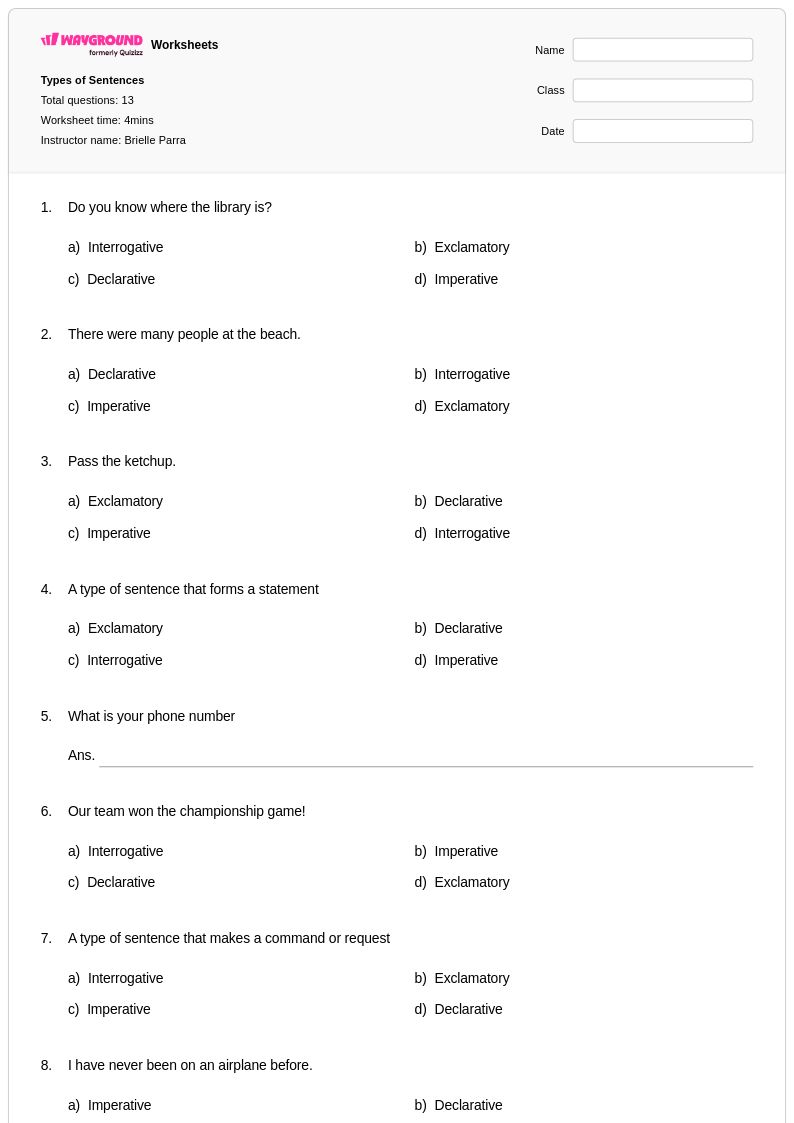
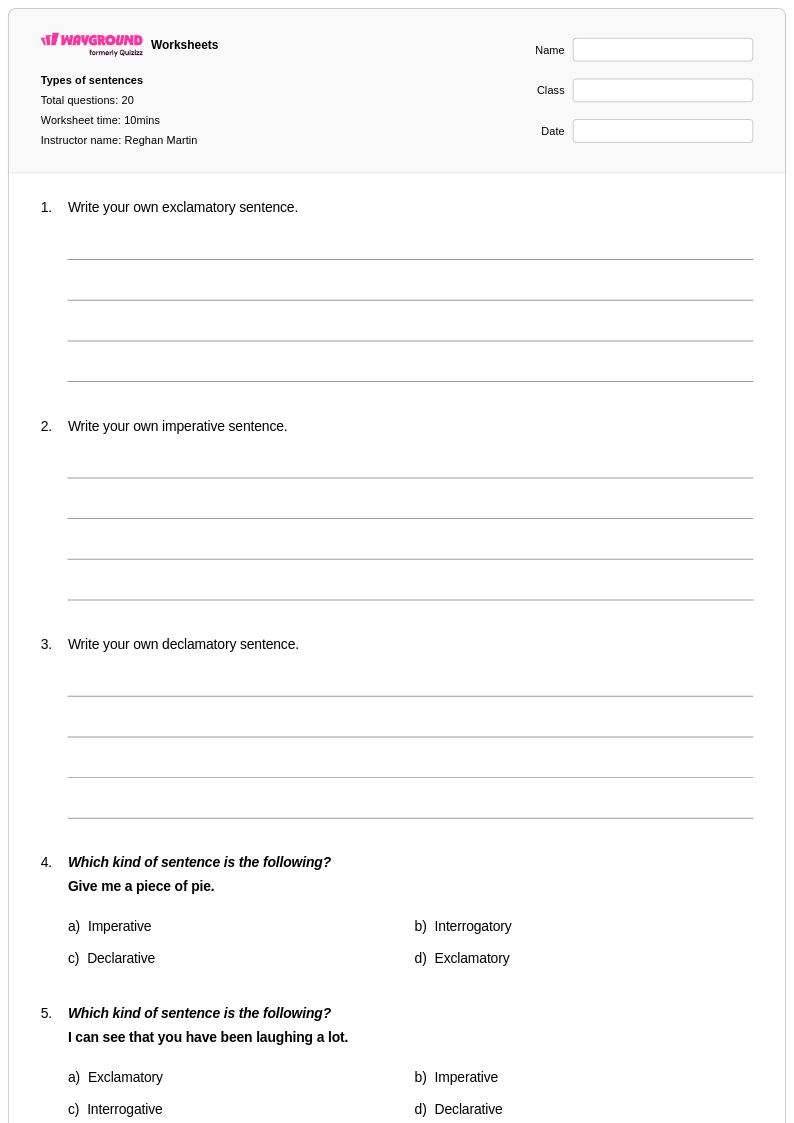
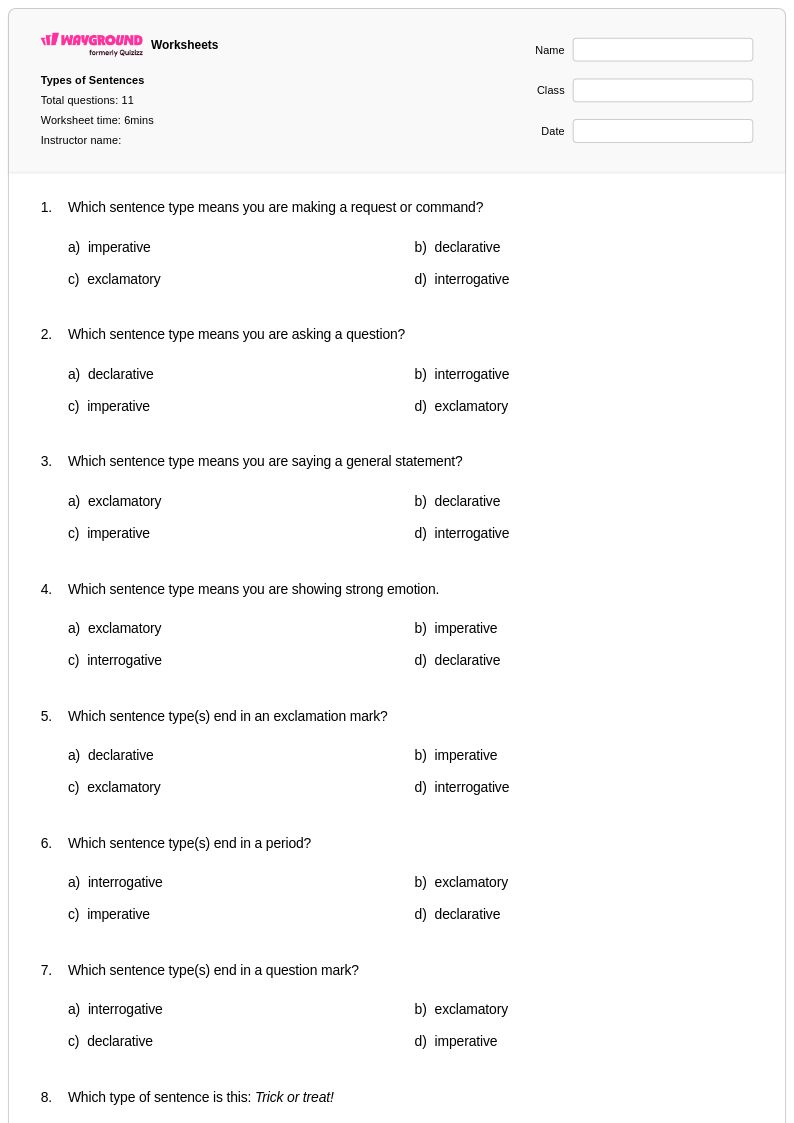
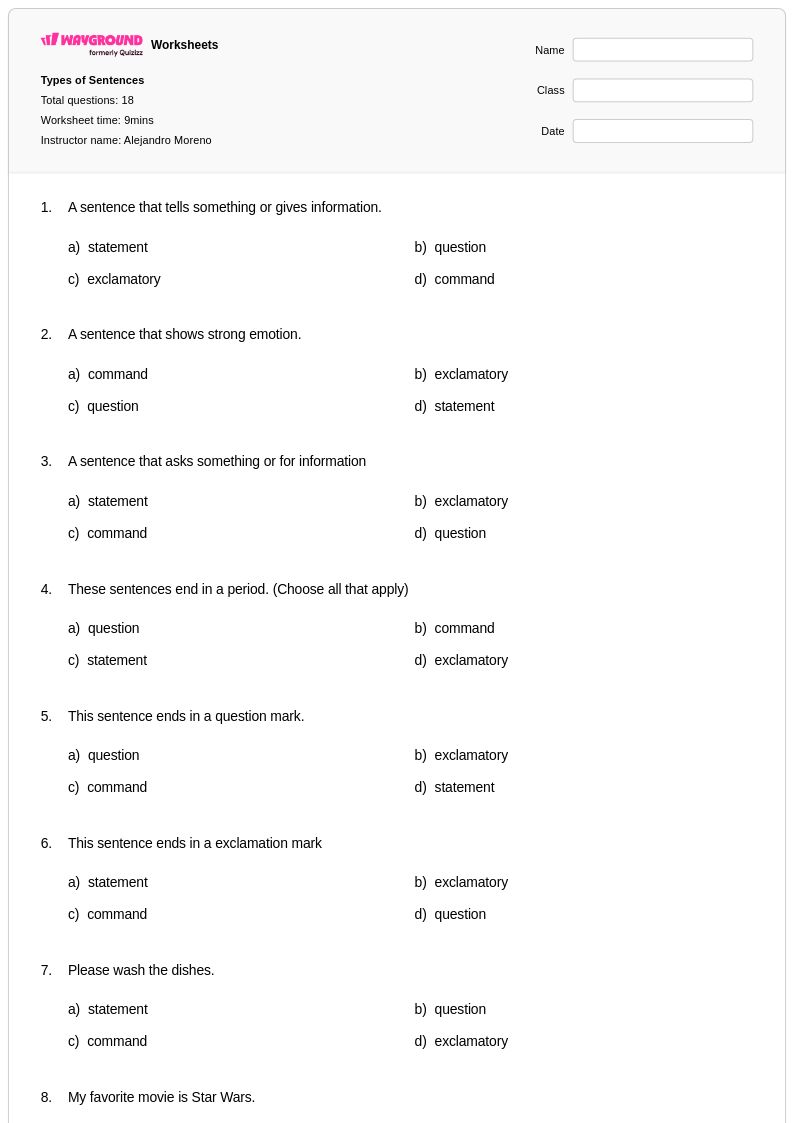
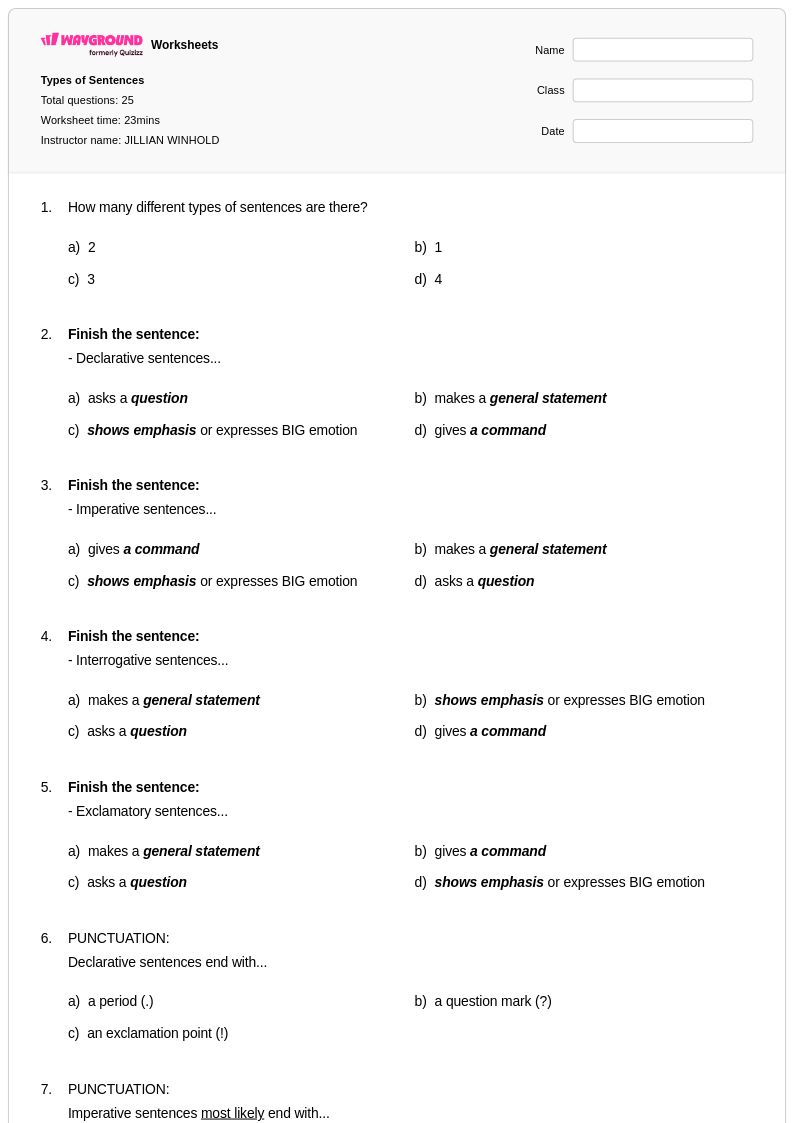
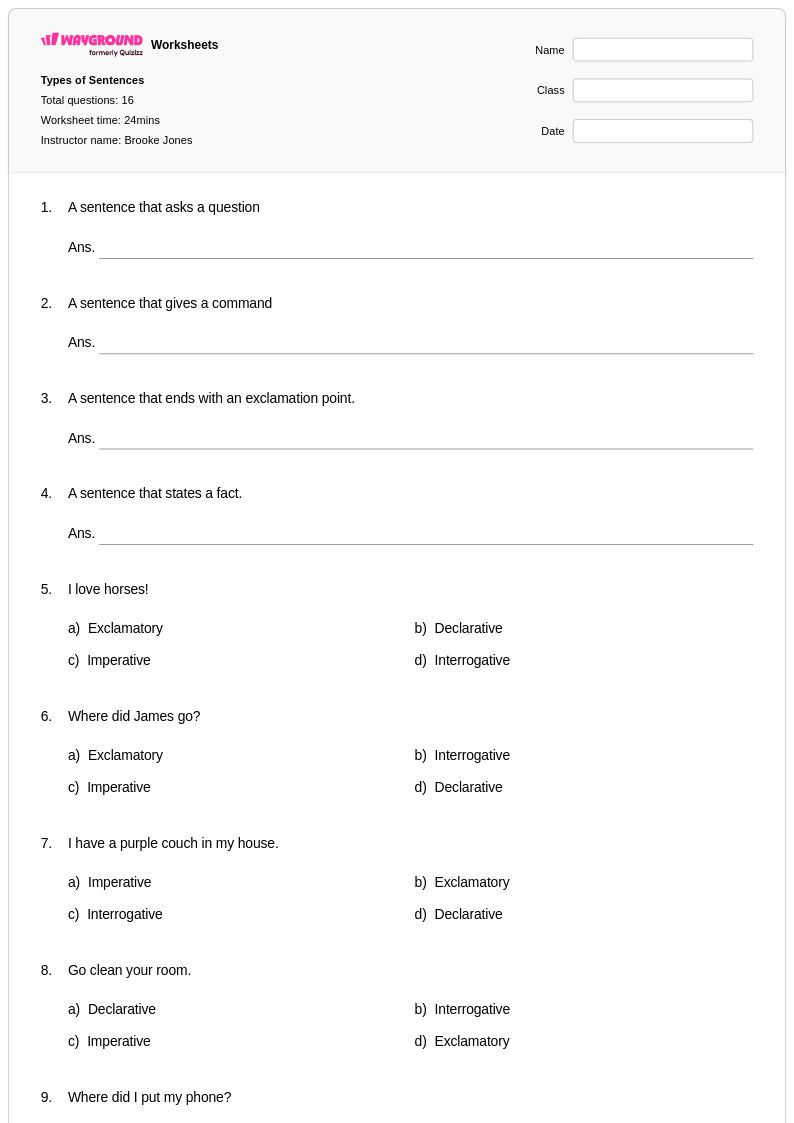
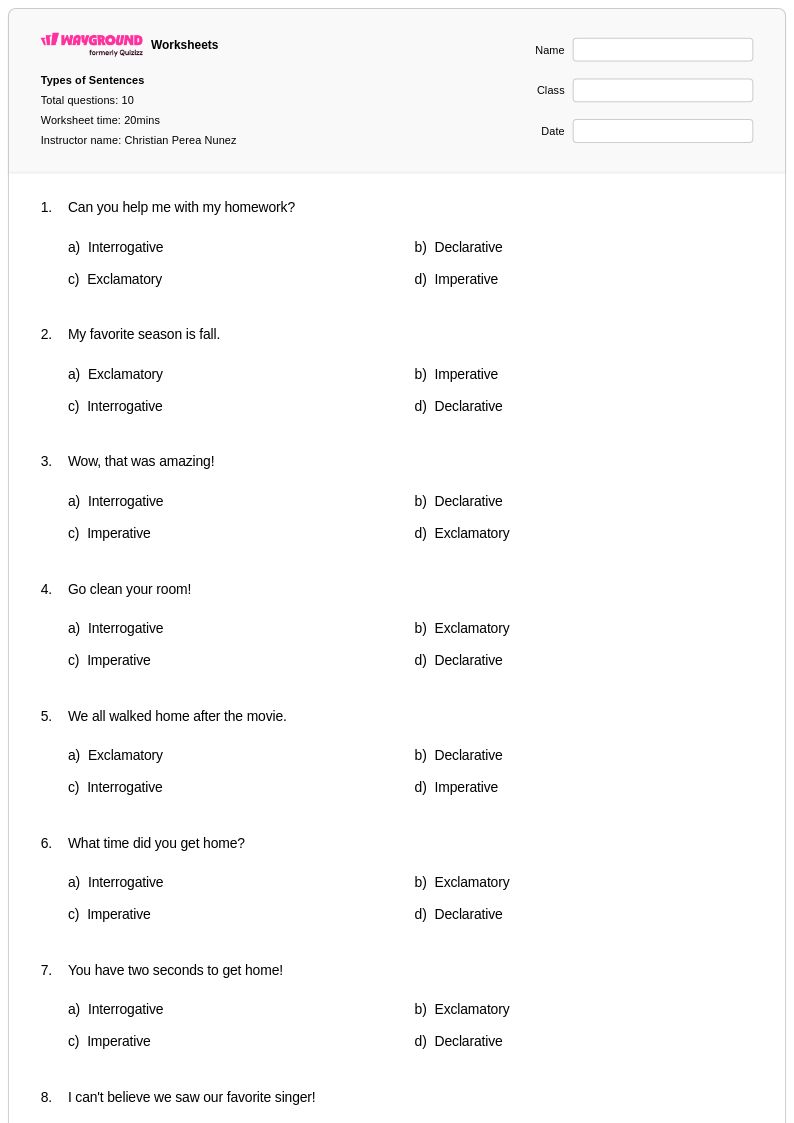
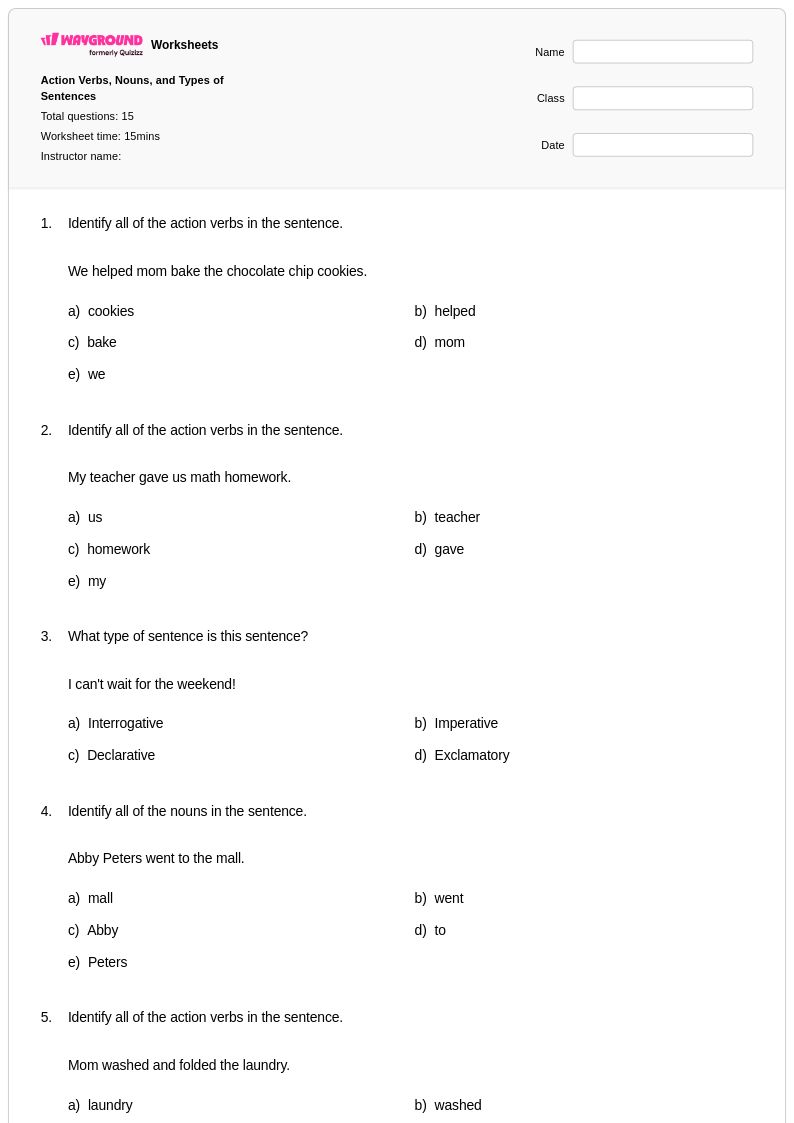
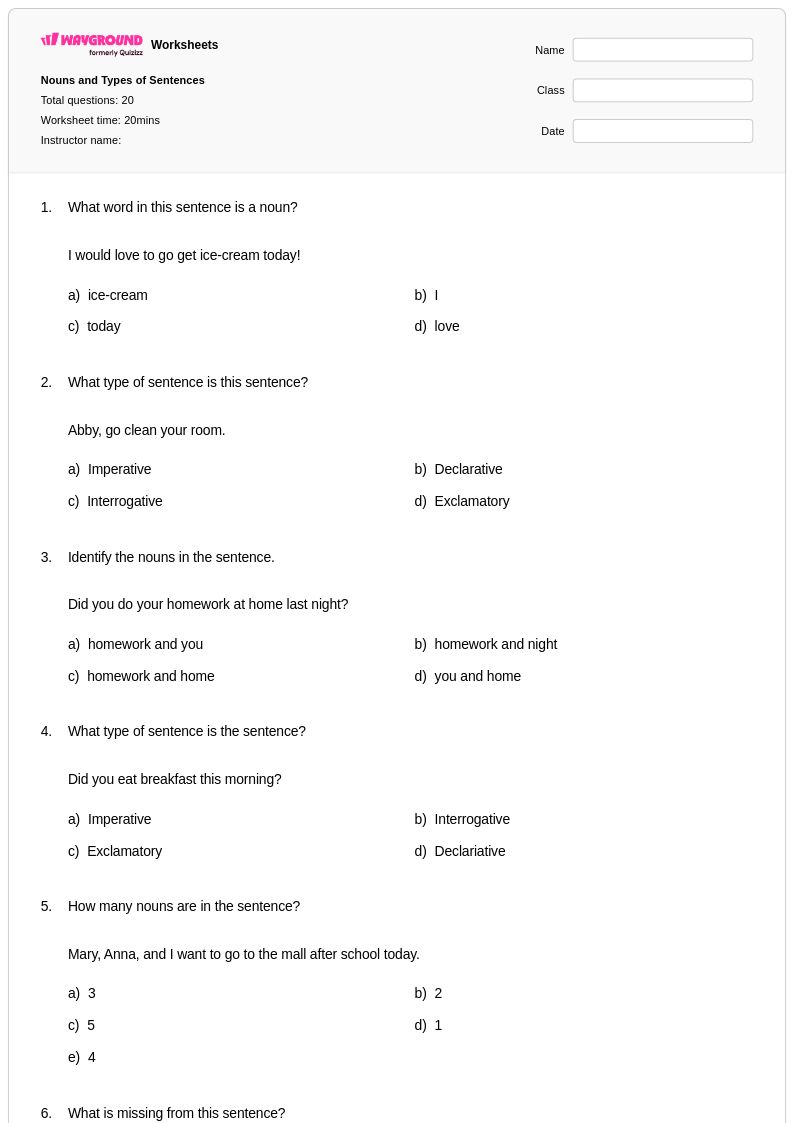
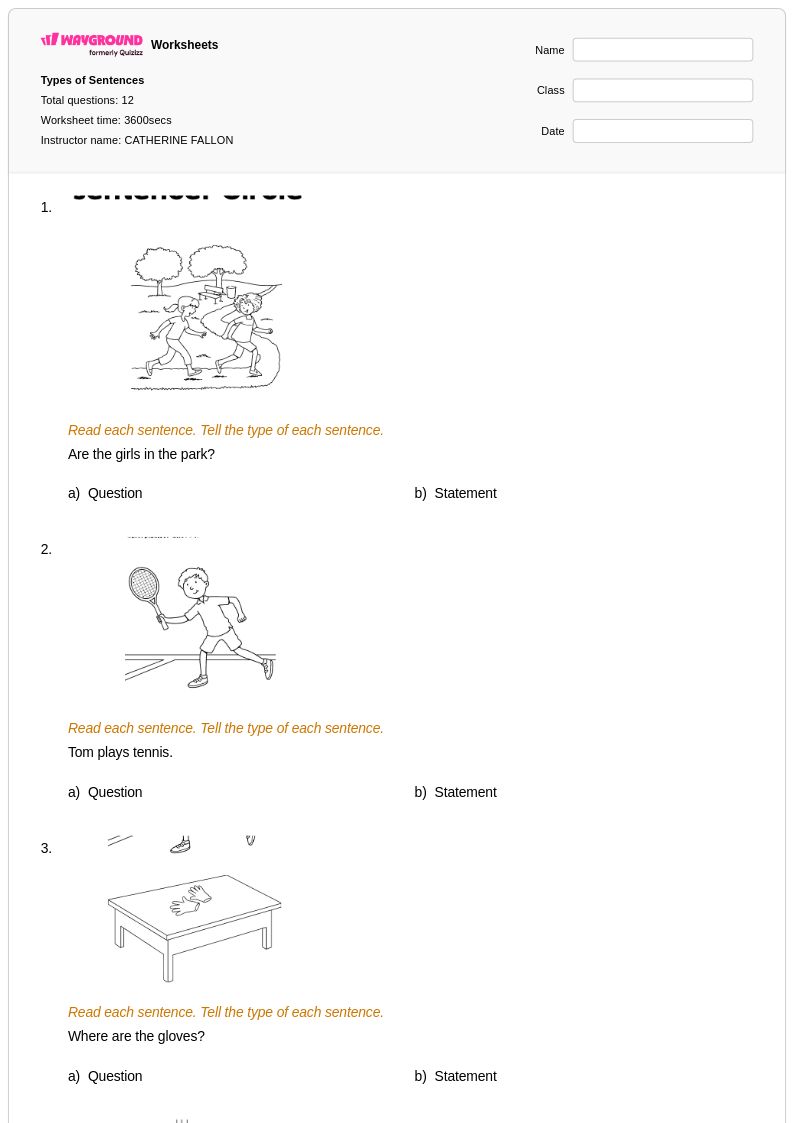
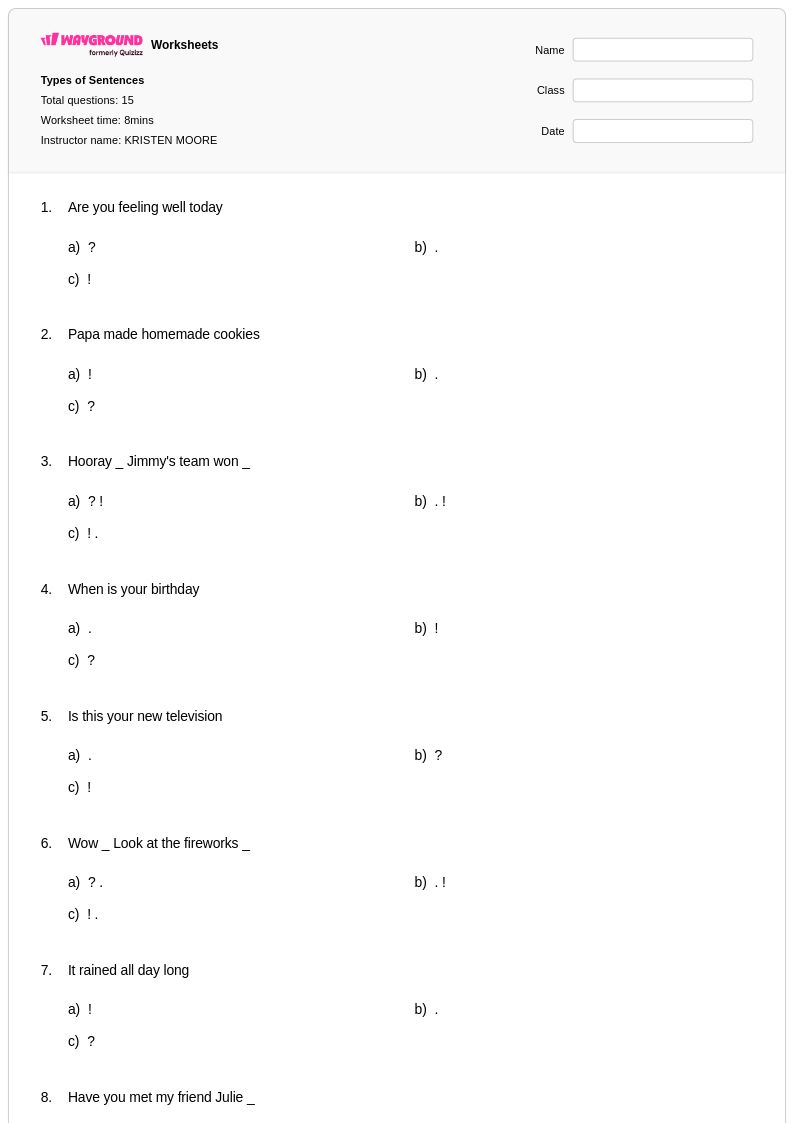
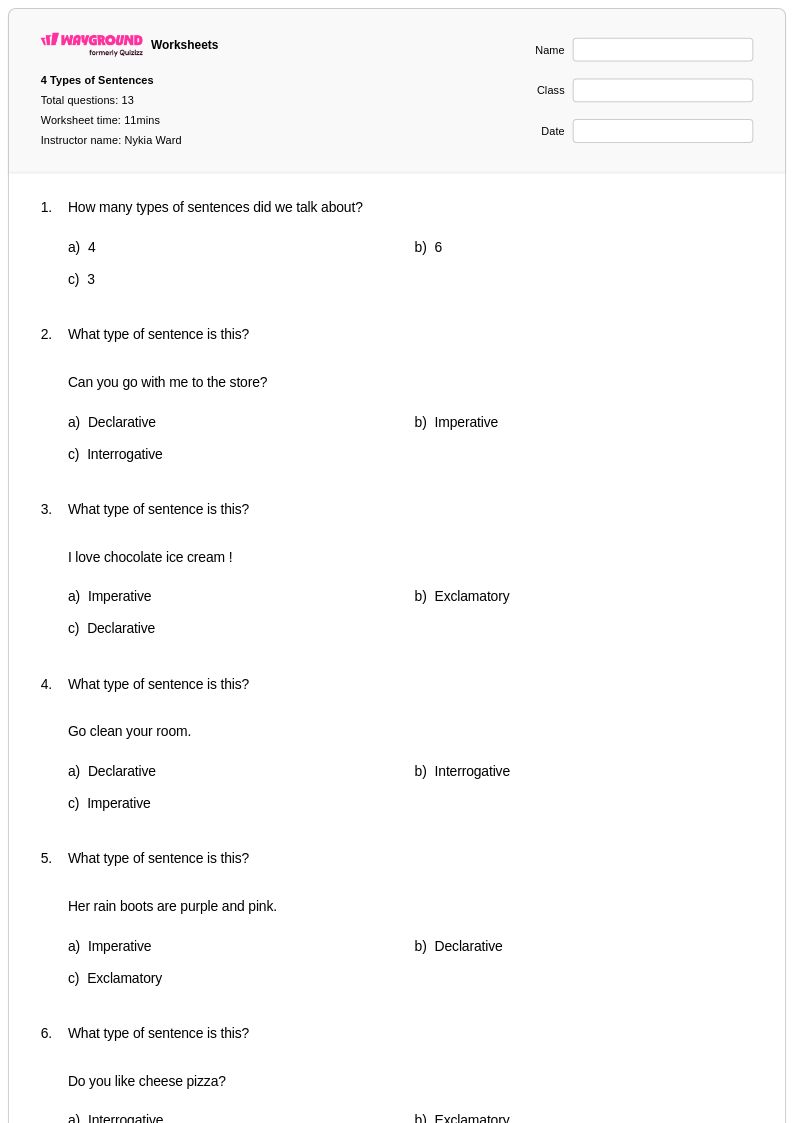
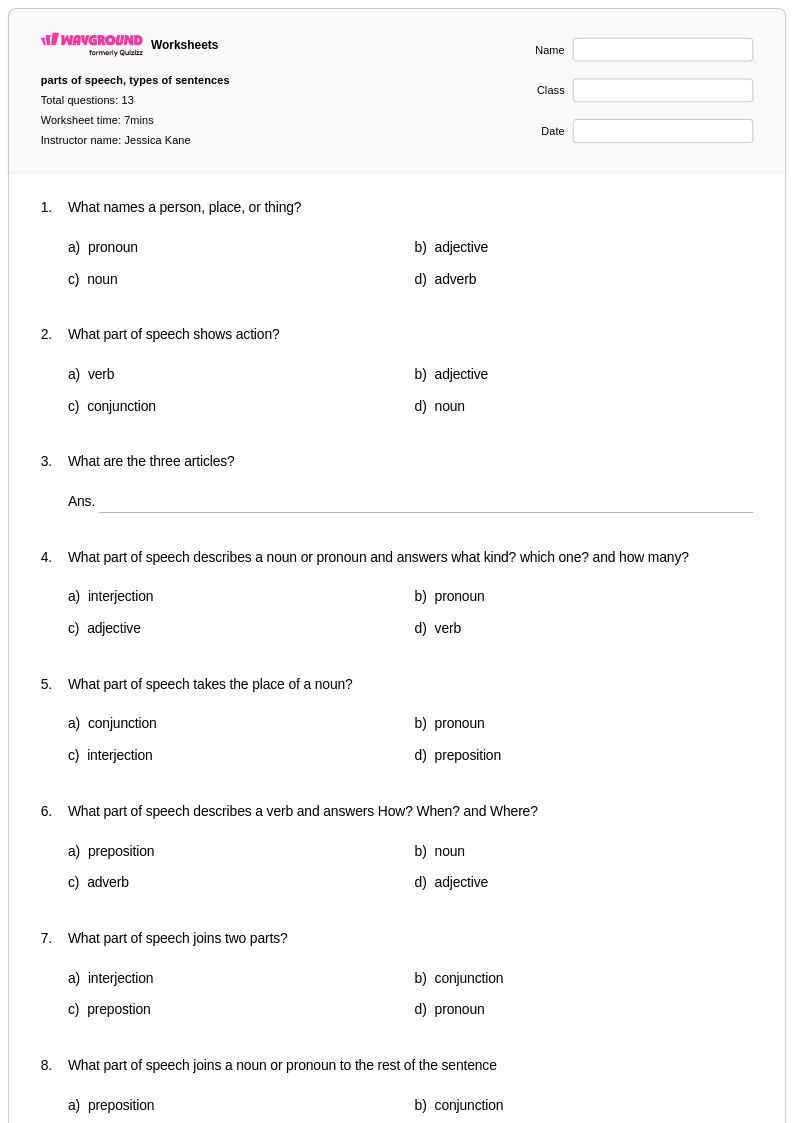
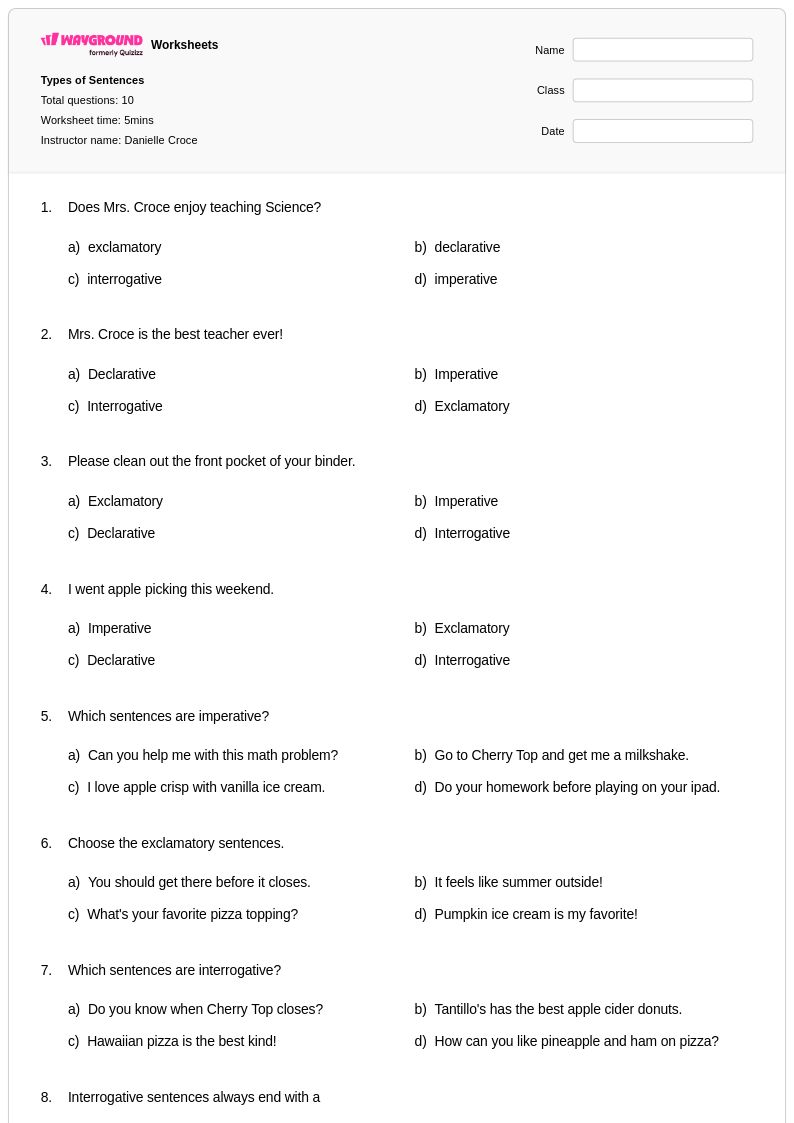
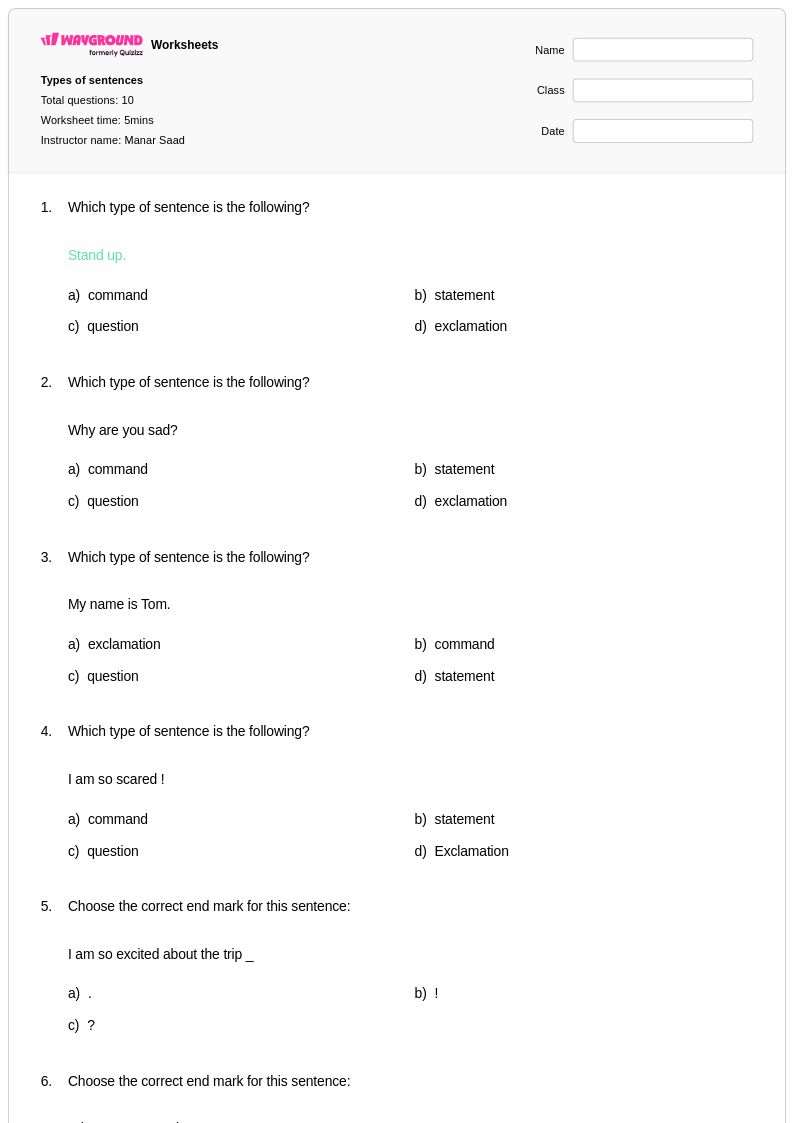
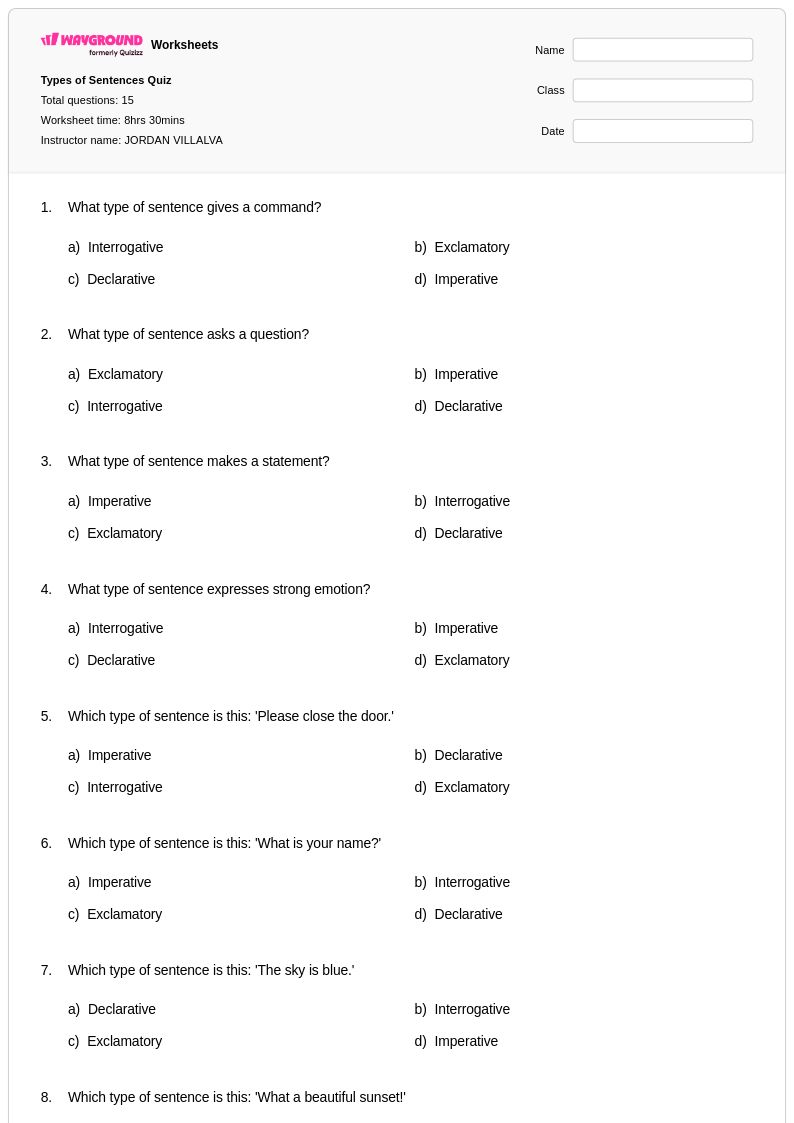
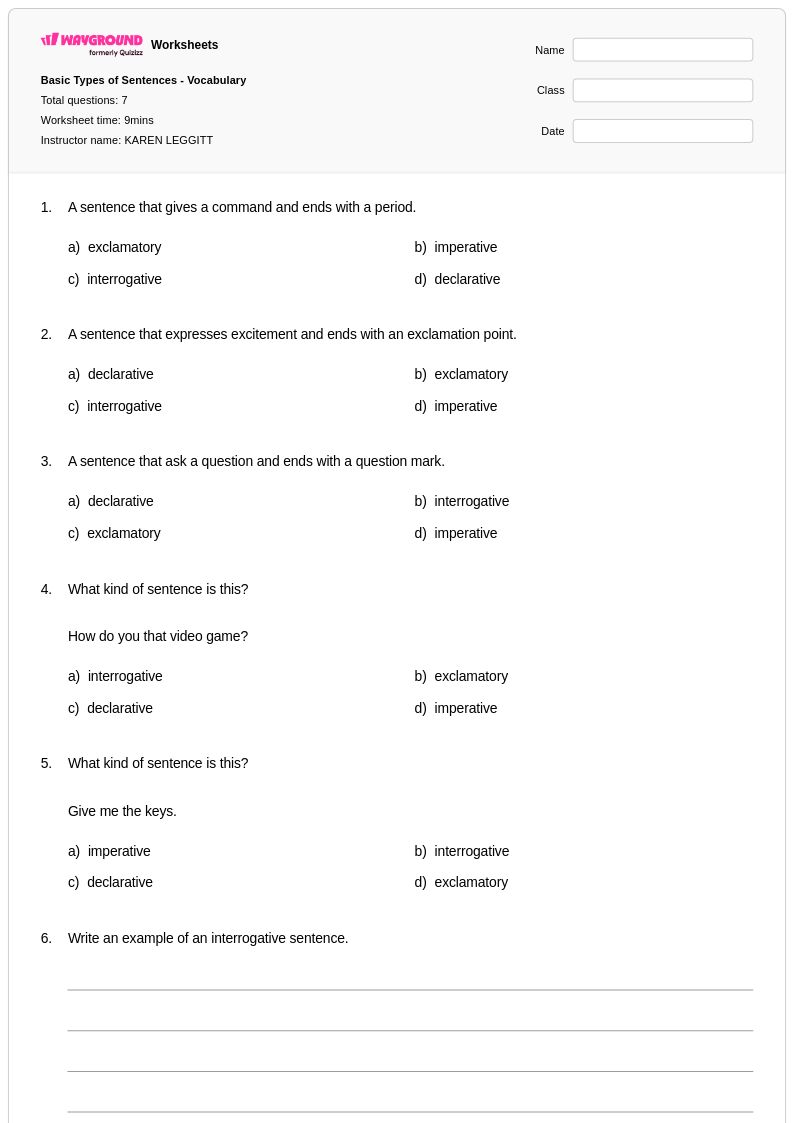
Types of sentences worksheets for Class 3 students available through Wayground (formerly Quizizz) provide comprehensive practice in identifying and constructing the four fundamental sentence types: declarative, interrogative, imperative, and exclamatory sentences. These carefully designed printable resources help third-grade learners distinguish between statements, questions, commands, and exclamations while strengthening their understanding of appropriate punctuation marks for each sentence type. The worksheets feature engaging practice problems that guide students through recognizing sentence purposes, matching sentences to their correct classifications, and transforming one sentence type into another. Each worksheet includes a complete answer key, making it simple for educators to assess student progress and provide immediate feedback on this essential grammar concept.
Wayground (formerly Quizizz) supports teachers with an extensive collection of sentence types worksheets created by millions of educators worldwide, offering robust search and filtering capabilities that align with state and national English language arts standards. The platform's differentiation tools allow teachers to customize worksheets based on individual student needs, whether for remediation with struggling learners or enrichment for advanced students ready to tackle more complex sentence structures. These resources are available in both printable pdf format and interactive digital versions, providing flexibility for classroom instruction, homework assignments, and independent practice sessions. Teachers can efficiently plan their grammar lessons, target specific learning gaps, and reinforce sentence structure concepts through varied practice opportunities that accommodate different learning styles and academic levels.
FAQs
How do I teach the four types of sentences to elementary students?
Start by introducing each sentence type with a clear, memorable label: declarative sentences make statements, interrogative sentences ask questions, imperative sentences give commands, and exclamatory sentences express strong emotion. Use mentor texts or read-alouds to surface real examples of each type before moving to written practice. Once students can identify each type by its punctuation and purpose, shift to construction tasks where they write their own examples in context.
What worksheets help students practice identifying types of sentences?
Effective practice worksheets present a mix of sentence examples and ask students to classify each as declarative, interrogative, imperative, or exclamatory, then justify their choice using punctuation or purpose as evidence. Scaffolded exercises that move from identification to sentence rewriting — for example, converting a statement into a question — build deeper understanding than classification alone. Types of sentences worksheets on Wayground progress from basic identification tasks to more complex sentence construction challenges, giving students structured repetition across multiple contexts.
What mistakes do students commonly make when identifying types of sentences?
The most common error is over-relying on punctuation alone: students often label any sentence ending in an exclamation point as exclamatory, even when it is actually an imperative command (e.g., 'Stop running!'). Students also confuse imperative sentences with declarative ones because imperatives lack an explicit subject. Teaching students to test sentence type by asking both 'What is this sentence doing?' and 'How does it end?' reduces these errors significantly.
How can I use types of sentences worksheets in both print and digital classrooms?
Types of sentences worksheets on Wayground are available as printable PDFs for traditional classroom use and in digital formats for technology-integrated learning environments, including the option to host them as a quiz directly on Wayground. This flexibility means the same worksheet set can serve a whole-class print activity one day and an individual digital assignment the next. Both formats include answer keys, supporting independent practice and teacher-led review equally well.
How do I differentiate types of sentences instruction for students at different skill levels?
For students who are still developing, reduce the task to two sentence types at a time and provide a reference card showing punctuation patterns before they begin independent work. For advanced students, move quickly to production tasks — having them rewrite a paragraph using all four sentence types intentionally. On Wayground, teachers can apply accommodations such as read aloud and reduced answer choices to individual students, so struggling learners receive targeted support without disrupting the rest of the class.
At what grade level should students be able to identify all four types of sentences?
Most ELA standards introduce the four sentence types in grades 2 through 4, with expectation of consistent identification and correct punctuation by the end of grade 4. However, students benefit from revisiting sentence types in middle school within the context of writing craft, where the purposeful use of sentence variety is tied to voice and style. Types of sentences worksheets are appropriate across this range, with task complexity adjusted to match the instructional goal.