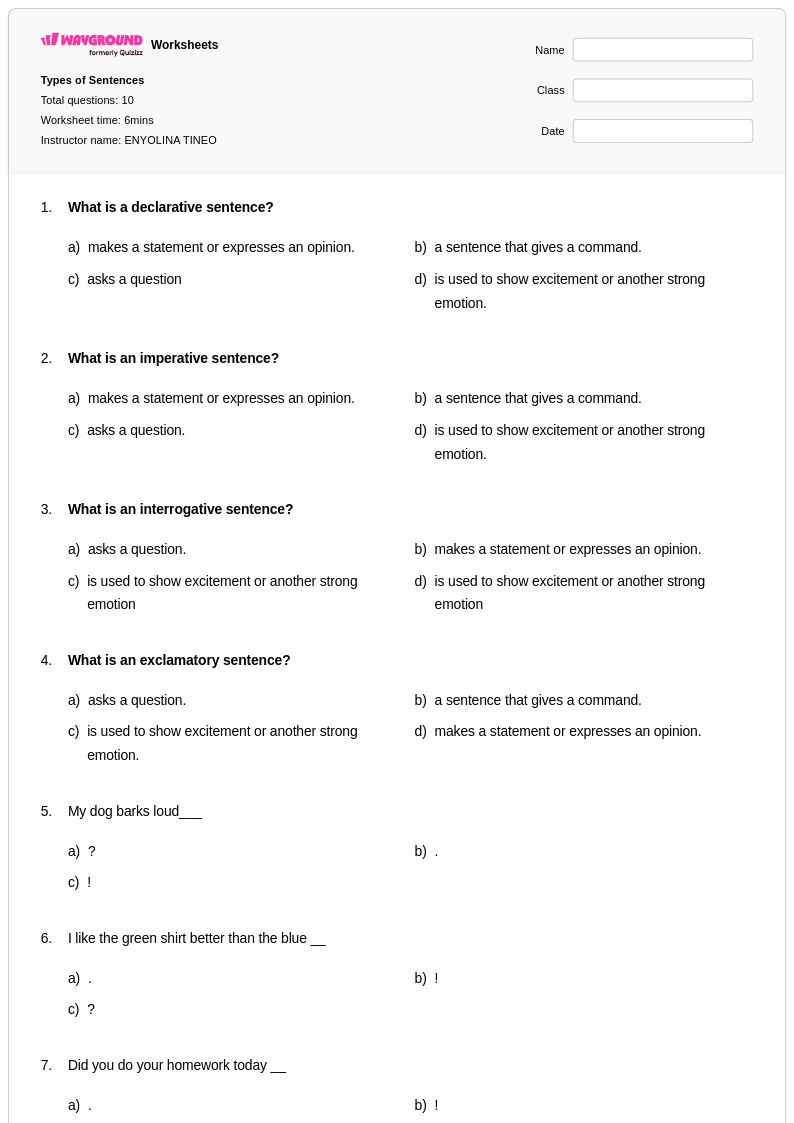
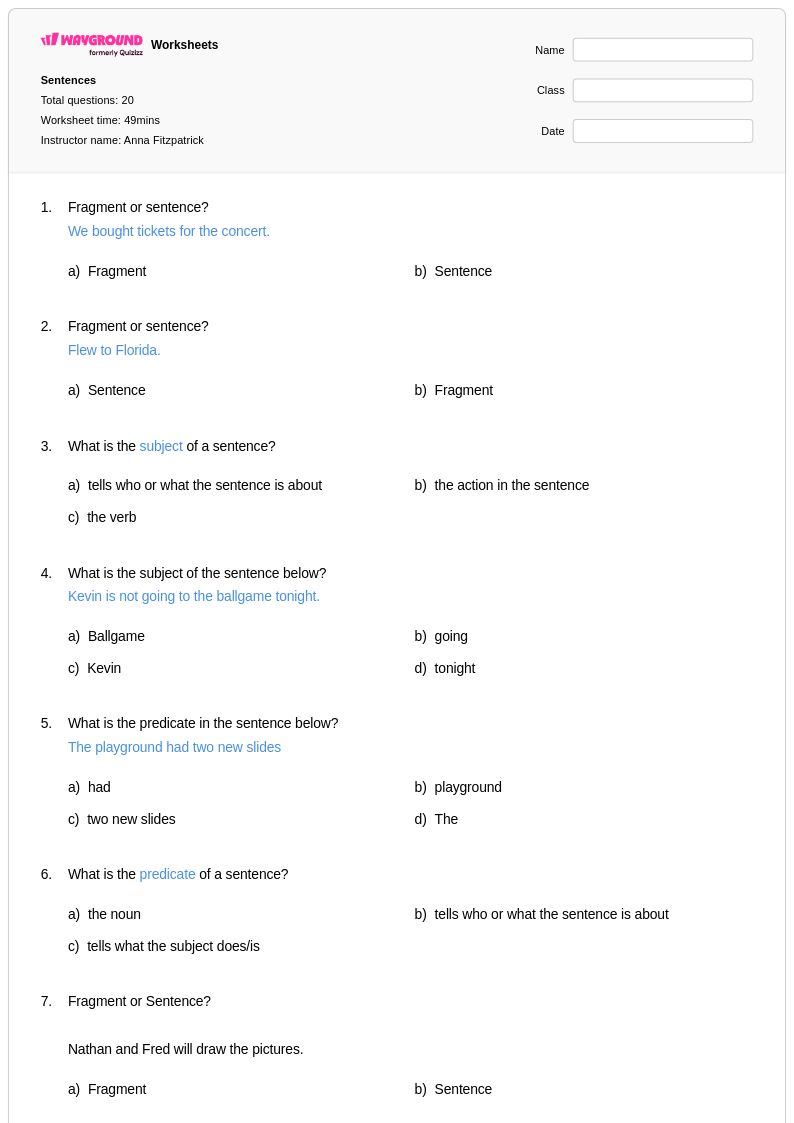
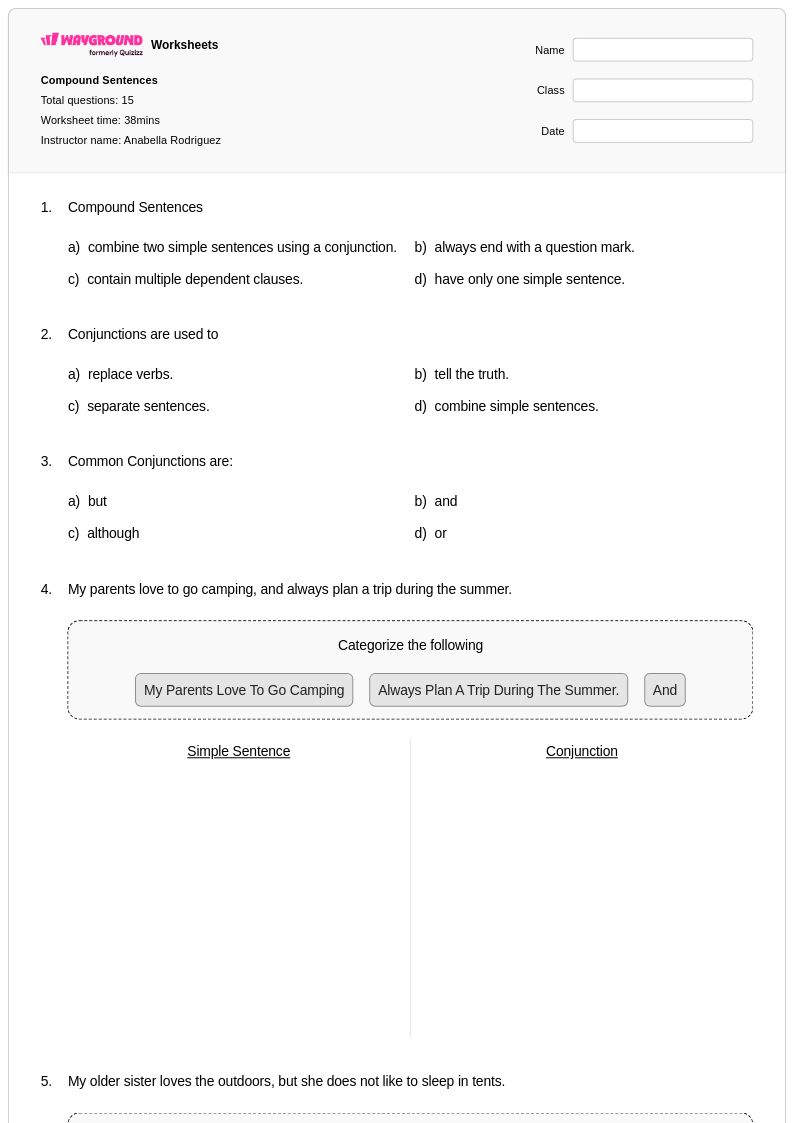
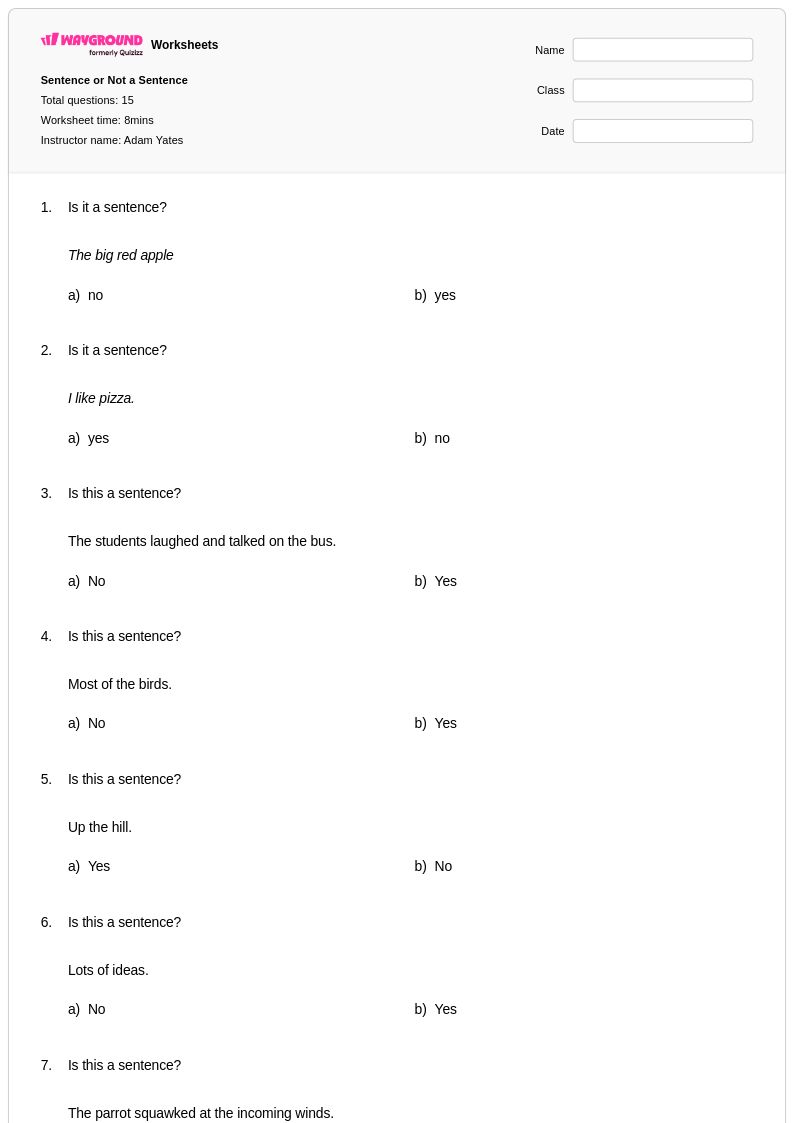
Free Printable Unscrambling Sentences Worksheets for Class 3
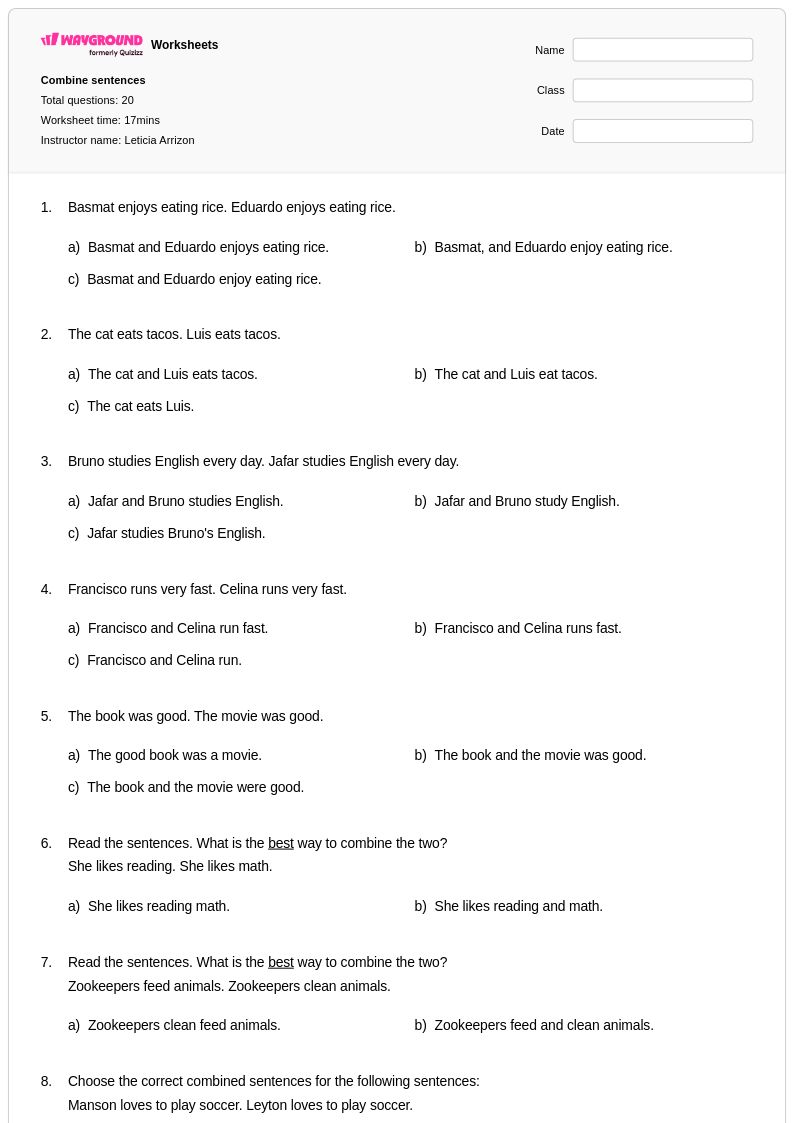
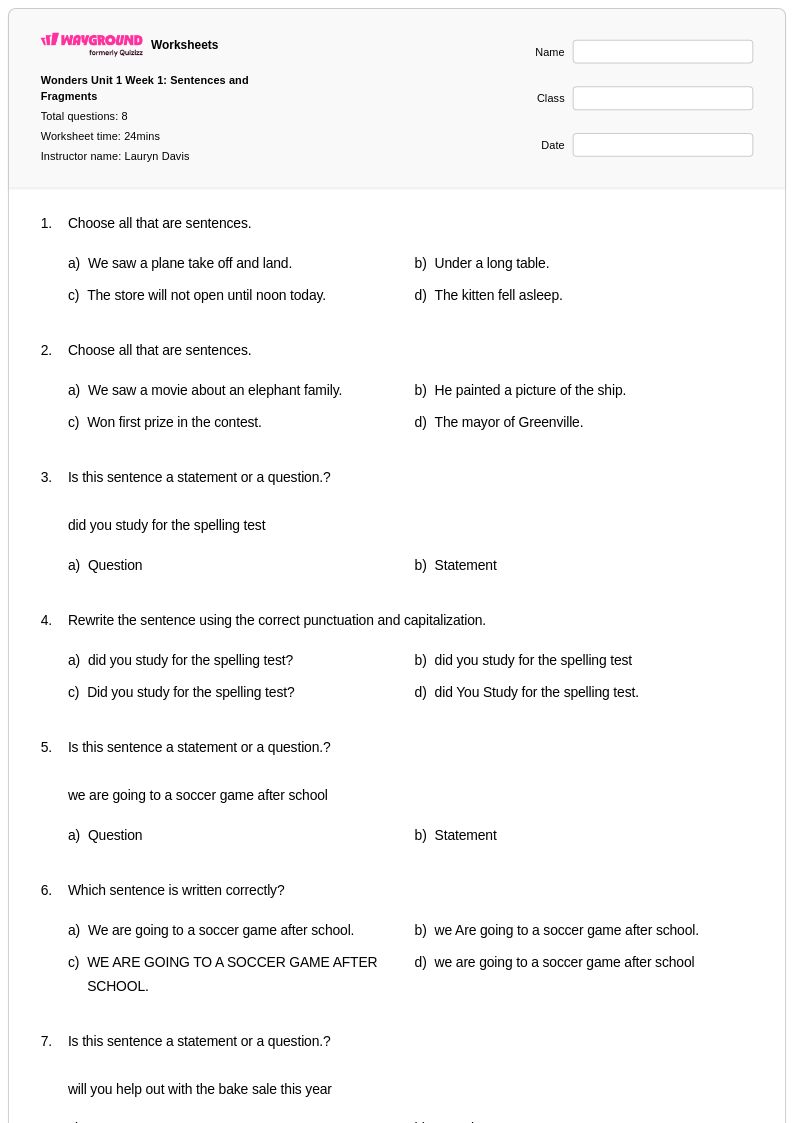
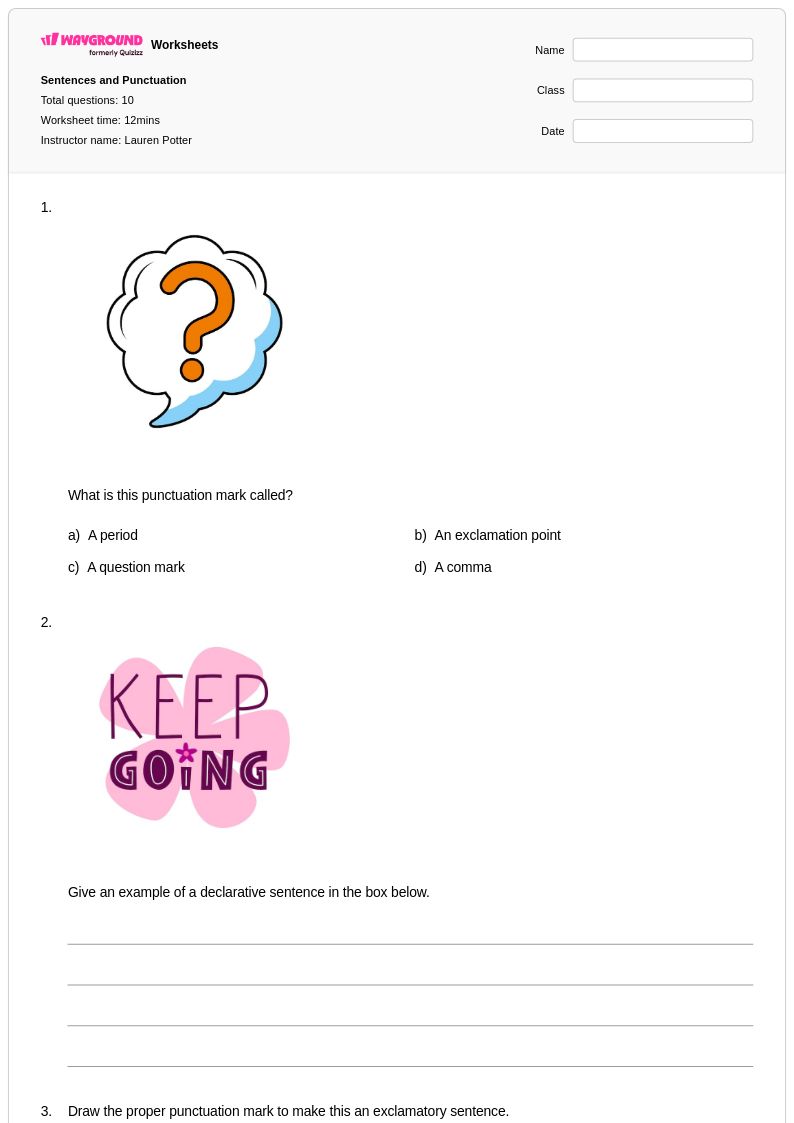
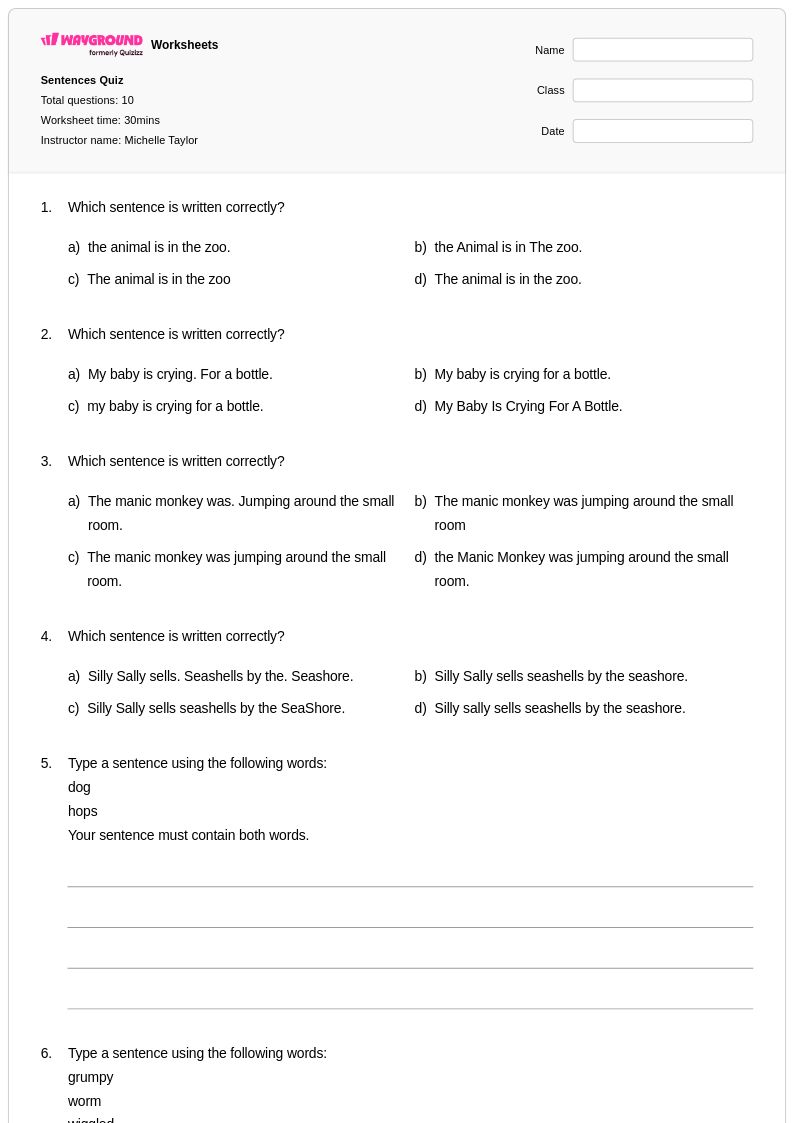
Wayground's free Class 3 unscrambling sentences worksheets provide printable practice problems and answer keys to help students master proper sentence structure through engaging word order activities.
Explore printable Unscrambling Sentences worksheets for Class 3
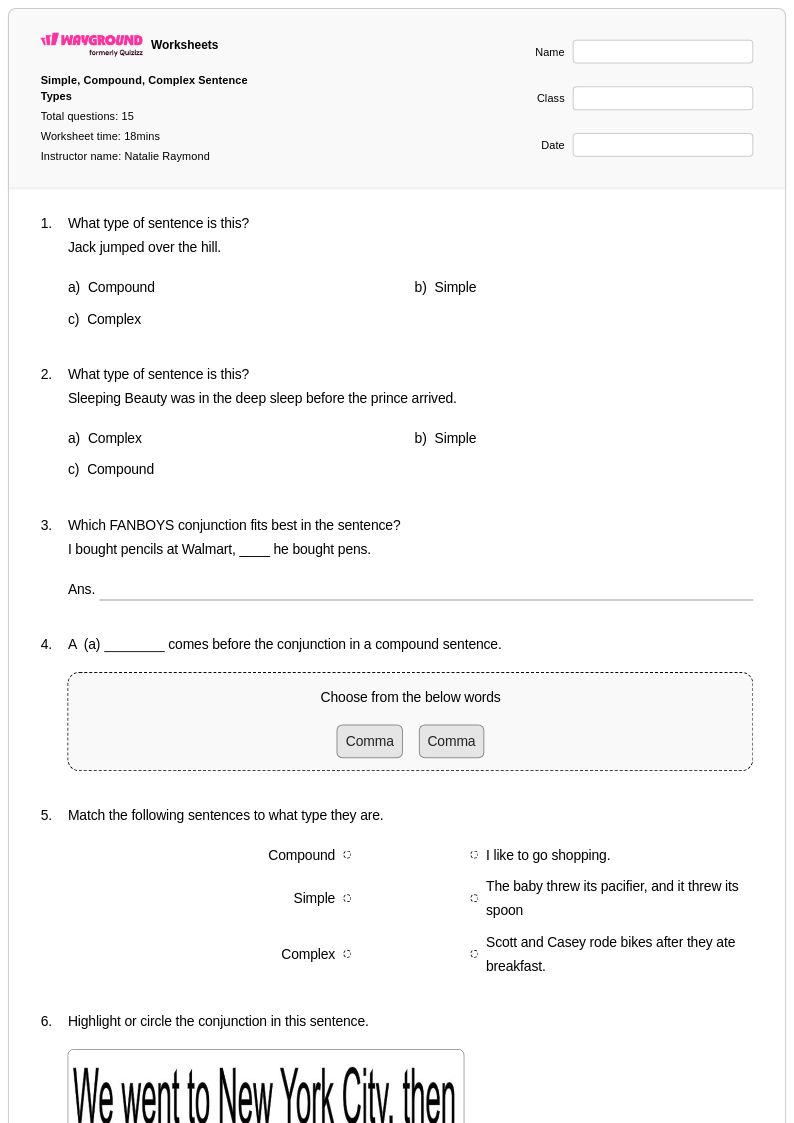
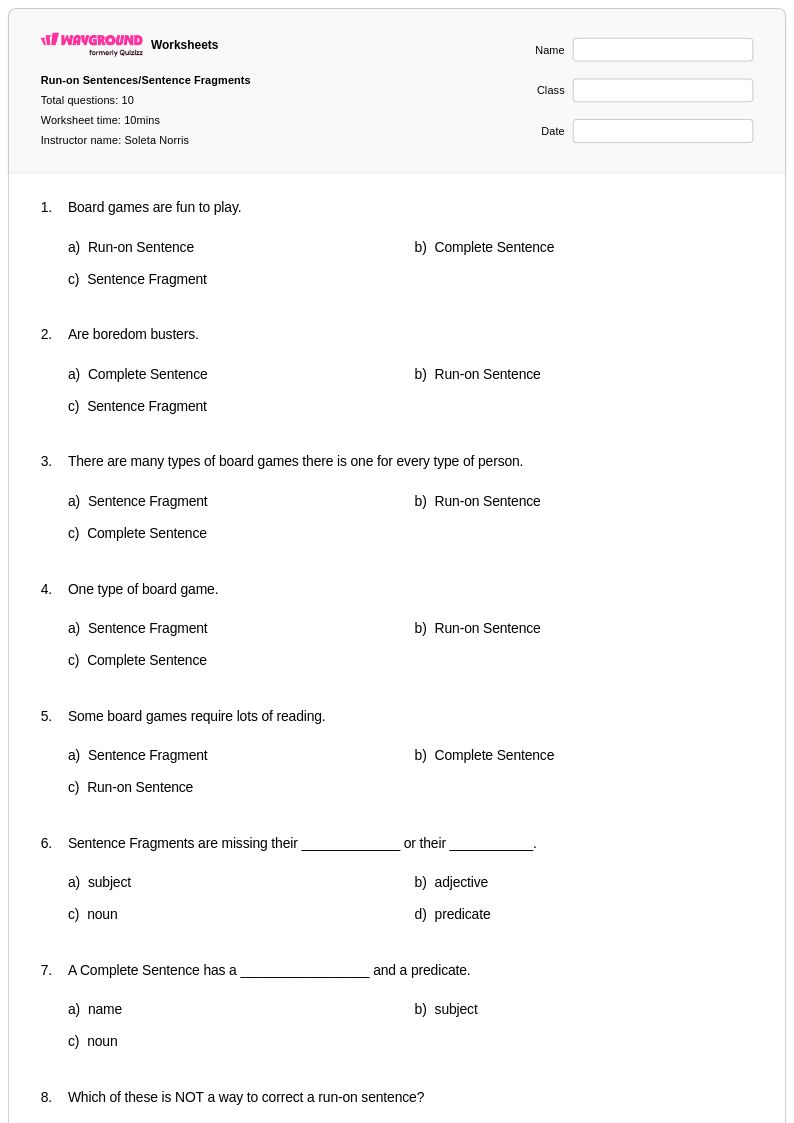
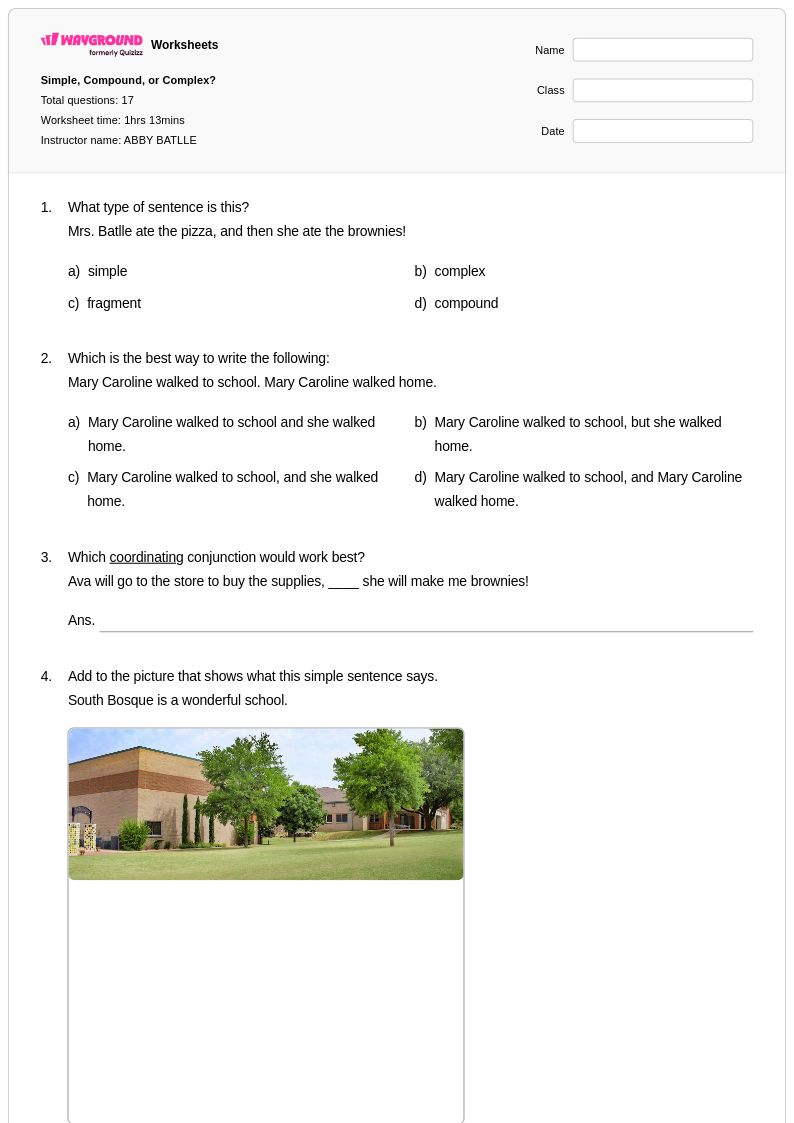
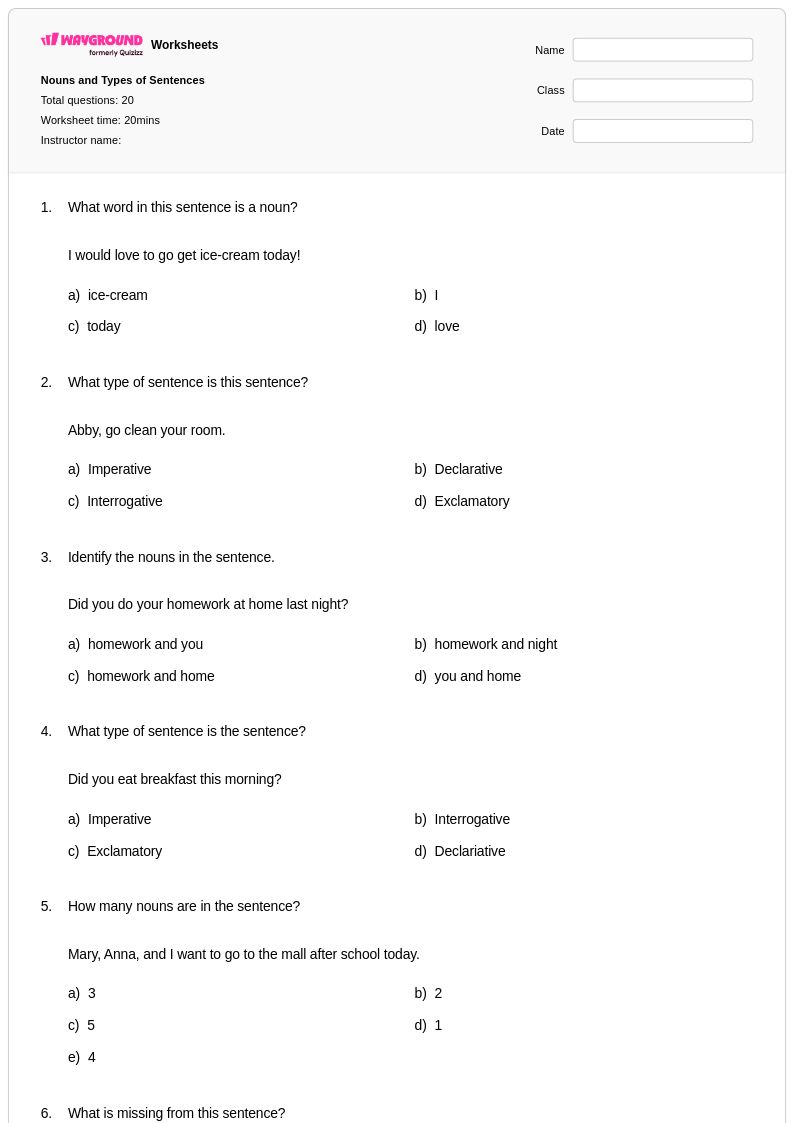
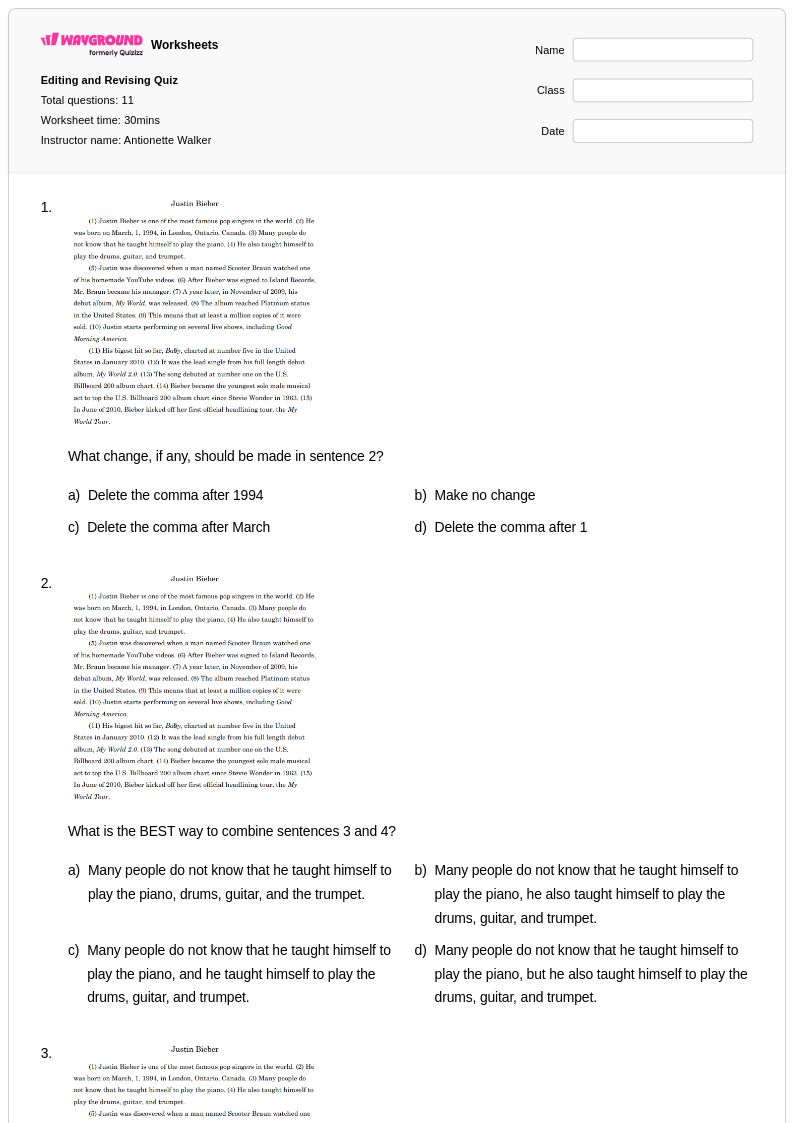
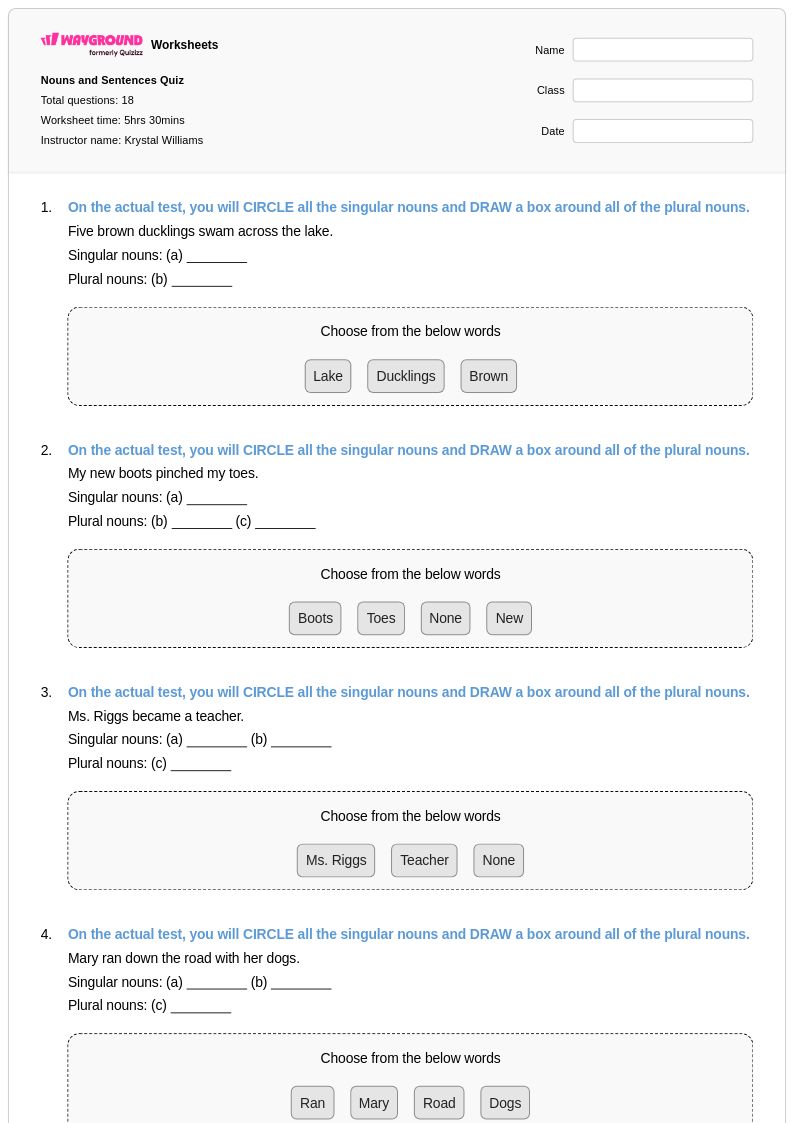
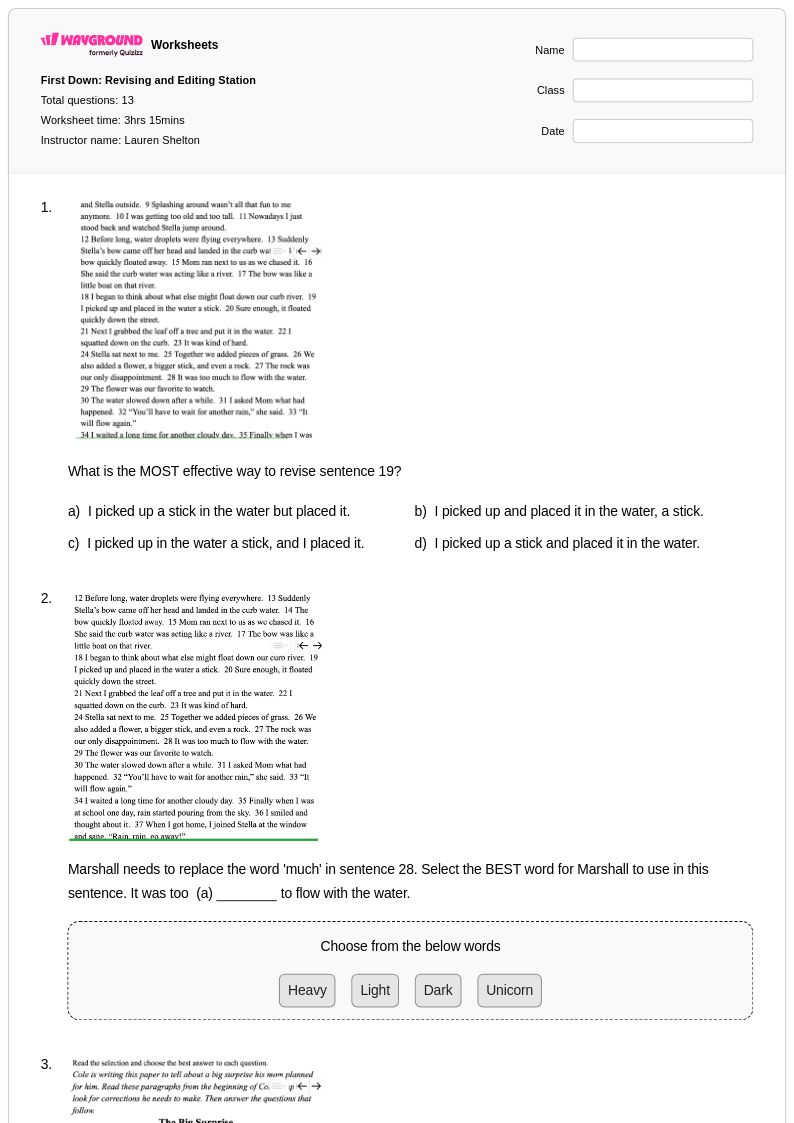
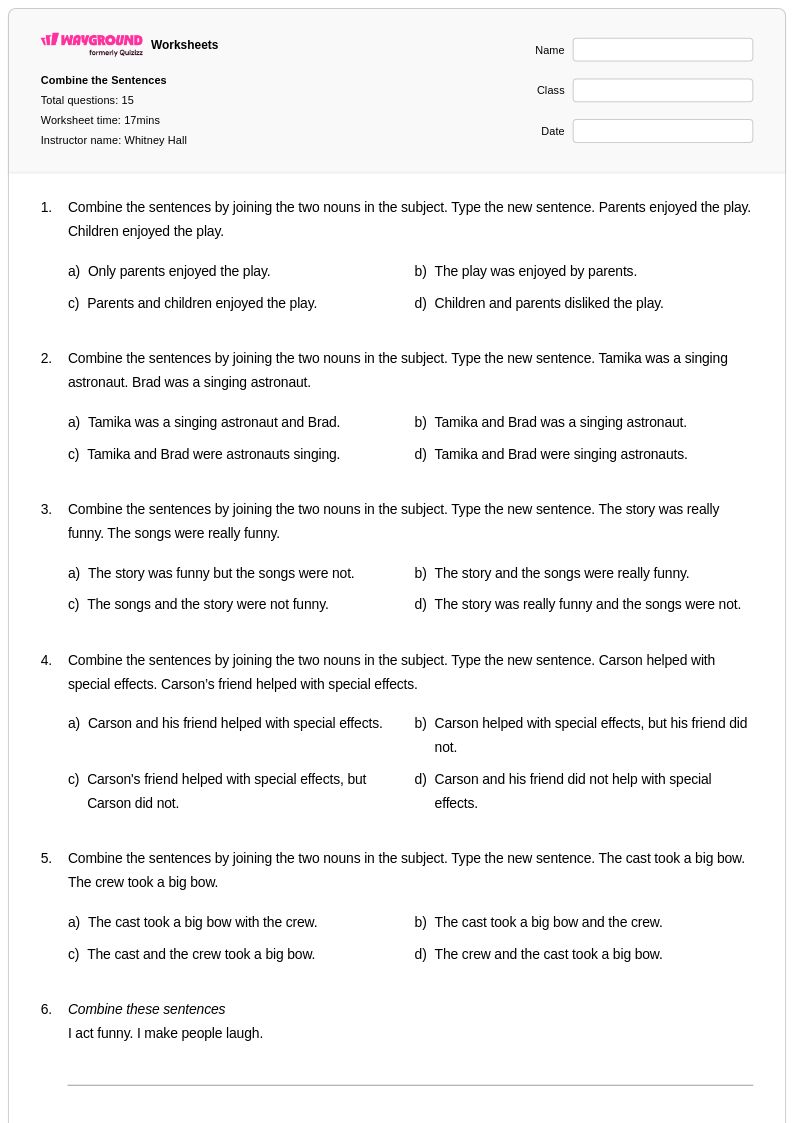
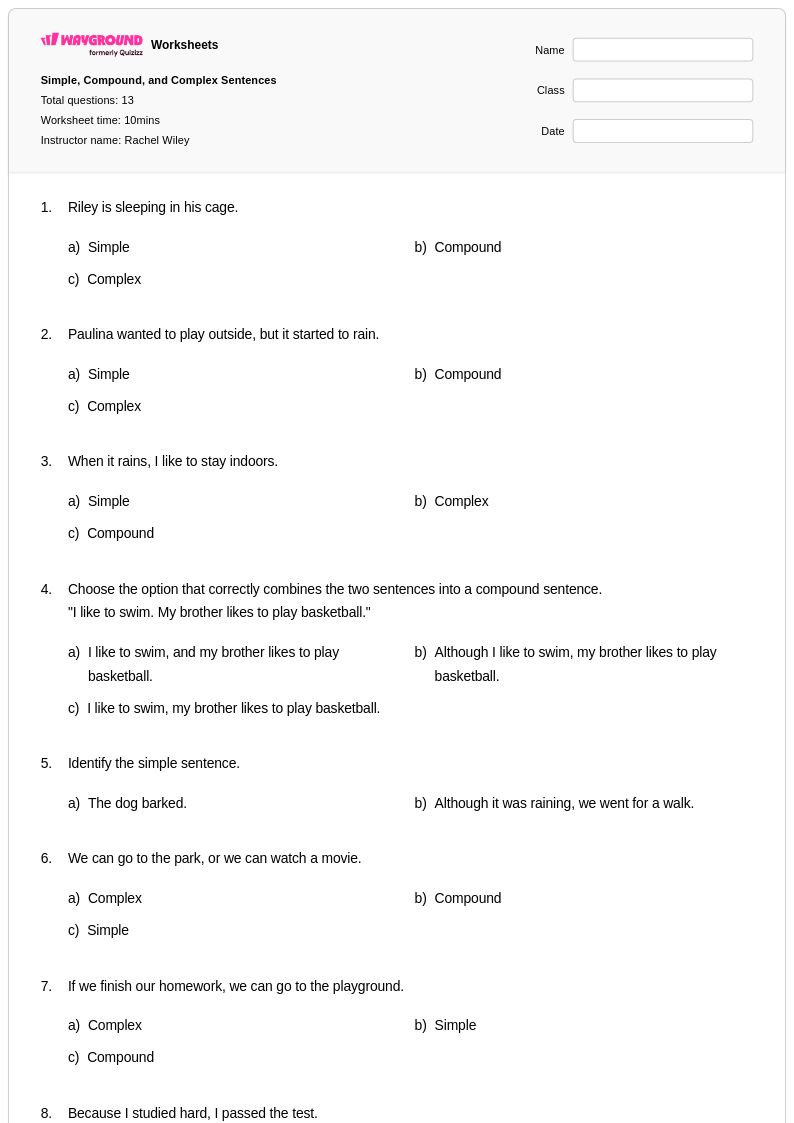
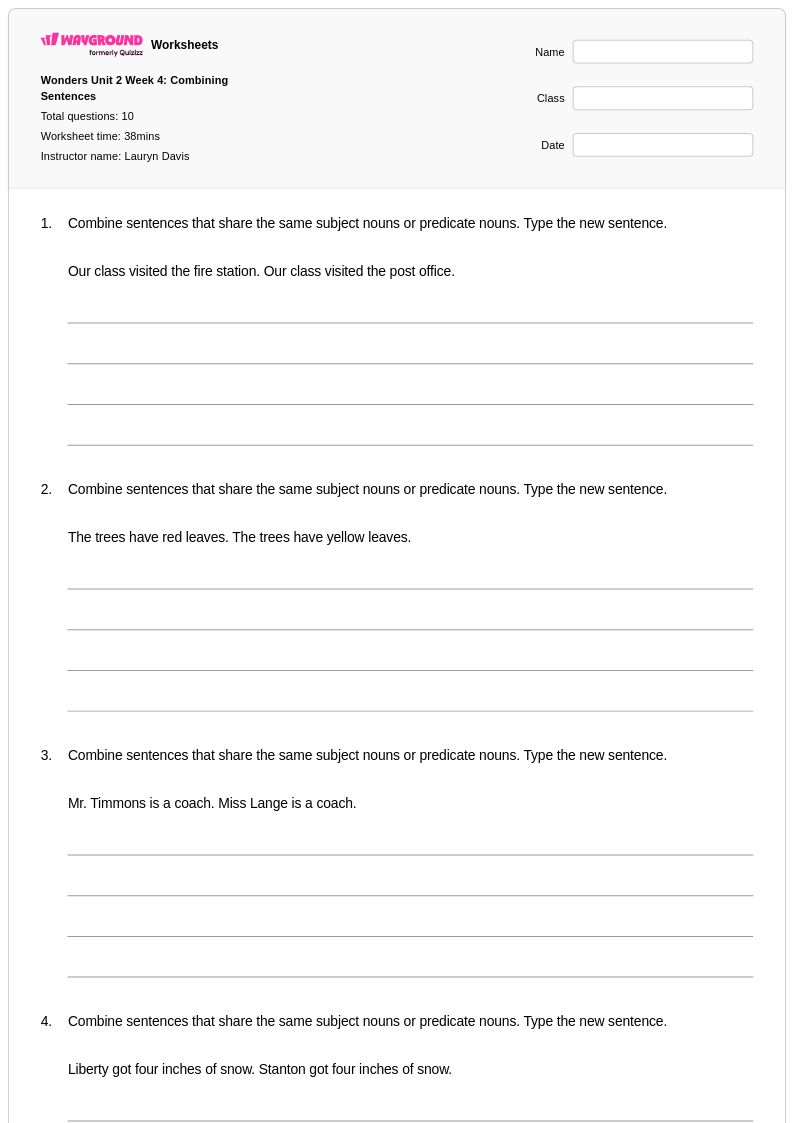
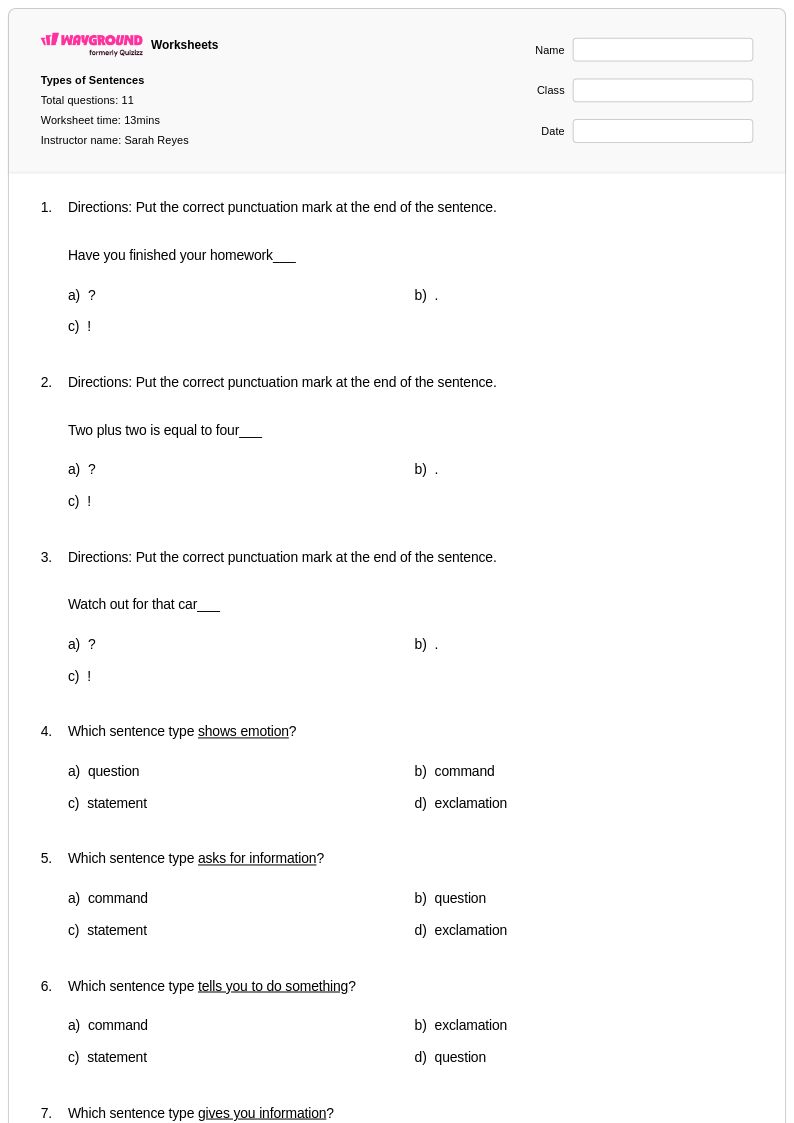
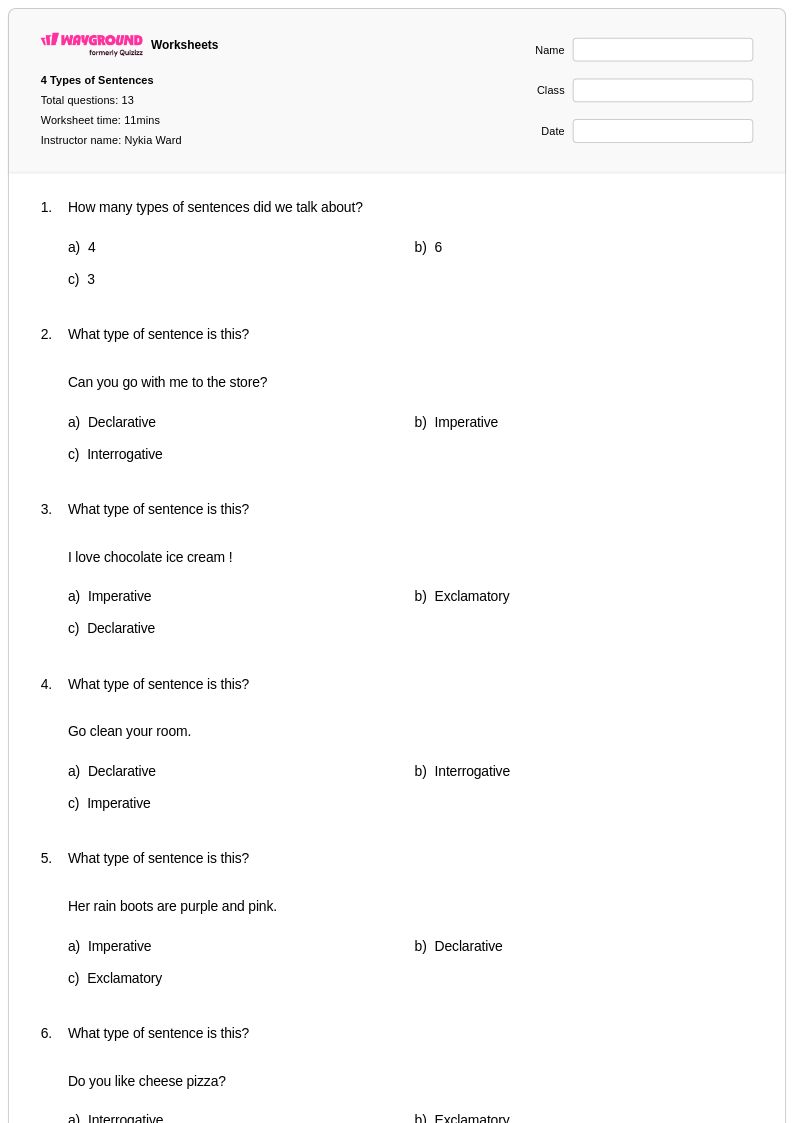
Unscrambling sentences worksheets for Class 3 students available through Wayground (formerly Quizizz) provide essential practice in understanding proper word order and sentence construction. These comprehensive resources challenge young learners to rearrange jumbled words into grammatically correct and meaningful sentences, strengthening their grasp of syntax, parts of speech, and logical sentence flow. Each worksheet features carefully crafted practice problems that progress from simple subject-verb-object patterns to more complex sentence structures appropriate for third-grade reading levels. Teachers can access these free printables with complete answer keys, making assessment and self-checking straightforward while building students' confidence in sentence formation and reading comprehension skills.
Wayground (formerly Quizizz) supports educators with an extensive collection of teacher-created unscrambling sentence resources, offering millions of worksheets that can be easily searched and filtered by specific learning objectives and standards alignment. The platform's differentiation tools allow teachers to customize difficulty levels, modify vocabulary complexity, and adjust sentence length to meet diverse student needs within the same classroom. These flexible resources are available in both printable PDF formats for traditional paper-and-pencil activities and digital formats for interactive online learning, enabling seamless integration into lesson planning, targeted remediation sessions, and enrichment activities. The comprehensive search functionality helps teachers quickly locate age-appropriate content that aligns with their curriculum goals, while the standardized answer keys streamline grading and provide immediate feedback opportunities for skill practice and mastery.
FAQs
How do I teach students to unscramble sentences?
Start by explicitly teaching the basic components of a sentence — subject, verb, and object — before asking students to reassemble them. Use short, simple sentences first so students can focus on identifying the subject-verb relationship without being overwhelmed by length. Gradually increase complexity by introducing adjectives, prepositional phrases, and subordinate clauses. Modeling the think-aloud process, where you narrate how you identify clues like capitalization and punctuation, gives students a replicable strategy they can apply independently.
What skills does unscrambling sentences practice build in students?
Unscrambling sentences directly reinforces syntactic awareness — the understanding of how words must be ordered to create grammatically correct meaning. Students practice identifying subject-verb relationships, proper placement of adjectives and nouns, and the logical sequencing of ideas within a sentence. Because students must actively reconstruct meaning rather than passively read, this exercise also strengthens reading comprehension and writing fluency over time.
What common mistakes do students make when unscrambling sentences?
The most frequent error is placing adjectives after the nouns they modify, which reflects interference from languages where that order is standard or simply a lack of internalized English syntax rules. Students also frequently misplace adverbs, particularly time and frequency words like 'always' or 'yesterday,' placing them at the start or end of a sentence without considering natural English word order. Another common mistake is ignoring capitalization as a clue for the sentence's first word, which can lead to multiple plausible but incorrect arrangements.
How can I differentiate unscrambling sentences activities for struggling readers?
For struggling readers, reduce sentence length and limit vocabulary to high-frequency words students already recognize, so cognitive load stays focused on word order rather than decoding. Providing a word bank with the correct words pre-labeled by part of speech can serve as a scaffold before removing that support. On Wayground, teachers can enable the Read Aloud accommodation so sentences are read to students, and the Reduced Answer Choices setting can lower the number of options displayed, making the task more manageable for students who need additional support.
How do I use Wayground's unscrambling sentences worksheets in my classroom?
Wayground's unscrambling sentences worksheets are available as printable PDFs for traditional classroom use and in digital formats for technology-integrated or remote learning environments, including the option to host them as a quiz directly on Wayground. Each worksheet includes a complete answer key, making them practical for independent work, center rotations, homework assignments, or targeted remediation sessions. Teachers can use Wayground's search and filtering tools to locate worksheets by reading level or grammar concept, ensuring the activity matches the current instructional focus.
At what grade level are unscrambling sentences worksheets most appropriate?
Unscrambling sentences exercises are most commonly used in early elementary grades, typically kindergarten through third grade, when students are building foundational understanding of English sentence structure. However, they remain valuable for upper elementary and middle school students who are learning more complex sentence constructions, including compound and complex sentences. They are also an effective tool for ELL students at any grade level who are developing English syntactic awareness.