Free Printable Units of Volume Worksheets for Kindergarten
Discover free kindergarten science worksheets and printables focused on units of volume, helping young learners explore measurement concepts through engaging practice problems with included answer keys.
Explore printable Units of Volume worksheets for Kindergarten
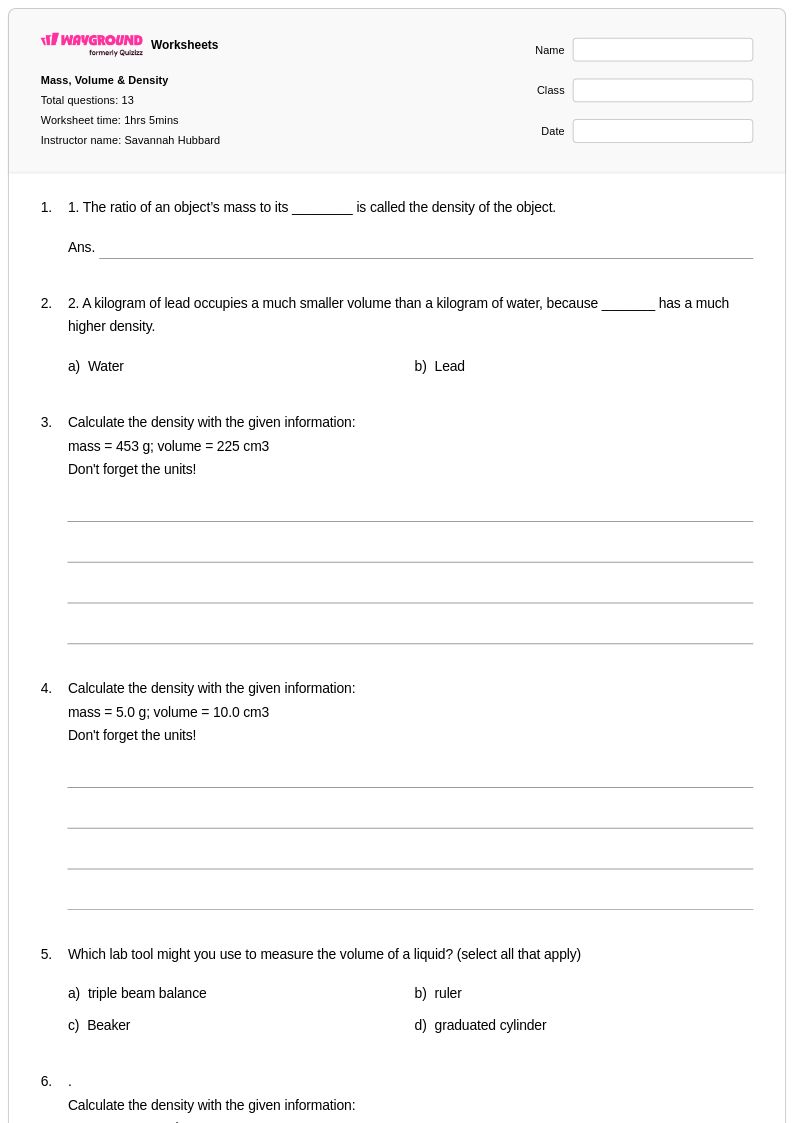
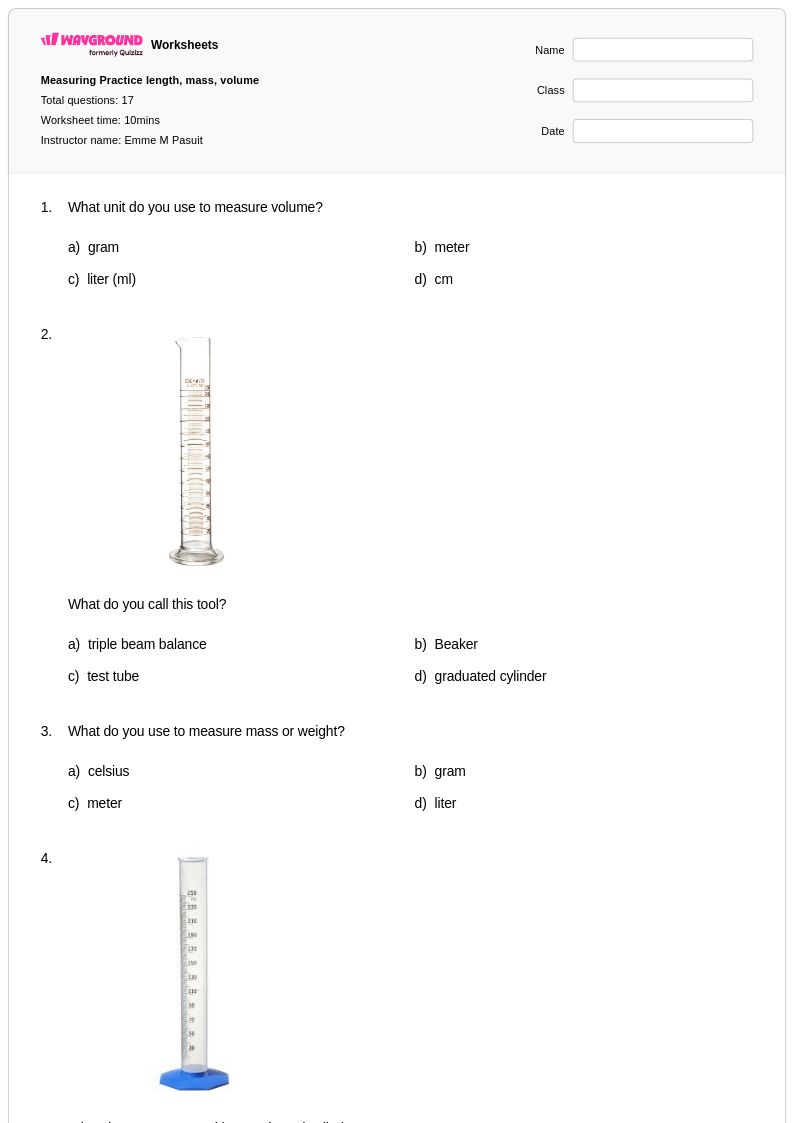
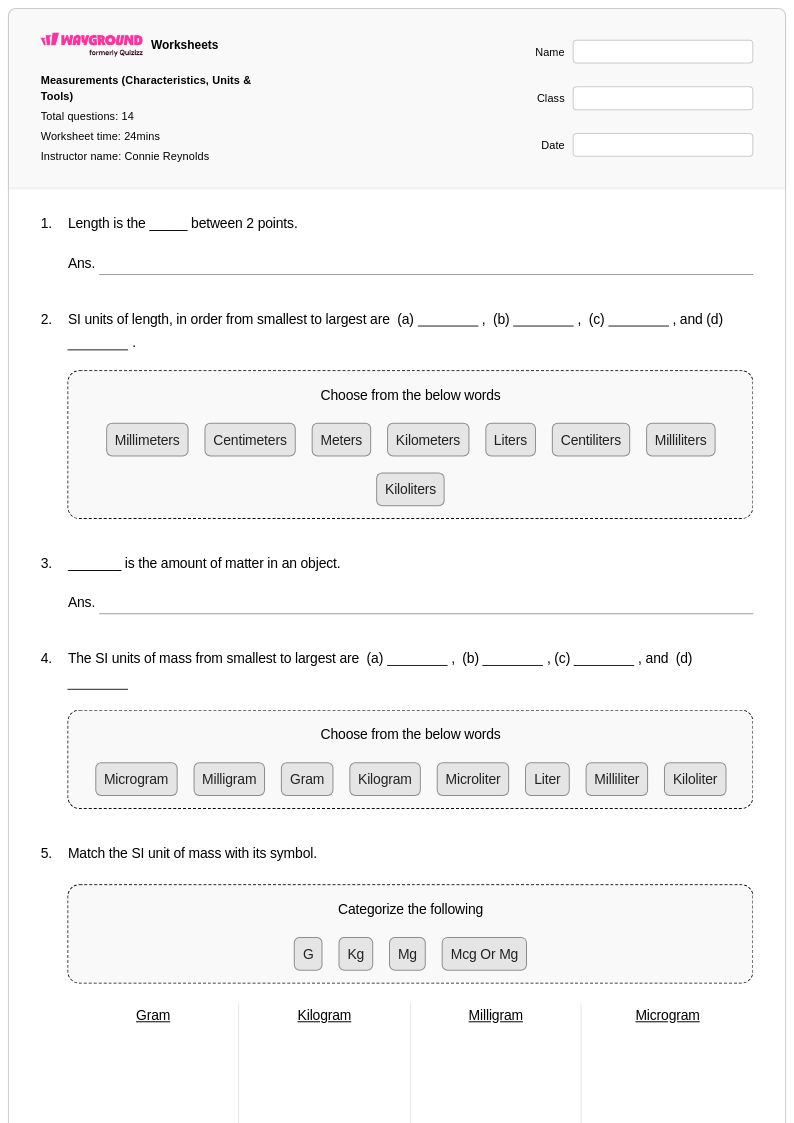
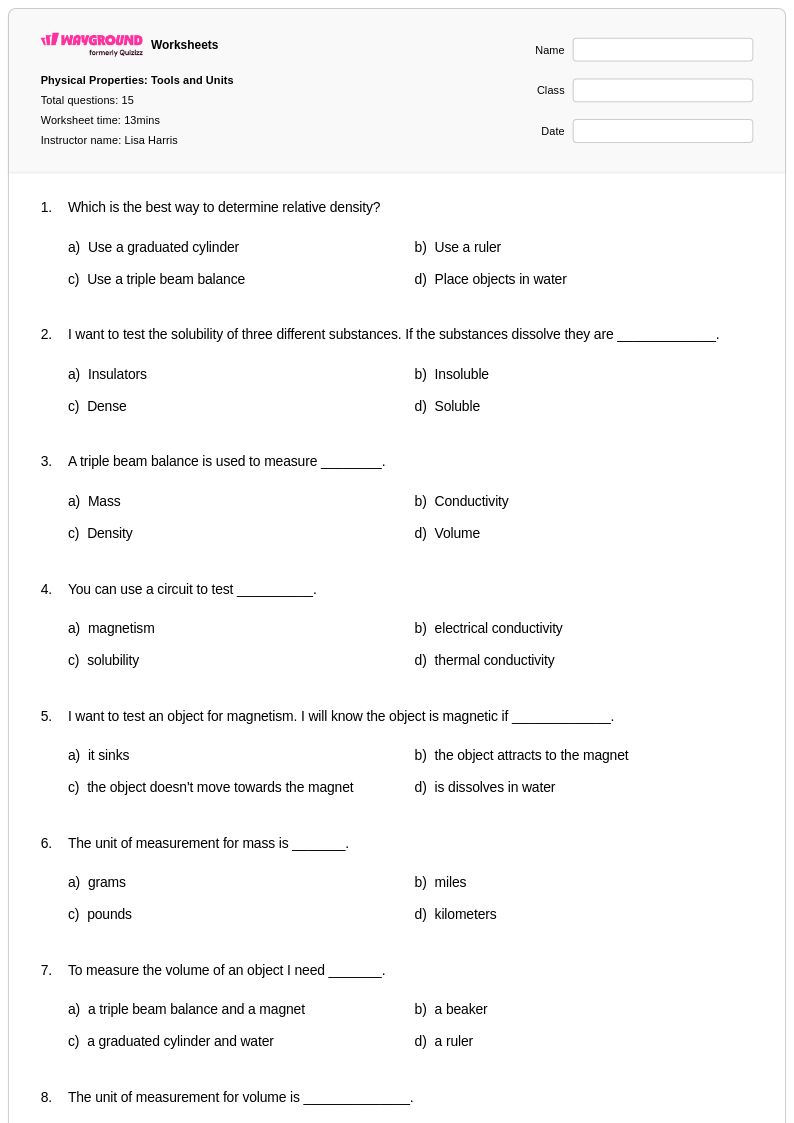
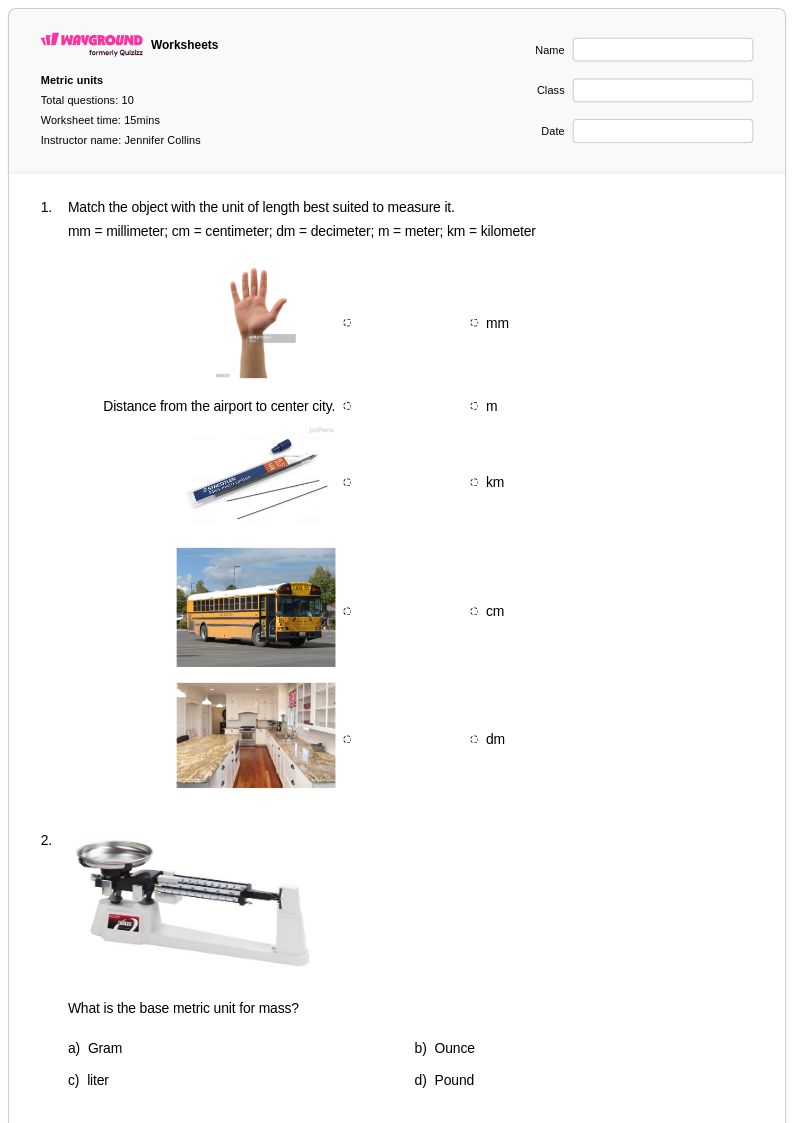
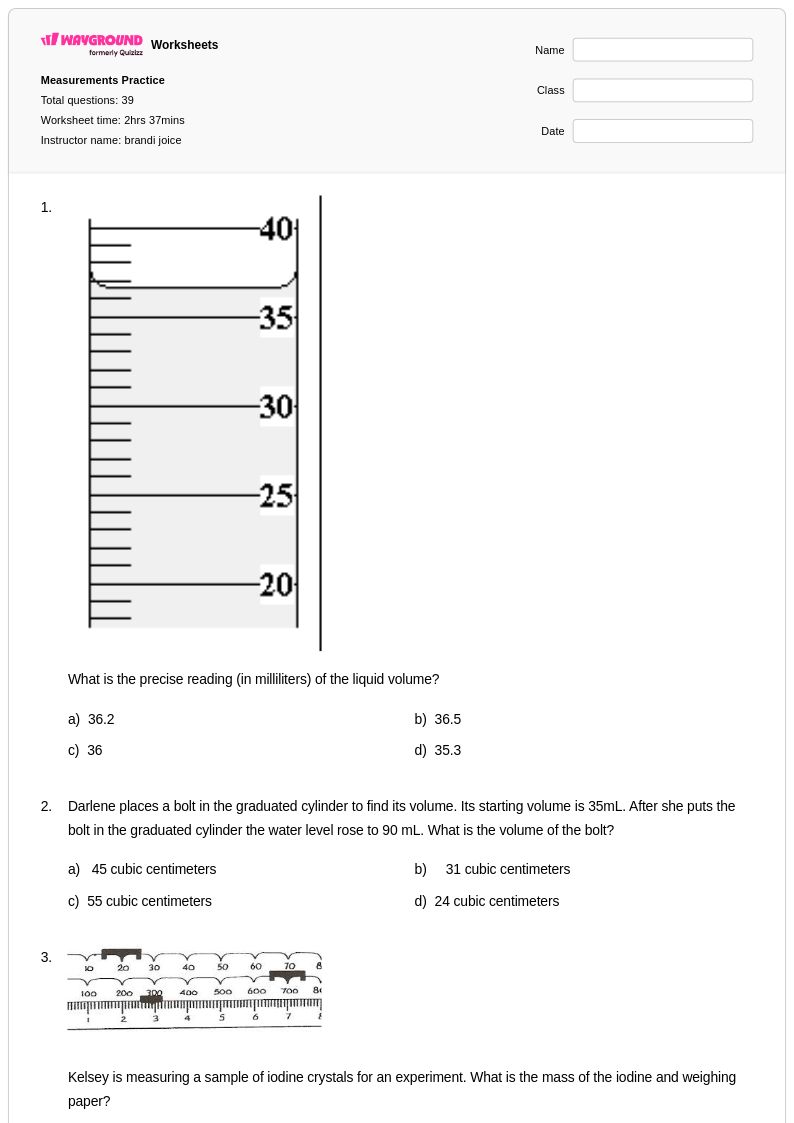
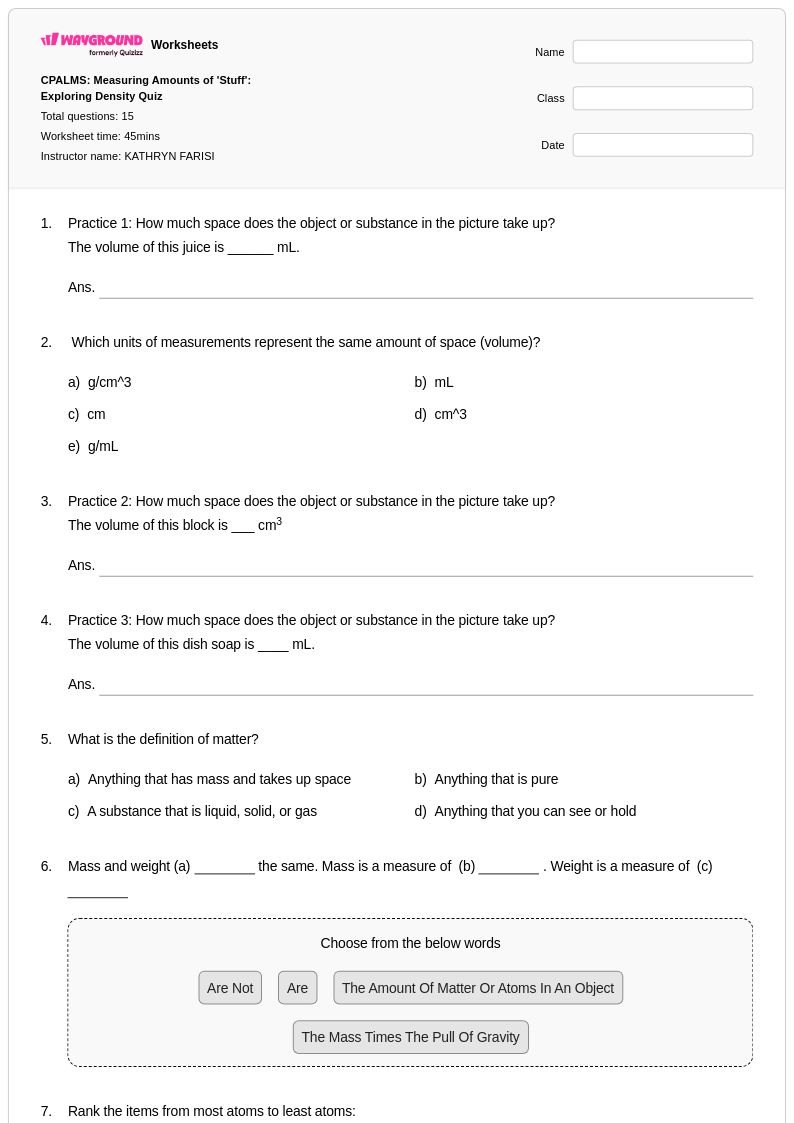
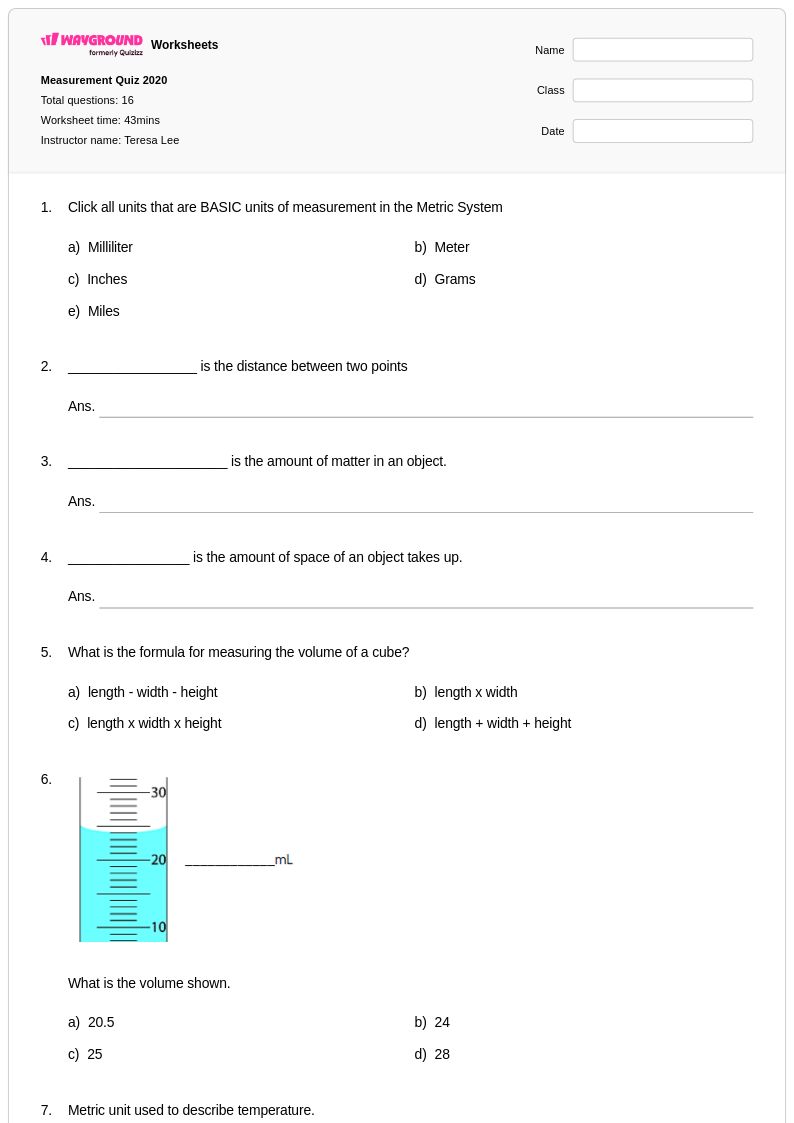
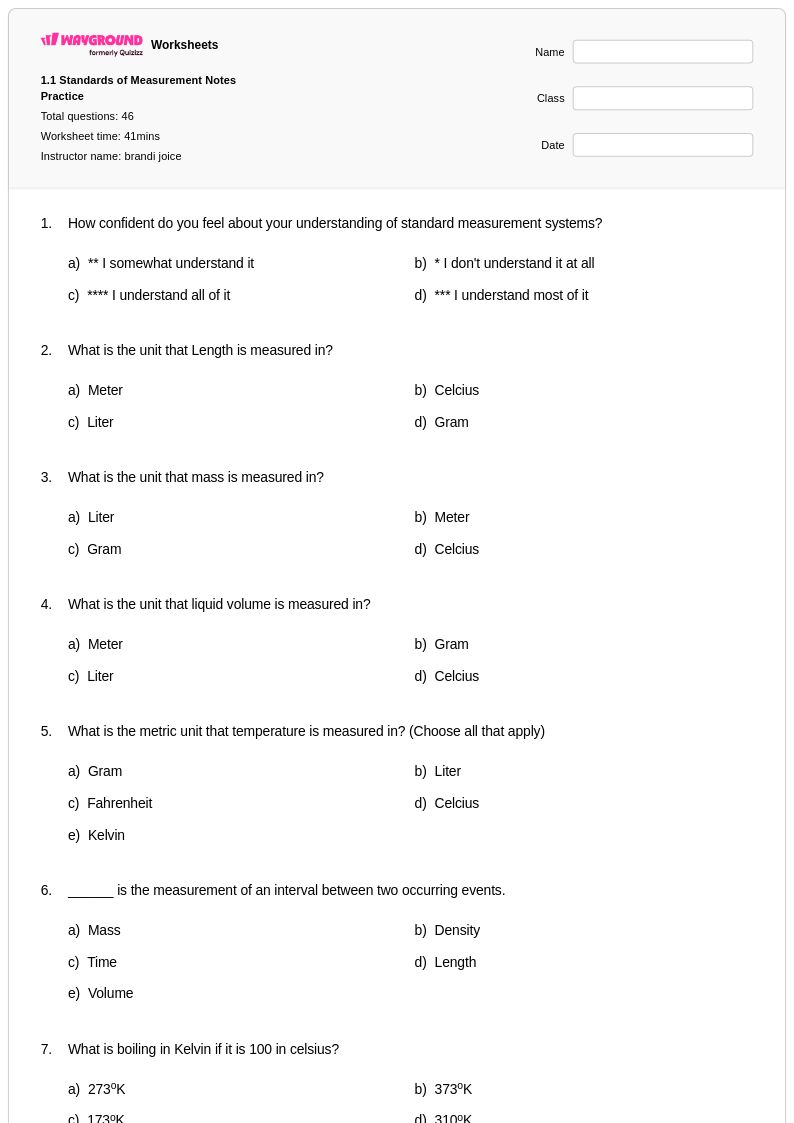
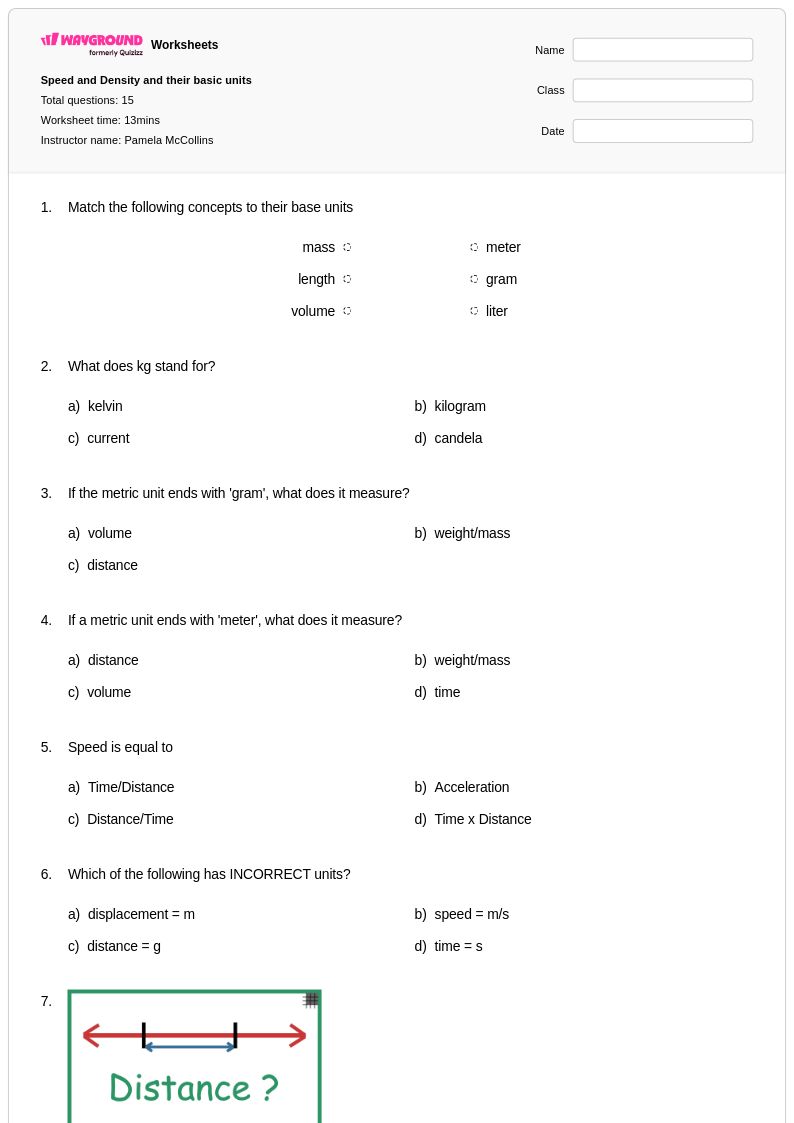
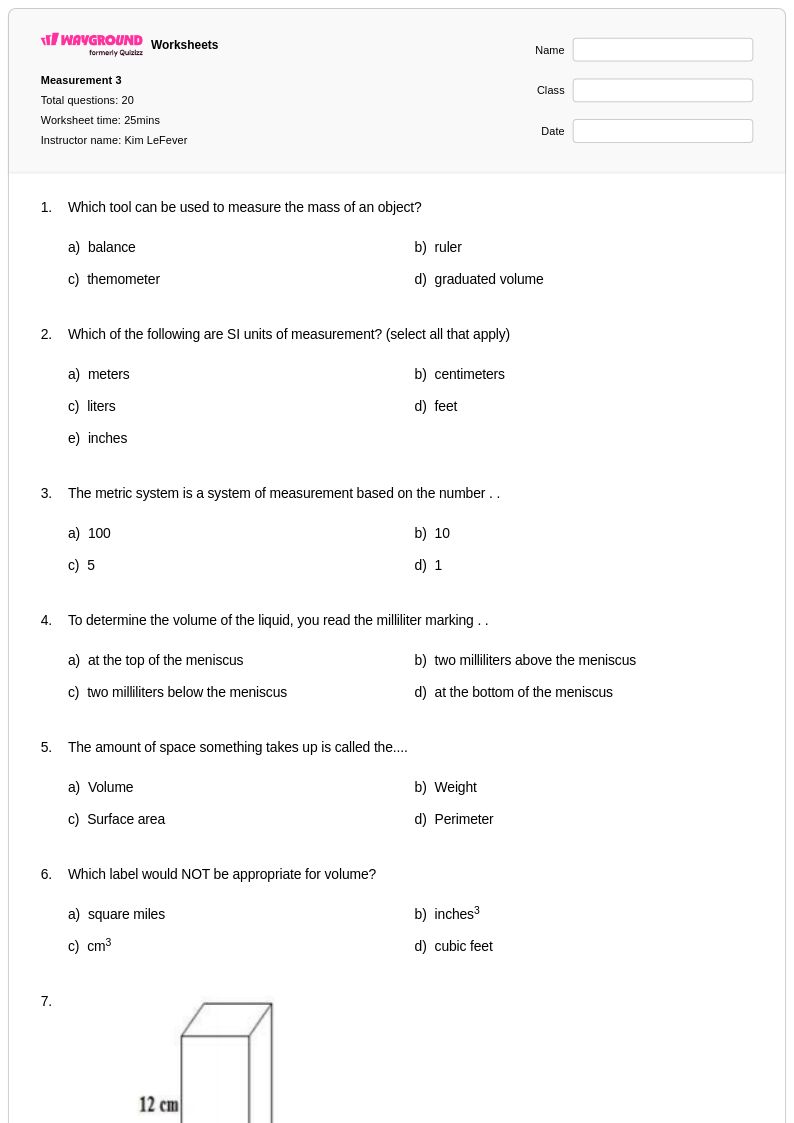
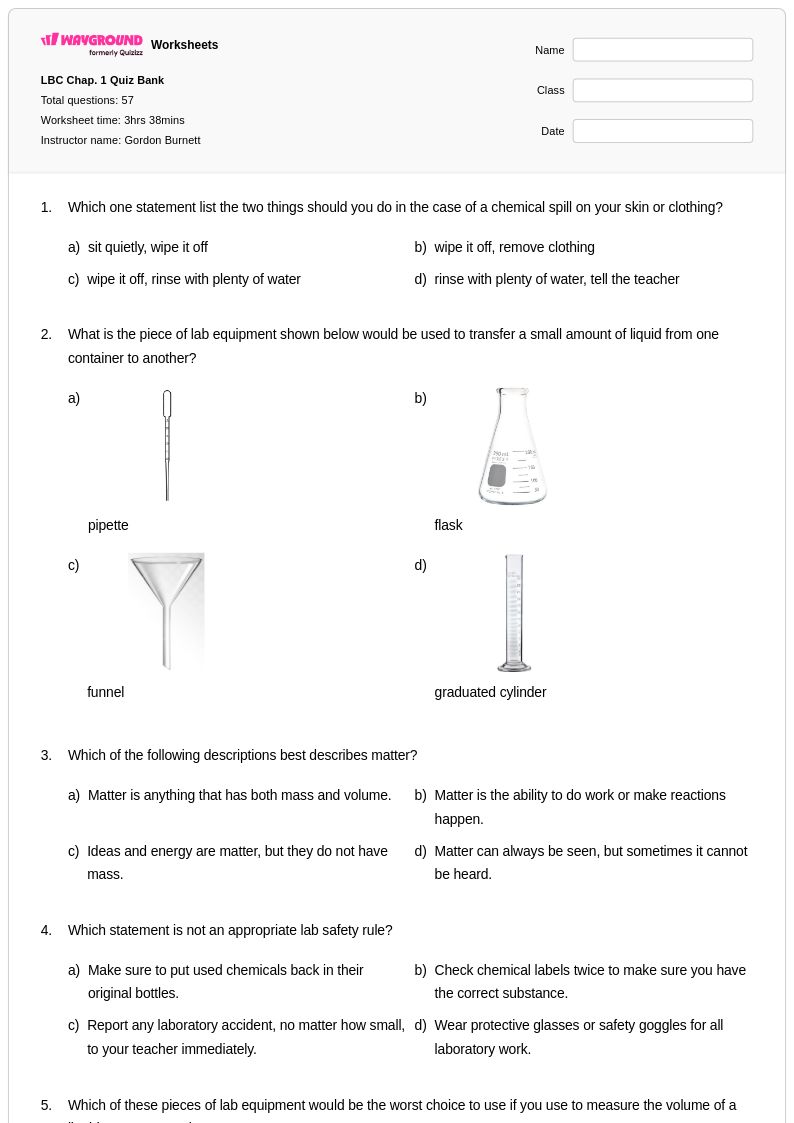
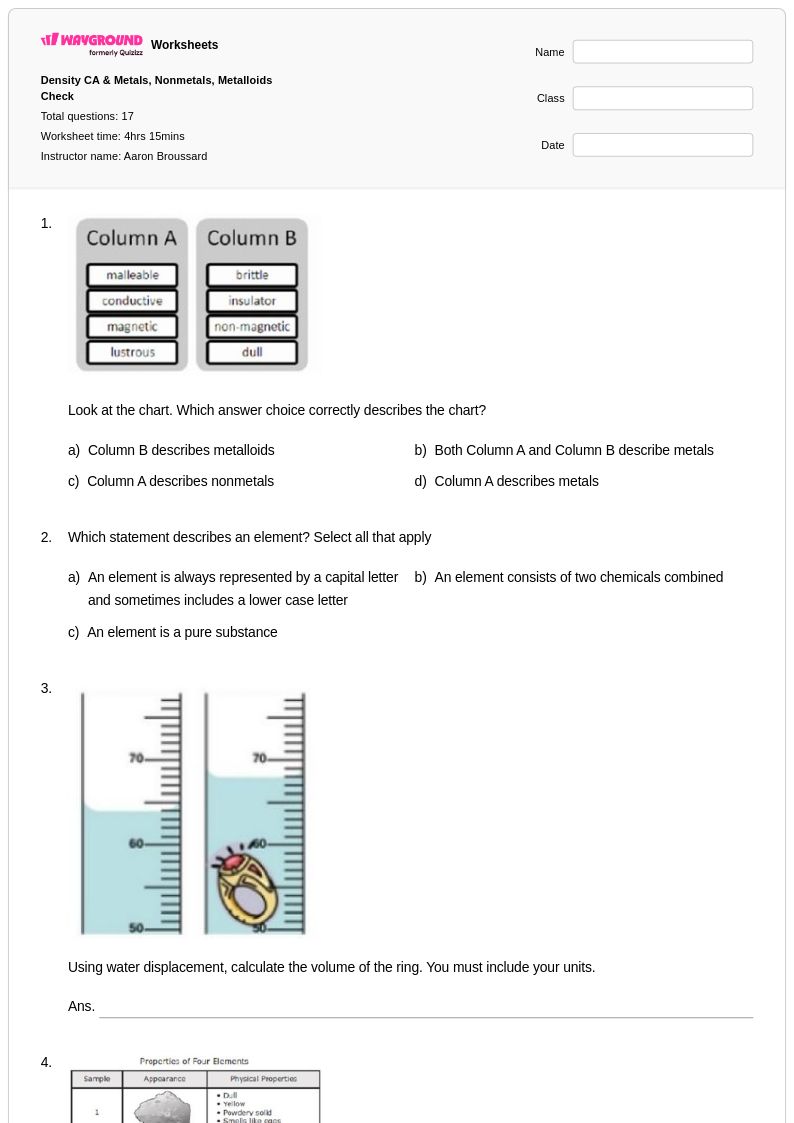
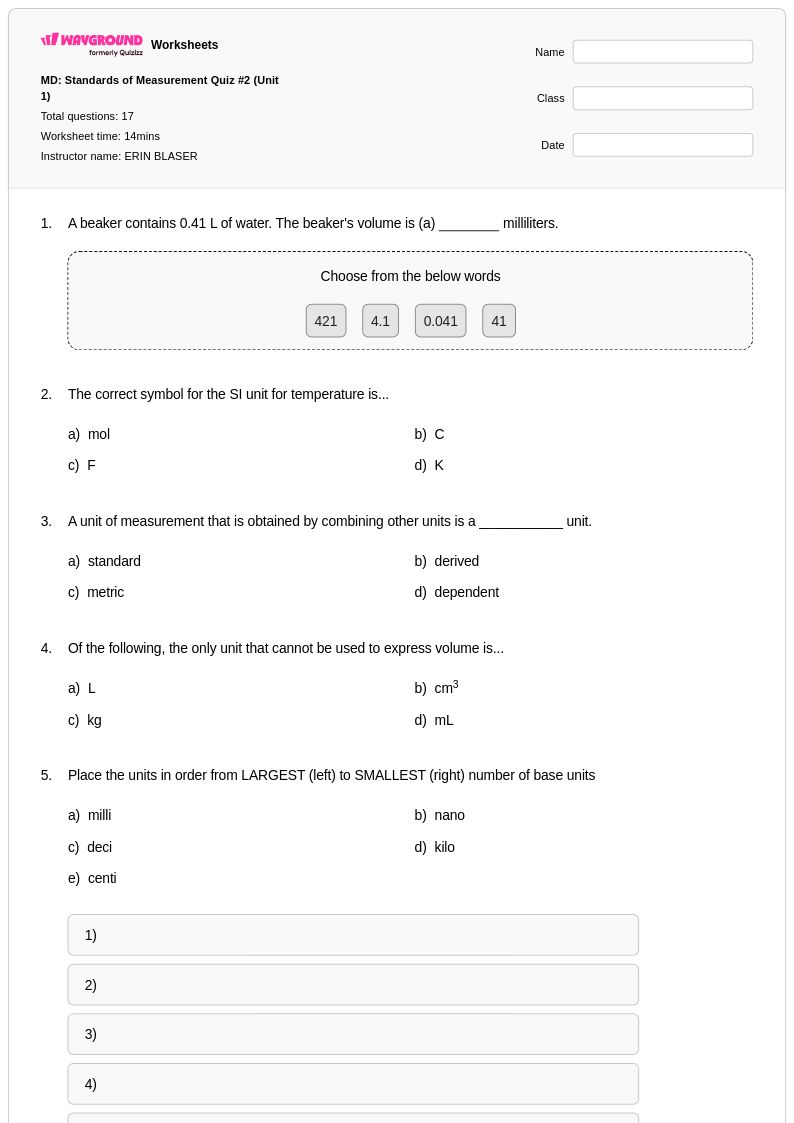
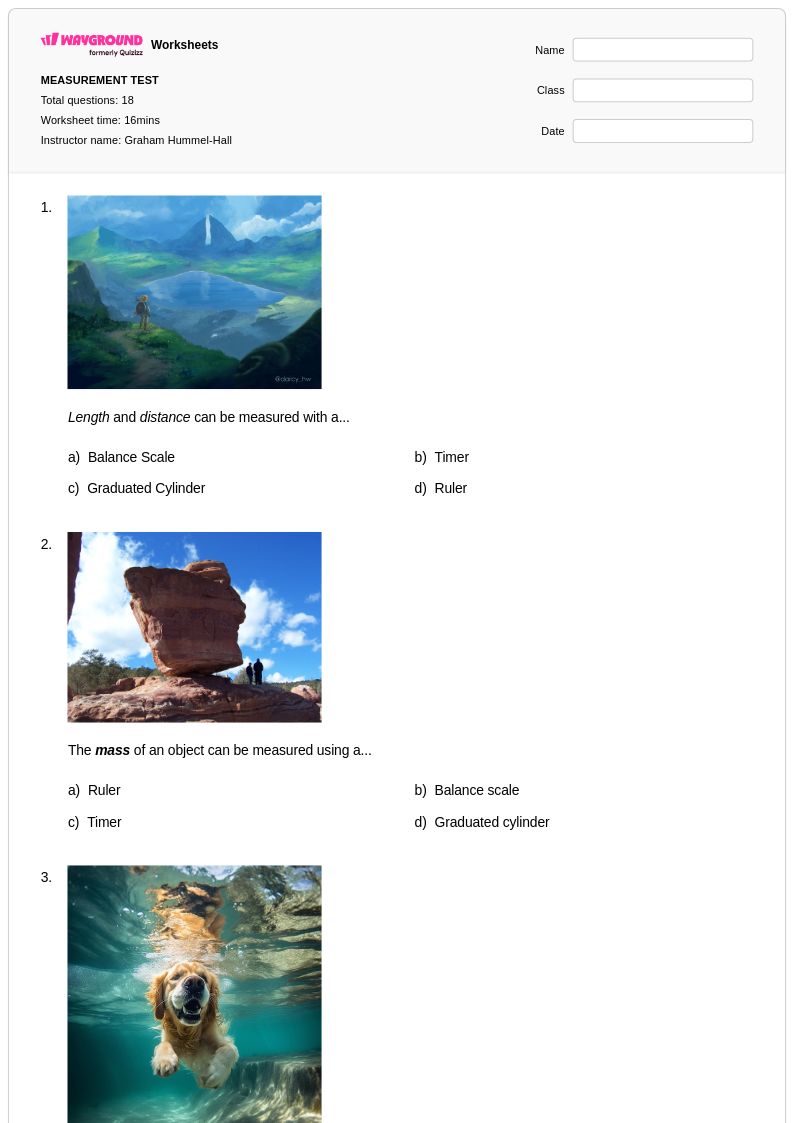
Units of volume worksheets for kindergarten students available through Wayground (formerly Quizizz) introduce young learners to fundamental measurement concepts through engaging, developmentally appropriate activities. These educational resources focus on building foundational understanding of volume concepts by helping children recognize and compare different containers, understand the relationship between size and capacity, and develop early measurement vocabulary. The worksheets strengthen essential pre-math skills including spatial reasoning, comparative thinking, and logical problem-solving through hands-on activities that encourage exploration of how much different containers can hold. Each printable resource includes comprehensive practice problems designed to reinforce learning, and teachers can access free pdf versions along with detailed answer keys to support effective instruction and assessment of student progress.
Wayground (formerly Quizizz) empowers educators with millions of teacher-created resources specifically designed to support kindergarten units of volume instruction across diverse learning environments. The platform's robust search and filtering capabilities allow teachers to quickly locate age-appropriate worksheets that align with early childhood mathematics standards and developmental milestones. Advanced differentiation tools enable instructors to customize content for varying ability levels, ensuring that both struggling learners and advanced students receive appropriate challenges during volume exploration activities. These versatile resources are available in both printable and digital formats, including convenient pdf downloads, making them ideal for classroom instruction, homework assignments, remediation sessions, and enrichment activities that extend learning beyond the traditional classroom setting.
FAQs
How do I teach units of volume to students who confuse capacity and volume?
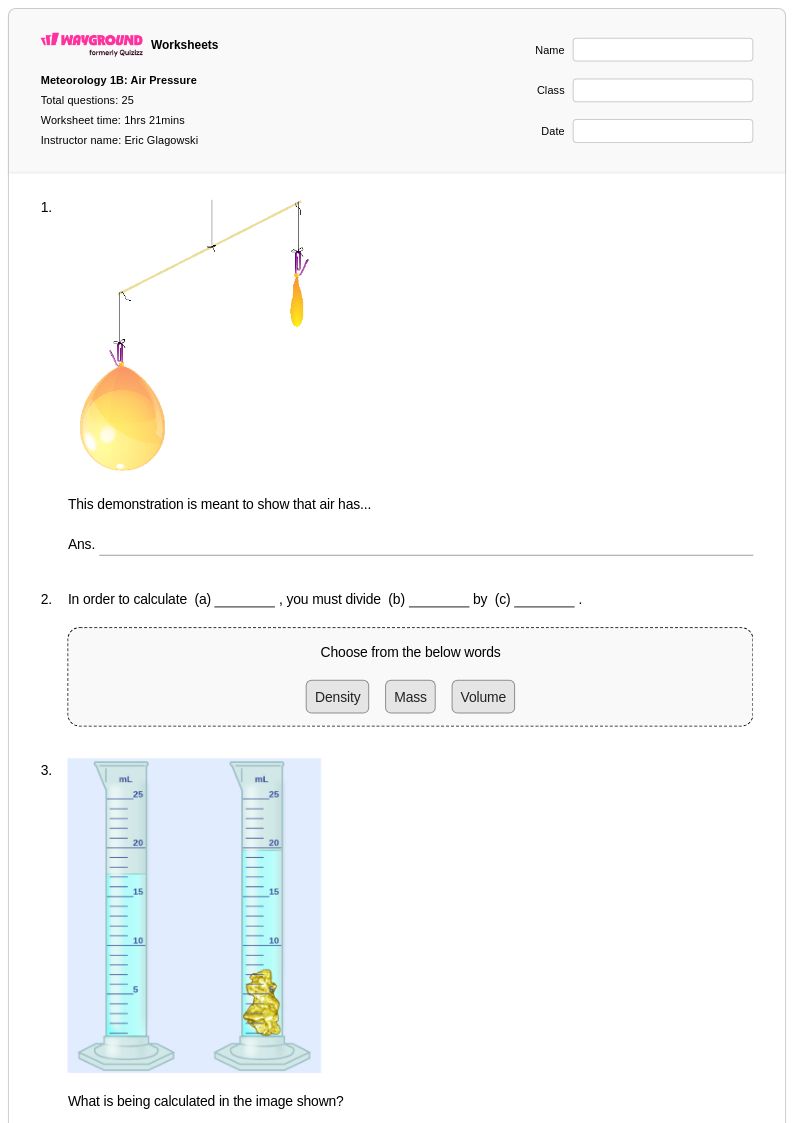
Capacity and volume describe related but distinct ideas: volume refers to the amount of three-dimensional space an object occupies, while capacity refers to how much a container can hold. A useful classroom approach is to use physical containers filled with water or sand so students can see that a rectangular prism has a calculated volume in cubic units, while the same container has a capacity measured in liters or milliliters. Explicitly connecting the metric relationship (1 mL = 1 cm³) gives students a concrete bridge between the two concepts and reduces persistent confusion.
What exercises help students practice converting between units of volume?
Conversion practice is most effective when it progresses from single-step problems (e.g., liters to milliliters) to multi-step problems that require students to move across unit systems or apply volume formulas before converting. Worksheets that pair a formula application step with an immediate unit conversion reinforce both skills simultaneously. Including real-world contexts, such as finding the volume of a fish tank in cubic inches and then expressing it in cubic feet, keeps practice meaningful and reveals whether students understand the conversion rationale rather than just memorizing factors.
What mistakes do students commonly make when working with units of volume?
One of the most frequent errors is applying area formulas instead of volume formulas, particularly multiplying only two dimensions instead of three when finding the volume of a rectangular prism. Students also commonly forget to cube the unit label, writing cm instead of cm³, which signals a surface-level understanding of what volume measures. In metric-to-imperial conversions, students often confuse the scale of cubic unit conversions (e.g., not recognizing that 1 cubic foot contains 1,728 cubic inches because all three dimensions must be converted). Targeted practice with unit labeling and dimensional analysis can address all three patterns.
How do I use these units of volume worksheets in my classroom?
Wayground's units of volume worksheets are available as printable PDFs for traditional classroom use and in digital formats for technology-integrated environments, making them flexible enough for in-person, hybrid, or remote instruction. Teachers can also host them as a quiz directly on Wayground for live or asynchronous student practice. Each worksheet includes a complete answer key, so they work equally well for independent student practice, guided small-group instruction, or homework assignments without additional teacher preparation.
How do I support struggling students when teaching volume measurement conversions?
Struggling students benefit from reduced cognitive load during conversion tasks, which means isolating one skill at a time before combining steps. On Wayground, teachers can apply accommodations such as reduced answer choices for individual students, lowering the number of options displayed so students can focus on reasoning rather than elimination guessing. The Read Aloud feature can also support students with reading difficulties so that language barriers do not interfere with demonstrating their math understanding. These accommodations can be assigned to specific students while the rest of the class works with default settings.
How do I differentiate units of volume worksheets for mixed-ability classes?
Effective differentiation for volume measurement starts with identifying whether a student's difficulty is conceptual (not understanding what volume means) or procedural (not knowing the conversion factors or formulas). For below-level learners, worksheets that begin with visual representations of cubic units and graduated cylinders build the conceptual foundation before introducing calculation. For advanced students, multi-step problems that combine volume formula application with unit conversion in both metric and imperial systems provide appropriate challenge. Wayground's filtering tools allow teachers to locate materials at different difficulty levels quickly, without building separate sets of materials from scratch.