Free Printable Voice in Writing Worksheets for Class 11
Class 11 voice in writing worksheets and printables help students develop their unique writing style through free PDF practice problems that strengthen personal expression and author perspective with comprehensive answer keys.
Explore printable Voice in Writing worksheets for Class 11
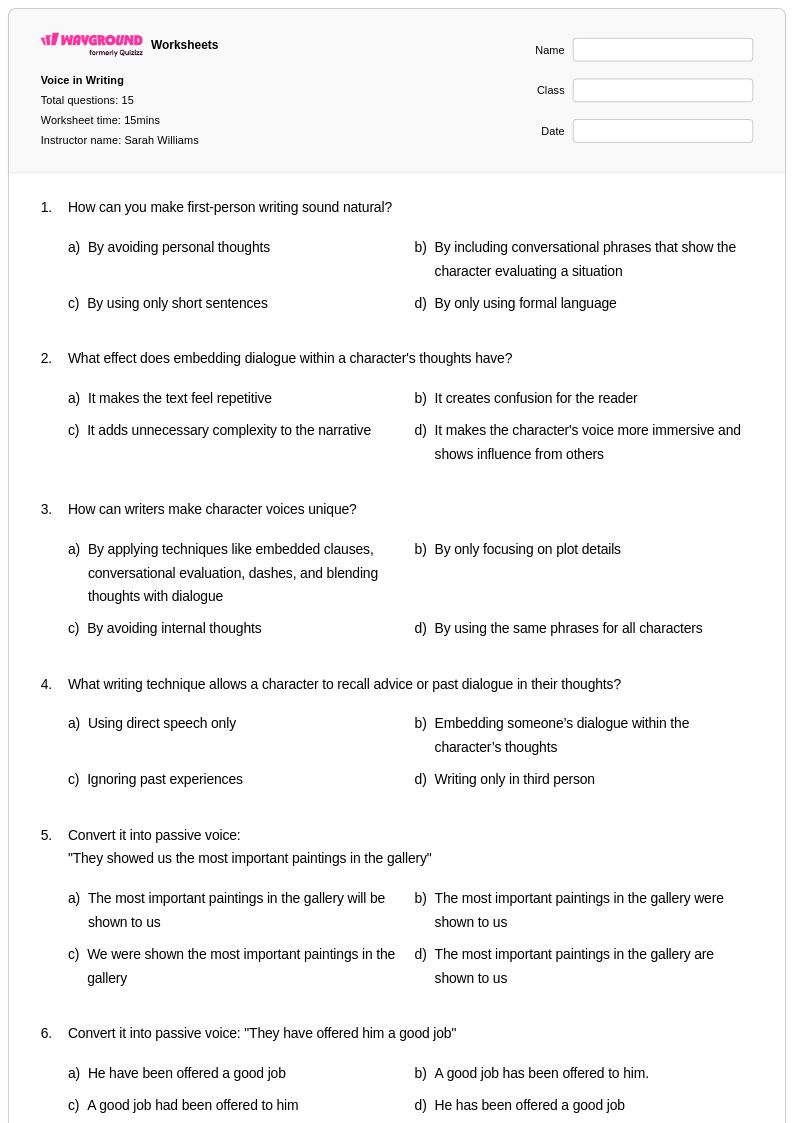
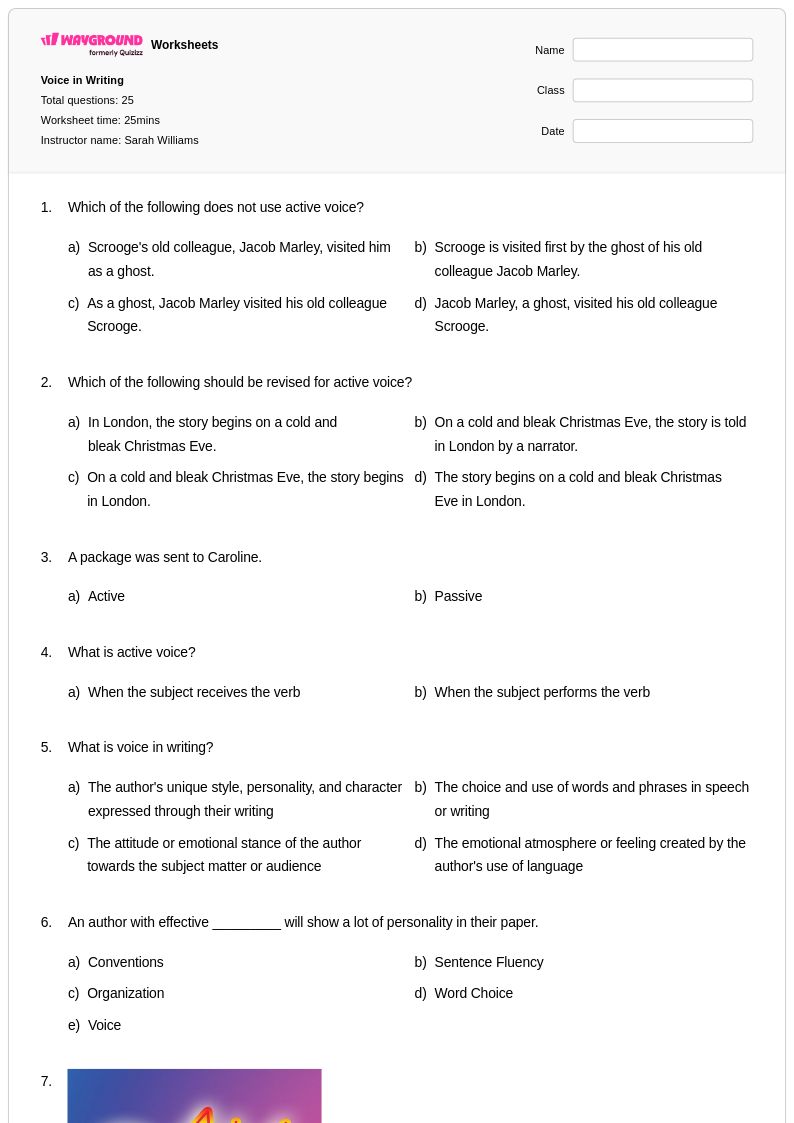
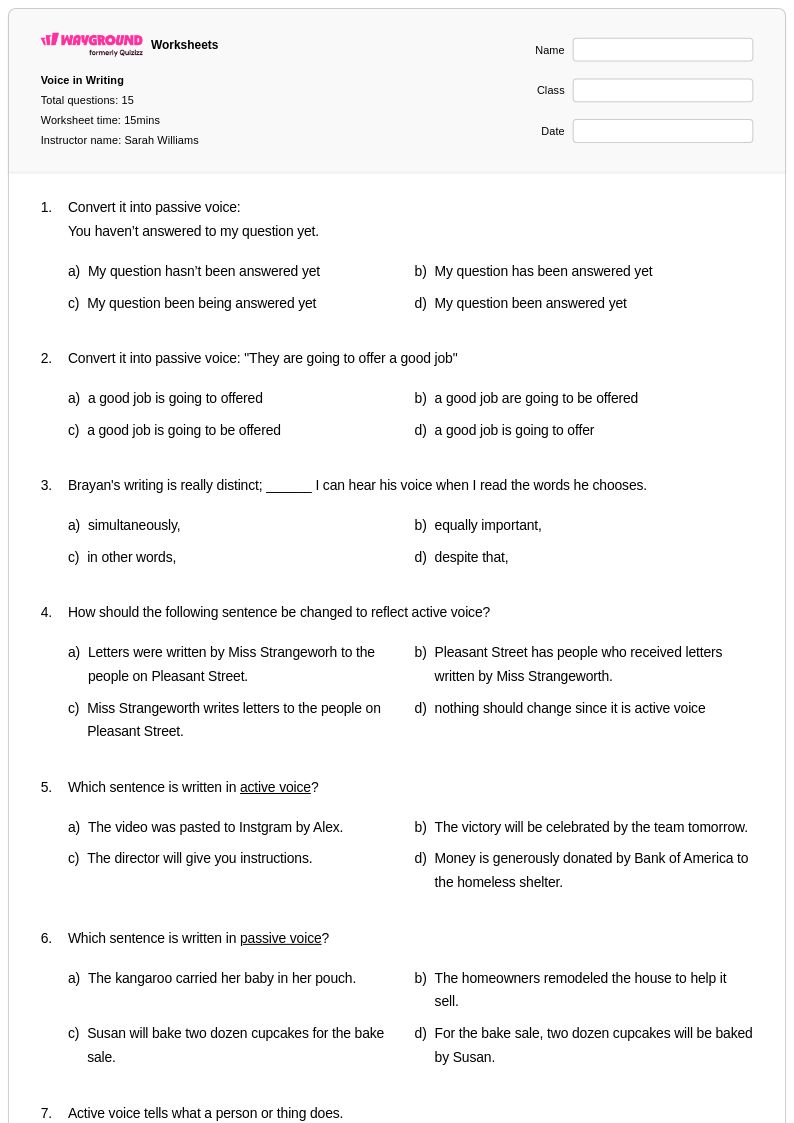
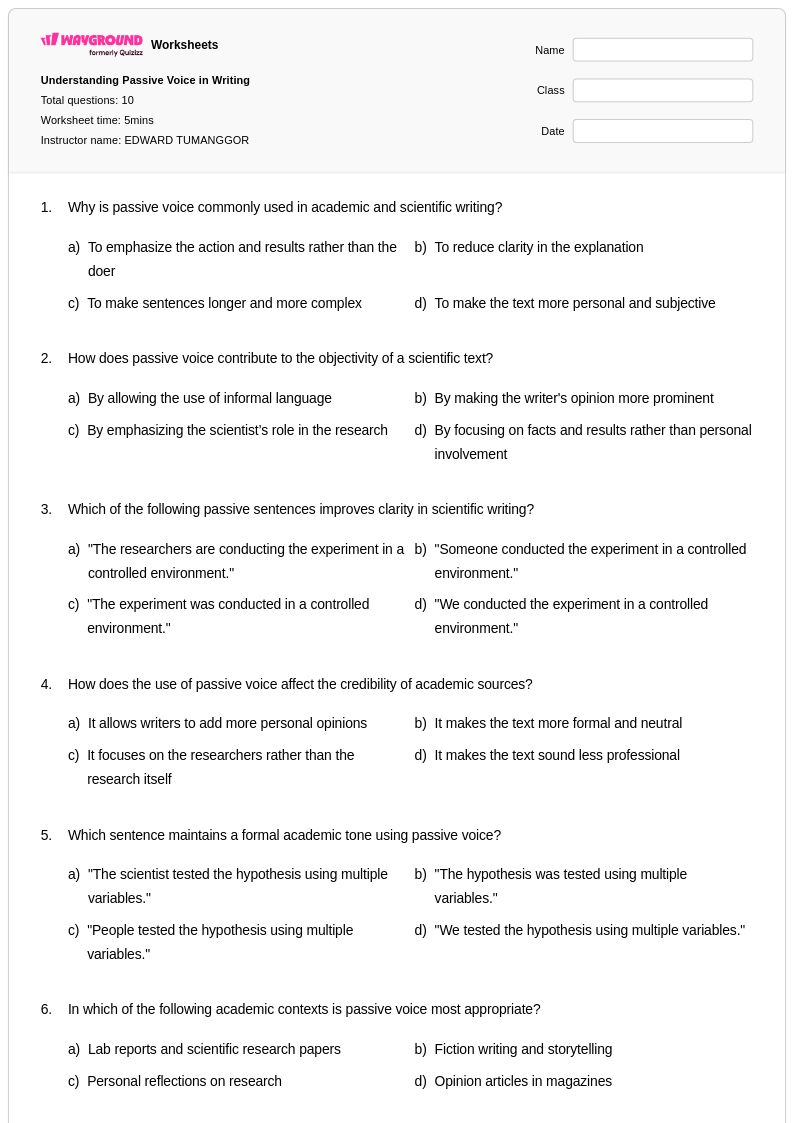
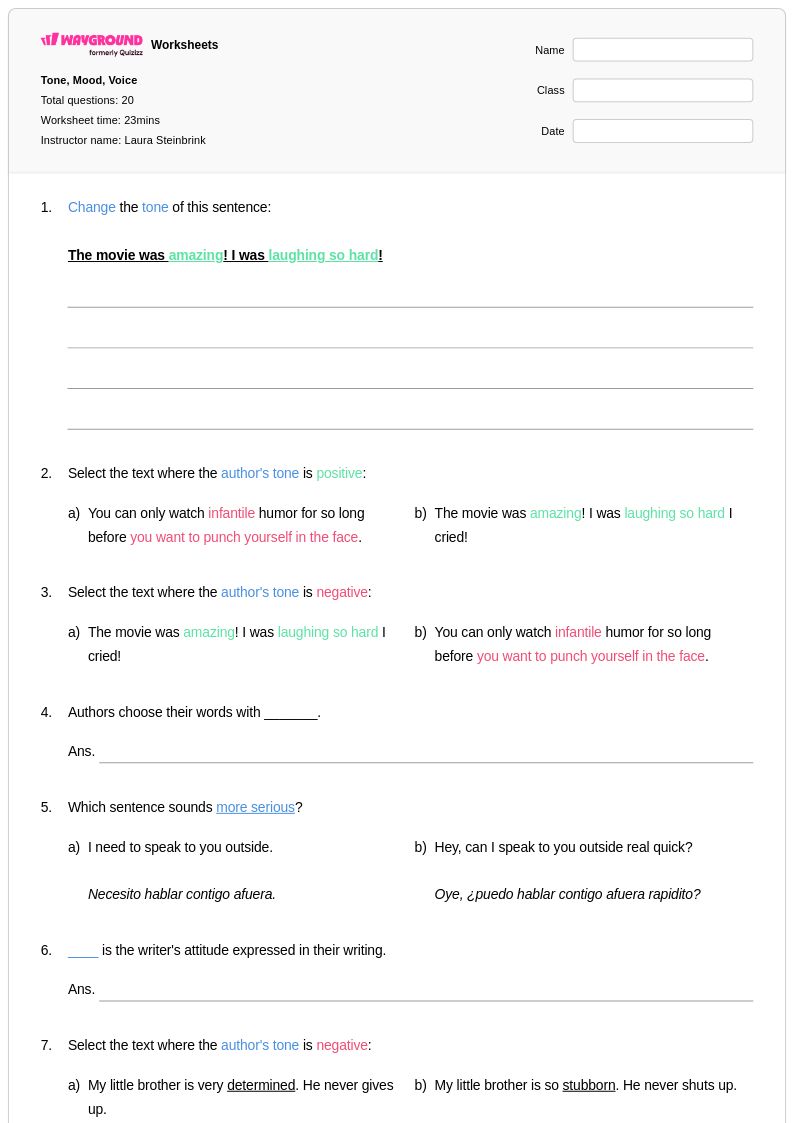
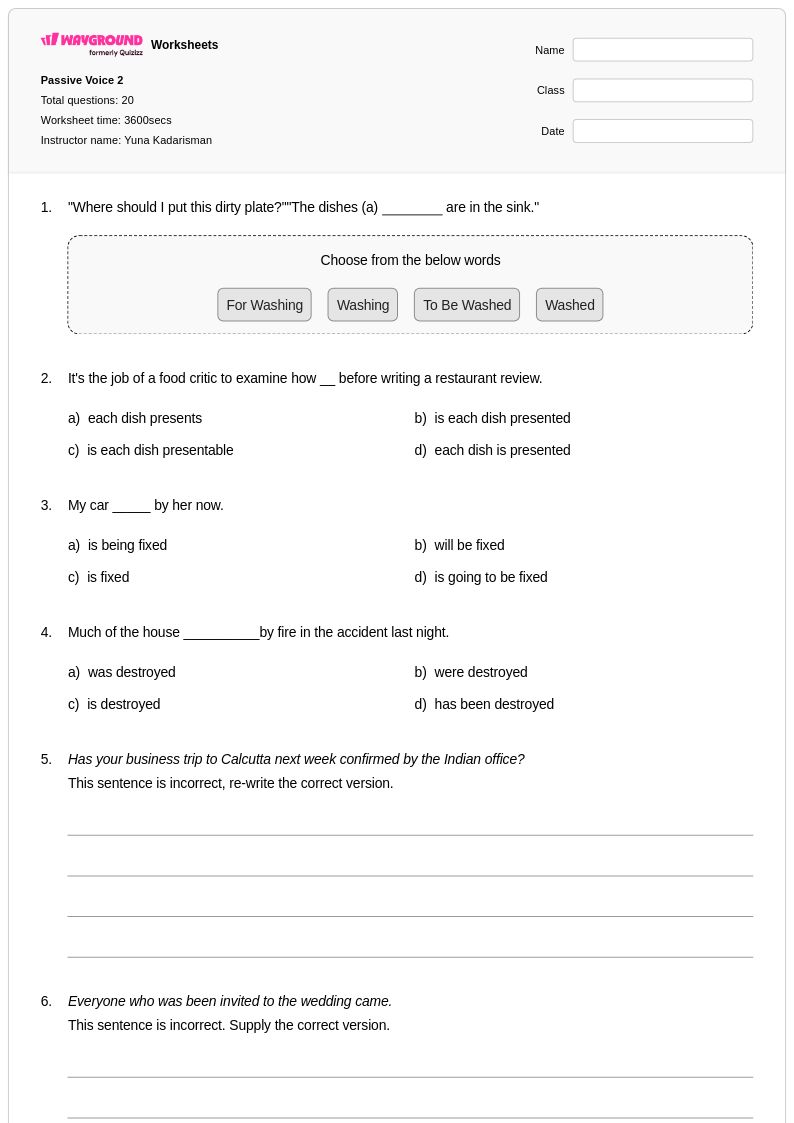
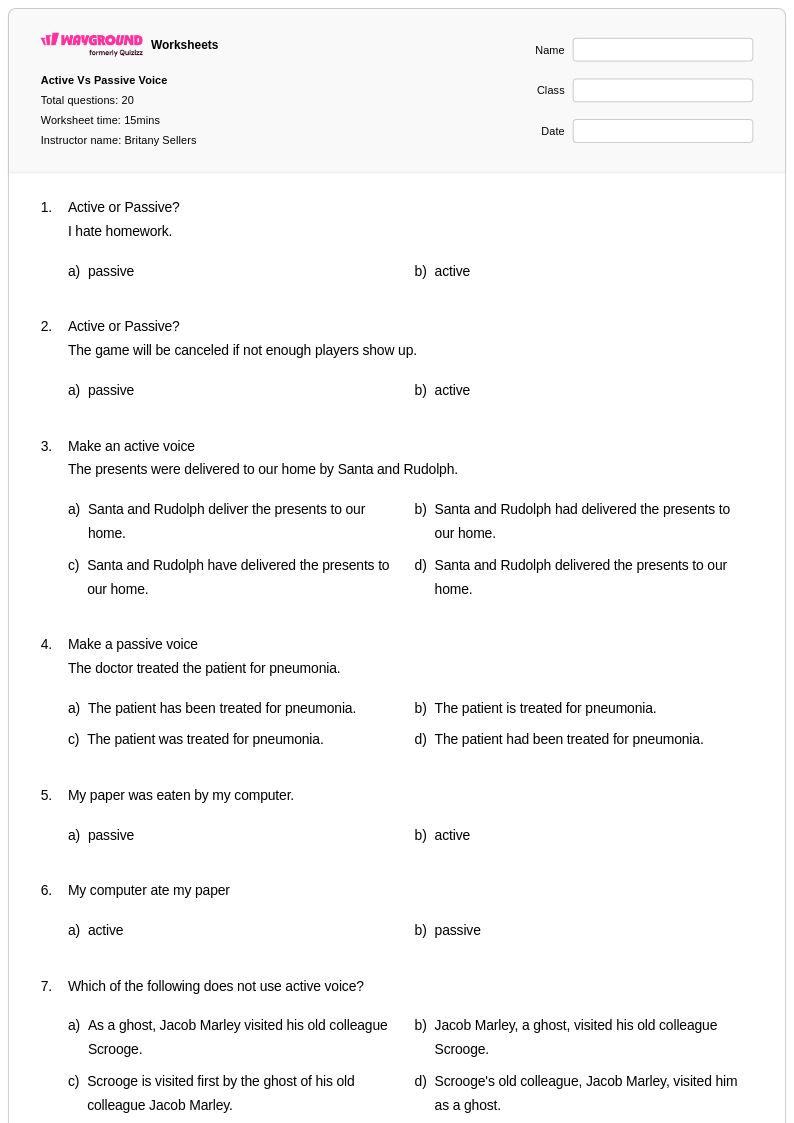
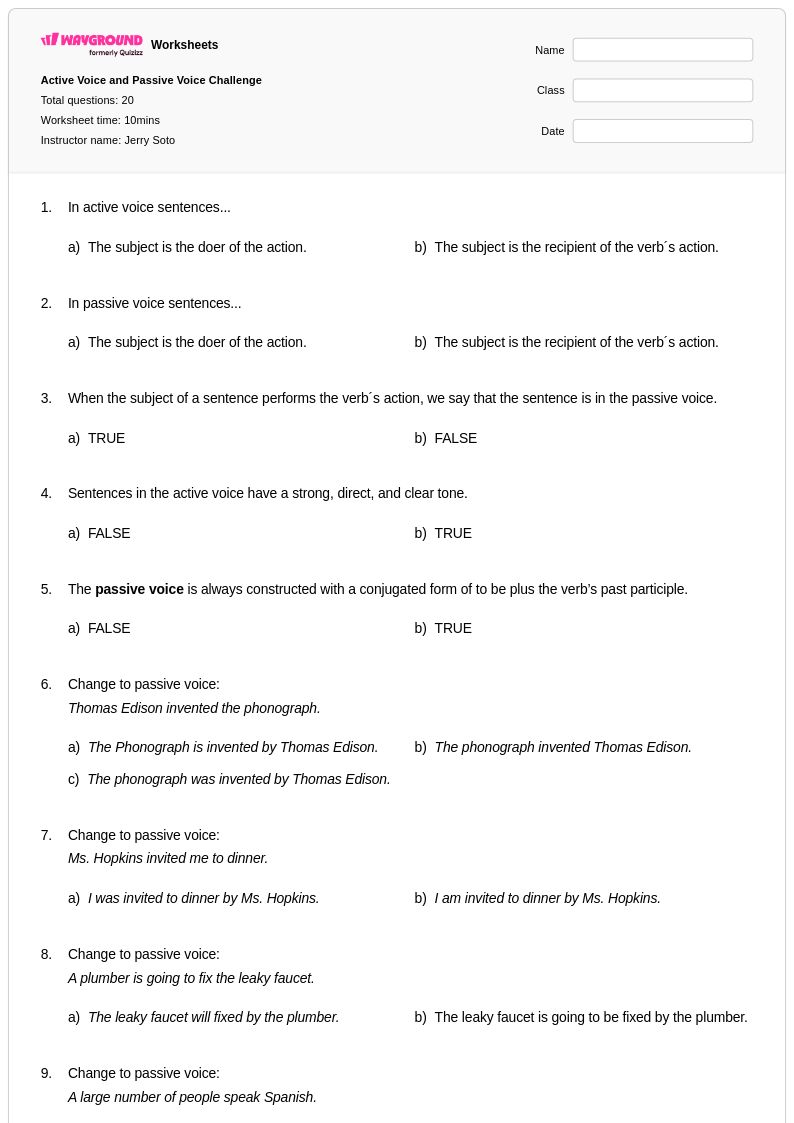
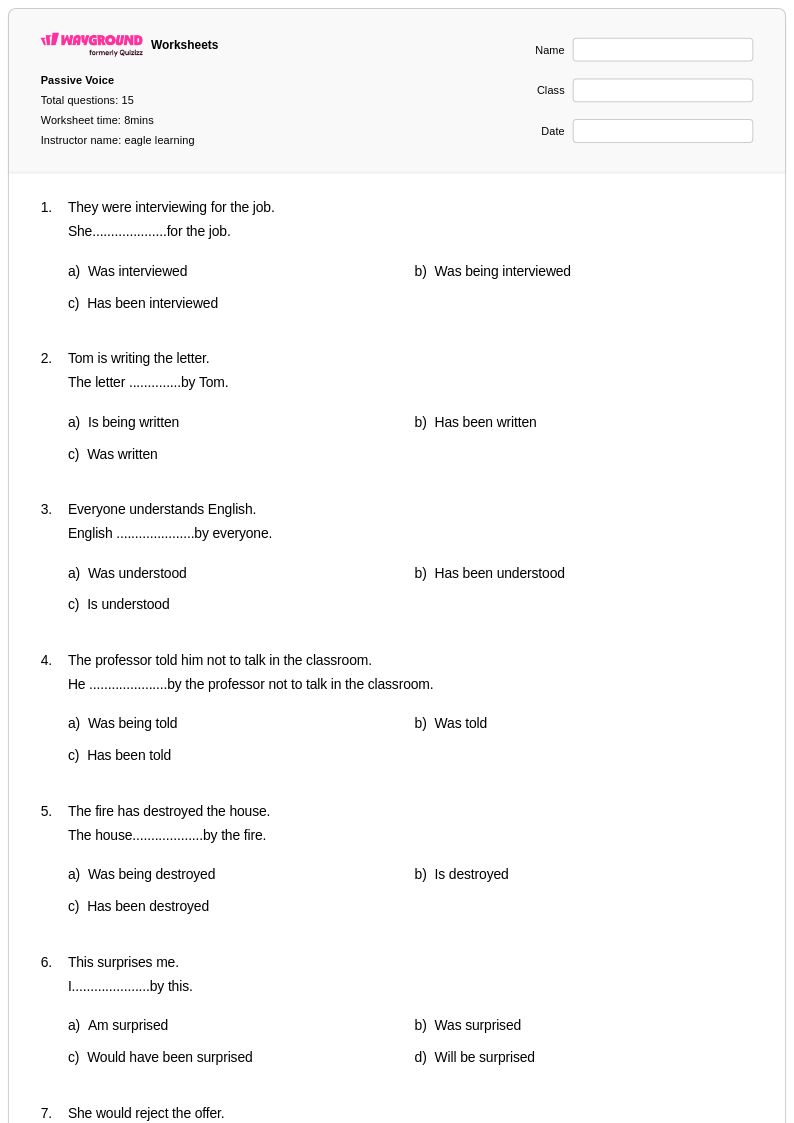
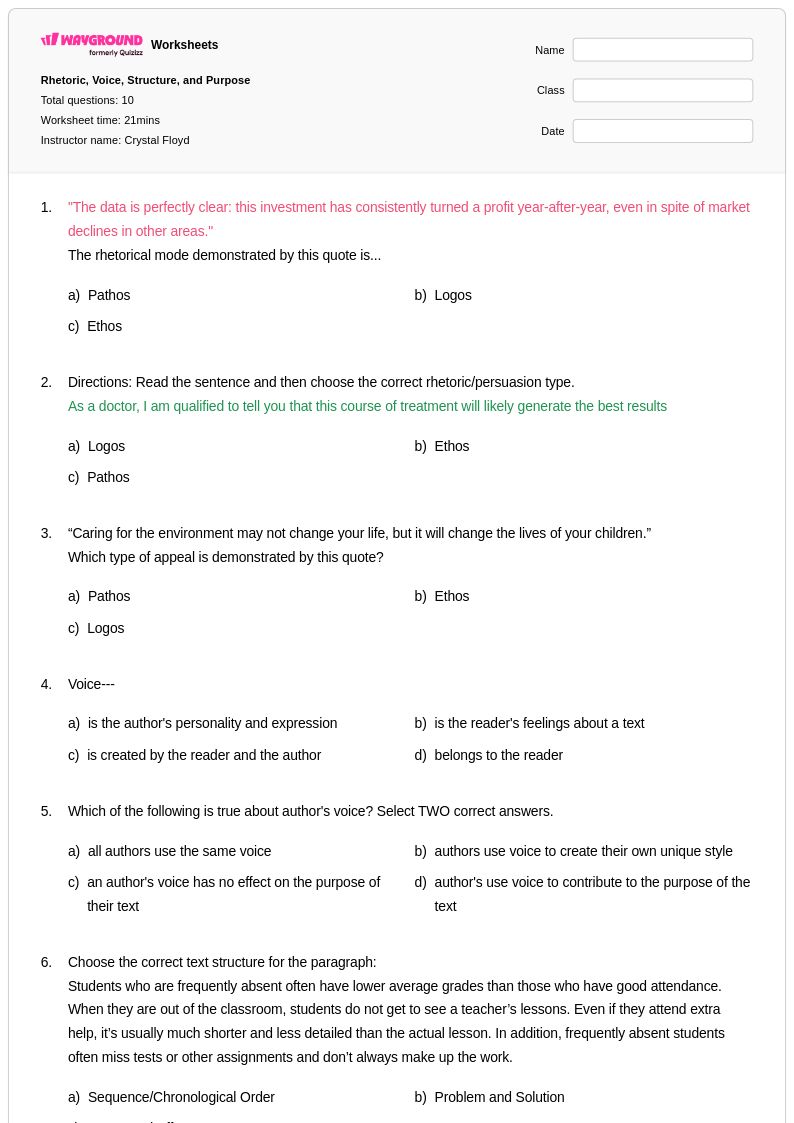
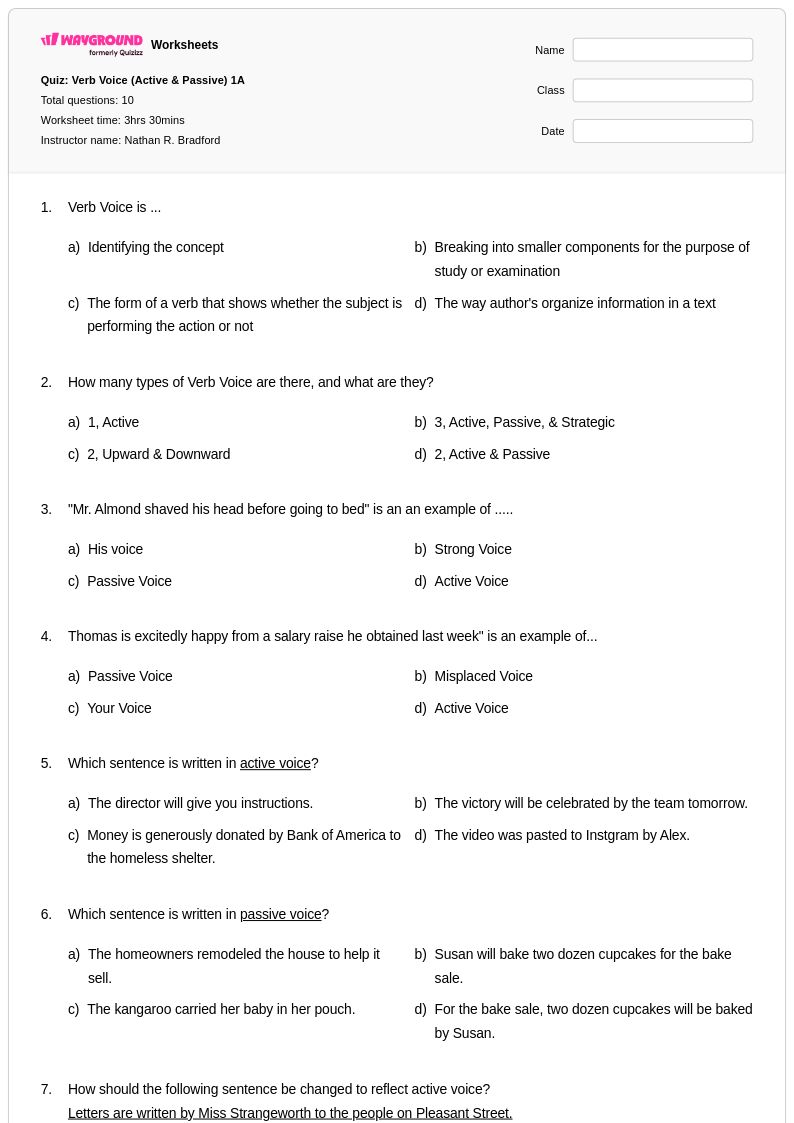
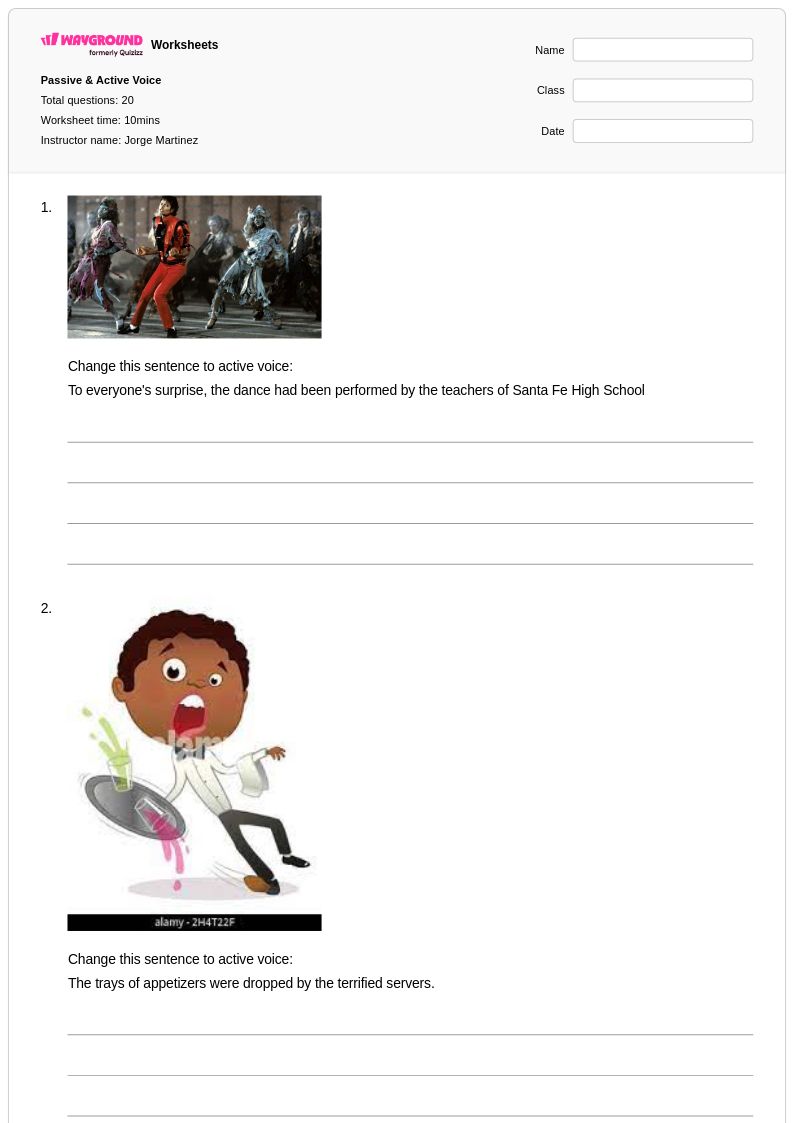
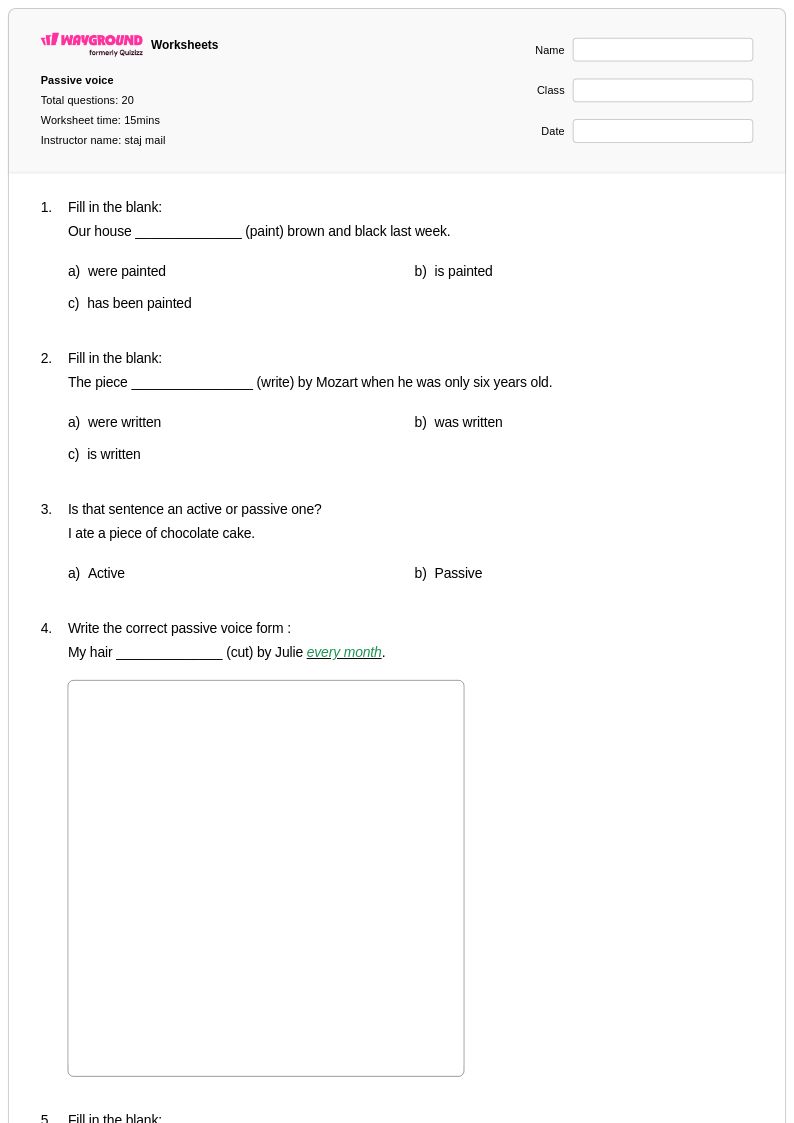
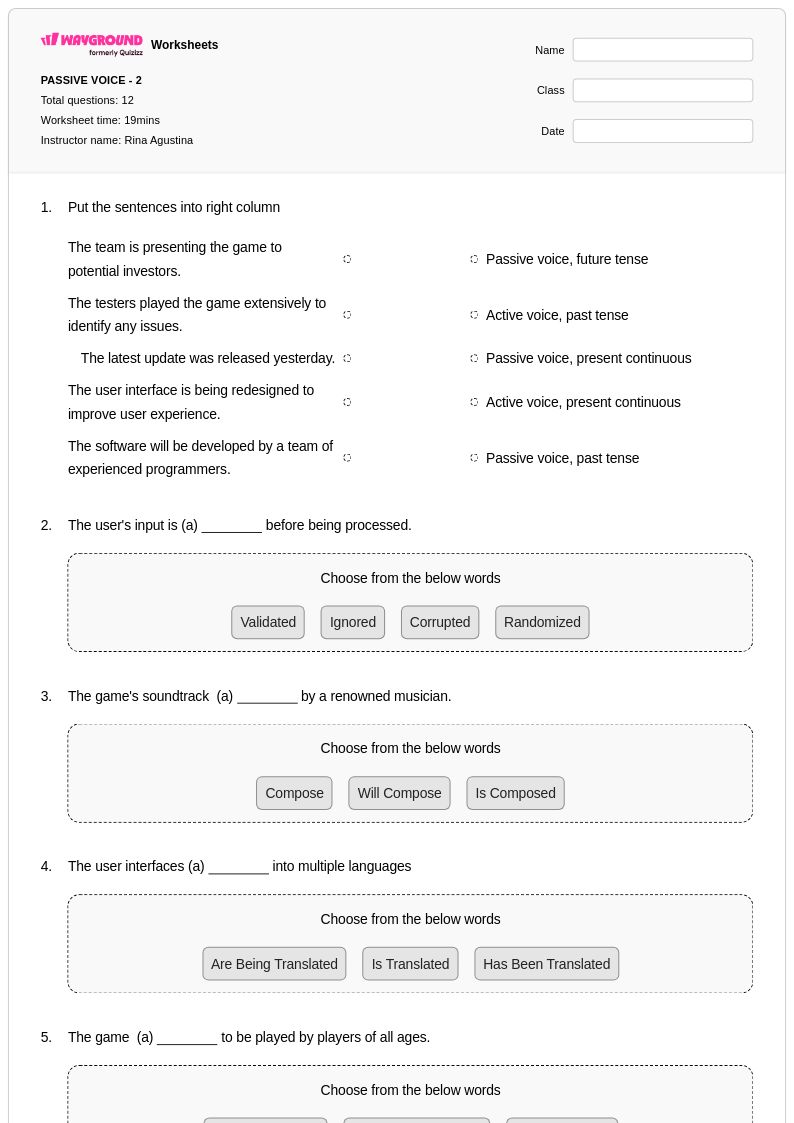
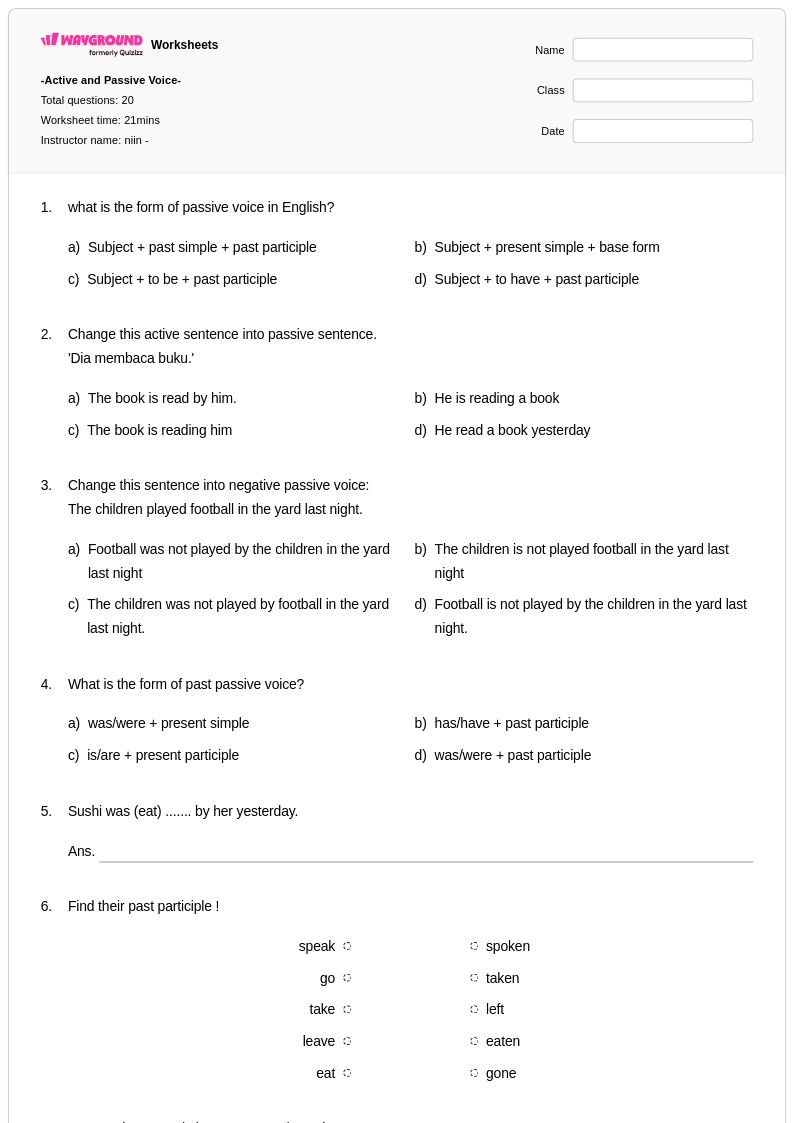
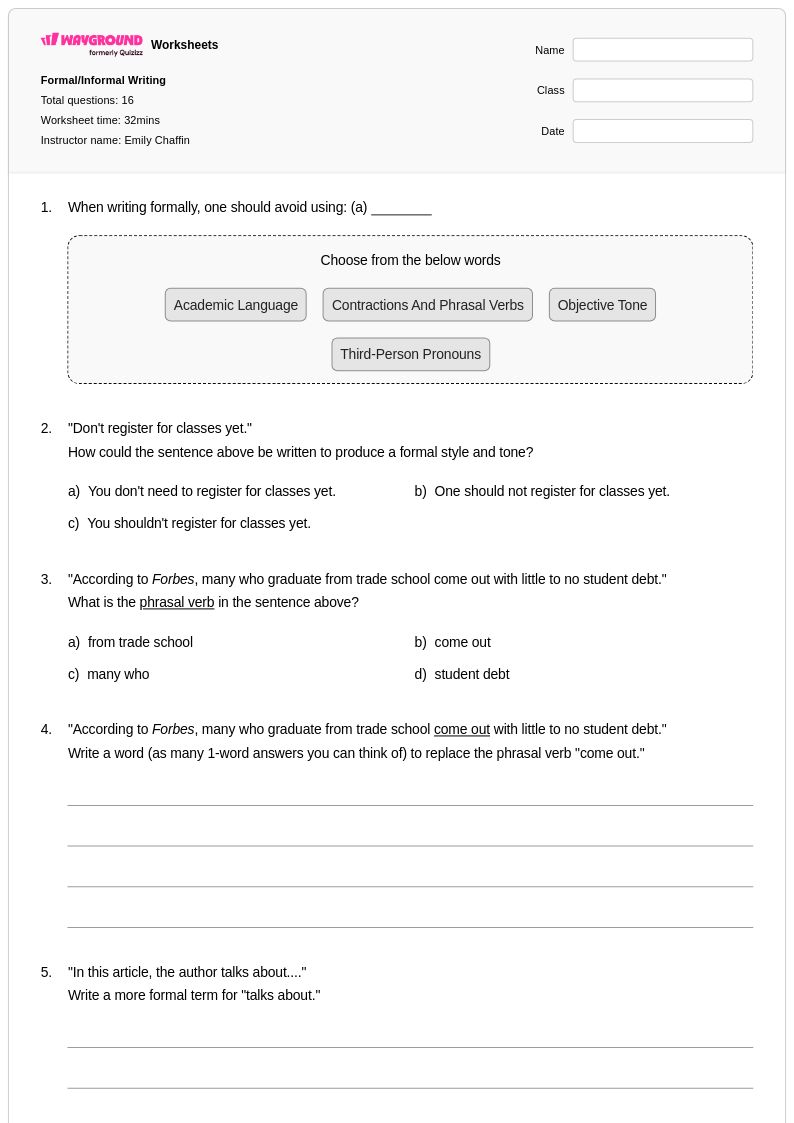
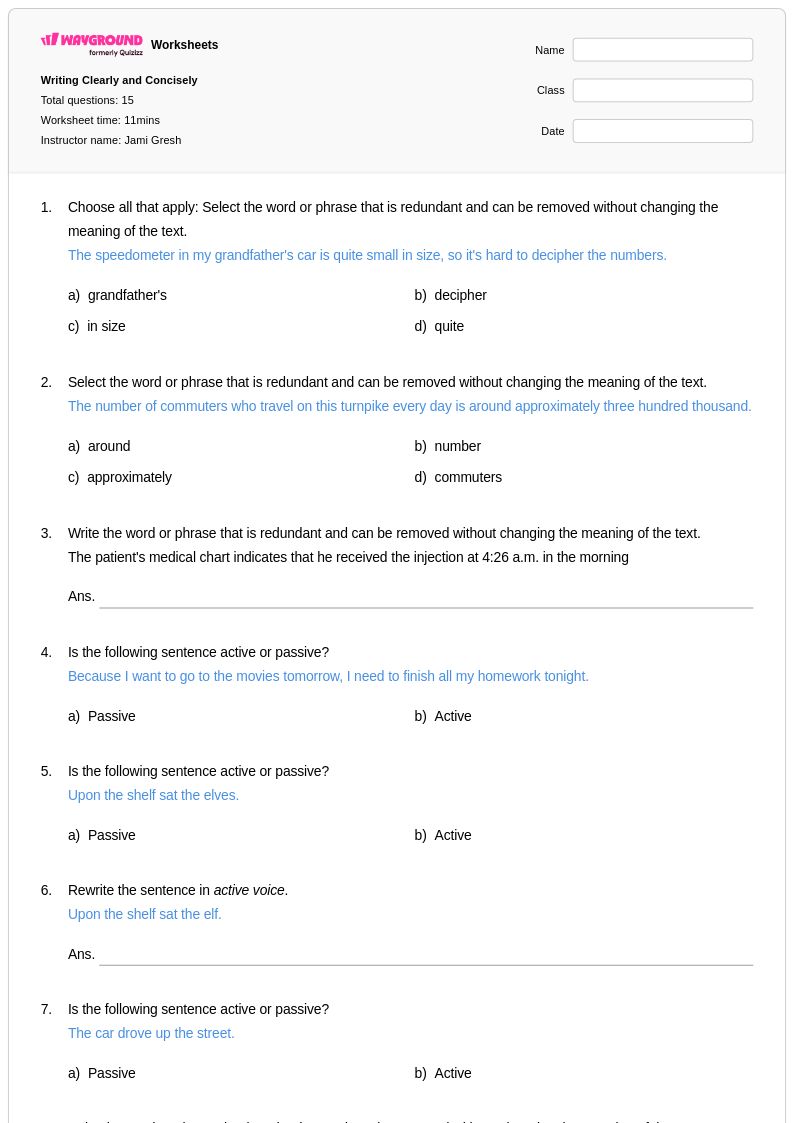
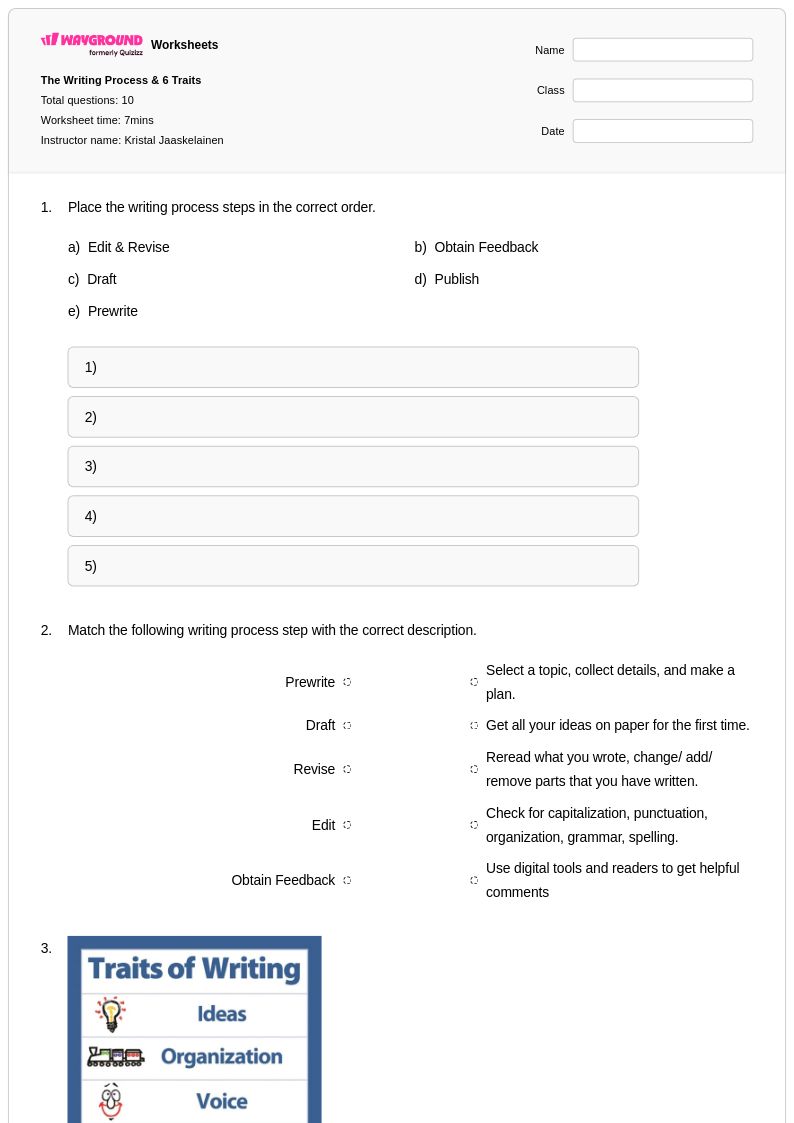
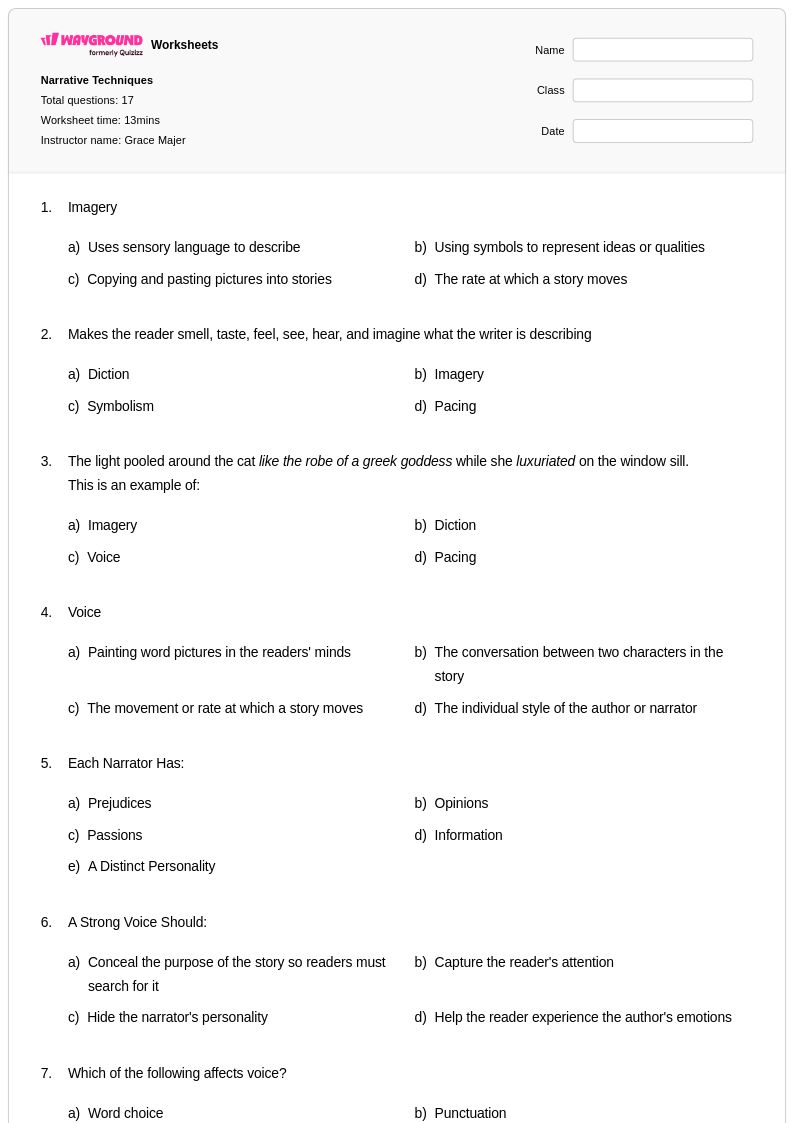
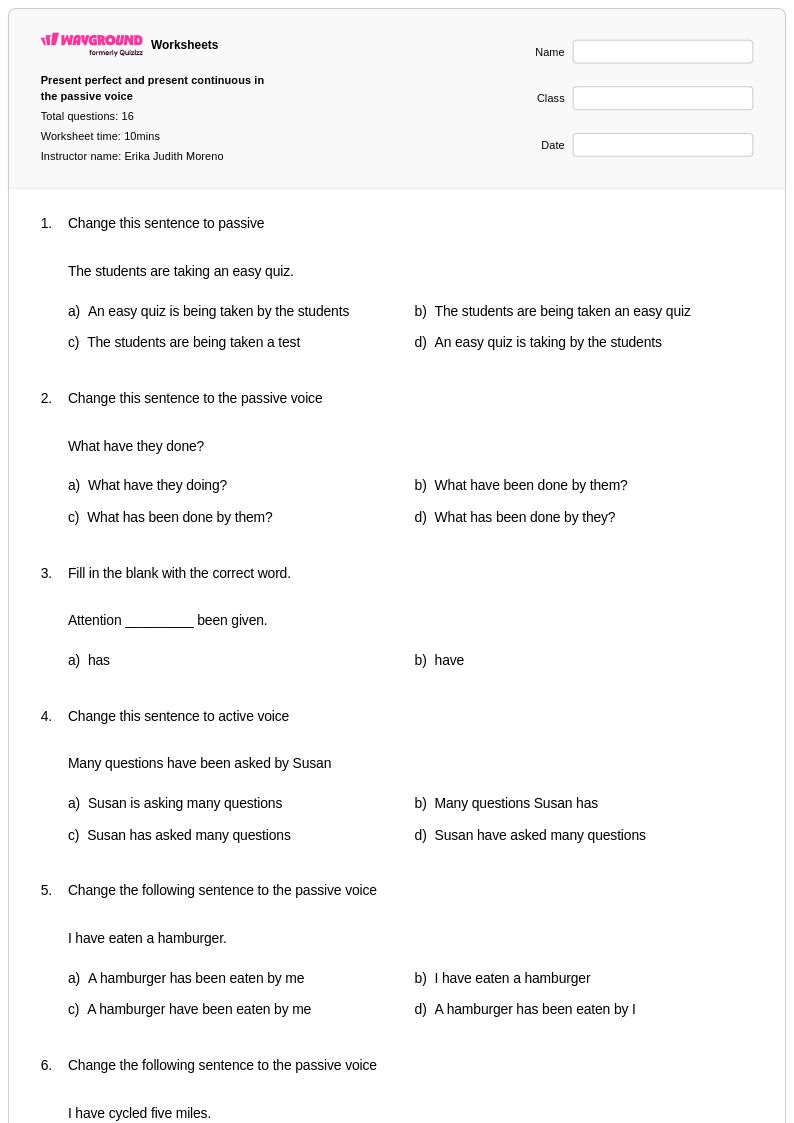
Voice in writing worksheets for Class 11 students available through Wayground (formerly Quizizz) provide comprehensive practice in developing and recognizing distinct narrative voices across various writing formats. These expertly crafted resources help students master the sophisticated skill of establishing consistent voice while adapting tone, diction, and perspective to match specific audiences and purposes. Students work through practice problems that challenge them to identify voice in published works, analyze how authors create unique voices through word choice and syntax, and develop their own authentic writing voices across genres from formal academic essays to creative narratives. Each worksheet includes detailed answer keys that guide students through the nuances of voice recognition and development, with free printables offering structured exercises in voice consistency, point of view selection, and tonal appropriateness.
Wayground (formerly Quizizz) empowers educators with an extensive collection of teacher-created voice in writing resources, drawn from millions of expertly developed materials that support comprehensive Class 11 English instruction. The platform's robust search and filtering capabilities allow teachers to quickly locate worksheets aligned with specific curriculum standards, while differentiation tools enable customization for students at varying skill levels within voice development. These flexible resources are available in both printable pdf formats for traditional classroom use and digital formats for interactive learning, supporting seamless integration into diverse teaching environments. Teachers utilize these materials for targeted skill practice, remediation for students struggling with voice consistency, enrichment activities for advanced writers, and comprehensive lesson planning that builds sophisticated writing voices essential for college-level composition and professional communication.
FAQs
How do I teach voice in writing to students?
Teaching voice in writing begins with helping students distinguish between formal and informal tone, then connecting those choices to audience and purpose. Effective strategies include having students analyze voice in published texts, imitate the style of a favorite author, and compare two versions of the same passage written in different voices. Over time, students develop their own authorial voice by experimenting with word choice, sentence rhythm, and perspective across multiple writing genres.
What exercises help students practice developing their writing voice?
Targeted practice exercises for voice in writing include rewriting a neutral passage from a strong first-person perspective, identifying whether a given text is formal or informal and explaining why, and analyzing how a published author's word choice reflects their personality. Students also benefit from exercises that ask them to shift the tone of a piece for a different audience, which builds awareness of how voice adapts to context. These activities reinforce that voice is a deliberate craft choice, not just a byproduct of writing.
What mistakes do students commonly make when developing voice in writing?
The most common mistake is inconsistency, where students shift between formal and conversational tones mid-paragraph without intention. Students also frequently confuse voice with style, treating flashy vocabulary as a substitute for genuine perspective. Another error is writing in a flat, neutral register to avoid mistakes, which eliminates any sense of personality or authorial presence. Targeted practice that asks students to sustain a consistent voice throughout an entire piece helps correct these patterns.
How can I help students understand the difference between tone and voice in writing?
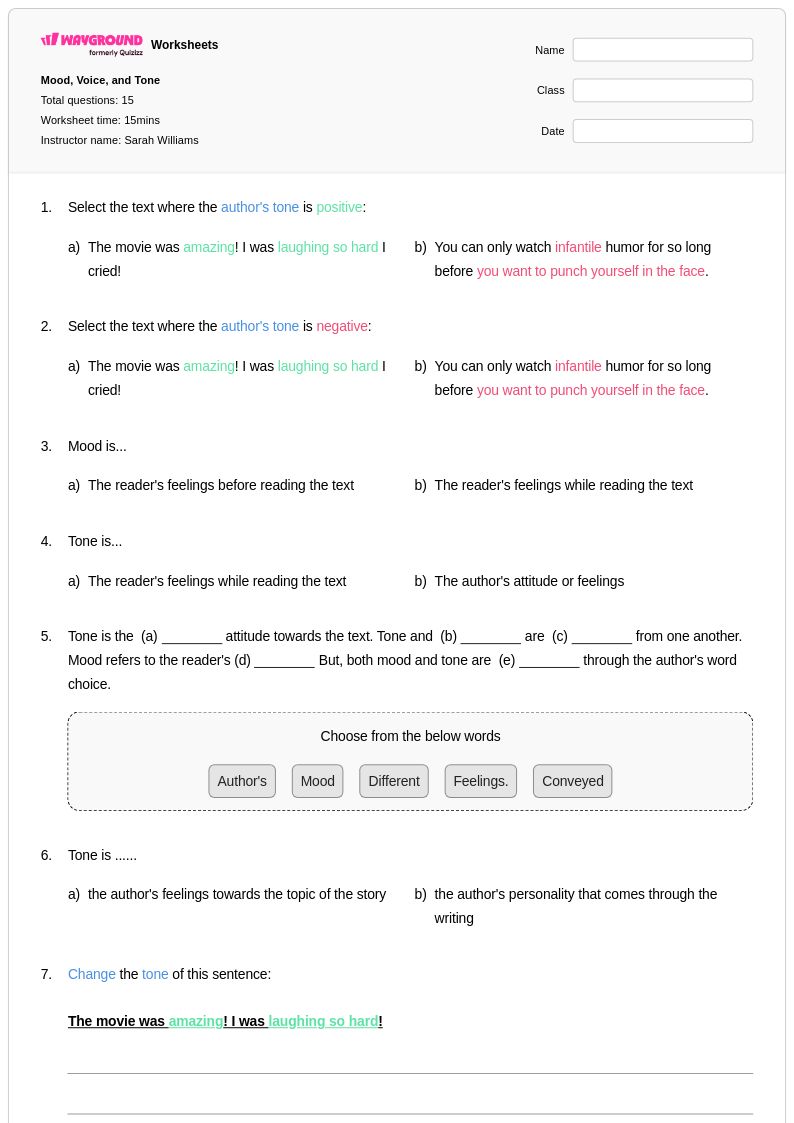
Voice refers to the consistent personality and perspective a writer brings to all their work, while tone is the emotional attitude expressed toward a specific topic or audience, which can shift from piece to piece. A useful classroom analogy is that voice is like a person's speaking personality, whereas tone is like their mood in a particular conversation. Having students read two pieces by the same author on different subjects and identify what stays constant versus what changes helps make this distinction concrete and memorable.
How do I use Wayground's Voice in Writing worksheets in my classroom?
Wayground's Voice in Writing worksheets are available as printable PDFs for traditional classroom use and in digital formats for technology-integrated learning environments, including the option to host them as a quiz directly on Wayground. Each worksheet includes a detailed answer key, making them suitable for independent student practice, guided instruction, or remediation of specific voice-related challenges. Teachers can also apply built-in differentiation settings, such as read aloud support or reduced answer choices, to accommodate individual student needs without disrupting the rest of the class.
How do I differentiate voice in writing instruction for students at different skill levels?
For students who struggle with voice, start with structured exercises that provide sentence stems or ask them to choose between two tonal options before writing independently. Advanced writers benefit from more open-ended tasks like analyzing the evolution of an author's voice across multiple texts or deliberately subverting their own established style. On Wayground, teachers can assign accommodations such as read aloud support or reduced answer choices to individual students, allowing differentiated practice to happen simultaneously within the same assignment.