Free Printable Writing a Strong Introduction Worksheets for Class 11
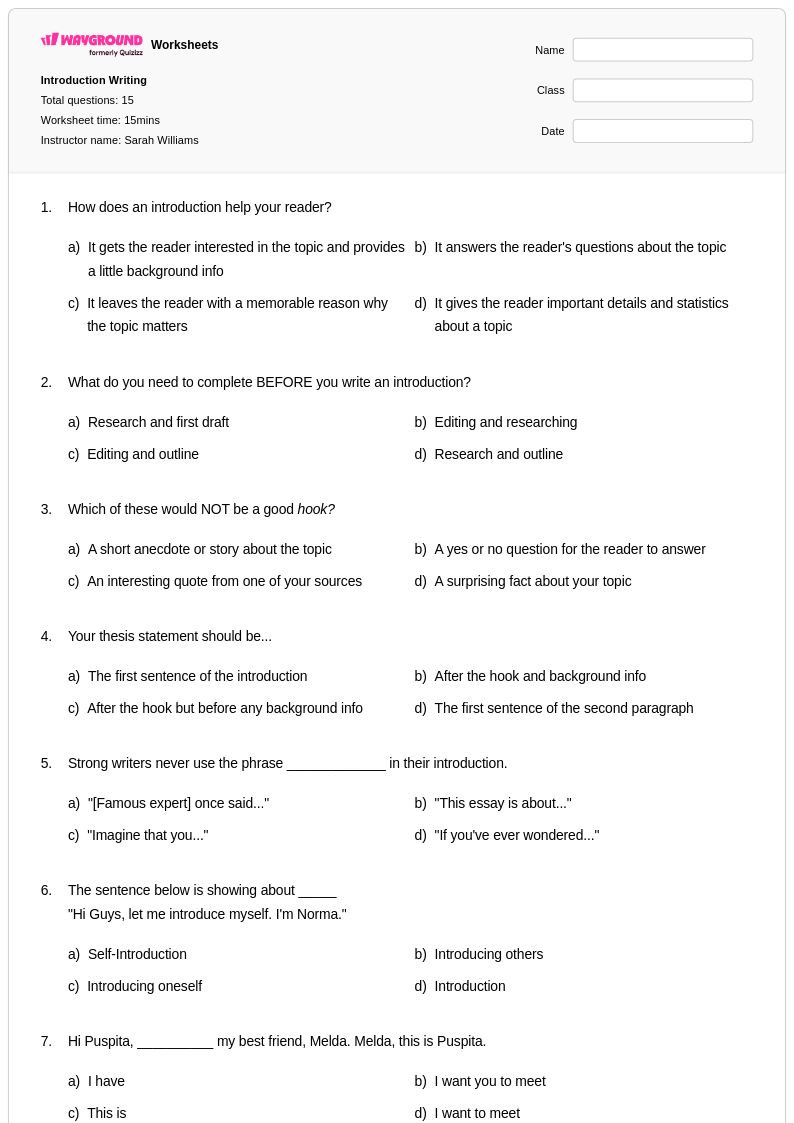
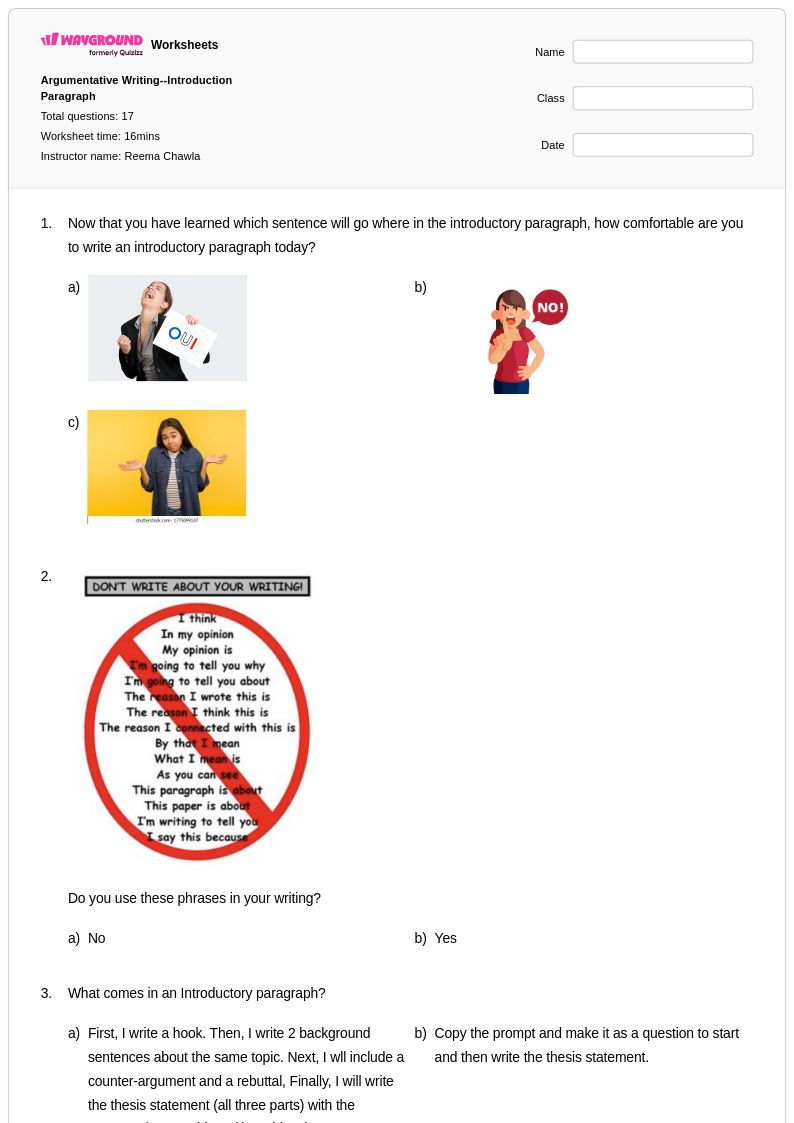
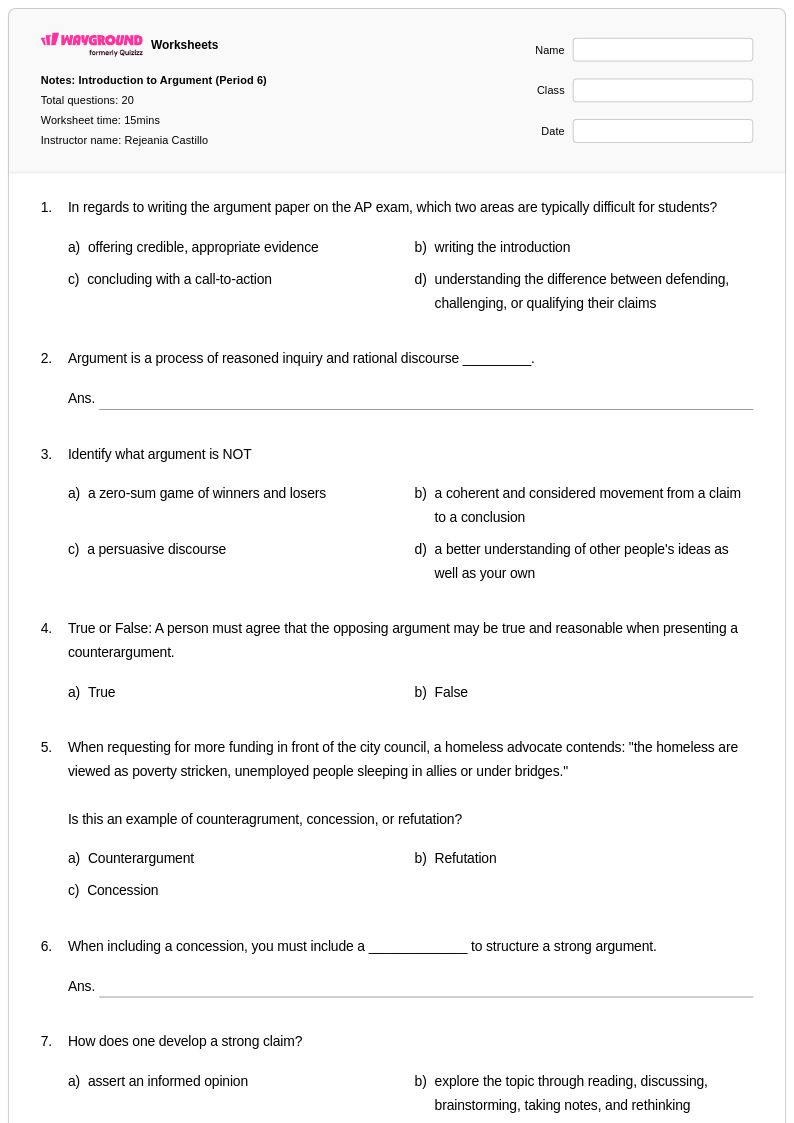
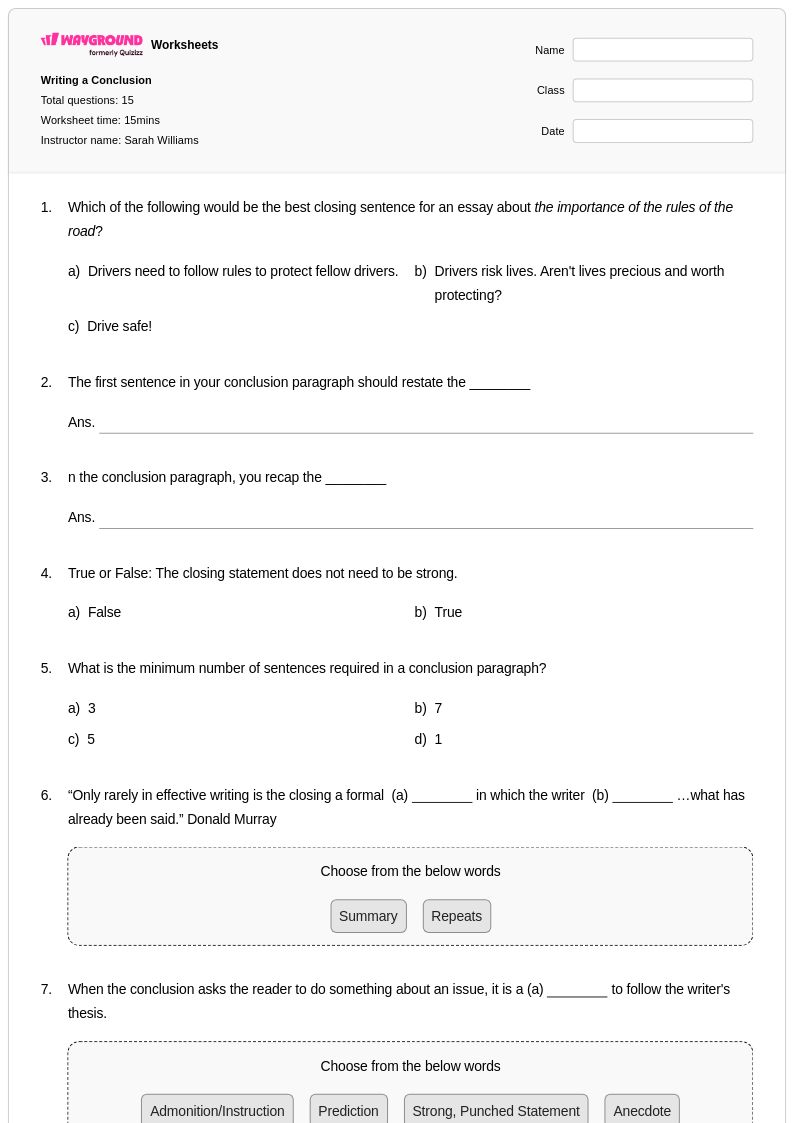
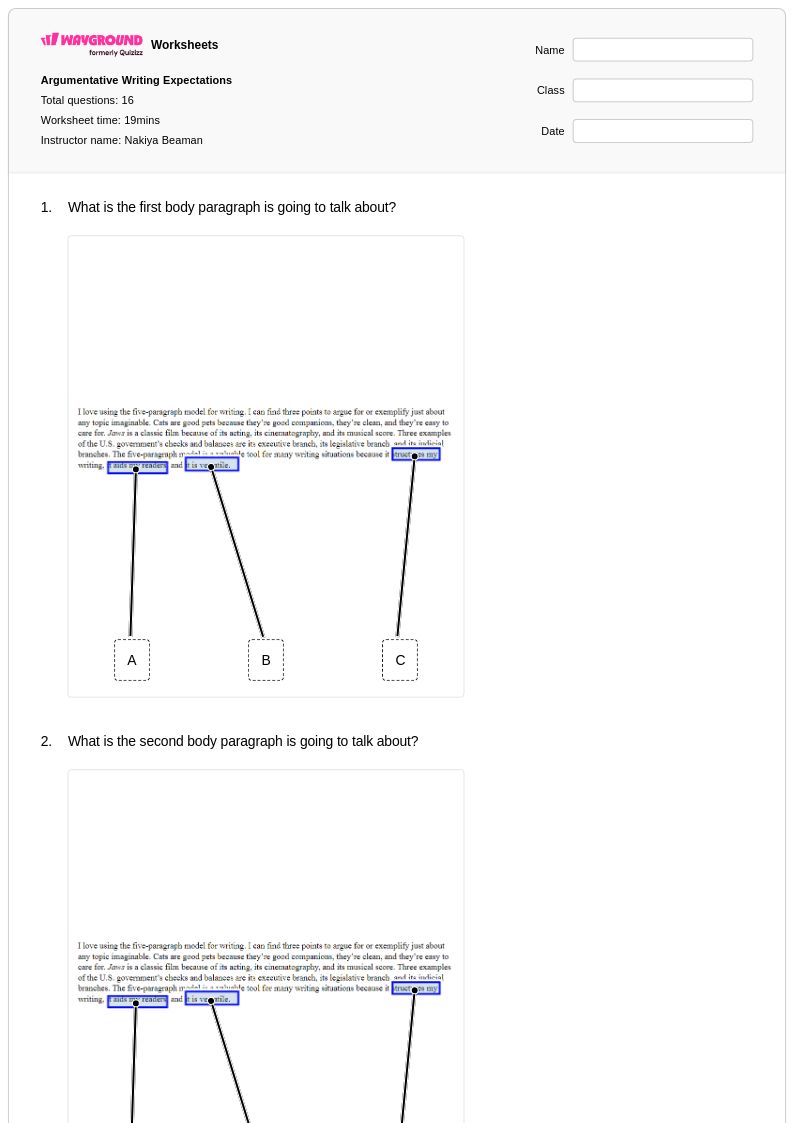
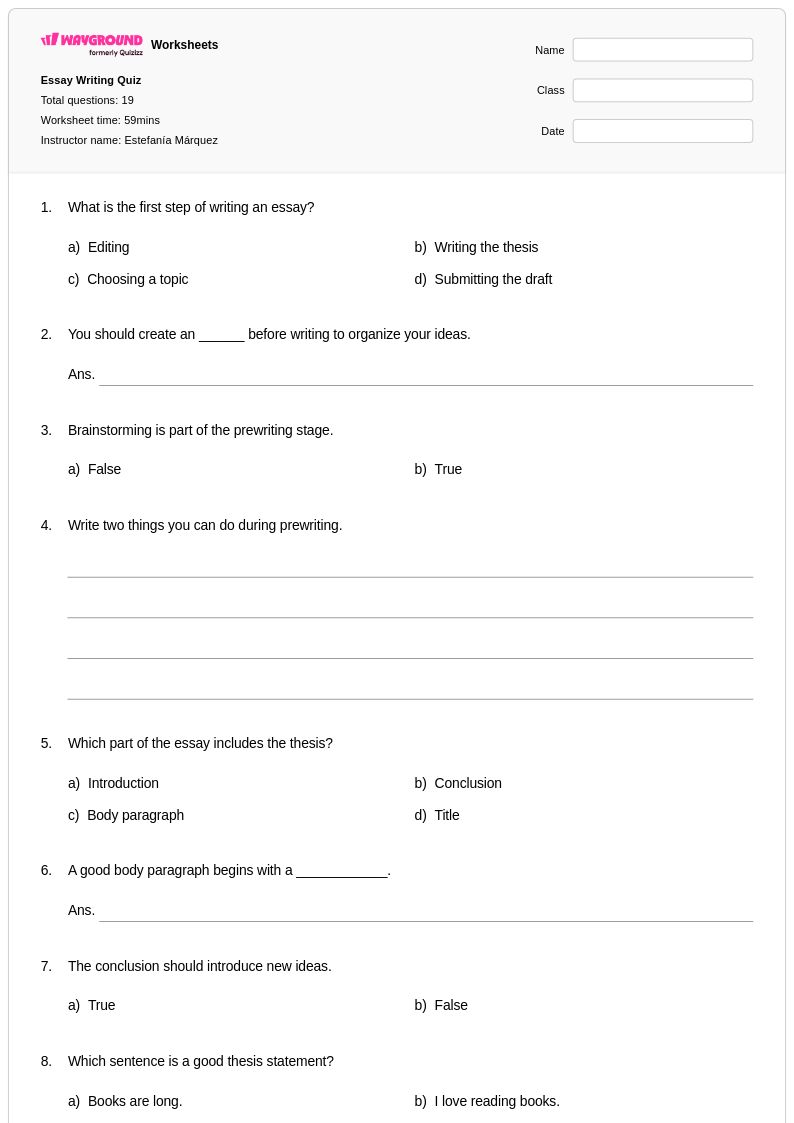
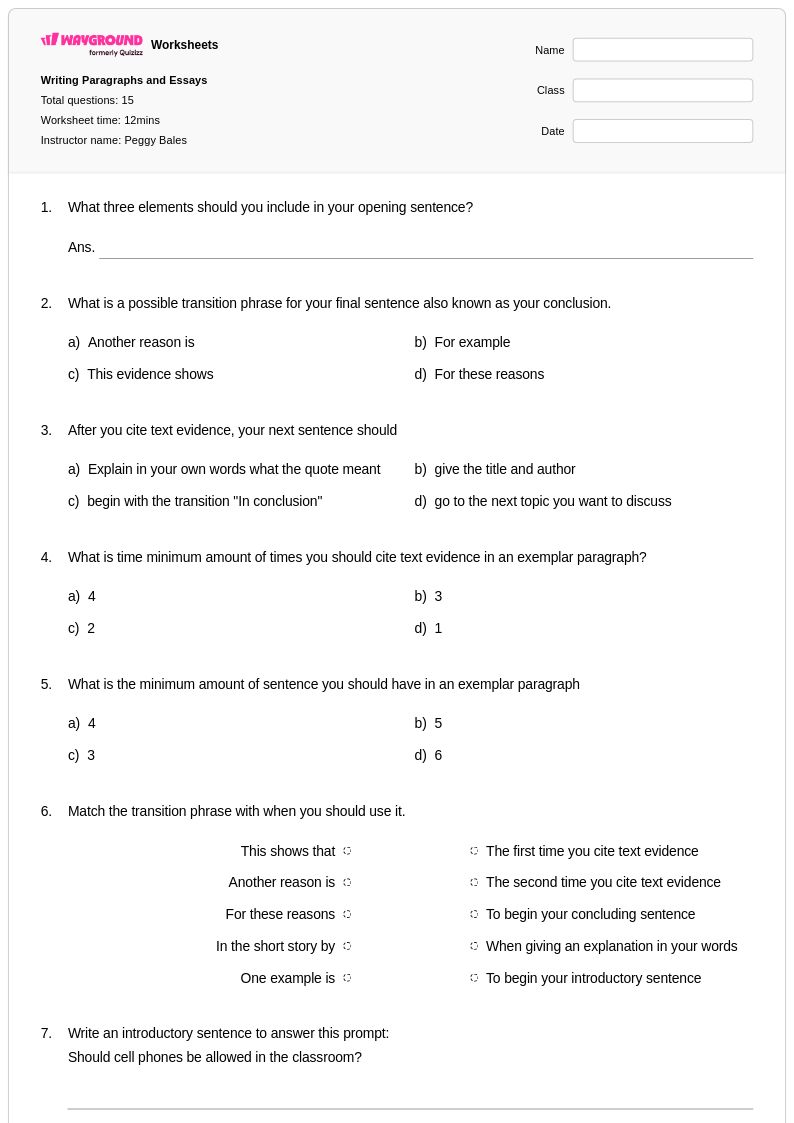
Class 11 students can master writing compelling introductions with Wayground's free worksheets and printables, featuring structured practice problems and answer keys to develop essential opening paragraph techniques.
Explore printable Writing a Strong Introduction worksheets for Class 11
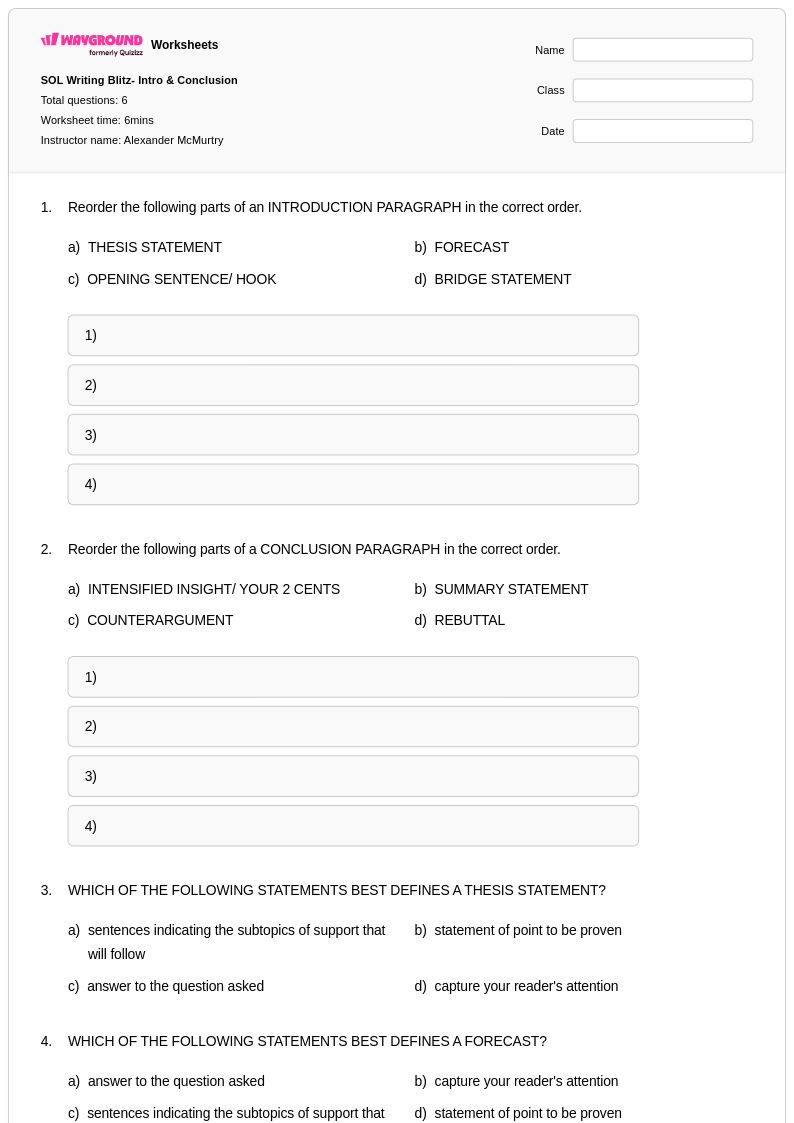
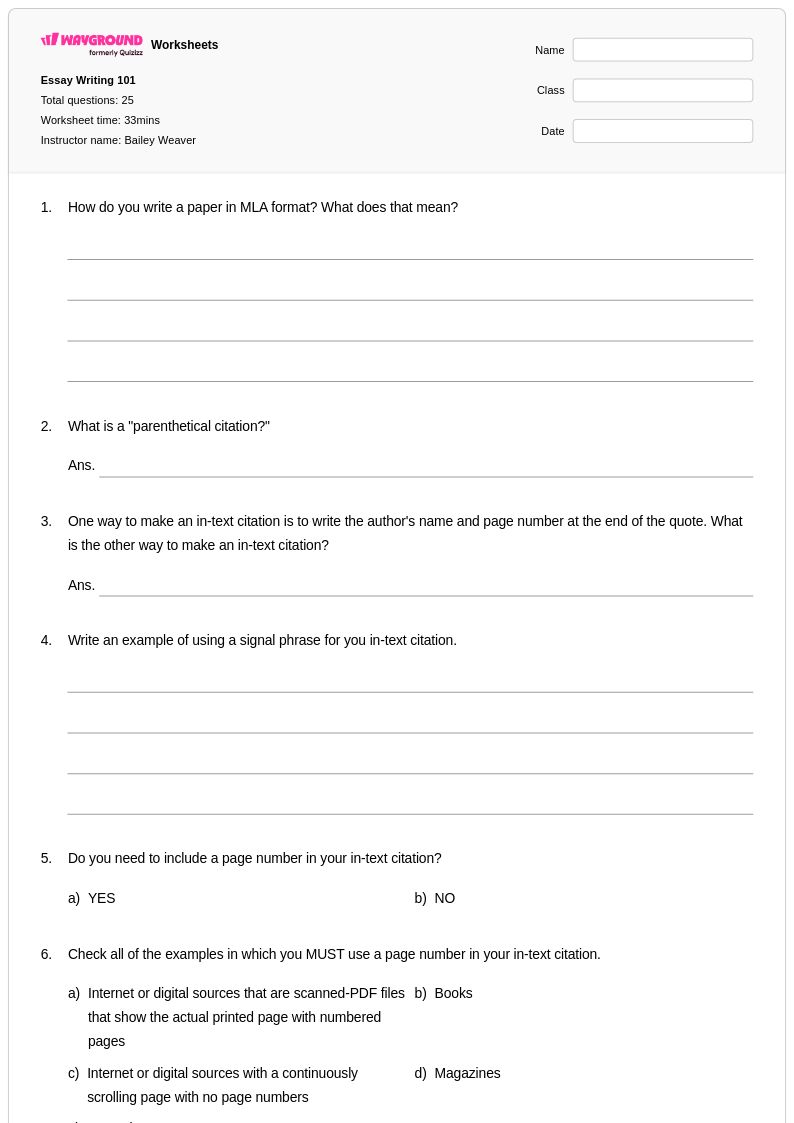
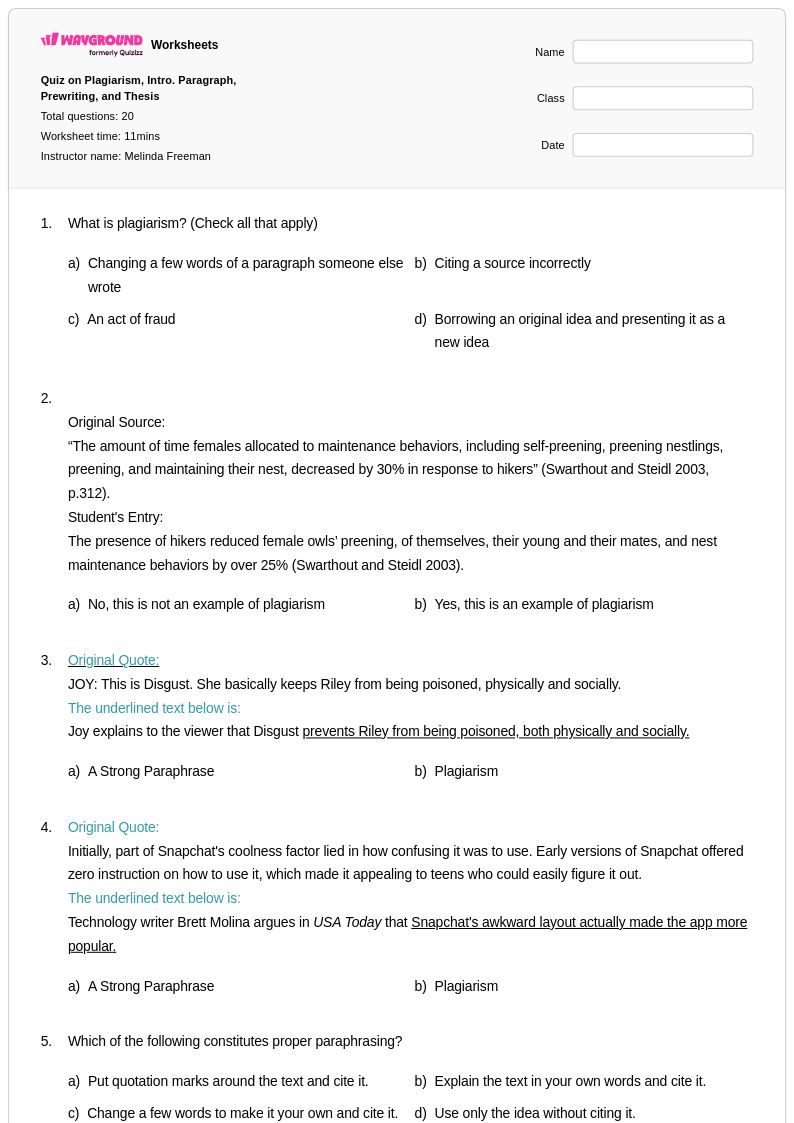
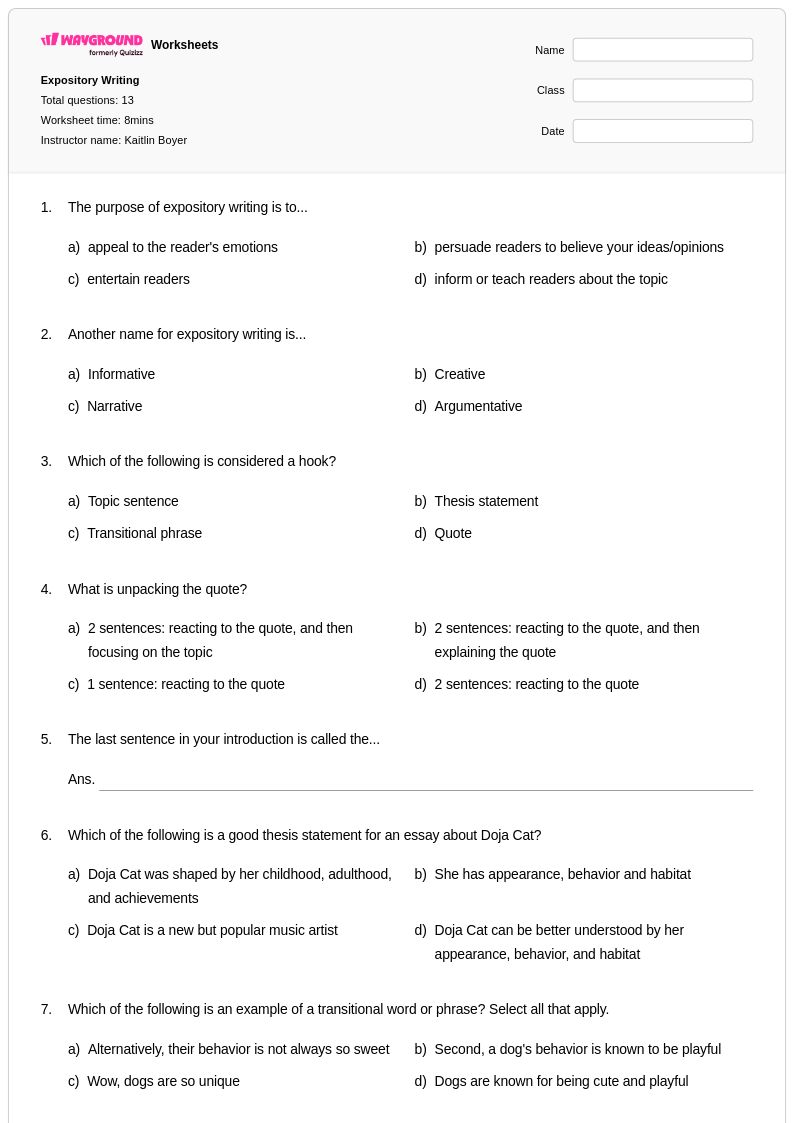
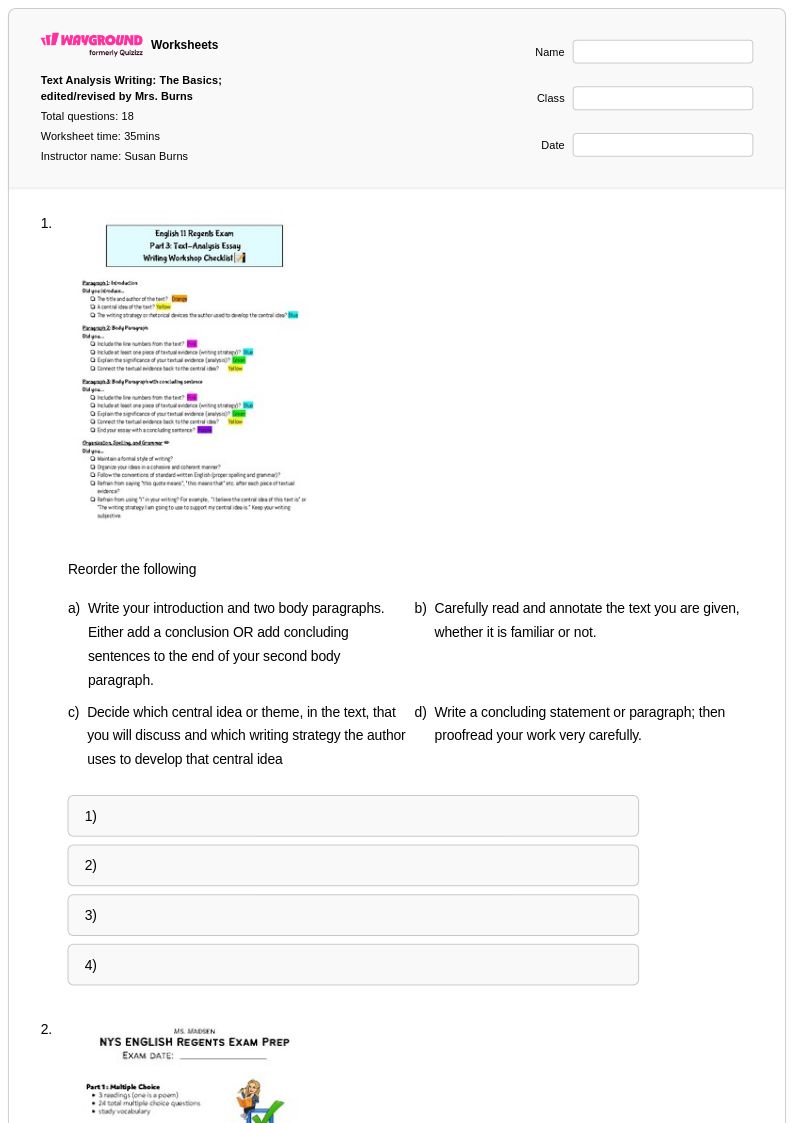
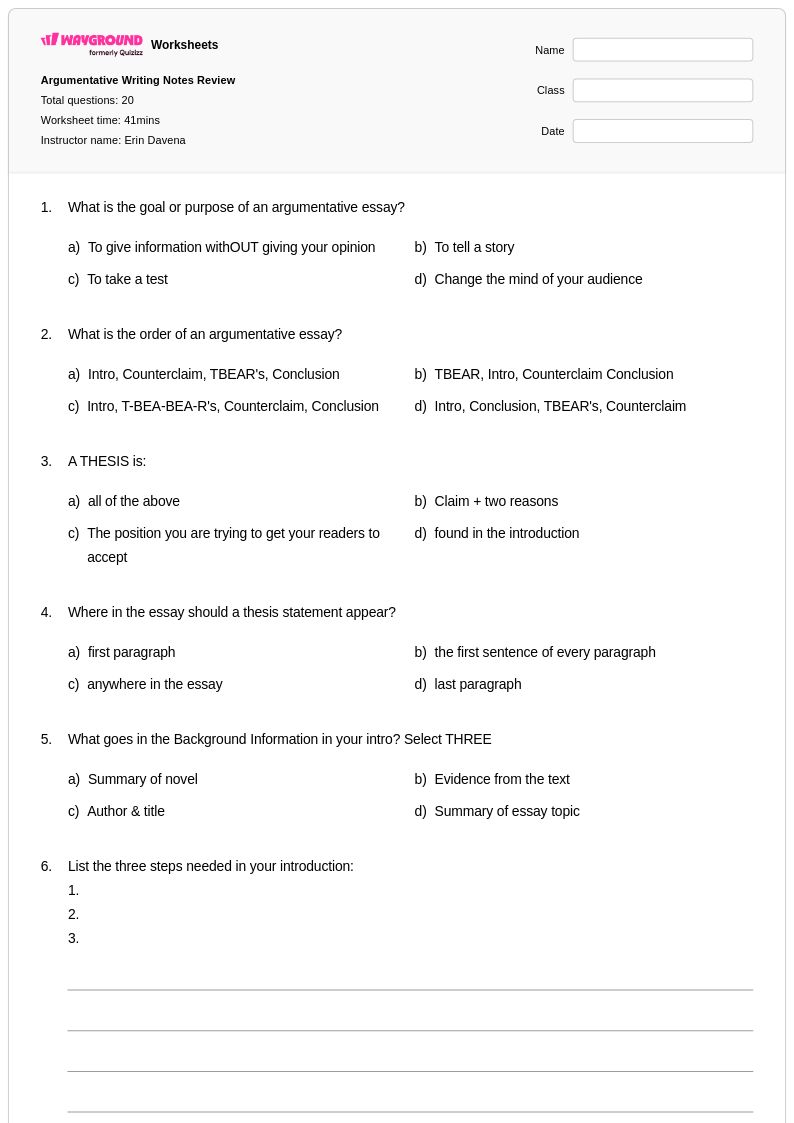
Writing a strong introduction for Class 11 students requires mastery of sophisticated techniques that engage readers while establishing clear thesis statements and organizational frameworks. Wayground's comprehensive collection of worksheets focuses specifically on helping eleventh-grade students develop the critical skills needed to craft compelling introductory paragraphs across various writing genres. These expertly designed resources provide systematic practice in hook creation, context building, and thesis development through structured exercises that progress from basic concept identification to advanced application. Students work through practice problems that challenge them to analyze exemplary introductions, identify effective strategies, and apply these techniques to their own writing, with complete answer keys available to support independent learning and self-assessment.
Wayground's extensive library draws from millions of teacher-created resources specifically targeting introduction writing skills for Class 11 English students, offering educators unprecedented flexibility in lesson planning and skill reinforcement. The platform's robust search and filtering capabilities allow teachers to quickly locate worksheets that align with specific curriculum standards while accommodating diverse learning needs through differentiation tools and customizable content. These printable and digital pdf resources seamlessly integrate into classroom instruction, homework assignments, and targeted remediation sessions, enabling teachers to provide focused practice on thesis statement construction, transitional techniques, and audience engagement strategies. The comprehensive collection supports both enrichment opportunities for advanced writers and additional scaffolding for students requiring extra support in developing sophisticated introductory paragraphs that meet grade-level expectations.
FAQs
How do I teach students to write a strong introduction?
Start by breaking the introduction into its three core components: the hook, background context, and thesis statement. Model each element explicitly using mentor texts, then have students analyze published introductions before attempting their own. Teaching students to identify what makes a hook effective — whether it's a surprising fact, a question, or an anecdote — gives them a replicable framework they can apply across writing genres.
What are the best exercises to help students practice writing introductions?
Effective practice exercises include rewriting weak introductions, matching hooks to thesis statements, and drafting multiple introductions for the same prompt using different hook strategies. Structured worksheets that isolate each component — hook, background, thesis — allow students to build mastery incrementally before combining all three into a complete paragraph. Varied practice across different writing genres, such as argumentative, narrative, and informational, helps students generalize the skill.
What mistakes do students commonly make when writing an introduction?
The most common errors include opening with a vague or overly broad statement (such as 'Since the beginning of time...'), restating the prompt rather than crafting an original hook, and writing a thesis that announces intent ('In this essay, I will...') instead of stating a defensible claim. Students also frequently omit background context, jumping from the hook directly to the thesis, which leaves readers without the information needed to understand the argument.
How do I help struggling writers learn to write a strong introduction?
For struggling writers, provide sentence frames and graphic organizers that map out the hook, background, and thesis slots before any drafting begins. Reducing the task to one component at a time — writing only a hook, for example — builds confidence without overwhelming students. On Wayground, teachers can enable the Read Aloud accommodation so students hear questions and instructions read aloud, and can reduce answer choices to lower cognitive load for students who need additional support.
How can I use Writing a Strong Introduction worksheets in my classroom?
These worksheets are available as printable PDFs for traditional classroom use and in digital formats for technology-integrated environments, including the option to host them as a quiz directly on Wayground. They work well as guided practice during a writing unit, as independent review before a major essay assignment, or as targeted remediation for students whose introductions consistently lack structure or clarity. The included answer keys allow students to self-assess, making them effective for independent study as well.
How do I teach students to write an effective thesis statement as part of their introduction?
An effective thesis statement makes a specific, arguable claim and signals the essay's direction without simply announcing the writer's intent. Teach students to distinguish between a topic sentence ('This essay is about social media') and a true thesis ('Social media has undermined adolescents' ability to sustain deep attention'). Practice exercises that ask students to revise weak thesis statements into strong, specific claims are particularly effective for building this skill.