Free Printable Word Patterns Worksheets for Class 2
Discover free Class 2 word patterns worksheets and printables that help students master phonics through engaging practice problems, complete with answer keys and downloadable PDFs from Wayground.
Explore printable Word Patterns worksheets for Class 2
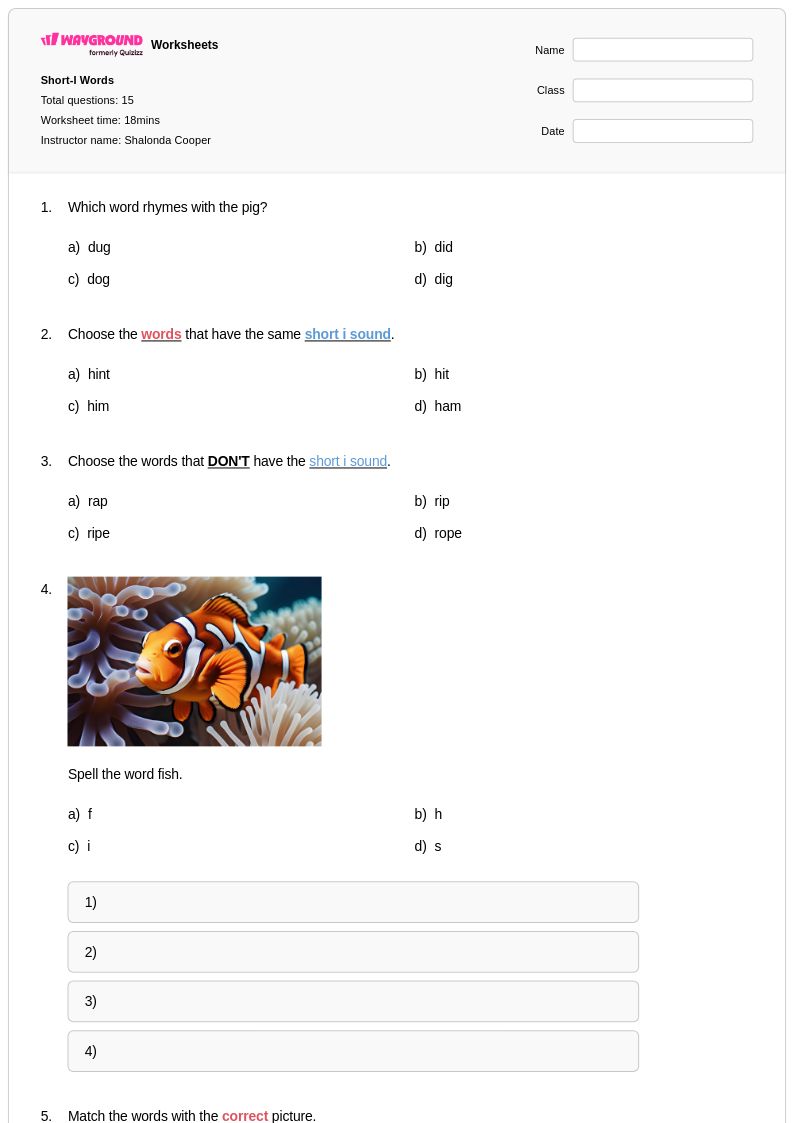
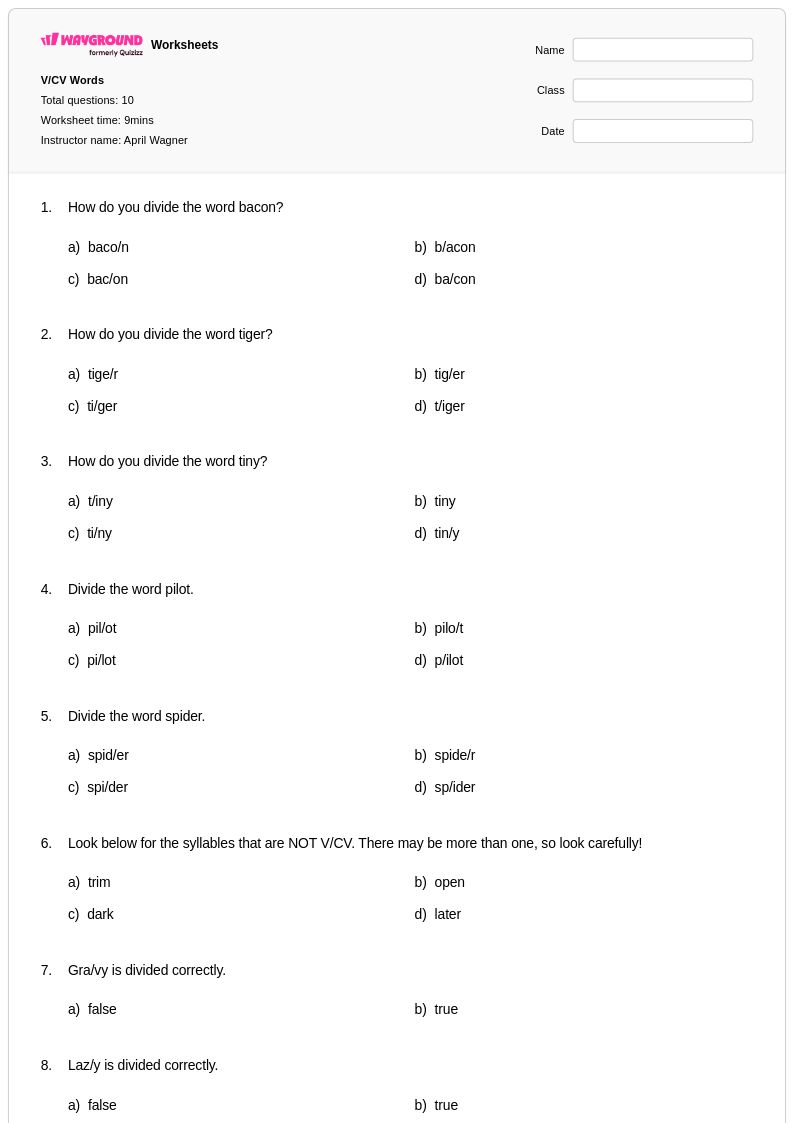
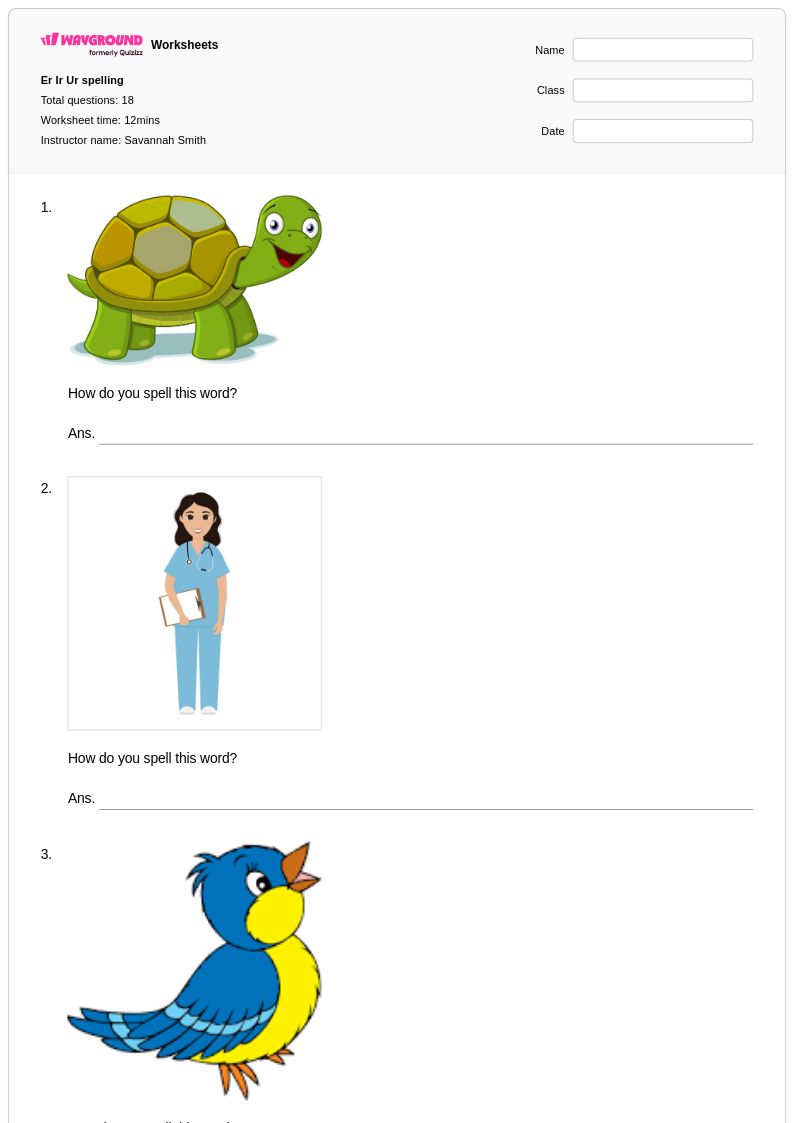
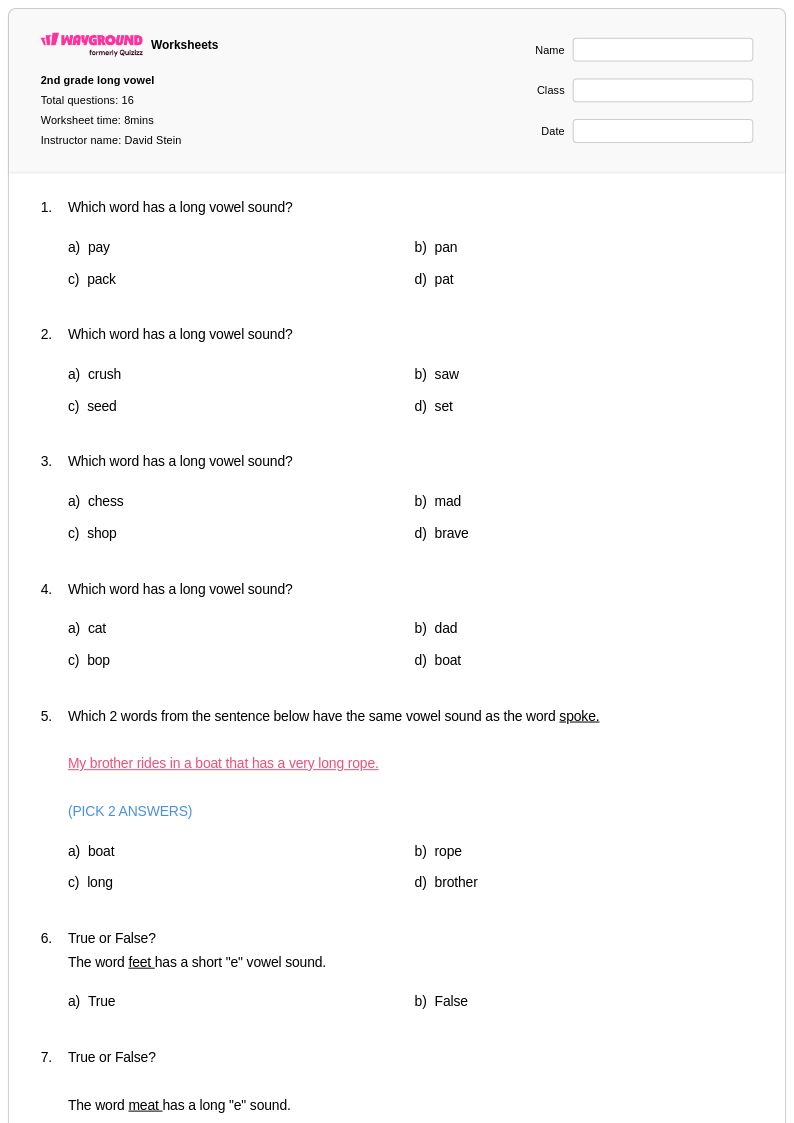
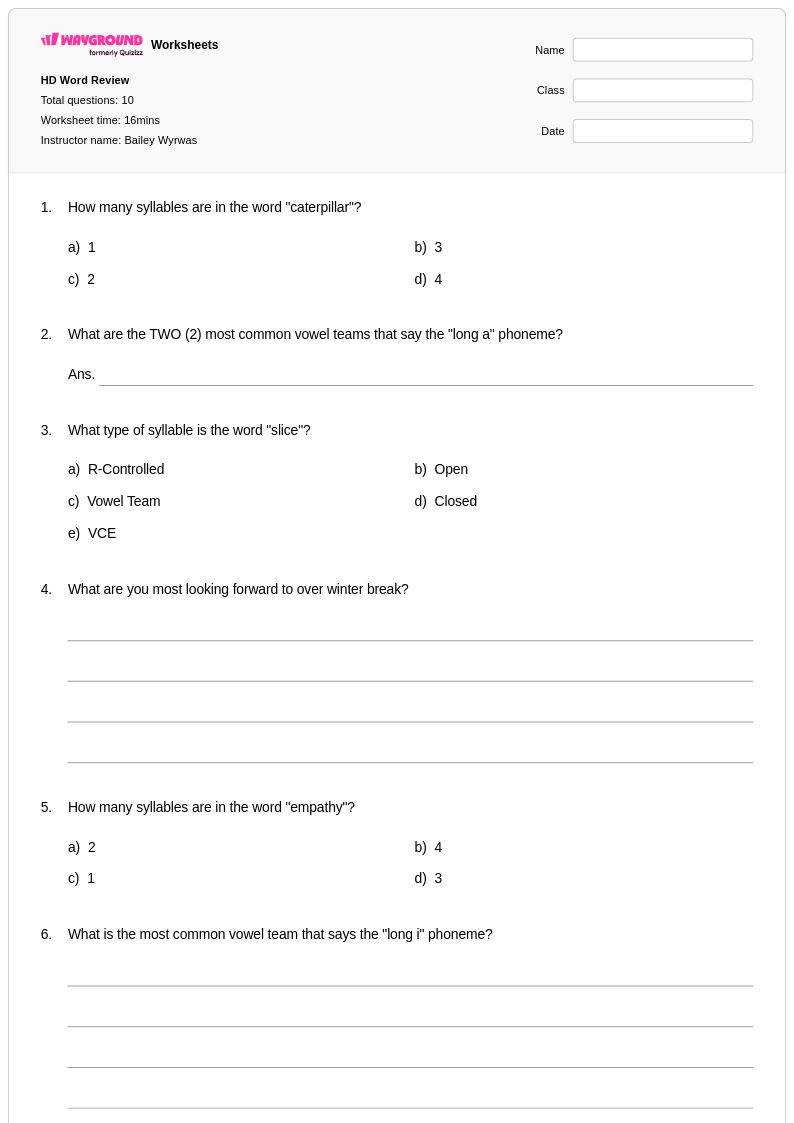
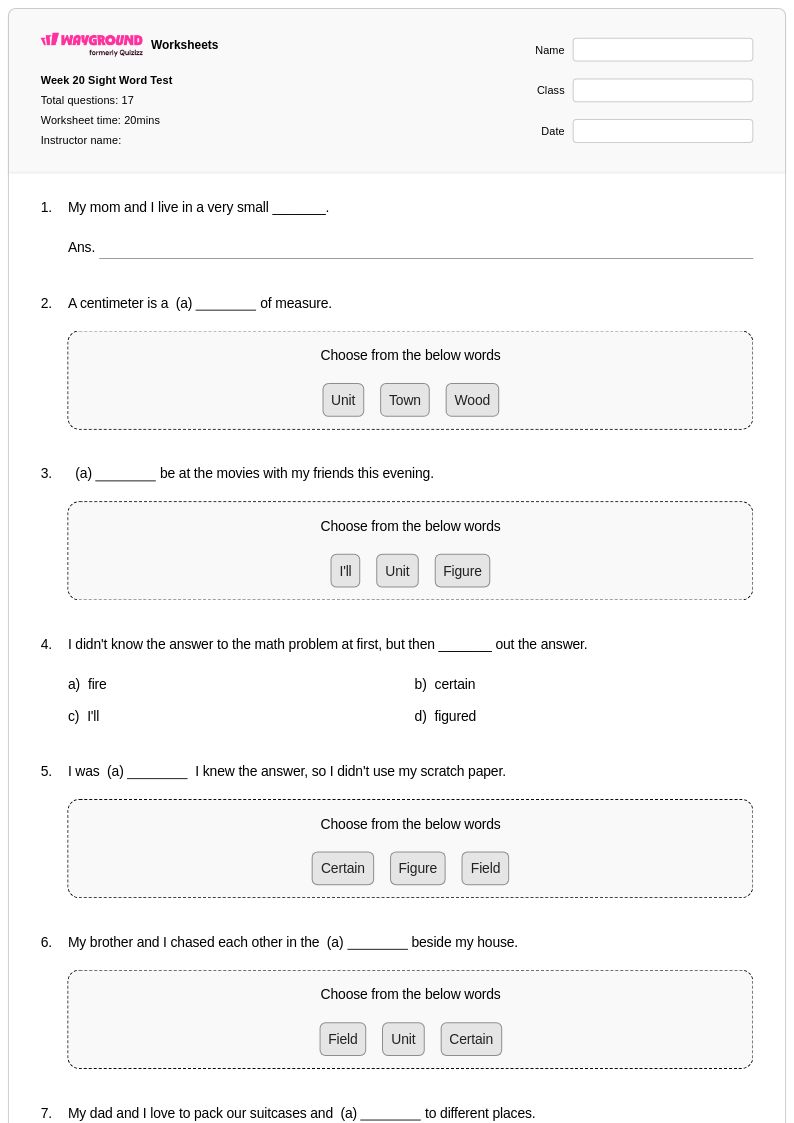
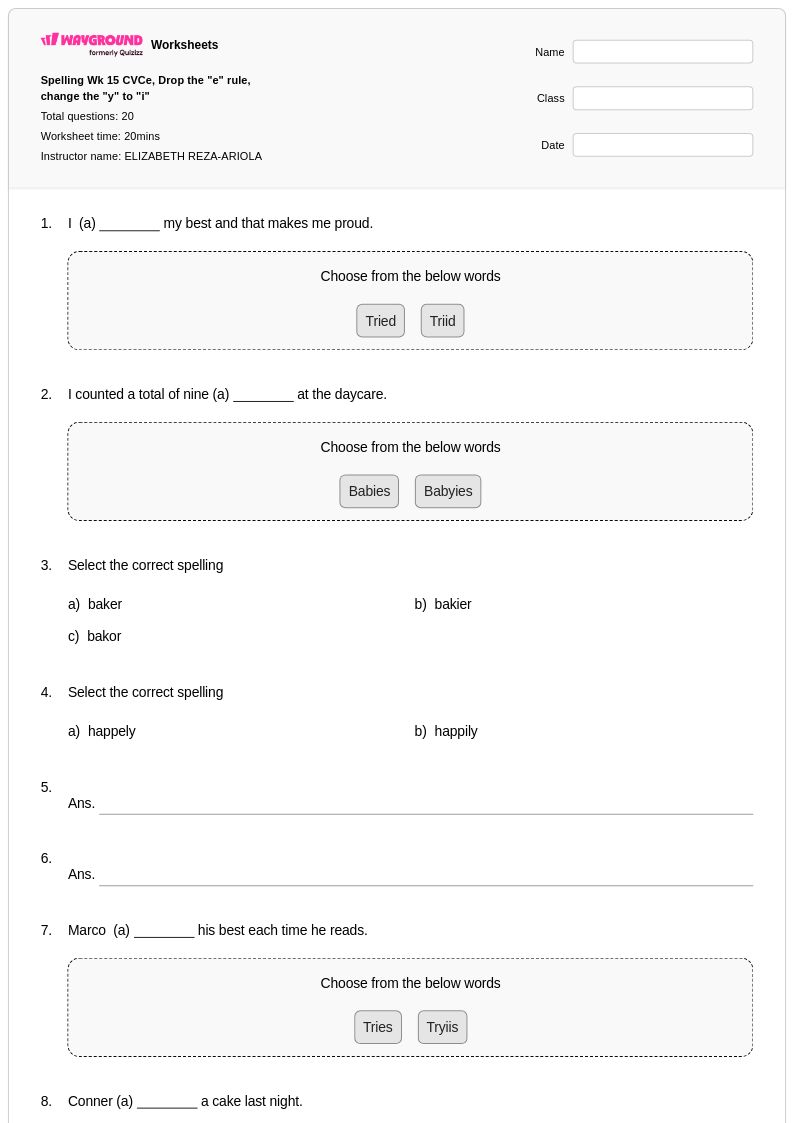
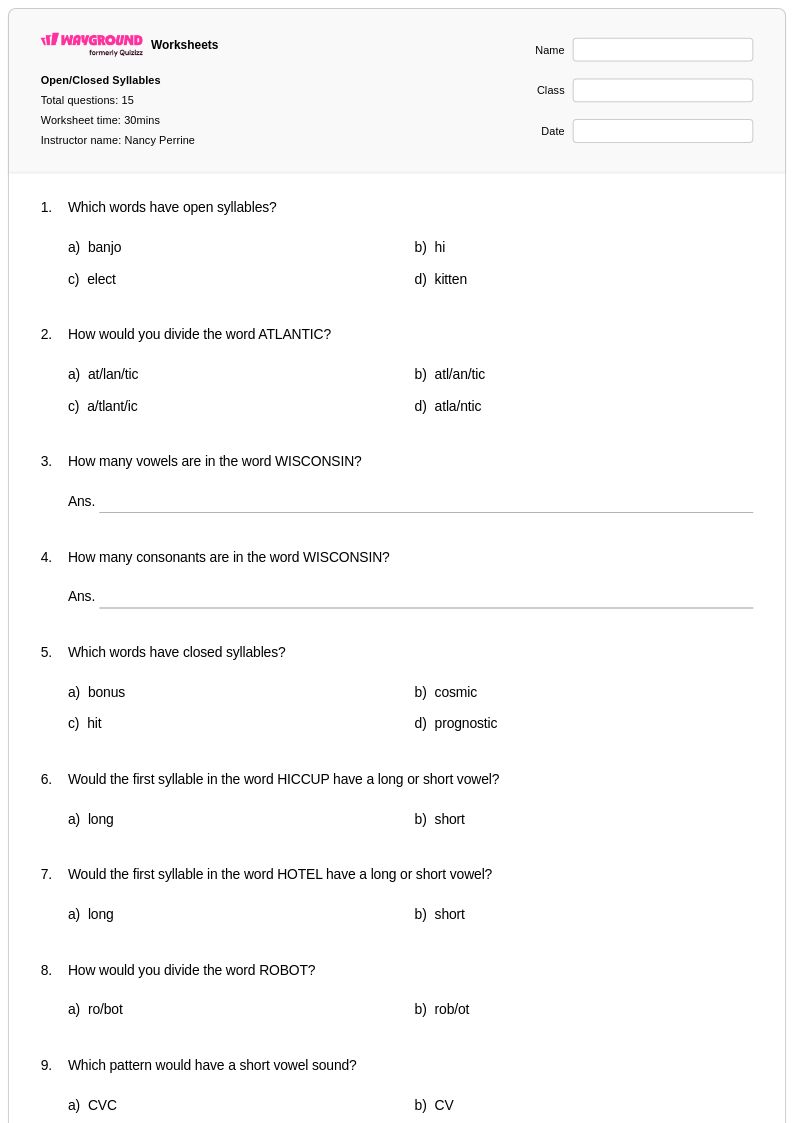
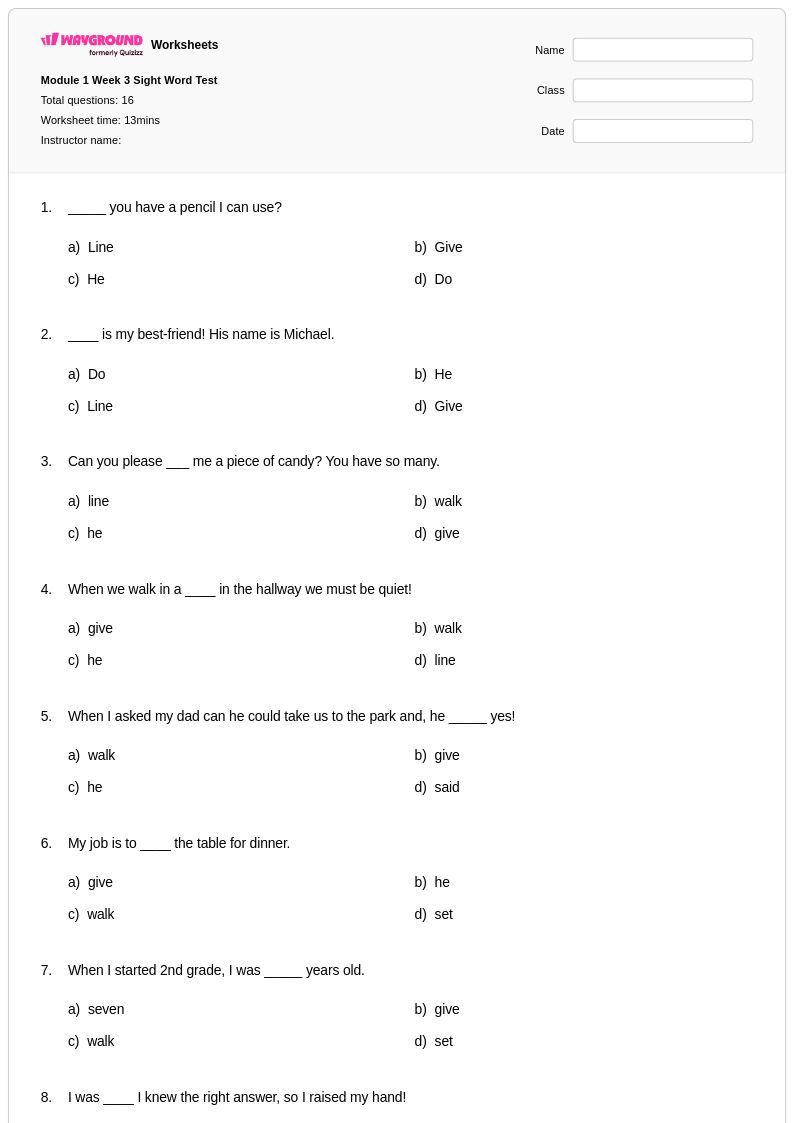
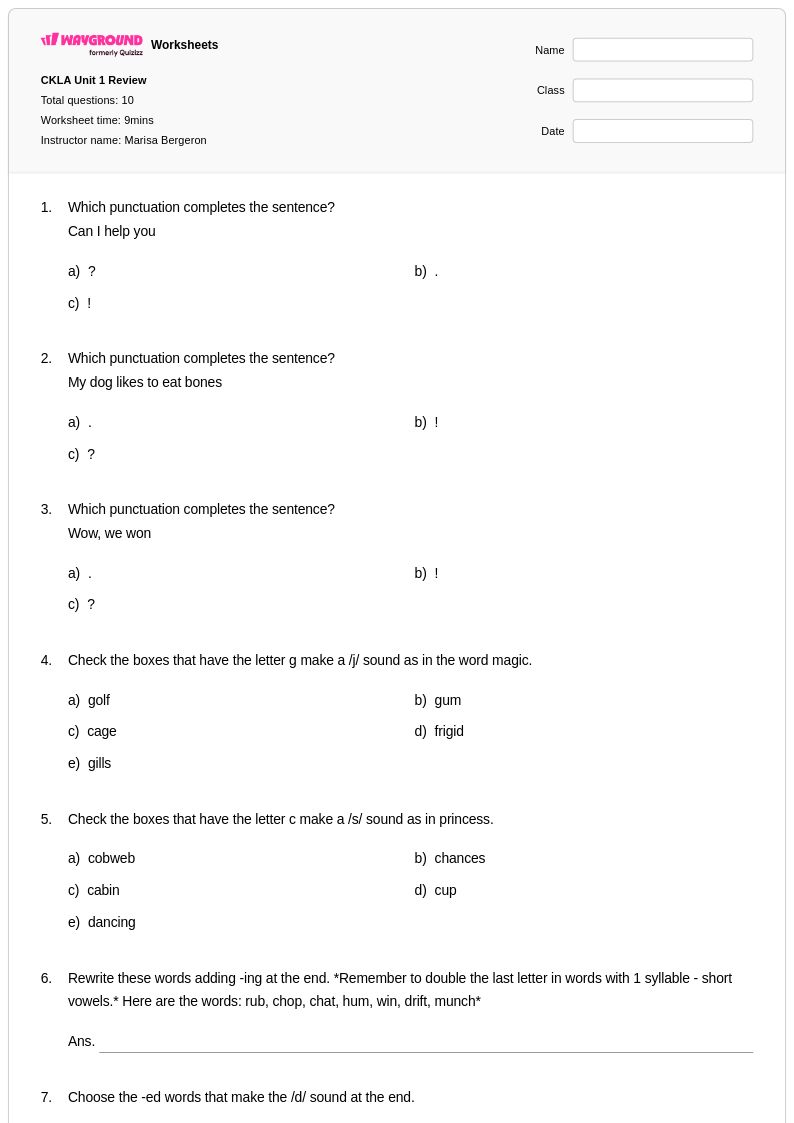
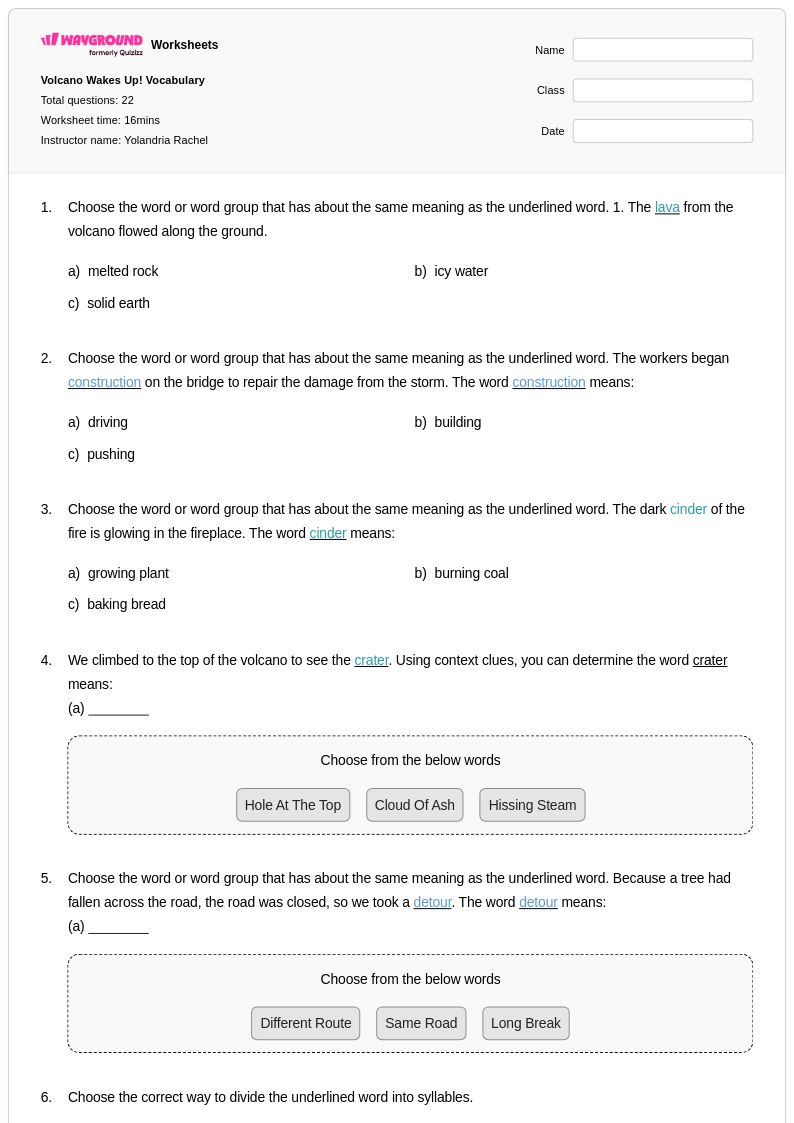
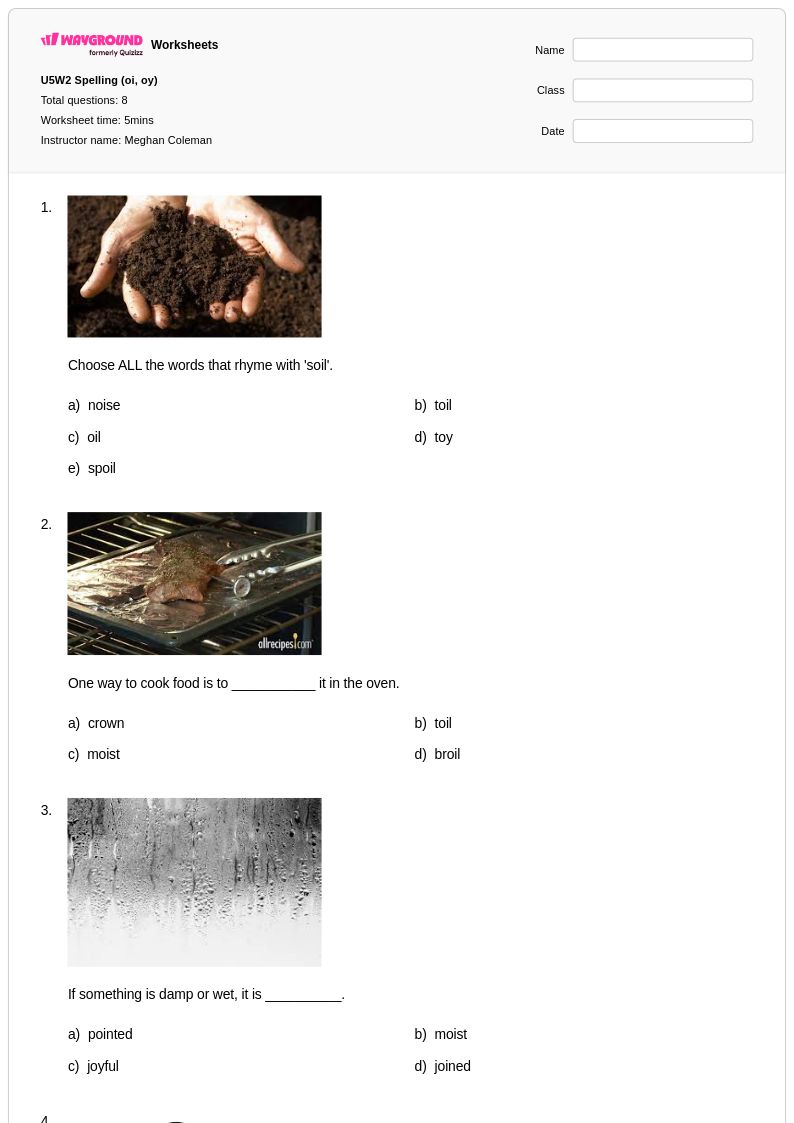
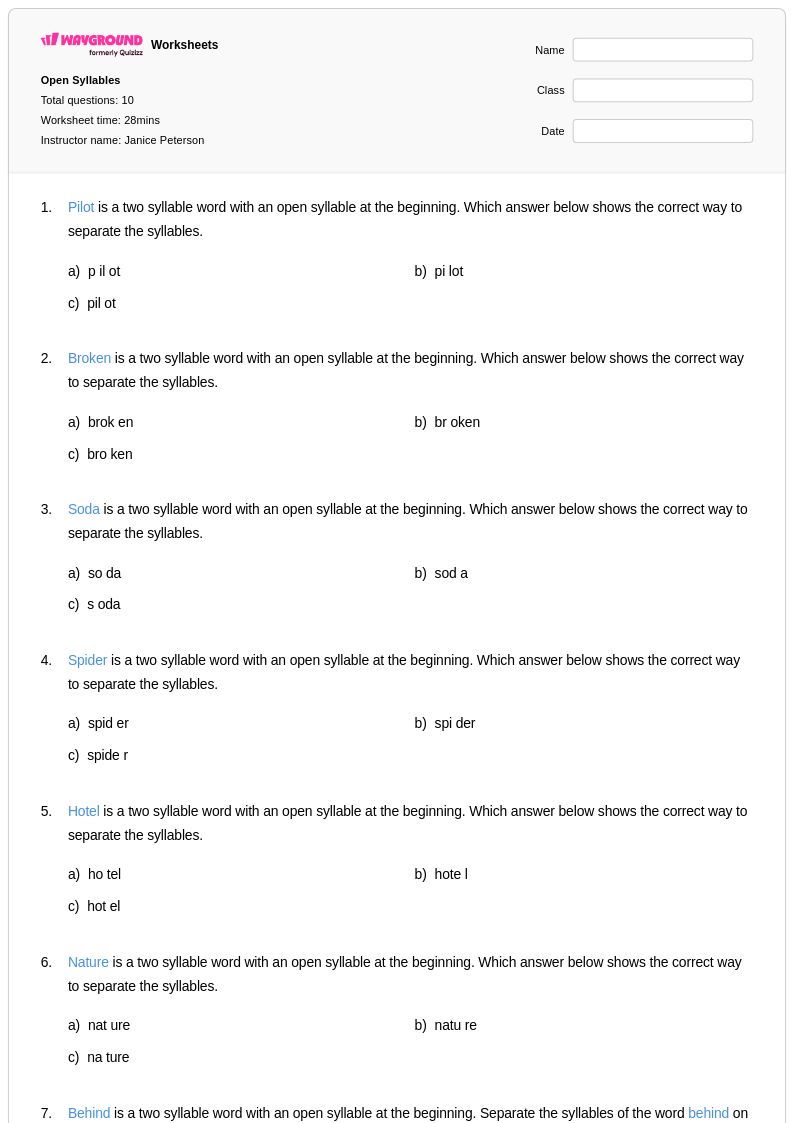
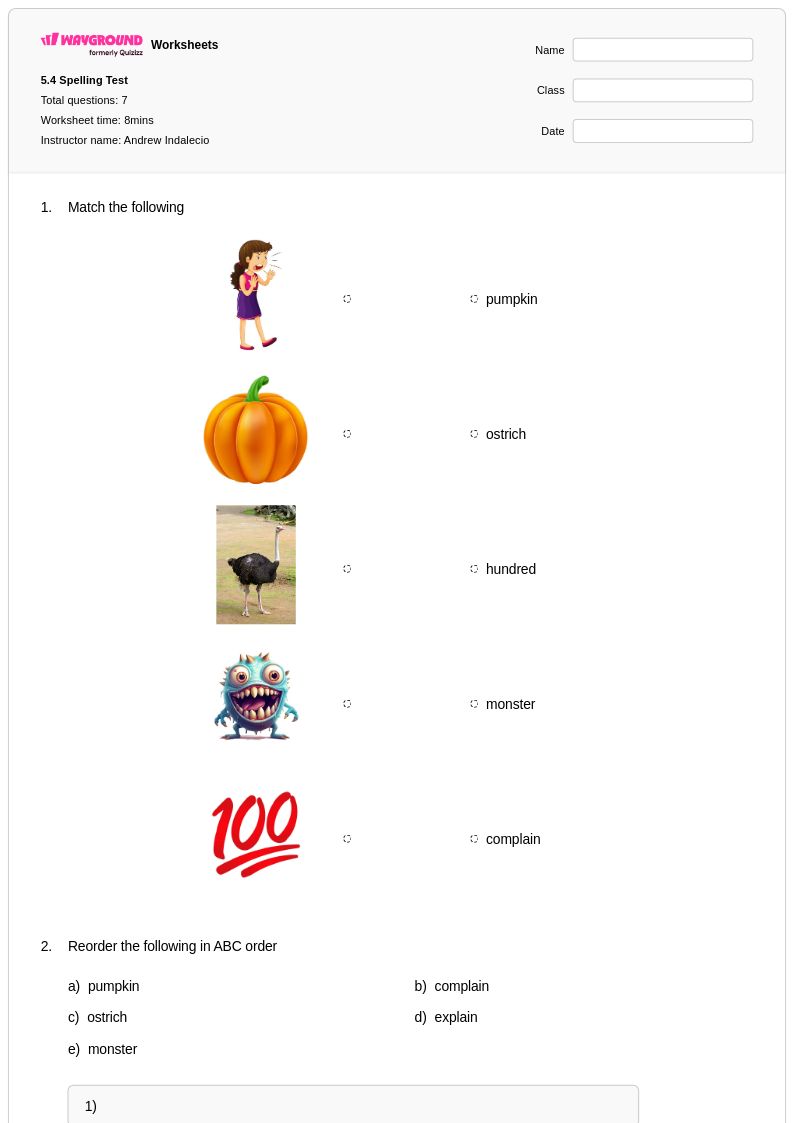
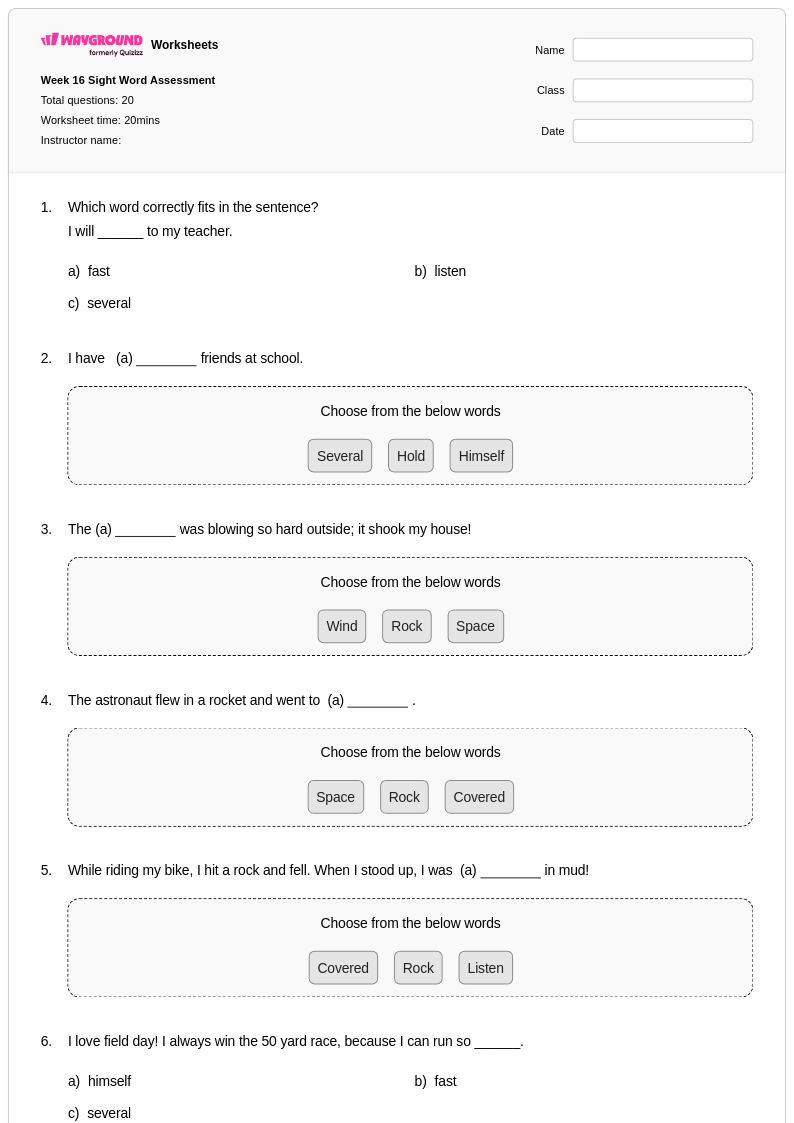
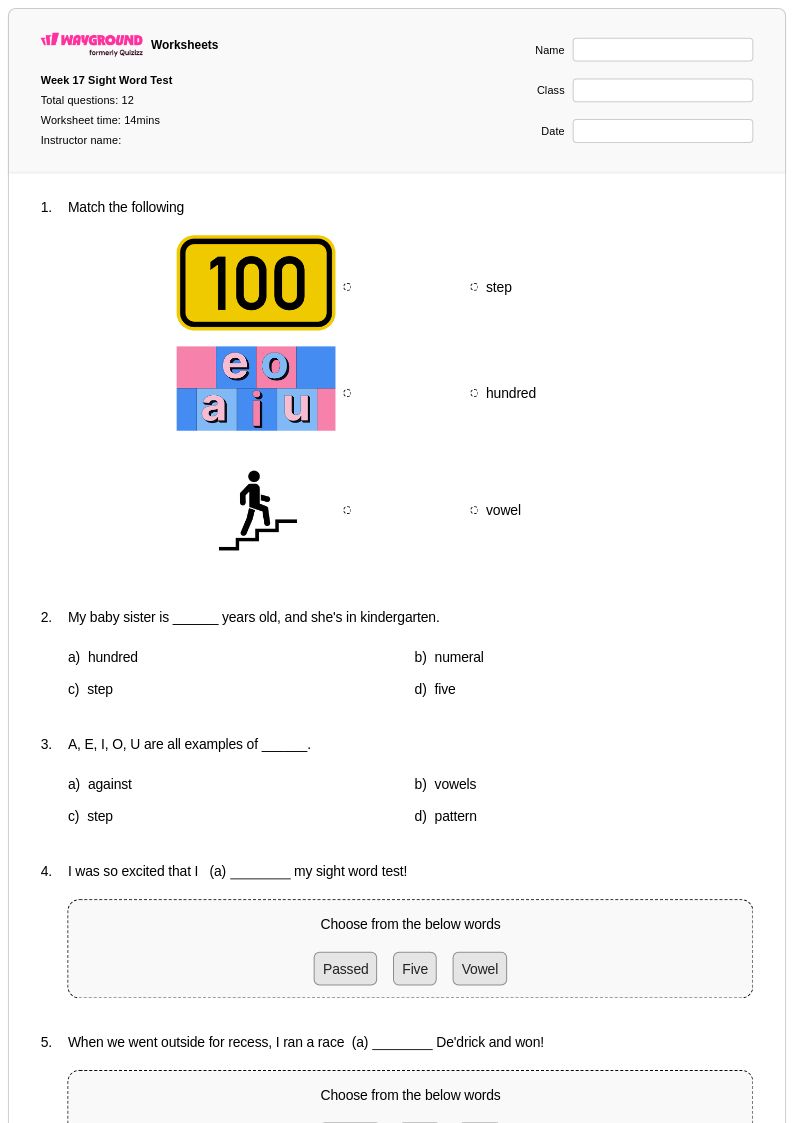
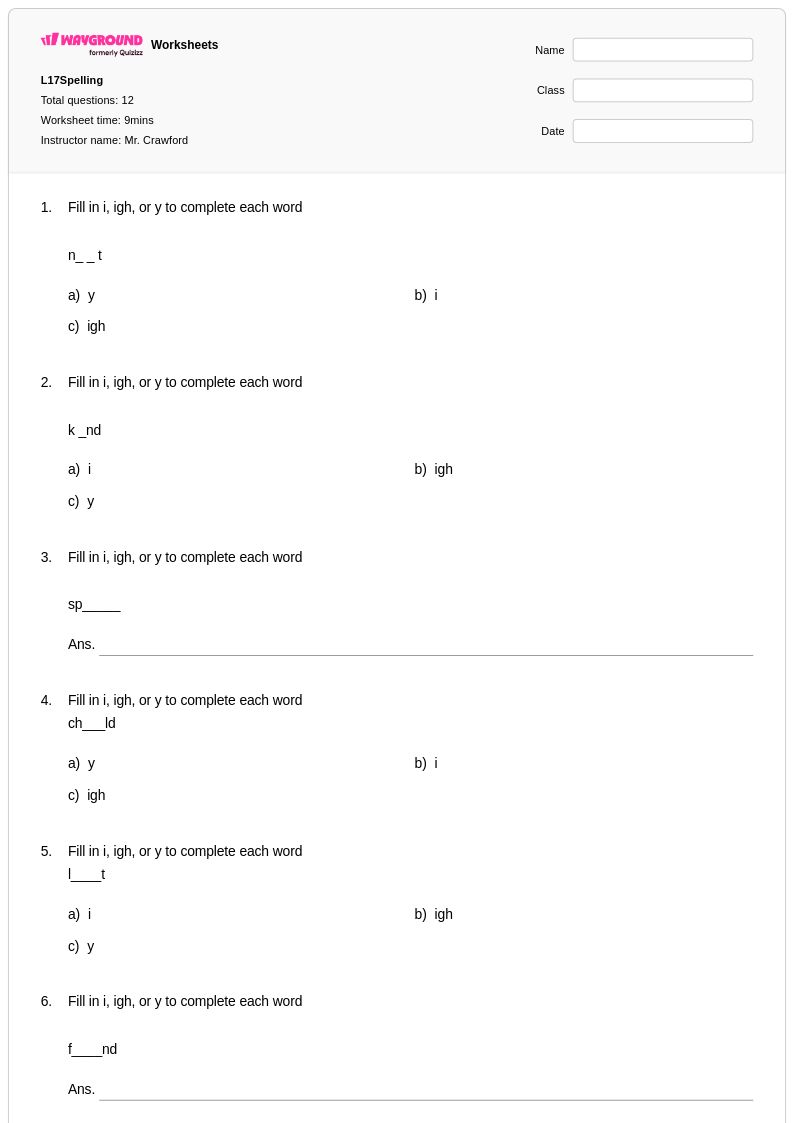
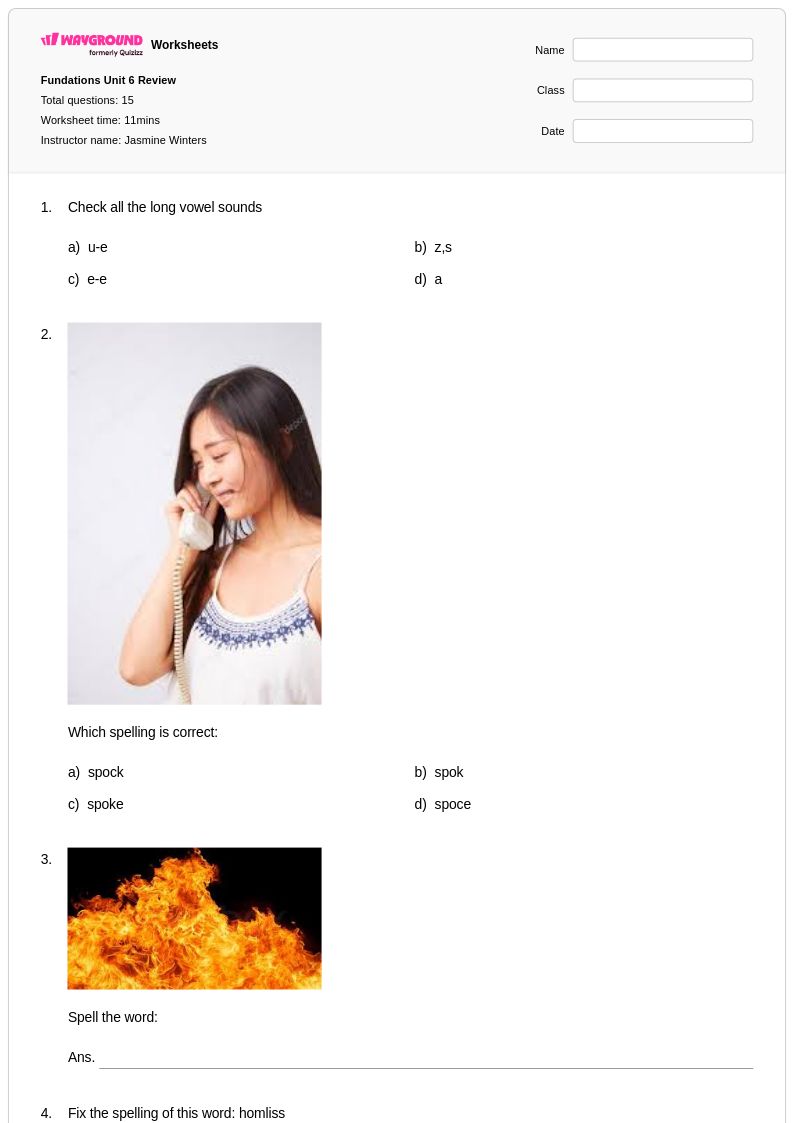
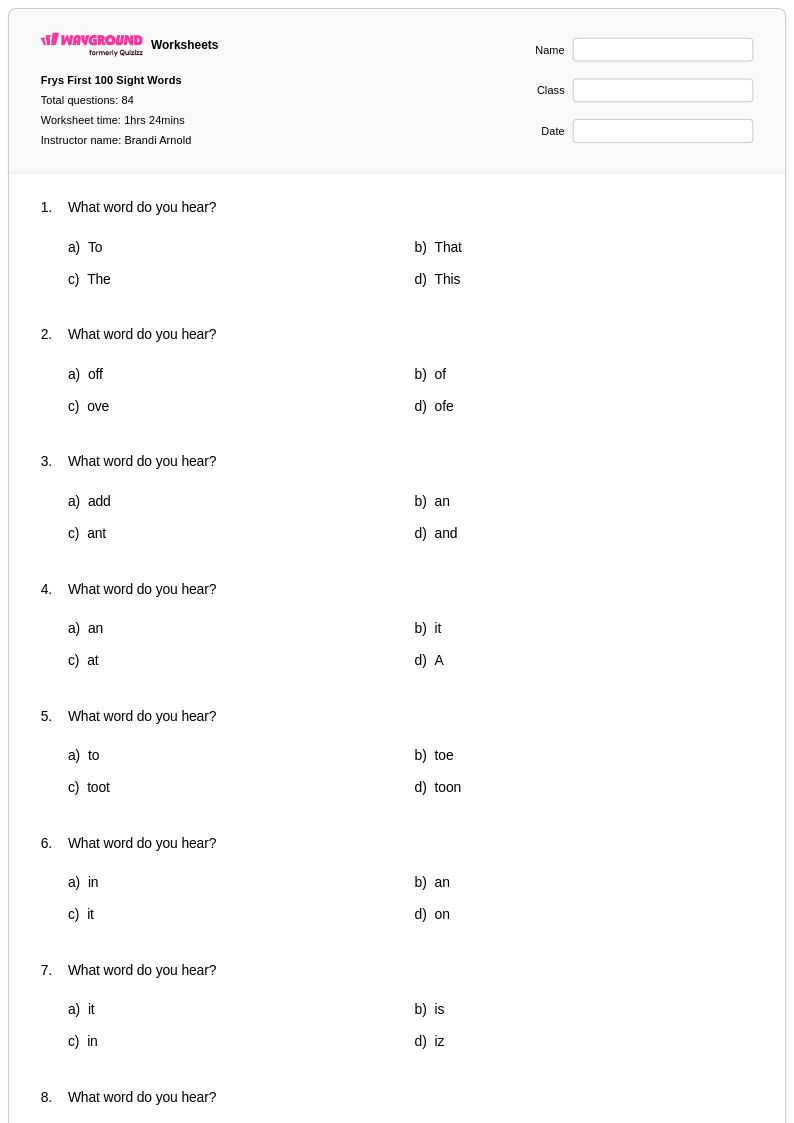
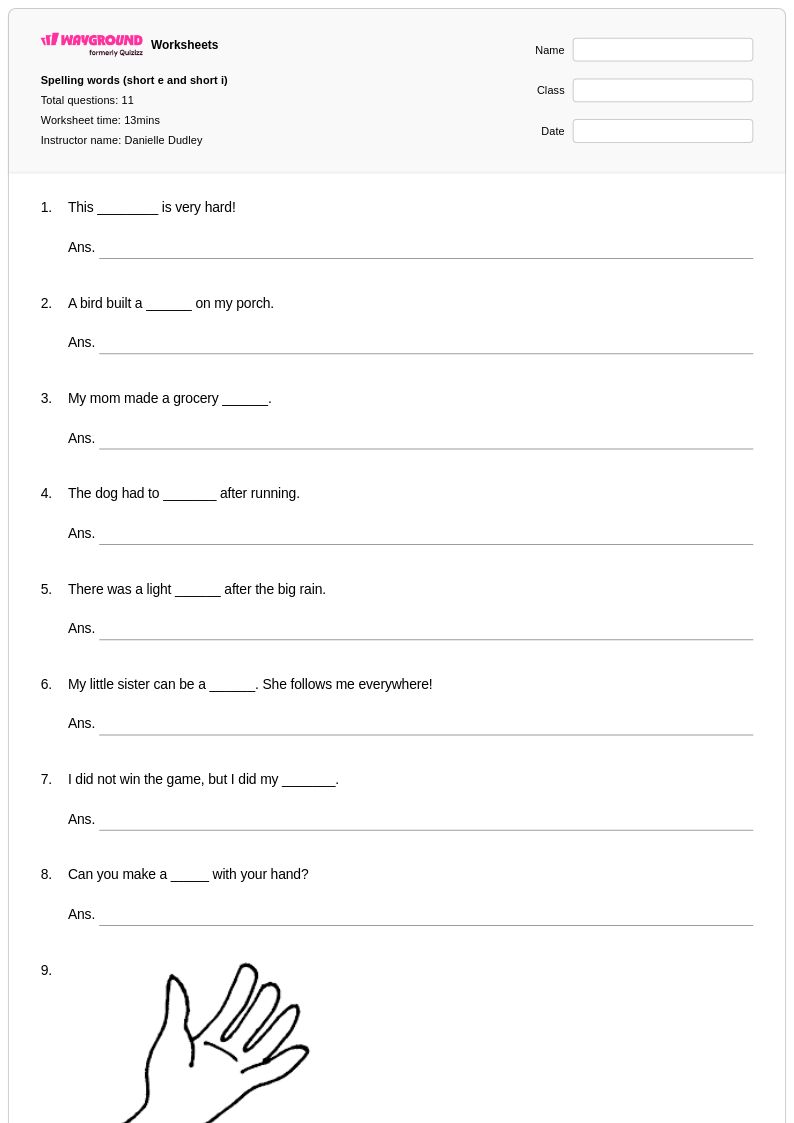
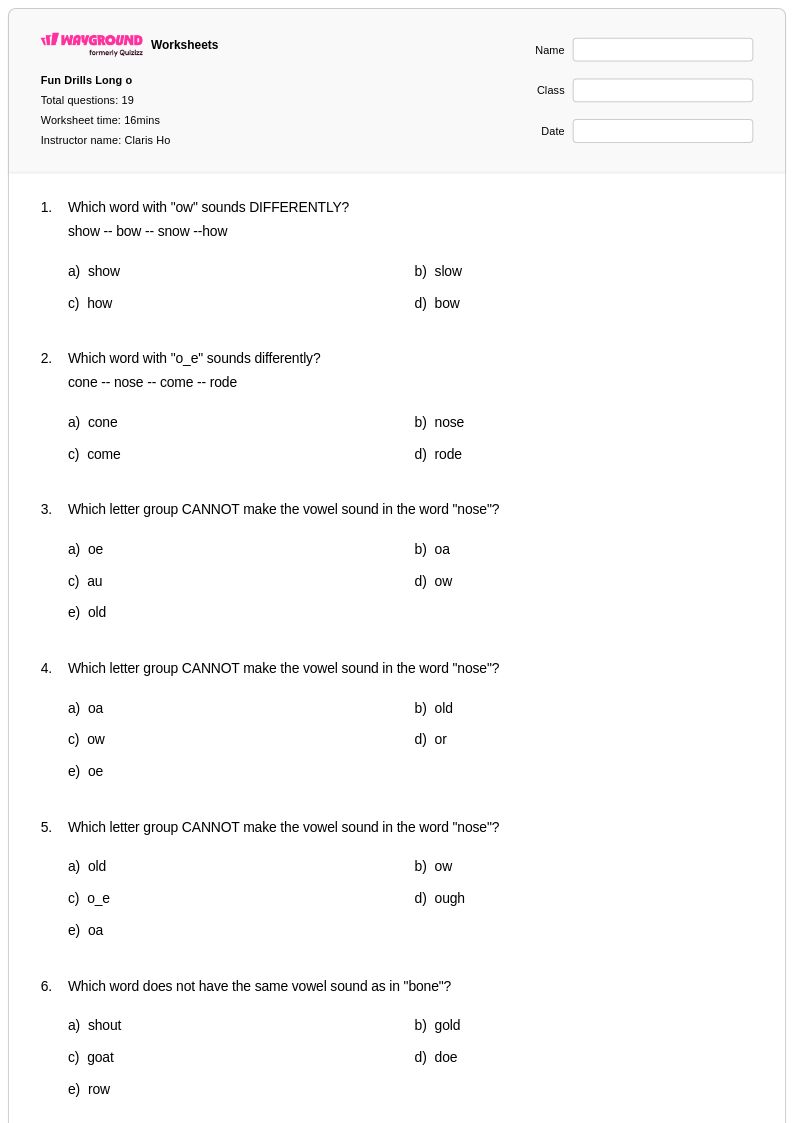
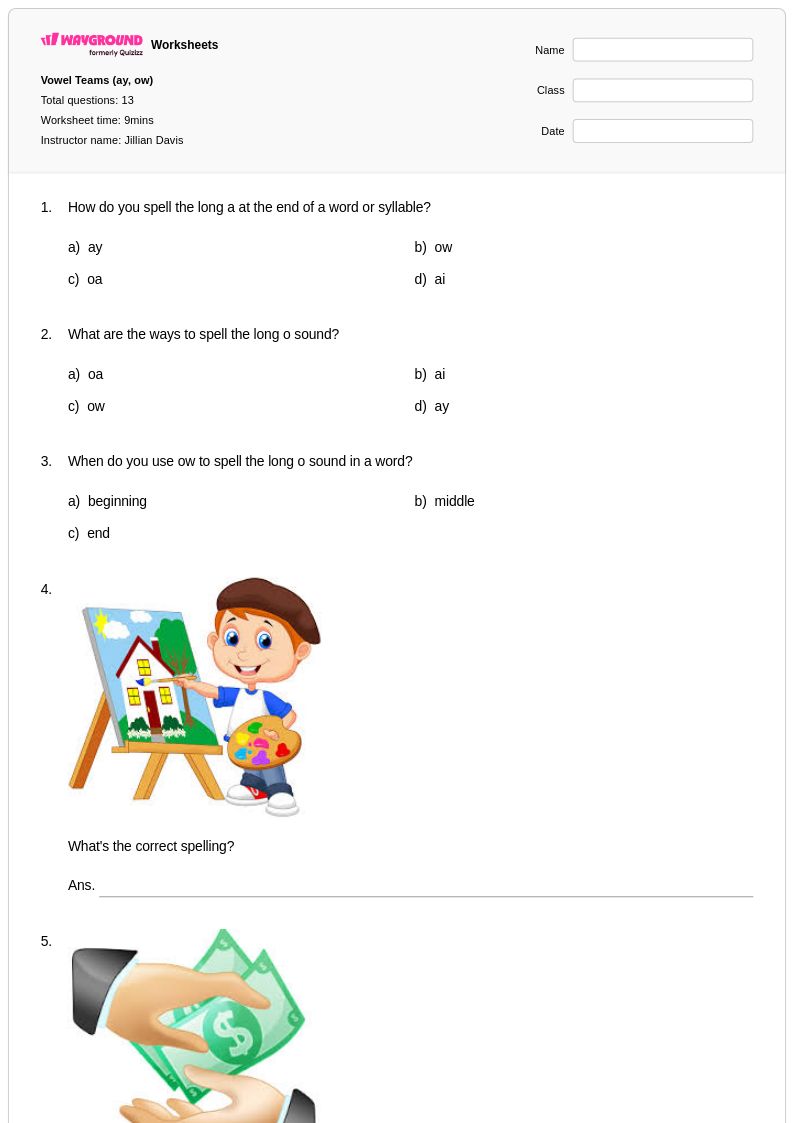
Word patterns form the foundation of reading fluency for Class 2 students, and Wayground's comprehensive worksheet collection provides targeted practice in recognizing and applying these essential phonics concepts. These expertly designed worksheets help young learners identify common spelling patterns such as silent e, vowel teams, consonant blends, and word families through engaging activities that build both decoding and encoding skills. Each printable resource includes structured practice problems that progress systematically from simple pattern recognition to more complex word analysis, with complete answer keys provided to support effective assessment and feedback. The free pdf format ensures accessibility for both classroom instruction and home practice, allowing students to develop automaticity in recognizing how letters work together to create predictable sounds and spellings.
Wayground, formerly Quizizz, empowers educators with millions of teacher-created resources specifically designed to support phonics instruction and word pattern mastery at the Class 2 level. The platform's advanced search and filtering capabilities enable teachers to quickly locate worksheets aligned with specific curriculum standards and learning objectives, while built-in differentiation tools allow for seamless customization based on individual student needs. Whether delivered in printable pdf format for traditional paper-and-pencil work or through digital formats for interactive learning, these resources support comprehensive lesson planning and provide flexibility for remediation, enrichment, and daily skill practice. Teachers can efficiently organize word pattern instruction across various complexity levels, ensuring that every student receives appropriate challenge and support in developing strong phonemic awareness and spelling proficiency.
FAQs
How do I teach word patterns to early readers?
Teaching word patterns works best when instruction moves from simple to complex: start with consonant-vowel-consonant (CVC) patterns, then introduce CVCe patterns, blends, and digraphs before layering in prefixes and suffixes. Explicit, repeated exposure to each pattern type helps students internalize the rules so they can apply them automatically during reading and writing. Anchor each new pattern to high-frequency example words students already know, then extend practice to unfamiliar words to build generalization.
What word pattern exercises help students build decoding skills?
Exercises that isolate a single pattern, such as sorting words by vowel sound, identifying blends at the start of words, or adding inflectional endings to base words, give students focused practice that directly improves decoding accuracy. Activities that ask students to manipulate onsets and rimes are especially effective because they make the internal structure of words visible. Combining these exercises with reading connected text reinforces that patterns are tools for real reading, not just isolated drills.
What mistakes do students commonly make when learning prefixes like 're-', 'un-', and 'mis-'?
A common error is misidentifying the prefix boundary — students may split a word like 'uncle' into 'un-' and 'cle', incorrectly treating a non-prefix string as a meaningful morpheme. Students also frequently confuse the meaning contribution of each prefix, applying 're-' where 'mis-' is semantically correct, or vice versa. Direct instruction that pairs each prefix with its precise meaning and multiple word examples helps students build accurate mental models rather than pattern-matching by sight alone.
How do I help students who confuse digraphs and blends?
The key distinction to reinforce is that a digraph produces one new sound (e.g., 'sh' in 'ship'), while a blend retains the individual sounds of each letter (e.g., 'bl' in 'black'). Students often confuse them because both involve two consonants appearing together. Auditory activities where students stretch out and count sounds in words — rather than letters — make this distinction concrete and easier to retain.
How can I use word patterns worksheets from Wayground in my classroom?
Wayground's word patterns worksheets are available as printable PDFs for traditional classroom use and in digital formats for technology-integrated environments, giving teachers flexibility across in-person, hybrid, and remote settings. Teachers can also host worksheets directly as a quiz on Wayground, enabling real-time student response tracking. Wayground supports individual student accommodations including extended time, read aloud, reduced answer choices, and adjustable reading modes — all configurable per student so the rest of the class receives default settings without disruption.
How do suffixes like '-ed', '-ic', and '-en' affect spelling and meaning?
The suffix '-ed' signals past tense but triggers different spelling changes depending on the base word — doubling the final consonant, dropping a silent 'e', or adding '-ed' directly. The suffix '-ic' converts nouns into adjectives (e.g., 'hero' to 'heroic') and often signals academic vocabulary across science and social studies. The '-en' suffix can signal a verb form meaning 'to make' (e.g., 'brighten') or, as a noun ending, a plural (e.g., 'children'), so students must learn to interpret it in context rather than applying a single rule.
At what point should students be working with roots and multi-part word structures?
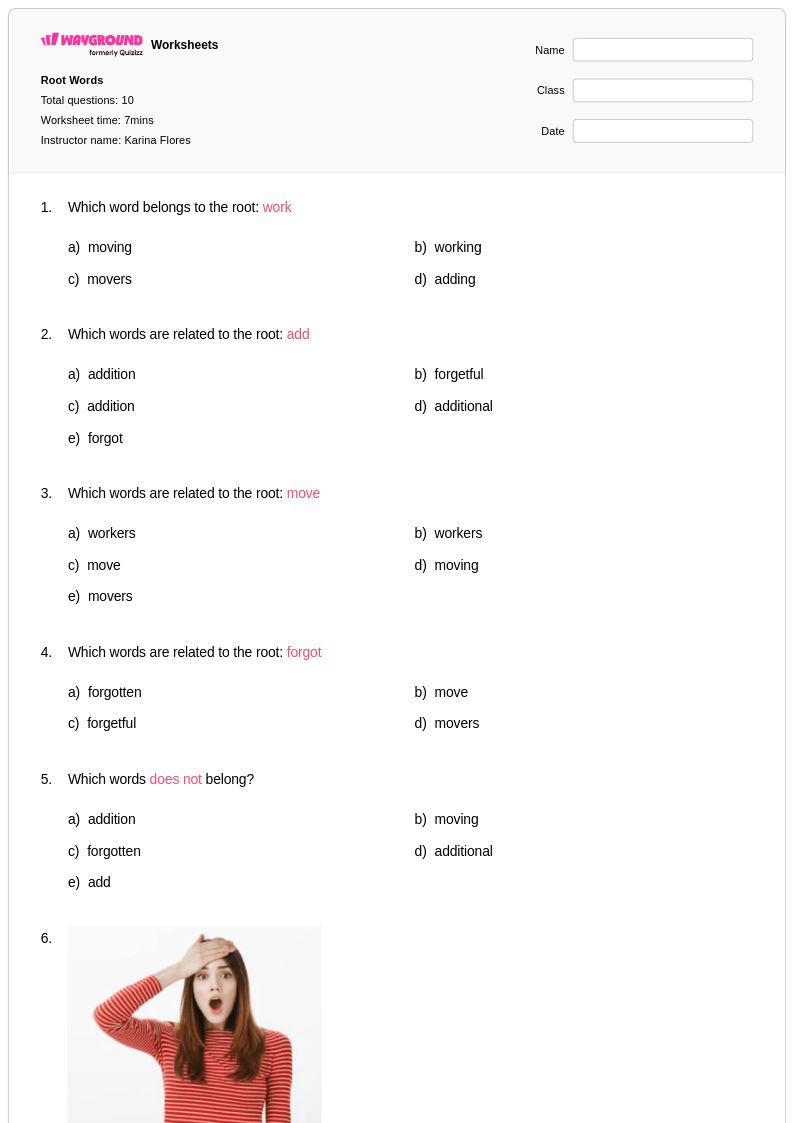
Once students have solid command of common prefixes and suffixes, introducing roots — especially Latin and Greek roots — extends their ability to decode and infer meaning across subject-area vocabulary. This transition is typically appropriate when students can reliably identify prefix and suffix boundaries in two-morpheme words and understand that word parts carry consistent meaning. Starting with high-utility roots like 'rupt', 'port', 'struct', and 'vis' gives students immediate leverage across multiple content areas.