wayground logo

Free Printable Worksheets

Font size

S
M
L
XL
Worksheets

Cell Transport

Total questions: 43

Worksheet time: 39mins

Name
Class
Date
1.
Water will move by osmosis
a)
to a higher concentration 
b)
wherever it feels like 
c)
to a lower concentration 
d)
to the side with fewer solute
2.
This is what type of solution? 
a)
hypotonic
b)
isotonic 
c)
hypertonic
3.
Which type of transport requires a concentration gradient? 
a)
both 
b)
active
c)
passive 
d)
neither
4.
If the cell has 86% solute and the outside solution has 67% solute, where will water flow? 
a)
in and out of the cell 
b)
out of the cell 
c)
into the cell 
d)
wait, this isn't math class
5.
Which type of cell is this? 
a)
prokaryotic 
b)
eukaryotic 
6.
Which cell is placed into a hypotonic environment? 
a)
A
b)
B
c)
C
d)
D
7.
This cell was placed into which type of solution?
a)
Hypertonic 
b)
Hypotonic 
c)
Isotonic 
d)
Cannot determine
8.
The salt in the glass of saltwater is considered the
a)
solvent
b)
solution 
c)
pepper
d)
solute
9.
What is the term for allowing some substances to cross the membrane but not others? 
a)
semi conservative 
b)
antiparallel 
c)
semi permeable
d)
hypothermic  
10.
Which type of transport is not passive? 
a)
pinocytosis 
b)
diffusion 
c)
facilitated diffusion 
d)
osmosis 
11.
Active transport requires 
a)
no energy 
b)
ATP 
c)
studying 
d)
osmosis
12.
Which factor doesn't affect the rate of molecule movement? 
a)
number of mitochondria 
b)
temperature 
c)
concetration 
d)
size of molecule 
13.
Which prefix means same or equal?
a)
hypo
b)
iso 
c)
hyper 
d)
pro 
14.
This occurs when the molecules are the same throughout. 
a)
homeostasis 
b)
diffusion 
c)
active transport 
d)
equilibrium 
15.
Pinocytosis involves the transport of 
a)
solids into the cell 
b)
lysosomes out of the cell 
c)
fluids into the cell 
d)
whole cells 
16.
Maintaining a stable internal environment is best known as 
a)
normal 
b)
equilibrium 
c)
plasmolysis 
d)
homeostasis
17.
This solution causes cells to shrivel 
a)
isotonic 
b)
hypotonic 
c)
hypertonic 
18.
Name this process. 
a)
phagocytosis 
b)
pinocytosis 
c)
exocytosis 
d)
facilitated diffusion 
19.
Name this process. 
a)
facilitated diffusion 
b)
osmosis 
c)
exocytosis
d)
endocytosis
20.
This picture represents what type of cell transport?
a)
endocytosis
b)
exocytosis
c)
osmosis
d)
passive transport
21.
The concentration of water is higher in the soil than in plant root cells. Water moves into root cells of a plant by...
a)
Facilitated Diffusion
b)
Simple Diffusion
c)
Active Transport
d)
Osmosis
22.
Due to the higher concentration of oxygen in the air than your blood, oxygen goes from the lungs into the red blood cells by....
a)
Facilitated Diffusion
b)
Simple Diffusion
c)
Active Transport
d)
Osmosis
23.
In a nerve cell, ATP energy is used to pump sodium (Na) out of the cell and potassium (K) into the cell. This is an example of...
a)
Facilitated Diffusion
b)
Simple Diffusion
c)
Active Transport
d)
Osmosis
24.
This cell organelle helps organisms maintain homeostasis by controlling what substances may enter or leave cells.
a)
vacuole
b)
nucleus
c)
cell membrane
d)
cell wall
25.
The cell below is in a _________ solution.
a)
Hypotonic
b)
Hypertonic
c)
Isotonic
26.
The cell below is in a _____________ solution.
a)
Hypertonic
b)
Hypotonic
c)
Isotonic
27.
When a cell is placed in a hypertonic (more concentrated) solution water
a)
moves from the inside of the cell to the solution
b)
moves from the solution to the inside of the cell
c)
moves equally in and out of the cell
d)
none of these
28.

Have you read your notes?

a)

yes

b)

no

29.
What type of transport is this?
a)
facilitated diffusion
b)
active transport
c)
diffusion
d)
osmosis
30.
Will you pass this test? 
a)
yes 
b)
no 
31.
if you put a plant in salt water it will ...
a)
swell because water diffuses into the cells
b)
swell because water diffuses out of the cell
c)
shrivel because water diffuses out of the cell
32.
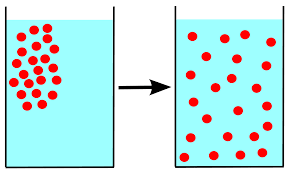
The picture below is an example of _________________.
a)
osmosis
b)
isotonic
c)
diffusion
d)
active transport
33.

Which way would the purple molecules move through the semi permeable membrane?

a)

From the A side to the B side

b)

From the B side to the A side

c)

None of the purple molecules would move.

34.
This picture represents which type of cellular transport?
a)
passive transport
b)
endocytosis
c)
exocytosis
d)
osmosis
35.
Which term means "water-loving"?
a)
Cohesion
b)
Nonpolar
c)
Hydrophilic
d)
Hydrophobic
36.
Which term means "water-fearing"?
a)
Adhesion
b)
Polar
c)
Hydrophilic
d)
Hydrophobic
37.
ATP is 
a)
cell energy
b)
sugar
c)
your teachers intials
d)
only used by mitochondria 
38.

The sodium-potassium pump moves ____ K ions into the cell and ____ Na molecules out of the cell.

a)

3,2

b)

3,3

c)

2,2

d)

2,3

39.

Where will water flow, by osmosis, if the outside of a cell has 35% sugar and the inside of the cell has 70% water?

a)

into the cell

b)

cannot determine

c)

out of the cell

d)

into and out equally

40.

Transport proteins are required in which type of diffusion?

(a)  

41.

Select all of the following types of active transport:

a)

facilitated diffusion

b)

pinocytosis

c)

Na/K pump

d)

osmosis

e)

exocytosis

42.

Which side is hypertonic?

a)

A

b)

B

43.

Water will flow in which direction: left or right?

(a)