
 Worksheets
Semester 1 Review...
Total questions: 76
Worksheet time: 1hrs 12mins
Name
Class
Date
1.
1. A football team wants to test a new "wicking fabric" jersey that will remove sweat from their body faster, keeping them cool. To test this, they soak a cotton, polyester, and wicking fabric jersey in saline solution and place them on a table heated to 98 degrees. The time it takes for the solution to evaporate is recorded.
What is the Independent variable?
What is the Independent variable?
a)
Saline Solution
b)
Temperature of the table
c)
Fabric of jersey
d)
Time of Evaporation
2.
An observation made from the experiment in question might include
a)
The jersey fabric should be stretchy
b)
the cotton jersey took the most time to dry
c)
The polyester jersey looked the best
3.
A simple hypothesis for that experiment might be
a)
If the wicking fabric takes the most time, it should be used
b)
If 3 fabrics are soaked in saline then the wicking fabric will dry the fastest
c)
No.
d)
If three fabrics are soaked in saline then the fabrics will get wet.
4.

What is the dependent variable?
a)
The type of bacteria
b)
The number of hours
c)
The Agar
d)
The number of bacteria
5.

What is an appropriate conclusion based on the graph?
a)
Bacteria populations are inversely related to time
b)
Bacteria like it hot
c)
Bacterial populations increase in Agar at a consistent rate for 10 hours
d)
The conclusion should be the time it takes on the x axis
6.
The arthropod's shell was white with rounded edges near the thorax.
a)
Quantitative
b)
Qualitative
7.
5cm= _________m?
a)
500
b)
.0005
c)
.05
d)
The answer is the inverse of .05
8.
The base unit for mass is
a)
gram
b)
liter
c)
meter
d)
Mass is an illusion, all matter is in a state of flux relative to the amount of pure energy it contains. Thus, on a long enough time scale, we are all pure energy indivisible from the universe.
9.
.123km=_______m
a)
.0123
b)
1.23
c)
123
d)
.000123
10.
What would one example of a mixture be?
a)
CO2
b)
Sugar
c)
Coffee
d)
Beryllium
11.
How many elements are in NaHCO3
a)
4
b)
5
c)
3
d)
1
12.
If a factory produces 762L tank of N2O, nitrous oxide every day, would the material in that tank be a mixture or pure substance?
a)
Mixture
b)
Pure substance
c)
Pure Mixture?
13.
While making lemonade, if you accidentally dissolve salt into your water instead of sugar how could you separate the mixture (you of course don't dump it down the drain because you would rather separate a mixture!)
a)
Boiling Point
b)
Coffee filter
c)
Dump out the water
d)
Luster
14.

Mr. Smith recently made cookies, and some chocolate was left on the baking sheet. To clean the pan, he decided to heat up the pan again so the chocolate would flow off the pan easier. What physical property did he change?
a)
Hardness
b)
Luster
c)
Conductivity
d)
Viscosity
15.
Melting Copper would be a(n)
a)
Physical change
b)
Chemical Change
c)
Exothermic Change
d)
Delicious change
16.

If the block in the picture is 100g, what is its density?
a)
10cm/g3
b)
10g/cm3
c)
.1g/cm3
d)
.1cm3/g
17.
Which state of matter can easily change its shape but not its volume?
a)
Fluid
b)
Liquid
c)
Gas
d)
Metalloid
18.

At what temperature is a solution of KNO3 saturated with 60g of solute?
a)
100 degrees
b)
20 degrees
c)
40 degrees
d)
10 degrees
19.

Does silicon like speaking foreign languages?
a)
No
b)
Si
c)
NaBro
20.
Hydrogen-2 has how many protons?
a)
0
b)
1
c)
2
d)
3
21.

What element is shown in the image?
a)
Helium
b)
Lithium
c)
Beryllium
d)
Fluorine
22.
Which Element is more reactive? Cesium, Argon
a)
Cesium
b)
Argon
23.
Which element has Bohr's second orbital?
a)
Helium
b)
Sulfur
c)
Chlorine
d)
Oxygen
24.
Which element tends to lose its valence electrons?
a)
Carbon
b)
Fluorine
c)
Magnesium
d)
Iodine
25.
elements in the same _________ tend to have similar properties because...
a)
Period- similar atomic number
b)
Group- similar valence number
c)
Group- Same neutron number
d)
Period- Same Bohr Orbital as valence
26.
Group 5 on the Periodic table forms what type of ion?
a)
Anion: 5-
b)
Anion: 3-
c)
Cation: 5+
d)
Cation: 5-
27.
If a student obtains 2 isotopes of carbon (C-12 and C-14) and uses them separately in the following reaction, what could she expect to happen?
C + O2 ---> CO2
C + O2 ---> CO2
a)
C-14 will react slower, it has more negativity
b)
C-12 will react faster, it is lighter
c)
C-14 will not react, it has more neutrons
d)
They will react in the same manner
28.
What is the name of the following compound?
KCl
KCl
a)
Kalcium Carbon Iodide
b)
Kopper Cesium Lorax
c)
Potassium Chloride
d)
Potassium Carbon Monoiodide
29.
If the illuminati creates element 118 and want to try and make it bond with Francium to make the ultimate ionic bond, will their diabolical plans work out?
a)
No, 118 would have a complete valence shell
b)
No, Koner won't let them use his element
c)
Yes, they are a metal and nonmetal
d)
Yes, for the illuminati secretly controls all matter.
30.
Ca + Cl2 ----> CaCl2
What is going on here?
What is going on here?
a)
The bonds of the products break to form the bonds of the reactants
b)
Calcium steals electrons from Chlorine
c)
The bonds of the reactants break and the bonds of the products form
d)
questions like this make me super concerned about my score on this exam.
31.
Mr. McNiece wanted to see how different types of music affected students' pulse rates. She played different types of music: heavy metal, rap, R&B, alternative, pop, country, and classical music. What constant should be considered when doing this experiment?
a)
types of music
b)
use all dead people
c)
using a different student for each music type
d)
amount of time the music was played
32.
If I burn a piece of paper and some of it becomes ash and smoke, I could say that
a)
The total amount of matter I started with decreased
b)
The total amount of matter I started with stayed the same
c)
The amount of matter I started with increased
33.
What coefficent would balance this equation?
Mg + Cl ---> MgCl2
Mg + Cl ---> MgCl2
a)
1 on the product Cl
b)
2 on the reactant Cl
c)
2 on both Mg's
d)
2 on both Cl's and a 2 on the reactant Mg
34.
How do you feel about this exam?
a)
Fantabulous
b)
Deeply, deeply concerned
c)
Meh
d)
We shall see when I study the morning of the exam
35.
Energy can neither be created nor destroyed. Ever!
a)
Theory
b)
Law
36.
There 20 blonde haired boys in the freshmen class.
a)
Quantitative
b)
Qualitative
37.
Any nonmetal can form what type of bonds?
a)
Covalent only
b)
Ionic only
c)
Ionic and Covalent
d)
Bonds of brotherhood
38.
Jessie is concerned about how tired his classmates seem. He created a drink that he thinks will boost their energy. He recruits 100 classmates with a history of tiredness. He has 50 of them drink his new special energy drink. The other 50 drink a beverage that looks like the special energy drink, but is just water and food coloring. Both groups were told that they were getting the special drink that would boost energy. After 2 hours, 30 classmates in the first group reported having more energy and 8 classmates in the second group reported having more energy.
What is the independent variable?
What is the independent variable?
a)
Amount of energy
b)
Type of Drink
c)
The food coloring
d)
There isn't one
39.

Do you like this joke?
a)
Yes
b)
No
c)
WHYYYYYYYYYYY Make it Stop
d)
Yolo
40.
Convert 8 kilometers to meters
a)
800 m
b)
80,000 m
c)
8,000 m
d)
.008 m
41.
490,000 g =____ kg
a)
490
b)
49
c)
4,900
d)
0.49
42.
Is 20 g greater than, less than, or equal to 2 kg?
a)
greater than
b)
less than
c)
equal to
43.
How would you write 4.3756 x 10⁴ in standard form?
a)
437,560,000
b)
0.00043756
c)
43,756
d)
4,3756
44.
How would you write -5.6 x 10⁻³ in standard form?
a)
0.0056
b)
-5,600
c)
0.00056
d)
-0.0056
45.
When writing a number in scientific notation, the first number must be greater than 1, but less than 10.
a)
False
b)
True
46.
How do you write
1001
in scientific notation?
1001
in scientific notation?
a)
1.0001 x 10⁴
b)
1.01 x 10⁵
c)
1.001 x 10³
d)
10.1 x 10³
47.
Which of the following is correct scientific notation?
a)
20.35 x 10⁴
b)
.2035 x 104
c)
2035 4
d)
2.035 x10⁴
48.
This part of the experiment serves as a basis of comparison; the one variable being tested has been omitted.
a)
experimental group
b)
control group
c)
data
d)
variables
49.
Mrs. Bourgeois wants to figure out if the time students spend studying affects their test grades. Group #1 didn't study at all for the test. Group #2 studied for 30 minutes. The CONTROL in this experiment is
a)
quiz grades
b)
the group that studied
c)
the group that didn't study
d)
all of these are controls
50.

Is this a direct variation?
a)
yes
b)
no
51.
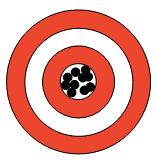
Describe this dart board using the words accuracy and precision.
a)
High Accuracy & High Precision
b)
High Accuracy & Low Precision
c)
Low Accuracy & High Precision
d)
Low Accuracy & Low Precision
52.

This dart board represents
a)
both accuracy and precision
b)
neither accuracy nor precision
c)
only accuracy
d)
only precision
53.

What is the volume of Object X?
a)
10.0 cm3
b)
15.0 cm3
c)
20.0 cm3
d)
25.0 cm3
54.

What is the independent variable?
a)
cost of mowing
b)
Moe's Mowing Service
c)
$18
d)
Mowing Time
55.

Which of the following is helium (He)?
a)
Metal
b)
Nonmetal
c)
Metalloid
56.

Which of the following is Lithium (Li)?
a)
Metal
b)
Nonmetal
c)
Metalloid
57.
A covalent bond is a bond between a _____ and a ______
a)
metal, nonmetal
b)
metal, metal
c)
nonmetal, nonmetal
58.
A covalent bond is formed when two atoms ____ electrons
a)
share
b)
lose
c)
transfer
d)
gain
59.
What is it called when atoms share two pairs of electrons?
a)
A double bond
b)
A single bond
c)
A triple bond
d)
A quadruple bond
60.
Which type of bond transfers electrons?
a)
Covalent bond
b)
Ionic bond
61.
How many valence electrons does Carbon have?
a)
4
b)
12
c)
6
d)
14
62.
Which type of bond does Nitrogen and Hydrogen make?
a)
covalent
b)
metallic
c)
ionic
d)
James
63.
Name CCl4
a)
carbon carbon tetraiodide
b)
carbon tetrachloride
c)
monocarbon tetrachloride
d)
water
64.
A(n) _________ is an ion with a positive (+) charge.
a)
anion
b)
cation
c)
ion
d)
solute
65.

This is a correct dot diagram for oxygen (O)
a)
true
b)
false
66.

This could be the dot diagram of
a)
Ne
b)
H
c)
C
d)
F
67.

What is the correct formula for this molecule?
a)
NH
b)
N3H
c)
NH3
d)
NH4
68.
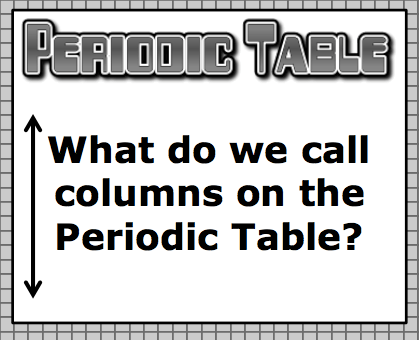
a)
Periods
b)
Groups
69.

a)
energy levels
b)
valence electrons
c)
protons
d)
neutrons
70.
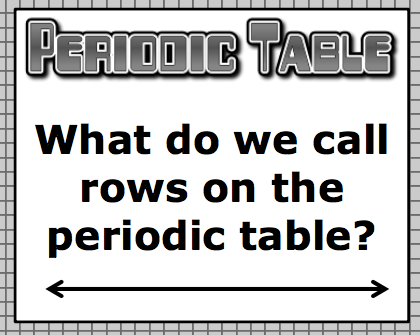
a)
Periods
b)
Groups
71.
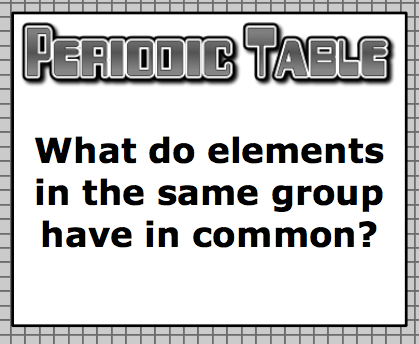
a)
energy levels
b)
valence electrons
c)
protons
d)
neutrons
72.
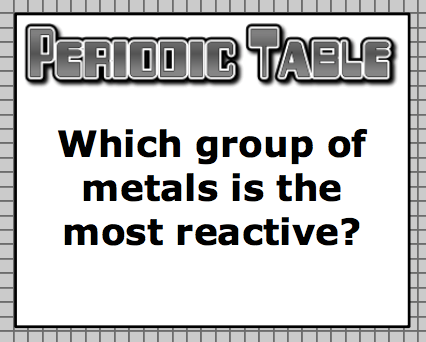
a)
Group 1
b)
Group 17
c)
Group 18
d)
Group 2
73.
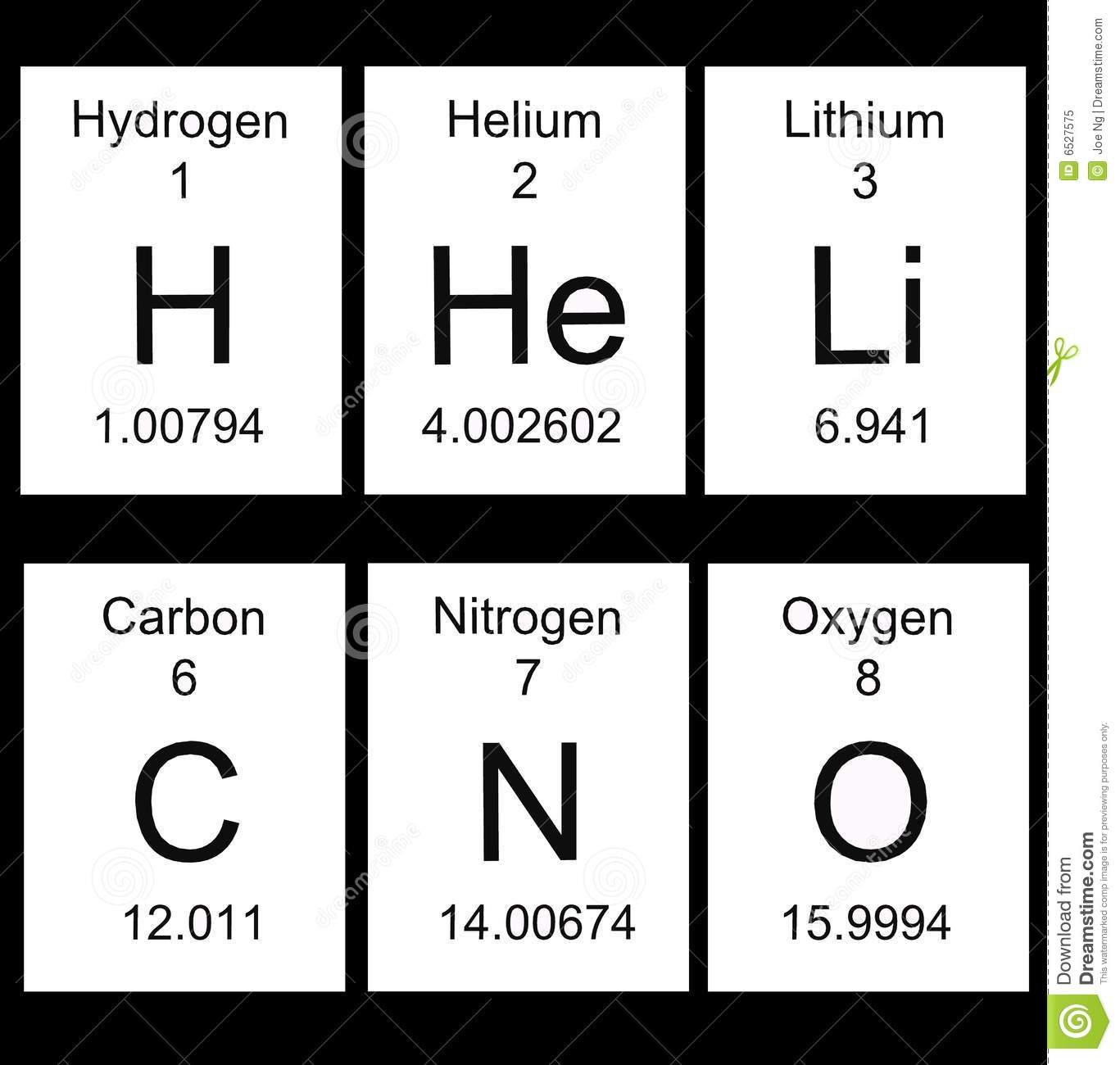
The number at the top of each square on the periodic table is the ...
a)
atomic number
b)
atomic mass
c)
Chemical Symbol
d)
Element Name
74.
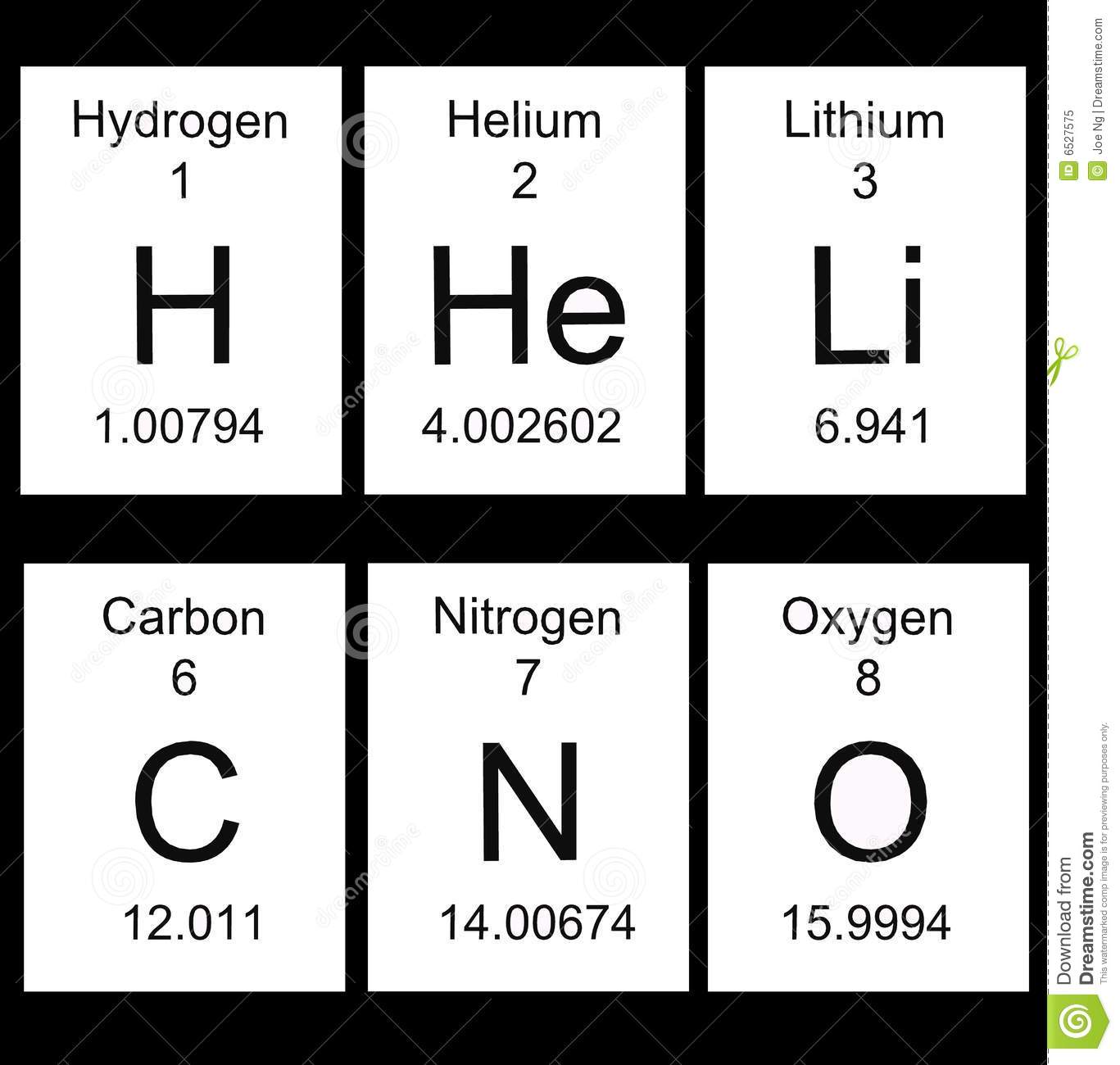
The number at the bottom of each square on the periodic table is the ...
a)
atomic number
b)
Average isotope atomic mass
c)
chemical symbol
d)
# of neutrons in the nucleus
75.
Which group of the periodic table is composed of inert (not reactive) gases?
a)
alkali metals
b)
alkaline earth metals
c)
halogens
d)
noble gases
76.

Which elements have the most similar chemical properties?
a)
K and Na
b)
K and Ca
c)
K and Cl
d)
K and S
100 %

