
NEW
Font size
S
M
L
XL
 Worksheets
Chapter 15 Populations and Communities
Total questions: 41
Worksheet time: 25mins
Name
Class
Date
1.
Temperature, light, air, water, soil and climate are all ______ parts of the environment.
a)
biotic
b)
abiotic
c)
living
d)
boreal
2.
Choose the phrase that correctly finishes this statement: "A species is....."
a)
a specific part of the abiotic environment
b)
a way of describing all the living parts of an ecosystem
c)
a group of organisms that can successfully mate with each other and reproduce
d)
part of the natural decomposing materials in soil
3.
What is an ecosystem?
a)
All the interacting organisms that live in an environment and the abiotic parts of the environment that affect the organisms
b)
A person who observes and studies the interactions between the biotic and abiotic parts of the environment
c)
The relationship among the biotic parts of the environment
d)
The relationship between all the abiotic elements of a pond
4.
Which is a biotic factor?
a)
A lake
b)
The air
c)
A tree
5.
When the birth rate is larger in any given period than the death rate the population will __________.
a)
increase
b)
decrease
c)
stay the same
6.
When the size of a population changes because individuals move in, it is called _____________.
a)
immigration
b)
emigration
c)
visiting
d)
rude
7.
Which of the following lists the levels of an ecosystem in order from largest to smallest?
a)
population, organism, community, ecosystem
b)
ecosystem, community, organism, population
c)
organism, community, population, ecosystem
d)
ecosystem, community, population, organism
8.
When the size of the population decreases because individuals leave, that is called ___________.
a)
immigration
b)
emigration
c)
visiting
d)
rude
9.
The largest population that an area can support is called its ________.
a)
limiting factor
b)
food source
c)
carrying capacity
d)
ecosystem
10.
Which of the following is a biotic factor?
a)
temperature
b)
sunlight
c)
bacteria
d)
water
11.
An organism gets food, water, shelter, and other things it needs to live, grow, and reproduce from its
a)
population
b)
habitat
c)
abiotic factors
d)
species
12.
An example of an adaptation that helps a prey species avoid being caught is
a)
claws
b)
mimicry
c)
sharp teeth
d)
poisonous stingers
13.
A relationship in which two species live closely together and both benefit is
a)
mutualism
b)
predation
c)
parasitism
d)
commensalism
14.
In ________, individuals whose unique characteristics are well-suited for an environment tend to survive and produce more offspring.
a)
natural selection
b)
mutualism
c)
adaptations
d)
predator/prey relationships
15.
If the death rate of a population is greater than the birthrate, the population decreases.
a)
True
b)
False
16.
The movement of animals or people into a given area from another area is called
a)
immigration
b)
emigration
17.
When organisms move out of the population, it is known as
a)
immigration
b)
emigration
18.

Identify the symbiotic image and definition.
a)
mutualism
b)
commensalism
c)
parasitism
d)
predation
19.

Identify the symbiotic image and definition.
a)
mutualism
b)
commensalism
c)
parasitism
d)
predation
20.

Identify the symbiotic image and definition.
a)
mutualism
b)
commensalism
c)
parasitism
d)
predation
21.

Identify the symbiosis relationship in this picture.
a)
mutualism
b)
commensalism
c)
parasitism
d)
predation
22.
In a relationship between a snake and a frog, if the snake eats the frog, the frog is _
a)
prey
b)
a predator
c)
alpha
d)
a mutualistic partner
23.
All populations of different species living together in an area are called _
a)
a community
b)
an ecosystem
c)
a population
d)
carnivores
24.
What is a producer?
a)
an organism that gets energy from eating other organisms
b)
an organisms that uses sunlight to make its own food
c)
an organism that gets energy from eating dead organisms, non-living material or waste
25.
A community of living and nonliving things in their natural environment makes up a
a)
food web
b)
ecosystem
c)
food chain
26.
An animal that hunts other animals for food is a ___________
a)
herbivore
b)
predator
c)
prey
d)
omnivore
27.
What is a herbivore?
a)
an animal that gets energy from eating other animals
b)
an organism that gets energy from eating only plants
c)
an animal that gets energy by eating both plants and other animals
28.
An organism that gets energy from eating other organisms is a ______________
a)
producer
b)
consumer
c)
decomposer
29.
An animal that is hunted and eaten for food is a
a)
predator
b)
prey
30.
What is a carnivore?
a)
an animal that gets energy by eating other animals
b)
An animal that gets energy by eating only plants
c)
an animal that gets energy by eating both plants and animals
31.
An animal that gets energy from eating both plants and animals is a
a)
herbivore
b)
carnivore
c)
omnivore
32.
Which of the following is a living part of the ecosystem?
a)
Air
b)
Sunlight
c)
Mushroom
d)
Soil
33.

What role in an ecosystem is this organism?
a)
producer
b)
primary consumer
c)
secondary consumer
d)
decomposer
34.
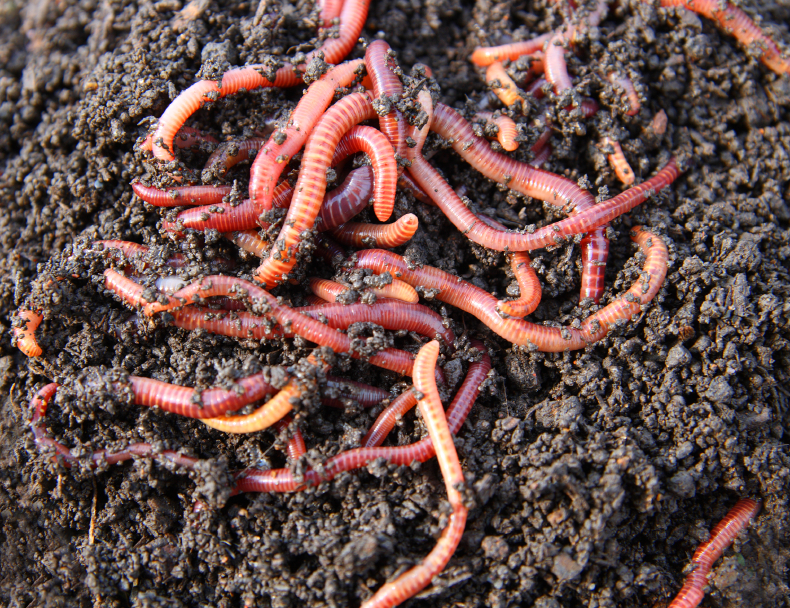
What role do these organisms play in their ecosystem?
a)
producer
b)
primary consumer
c)
secondary consumer
d)
decomposer
35.

What type of prey adaptation is this?
a)
protective coloration
b)
counter shading
c)
protective resemblance
d)
mimicry
36.

What type of prey adaptation is this?
a)
protective coloration
b)
counter shading
c)
protective resemblance
d)
mimicry
37.

What type of prey adaptation is this?
a)
protective coloration
b)
counter shading
c)
protective resemblance
d)
mimicry
38.

What type of prey adaptation is this?
a)
protective coloration
b)
warning coloration
c)
protective resemblance
d)
mimicry
39.
Organisms that break down ______________ or remains are decomposers.
a)
Waste
b)
Protein
c)
Molecules
d)
Community
40.
Food, water, air, and shelter that an organism needs to survive.
a)
instinct
b)
basic needs
c)
camouflage
d)
adaptation
41.
A body part of behavior that helps an organism survive.
a)
Adaptations
b)
Physical
c)
Behavioral
d)
Instinct
Reset

