
 Worksheets
Cells, Classification & Ecosystems
Total questions: 50
Worksheet time: 34mins
Name
Class
Date
1.
Animal and Plant cells are both this type of cell.
a)
Eukaryote
b)
Prokaryote
2.
Bacteria cells are this type of cell.
a)
Eukaryote
b)
Prokaryote
3.
This cell part is in ALL cells. It is the gel-like substance that provides cell shape.
a)
Chloroplasts
b)
Chromosomes
c)
Cytoplasm
d)
Mitochondria
4.
The basic unit of all living things is ______
a)
the cell.
b)
Protien
c)
oxegen
d)
bones
5.
How many parents are needed for sexual reproduction?
a)
1 parent
b)
2 parents
c)
3 parents
d)
0 parents
6.
How many parents are needed for asexual reproduction?
a)
0
b)
3
c)
2
d)
1
7.

What cell part is NOT found in all cells?
a)
Cell Wall
b)
Cell Membrane
c)
Cytoplasm
d)
Genetic Material
8.

The two kinds of organisms are Prokaryotes and Eukaryotes. How are they different?
a)
Prokaryotes have a nucleus.
b)
Eukaryotes have a nucleus.
c)
Prokaryotes are plant cells.
d)
There is no difference.
9.

What is the difference between bacteria and archaea?
a)
Bacteria are single celled, archaea are many celled.
b)
Bacteria has DNA, archaea does not.
c)
Are you speaking a different language?
d)
Bacteria live everywhere, archaea live in extreme environments.
10.

How are eukaryotes different from prokaryotes?
a)
They aren't different, except the spelling.
b)
Prokaryotes have a cell wall, eukaryotes don't.
c)
Eukaryotes have a NUCLEUS, prokaryotes do NOT!
d)
Prokaryotes have a NUCLEUS, eukaryotes do NOT!
11.

What is the main function of the cell membrane?
a)
Digestion
b)
Storage
c)
Protective Barrier
d)
Controls cell's functions
12.

What is the name of the genetic material that is inside the nucleus?
a)
cytoplasm
b)
ribosomes
c)
mitochondria
d)
DNA
13.
A eukaryotic organism that cannot be classified as an animal, plant or fungus.
a)
Protozoan
b)
Protist
c)
Pseudopod
d)
Virus
14.
The scientific name for an organism is made from the:
a)
class and family name
b)
genus and species name
c)
domain and kingdom name
d)
kingdom and phylum name
15.
Which kingdoms contain members who are prokaryotic?
a)
Archaebacteria and Eubacteria
b)
Archaebacteria and Protista
c)
Eubacteria and Animalia
d)
Eubacteria and Fungi
16.
Which kingdom consists of heterotrophic organisms that grow on or in what they eat?
a)
archaea
b)
bacteria
c)
protists
d)
fungi
17.
Examples of fungi:
a)
Algae, mushrooms, and Staphylococcus
b)
Amoeba, molds, and Salmonella
c)
Water molds, yeast, and E. coli
d)
Yeast, mushrooms and molds
18.
Members of this kingdom never have a cell wall
a)
Animalia
b)
Plantae
c)
Archaebacteria
d)
Protista
19.
The domain Archaea:
a)
are multicellular
b)
Undergo photosynthesis
c)
have membrain bound organelles
d)
are able to tolerate extreme conditions
20.

Which is the broadest classification level?
a)
Species
b)
Family
c)
Genus
d)
Domain
21.

Which is the most specific classification level?
a)
Domain
b)
Kingdom
c)
Genus
d)
Species
22.

Which kingdom has all multicellular organisms that move to catch their food?
a)
Protist
b)
Fungi
c)
Plant
d)
Animal
23.
A group of organisms that look alike and can reproduce among themselves is known as a:
a)
Genus
b)
Phylum
c)
Species
d)
Family
24.
What do protists, plants, fungi, and animals have in common?
a)
Multicellular
b)
Eukaryotic
c)
Prokaryotic
d)
Consumers
25.
The correct way to write the scientific name for a red maple tree is....
a)
ACER RUBRUM
b)
Red maple
c)
acer rubrum
d)
Acer rubrum
26.
What is taxonomy?
a)
the scientific study of how living things are classified
b)
the name of Linneaus' classification system
c)
the process used by geologists to classify rocks
d)
the process of observing an organism's behavior
27.
In printed scientific names, only the ________ is capitalized.
a)
family
b)
class
c)
species
d)
genus
28.
Why do scientists classify living things?
a)
to help keep information about organisms
b)
to make it easy to find information about an unknown species
c)
to communicate clearly with other scientists about organisms
d)
all of the above
29.
Which of the following is NOT part of the cell theory.
a)
All non-living things are made of cells
b)
All cells come from pre-existing cells
c)
Cells are the basic unit of structure and function of all living things
30.
The combination of all the living and nonliving factors in an area.
a)
Ecosystem
b)
Habitat
c)
Population
d)
Community
31.
Put these in order from broad to narrow. (from the largest to the smallest)
a)
Ecosystem, Organism, Population, Community
b)
Community, Organism, Population, Ecosystem
c)
Ecosystem, Community, Population, Organism
d)
Organism, Population, Community, Ecosystem
32.
The nonliving factors in an environment.
a)
Abiotic Factors
b)
Biotic Factors
c)
Trees
d)
Fungus
33.
The living factors in an environment.
a)
Biotic
b)
Abiotic
c)
Rocks
d)
Sunlight
34.
All of the organisms of the same species that live together in an area.
a)
Community
b)
Population
c)
Family
d)
Habitat
35.
All of the organisms of different species that live in an area.
a)
Community
b)
Population
c)
Habitat
d)
Ecosystem
36.
Place where an organism lives.
a)
Habitat
b)
Cave
c)
Home
d)
Ecosystem
37.
Sunlight, pH of water, temperature, rocks, soil and air would all be ____________.
a)
Biotic
b)
Abiotic
c)
Ecosystems
d)
Habitats
38.
Plants, animals, bacteria and fungi would all be examples of _____________.
a)
Biotic Factors
b)
Abiotic Factors
c)
Predators
d)
Prey
39.
The job that an organism fulfills in an ecosystem.
a)
Occupation
b)
Hobby
c)
Niche
d)
Habitat
40.
How many Kingdoms are organisms classified into?
a)
4
b)
6
c)
8
d)
10
41.
Which tool do taxonomists use to classify organisms?
a)
Periodical Table
b)
Bohrs' Model
c)
Dichotomous Key
d)
Aristotles' Method
42.
The 8 levels of classification, most broad to most specific.
a)
Domain, Genus, Family, Order, Class, Phylum, Kingdom, Species
b)
Domain, Species, Kingdom, Genus, Phylum, Family, Class, Order
c)
Domain, Kingdom, Phylum, Class, Order, Family, Genus, Species
d)
Order, Kingdom, Species, Domain, Phylum, Family, Class, Genus
43.
What are the three domains?
a)
Archaea, Bacteria, and Eubacteria
b)
Archaea, Protists, and Eubacteria
c)
Archaea, Bacteria, and Eukarya
d)
Archaea, Fungi, Animalia
44.
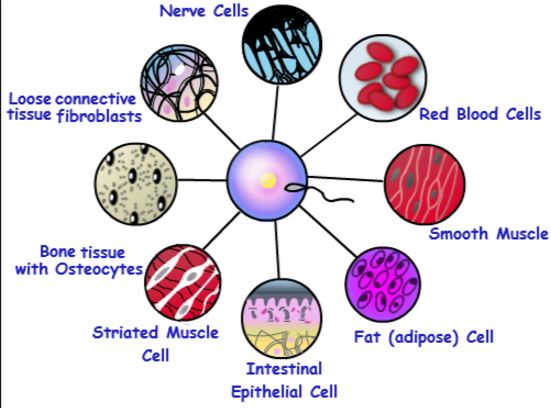
An organism that is composed of more than one cell is also known as a _____ organism.
a)
Prokaryotic
b)
Unicellular
c)
Multicellular
d)
Autotrophic
45.
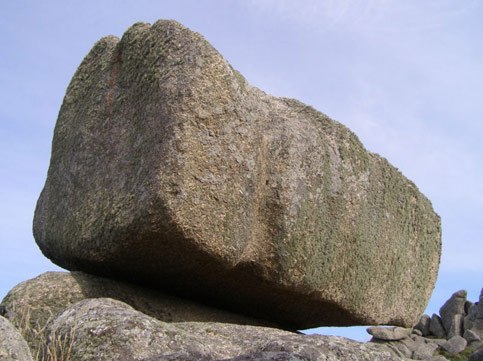
Why is a rock not considered a living organism?
a)
It does not move
b)
I cannot do photosynthesis
c)
It does not breathe
d)
It is not composed of one or more cells
46.
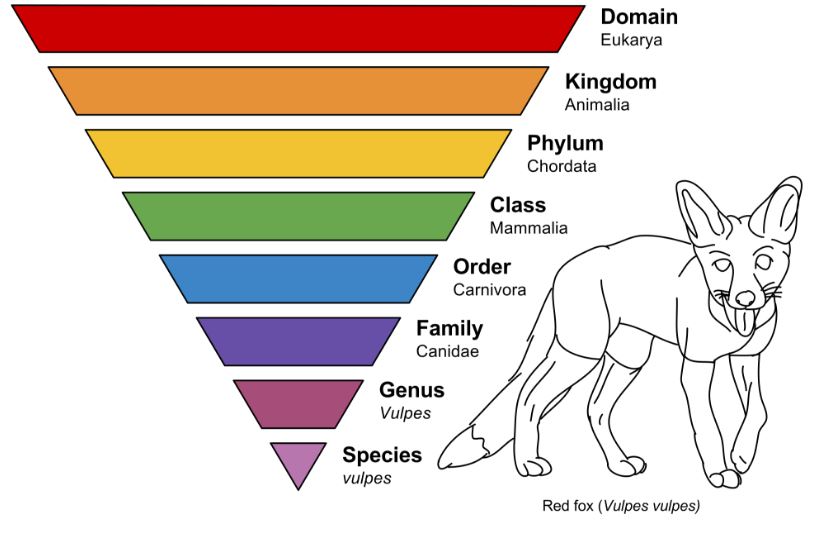
What is the study of classification called?
a)
Taxonomy
b)
Geology
c)
Anatomy
d)
Geometry
47.
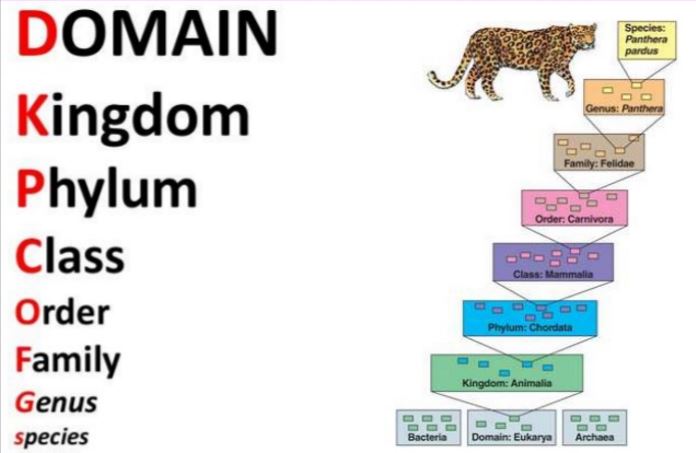
What is the most specific level of classification?
a)
Family
b)
Domain
c)
Species
d)
Carolus Linnaeus
48.
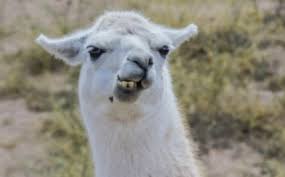
The first part of a scientific name is an organism's _______________ and the second part is its ________________.
a)
species, genus
b)
phylum, order
c)
class, spices
d)
genus, species
49.

Which kingdom do humans belong to?
a)
Plantae
b)
Fungi
c)
Animalia
d)
Protista
50.
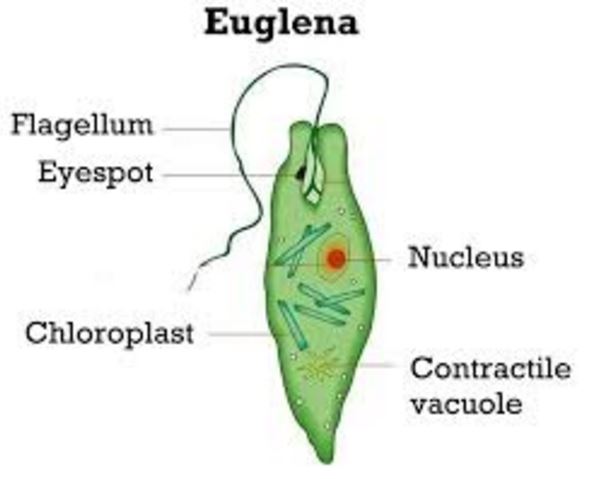
Organisms that are classified as unicellular are --
a)
seen with the naked eye
b)
many celled organisms
c)
single celled organisms
d)
able to make their own food
100 %

