
 Worksheets
Bio Unit 3
Total questions: 56
Worksheet time: 33mins
Name
Class
Date
1.
Which are enzymes?
a)
simple carbohydrates
b)
proteins that speed up chemical reactions
c)
lipids that make up the cell membrane
d)
a building block of DNA
2.
DNA and RNA are examples of...
a)
proteins
b)
nucleic acids
c)
carbohydrates
d)
lipids
3.
Which organelle breaks down sugar into something our cells can use? (ATP)
a)
cell membrane
b)
mitochondria
c)
Golgi body
d)
endoplasmic reticulum
4.
What is the function of nucleic acids?
a)
Stores energy
b)
Stores genetic information
c)
Movement
d)
Physical structure
5.
Phospholipids are used in what biological structure?
a)
RNA
b)
DNA
c)
Cell membrane
d)
Cell wall
6.
Enzymes are usually which of the following?
a)
carbohydrates
b)
lipids
c)
proteins
d)
nucleic acids
7.
What suffix is used in the names of most carbohydrates?
a)
-ase
b)
-nic
c)
-ose
d)
-yme
8.
Carbohydrates are made of...
a)
C H O
b)
C H O N
c)
C H O N P
d)
C H O N S
9.
What is the function of carbohydrates?
a)
store genetic information
b)
store energy (long-term)
c)
store energy (short-term)
d)
build skin, hair, nails, muscles
10.
The process of using an mRNA to make a protein is called
a)
Replication
b)
Transcription
c)
Translation
d)
Cell Division
11.
Transcription takes place in the
a)
cytoplasm
b)
chloroplast
c)
nucleus
d)
mitochondria
12.
Translation takes place in the
a)
ribosome
b)
chloroplast
c)
nucleus
d)
mitochondria
13.
This nucleic acid is single stranded
a)
DNA
b)
RNA
c)
Both
14.
Contains the bases adenine, thymine, guanine and cytosine
a)
DNA
b)
RNA
c)
Both
15.
Contains the bases adenine, uracil, cytosine and guanine
a)
DNA
b)
RNA
c)
Both
16.
Deoxyribose is the sugar present in the nucleotide
a)
DNA
b)
RNA
c)
Both
17.
Carries the genetic code to the ribosome
a)
mRNA
b)
tRNA
c)
rRNA
d)
DNA
18.
Brings the amino acids to the ribosome
a)
mRNA
b)
tRNA
c)
rRNA
d)
DNA
19.

What amino acid is represented by the codon UUA?
a)
Phenylalanine
b)
Tyrosine
c)
Leucine
d)
Stop codon
20.
Which is the mRNA molecule that would be transcribed from this DNA template:
TGG CAA GTA CGT
TGG CAA GTA CGT
a)
ACC GTT CAT GCA
b)
UGG CAA GUA CGU
c)
UCC GUU CUU GCU
d)
ACC GUU CAU GCA
21.
A change in one of the nucleotides of DNA results in
a)
translation
b)
mutation
c)
transcription
d)
replication
22.
What type of mutation is represented in the second strand of DNA?
TACGGCACT
TACGGAACT
TACGGCACT
TACGGAACT
a)
Deletion
b)
Insertion
c)
Substitution
d)
No mutation
23.
What type of mutation is represented in the second strand of DNA?
TACGGCACT
TACGGACT
TACGGCACT
TACGGACT
a)
Deletion
b)
Insertion
c)
Substitution
d)
No mutation
24.
Cell types: Animal and plant cells are both ...
a)
Eukaryote
b)
Prokaryote
25.
Cell types: These do not have a nucleus.
a)
Plant cells
b)
Animals Cells
c)
Bacteria
26.
Organelle responsible for converting the energy found in glucose into ATP...the power plant in the factory analogy.
a)
Mitochondrion
b)
Golgi body
c)
Nucleus
d)
Ribosomes
27.
Organelle where proteins are made...workers in the factory analogy.
a)
Golgi body
b)
Mitoichondrion
c)
Chromosomes
d)
Ribosomes
28.
This organelle is responsible for photosynthesis as it is capable of capturing energy from the sun and using that energy to convert carbon dioxide and water into glucose and oxygen.
a)
Chlorophyll
b)
Chloroplast
c)
Mitochondria
d)
Golgi Apparatus
29.
Found only in plant cells this structure is outside of the cell membrane and adds more support/structure to the plant.
a)
Cell membrane
b)
Cell Nucleus
c)
Cell Wall
d)
Endoplasmic Reticulum
30.
Tiny cell structures that carry out specific functions within the cell are called...
a)
membranes
b)
nucleus
c)
organelles
d)
animalicules
31.
This structure is a storage area for the cell. Plants usually have one large one.
a)
Lysosome
b)
Vacuole
c)
Ribosome
d)
Golgi Body
32.
These are passageways assemble proteins on their way to the Golgi apparatus
a)
Golgi apparatus
b)
Rough endoplasmic reticulum
c)
Ribosome
d)
Smooth endoplasmic reticulum
33.

All living things are made up of...
a)
cells
b)
cell tissues
c)
organ
d)
organ systems
34.
Macromolecules: mono is made of simple and complex sugars?
a)
lipids
b)
proteins
c)
carbohydrates
d)
nucleic acids
35.
What type of mutation is represented in the second strand of DNA?
TACGGCACT
TACGGCCACT
TACGGCACT
TACGGCCACT
a)
Deletion
b)
Insertion
c)
Substitution
d)
No mutation
36.
This structure allows bacterial cells to move freely; made of microtubules and microfilaments
a)
cilia
b)
flagella
c)
cell wall
d)
ribosomes
37.
During osmosis
a)
water moves from high to low concentration
b)
large or oddly shaped molecules move across a cell membrane
c)
water moves when energy is used
d)
proteins are built
38.
Passive transport requires no
a)
concentration gradients
b)
osmosis
c)
motion
d)
energy
39.
The movement of molecules against a concentration gradient
a)
simple diffusion
b)
facilitated diffusion
c)
active transport
d)
osmosis
40.
What is diffusion?
a)
when molecules move
b)
when molecules move from a high concentration to a low.
c)
no movement
d)
molecules move everywhere
41.
Which of the following is the correct equation for PHOTOSYNTHESIS?
a)
CO2 + light + H2O --> O2 + Sugar
b)
CO2 + sugar + H2O --> O2 + light
c)
O2 + light + H2O --> CO2 + Sugar
d)
CO2 + O2 + H2O --> Light+ Sugar
42.
What are the products of photosynthesis?
a)
water and carbon dioxide
b)
oxygen and glucose
c)
oxygen and carbon dioxide
d)
oxygen and water
43.

What cell structure is letter D?
a)
cytoplasm
b)
nucleus
c)
chloroplast
d)
mitochondrion
44.

What cell structure is letter C?
a)
mitochondrion
b)
chloroplast
c)
nucleus
d)
cell membrane
45.
Before a cell can ever divide
a)
the cell must have a nucleus
b)
the cell must be healthy
c)
the cell's DNA must be copied
d)
the cell must be fully grown
46.
During prophase
a)
chromosomes line up at the cell's equator
b)
nuclear envelope reappears at each end of the cell
c)
chromosomes are pulled apart into chromatids towards opposite ends of the cell
d)
chromosomes become visible and the nuclear envelope dissolves
47.

Identify this phase of Mitosis.
a)
prophase
b)
metaphase
c)
anaphase
d)
telophase
48.

Identify this phase of mitosis.
a)
prophase
b)
metaphase
c)
anaphase
d)
telophase
49.

The structure labeled A is a(n)
a)
chromatid
b)
centriole
c)
centromere
d)
chromophere
50.
A process in which DNA has the unique ability to make an exact copy of itself.
a)
Replication
b)
Translation
c)
Transcription
51.
A nucleotide includes...?
a)
pentose sugar
b)
nitrogenous base
c)
phosphate group
d)
all of the above
52.
The process to go from DNA to mRNA is _______
a)
translation
b)
transcription
c)
replication
53.
Which shows the correct complementary base pairing for DNA?
a)
C-A, T-G
b)
A-G, C-T
c)
C-G, U-A
d)
T-A, G-C
54.
Which statement is TRUE regarding DNA and RNA?
a)
DNA's sugar is ribose; RNA's sugar is deoxyribose
b)
DNA is single stranded; RNA is double stranded
c)
DNA contains thymine; RNA contains uracil
d)
DNA is in cytoplasm; RNA is in nucleus
55.
Which of the following bases is NOT found in RNA?
a)
Thymine
b)
Adenine
c)
Guanine
d)
Cytosine
56.
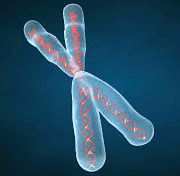
The diploid number of human chromosomes is
a)
23
b)
46
c)
92
100 %

