wayground logo

Free Printable Worksheets

Font size

S
M
L
XL
Worksheets

Cells and Osmosis

Total questions: 41

Worksheet time: 36mins
Name
Class
Date
1.
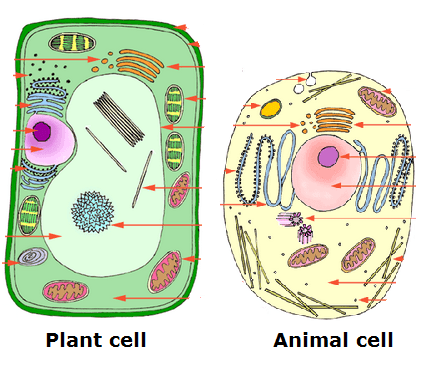
This type of cell has a cell wall and chloroplasts.
a)
Plant cell
b)
Animal Cell
c)
Bacteria
2.
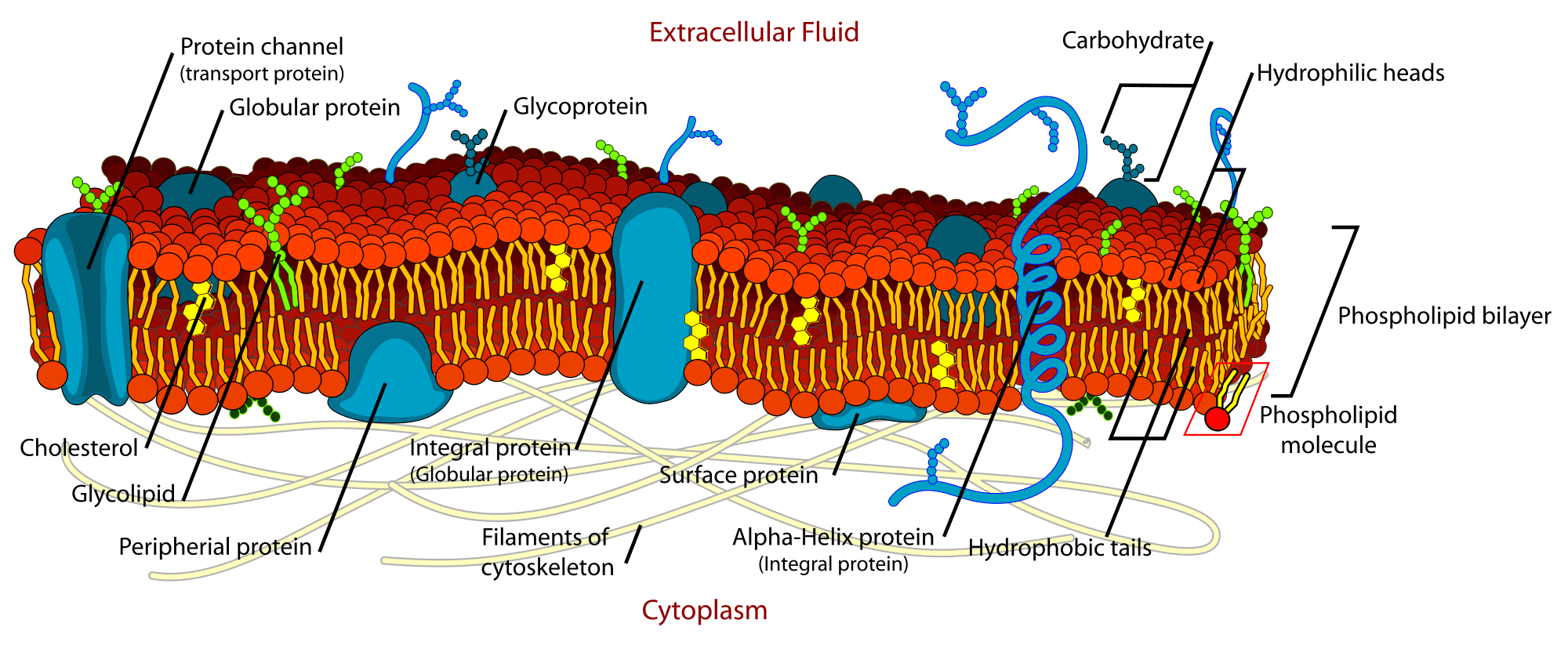
This organelle is in both plants and animals. It is a barrier between the cell and the environment.  It controls what goes in and out of a cell.
a)
cell wall
b)
cell membrane
c)
cell organelles
d)
mitochondria
3.
This structure is only in plant cells. It is outside of the cell membrane and adds more support/structure to the plant.
a)
Cell membrane
b)
Cell Nucleus
c)
Cell Wall
d)
Endoplasmic Reticulum
4.
Name 2 organelles plant cells have that animal cells do not.
a)
vacuoles & nucleus
b)
mitochondria & vacuoles
c)
chloroplasts & cell wall
d)
cell membrane & chloroplasts
5.
The cell membrane is selectively permeable, which means...
a)
All materials can enter and leave the cell
b)
Certain things can enter while others cannot
c)
The cell manually sorts through all materials
d)
Only certain cells can interact with the cell.
6.
Phospholipids make up which organelle?
a)
RNA
b)
DNA
c)
Cell membrane
d)
Cell wall
7.
Which structure is common to plant and animal cells?
a)
chloroplast
b)
cell wall
c)
central vacuole
d)
mitochondria
8.
Which of the following is the smallest unit of life that can carry out all life functions?
a)
the mitochondria
b)
the vacuoles
c)
the nucleus
d)
the cell
9.
Chloroplasts in plant cells allow the plant to perform a function that animal cells cannot do.  What is the main function of the chloroplasts found in plant cells?
a)
to absorb light energy and manufacture food
b)
to remove waste materials by active transport
c)
to manufacture chemical energy from food
d)
to control the shape of the cell
10.
In what part of the plant cell does the process of photosynthesis take place?
a)
nucleus
b)
mitochondria
c)
chloroplasts
d)
vacuoles
11.
Which of the following is not part of the cell theory?
a)
cells must contain DNA 
b)
all living things are made from cells
c)
cells can only come from other cells
d)
cells are the basic unit of life
12.
The basic unit of structure and function in a living things.
a)
chloroplast
b)
nucleus
c)
cell
d)
cell membrane
13.

What distinguishes a plant cell from an animal cell? (How do you tell them apart) Hint: There's 3 ways (Check all 3)

a)

Central Vacuole

b)

Mitochondria

c)

Cell Wall

d)

Ribosomes

e)

Chloroplasts

14.
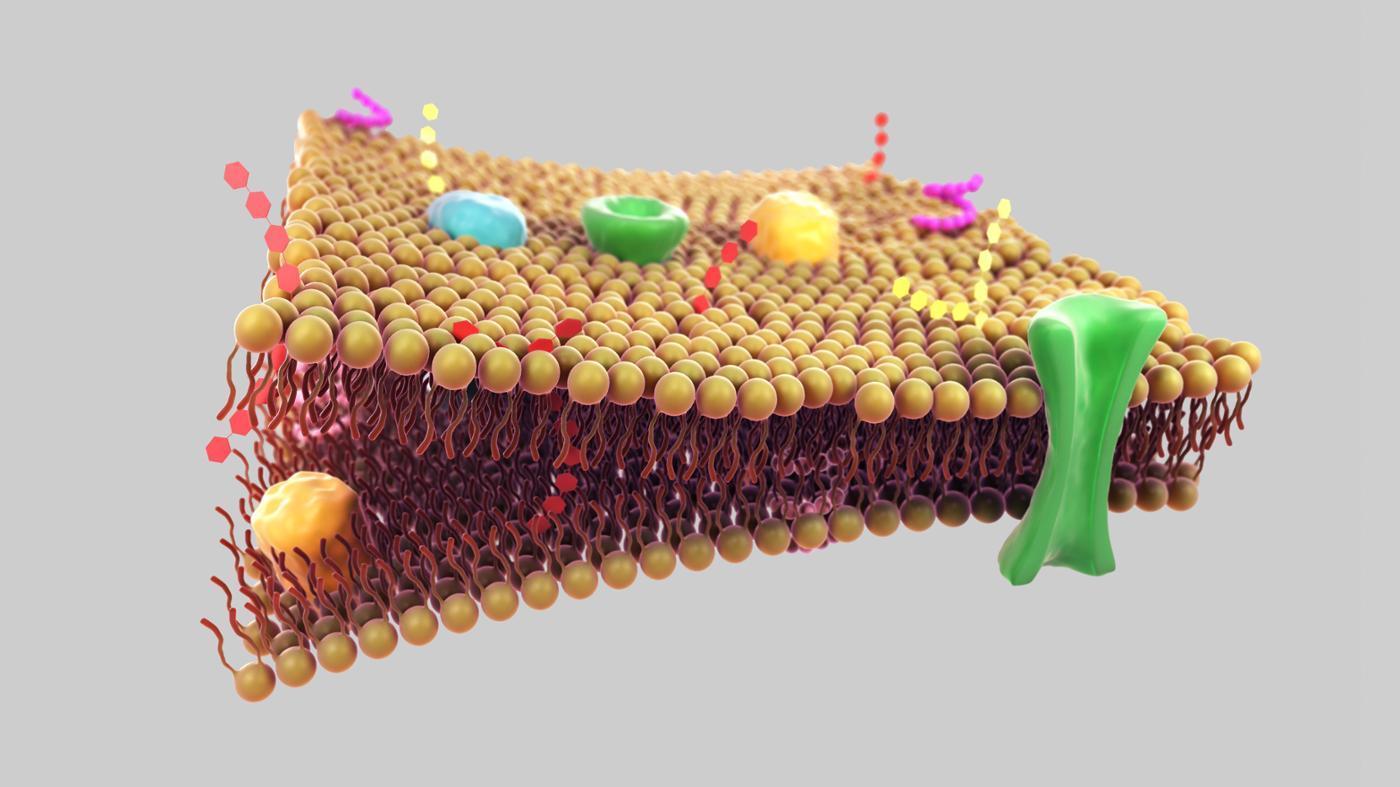
What is this image?
a)
cell membrane
b)
proteins
c)
carbohydrates
d)
lipids
15.
What is NOT TRUE about the cell membrane
a)
It controls what enters and leaves the cell
b)
Semipermeable
c)
Phospholipid bilayer
d)
Contains digestive enzymes
16.
What does "bilayer" mean?
a)
one layer
b)
two layers
c)
laminated
d)
bilateral
17.
Most of the cell membrane is made of...
a)
Lipids
b)
Carbohydrates
c)
Proteins
d)
Nucleic acids
18.
What do the brown structures represent?
a)
Phospholipids
b)
Glycoproteins
c)
Channel Proteins 
d)
Cyctoskeleton Filaments
19.

The ability to allow only certain molecules into or out of the cell.

a)

permeability

b)

impermability

c)

unpermeability

d)

semipermeablity

20.
The phospholipid bilayer comprises what part of the cell?
a)
cytoplasm
b)
cell membrane
c)
cytoskeleton
d)
nuclear membrane
21.
Which statement best describes the cell membrane?
a)
The protective outer layer that controls what enters and leaves the cell.
b)
Stores information on DNA molecules / Directs and controls the activities of the cell.
c)
A folded membrane that moves materials around inside cells / Also acts as the site of manufacturing materials needed by the cell.
d)
The smallest organelle with a huge job / Makes proteins, which are the building blocks of the body.
22.
During osmosis
a)
water moves from high to low concentration
b)
large or oddly shaped molecules move across a cell membrane
c)
water moves when energy is used
d)
proteins are built
23.
Osmosis is the movement of _____ across a membrane.
a)
food
b)
energy
c)
oxygen
d)
water
24.
A person would never have pure water put into their veins in a hospital because their cells would...
a)
Shrink/Dehydrate
b)
Expand
25.
What is diffusion?
a)
when molecules move 
b)
when molecules move from a high concentration to a low.
c)
no movement 
d)
molecules move everywhere
26.

Why can't you drink salt water?

a)

It's hypertonic to your cells

b)

It's hypotonic to your cells

c)

It's isotonic to your cells

d)

It's paratonic to your cells

27.
Ideally, your cells should be in a(n) _______ solution
a)
Hypertonic
b)
Hypotonic
c)
Isotonic
d)
Cola
28.
An animal cell placed in a hypertonic (salty) solution will
a)
Shrink
b)
Swell
c)
Stay the same
29.
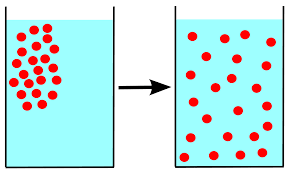
The picture below is an example of _________________.
a)
osmosis
b)
isotonic
c)
diffusion
d)
active transport
30.
What is the definition of  Selective Permeability?
a)
The movement of materials across the cell membrane that requires NO ENERGY from the cell.
b)
The movement of materials through (or across) the cell membrane
c)
The ability of the cell membrane to allow some things to pass through while preventing other things from passing through.
d)
The movement of molecules from an area of high concentration to a area of low concentration 
31.

If the dots represent sugar which is more concentrated

a)

Inside the cell

b)

Outside the cell

c)

Neither they are equal (equilibrium)

32.

If the dots represent sugar, what direction will water flow?

a)

Into the cell

b)

Out of the cell

c)

Into and out equally (equilibrium)

33.

If the percentage represents sugar, what direction will water flow?

a)

Into the cell

b)

Out of the cell

c)

Into and out equally (equilibrium)

34.

If the miligrams are referring to the amount of sugar, what direction will water flow?

a)

Into the cell

b)

Out of the cell

c)

Into and out equally (equilibrium)

35.

Which cell would water move into?

a)
b)
c)
d)
36.

Which cell would water move out of?

a)
b)
c)
d)
37.

What are TWO ways you can predict the movement of water?

a)

from a [High] of water to a [Low] of water

b)

towards the [Lower] of solutes

c)

towards the [Higher] of solutes

d)

from a [Low] of water to a [High] of water

38.
The cell below is in a _________ solution.
a)
Hypotonic
b)
Hypertonic
c)
Isotonic
39.
The cell below is in a _____________ solution.
a)
Hypertonic
b)
Hypotonic
c)
Isotonic
40.
A cell in an isotonic solution will
a)
swell
b)
shrink
c)
stay the same size
d)
impossible to tell
41.
When a cell is placed in a hypertonic solution water
a)
moves from the inside of the cell to the solution
b)
moves from the solution to the inside of the cell
c)
moves equally in and out of the cell
d)
none of these