wayground logo

Free Printable Worksheets

Font size

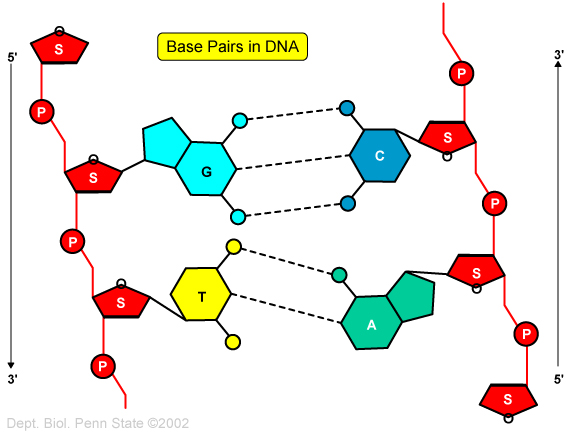
S
M
L
XL
Worksheets

DNA -> RNA -> Protein

Total questions: 46

Worksheet time: 30mins
Name
Class
Date
1.
Which of the following best describes a DNA molecule?
a)
double helix
b)
contains ribose
c)
made of amino acids
d)
contains Uracil
2.
Which of the following units are repeatedly joined together to form a strand of DNA?
a)
amino acids
b)
nucleotides
c)
fatty acids
d)
polysaccharides
3.
Nitrogenous bases are joined by which type of bond?
a)
polar bonds
b)
ionic bonds
c)
covalent bonds
d)
hydrogen bonds
4.
If there is 37% guanine how much cytosine is there?
a)
77%
b)
47%
c)
37%
d)
57%
5.
What does DNA stand for?
a)
Deoxyribonucleic acid
b)
Denitrogenous acid
c)
Deribonucleic acid
d)
Diribonucleic acid
6.

Chargraff's Rule says that

a)

A pairs with C

b)

C pairs with G

c)

G pairs with T

d)

T pairs with A

7.
What will the matching sequence be on a strand that reads AAGCTAT?
a)
AACGATA
b)
TTCGTTA
c)
CCTGATA
d)
TTCGATA
8.

Which Nitrogenous Bases can be found in RNA?

a)

Guanine

b)

Cytosine

c)

Adenine

d)

Thymine

9.

Which Nitrogenous Base matches in RNA with Adenine from DNA?

a)

Guanine

b)

Cytosine

c)

Uracil

d)

Thymine

10.

True or False: Adenine will always pair up with Thymine in DNA and RNA

a)

True

b)

False

11.

Which of the following are the bases for RNA?

a)

adenine, uracil, thymine, and guanine

b)

adenine, uracil, guanine, and cytosine

c)

adenine, thymine, guanine, and cytosine

d)

adenine, uracil, thymine, and cytosine

12.

True or False: RNA uses deoxyribose sugar.

a)

True

b)

False

13.
Where does transcription take place?
a)
nucleus
b)
cytoplasm
c)
ribosome
14.
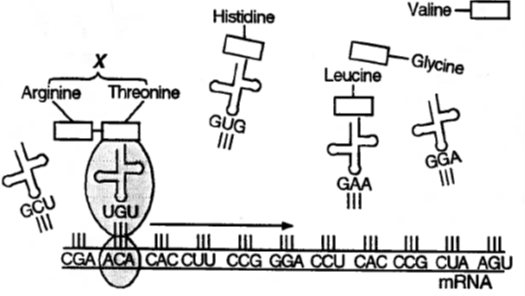
What is occurring in this picture?
a)
Translation
b)
Replication
c)
Translocation
d)
Transcription
15.

Using this DNA sequence ATA CGA GGA TTT, what is the complementary RNA sequence will be

a)

UAU GCU CCU AAA

b)

UAU GCU CCU TTT

c)

TAT GCT CCT AAA

d)

TAT GCT CCT TTT

16.

Through the process of transcription, DNA makes a complimentary strand of

a)

DNA

b)

RNA

c)

CNA

d)

PLB

17.
RNA has how many strands?
a)
one
b)
two
18.
Why is DNA important?
a)
it is very small and very complicated
b)
it's in everything
c)
it serves as the blueprint for traits of all living things
d)
because we eat it every day for energy
19.
The process to go from DNA to mRNA is _______
a)
translation
b)
transcription
c)
replication
d)

transformation

20.
The process to go from mRNA to a protein is called ____
a)
transcription
b)
rRNA
c)
replication
d)
translation
21.
DNA holds the code for
a)
lipids
b)
carbohydrates
c)

amino acids

d)
sugar
22.
Choose the nucleotide sequence of the RNA strand that would be complementary to the following strand: 
GTAGTCA
a)
UATUAGA
b)
ACGACTG
c)
CAUCAGU
d)
CATCAGT
23.
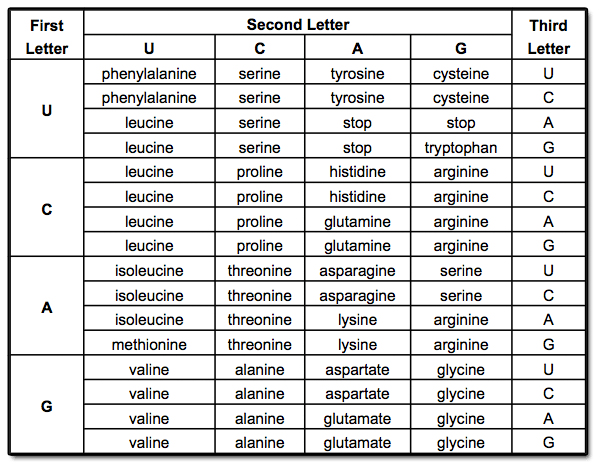
What amino acid is represented by the codon UUA?
a)
Phenylalanine
b)
Tyrosine
c)
Leucine
d)
Stop codon
24.
What is the three base sequence of mRNA that codes for a single amino acid?
a)
Anticodon
b)
Codon
c)
Protein
25.

Groups of three bases in mRNA are called

a)

triplets

b)

codons

c)

anticodons

d)

trifolds

26.

RNA is like a disposable copy of ___________

a)

tRNA

b)

mRNA

c)

DNA

d)

rRNA

27.

Made up of a sugar, phosphate, and a base

a)

nucleotide

b)

codon

c)

anticodon

d)

triplet

28.

Does NOT code for a protein

a)

intron

b)

exon

29.

Enzyme that binds to DNA during transcription

a)

deoxyribose

b)

ribose

c)

RNA polymerase

d)

glycogen

30.

The transfer RNA (tRNA) brings _______ to the mRNA

a)

nucleosomes

b)

polymerase

c)

bases

d)

amino acids

31.

Location of replication

a)

nucleus

b)

ribosome

c)

endoplasmic reticulum

d)

cytoplasm

32.

Location of transcription

a)

in the cytoplasm at the ribosome

b)

in the nucleus

c)

in the cytoplasm at the lysosome

d)

in the cytoplasm at the smooth ER

33.

Protein factory

a)

Golgi

b)

nucleus

c)

smooth ER

d)

ribosome

34.

In what process is mRNA synthesized?

a)

Transcription

b)

Translation

c)

DNA Replication

d)

Mitosis

35.

Where does TRANSCRIPTION occur?

a)

Nucleus

b)

Ribosome

c)

Cytoplasm

d)

Mitochondria

36.

Which of the following is a codon?

a)
b)

ATG

c)

AUG

d)

AUT

37.

How many codons equals 1 amino acid?

a)

1

b)

2

c)

3

d)

4

38.

How many nucleotides equal 1 amino acid?

a)

1

b)

2

c)

3

d)

4

39.

On which molecule can an anticodon be found?

a)

mRNA

b)

DNA

c)

tRNA

d)

rRNA

40.

Which two thing are found on a molecule of tRNA?

a)

amino acids; anticodons

b)

amino acids; codons

c)

ribose sugar; proteins

d)

deoxyribose sugar; codons

41.

TRANSCRIBE this DNA sequence: TACGTTACT

a)

AUGCAAUGA

b)

ATGCAATGA

c)

AUGGATUGA

d)

TACGTTACT

42.
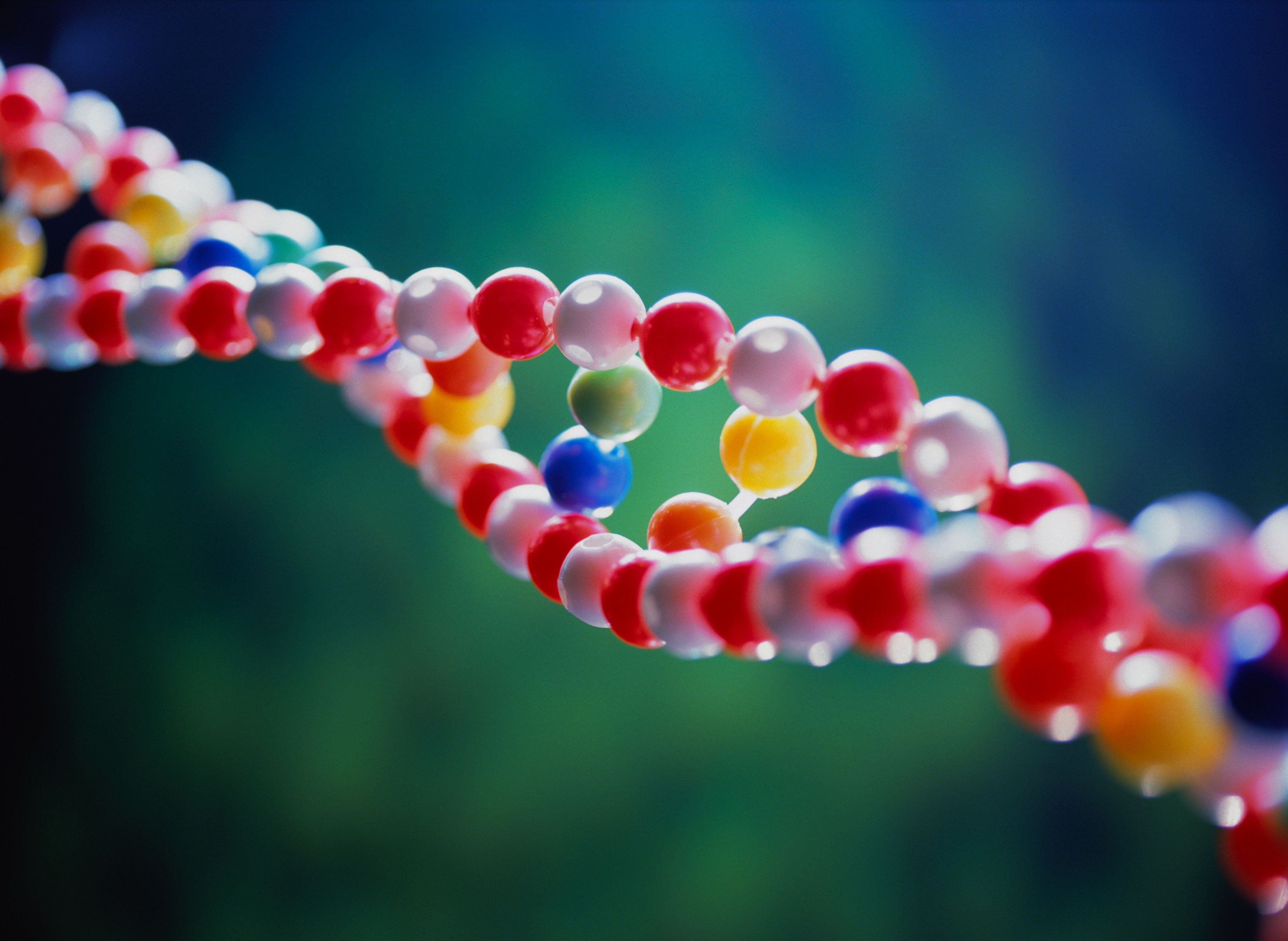
What process is going on in this photo? 
a)
Transcription 
b)
Translation 
c)
Replication 
d)
All the above 
43.
Does the order of amino acids in a protein matter?
a)
YES!
b)
NO!
44.

A DNA nucleotide may be made up of a phosphate group, along with

a)

deoxyribose sugar and uracil

b)

ribose sugar and cytosine

c)

deoxyribose sugar and thymine

d)

ribose sugar and adenine

45.

Which of the following units are repeatedly joined together to form a strand of DNA? (This is the MONOMER of DNA.)

a)

amino acids

b)

nucleotides

c)

fatty acids

d)

polysaccharides

46.

The important enzyme related with transcription is;

a)

gyrase

b)

DNA polymerase

c)

RNA polymerase

d)

ligase