
 Worksheets
Sci 9 Unit B 2.0 Atoms and the Periodic Table
Total questions: 106
Worksheet time: 2hrs 46mins
Each column (↕) in the periodic table is called a ...
category
Which group of the periodic table is composed of very stable elements?
alkali metals
alkaline earth metals
halogens
noble gases

The atoms along the zig-zag staircase (coloured blue in the diagram) are called ...
metals
nonmetals
metalloids
noble gases

Which of the following elements is a halogen?
Helium
Chlorine
Oxygen
Beryllium

Which of the following elements is an alkali metal?
Magnesium
Iron
Sodium
Oxygen
Metalloids properties can be described as...
same as nonmetals
good conductors
unique characteristics of metals and nonmetals
same as metals
The properties of an element can be predicted from...
its name
its group
its colour
its symbol

Which coloured section is the metal category in the diagram?

What coloured section is the least reactive on the diagram?
pink
red
dark blue
orange

What happens to the atomic number as you move left to right on the Periodic Table?
Magnesium has the most similar properties to
(a)
Flourine has the most similar properties to
(a)

The atomic number of the pictured element is
28
58.6934
Ni
59
A negatively charged subatomic particle that moves around the nucleus is ...
Which of the 3 major types of elements has the largest number of elements?
Metals
Metalloids
Nonmetals
Noble Gases

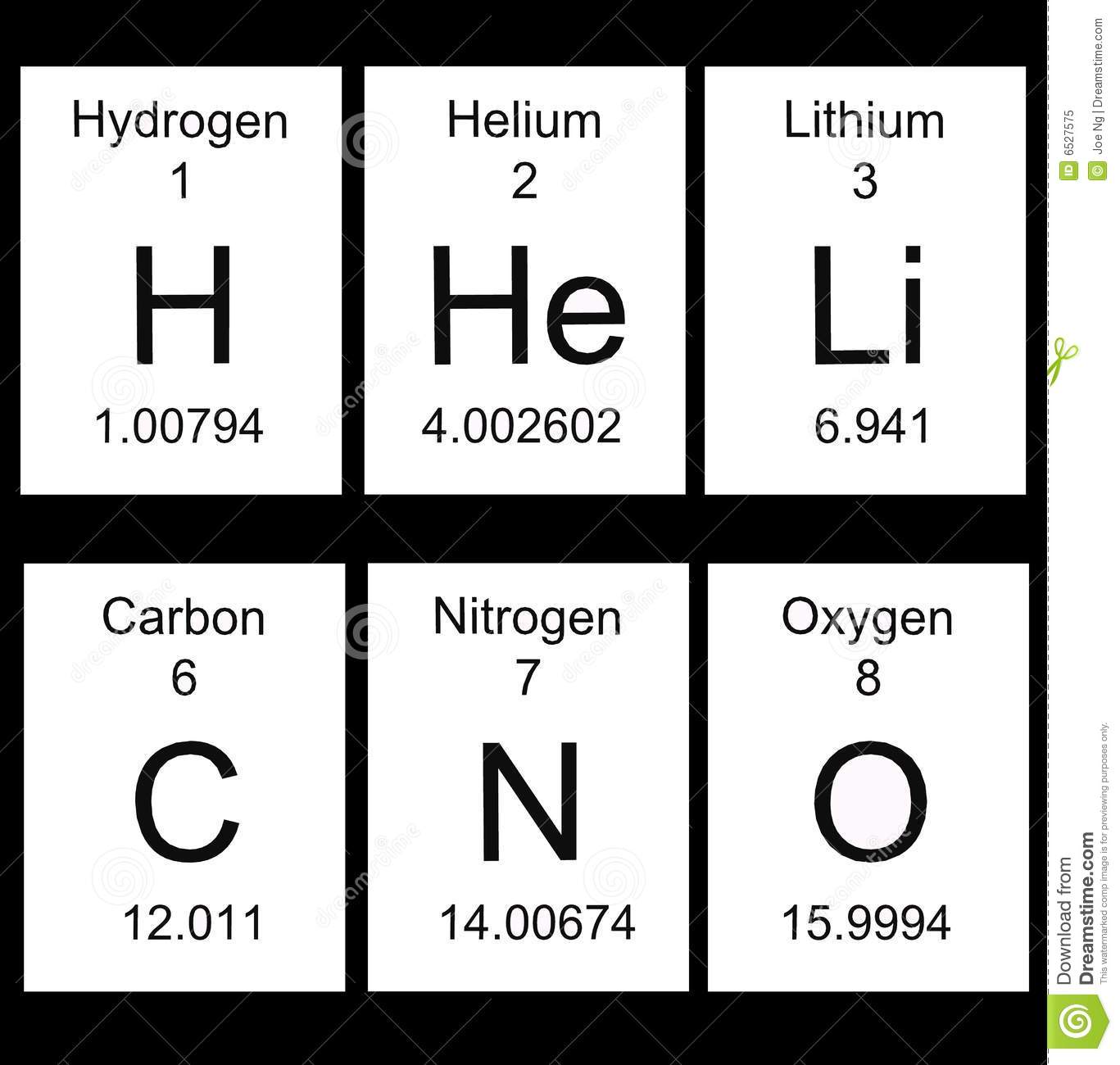
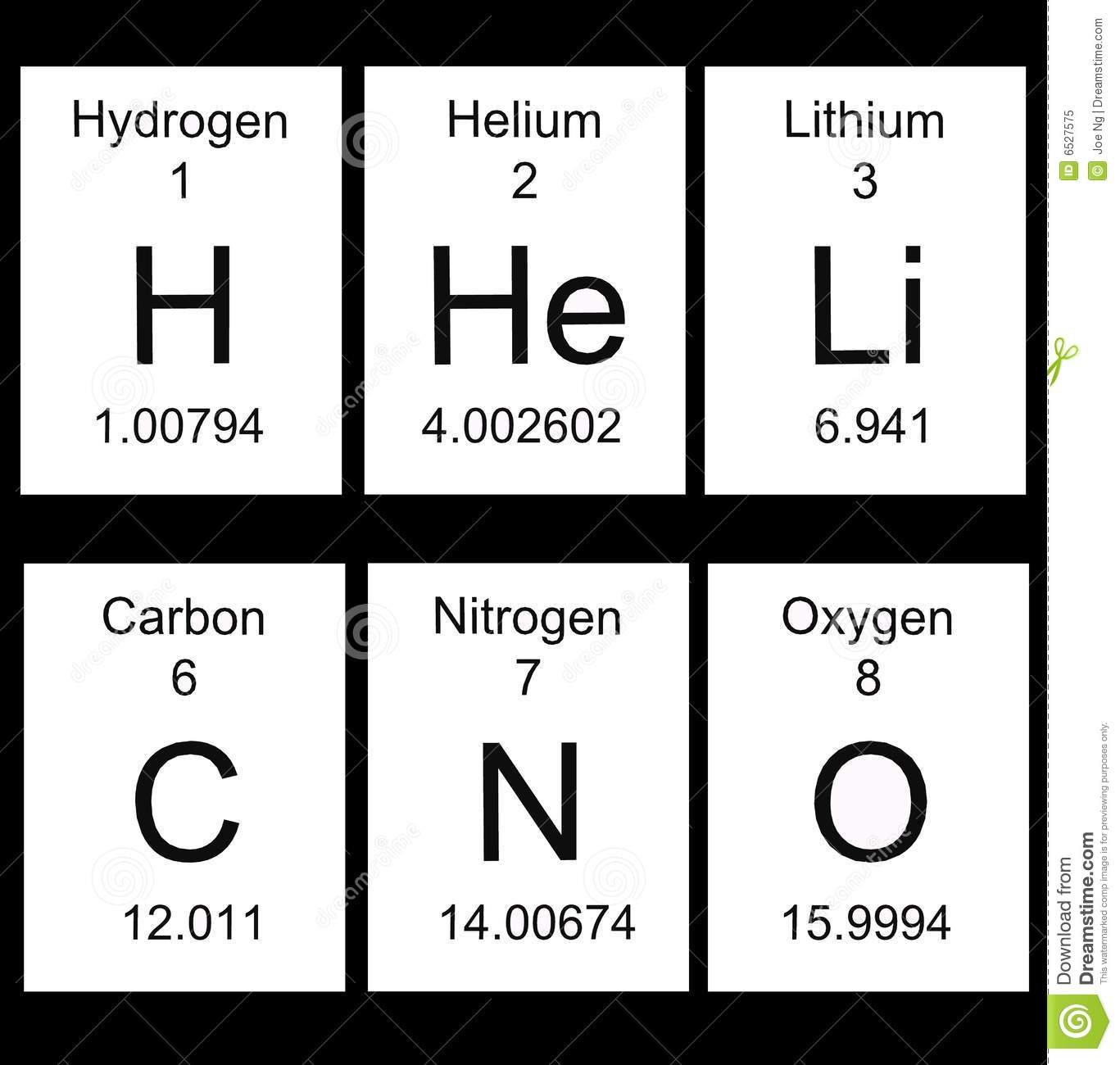
Which of the following pairs has the same number of neutrons?
carbon & boron
hydrogen and lithium
helium and carbon
nitrogen and oxygen

Which 2 groups (families) on the periodic table react vigorously?
noble gases and alkali metals
alkali metals and halogens
noble gases and halogens
metals and halogens

Which pairs of elements have the most similar chemical properties?
K & Na
K &Ca
K & Cl
K & S
There are ___ groups on the periodic table.
7
18
5
3



Pure forms of this group of elements are stored in oil so they won't react with oxygen and water in the air:
Alkali Metals
Alkaline-earth metals
Halogens
Noble Gases


How many neutrons are in an atom of potassium?
7
2
39
20

What is the number of protons for Nitrogen?
14
7
15
18
The smallest particle of any particular type of matter is:
Compound
Atom
Chemical
Element

What is the mass number of fluorine?
9
18
10
19

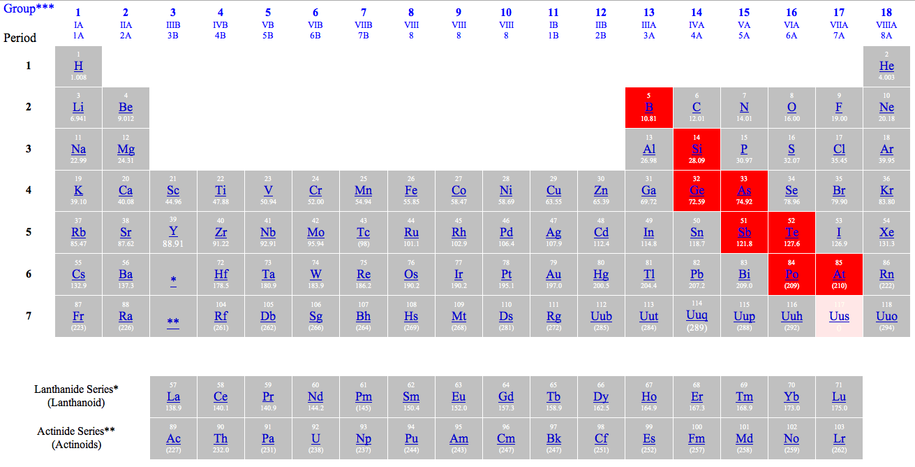
Who first arranged the modern periodic table we use today?
Vladimir Mendeleev
Dmitri Mendeleev
Ivan Mendeleev
Vasily Mendeleev
As you move from left to right ----> across the metal periods, the metal elements
Non-metals are
shiny
brittle
metalloids
good conductors of heat and electricity
Elements in a group (family) have similar ...
atomic symbols
atomic sizes.
chemical properties.
atomic weights.
Metals are...
shiny
good conductors of heat and electricity
malleable
all of the above are true.
What are the elements to the left of the metalloids called?
metals
non-metals
metalloids
Neon is an example of a(n):
Alkali Metal
Noble Gas
Halogen
Rare Earth Metal
Which of the following metals is the most highly reactive?

How many neutrons in tin?
50
69
118
119

How many neutrons?
15
16
17
14


Number of protons=?


What are the names of the particles located in the nucleus of an atom?

Pictures of the atom from science textbooks are misleading because


Smaller mass than a proton and has a negative charge
Smaller mass than a proton and has a positive charge
Greater mass than a proton and has a negative charge
Greater mass than a proton and has a positive charge
Subatomic particles in an atom that are neutral and have no charge:
negatrons
electrons
neutrons
protons

How many neutrons are in an atom of cobalt?
27
58.6
28
30


atomic number
and mass number
of this atom?
atomic number = 7
mass number = 14
atomic number = 14
mass number = 7
What were most Alchemists obsessed with?
Creating gold
Finding diamonds
Finding copper
Creating dollars
Who proposed the first idea that everything is made of atomos?
Lavoisier
Empedocles
Democritus
Priestley
Who stated the modern atomic theory (proven with experimental data) of the atom?
Democritus
Dalton
Thomson
Bohr
Who discovered that the atom had an small, dense, positively charged nucleus?
Ernest Rutherford
J.J Thomson
Aristotle
John Dalton
Which scientist named the positive center of the atom as the "nucleus?"
Democritus
Dalton
Thomson
Rutherford
Which scientist proposed a new atomic model after discovering the electron in 1897?
Dalton
Thomson
Rutherford
Bohr

Who proposed that electrons move around the nucleus in orbits called shells?
Dalton
Thomson
Rutherford
Bohr
"In an atom, electrons move in definite shells around the nucleus." was stated by this scientist:
Thomson
Rutherford
Bohr
Democritus
The first person to propose a theory about an atom called the 'Atomos Theory' was
This person studied gases at different temperatures and was known as the first chemist.
Democritus
Robert Boyle
Nagaoka
John Dalton
Alchemists tried to make metals, such as lead and iron, into _____________________.
gold
silver
aluminum
copper

This person proposed that everything was made of earth, air, fire and water.
Democritus
Robert Boyle
Nagaoka
Aristotle
A new element was discovered with 119 electrons. Which group would it be in?
alkali metal
alkaline earth metal
halogen
noble gases
A new element was discovered with 120 electrons. Which group would it be in?
alkali metal
alkaline earth metal
halogen
noble gases
This person developed a naming system for substances and completed many experiments with well-recorded procedures.
Democritus
Antoine Lavoisier
Nagaoka
John Dalton
These people developed ways to preserve food and other things with chemicals like salt, honey and juniper:
Hittites
ancient Egyptians
Stone Age people
Alchemists
These people learned how to control fire to make tools and cook food:
Hittites
ancient Egyptians
Stone Age people
Alchemists
These people extracted iron from rock and used iron and carbon to make steel for tools and weapons:
Hittites
ancient Egyptians
Stone Age people
Alchemists
This person discovered that the nucleus has protons and neutrons:
Thompson
Chadwick
Nagaoka
Dalton
This scientist is known as the 'father of atomic theory' since he brought back the idea that everything is made of atoms?
Aristotle
Chadwick
Nagaoka
Dalton
This person discovered that the electrons of the atom exist in shells around the nucleus.
Bohr
Boyle
Democritus
Rutherford

Which pair of elements have the most similar properties?
Li & Be
Li & Na
Mg & Na
N & O
There is an element sitting on the table in front of you. It is shiny, malleable and conducts electricity.
Which group does it belong to?
Group 8
Group 17
Which pair of elements have the most similar properties?
Mg & Ti
Ti & Zr
Zn & Ga
B & C
Which pair of elements have the most similar properties?
Ni & Ti
Ni & Pd
Cu & Zn
Br & Kr
Match the group name to the group number:
alkaki metal
Group 1
noble gas
Group 18
alkaline earth metal
Group 2
halogen
Group 17
Match the following groups to their properties:
Group 17
most reactive non-metals
Group 2
reactive metals with higher density
Group 18
least reactive elements
Group 1
most reactive metals with lower density
Match the following element types to their properties:
metal
shiny, malleable, ductile, conductors
non-metal
dull, brittle, insulators
metalloid
variety of properties
How many electrons in an atom of phosphorus?
(a)
How many protons in an atom of strontium?
(a)
What is the average number of neutrons in an atom of cesium?
(a)

