
 Worksheets
IGCSE ORGANIC CHEMISTRY 2
Total questions: 110
Worksheet time: 1hrs 21mins

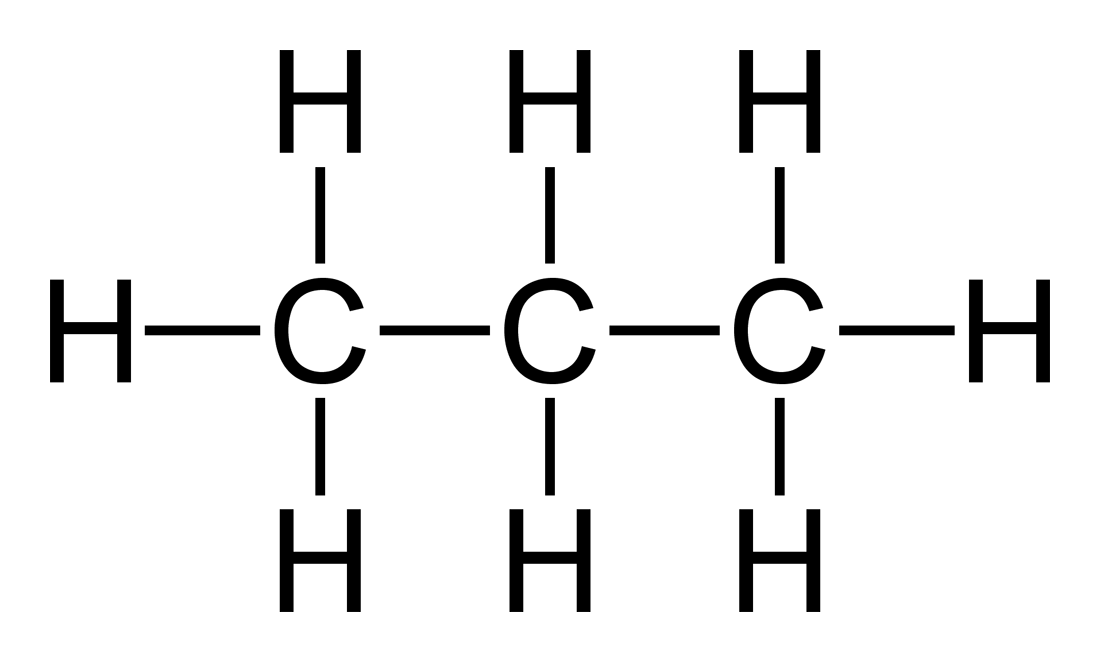
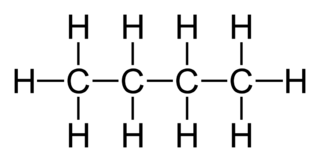
What is the general formula of the alkenes?
CnH2n+1
CnH2n+2
CnH2n
CnH2n+1OH
Which of the following is an unsaturated hydrocarbon?
C2H6
C3H8
C4H8
C4H10

What is the homologous series for propene?
alkanes
alkenes
alkynes
aromatics
What color does bromine water turn in the presence of an alkene?
Orange
Blue
Colorless
Green
An alkane can be described as:
Saturated
Unsaturated
Mysterious
Totes kewl
If an alkene reacts with a halogen (such as bromine), it is known as what type of reaction?
Addition
Condensation
Polymerisation
Hydrogenation
An atom or group of atoms which are responsible for the reactions of a particular compound are known as what:
Functional Group
Homologous Series
Polymerisation
Gradation
What is formed during the combustion of an organic substance assuming we have enough oxygen present?
carbon monoxide
water
carbon dioxide
hydrogen
What is the term given to the process by which longer chain hydrocarbons are broken down into shorter length alkanes, alkenes, and possibly hydrogen?
fractional distillation
evaporation
cracking
polymerisation
What two conditions are needed for cracking?
high temperature
high pressure
catalyst
low temperature
C10H22 --> C5H12 + C3H6 + ?
C2H4
C3H4
CO2
CH4
What color does bromine water turn in the presence of an alkane?
Orange
Blue
Colorless
Green
When an alkene reacts with steam in the presence of a catalyst, what is produced?
alkane
alcohol
carboxylic acid
poly(alkene)
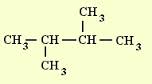
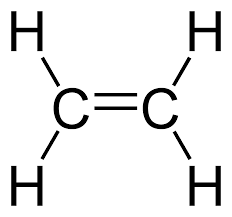
Select the formula for the following name: Octene
C8H16
C8H14
C8H18
C8H15OH
What is the observation obtained when alkene react with acidified KMnO4
decolourize purple solution
decolourize reddish brown solution
decolourize blue solution
yellow precipitate formed
When heat is applied to a hydrocarbon and it melts, the energy is being used to...
Break covalent bonds
Overcome intermolecular forces
Break a molecule
Separate atoms
What is the functional group of alcohols?
–NH2
–COOH
–CHO
–OH
–NO2

Name this compound...
methane
methene
methanol
methoxymethane
alkene + ? --> alcohol
hydrogen
oxygen
water
carbon dioixde
Which process makes ethanol through anaerobic respiration of yeast?
Filtration
Intoxication
Fermentation
Distillation
If an alkene is reacted with steam and a catalyst, what is made?
An acid
An alkene
An alkane
An alcohol
CH3CH2OH is the formula of which alcohol?
Methanol
Ethanol
Propanol
Butanol
CH3CH2CH2CH2OH is the formula of which alcohol?
Methanol
Ethanol
Propanol
Butanol
CH3CH2COOH is called
Ethanoic acid
Propane
Propanol
Propanoic acid
Which ester would be made by reacting ethanoic acid and methanol together....
ethyl methanoate
methyl methanoate
methyl ethanoate
ethyl ethanoate

What is the name of this molecule
butanoic acid
butyl propanoate
propyl butanoate
propanol

What chemical would you use to make the following molecule
methanol and propanoic acid
methanoic acid and butanol
methanol and butanoic acid
methanol acid and propanol
What gas is produced when potassium carbonate reacts with ethanoic acid?
hydrogen
carbon dioxide
oxygen
chlorine
What is the role of sulfuric acid in the reaction to make esters?
weak acid
hydrogen ion acceptor
catalyst
partially ionises
Esters have distinctive sweet smells, and are volatile liquids. What does volatile mean?
flows easily
catches fire easily
evaporates easily
colours easily

Name this compound
propanol
propanoic acid
butanoic acid
butanol


What is this compound called?
propyl ethanoate
ethyl ethanoate
ethyl propanoate
methyl ethanoate
Esters are formed through what type of reaction?
hydrolysis
condensation
hydration
dehydration
What gas is produced when magnesium reacts with ethanoic acid?
hydrogen
carbon dioxide
oxygen
chlorine
Complete the word equation for the reaction:
ethanoic acid + potassium carbonate → _________ ________+ carbon dioxide + water
(a)
Ethanoic acid is described as a weak acid. Explain what this means in terms of ionisation
fully ionised
partially ionised
deionised
What process is used to separate crude oil in hydrocarbons with different chain lengths?
distillation
fractional distillation
cracking
polymerisation
Fractional distillation separates crude oil based on the different __________ of the molecules in the mixture
melting point
boiling point
freezing point
chemical reactivity
Molecules collected at the bottom of the fractionating column tend to be...
more viscous, less flammable and less volatile
less viscous, more flammable and more volatile
more viscous, more flammable and less volatile
less viscous, less flammable and more volatile
Molecules collected at the top of the fractionating column tend to be...
more viscous, less flammable and less volatile
less viscous, more flammable and more volatile
more viscous, more flammable and less volatile
less viscous, less flammable and more volatile
A fraction of crude oil is made up of:
Hydrocarbons of similar chain lengths
Numbers
Large hydrocarbons
Alkenes only
Crude oil is made up of:
Ethane
Butane
A mixture of different hydrocarbons
Extremely large hydrocarbons which are broken up once extracted
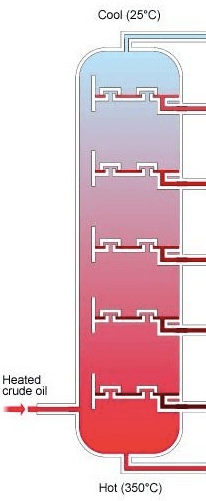
What process happens at each level in the fractionating column?
Evaporation
Condensation
Combustion
What process happens as the crude oil enters the fractionating column?
Evaporation
Condensation
Combustion

Where do short chain hydrocarbons collect?
At the top
In the middle
At the bottom

Where do long chain hydrocarbons collect?
At the top
In the middle
At the bottom
Shorter hydrocarbons have:
Higher boiling points
Lower boiling points

Used in gas stoves
kerosene
fuel oil
bitumen
refinery gas
The most viscous fraction
kerosene
fuel oil
bitumen
refinery gas
The most flammable fraction
kerosene
fuel oil
bitumen
refinery gas
Fuel for ships
fuel oil
petroleum
diesel
bitumen
Fuel for lorries
fuel oil
petroleum
diesel
bitumen
For surfacing roads
bitumen
refinery gas
petroleum
diesel
Fraction with the highest boiling point
bitumen
refinery gas
petroleum
diesel
Which compound belongs to the alkene family?
C2H2
C2H4
C6H6
C6H14

A homologous series is a family of organic compounds with
similar chemical properties and same general formula
similar chemical properties and different general formula
different chemical properties and same general formula
similar physical properties and same general formula
Each member of a homologous series differs from the next by a
–CH2 group
–CH group
–CO2 group
–CH4 group
State the general formula for alkene
CnH2n+2
CnH2n
CnH2n+1
CnH2n-2
Which are the following are all alkanes?
methane, ethane, propane
methane, ethene, propene
methene, ethene, propene
ethene, propene, butene
Which are the following are all alkenes?
methane, ethane, propane
methane, ethene, propene
methene, ethene, propene
ethene, propene, butene
Alkanes react with excess oxygen to form
carbon dioxide and water vapour
salt and water
carbon monoxide and soot
metal hydroxide and hydrogen
An alkane is
polyunsaturated
polysaturated
saturated
unsaturated
Alkanes undergo substitution by chlorine only in the presence of
UV light
oxygen
water
aqueous bromine
What are the conditions for cracking?
solid catalyst of aluminium oxide and silicon dioxide, at 600oC
nickel catalyst at 200oC
nickel catalyst at 600oC
solid catalyst of aluminium oxide and silicon dioxide, at 200oC
Which of the following statements about cracking is not true?
Cracking is the breakdown of large alkane molecules into small molecules.
Cracking is used to produce fuel for motor vehicles.
Cracking is used to produce H2 and alkenes.
Cracking takes place in the presence of sunlight.
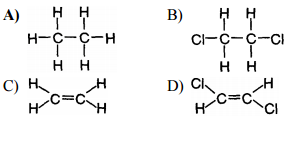
Which of the following shows the structure of propene?


Which of the following shows the structure of ethane?


Homologous series has four features :
Same functional group
Same general formula
Same chemical reaction
Different physical properties
All
Homologous series ?
Heptane
Metylhexena
Butane
Propene
Different features classified as homologous series
General formula
Chemical reaction
Functional group
Physical properties
Which of the following alcohols has the highest boiling point?
Butanol
Pentanol
Hexanol
Heptanol
What is the general formula for alcohols?
CnH2n
CnH2n+2
CnH2n+1OH
CnH2n+1COOH

The following equation represents the preparation of ethanol in industry.
What is the process?
Oxidation
Hydration
Fermentation
Hydrogenation
Which of the following process can transform pentene to pentane?
Oxidation
Reduction
Fermentation
Hydrogenation
Which of the following hydrocarbons contains only single bonds?
Alkanes
Alkenes
Alkynes
Which of the following is a flammable solid that can be used as a fuel for electricity generation or heating?
Methane
Petroleum
Natural gas
Coal

Given the formula representing a compound:
Which formula represents an isomer of this compound?


Which compound is an isomer of C2H5OC2H5?
CH3COOH
C2H5COOCH3
C3H7COCH3
C4H9OH

Given the structural formulas:
Which two formulas represent compounds that are isomers of each other?
A and B
A and C
B and D
C and D
Which compound has an isomer?


Which compound is an isomer of CH3CH2OH?
CH3COOH
CH3CH2CH3
CH3OCH3
CH3COCH3
Compounds that are composed of the same number and type of atoms but have them arranged in different ways are ___________.
isomers
isotopes
polymers
alkanes
A structural isomer of pentane is?
2,2-dimethylbutane
2-methylbutane
1-methylpropane
1-methylpentane
The products of the reaction of a carboxylic acid and an alcohol would be
Ketone and water
Amide and water
Acid chloride and water
Ester and water

