Worksheets
Biochem Test Review
Total questions: 105
Worksheet time: 1hrs 14mins

An ionic bond is formed when
Valence electrons are shared.
Valence electrons surround the cations.
Valence electrons are transferred between atoms.
Valence electrons are completely transferred between two metals.
What is a valence electron?
an electron that is found in the outermost shell of an atom
an electron found in the innermost shell of an atom
an electron found in the middle shell
an electon found in the nucleus

What is the number of valence electrons of Oxygen?
1
2
6
8

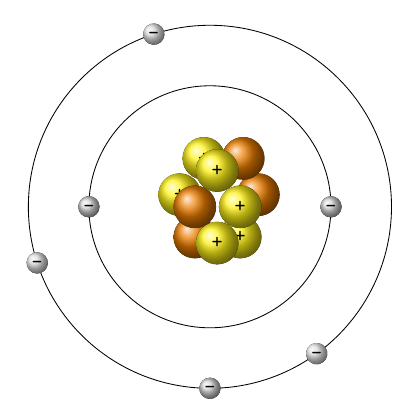
How many valence electrons in this structure ?
4
5
6
7

How many electrons are being shared between the two carbon atoms in the compound ethyne?
1
2
3
6
An ionic bond is formed when
Valence electrons are shared.
Valence electrons surround the cations.
Valence electrons are transferred between atoms.
Valence electrons are completely transferred between two metals.
When elements form bonds, it changes their ________ properties.
mass
chemical and physical
physical
chemical
The chemical bond formed when two atoms share electrons is call a(n)
covalent bond
ionic bond
metallic bond
electron bond
Which of the following is a similarity between ionic and covalent bonds?
Both include the gaining and losing of electrons
Both include the sharing of electrons
Both make the elements more stable
Both are typically found as solids at room temperature
Metallic
What is cohesion?
The ability of a molecule to "stick" to itself
The ability of a molecule to "stick" to other molecules
Large amounts of energy are required to change the temperature of a substance
A well-organized and efficient team
What about the chemical structure of water causes many of the critical properties that support life on Earth?
Hydrogen Bonds
Cohesive behavior
Polarity
Expansion Upon Freezing

What characteristic is shown in the image?
Polarity
Hydrogen Bonds
Cohesion
Adhesion

This individual is ice fishing. They cut through the top layers of ice to reach the water and fish below. What property of water allows for this to happen?
Expansion Upon Freezing
Universal Solvent
Ability to Moderate Temperature
Cohesive Behavior
What property of water allows for water to act as a temperature regulator for the world?
Cohesive Behavior
Expansion Upon Freezing
High Specific Heat
Universal Solvent

What property of water causes these Alka-Seltzer tablets to dissolve?
Universal Solvent
Expansion Upon Freezing
Cohesive Behavior
High Specific Heat
Sweating is an example of what property of water?
Ability to Moderate Temperature
Expansion Upon Freezing
Cohesive Behavior
Universal Solvent


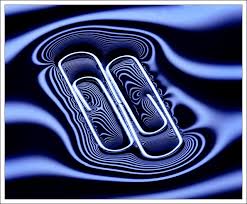


The ability of water molecules to stick to each other, creating surface tension is called:
Cohesion
Adhesion
Insulation
Ph

The fact that water can stick to other substances is called:
Ph
Adhesion
Cohesion
Insulation
Which organic molecule would a long-distance runner most likely choose to eat two hours before a race?
A protein, because it builds muscle mass.
A lipid because it provides long term energy storage.
A carbohydrate because it releases energy quickly.
A protein, because it transports oxygen into the blood stream.
How are the functions of a carbohydrate and a lipid similar?
Both are a source of energy.
Both are replicated during meiosis.
Both lower the activation energy of reactions.
Both dissolve nutrients in the digestive system.
What are the monomers of a lipid?
fat cubes and glycogen
glycerol and amino acids
fatty acids and glycerol
amino acids
Nucleotides are a monomer of which biomolecule?
Nucleic acids
Proteins
Carbohydrates
Lipids
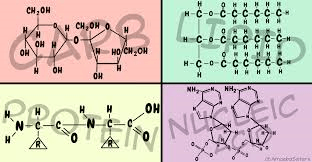
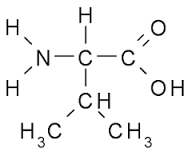
Which biomolecules can be DNA and RNA?
Carbohydrates
Lipids
Proteins
Nucleic Acids
Which organic molecules is paired with its function?
nucleic acid- to store energy
lipids – to regulate metabolic.
protein- to provide insulation.
carbohydrates – to provide quick-release energy.

Which biomolecule makes up cell membranes?
Protein
Carbohydrate
Lipid
Nucleic acid
Which of the following contains the most lipid?


Below are the four biomolecules, EXCEPT:
Protein
Lard
Carbohydrates
Nucleic Acid

What type of biomolecule contains carbon, hydrogen, oxygen, and nitrogen?
carbohydrate
lipid
nucleic acid
protein
Which of the following is the correct pair of biomolecules and their monomers?
Carbohydrate: Fatty Acids
Protein: Amino acid
Lipid: Nucleotide
Nucleic Acid: DNA

The following statements are TRUE regarding lipids, EXCEPT:
they store energy for later use
they are insoluble in water
they are composed of carbon, hydrogen, oxygen and phosphorus
they can be found in fats and oils
Which of the following is a monosaccharide?
Chitin
Sucrose
Starch
Glucose
Cholesterol is a/an...
carbohydrate
lipid
protein
nucleic acid
Which of the following transfers the genetic information for the creation of proteins
from the nucleus to the ribosomes?
DNA
RNA
nucleotide
enzyme

The sugar in RNA is _____________while the sugar in DNA is ________.
deoxyribose, ribose
ribose, deoxyribose
c. ribose, phosphate
ribose, uracil
Which of the following sugars are the components of lactose?
glucose & galactose
fructose and galactose
glucose and glucose
glucose & fructose
Which of the following elements is present in Nucleic acid but not in other biomolecules?
Carbon
Phosphorus
Nitrogen
Hydrogen

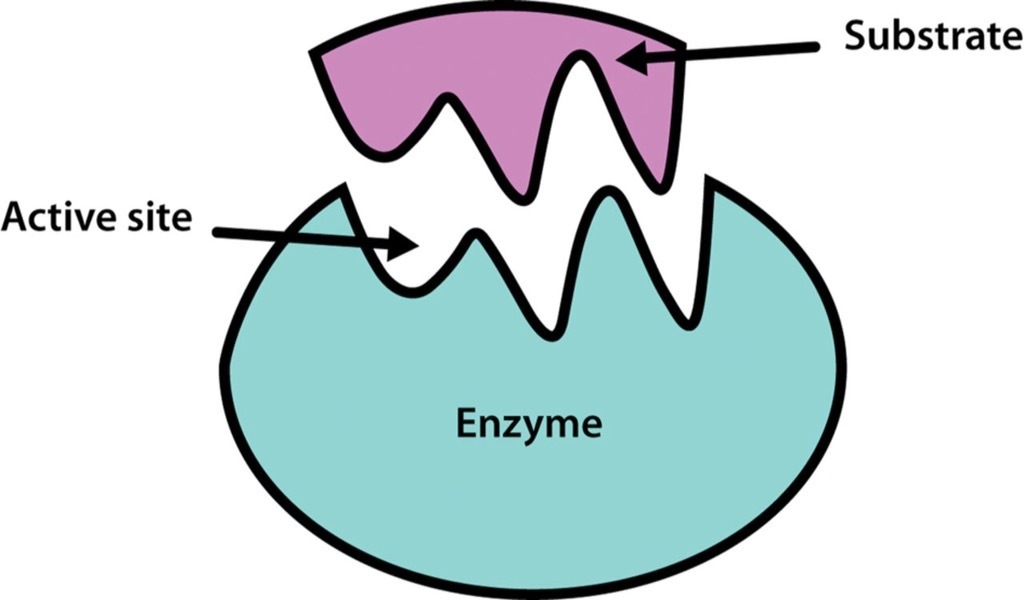
What do enzymes do?
Build things up or break them down
Help filter waste from the body
Create environments where food can be eaten
Add and remove water
Which category of macromolecules do enzymes belong to?
Carbohydrates
Proteins
Fats/Lipids
Enzymes are specific. This means that an enzyme only works with molecules that are....
the right size and shape
broken down already
present in water
too big for the body to handle

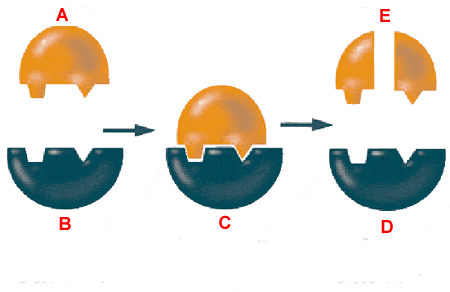
In the diagram, what is letter A?
product
enzyme-substrate complex
substrate
active site

Letter D...
enzyme
active site
substrate
products

Letter B...
substrate
active site
enzyme
products

Letter C...
products
substrate
enzymes
active site

Letter E...
active site
products
substrate
enzyme
An enzyme speeds up a reaction by
raising the activation energy
lowering the activation energy
releasing energy
absorbing energy.
What happens to an enzyme when it is denatured?
Activation energy is lowered
It becomes stronger
It loses its shape
Activation energy is raised
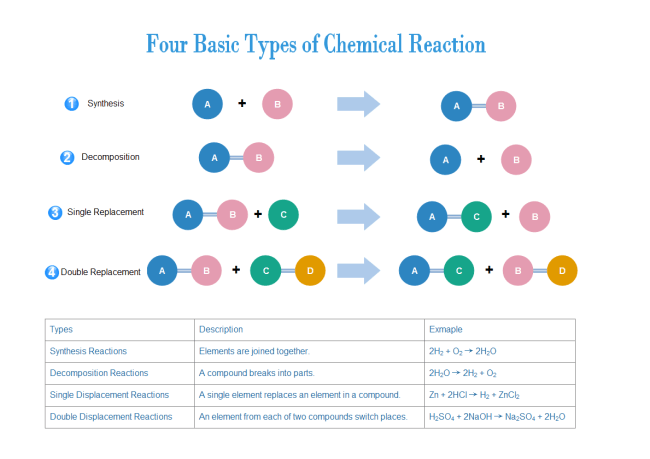
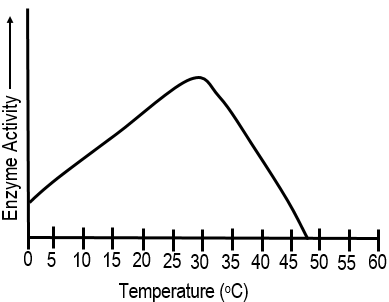
Changes in pH and temperature can ___________________ an enzyme which causes it to lose its shape and affects its function.
puncture
denature
double
delete

On the pH scale, an acid is a compound that produces a solution with a pH (a) 7.
On the pH scale, a base is a compound that produces a solution with a pH (a) 7.

What pH does a neutral substance have?
5
6
7
8

Which of the following is the weakest acid?
bananas (pH 5)
tomatoes (pH 4)
cheese (pH 6)
orange juice (pH 3)
What is pH a measure of?
Density
Mass
Hydrogen Ion Concentraion
Polarity
Which of the following pH values represents the greatest concentration of -OH ions?
3
6
9
1


A pure substance that cannot be broken down into any other substance.
Elements
Compounds
Mixtures
Fe is the ___________________ for iron
Letters
Chemical Symbol
Equation
A(n) ______________ is formed when two or more elements chemically combine.
Compound
Element
Mixture
A ___________ is a combination of many different elements not chemically combined.
Element
Compound
Mixture