
 Worksheets
Chem Final Review Test 1401
Total questions: 105
Worksheet time: 2hrs 45mins
Give the composition of water
two hydrogen atoms and two oxygen atoms
one hydrogen and one oxygen atom
two hydrogen atoms and one oxygen atom
three hydrogen atoms and one oxygen atom
one hydrogen atom and two oxygen atoms
The atomic number (Z) is the number of _______ found in the nucleus of an atom.
Neutrons
Electrons
Protons and Neutrons
Protons
Protons and Electrons
A sample of a compound containing only nitrogen and oxygen decomposes and produces 24.50 g of nitrogen and 32.59 g of oxygen. What is the mass of the original sample of the compound?
32.59 g
55.90 g
57.09 g
24.50 g
90.57 g
An atom that has gained an electron is:
a cation
unlikely to be found in homogenous mixtures
electrically neutral
likely to behave like other atoms
an anion
What does "X" represent in the following symbol? 3580X
mercury
chlorine
scandium
bromine
selenium
Calculate the atomic mass of element "X" if it has two naturally occurring isotopes with the following masses and natural abundances.
X-10, 10.0129 amu, 19.78%
X-11, 11.0093 amu, 80.22%
10.195 amu
10.002 amu
10.797 amu
10.323 amu
10.812 amu
Two or more substances in variable proportions are added together, where the composition is nonuniform throughout are:
a solution
a homogenous mixture
a compound
an element
a heterogenous mixture
Which ion is represented by the following information?
p+ = 79, n0 = 118, e− = 78
Au+
Pt+
Au2+
Au3+
Pt2+
When waves of equal amplitude from two sources are in phase when they interact, it is called:
destructive interferance
frequency
constructive interference
diffraction
amplitude
Give the possible values for the angular momentum quantum number (ml) of a d-orbital.
0
-1, 0, 1
0, 1, 2
-2, -1, 0, 1 , 2
-3, -2, -1, 0, 1, 2, 3
Calculate the wavelength (in nm) of the blue light emitted by a mercury lamp with a frequency of 6.88×10¹⁴ Hz.
229 nm
436 nm
206 nm
485 nm
675 nm
Calculate the frequency of light associated with the transition from n=4 to n=2 in the hydrogen atom.
6.17×10¹⁴s−1
5.59×10¹⁴s−1
4.57×10¹⁴s−1
1.79×10¹⁴s−1
3.28×10¹⁴s−1
Calculate the energy of the violet light emitted by a hydrogen atom with a wavelength of 377.2 nm.
4.73×10⁻¹⁹J
2.06×10⁻¹⁹J
1.23×10⁻¹⁹J
8.13×10⁻¹⁹J
5.27×10⁻¹⁹J
Determine a ball's mass with a wavelength of 3.45×10−36m and a velocity of 6.55 m/s.
29.3 kg
12.6 kg
28.9 kg
34.6 kg
3.41 kg
Rutherford's Gold Foil experiment helped prove:
The diameter of a gold atom
That the mass of an atom is concentrated in a tiny space.
The exact mass of a gold atom.
The exact charge of an electron
The mass-to-charge ratio of an electron.
Electrons fill lower-energy atomic orbitals before filling higher-energy ones is known as the:
Pauli exclusion principle
Hund's rule
Schrodinger Equation
Heisenberg uncertainty principle
Aufbau principle
The mass number (A) is equal to:
The sum of the number of electrons and protons
The sum of the number of neutrons and electrons
The sum of the number of protons, neutrons and electrons
The sum of the number of neutrons and protons
the sum of the number of the number of protons
The element that corresponds to the complete electronic configuration 1s22s22p63s23p64s13d5 is:
Titanium
Vanadium
Chromium
Manganese
Iron
Choose the "short" electron configuration for Po.
[Xe]6s25d106p4
[Xe]5d106p4
[Xe]6s24f145d106p4
[Xe]6p4
[Xe]6d96p4
Isotopes are formed when atoms differ in their number of:
Electrons
Neutrons
Protons
Neutrons and Protons
Electrons and Protons
Which of the following elements is a mettaloid?
Ir
Ta
As
Sn
Rb
Give the complete electron configuration of Ge.
1s^2, 2s^2, 2p^6, 3s^2, 3p^6, 4s^2
1s^2, 2s^2, 2p^6, 3s^2, 3p^6, 4s^2, 4p^6
1s^2, 2s^2, 2p^6, 3s^2, 3p^6, 4s^2, 3d^10, 4p^2
1s^2, 2s^2, 2p^6, 3s^2, 3p^6, 4s^2, 3d^10, 4p^6
1s^2, 2s^2, 2p^6, 3s^2, 3p^6, 4s^2, 4p^6
Choose the orbital diagram that represents the ground state of a N-atom


What is the maximum number of possible orbitals in the n=4 energy level (or shell)?
1
5
7
9
16
How many moles of H2O are contained in 85.6 mg of H2O
4.75×10⁻³ mol
33.4 mol
2.21×10⁻² mol
2.99×10⁻³ mol
1.10×10⁻⁴ mol
An atom that has lost an electron is:
a cation.
unlikely to be found in homogeneous mixtures.
electrically neutral.
likely to behave exactly like the parent atom.
an anion
What does "X" represent in the following symbol?
1428X
Silicon
Sulfur
Zinc
Ruthenium
Nickel
Calculate the atomic mass of element "X," if it has 2 naturally occurring isotopes with the following masses and natural abundances:
X-45, 44.8776 amu, 32.88%
X-47, 46.9443 amu, 67.12%
46.26 amu
45.91 amu
46.34 amu
46.84 amu
44.99 amu
When waves of equal amplitude from two sources are out-of-phase when they interact, it is called:
destructive interference
diffraction
constructive interference
effusion
amplitude
Determine the velocity of a medicine ball (m = 10.0 kg) with a wavelength of 1.33×10⁻³⁵ m.
8.81 m/s
12.3 m/s
2.21 m/s
4.98 m/s
6.44 m/s
Calculate the wavelength of light associated with the transition from n = 1 to n = 3 in the hydrogen atom.
103 nm
155 nm
646 nm
971 nm
136 nm
Only two electrons, with opposing spins, are allowed in each orbital is known as the
Pauli exclusion principle.
Hund's rule.
Aufbau principle.
Heisenberg uncertainty principle.
Place the following in order of increasing 1st Ionization Energy (IE1):
N, F, As
N < As < F
As < N < F
F < N < As
As < F < N
F < As < N
Choose the valence orbital diagram that represents the ground state of Se2⁻


Identify the element that has a ground state electronic configuration of [Ar]4s23d7.
tungsten
zinc
rhenium
cobalt
calcium
Determine the name for W(SO3)2
Tungsten (II) Sulfate
Tungsten (IV) Sulfite
Tungsten (IV) Sulfide
Tungsten (II) Sulfite
Tungsten (IV) sulfate
Give the correct formula for Barium Nitride
BaN2
Ba(NO3)
Ba3N2
Ba2N3
Ba(NO2)
Calculate the molar mass of Al(ClO3)3
87.05 g/mol
121.95 g/mol
310.18 g/mol
277.33 g/mol
148.93 g/mol
How many molecules are contained in 17.4 mg of Na(NO3)?
1.23×10²⁰ molecules
2.96×10²¹ molecules
2.87×10²² molecules
1.10×10²¹ molecules
3.37×10²⁰ molecules
Determine the empirical formula for a compound that contains C, H, and O. It has 18.75% C and 74.94% O by mass.
C2H6O
CHO
C4H13O2
CH4O3
CH3O
Write the chemical name for P2O5
Phosphorous (IV) Oxide
Diphosphorous Pentoxide
Phosphorous Pentoxide
Phosphorus (II) Oxide
Diphosphorous oxide
Which of the following represents the Lewis dot structure for Ca2+ ?


How many pi ( π ) bonds are present in the following molecule?
1
2
3
4
5
Give the number of valence electrons for XeI2.
22
20
18
24
16
Choose the best Lewis structure for SF4.


Write the formula for Titanium (II) cyanide dihydrate
Ti2(CN)2 • H2
Ti2(CN) • 2H2O
TiN • 2H2O
Ti(CN)2 • H2
Ti(CN)2 • 2H2O
Draw the best Lewis structure for azide ion, N3− . What is the formal charge on the N-atom
0
+1
-1
+2
-2
Identify the bond with the lowest bond energy
C−C
N=N
C=C
C=O
O=O
The bond angle in NH3 is:
107°
180°
120°
109.5°
90°
How many of the following molecules are polar?
XeF4, CS2, BCl3, SeH2
2
0
1
3
4
How many of the following molecules have sp3 hybridization on the central atom?
CH2O, SO2, OCl2, CH2I2
4
3
2
1
0
Give the hybridization for the Br in BrF3
sp3d2
sp3d
sp3
sp2
sp

Consider the molecule below. Determine the molecular geometry at each of the two labeled carbons.
C1 = Tetrahedral, C2 = Linear
C1 = Trigonal Planar, C2 = Bent
C1 = Trigonal Planar, C2 = Tetrahedral
C1 = Bent, C2 = Trigonal Planar
C1 = Trigonal pyramidal, C2 = See-saw
Place the following in order of increasing (smallest-to-largest) atomic radius (AR).
P, Al, F
Al<F<P
P<Al<F
F<Al<P
Al<P<F
P<F<Al
Place the following in order of decreasing (most-to-least) 1st Ionization energy (IE1)
Mg>K>Cs
Cs>Mg>K
Mg>Cs>K
Cs>K>Mg
K>Mg>Cs
Which element is diamagnetic?
Cd
Se
Zr
Ni
Rb
Choose the bond below that is the most polar
N−C
C−C
O−C
F−C
F−F
Calculate the mass percent of composition of Potassium in K3(PO4)
26.75%
17.98%
30.72%
55.26%
20.82%
Identify the number of bonding pairs and lone pairs of electrons in water.
1 bonding pair and 1 lone pair
1 bonding pair and 2 lone pairs
2 bonding pairs and 2 lone pairs
2 bonding pairs and 1 lone pair
3 bonding pairs and 2 lone pairs
Determine the Electron Geometry (EG) and the Molecular Geometry (MG) of ClO4− .
EG = Tetrahedral, MG = Tetrahedral
EG = Tetrahedral, MG = Trigonal Pyramidal
EG = Trigonal Planar, MG = Bent
EG = Trigonal Planar, MG = Trigonal Planar
EG = Tetrahedral, MG = Trigonal Planar
Determine the name for CoCl2 · 6H2O. Remember that Co forms several ions.
Cobalt chloride hydrate
Cobalt(I) chloride heptahydrate
Cobalt(II) chloride heptahydrate
Cobalt(II) chloride hexahydrate
Cobalt(I) chloride
Calculate the molar mass of Al(C2H3O2)3
86.03 g/mol
204.13 g/mol
56.00 g/mol
258.09 g/mol
139.99 g/mol
Determine the molecular formula of a compound that is 49.48% carbon, 5.19% hydrogen,28.85% nitrogen, and 16.48% oxygen. The molecular weight is 194.19 g/mol
C8H12N4O2
C4H5N2O
C8H10N4O2
C8H10N2O
C16H20N8O4
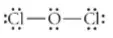
Choose the best Lewis structure for OCl2.
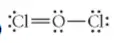
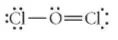
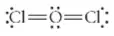
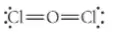
Give the number of valence electrons for SO4−2 .
32
30
34
28
36
Draw the best Lewis structure for BrO4⁻ and determine the formal charge on bromine.
-1
+1
0
+2
+3
Determine the Electron Geometry (EG), Molecular Geometry (MG), and polarity of SF4.
EG = Trigonal bipyramidal, MG = Trigonal bipyramidal, and Nonpolar
EG = Tetrahedral, MG = Tetrahedral, and Polar
EG = Trigonal bipyramidal, MG = See-saw, and Polar
EG = Octahedral, MG = Trigonal bipyramidal, and Nonpolar
EG = Octahedral, MG = Octahedral, and Nonpolar
How many of the following molecules are polar?
PCl5 COS XeO3 SeBr2
2
0
1
3
4
Calculate the mass percent composition of sulfur in Al2(SO4)3.
28.12%
9.372%
42.73%
21.38%
35.97%
How many of the following molecules have sp3d hybridization on the central atom?
SiCl4 BrF5 AsF5 BrF3
2
0
4
1
3
Give the complete Ionic equation for the reaction (if any) that occurs when aqueous Na2S and Zn(NO3)2 are mixed.
Na+ (aq) + NO3- (aq) -> Na(NO3) (s)
Na+ (aq) + S-2 (aq) + Zn+2 (aq) + 2NO3- (aq) -> ZnS (s) + 2Na+ (aq) + 2NO3- (aq)
Na+ (aq) + S-2 (aq) + Zn+2 (aq) + 2NO3- (aq) -> Zn+2 (aq) + S-2 (aq) + 2Na(NO3) (s)
Zn+2 (aq) + S-2 (aq) -> ZnS (s)
No Reaction
Determine the specific heat capacity of a metal alloy that requires 3.44 kJ to raise the temperature of 90.0 g of alloy from 25.0 Celsius to 41.7 Celsius.
4.38 J/g•°C
2.29 J/g•°C
3.95 J/g•°C
2.53 J/g•°C
1.87J/g•°C
The law of_______ states that energy can be neither created nor destroyed.
Kinetic Energy
The Consecration of Energy
Potential Energy
The Conservation of Energy
Thermochemistry
Determine the limiting reactant and the mass (in grams) of nitrogen gas that can be formed from 11.5 g N2O4 and 10.2 g N2H4.
N2O4(l)+2N2H4(l)⟶ 3N2(g)+4H2O(g)
Limiting reactant is N2H4, and 59.0 g N2 is formed.
Limiting reactant is N2O4 and 10.5 g N2 formed
Limiting reactant is N2O4 and 45.7 g N2 formed
Limiting reactant is N2H4 and 13.4 g N2 formed
No limiting reactant, and 45.0 g N2 formed
What is the name of an aqueous solution of HBrO?
Hydrobromic acid
Hypobromous acid
Bromous acid
Bromic acid
Perbromic acid
Use the information provided to determine ΔHrx for the following reaction:
CH4(g) +3Cl2(g)⟶ 3CHCl3(l)+3HCl(g)
ΔHrx (KJ/mol)
CH4 (g) = -75, CHCl3 (l) = -134, HCl (g) = -92
-151 kJ/mol
-335 kJ/mol
+662 kJ/mol
+117 kJ/mol
-217 kJ/mol
All of the following compounds are soluble in water except:
Ba(OH)2
PbCl2
Zn(SO4)
Ag(NO3)
Cu(C2H3O2)2
Identify acetic acid, H(C2H3O2) (aq)
Weak acid
Weak base
Strong base
Strong acid
Not acid or base
Determine the oxidation state of phosphorous in P2O5 .
+5
+3
0
+2
+4
The titration of 25.0 mL of an unknown concentration of H2(SO4) solution requires 83.6 mL of 0.12 M Na(OH) solution. What is the concentration of H2(SO4) solution (in M)?
0.20 M
0.40 M
0.13 M
0.36 M
0.25 M
In 11.52 g sample of N2 reacts with 3.03 g of H2 to form ammonia (NH3) If ammonia is the only product, what mass of ammonia is formed?
17.03 g
11.00 g
14.01 g
32.76 g
23.07 g
Which of the following is a single-replacement (or single-displacement) reaction?
C(s) + O2(g) → CO2 (g)
2H(ClO4)(aq) + Ca(OH)2(aq) → 2H2O(l) + Ca(ClO4)2(aq)
Fe(s) + 2Ag(NO3)(aq) → 2Ag(s) + Fe(NO3)2(aq)
Mg(SO4)(aq) + Ba(NO3)2(aq) → Mg(NO3)2(aq) + Ba(SO4)(s)
None of the above are acid-base reactions
Determine the oxidation state of manganese in MnO4- ion.
+1
+3
+5
+7
0
Use the bond energies provided to estimate ΔHrx for the reaction below:
PCl3(g)+Cl2(g)→ PCl5(l)
Bond energy table:
Cl-Cl = 243, P-Cl = 331
-243 kJ/mol
-419 kJ/mol
-662 kJ/mol
-67 kJ/mol
-905 kJ/mol
Determine the concentration of a solution prepared by diluting 20.0 mL of a 0.200 M LiBr to 250.0 mL
1.13 M
0.0887 M
0.0313 M
0.0160 M
0.0501 M
Balance the following equation:
…C2H6(g)+… O2(g)⟶…CO2(g)+…H2O(g)
What is the stoichiometric coefficient for carbon dioxide?
1
2
3
4
6
According to the following reaction, what volume (in mL) of 0.244 M Pb(NO3)2 solution is required to react exactly with 50.0 mL of 0.210 M CaCl2 solution?
CaCl2(aq)+Pb(NO3)2(aq)⟶ PbCl2(s)+Ca(NO3)2(aq)
97.4 mL
21.5 mL
43.0 mL
86.1 mL
58.1 mL
Determine the percent yield of a reaction that produces 20.04 g of Fe when 50.00 g of Fe2O3 reacts with excess Al, according to the following reaction:
Fe2O3(s)+2Al(s)⟶ Al2O3(s)+2Fe(s)
61.03%
28.65%
57.31%
20.02%
81.93%
Using Hess' Law and the reaction enthalpies given below, determine the ΔHrx for the following reaction:
2S(s)+3O2(g)⟶ 2SO3(g)
Given:
SO2(g)⟶S(s)+O2(g) , ΔHrxn = -296.8 kJ/mol
2SO2(g)+O2(g)→ 2SO3(g) , ΔHrxn = -197.8 kJ/mol
-494.6 kJ/mol
-692.4 kJ/mol
-791.4 kJ/mol
1583 kJ/mol
-293.0 kJ/mol
What element is undergoing reduction (if any) in the following reaction?
Cu(s)+2Sn(NO3)2(aq)→ Cu(NO3)2(aq)+2Sn(s)
Cu
Sn
N
O
This is not an oxidation-reduction reaction.
According to the reaction below, how much energy is released with the consumption of 51.2 g of Al?
Fe2O3(s)+2Al(s)→ Al2O3(s)+2Fe(s) , ΔHrxn = -472 kJ/mol
51.2 kJ
448 kJ
224 kJ
1617 kJ
808 kJ
What is one of the reactants of a combustion reaction?
Carbon Dioxide
Hydrogen Gas
Oxygen Gas
Water
Sulfur
Give the theoretical yield, in mol, of CO2 from the reaction of 0.400 mol of C8H18 with 4.00 mol of O2.
2C8H18(l)+25O2(g)→ 16CO2(g)+18H2O(g)
2.88 mol
3.20 mol
2.56 mol
16.0 mol
5.12 mol
Which compounds will undergo a gas-evolving reaction in an aqueous reaction?
H(C2H3O2) (aq)
HF (aq)
HCl (aq)
H2(SO3) (aq)
H(ClO3) (aq)
Choose the reaction that represents the decomposition of C6H12O2
C6H12O2 (l) + 8O2 (g) -> 6CO2 (g) + 6H2O (g)
Mg (s) + C6H12O2 (l) -> Mg(C6H12O2) (aq)
6C (s) + 6H2 (g) + O2 (g) -> C6H12O2 (l)
C6H12O2 (l) -> 6C (s) + 6H2 (g) + O2 (g)
None of the above represents the combustion of C6H12O2
A chemical change
occurs when methane gas is burned.
occurs when paper is shredded.
occurs when water is vaporized.
occurs when salt is dissolved in water.
occurs when powdered lemonade is stirred into water.
A 12.39 g sample of phosphorus reacts with 42.54 g of chlorine to form only phosphorus trichloride (PCl3). If it is the only product, what mass of PCl3 is formed
30.15 g
54.93 g
140.01 g
79.71 g
91.86 g
Why are the halogens among the most active nonmetals?
Their valence electrons are more effectively shielded.
All halogens have low electron affinities.
They all have smaller diameters than other nonmetals.
Their d-orbitals are completely filled.
They only need one electron needed to attain a noble gas configuration
Give the percent yield when 28.16 g of CO2 are formed from the reaction of 4.000 moles ofC8H18 with 8.000 moles of O2.
2 C8H18 + 25 O2 → 16 CO2 + 18 H2O
20.00%
25.00%
50.00%
12.50%
75.50%
Choose the reaction that represents the combustion of C6H12O2
C6H12O2(l) + 8 O2(g) → 6 CO2(g) + 6 H2O(g)
Mg(s) + C6H12O2(l) → MgC6H12O2(aq)
6 C(s) + 6 H2(g) + O2(g) → C6H12O2(l)
C6H12O2(l) → 6 C(s) + 6 H2(g) + O2(g)
None of the above represent the combustion of C6H12O2.
According to the following reaction, how many moles of Fe(OH)2 can form from 175.0 mL of0.227 M LiOH solution? Assume that there is excess FeCl2.
FeCl2(aq) + 2 LiOH(aq) → Fe(OH)2(s) + 2 LiCl(aq)
3.97 × 10⁻² mol
2.52 × 10⁻² mol
1.99 × 10⁻² mol
5.03 × 10⁻² mol
6.49 × 10⁻² mol
Give the net ionic equation for the reaction (if any) that occurs when aqueous solutions of Al(C2H3O2)3 and LiNO3 are mixed.
Al3+(aq) + 3 NO3-(aq) → Al(NO3)3(s)
Li+(aq) + C2H3O2-(aq) → LiC2H3O2(s)
Al3+(aq) + 3 NO3-(aq) + Li+(aq) + C2H3O2-(aq) → Al(NO3)3(aq) + LiC2H3O2(s)
3 Li+(aq) + (C2H3O2)33-(aq) → Li3(C2H3O2)3(s)
No reaction occurs.
What element is undergoing oxidation (if any) in the following reaction?
CH4(g) + 2 O2(g) → CO2(g) + 2 H2O(g)
O
H
C
C and H
None of the elements is undergoing oxidation.
Which of the following compounds will undergo a gas-evolving reaction in an aqueous solution?
CH3COOH
HF
HCl
H2SO4
H2CO3
Which of the following (with specific heat capacity provided) would show the smallest temperature change upon gaining 200.0 J of heat?
50.0 g Al, CAl = 0.903 J/g.°C
50.0 g Cu, CCu = 0.385 J/g.°C
25.0 g granite, Cgranite = 0.79 J/g.°C
25.0 g Au, CAu = 0.128 J/g.°C
25.0 g Ag, CAg = 0.235 J/g.°C

