Wayground logo

Free Printable Worksheets

Font size

S
M
L
XL
Worksheets

Chemistry Fall Semester Review

Total questions: 100

Worksheet time: 2hrs 15mins

Name
Class
Date
1.
What piece of lab equipment is pictured?
a)
beaker
b)
test tube
c)
erlenmeyer flask
d)
glass beaker
2.
What kind of hazard does this symbol indicate?
a)
poison
b)
caustic
c)
electrical
d)
biohazard
3.
What hazard does this symbol indicate?
a)
flammable
b)
electrical
c)
poison
d)
caustic
4.
Which of the following should NOT be worn during a laboratory activity?
a)
loose clothing
b)
dangling jewelry
c)
sandals
d)
all of the above
5.
 The following footwear is best in the laboratory. 
a)
shoes appropriate for the weather
b)
open-toed shoes
c)
closed-toed shoes
d)
sandals
6.
Long hair in the laboratory must be
a)
cut short
b)
held away from the experiment with one hand
c)
always be neatly groomed
d)
tied back or kept entirely out of the way with a hair band, etc.
7.
You are heating a substance in a test tube. Always point the open end of the tube
a)
towards your body
b)
toward your lab partner
c)
towards another classmate
d)
away from all people
8.
What is this?
a)
Measuring tube
b)
Test tube
c)
Graduated Cylinder
d)
Pipette
9.
a)
glass triangle
b)
funnel
c)
stirring rod
d)
filter
10.
a)
test tube rack
b)
test tube holder
c)
tongs
d)
clamp
11.
a)
ignition tubes
b)
test tubes
c)
graduated cylinders
d)
burets
12.
a)
beaker
b)
flask
c)
graduated cylinder
d)
test tube
13.
What Safety Symbol is this?
a)
Biological Hazard
b)
Radiation Safety
c)
Open Flame Alert
d)
Fire Safety
14.
What is an MSDS?
a)
A new virus recently discovered in Madagascar
b)
Mohs Safety Decision System
c)
Material Safety Data Sheet
d)
Master Safety Detection Scenario
15.
What is NFPA?
a)
National Fire Protection Association
b)
National Friends Protection Agency
c)
No Fire Protection Association
16.
The blue diamond on the NFPA symbol stand for?
a)
health
b)
reactivity
c)
other
d)
fire
17.
An educated guess is called a__________.
a)
result
b)
data
c)
hypothesis
d)
problem
18.
You use your five sense to find out about the world around you. This is called______.
a)
observations
b)
data
c)
conclusion
d)
scientific method
19.
What is the control of an experiment?
a)
what stays the same
b)
what changes
c)
conclusion
d)
nothing
20.
What is the variables of an experiment?
a)
the problem
b)
data collected
c)
your question
d)
what changes
21.
You are doing an experiment recording the growth of plants under different amounts of sunlight. What is the dependent variable?
a)
The sunlight
b)
The growth
c)
The experiment
d)
The amounts of photons
22.
You are doing an experiment recording the growth of plants under different amounts of sunlight. What is the independent variable?
a)
The growth
b)
The sun
c)
The control
d)
The cheese
23.
In a controlled experiment, how many variables can be worked with at a time? 
a)
one
b)
none
c)
two or more
d)
how ever many makes sense.
24.
The flowers are green and blue. 
a)
Qualitative
b)
Quantitative 
25.
There are 75 trees in the forest. 
a)
Qualitative 
b)
Quantitative
26.
There are ten buttons on the table. 
a)
Qualitative
b)
Quantitative
27.
Measuring the gas mileage used over the winter versus summer months would involve the collection of ____ data.  
a)
quantitative
b)
qualitative
28.
You want to collect data on the taste of apples to help a farmer grow sweeter apples in his orchard.  You have your assistants describe apples as "sweet" or "tart".   This is called ____ data
a)
quantitative
b)
qualitative
c)
not scientific
d)
hypothetical
29.
Recording data on how yellow or orange leaves turn in October by describing them as "green" "slightly yellow" "very yellow" or "orange" is ____ data
a)
quantitative
b)
qualitative
30.
Name an extensive properties
a)
color
b)
mass
c)
luster
d)
odor
31.
mass, volume, weight are all what type of property
a)
intensive
b)
extensive
32.
Wood burning is an example of _______
a)
physical intensive property
b)
physical extensive property
c)
chemical change
d)
Physical change
33.
The melting point of ice is 00 C. This is an example of ________.
a)
physical intensive property
b)
physical extensive property
c)
Chemical change
d)
Chemical property
34.
The density of pyrite is 5g/cm3 . This is an example of 
a)
physical intensive property
b)
physical extensive property
c)
chemical change
d)
chemical property
35.
Physical properties of a substance include _________
a)
color and odor
b)
melting and boiling points
c)
density 
d)
all of the choices are correct
36.
Which of the following is a chemical property of milk?
a)
it is white
b)
it has fats
c)
it has turns sour if left out of the refridgerator
d)
it is soluble in water
37.
_________ is anything that takes up space and has mass.
a)
Inertia
b)
Matter
c)
Viscosity
d)
Malleability 
38.
Which one is a liquid?
a)
a
b)
b
c)
c
39.
Which one is a solid?
a)
a
b)
b
c)
c
40.
Which one is a gas?
a)
a
b)
b
c)
c
41.
What state of matter has a definite shape and a definite volume?
a)
solid
b)
liquid 
c)
gas
42.
Which state of matter has a definite volume but no real shape of its own?
a)
solid
b)
liquid
c)
gas
43.
Which state of matter has neither a definite shape nor a definite volume?
a)
solid
b)
liquid
c)
gas
44.
The smallest part of an element is
a)
proton
b)
atom
c)
compound
d)
mixture
45.
In the modern periodic table elements are arranged by:
a)
atomic mass
b)
atomic number
c)
valence electrons
d)
number of isotopes
46.
Each column in the periodic table is called a 
a)
period
b)
group
c)
cluster
d)
unit
47.
The atomic number tells you what?
a)
number of electrons
b)
number of protons
c)
number of neutrons
d)
both electrons and protons in an atom.
48.
The atoms along the staircase are called 
a)
metals
b)
nonmetals
c)
metalloids
d)
noble gases
49.
How many Valance electrons does Iodine Have?
a)
6
b)
16
c)
7
d)
17
50.
The periodic table has __ periods.
a)
18
b)
8
c)
2
d)
7
51.
In what section would Transition Metals be found?
a)
orange
b)
light blue
c)
blue
d)
white
52.
Which is a valance electron?
a)
A
b)
B
c)
C
53.
What do we know about the group highlighted in blue?
a)
They are extremely reactive metals--the alkali metals
b)
They are fairly reactive metals--alkaline earth metals
c)
They are reactive nonmetals--the halogens
d)
They are unreactive gases--the noble gases
54.
What scientist is best known for his "Plum Pudding" model of the atom?
a)
J.J. Tomson
b)
Ernest Rutherford
c)
John Dalton
d)
Democritus
55.
An atom's overall charge is ________.
a)
positive 
b)
depends
c)
neutral 
d)
negative 
56.
The first person to ever talk about an atom was
a)
Democritus
b)
Rutherford
c)
Dalton
57.
The weighted average of the masses of all naturally occurring isotopes of an element is
a)
Atomic number
b)
Atomic Mass
c)
Atomic weight
d)
Protons
58.
Neon has an atomic number of 10 and an atomic mass of 20.180.  How many protons, electrons, and neutrons will it have?
a)
P=10 E=10 N=11
b)
P=5  E=5  N=10
c)
P=10  E=10  N=10
d)
P=10  E=5  N=5
59.
If two atoms have the same atomic number but different numbers of neutrons, they are
a)
Ions of that element
b)
Different elements
c)
Isotopes of the same atom
d)
Isotopes of different elements
60.
The atomic number for Oxygen is 8, so
a)
there are 8 protons in the atom
b)
the atomic mass is less than 8
c)
the mass of the atom is 8
d)
the atom is decaying
61.
 Copper used in electric wires comes in two isotopes: 63Cu and 65Cu. 63Cu has an an abundance of 69.09%. The other isotope, 65Cu, has an abundance of 30.91%.
a)
64.8
b)
65
c)
63.54
d)
128
62.
An atom is considered an ion if it has extra: 
a)
Protons
b)
Neutrons
c)
Electrons
d)
Orbitals
63.
Valence electrons are: 
a)
Electrons located in the outermost orbital 
b)
Electrons located in the innermost orbital
c)
Electrons that are bonded to another atom
d)
Electrons that in the second orbital
64.
An isotope has extra: 
a)
Protons
b)
Charge
c)
Mass
d)
Oribitals
65.
An ion has extra: 
a)
Charge
b)
Valence Electrons
c)
Mass
d)
Orbitals
66.
An ion of Sodium loses one electron. What is its new charge? 
a)
-1
b)
+1
c)
-2
d)
+2
67.
The tendency of an atom to attract electrons and acquire a negative charge
a)
electronegativity
b)
charge
c)
bonding ability
d)
electron configuration
68.
The minimum energy required to remove an electron from an atom
a)
electron configuration
b)
energy levels
c)
ionization energy
d)
ionic bond
69.
Which has the larger Electronegativity: 
Cl or Al?
a)
Cl
b)
Al
70.
Which atom has the largest atomic radius?
a)
potassium
b)
rubidium 
c)
francium
d)
cesium
71.
What atom matches this electron configuration?
1s22s22p63s23p64s23d10
a)
Zinc
b)
Copper
c)
Nickel
d)
Germanium
72.

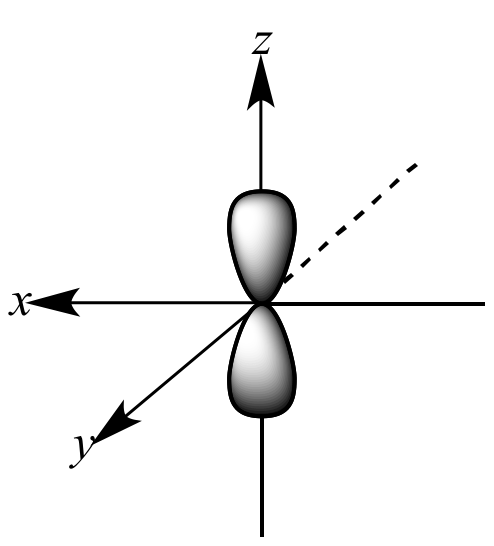
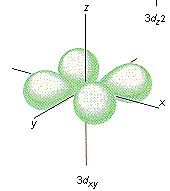
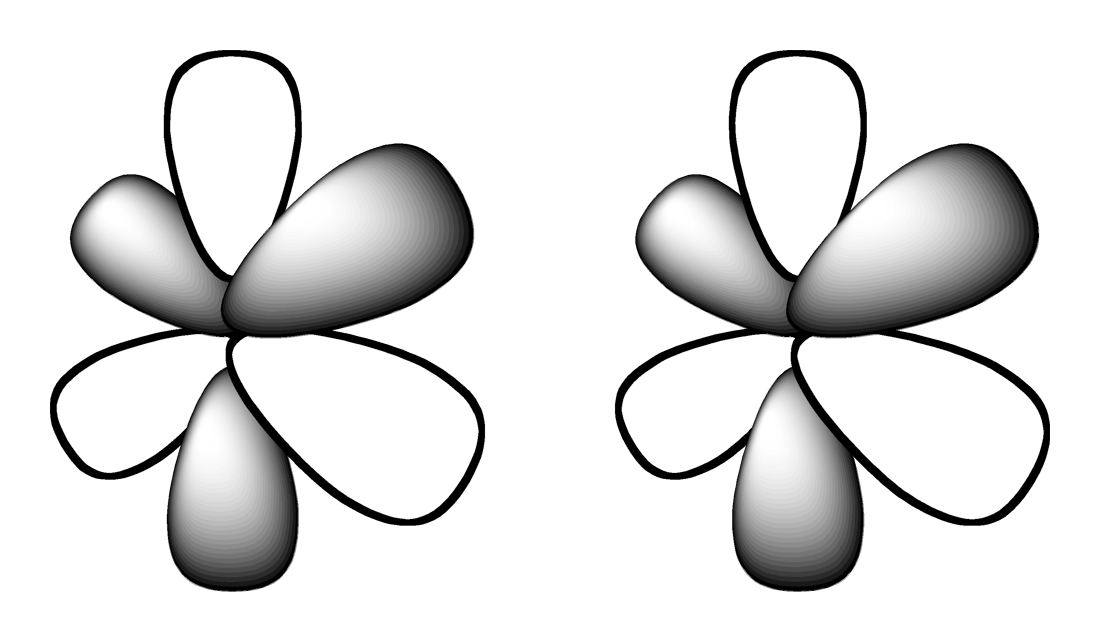
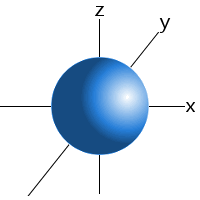
Which shape represents the shape of an "p" orbital?
a)
b)
c)
d)
73.
 The diagram above represents two electrons with 
a)
a. opposite spins.
b)
 b. the same spin.
c)
c. different energies.
d)
d. different energy levels.
74.
What is the shorthand electron configuration for Sulfur atom?
a)
[Ar] 3p4
b)
[He] 3s23p4
c)
[Ne] 3s23p4
d)
[Na] 3s23p3
75.
What atom matches this electron configuration?
[Xe] 6s25d9
a)
Mercury
b)
Gold
c)
Platinum
d)
Thallium
76.
An orbital can at most hold how many electrons?
a)
1 electron
b)
2 electrons
c)
3 electrons
d)
4 electrons
77.
Which element is depicted from this atomic orbital diagram?
a)
Carbon
b)
Nitrogen
c)
Oxygen
d)
Phosphorus
78.

Which orbital shows a violation of Hund's Rule?

a)

A

b)

B

c)

C

d)

D

e)

None of these

79.

Which orbital shows a violation of the Pauli Exclusion Principle?

a)

A

b)

B

c)

C

d)

D

e)

None of these

80.

Which orbital shows a violation of the Aufbau Principle?

a)

A

b)

B

c)

C

d)

D

e)

None of these

81.
The formula for magnesium cyanide is...
a)
Mg(CN)2
b)
MgCN2
c)
MgCN
d)
(Mg)2CN
82.
What is the formula for calcium phosphide?
a)
CaP
b)
Ca2P3
c)
Ca3P2
d)
Ca2P
83.
Na2Cr2O7
a)
sodium chromate
b)
sodium (II) chromate
c)
sodium (I) dichromate
d)
sodium dichromate
84.
What is the name of FeSO4?
a)
Iron Sulfite
b)
Iron (II) Sulfite
c)
Iron(IV) Sulfate
d)
Iron (II) Sulfate
85.
What is the formula for iron(II) carbonate?
a)
Fe2CO3
b)
FeCO3
c)
Fe2CO2
d)
FeCO4
86.
What is the name of N2O3
a)
Nitrogen trioxide
b)
Dinitrogen oxide
c)
Dinitrogen trioxide
d)
Nitrogen oxide
87.
What is the name of C3Cl8 ?
a)
Carbon octachloride
b)
Tricarbon octachloride
c)
Carbon trichloride
d)
Octacarbon trichloride
88.
What is the name of Br6F10 ?
a)
Bromium fluoride
b)
Hexabromine fluoride
c)
Bromium decafluoride
d)
none of the above
89.

Hexaboron monosilicide

a)

B5S

b)

B6S

c)

B6Si

d)

Br6Si1

e)

Br6Si

90.

Chlorine dioxide

a)

Cl1O2

b)

CO2

c)

ClO2

d)

CrO2

91.

Hydrogen iodide

a)

H1I1

b)

HI

c)

HyIo

d)

HIo1

92.

Ionic bonds form by __________.

a)

sharing electrons

b)

attraction between opposite charges

c)

delocalized electrons

d)

electron spins

93.

Is KCl an ionic or covalent bond?

a)

ionic

b)

covalent

94.

How do covalent bonds form?

a)

sharing electrons

b)

attraction between opposite charges

c)

delocalized electrons

d)

electrons spinning

95.
Which of the following is the correct Lewis dot structure for the molecule fluorine (F2)?
a)
A
b)
B
c)
C
d)
D
96.
What is the correct structure for BF3?
a)
Option A.
b)
Option B. 
c)
Option C.
d)
Option D.
97.
A molecule of methane has what shape?
a)
Tetrahedral
b)
Triangular
c)
Pyramidal
d)
Octahedral
98.
A molecule of water has what shape?
a)
Linear
b)
Tetrahedral
c)
Bent
d)
Triangular
99.

Which is the correct molecular structure for carbon dioxide?

a)
b)
c)
d)
100.

In metallic bonds, the force of attraction is between

a)

positive and negative ions

b)

cations and electrons

c)

two different metals

d)

neutrons and electrons