
 Worksheets
Cellular Energy Review
Total questions: 40
Worksheet time: 1hrs 15mins
Name
Class
Date
1.
In what cell part does photosynthesis take place?
a)
Nucleus
b)
Mitochondria
c)
Chloroplast
d)
Bacteria
2.
In what cell part does the majority of cellular respiration take place?
a)
Nucleus
b)
Mitochondria
c)
Chloroplast
d)
Bacteria
3.
What process does a plant do in order to survive if there is no sunlight?
a)
Photosynthesis
b)
Cellular Respiration
c)
Digestion
d)
Catalysis
4.
Which of the following depend on alcoholic fermentation?
a)
Production of Beer
b)
Production of Wine
c)
Bread dough rising
d)
All of the these depend on it.
5.
What is the "synthesis" part of photosynthesis?
a)
Light Reactions
b)
Calvin Cycle
c)
Glycolysis
d)
Citric Acid Cycle (Kreb's Cycle)
6.
What is it called when light is converted into chemical energy?
a)
Light Reactions
b)
Calvin Cycle
7.
Plants are green because they contain chlorophyll which is a pigment that reflects green light.
a)
True
b)
False
8.
Aerobic respiration requires or does not require the use of oxygen?
a)
Requires
b)
Does not require
9.
Which process produces more energy?
a)
Glycolysis
b)
Citric Acid Cycle (Kreb's Cycle)
10.
Which of the following is not a part of aerobic respiration?
a)
Glycolysis
b)
Citric Acid Cycle (Kreb's Cycle)
c)
Conversion of pyruvic acid into acetyl-CoA
d)
Light Reactions
11.
The Calvin Cycle does not work in the dark because it needs energy from the light reactions which require light.
a)
True
b)
False
12.
Where do the light reactions of photosynthesis take place?
a)
Stroma
b)
Thylakoid
c)
Cristae
d)
Matrix
13.
Where does the Calvin Cycle take place?
a)
Matrix
b)
Cristae
c)
Stroma
d)
Thylakoid
14.
Where does glycolysis take place?
a)
Stroma
b)
Matrix
c)
Cytoplasm
15.
Where does the Citric Acid Cycle take place?
a)
Stroma
b)
Matrix of mitochondria
c)
Thylakoid
d)
Nucleus
16.
C6H12O6 + 6O2 → 6H2O + 6CO2 + energy (ATP)
This is the equation for which process?
This is the equation for which process?
a)
Photosynthesis
b)
Cellular Respiration
17.
6CO2 + 6H2O + sunlight → C6H12O6 + 6O2
a)
Photosynthesis
b)
Cellular Respiration
18.
Photosynthesis and Cellular Respiration are considered to be complementary processes because they are the exact same.
a)
True
b)
False
19.
Energy is stored in the chemical bonds of this molecule
a)
ATP
b)
Enzyme
c)
Salt
20.
The process by which an autotroph obtains energy from inorganic compounds instead of light.
a)
Photosynthesis
b)
Chemosynthesis
21.
Why are NADH and FADH important?
a)
Combine carbon dioxide with 5 carbon sugars
b)
Release carbon dioxide
c)
Are high energy that carry electrons to the electron transport chain
d)
Have nothing to do with this unit
22.
Where is energy stored in an ATP molecule?
a)
Glucose
b)
Chemical bonds
c)
Nucleus
d)
Carbon
23.
Which type of anaerobic respiration occurs in your body?
a)
Lactic Acid Fermentation
b)
Alcoholic Fermentation
c)
Photosynthesis
d)
Light Reactions
24.
Which of the following is the correct equation for PHOTOSYNTHESIS?
a)
CO2 + light + H2O --> O2 + Sugar
b)
CO2 + sugar + H2O --> O2 + light
c)
O2 + light + H2O --> CO2 + Sugar
d)
CO2 + O2 + H2O --> Light+ Sugar
25.
What is the ultimate ORIGINAL source of energy for living things
a)
Sugar
b)
Sun
c)
Moon
d)
Carbon Dioxide
26.
Which organisms perform Photosynthesis?
a)
Only Autotrophs
b)
Only Heterotrophs
c)
Autotrophs and Heterotrophs
27.
Which of the following is an example of an AUTOTROPH?
a)
Appletree
b)
Dog
c)
Mushroom
d)
Human
28.
Which gas is removed from the atmosphere during photosynthesis?
a)
hydrogen
b)
oxygen
c)
nitrogen
d)
carbon dioxide
29.
What are the products of photosynthesis?
a)
water and carbon dioxide
b)
oxygen and glucose
c)
oxygen and carbon dioxide
d)
oxygen and water
30.
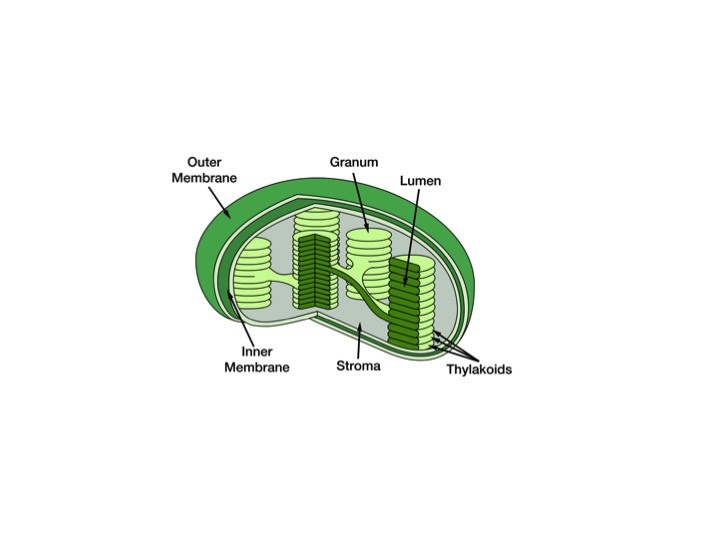
Chloroplasts are...
a)
Structures of animal cells to produce ATP
b)
Organelles where lipids are elaborated
c)
Specialized structures of plants where food is made
d)
Waste organelle of plants
31.
What are the reactants in cellular respiration?
a)
Carbon Dioxide, Water, Sunlight
b)
Glucose, Oxygen
c)
Carbon Dioxide, Water, ATP
32.
What are the products in cellular respiration?
a)
Carbon Dioxide, Water, Sunlight
b)
Glucose, Oxygen
c)
Carbon Dioxide, Water, ATP
33.
The first step of cellular respiration is always
a)
The Kreb's Cycle
b)
Glycolysis
c)
the electron transport chain
d)
Fermentation
34.
What type of fermentation occurs in the cells of humans?
a)
Alcoholic
b)
Lactic Acid
35.
What organelle makes most of the ATP and is called the power plant of the cell?
a)
ribosomes
b)
lysosomes
c)
organelles
d)
mitochondrion
36.
Photosynthesis ______ glucose while cellular respiration ______ glucose.
a)
builds; breaks apart
b)
breaks apart; builds
37.
Photosynthesis _______ energy while cellular respiration ______ energy.
a)
uses; releases
b)
releases; uses
c)
uses; uses
d)
releases; releases
38.
What type(s) of cells perform cellular respiration?
a)
all cells
b)
animals
c)
plants
d)
bacteria
39.
What is the product of glycolysis?
a)
Pyruvic Acid
b)
Citric Acid
c)
glucose
d)
ADP
40.
Plants (Select all that apply)
a)
Perform Photosynthesis
b)
Perform Cellular Respiration
c)
Perform Lactic Acid Fermentation
d)
Perform Alcoholic Fermentation
100 %

