
 Worksheets
2nd Nine Week Study Guide
Total questions: 89
Worksheet time: 3580secs
Name
Class
Date
1.

what is this?
a)
convergent
b)
divergent
c)
transform
d)
subduction
2.

what is this ???
a)
tranform
b)
divergent
c)
convergent
d)
subduction
3.

what is this ????
a)
transform
b)
divergent
c)
convergent
d)
divergent
4.

what is this???
a)
subduction
b)
convergent
c)
diversion
d)
transform
5.
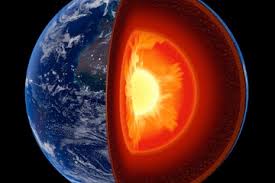
As you travel from the inner core to the crust, how would temperature, pressure and density of the material change?
a)
The would all increase
b)
The would all decrease.
c)
They would stay the same.
d)
Temperature would decrease, but pressure and density would increase.
6.
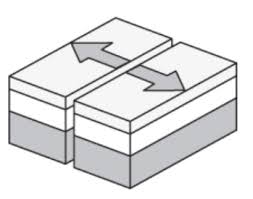
Name the boundary
a)
convergent boundary
b)
divergent boundary
c)
transform boundary
d)
sergent boundary
7.
A subduction zone is formed...
a)
when one tectonic plate sinks below another
b)
at every type of convergent plate boundary
c)
at every type of divergent plate boundary
d)
at transform boundaries
8.
Whenever a subduction zone is formed a ______ is formed.
a)
Mountain
b)
Island Arc
c)
Rift
d)
Volcano
10.
Plate movement is caused by ______________.
a)
the rotation of the Earth
b)
ocean tides
c)
convection currents in the mantle
d)
the moon's gravity
10.
Plate movement is caused by ______________.
a)
the rotation of the Earth
b)
ocean tides
c)
convection currents in the mantle
d)
the moon's gravity
11.
What are mid-ocean ridges?
a)
A chain of underwater waterfalls
b)
A chain of underwater volcanos
c)
A chain of underwater mountains
d)
A chain of underwater rocks
12.
What does the theory of continental drift state?
a)
The continents were once joined in a super-continent and have moved over time
b)
Continents are stationary and do not move
c)
The Earth is broken into lithospheric plates that move due to convection currents
d)
none of the above
13.

Who is the person credited with developing the theory of continental drift?
a)
Harry Hess
b)
Galileo
c)
Alfred Wegener
d)
Newton
14.
This layer of Earth is the thickest part
a)
crust
b)
outer core
c)
mantle
d)
inner core
15.
What is Pangaea?
a)
The name of a German Scientist
b)
the name of the supercontinent that existed millions of years ago
c)
another name for continental drift
d)
the name of an ancient fossil
16.
What was the name given to all the continents when they were joined as one super continent?
a)
Supreme Continent
b)
Eurasia
c)
Plate tectonics
d)
Pangea
17.
Which of these layers is ALL solid iron and nickle?
a)
inner core
b)
outer core
c)
lithosphere
d)
mesosphere
18.

Which layer of Earth is located above the outer core?
a)
crust
b)
inner core
c)
mantle
d)
lithosphere
19.
The layer that makes up most of the earth's mass and volume is the
a)
crust
b)
mantle
c)
core
d)
asthenosphere
20.
Which of the following occurs because of convection currents?
a)
Tectonic plates on the crust move.
b)
The mantle increases in size.
c)
Pressure in the crust increases.
d)
Pressure in the crust decreases.
21.

Scientists think that convection currents that move the plates flow in Earth's
a)
Continental crust
b)
Oceanic crust
c)
Asthenosphere
d)
Lithosphere
22.
The mantle of Earth is made partly of magma. When magma rises and sinks, this is called ______________.
a)
a conduction current
b)
a hot spot
c)
a volcanic eruption
d)
a convection current
23.
What is the order of the layers?
a)
inner core, lithosphere, mesosphere, outer core, asthenosphere
b)
asthenosphere, lithosphere, mesosphere, outer core, inner core
c)
lithosphere, asthenosphere, mesosphere, outer core, inner core
d)
crust, core, mantle
24.
If you traveled from the center of Earth to the surface, the pressure would...
a)
increase
b)
decrease
c)
stay the same
d)
unsure
25.

Which liquid is the least dense?
a)
oil
b)
water
c)
syrup
d)
plastic bottle
26.

Which box has a higher density?
a)
Box A
b)
Box B
c)
cannot be determined
d)
they are the same
27.
The huge pieces of the Earth's crust are called
a)
crust
b)
plates
c)
directions
d)
seismos
28.
What type of plate boundary would you expect to see: Subduction, trench, destructive earthquakes, volcanic island chains, and destruction of lithosphere.
a)
Convergent Ocean-Ocean
b)
Convergent Continental-Ocean
c)
Divergent Ocean-Ocean
d)
Convergent Continental-Continental
29.
Mountains form from ...
a)
plates sliding past one another
b)
collision of plates
c)
plates moving away from each other
30.
Created by a divergent boundary.
a)
Rocky Mountains
b)
Mariana Trench
c)
Mid Atlantic ridge
32.
During sea floor spreading, molten material rises up from the mantle...
a)
along the continents
b)
at the mid ocean ridges
c)
deep ocean trenches
d)
at north and south poles
32.
During sea floor spreading, molten material rises up from the mantle...
a)
along the continents
b)
at the mid ocean ridges
c)
deep ocean trenches
d)
at north and south poles
33.
Fossils of a particular animal species have been found in both southern Africa and South America but nowhere else. Which of the following is MOST LIKELY the reason why?
a)
The fossils evolved into different organisms
b)
The climate changed and became much colder.
c)
In the past, Africa and South America were part of the same continent
d)
In the future, Africa and South America will be part of the same continent.
34.
What is most likely to occur when a plate carrying continental crust collides with a plate carrying continental crust?
a)
Both crusts subduct, forming a trench
b)
Both crusts subduct to create a mountain range
c)
Neither crust subduct and mountains are created
d)
The continental crust will subduct and recycle the continental crust.
35.
What is soil?
a)
A mixture of minerals
b)
A mixture of water, minerals, gases and organic matter
c)
A type of rock
d)
A type of bacteria
36.
Where can you find soil?
a)
Only on dry land
b)
Only on the bottom of oceans and lakes
c)
Covering all earth's surface
d)
Covering earth's surface only at low elevation
37.
What does weathering mean?
a)
To form or create new
b)
To build up
c)
To break down
d)
To completely destroy
38.
Why is soil important to plants?
a)
Plants extract water from the soil
b)
Plants extract nutrients from the soil
c)
Plants anchor themselves in the soil
d)
All of the above
39.
Which of the following is not a major weathering factor?
a)
Plants
b)
Animals
c)
Water
d)
Wind
40.
What is the most important property of soil?
a)
Colour
b)
Texture
c)
Density
d)
Consistency
41.
Which soil texture is made of tiny or fine particles (less than 0.002mm)?
a)
Sand
b)
Silt
c)
Clay
42.
Which of the following is not a living thing found in soil?
a)
insects
b)
plants
c)
water
d)
bacteria
43.
Which of the following nonliving parts of soil was once living?
a)
rocks and sediments
b)
minerals
c)
organic matter
d)
water
44.
Soil is made up of
a)
living things only
b)
living and nonliving things
c)
nonliving things only
45.
The very top layer of soil is mostly made of
a)
Solid rock
b)
Clay and mineral deposits
c)
A mixture of minerals and organic material
d)
Mostly organic material (humus)
46.
What do we call the layers of soil?
a)
Deposits
b)
Horizons
c)
Minerals
d)
Rocks
47.

Which horizon is made up of partially weathered rocks?
a)
Horizon A
b)
Horizon B
c)
Horizon C
d)
Horizon D or R
48.

In which horizon is most of the HUMUS?
a)
Horizon A
b)
Horizon B
c)
Horizon C
d)
Horizon D or R
49.

Which type of soil contains equal parts of sand, silt, and clay?
a)
humus
b)
loam
c)
peat
d)
equilizing dirt
50.
There is an unlimited supply of fertile soil.
a)
True
b)
False
54.
The non-decomposed organic material that lies on top of the A Horizon is called...
a)
Trash
b)
Stuff
c)
Litter
d)
Dog poop
52.

Wind blowing dirt and sand through the air is an example of...
a)
weathering
b)
erosion
53.
Which type of soil can hold the greatest amount of water?
a)
sand
b)
silt
c)
clay
d)
loam
54.
The non-decomposed organic material that lies on top of the A Horizon is called...
a)
Trash
b)
Stuff
c)
Litter
d)
Dog poop
55.
Soil that is rich in humus has high
a)
fertility.
b)
water content.
c)
sand content.
d)
clay content.
56.
You dig a small hole in the soil and the next day it rains. The hole fills with water, but does not empty even after several days of dry weather. What is the soil mostly made of?
a)
clay
b)
sand
c)
humus
d)
silt
57.

Soil is made of
a)
weathered rocks and minerals
b)
dead plants and animals
c)
air and water
d)
all of the above
58.

_______ is the type of soil used most often with plants and on farms. It is a mixture of clay, sand, and silt.
a)
loam
b)
humus
c)
soil
d)
dirt
59.

Are there minerals in soil?
a)
Yes
b)
No
60.
How does freezing water cause the weathering of rocks? The freezing water—
a)
keeps the rocks in place
b)
makes the rocks last longer
c)
expands cracks and breaks rocks
d)
causes rocks to fall in landslides
61.
The process that breaks down rocks and other materials on Earth's surface is called
a)
weathering
b)
erosion
c)
soil conservation
d)
decomposition
62.

What is mechanical weathering?
a)
Process through which rocks are physically broken into smaller pieces.
b)
Rocks are broken down through chemical changes.
c)
Rocks are worn away from acid in plant roots.
d)
Rocks broken down by machinery.
63.
Which type of climate will have faster chemical weathering?
a)
Hot and Wet
b)
Cold and Dry
c)
Hot and Cold
d)
Cold and Wet
64.

The diagrams shows a rock with water trapped in the cracks during the day and at night.
Which statement best explains why this process results in weathering?
Which statement best explains why this process results in weathering?
a)
frozen water acts as a solute
b)
water expands when it freezes
c)
the mass of water increases when it freezes
d)
frozen water dissolves most types of rock
65.
Rust that forms on rocks or metal because of extended exposure to oxygen is what example of chemical weathering?
a)
carbon dioxide (carbonic acid)
b)
acid rain
c)
oxygen
d)
living organisms
66.

What are the two factors that affect the rate at which weathering occurs?
a)
climate and mass of rock
b)
climate and size of rock
c)
type of rock and size of rock
d)
type of rock and climate
67.
This type of weathering occurs when rocks weaken then break down due to chemical changes in the composition of the rock.
a)
mechanical weathering
b)
chemical weathering
c)
erosion weathering
d)
deposition
68.
This type of weathering occurs when rock is physically broken down into smaller pieces of rock.
a)
mechanical weathering
b)
chemical weathering
c)
erosion weathering
d)
deposition
69.
Rocks along a riverbed that are smoothed from continuously moving water and sediment rubbing against them is an example of:
a)
mechanical weathering
b)
chemical weathering
70.
Potholes forming in the road after a cold winter is an example of:
a)
mechanical weathering
b)
chemical weathering
71.
What is the process of moving sediments from location to another?
a)
Deposition
b)
Erosion
c)
Weathering
d)
Compaction
72.
The process of breaking up Earth's surface into sediment is called...
a)
sediment
b)
erosion
c)
weathering
d)
deposition
73.
What is sediment?
a)
the process of rocks being broken down and carried away
b)
bits of rock, sand, and silt caused by the weathering of rocks
c)
the top layer of the soil
d)
decaying plant or animal material
74.

How do plants weather rocks?
a)
during photosynthesis
b)
when roots grow into cracks of rocks and expand the rock
c)
when the plant moves water from the roots to the leaves
d)
Plants don't weather rocks
75.
Which agents break down earth materials?
a)
wind only
b)
earthquakes and gravity
c)
ice and 007
d)
wind, water, and ice
76.
How does vegetation in the soil affect the rate of erosion?
a)
It doesn't affect erosion.
b)
It decreases erosion.
c)
It increases erosion.
77.
Which practice would cause erosion?
a)
Not using good farming practices
b)
Skiing
c)
Placing silt fences around building sites
d)
Filling gullies with rocks
78.
The process when soil or rock are left or placed in a new location.
a)
Erosion
b)
Weathering
c)
Mass movement
d)
Deposition
79.
At the beach which agent of erosion affects the coast?
a)
Wind
b)
Water
c)
Animals
d)
Gravity
80.
What are examples of mass movement?
a)
Landslides and mudflows
b)
Slumps
c)
Creeps
d)
All of these
81.
What is the cause of mass movement?
a)
Chemical weathering
b)
Abrasion
c)
Erosion
d)
Gravity
86.

What creates the u-shaped valley in a mountainous area?
a)
continental glacier
b)
morraine
c)
alpine glacier
d)
arete
89.
A glacier is a large mass of
a)
water
b)
soil
c)
rocks
d)
ice
84.
When a glacier moves across land it picks up rocks. This process is called
a)
abrasion
b)
plucking
c)
landslide
d)
creep
85.
What small streams and rivers that flow into the main river are called.
a)
Meanders
b)
Gullies
c)
Rills
d)
Tributaries
86.
What creates the u-shaped valley in a mountainous area?
a)
continental glacier
b)
morraine
c)
alpine glacier
d)
arete
87.
If soil and debris are moving slowly downhill it is called a
a)
glacier
b)
slump
c)
creep
d)
landslide
88.
The rapid movement of water, soil, and rocks downhill is called a
a)
mudflow
b)
landslide
c)
slump
d)
creep
89.
A glacier is a large mass of
a)
water
b)
soil
c)
rocks
d)
ice
100 %

