
 Worksheets
6th Grade End of the Year Review
Total questions: 84
Worksheet time: 59mins


The Law of Conservation of Energy states that
energy is always created and destroyed.
energy is neither created or destroyed, it just moves and transforms.
energy is always created; but never destroyed or transformed.

What affects the gravitational potential energy of an object?
mass and volume
length and width
height and mass
height and weight

Which action below is converting electrical to thermal energy?
An electric vacuum cleaner
An electric toothbrush
An electric toaster

Energy of motion is
potential energy
kinetic energy
elastic energy
chemical energy

When a ball bounces, when does kinetic energy convert into potential energy?
When the ball moves downward
When the ball moves upward
When the ball is in constant motion
When the ball is still
When a ball bounces, when does potential energy convert into kinetic energy?
When the ball moves downward
When the ball moves upward
When the ball is in constant motion
When the ball is still

When the temperatures of materials that are in contact are the same, the materials are said to be in
thermal balance
equality
a powerful situation
thermal equilibrium

____________________ occurs when snowflakes melt in your warm hands.
convection
conduction
radiation
thermal balance
When snowflakes melt in your hand, thermal energy (or heat) moves from _____________________ to ___________________
your hand to the air
your warm hand to the snowflake
the snowflake to the air
from the warm air to the snowflake

Heat transfer is really neat; it always goes from ________ to _________
cold to hot
cold to warm
lukewarm to warmer
hot to cold

_______________ is when heat is transferred (or moves) through electromagnetic waves. This can occur in air or space.
radiation
conduction
convection
rotation

______________________ occurs when energy changes from one form to another.
Energy transformation
Energy transfer
Energy balance
Energy equilibrium

_____________________ occurs only in gases and liquids. This is one way heat transfers from one place to another.
Conduction
Convection
Radiation
Containment

_______________________ is stored energy to position or arrangement of particles in an object.
kinetic energy
potential energy
thermal energy
electrical energy

How does heat transfer when noodles are cooked on the stove?
Heat moves from the water to the noodles to the stove
Heat moves from the stove to the air to the noodles
Heat moves from the stove to the pot to the water to the noodles
Heat moves from the pot to the air to the stove to the noodles

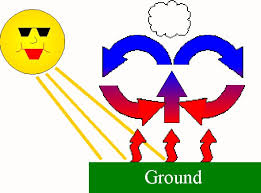


Which of the following is true regarding warm and cool air?
warm air is more dense than cool air, so it rises
cool air is more dense than warm air, so it sinks
warm air is less dense than cool air, so it sinks
cool air is less dense than warm air, so it rises
The movement of air from an area of high pressure to an area of low pressure is called...
humidity
pressure
precipitation
wind
Which best describes the Coriolis Effect?
Wind moving at different speeds as a result of cool temperatures
Wind moving in vertical lines because it is warmed by the atmosphere
Wind bouncing against the Earth
Wind traveling in curved lines due to the rotation of the Earth
What happens with precipitation when a cold front leaves the area?
summer
snow
storm
clearing
Which is the best description of a jet stream?
Slow moving underwater current
Slow moving air that moves across the Earth
Fast moving underwater current
Fast moving air that moves across the Earth
Weather is primarily caused by which of the following?
Moon's pull on the Earth
Uneven heating of the ocean
Differential heating of the Earth's surface
None of the above
Identify the layer of the atmosphere in which weather occurs.
Biosphere
Thermosphere
Stratosphere
Troposphere
What happens to the temperature when a cold front moves in?
It gets warmer
It gets colder
It gets cold and warm
It stays the same
What happens with precipitation when a warm front leaves the area?
major storm
light rain
no precipitation
hurricane

What front does this symbol represent?
warm
cold
stationary
occluded

What front does this symbol represent?
warm
cold
stationary
occluded

What front does this symbol represent?
occluded
warm
stationary
cold

What front does this symbol represent?
cold
occluded
stationary
warm

What type of front is shown above?
occluded
stationary
warm
cold

What type of front is shown above?
warm
cold
stationary
occluded

What type of front is shown above?
stationary
occluded
warm
cold

What type of front is shown above?
cold
warm
occluded
stationary
Warm air has what type of density?
high
low
medium
no density
Cold air has what type of density?
high
low
medium
no density

