
 Worksheets
Earth Science
Total questions: 88
Worksheet time: 3hrs 37mins
Name
Class
Date
1.
Where is most of the freshwater found on Earth?
a)
lakes
b)
glaciers
c)
oceans
d)
rivers
2.
How are salts added to the ocean?
a)
precipitation
b)
evaporation
c)
erosion from land
d)
density
3.
Physically breaking down rocks and materials is called__________weathering.
a)
Chemical
b)
Mechanical
c)
Biological
d)
Permeable
4.
Soil formation begins with the weathering of_______.
a)
Humas
b)
Subsoil
c)
Litter
d)
Rock
5.
The layer of soil which the topsoil is found.
a)
Horizon A
b)
Horizon B
c)
Horizon C
d)
Horizon D or R
6.
The MAIN thing Decomposers do for the the soil is the following:
a)
Store moisture
b)
Burrow deep in the soil
c)
Make space for air and water
d)
Break down and digest dead organisms
7.
Decayed organic material in soil is called______.
a)
Litter
b)
Silt
c)
Humus
d)
Clay
8.
The movement of rocks and weathered materials is called_________.
a)
Chemistry
b)
Physical
c)
Weathering
d)
Erosion
9.
Soil conservation includes all of the following EXCEPT_______.
a)
Desertification
b)
Contour plowing
c)
Terracing
d)
Crop rotation
10.
Topsoil which contains the HUMUS is the soil layer best for growing plants.
a)
True
b)
False
11.
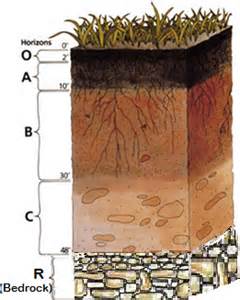
Which horizon is made up of partially weathered rocks?
a)
Horizon A
b)
Horizon B
c)
Horizon C
d)
Horizon D or R
12.
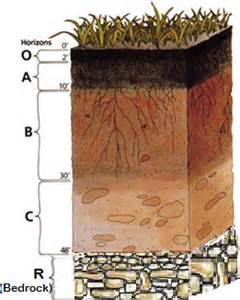
In which horizon is most of the HUMUS?
a)
Horizon A
b)
Horizon B
c)
Horizon C
d)
Horizon D or R
13.

Fossils are made by
a)
Plants dying
b)
Animals or plants are imprinted on a layer of sedimentary rock
c)
Breaking down of rocks
14.
Which of the following is not a renewable resource?
a)
water
b)
plant
c)
petroleum
d)
sun
15.
Which of the following is a nonrenewable resource?
a)
natural gas
b)
plants
c)
sun
d)
water
16.
Which tells what is in common between renewable and nonrenewable resources?
a)
They both have unlimited supply.
b)
They both develop over hundreds of millions of years.
c)
They both replenish quickly
d)
They both give us energy and electricity.
17.
Which defines a mineral?
a)
1 or more minerals that many contain organic substance.
b)
Made up of the same molecules.
c)
Substance that makes up rocks.
18.
How much of the earth's water is freshwater?
a)
50 %
b)
3 %
c)
97 %
d)
93 %
19.
Ocean's cover what percent of the Earth's surface?
a)
70 %
b)
60 %
c)
10 %
d)
none of the above
20.
What is the first layer of the atmosphere?
a)
Mesosphere
b)
Troposphere
c)
Thermosphere
d)
Exosphere
21.
Where weather happens
a)
Troposphere
b)
Stratosphere
c)
Mesosphere
d)
Thermosphere
22.
Ozone layer is located here
a)
Trosphere
b)
Thermosphere
c)
Stratosphere
d)
Mesosphere
23.
Space shuttle orbits here
a)
Mesosphere
b)
Stratosphere
c)
Thermosphere
d)
Troposphere
24.
Which is the most thinnest layer of the earth?
a)
Mantle
b)
crust
c)
Bread crust
d)
Pizza crust
25.
This layer of Earth is solid Iron and Nickel
a)
Outer Core
b)
Mantle
c)
Inner Core
d)
Crust
26.
What is the name of the layer that contains the uppermost mantle and crust
a)
Asthenosphere
b)
Mesosphere
c)
Lithosphere
d)
Transosphere
27.
This layer of Earth is the thickest part
a)
crust
b)
outer core
c)
mantle
d)
inner core
28.

Identify layer #20.
a)
mantle
b)
pizza crust
c)
inner core
d)
outer core
29.
The upper and lower mantle stay solid because of the intense _____________ at that layer.
a)
Temperature
b)
Pressure
c)
Gravity
d)
Density
30.
The lithosphere is made up of which two layers?
a)
Upper and Lower Mantle
b)
Upper Mantle and Crust
c)
Core and Mantle
d)
Crust and Uppermost Mantle
31.
97% of the water on the earth's surface is
a)
fresh water
b)
frozen water
c)
ground water
d)
salt water
32.
Which soil type would be fertile for growing the majority of plants?
a)
organic and mineral
b)
pebbles and gravel
c)
light and sandy
d)
clay ad silt
33.
Which material is a mineral
a)
silt
b)
fossil
c)
diamond
d)
shale
34.
Glaciers dropping rock and sand to form moraines (deposition of debris)
a)
Weathering
b)
Erosion
c)
Deposition
35.
Caves being formed by acid rain dissolving underground limestone
a)
Weathering
b)
Erosion
c)
Deposition
36.
Flood water pounding against a canyon wall and wearing it down
a)
Weathering
b)
Erosion
c)
Deposition
37.
What is the correct order of making and dropping off of sediments?
a)
weathering, erosion, deposition
b)
erosion, weathering, deposition
c)
weathering, deposition , erosion
38.
The lithosphere consists of the –
a)
upper mantle and the crust.
b)
lower mantle and the outer core.
c)
inner and outer core.
d)
crust and the entire mantle.
39.
What is a destructive force?
a)
A natural process that destroys land
b)
A natural process that creates land
c)
A natural process where areas that are normally dry is covered in water
40.
A constructive force is defined as
a)
a natural occurrence that can build up or break down
b)
an earthquake or a volcano
c)
a natural force that builds up and creates new land
d)
a destructive force that has been controlled
41.
An area of new land at the mouth of a river.
a)
Sand Dune
b)
Delta
c)
Fault
d)
Glacier
42.
A hill of sand, made and shaped by wind.
a)
Sand Dune
b)
Delta
c)
Fault
d)
Volcano
43.
Where do deltas form?
a)
Desert Areas
b)
At river mouths
c)
On the Banks of Rivers
d)
In Valleys Formed by Glaciers
44.
How were the Hawaiian islands formed?
a)
by an earthquake
b)
by volcanoes
c)
by tidal waves
d)
by wind erosion
45.
Which does NOT cause erosion?
a)
water
b)
sunlight
c)
wind
d)
ice
46.
Why are the rocks and pebbles found in riverbeds usually smooth?
a)
The rocks are very old.
b)
Animals in the river keep rubbing against the rocks.
c)
Rivers only flow where rocks are smooth.
d)
The rocks are worn smooth by rubbing against other rocks.
47.
Which example shows how Earth's surface has been changed by fast-moving water?
a)
earthquake
b)
canyon
c)
volcano
d)
freshwater lake
48.

What does a glacier create?
a)
V shaped valleys
b)
U shaped valleys
c)
Big valleys
d)
small valleys
49.

A glacier is a slowly moving mass of __________.
a)
rock
b)
wind
c)
ice
d)
sediment
50.
The process that breaks down rocks and other materials on Earth's surface is called
a)
weathering
b)
erosion
c)
soil conservation
d)
decomposition
51.
Levees have been built along much of the Mississippi River. What is the purpose of a levee?
a)
to help control flooding
b)
to help control wildlife
c)
to help prevent erosion
d)
to allow traffic to cross the river
52.
A levee is a human-made feature that is designed to reduce the damage done by
a)
earthquakes
b)
landslides
c)
lightning
d)
floods
53.
A levee is a human-made feature that is designed to reduce the damage done by
a)
earthquakes
b)
landslides
c)
lightning
d)
floods
54.

Match the following words to the pictures
a)
Constructive Forces
b)
Destructive Forces
c)
Weathering
d)
Human Intervention
55.

Match the following words to the pictures
a)
Constructive Forces
b)
Destructive Forces
c)
Weathering
d)
Human Intervention
56.

Match the following words to the pictures
a)
Constructive Forces
b)
Destructive Forces
c)
Weathering
d)
Human Intervention
57.

Match the following words to the pictures
a)
Constructive Forces
b)
Destructive Forces
c)
Weathering
d)
Human Intervention
58.
When the moon is in between the earth and the sun it is a
a)
New Moon
b)
Full Moon
c)
First Quarter
d)
Third Quarter
59.
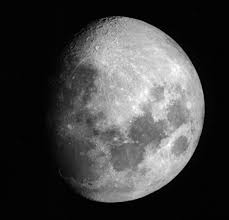
Name the moon phase
a)
waning crescent
b)
waxing crescent
c)
waning gibbous
d)
waxing gibbous
60.
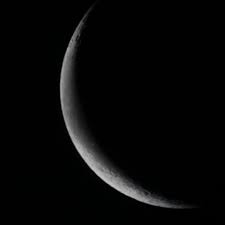
Name the moon phase
a)
waning crescent
b)
waxing crescent
c)
waning gibbous
d)
waxing gibbous
61.
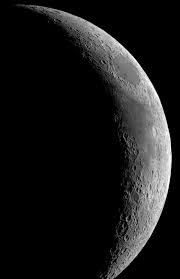
Name the moon phase
a)
waning crescent
b)
waxing crescent
c)
waning gibbous
d)
waxing gibbous
62.
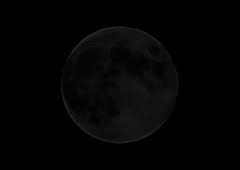
Name the moon phase
a)
First Quarter
b)
Last Quarter
c)
New Moon
d)
Full Moon
63.
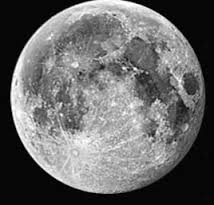
Name the moon phase
a)
First Quarter
b)
Last Quarter
c)
New Moon
d)
Full Moon
64.
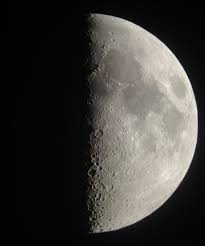
Name the moon phase
a)
First Quarter
b)
Last Quarter
c)
New Moon
d)
Full Moon
65.
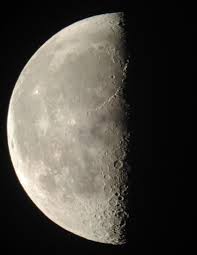
Name the moon phase
a)
First Quarter
b)
Last Quarter
c)
New Moon
d)
Full Moon
66.
Why does the Moon have different phases?
a)
It follows the Sun around the Earth.
b)
It moves around the Earth.
c)
It moves around the Sun.
67.
We can see the light shining on the Moon during the New Moon Phase.
a)
True
b)
False
68.
The Moon gets its light from the
a)
Earth
b)
Stars
c)
Sun
69.
How many phases does the moon go through?
a)
4
b)
8
c)
10
d)
16
70.
How long is a lunar month?
a)
30
b)
29.5
c)
27
d)
27.3
71.
Phases of the moon in which the moon appears to be getting larger are referred to as _.
a)
waxing
b)
waning
c)
new
d)
eclipse
72.
As the moon's shape appears to get smaller, we say that the moon is _.
a)
swelling
b)
waxing
c)
waning
d)
disappearing
73.

Which weather instrument is this?
a)
Wind Vane
b)
Anemometer
c)
Thermometer
d)
Rain Gauge
74.

Which weather instrument is this?
a)
Wind Vane
b)
Anemometer
c)
Barometer
d)
Thermometer
75.

Which weather instrument is this?
a)
Rain Gauge
b)
Thermometer
c)
Wind Vane
d)
Anemometer
76.

Which weather instrument is this?
a)
Barometer
b)
Thermometer
c)
Wind Vane
d)
Rain Gauge
77.

Which weather instrument is this?
a)
Anemometer
b)
Barometer
c)
Rain Gauge
d)
Wind Vane
78.
You are trying to decide if you should take a jacket with you as you leave the house, which weather instrument should you use?
a)
Thermometer
b)
Wind Vane
c)
Rain Gauge
d)
Barometer
79.
You are wanting to fly a kite and need to know which way the wind is blowing, which instrument would you use?
a)
Anemometer
b)
Theremometer
c)
Wind Vane
d)
Rain Gauge
80.
If you want to determine how much rain you have gotten at your house, which instrument would you use?
a)
Thermometer
b)
Rain Gauge
c)
Anemometer
d)
Wind Vane
81.
You see that the weather is changing and your eats begin to pop, which instrument could tell us if the atmospheric pressure is changing?
a)
Thermometer
b)
Anemometer
c)
Barometer
d)
Wind Vane
82.
The weather forecast tomorrow says there will be a 15 mph northeast wind and a high temperature of 52 degrees. What three instruments will a meteorologist use to make this prediction?
a)
anemometer, wind vane, thermometer
b)
barometer, hygrometer, wind vane
c)
thermometer, satellite image, hygrometer
d)
wind vane, satellite image, barometer
83.
As weathering eats away pockets of limestone underground, what are likely to form?
a)
underground rivers
b)
domes
c)
faults
d)
caves
84.
Which geographical feature is formed by water erosion?
a)
plain
b)
sand dune
c)
volcano
d)
canyon
85.
Levees have been built along much of the Mississippi River. What is the purpose of a levee?
a)
to help control flooding
b)
to help control wildlife
c)
to help prevent erosion
d)
to allow traffic to cross the river
86.
What does reduce mean?
a)
make bigger
b)
add things
c)
make smaller
d)
make different
87.
What does reuse mean?
a)
Use again
b)
Throw away
c)
To buy again
d)
To make again
88.
What does recycle mean?
a)
Make smaller
b)
Make bigger
c)
Converting waste into something that can be used again.
d)
Throw away
100 %

