
 Worksheets
Earth Science Mini Assessment Review
Total questions: 85
Worksheet time: 1hrs 8mins
Name
Class
Date
1.

The remains of living things that died long ago are often found in what type of rock?
a)
igneous rocks
b)
sedimentary rock
c)
metamorphic rock
d)
all rocks
2.

The cooled and hardened magma from volcanoes form what rocks?
a)
igneous
b)
sedimentary
c)
metamorphic
d)
fossils
3.

The thickest layer of Earth is the ___ where it is so hot that the rock there is soft.
a)
inner core
b)
crust
c)
outer core
d)
mantle
4.

Hot, molten rock inside the earth is called ...
a)
lava
b)
magma
c)
igneous rock
d)
minerals
5.

Once magma reaches the earth's surface, it is called __________.
a)
a vent
b)
minerals
c)
igneous rocks
d)
lava
6.

Large rocks can be broken down into smaller rocks by wind and water. These small rocks can break down into very tiny pieces called _______.
a)
minerals
b)
pebbles
c)
sediments
d)
chalk
7.

Rocks that are buried deep in the earth can be changed into an entirely new rock when it goes through what?
a)
weathering and erosion
b)
pressing and cementing
c)
heat and pressure
d)
cooling and hardening
8.

A never ending process by which rocks are changed from one type to another.
a)
weathering and erosion
b)
rock cycle
c)
heat and pressure
d)
pressing and cementing
9.

1. What will happen if an igneous rock is put under an extreme amount of heat and pressure?
a)
it will melt into lava
b)
it will weather and erode
c)
it will become a metamorphic rock
d)
it will become a sedimentary
10.

This rock formed when bits of other rocks became pressed into a solid. What type of rock is it?
a)
Sedimentary Rock
b)
Metamorphic Rock
c)
Igneous Rock
11.
What are the 3 major types of rocks?
a)
Igneous, Metamorphic, Sedimentary
b)
Metamorphic, Igneous, Cementation
c)
Brown, Red, Gray
d)
Streak, Hardness, Breakage
12.
What process is used to form sedimentary rocks?
a)
Lava cools and hardens to form a rock.
b)
Weathering, Erosion, Deposition, Compaction, Cementation
c)
Extreme heat and pressure from inside the Earth turn rocks into new rocks.
d)
Magma trapped under the Earth's surface cools and solidifies.
13.
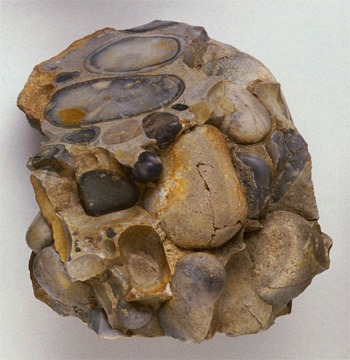
This rock was formed by smaller pieces of rock that settled at the bottom of a lake millions of years ago. What type of rock is this?
a)
Sedimentary
b)
Igneous
c)
Metamorphic
14.
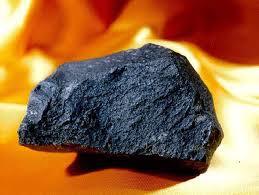
This rock was found near the mouth of a volcano. What type of rock is this?
a)
Sedimentary
b)
Igneous
c)
Metamorphic
15.
What is deposition?
a)
Dropping off sediment
b)
Movement of sediment
c)
Breaking down of sediment
16.

The process when rocks break into smaller pieces due to exposure to natural elements is called
a)
erosion
b)
weathering
c)
sediments
d)
deposition
17.
The movement of weathered material (sediment) is called?
a)
weathering
b)
erosion
c)
deposition
d)
cementation
18.
True or False: Once a rock is sedimentary, it cannot become an igneous rock.
a)
True
b)
False
19.

This rock started as lava that cooled and then was heated and put under pressure over time. What type of rock is this?
a)
Sedimentar
b)
Igneous
c)
Metamorphic
20.

Each rock type can follow only one pathway of the rock cycle.
a)
True
b)
False
21.
Sedimentary rock is formed through the process of
a)
Cementation
b)
Stratification
c)
Erosion
d)
Foliation
22.
naturally occurring solid mixture of one or more minerals and organic matter
a)
deposion
b)
erosion
c)
rock
d)
rock cycle
23.
Pure substances that cannot be broken down into simpler substances by ordinary chemical means
a)
Compound
b)
Element
c)
Molecule
d)
Crystals
24.
A naturally occurring, inorganic solid which has a definite crystalline structure
a)
Mineral
b)
Element
c)
Compound
d)
Rock
25.
The three groups of rocks are classified by
a)
How they form
b)
Color
c)
Grain size
d)
Chemical Composition
26.
What is the name of the layer that contains the uppermost mantle and crust
a)
Asthenosphere
b)
Mesosphere
c)
Lithosphere
d)
Transosphere
27.
This layer of Earth is the thickest part
a)
crust
b)
outer core
c)
mantle
d)
inner core
28.
What are the two types of crust
a)
continental and oceanic
b)
ocean and upper
c)
lower and upper
d)
pizza and subway
29.
What is the inner core composed of?
a)
Basalt
b)
Granite
c)
Solid Metals
d)
Molten (liquid) Metals
30.
Which layer of Earth is the thinnest?
a)
Crust
b)
Mantle
c)
Inner Core
d)
Outer Core
31.
Which layer of the earth is between the core and the crust?
a)
Crust
b)
Mantle
c)
Outer Core
d)
Inner Core
32.
Which layer of the earth has the lowest temperature?
a)
Crust
b)
Mantle
c)
Outer Core
d)
Inner Core
33.
Which layer of the earth is under the highest pressure?
a)
Crust
b)
Mantle
c)
Outer Core
d)
Inner Core
34.
This layer of the earth is made up of soft solid rock that flows in convection currents.
a)
crust
b)
lithosphere
c)
asthenosphere
d)
outer core
35.
This part of the Earth has the greatest temperature
a)
crust
b)
mantle
c)
outer core
d)
inner core
36.
The Earth's solid inner core is surrounded by the hot, molten metal of which layer?
a)
Mantle
b)
Outer Core
c)
Crust
d)
Lithosphere
37.
Which of the following occurs because of convection currents?
a)
Tectonic plates on the crust move.
b)
The mantle increases in size.
c)
Pressure in the crust increases.
d)
Pressure in the crust decreases.
38.
Which type of plate boundary would cause mountains to form?
a)
Transform
b)
Convergent
c)
Divergent
d)
Reform
39.
The Great Rift Valley in Africa and the Mid-Ocean Ridge were all created by this boundary
a)
Divergent
b)
Convergent
c)
Reform
d)
Transform
40.
Earthquakes and volcanoes are most likely found in which locations?
a)
At plate boundaries
b)
in oceans
c)
in the middle of continents
d)
in the middle of plates
41.
The Himalayas in Asia are an example of what type of plate boundary?
a)
divergent
b)
continent-to-continent convergent
c)
ocean-to-continent convergent
d)
transform
42.
Transform boundaries are most likely to produce what phenomenon?
a)
volcanoes
b)
deep sea trenches
c)
underwater mountain ranges
d)
earthquakes
43.
When an oceanic plate and a continental plate collide, which one will subduct?
a)
oceanic
b)
continental
c)
neither
44.
The area where two tectonic plates meet.
a)
mantle
b)
focus
c)
plate boundary
d)
convection
45.
A continental rift(crack) valley can be formed from stretching continental crust at...
a)
transform plate boundaries
b)
convergent plate boundaries
c)
divergent plate boundaries
d)
all plate boundaries
46.

What is the name of the plate boundary that slides past each other?
a)
Divergent
b)
Convergent
c)
Transform
d)
Mr. C the Slide Man
47.

Which of these events can ONLY happen on a DIVERGENT BOUNDARY?
a)
Rift Valley
b)
Mountain
c)
A peninsula
d)
An Insanely complex, long answer that you will click out of instinct.
48.
The type of plate boundary where two plates come together is a .....
a)
Convergent Boundary
b)
Divergent Boundary
c)
Transform Boundary
d)
Plate Boundary
49.
Which of the following causes Earth's tectonic plates to move?
a)
Energy from the Sun
b)
Magnetic Pole Reversal
c)
Convection currents in the mantle
d)
Faults in Mountain Ranges
50.
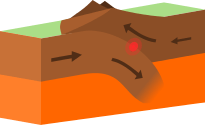
What type of plate boundary is this?
a)
Plate
b)
Divergent
c)
Convergent
d)
Transform
51.

What type of event will occur at this boundary?
a)
Earthquake
b)
Volcano Eruption
c)
Tornado
d)
Mountain Building
52.
The lithosphere combines what two layers?
a)
Asthenosphere and Crust
b)
Crust and Upper Mantle
c)
Mantel and Asthenosphere
d)
Inner and Outer Core
53.

What kind of plate boundary is shown here?
a)
divergent
b)
convergent
c)
transform
d)
strike slip
54.
When the sea floor spreads apart, volcanoes and ridges are formed because
a)
underwater earthquakes form them
b)
sediments deposit forming ridges
c)
less dense magma moves to the surface as the plates pull apart
d)
ocean water pushes down surrounding sea floor pushing up the ridges
55.
Tectonic plates that have continental crust on them are
a)
thin and dense
b)
mostly made of basalt
c)
thicker and less dense
d)
not found in the Northern Hemisphere
56.
Volcanoes and trenches are common along what type of boundary?
a)
transform
b)
divergent
c)
convergent
57.
Less dense material will do the following:
a)
It will rise upwards or go on top of more dense material.
b)
It will sink below more dense material.
c)
It will always slide side-by-side with more dense material.
d)
Become more dense when heated.
58.
_____________ was a super continent that existed between 200 and 300 million years ago until it began to slowly drift apart.
a)
samorinea
b)
tentoria
c)
juaguilla
d)
pangaea
59.
The machine used to measure the strength of seismic waves is called a _____________.
a)
telegraph
b)
seismograph
c)
autograph
d)
quake-graph
60.
A destructive wave created by underwater earthquakes of volcanoes is called a ___________.
a)
hurricane
b)
tundra
c)
typhoon
d)
tsunami
61.

Layer B is _____
a)
crust
b)
mantle
c)
outer core
d)
inner core
62.
The asthenosphere is described as_______.
a)
sticky goo
b)
plastic putty like material
c)
water
d)
solid metal
63.
What does the theory of continental drift state?
a)
The continents were once joined in a super-continent and have moved over time
b)
Continents are stationary and do not move
c)
The Earth is broken into lithospheric plates that move due to convection currents
d)
none of the above
64.
This layer of Earth is the thickest part
a)
crust
b)
outer core
c)
mantle
d)
inner core
65.
During sea floor spreading, molten material rises up from the mantle...
a)
along the continents
b)
at the mid ocean ridges
c)
deep ocean trenches
d)
at north and south poles
66.
Oceanic crust is
a)
Younger and less dense than continental crust
b)
Thinner, younger and more dense than continental crust
c)
Older, thicker and less dense that continental crust
d)
Bigger and younger than continental crust
67.
When plates in the crust shift, a(n) ___________ can occur.
a)
earthquake
b)
landslide
c)
volcano
d)
deposition
68.
Rocks go through a series of continuous changes, this is known as ________________.
a)
landslide
b)
flooding
c)
rock cycle
d)
soil cycle
69.
The crust is the __________________layer of the earth.
a)
innermost
b)
liquid
c)
outermost
d)
cycle
70.

Plate 1
a)
Indo-Australian
b)
Pacific Plate
c)
South American
d)
Eurasian
71.

Plate 2
a)
Indo-Australian Plate
b)
Pacific Plate
c)
South American Plate
d)
Eurasian Plate
72.

Plate 3
a)
North American Plate
b)
South American Plate
c)
African Plate
d)
Eurasian Plate
73.

Plate 4
a)
North American Plate
b)
African Plate
c)
Antarctic Plate
d)
Nazca Plate
74.

Plate 5
a)
Indo-Austrailian
b)
South American
c)
African
d)
North American
75.

Plate 6
a)
South American
b)
Antarctic
c)
African
d)
Nazca
76.

Plate 7
a)
Pacific Plate
b)
Eurasian Plate
c)
African Plate
d)
Nazca Plate
77.

Plate 8
a)
North American
b)
South American
c)
Antarctic Plate
d)
African
78.

Earth has five layers based on physical properties. The diagram below shows these five layers.
Which letter represents the asthenosphere, the soft layer on which the tectonic plates move?
Which letter represents the asthenosphere, the soft layer on which the tectonic plates move?
a)
A
b)
B
c)
C
d)
D
79.
How is the outer core of Earth different from the inner core?
a)
The outer core is solid, and the inner core is liquid.
b)
The outer core is liquid, and the inner core is solid.
c)
The outer core is made of nickel, and the inner core is made of iron.
d)
The outer core is made of iron, and the inner core is made of nickel.
80.

Earth has five layers based on physical properties. The diagram below shows these five layers.
Which letter represents the mesosphere?
Which letter represents the mesosphere?
a)
B
b)
C
c)
D
d)
E
81.
Imagine you could travel in a straight line through Earth from a point on one side and come out on the other side. What compositional layer would you travel through in the exact center of Earth?
a)
Core
b)
Crust
c)
Lithosphere
d)
Mesosphere
82.
How is the outer core of Earth different from the inner core?
a)
The outer core is solid, and the inner core is liquid.
b)
The outer core is liquid, and the inner core is solid.
c)
The outer core is made of nickel, and the inner core is made of iron.
d)
The outer core is made of iron, and the inner core is made of nickel.
83.

The illustration below shows some of Earth's tectonic plates. The arrows indicate the direction in which some of these plates are moving.
Based on the direction of the Cocos Plate, what type of plate boundary likely exists between the Cocos Plate and the Caribbean Plate? (Hint: Step 1. Analyze the likely relative motions of the Caribbean Plate and the Cocos Plate. Step 2. Relate the relative motions of plates to the type of plate boundary.)
Based on the direction of the Cocos Plate, what type of plate boundary likely exists between the Cocos Plate and the Caribbean Plate? (Hint: Step 1. Analyze the likely relative motions of the Caribbean Plate and the Cocos Plate. Step 2. Relate the relative motions of plates to the type of plate boundary.)
a)
Transform Boundary
b)
Divergent Boundary
c)
Convection Boundary
d)
Convergent Boundary
84.

The map shows where llamas and camels live.
Camels and llamas are very closely related animals that live in places that are very far apart. The relationship between camels and llamas suggests that ________
Camels and llamas are very closely related animals that live in places that are very far apart. The relationship between camels and llamas suggests that ________
a)
air temperatures have gotten higher.
b)
the oceans have gotten larger.
c)
weather patterns have changed.
d)
the continents have drifted.
85.

Study the diagram.
Which two plates on the diagram show a divergent boundary?
Which two plates on the diagram show a divergent boundary?
a)
The Eurasian and Pacific plates
b)
The South American and African plates
c)
The North American and Pacific plates
d)
The South American and Nazca Plates
100 %

