
 Worksheets
Ecology Review
Total questions: 80
Worksheet time: 59mins
Name
Class
Date
1.

Which organism do the owl and the weasel compete for in the food web?
a)
Hawk
b)
Spider
c)
Grasshopper
d)
Shrew
2.

Which of the following is a herbivore?
a)
cricket
b)
frog
c)
hawk
d)
shrew
3.

How many carnivores are shown in this food web?
a)
6
b)
4
c)
5
d)
3
4.
What might happen if you remove a primary consumer from the ecosystem?
a)
There would be more food for secondary consumers.
b)
The number of primary consumers would increase.
c)
The number of plants would increase.
d)
The number of secondary consumers would increase.
5.

Which of the following would be the most likely effect, if there were a sudden increase in the cricket population?
a)
There would be a decrease in the small bird population.
b)
There would be a decrease in the grass/flowers population.
c)
There would be a decrease in the mice population.
d)
There would be an increase in the grass/flowers population.
6.
A consumer that hunts is called:
a)
a producer.
b)
an omnivore.
c)
a predator.
d)
a herbivore.
7.

Which of the following best describes the small bird in the food web above?
a)
primary and secondary consumer
b)
secondary and tertiary consumer
c)
primary consumer only
d)
secondary consumer only
8.
A frog eats a fly. The frog and fly are demonstrating ________.
a)
mutualism
b)
competition
c)
predator/prey
d)
parasitism
9.
A tapeworm inside a dog is
a)
competition
b)
predation
c)
commensalism
d)
parasitism
10.
A tick and a dog have this type of relationship.
a)
mutualism
b)
commensalism
c)
neutralism
d)
parasitism
11.
A symbiotic relationship that involves species having to fight for something they both need or want
a)
competition
b)
predation
c)
commensalism
d)
parasitism
12.
Plants both trying to get sunlight are
a)
commensalism
b)
mutualism
c)
compeition
d)
parasitism
13.

How many primary consumers are there in this food web?
a)
1
b)
2
c)
3
d)
4
14.
Example of a consumer
a)
worm
b)
bacteria
c)
mushroom
d)
hawk
15.
Example of a decomposer
a)
fungus
b)
mouse
c)
plants
d)
frogs
16.
A tree is a ....
a)
composer
b)
decomposer
c)
producer
17.
Humans are considered...
a)
consumers
b)
decomposers
c)
producers
18.
Worms are considered...
a)
producer
b)
consumer
c)
decomposer
19.
Frogs are considered...
a)
consumers
b)
decomposers
c)
producers
20.
Grass is considered a ...
a)
consumer
b)
producer
c)
decomposer
21.

What is a producer?
a)
an organism that gets energy from eating other organisms
b)
an organisms that uses sunlight to make its own food
c)
an organism that gets energy from eating dead organisms, non-living material or waste
d)
an organism that uses chemical energy to make its own food
22.

What is a herbivore?
a)
an animal that gets energy from eating other animals
b)
an organism that gets energy from eating only plants
c)
an animal that gets energy by eating both plants and other animals
d)
an animal that eats only herbs
23.

An organism that gets energy from eating other organisms is a ______________
a)
producer
b)
consumer
c)
decomposer
d)
prey
24.

A connection of food chains with many food energy paths in an ecosystem is a ____________
a)
ecosystem
b)
food web
c)
environment
d)
population
25.

An animal that is hunted and eaten for food is a
a)
predator
b)
prey
c)
population
26.
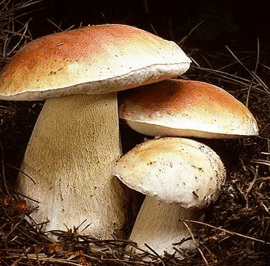
An organism that gets energy from breaking down dead organisms, non-living material or waste
a)
producer
b)
consumer
c)
decomposer
d)
autotroph
27.

What is a carnivore?
a)
an animal that gets energy by eating other animals
b)
An animal that gets energy by eating only plants
c)
an animal that gets energy by eating both plants and animals
d)
an animal that makes its own energy through photosynthesis
28.

An animal that gets energy from eating both plants and animals is a
a)
herbivore
b)
carnivore
c)
omnivore
d)
autotroph
29.

Which of the following is NOT a consumer
a)
grass
b)
dog
c)
shark
d)
fish
30.

Which of the following is a herbivore?
a)
cricket
b)
frog
c)
hawk
d)
shrew
31.

Where do all life forms get their energy?
a)
Earth's Core
b)
Water
c)
Plants
d)
The Sun
32.
The arrows in a food chain or web represents what?
a)
They point to the organism that is being eaten.
b)
It shows how sunlight flows within an ecosystem.
c)
They show what direction the energy is flowing between organisms.
d)
They represent how water is transferred within a habitat.
33.

What is this called?
a)
Food Web
b)
Food Chain
c)
Abiotic Factors
34.

What is this called?
a)
Food Web
b)
Food Chain
c)
Abiotic Factors
35.
If a frog is the prey, what could be the predator?
a)
Grass
b)
Insect
c)
Snake
d)
Snail
36.
What is the name for the organism that eats the primary consumer?
a)
secondary consumer
b)
tertiary consumer
c)
producer
d)
decomposer
37.

In this food chain, what will happen if the frogs become extinct?
a)
The snakes will increase.
b)
The grasshoppers will decrease.
c)
The eagles will remain the same.
d)
The grasshoppers will increase.
38.

A food chain shows the transfer of ___ from one organism to another.
a)
matter
b)
consumers
c)
energy
d)
habitat
39.
Which of the following food chains shows the correct energy flow left to right?
a)
rabbit-coyote-grass
b)
grass-rabbit-coyote
c)
coyote-rabbit-grass
d)
grass-coyote-rabbit
40.
Which organism do the owl and the weasel compete for in the food web?
a)
Hawk
b)
Spider
c)
Grasshopper
d)
Shrew
41.
Which of the following is a herbivore?
a)
cricket
b)
frog
c)
hawk
d)
shrew
42.
Grass is considered a ...
a)
consumer
b)
producer
c)
decomposer
d)
composers
43.
All members of one species in a certain area.
a)
Population
b)
Limiting Factors
c)
Immigration
d)
Birth Rate
44.
The number of births in a population during a certain time period.
a)
Birth Rate
b)
Death Rate
45.
The number of deaths in a population during a certain time period.
a)
Birth Rate
b)
Death Rate
46.
If the birth rate is _________ than the death rate then the population will ____________.
a)
Greater/Increase
b)
Greater/Decrease
47.
If the death rate is ______ than the birth rate then the population will ____________.
a)
Greater/Increase
b)
Greater/Decrease
48.
The largest number of organisms that the environment can support.
a)
Carrying Capacity
b)
Limiting Factor
49.
Environmental factors that keep a population from increasing.
a)
Carrying Capacity
b)
Limiting Factors
50.
What happens when an environment reaches its carrying capacity?
a)
Populations will decrease
b)
Resources such as food, water, and space will be unlimited
c)
Populations will increase
d)
Nothing, everything will stay the same.
51.
A living or once-living organisms in an ecosystem is a
a)
population
b)
biotic factor
c)
abiotic factor
d)
community
52.
A nonliving element in an ecosystem is an
a)
animal
b)
abiotic factor
c)
biotic factor
d)
organism
53.
Which of the following is not a biotic factor?
a)
mushroom
b)
air
c)
elephant
d)
coyote
54.
Temperature, light, air, water, and soil are all _____ parts of the environment
a)
alive
b)
biotic
c)
abiotic
d)
living
55.
Limiting factors are sometimes helpful because they can keep the population from getting too large.
a)
True
b)
False
56.
Food, water, sunlight, shelter, and space are resources that are often __________.
a)
limiting factors
b)
wet
c)
messy
d)
found in rocks
57.
Any thing or organism that regulates the size of a population of another organism is known as __________.
a)
a limiting measure
b)
a limiting factor
c)
factorization
d)
materialization of precipitation
58.

A system made up of organisms interacting with one another
a)
biology
b)
abiotic
c)
biotic
d)
ecosystem
59.

A group of the same type of organisms living in the same place at the same time.
a)
threatened species
b)
populations
c)
community
d)
limiting factor
60.

Deserts, mountains, and rivers are all examples of ________.
a)
vacation spots
b)
tundra
c)
ecosystems
d)
wetlands
61.
Conservation uses fewer natural resources so it helps
a)
slow down overpopulation
slow down overpopulation
slow down overpopulation
b)
grow food
c)
prevents habitat destruction
d)
creates habitats
62.
The need for fossil fuels and be reduced by:
a)
alternative energy sources
b)
new oil sources
c)
making new coal
d)
natural gas lines
63.
Resources are conserved by reducing, recycling, and__________________
a)
renaming
b)
reviewing
c)
rebuilding
d)
reusing
64.
saving wetlands and eliminating clearing can help:
a)
stop air pollution
b)
protect habitats
c)
decrease invasive species
d)
eliminate exotic species
65.
Preserving and wise use of resources is called:
a)
industrialization
b)
deforestation
c)
conservation
d)
ecology
66.
Recovering useful material from scrap or garbage is:
a)
renewing
b)
reviewing
c)
reducing
d)
recycling
67.
biodiversity is maintained through protection of
a)
exotic species
b)
habitats
c)
biology
d)
farmers
68.
A natural resource that can be replaced is:
a)
nonrenewable
b)
renewable
c)
generic
d)
organic
69.
The number and variety of organisms in a given place at a given time is called________.
a)
diversity
b)
biodiversity
c)
limiting factor
d)
carrying capacity
70.
natural resource that forms more slowly than it can be used is:
a)
organic
b)
toxic
c)
nonrenewable
d)
renewable
71.
An unwanted change in the environment caused by pollutants is:
a)
garbage
b)
pollution
c)
overpopulation
d)
invasive
72.
When an ecosystem exceeds its carrying capacity, it is:
a)
overpopulated
b)
diminished
c)
biologically diverse
d)
extinct
73.
5 major kinds of pollution are: garbage, chemical, high powered wastes, gases, and___________
a)
dirt
b)
grime
c)
water
d)
noise
74.
habitat destruction can be caused by:
a)
preventing non-point source pollution
b)
preventing point source pollution
c)
deforestation
d)
crop rotation
75.
Human growth population has increased due to:
a)
biodiversity
b)
pollution control
c)
advances in medicine
d)
better air quality
76.
an organism that takes over a new habitat is called:
a)
overwhelming species
b)
detrimental species
c)
exotic species
d)
common species
77.
Scientists say that ________ may cause the earth's temperature to rise by 3 degrees.
a)
global warming
b)
global heating
c)
world warming
d)
world heating
78.
If an animal is nearly extinct, it is ________.
a)
in danger
b)
endangered
c)
dangerous
d)
extinctish
79.
The five major kinds of pollution are gases, noise, garbage,chemicals, and ......
a)
dirt
b)
odors
c)
radiation
radiation
radiation
d)
rain
80.
A ______________ is a material that causes pollution.
a)
pollutant
b)
conservation
c)
compost
d)
plant
100 %

