
 Worksheets
Hydrology Review
Total questions: 83
Worksheet time: 1hrs 11mins
Name
Class
Date
1.
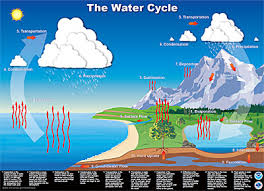
During which stage do clouds form?
a)
condensation
b)
evaporation
c)
precipitation
2.
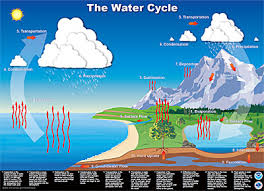
Which stages does liquid water from the ocean turn into water vapor?
a)
condesantion
b)
evaporation
c)
precipitation
d)
run off
3.
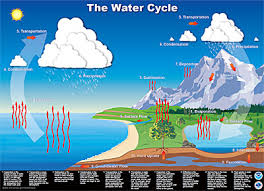
Which stage does ground water try to return to the ocean or soak into the ground?
a)
condensation
b)
evaporation
c)
precipitation
d)
run off
4.
Where is most of the freshwater found on Earth?
a)
lakes
b)
glaciers
c)
oceans
d)
rivers
5.
Which source of freshwater is not easily available for human use?
a)
oceans
b)
freshwater lakes
c)
rivers
d)
icecaps/glaciers
6.
Any type of moisture that falls to the Earth.
a)
evaporation
b)
precipitation
c)
condensation
d)
transpiration
7.
The release of moisture by living plants.
a)
evaporation
b)
precipitation
c)
condensation
d)
transpiration
8.
The flow of water from land into a body of water.
a)
groundwater
b)
headwaters
c)
run-off
d)
infiltration
9.
On which kind of day would you expect the most evaporation from the surface of a pond?
a)
warm, sunny
b)
cold, sunny
c)
warm, rainy
d)
cold, rainy
10.

What is A?
a)
Evaporation
b)
Condensation
c)
Precipitation
d)
Runoff
11.

What is B?
a)
Evaporation
b)
Condensation
c)
Precipitation
d)
Runoff
12.

What is C?
a)
Evaporation
b)
Condensation
c)
Precipitation
d)
Runoff
13.

What is D?
a)
Evaporation
b)
Condensation
c)
Precipitation
d)
Runoff
14.
Which represents the distribution of water on Earth?
a)
3% freshwater, 97% salt water
b)
97% freshwater, 3% salt water
c)
71% freshwater, 29% salt water
d)
29% freshwater, 71% salt water
15.

Most of the Earth's water is in
a)
salty oceans
b)
freshwater lakes
c)
freshwater ponds
d)
glaciers
16.
Wastes produced by agriculture, households, industry, mining, and other human activities can end up in ______________.
a)
groundwater
b)
streams and rivers
c)
oceans
d)
All of these choices
17.
The water cycle is powered by the
a)
sun
b)
wind
c)
air
d)
biomass
18.
When take shorter showers, you are conserving
a)
electricity
b)
water
c)
soap
19.
What is the water cycle?
a)
the 3 forms of water
b)
the movement of water on, above, or below the surface of the Earth
c)
when water melts
d)
when clouds form
20.
When oil, antifreeze, pesticides are poured on the ground, they are harmful because they _______ the groundwater.
a)
freeze
b)
help
c)
pollute
d)
clean
21.
_________ can be polluted by agricultural wastes, including animal wastes, fertilizers, and pesticides.
a)
Groundwater
b)
Homes
c)
Classrooms
d)
Municipal sewage
22.
Washing a full load of laundry is ________________ water.
a)
conserving
b)
wasting
c)
purifying
d)
dirtying
23.
Your beachtowel drying at the beach is an example of __________________.
a)
Transpiration
b)
Precipitation
c)
Condensation
d)
Evaporation
24.
Which of the following is a good way to conserve water at home?
a)
taking long showers
b)
washing the car on a sunny afternoon
c)
running the dishwasher for your favorite bowl
d)
washing the car on a cloudy day
25.
The major warm surface current on the Eastern United States
a)
Gulf Stream
b)
Atlantic Drift
c)
Atlantic Ocean
d)
Caribbean Sea
26.
A large stream of water moving through an ocean
a)
Wave
b)
Tide
c)
Current
d)
Wake
27.
When do neap tides happen
a)
New and Full Moons
b)
1st and 3rd Quarters
28.
When do spring tides happen
a)
New Moon
b)
Full Moon
c)
New and Full Moon
d)
1st and 3rd Quarters
29.
Timing of high tides
a)
Once a day
b)
Twice a day
c)
Three times a day
d)
Four time a day
30.
Cause of surface currents
a)
Sun
b)
Wind
c)
Geothermal Activity
d)
Voklcanic Activity
31.
Cause of deep ocean currents
a)
Differences in Density
b)
Heat from the Sun
c)
Volcanic Activity
d)
Gravity
32.
Description of deep currents in the ocean
a)
Warm, Slow, and More Dense
b)
Warm, Fast, and Less Dense
c)
Cold, Slow and More Dense
d)
Cold, Fast, and Less Dense
33.
The cause of tides
a)
Waves
b)
Currents
c)
Interaction of the Sun, Moon, and Earth
d)
Inertia
34.
The cause of waves at the surface of the ocean
a)
Boats
b)
Wind
c)
Marine life
d)
Geothermal energy
35.
Huge cracks in the ocean floor
a)
Mid-ocean Ridge
b)
Ocean Trench
c)
Guyot
d)
Seamount
36.
Individual mountains of volcanic material on the ocean floor
a)
Volcanic Island
b)
Guyot
c)
Mid-ocean Ridge
d)
Seamount
37.
Mountain Chains on the ocean floor
a)
Ocean Trench
b)
Seamount
c)
Mid-ocean Ridge
d)
Guyot
38.
The large flat, almost level area of the ocean floor
a)
Guyot
b)
Ocean Floor
c)
Abyssal Plain
d)
Seamount
39.
The steep incline of the continental margin
a)
Continental Divide
b)
Continental Shelf
c)
Continental Slope
d)
Continental Divide
40.
The gently sloping section from the shoreline
a)
Continental divide
b)
Continental Shelf
c)
Continental Slope
d)
Continental Margin
41.
The measure of the amount of salt in water
a)
Salinity
b)
Alkalinity
c)
Acidity
d)
Affinity
42.
What is the average salinity of saltwater?
a)
2.5 %
b)
3.0 %
c)
3.5 %
d)
4.0 %
43.
The most abundant salt in seawater
a)
Potassium Chloride
b)
Manganese Chloride
c)
Sodium Chloride
44.
Saving water is called
a)
Salvation
b)
Conservation
c)
Utilization
d)
Immunization
45.
Runoff from a road is an example of
a)
Point Source Pollution
b)
Non-point Source Pollution
46.
Pollution that can be identified from a specific location is called
a)
Point Source
b)
Non-point Source
47.
When a water molecule turns from a liquid to a gas it ____________ energy
a)
Gains
b)
Loses
48.
What is the energy source for the water cycle?
a)
Geothermal
b)
Nuclear
c)
Solar
d)
Wind
49.
The total amount of water on Earth does not change
a)
True
b)
Fals
50.
What is Salinity?
a)
how much salt is in any given liquid
b)
salt on the rocks
c)
how much salt is in takis
51.
What causes deep ocean currents?
a)
moon's gravitational pull
b)
temperature, density, salinity
c)
wind
52.
27. What area of the ocean floor would have the greatest amount of pressure being exerted?
a)
trench
b)
Rift Valley
c)
seamount
53.
What are mid ocean ridges and why are they important?
a)
volcanic islands that are still active
b)
underwater mountain range that creates new sea floor
c)
Part of the Himalayan mountain range
54.
What is porosity?
a)
how the holes change in rocks without water
b)
how much time it takes water to run through rocks
c)
how much water can be held in rocks and other earth's substances
55.
This occurs when there is an abundance of water vapor suspended in the air
a)
frost
b)
heat
c)
humidity
d)
dew
56.
There are many bodies of water in or next to Georgia, including Lake Blackshear and the Atlantic Ocean. What is most likely a difference between the water in Lake Blackshear and the water in the Atlantic Ocean?
a)
The water in Lake Blackshear is always much colder than the water in the Atlantic Ocean.
b)
The water in the Atlantic Ocean is part of the water cycle, but the water in the Lake Blackshear is not.
c)
The water in Lake Blackshear comes from rivers, while the water in the Atlantic Ocean comes from rain.
d)
The water in the Atlantic Ocean contains more dissolved salts than the water in Lake Blackshear.
57.
Of all the water on Earth 3% is freshwater. Which of the following contains the least amount of that freshwater?
a)
groundwater
b)
polar ice cap
c)
lakes and rivers
d)
glaciers
58.
During a very hot, dry summer in Georgia the ground water supply decreases because of this what will happen to the rate of flow in the streams of Georgia?
a)
The rate of flow will increase
b)
The rate of flow will decrease
c)
There is no way to tell what will happen to stream rate of flow.
d)
The rate of flow will remain the same.
59.
Evaporation describes the conversion of liquid water to water vapor. What is transpiration?
a)
The process by which plants chemosynthesize.
b)
. The process by which plants photosynthesize.
c)
The process by which plants release oxygen from their leaves.
d)
The process by which plants release water from their leaves.
60.
What causes the outside of the windshield of a car to get icy on a cold winter night when there is no rain?
a)
Moisture comes from inside the car and freezes.
b)
Water vapor from the air freezes on the glass.
c)
Water that is already on the glass freezes.
d)
Hydrogen and oxygen in the air causes it to freeze.
61.
The salts in the sea come from
a)
weathering and erosion of rocks.
b)
Acid rain
c)
particles falling from space.
d)
organisms living in the sea.
62.
Which shows the order of Earth’s 5 major oceans from largest to smallest?
a)
Atlantic, Pacific, Indian, Southern, Arctic
b)
Indian, Atlantic, Pacific, Arctic
c)
Pacific, Atlantic, Indian, Southern, Arctic
d)
Pacific, Arctic, Indian, Southern, Atlantic
63.
As a wave transfers energy, water particles do what?
a)
stay essentially in the same place, moving up and down.
b)
move in the same direction as the wave.
c)
move in the opposite direction from the wave.
d)
water particles are not affected by energy transfer in waves.
64.
Which of these best describes the cause of waves in the ocean?
a)
high and low tides
b)
evaporation of water
c)
wind blowing across the surface of the ocean
d)
ridges and trenches on the bottom of the ocean
65.
What causes tides but NOT waves and currents?
a)
winds and the moon’s gravity
b)
mostly the moon’s gravitational pull
c)
mostly the sun’s gravity
d)
only winds
66.
What causes density currents in the ocean?
a)
Difference in salinity in the ocean
b)
Difference in temperature in the ocean
c)
Both salinity and temperature in the ocean
d)
Neither salinity or temperature affect density currents.
67.
Which factor creates currents, NOT ocean waves?
a)
wind
b)
earthquakes
c)
moon's gravity
d)
density differences
68.

When we go to beach, we are allowed to go on ____________
a)
continental slope
b)
continental shelf
c)
abyssal plain
d)
sea mount
69.

Label F
a)
continental slope
b)
continental shelf
c)
abyssal plain
d)
sea mount
70.

Label E
a)
continental slope
b)
volcanic island
c)
abyssal plain
d)
sea mount
71.

Label C
a)
continental slope
b)
continental shelf
c)
abyssal plain
d)
sea mount
72.

Label A
a)
continental slope
b)
continental shelf
c)
abyssal plain
d)
sea mount
73.

The land area that supplies water to a river system is called a
a)
water table
b)
trailer
c)
house
d)
watershed
74.
What is an underground layer of rock or soil filled with water called?
a)
Aquifer
b)
Spring
c)
Well
d)
Reservoir
75.
A giant wave
a)
surfing wave
b)
breaker
c)
tsunami
d)
crest
76.
What is a trough?
a)
highest point on a wave
b)
lowest point on a wave
c)
longest point on a wave
d)
shortest point on a wave
77.
What is a crest?
a)
lowest point of a wave
b)
longest part of a wave
c)
shortest part of a wave
d)
highest point of a wave
78.
Water stored below the Earth's surface is called:
a)
Groundwater
b)
Bogs
c)
Water in the ground
79.
What is the most responsible for the presence of groundwater in an area?
a)
the movement of water from a confined aquifer into surface water
b)
movement of surface water and precipitation through soil and rock
c)
the movement of water from streams and rivers to watersheds
d)
the movement of surface water through impermeable rock
80.
A rural, forested area receives a lot of rain in a short amount of time. What would most likely cause potential flooding in the area?
a)
If the area has a large uncharged aquifer beneath it
b)
if the water level in the area is below the zone of saturation
c)
if the ground of the area is already saturated with water
d)
if the ground of the area is mostly sandy soil
81.
The drilling for freshwater increases along coastal areas. What is a likely consequence of this action?
a)
An intrusion of salt water into aquifers
b)
The loss of water resources in estuaries
c)
The destruction of estruaries because of an increase in sea levels
d)
a decrease in salt concentration in inlet waterways
82.
How could a long-term decrease in precipitation impact an area?
a)
it could increase the average water level of lakes in the area
b)
it could increase the amount of flooding in the area
c)
it could decrease the amount of possible infiltration in the area
d)
it could decrease the possible amount of damage to crops in the area
83.
Which results from the unequal heating of the ocean water of Earth?
a)
a constant sea level
b)
changes in tidal patterns
c)
unchanging climate for all regions of Earth
d)
changes in ocean current patterns
100 %

