wayground logo

Free Printable Worksheets

NEW

Font size

S
M
L
XL
Worksheets

Earth in the Universe

Total questions: 80

Worksheet time: 1hrs 22mins

Name
Class
Date
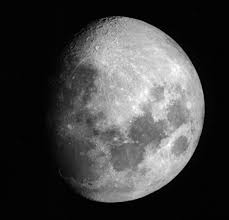
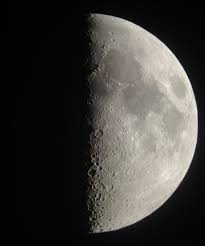
1.
Name the moon phase
a)
waning crescent
b)
waxing crescent
c)
waning gibbous
d)
waxing gibbous
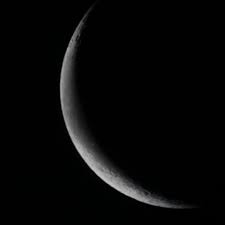
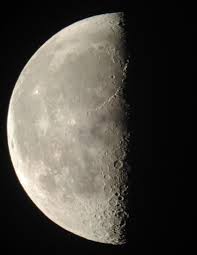
2.
Name the moon phase
a)
waning crescent
b)
waxing crescent
c)
waning gibbous
d)
waxing gibbous
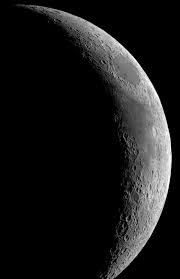
3.
Name the moon phase
a)
waning crescent
b)
waxing crescent
c)
waning gibbous
d)
waxing gibbous
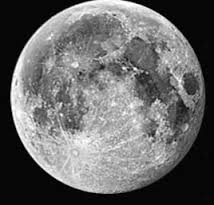
4.
Name the moon phase
a)
waning crescent
b)
waxing crescent
c)
waning gibbous
d)
waxing gibbous
5.
Name the moon phase
a)
First Quarter
b)
Last Quarter
c)
New Moon
d)
Full Moon
6.
Name the moon phase
a)
First Quarter
b)
Last Quarter
c)
New Moon
d)
Full Moon
7.
Name the moon phase
a)
First Quarter
b)
Last Quarter
c)
New Moon
d)
Full Moon
8.
Name the moon phase that would come AFTER this moon.
a)
waning crescent
b)
waxing crescent
c)
waning gibbous
d)
waxing gibbous
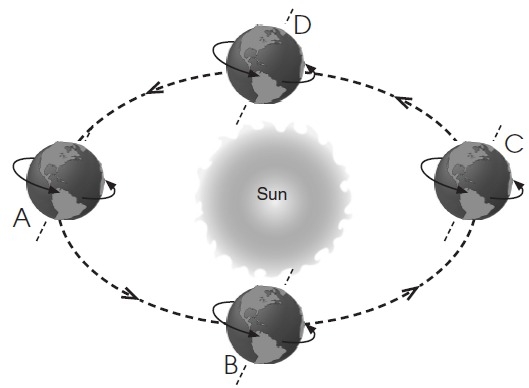
9.
What season is letter A?
a)
Winter
b)
Summer
c)
Spring
d)
Fall
10.
When the Northern Hemisphere is pointing towards the sun, what season is the Southern Hemisphere?
a)
Winter
b)
Spring
c)
Fall
d)
Summer
11.
What are the reasons for the seasons?
a)
Earth's tilt and rotation.
b)
Earth's rotation and revolution.
c)
Earth's tilt and revolution.
d)
Earth's tilt and resolution
12.
Which moon phase is shown in this diagram?
a)
new moon
b)
1st quarter
c)
full moon
d)
last quarter/3rd quarter
13.
Which moon phase is shown in this diagram?
a)
new moon
b)
first quarter
c)
full moon
d)
last quarter/3rd quarter
14.
Tides are caused by ___________
a)
wind
b)
gravitational pull of moon
c)
waves gravitation toward land
d)
rain
15.
Name the phase of the moon for letter a
a)
First Quarter
b)
Last Quarter
c)
Waxing Gibbous
d)
Waning Gibbous
16.
Name the phase of the moon for letter f
a)
Waning Gibbous
b)
Waxing Gibbous
c)
Waning Crescent
d)
Waxing Crescent
17.
A[n] ______________ tide occurs when the sun is at right angles to the line between Earth and the moon. 
a)
high
b)
neap
c)
low
d)
spring
18.
A[n] ___________ tide occurs when the sun, Earth, and the moon are nearly in a line. 
a)
spring
b)
high
c)
low
d)
neap
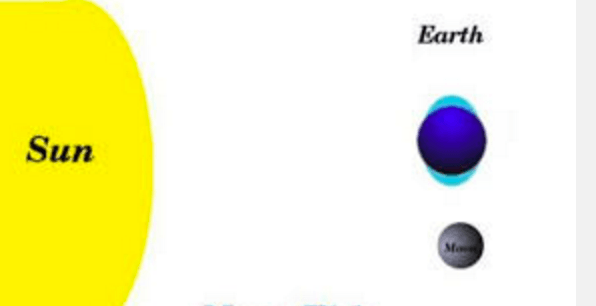
19.

Wha type of tide would this arrangement of earth-moon-sun create?

a)

full moon tide

b)

new moon tide

c)

neap tide

d)

spring tide

20.
What type of tides would this arrangement of earth-moon-sun create?
a)
neap tide
b)
spring tide
c)
new moon tide
d)
full moon tide
21.
How many low tides and high tides happen in a day?
a)
1 low tide, 1 high tide
b)
4 low tides, 4 high tides
c)
3 low tides, 3 high tides
d)
2 low tides, 2 high tides
22.
The Moon has a greater influence on Earth tides than the Sun because...
a)
it is smaller than the Sun
b)
it revolves around the Earth
c)
it is closer to the Earth
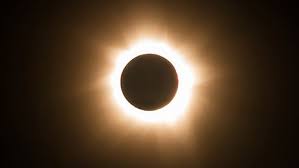
23.
a)
solar eclipse
b)
lunar eclipse
24.
a)
solar eclipse
b)
lunar eclipse
25.
During a solar eclipse...
a)
The sun is blocked
b)
The Earth is blocked
26.
Solar eclipses occur during which Moon phase?
a)
New Moon
b)
Waning Crescent
c)
Waxing Crescent
d)
Waning Gibbous
27.
What is the correct alignment of a solar eclipse?
a)
Sun - Moon - Earth
b)
Sun - Earth - Moon
c)
Earth - Sun - Moon
d)
Moon - Sun - Earth
28.
This is a diagram of the moon phases Which moon phase would a lunar eclipse occur in?
a)
New Moon
b)
1st quarter
c)
Full moon
d)
3rd quarter
29.
The spinning of the Earth on its axis is
a)
rotation
b)
revolution
c)
precession
d)
nutation
30.
What happens when the area in which you live tilts away from the sun?
a)
It is summer.
b)
It is spring.
c)
It is winter.
d)
It is fall.
31.
Which season is taking place in the Northern Hemisphere in Position 2?
a)
Winter
b)
Spring
c)
Summer
d)
Fall
32.
Which season is taking place in the Southern Hemisphere in Position 1?
a)
Winter
b)
Spring
c)
Summer
d)
Fall
33.
What is the Earth's tilt in degrees?
a)
25.3 degrees
b)
32.5 degrees
c)
28.5 degrees
d)
23.5 degrees
34.
The Earth's _______ is an imaginary line that goes from the North Pole to the South Pole.
a)
vernal equinox
b)
axis
c)
solar eclipse
d)
solar flare
35.
How long does Earth take to make a complete rotation?
a)
365 days
b)
24 hours
36.
The order of the planets is:
a)
Mars,Venus,Earth,
Mercury,Saturn
Jupiter, Uranus, Neptune
b)
Earth,Venus,Mars
Jupiter, Neptune,
Mercury,Saturn,
Uranus
c)
Mercury,Venus,Earth
Mars,Jupiter,
Saturn,Uranus
Neptune
37.
Which planet is the largest?
a)
Jupiter
b)
Saturn
c)
Uranus
d)
Neptune
38.
How long does it take the Earth to make one REVOLUTION around the Sun?
a)
12 hours
b)
24 hours
c)

365.25 days

d)
29.5 days
39.

Why don't we have a solar or lunar eclipse every month?

a)

Because the sun sometimes aligns between the moon and Earth

b)

Because the sun is too big to be blocked

c)

Because the moon has a slightly tilted orbit

d)

They DO occur every month, we just don't see them!

40.

The sun appears to move across the sky each day. What causes this?

a)

the spinning of the Earth around its axis

b)

The path of the sun around the Earth

c)

the production the nuclear energy around the sun

d)

the tilt of the Earth on its axis

41.
Earth and the rest of the solar system are located in the galaxy ___________________.
a)
Milky Way
b)
star
c)
Andromeda
42.
What is designed and built to transport people and cargo between Earth and space?
a)
space rocket
b)
space shuttle
c)
space prove
43.
Which tool allows scientists to take pictures very distant objects such as other galaxies, stars, and planets?
a)
telescope
b)
periscope
c)
space shuttle
44.
What space tool leaves a planets orbit and travels to places too dangerous for man. 
a)
solar probe
b)
space probe
c)
spectroscope
45.
A __________________________ is a huge collection of stars, gases, and dust that is classified by shape.
a)
galaxy
b)
Big Bang Theory
c)
light-year
46.
A _________ IS AN UN-CREWED VEHICLE THAT CARRIES SCIENTIFIC INFORMATION AND INSTRUMENTS  TO DISTANCE OBJECTS IN SPACE
a)
SHUTTLE ROCKET
b)
ROCKET
c)
PROBE
d)
PROBE ROCKET
47.
In relation to us, most galaxies are…
a)
Moving toward us
b)
Moving away from us
c)
Not moving
48.
Where does the energy on Earth come from?
a)
Geothermal energy in the Earth's core.
b)
The sun, through radiation.
c)
The sun, through conduction.
d)
The sun, through convection.
49.
Which of these planets is closest to the Earth?
a)
Mercury
b)
Mars
c)
Jupiter
d)
Saturn
50.

What is/are caused by the tilt of the Earth on its axis?

a)

The water cycle

b)

Seasons

c)

Moon phases

d)

Gravity

51.

How long does it take the Earth to make one rotation?

a)

1 year/365 days

b)

1 week/7 days

c)

1 day/24 hours

d)

1 hour/60 minutes

52.

How long does it take the Earth to make one revolution?

a)

1 year/365 days

b)

1 week/7 days

c)

1 day/24 hours

d)

1 hour/60 minutes

53.
Which planet has the most gravity?
a)
Earth
b)
Mercury
c)
Jupiter
d)
Neptune
54.

Which planet is NOT a "gas giant"?

a)

Venus

b)

Uranus

c)

Saturn

d)

Neptune

55.

How long does it take Earth to make a full revolution around the Sun?

a)

1492

b)

367

c)

365.25

d)

360

56.

What is the 4th planet from the Sun?

a)

Earth

b)

Mars

c)

Jupiter

d)

Mercury

57.

What was the first artificial satellite to orbit the Earth?

a)

Apollo 11

b)

Sputnik

c)

NASA

d)

Probe I.S.S

58.
Earth and the other planets closest to the Sun are made mostly of _______
a)
gas
b)
metal
c)
water
d)
rock
59.
Earth's ________ on its axis causes day and night.
a)
rotation
b)
revolution
c)
phase
d)
tilt
60.
The moon is a natural  ______ of Earth.
a)
comet
b)
axis
c)
satellite
d)
space probe
61.
One of the main differences between the outer and inner planets is __________.
a)
The inner planets all have water
b)
the inner planets are much bigger than the outer planets
c)
the outer planets are gas planets
d)
the inner planets have rings, and the outer planets don't
62.
As the Earth travels around the sun, this tilt causes different areas of the Earth’s surface to get different amounts of daylight at different times of the year. The angle of the Sun’s rays to the surface also causes areas to have more or less of the Sun’s energy. This causes the ________.
a)
months
b)
day and night
c)
seasons
d)
years
63.
Imaginary line that runs through Earth. 
a)
orbit
b)
day
c)
tilt
d)
axis
64.
What happens when the area in which you live tilts away from the sun?
a)
It is summer.
b)
It is spring.
c)
It is winter.
d)
It is fall.
65.
Why does the moon appear to shine?
a)
It is like a star and gives off light
b)
it refracts light from space
c)
It reflects light from the sun
d)
It absorbs light from the sun
66.
The Moon has a greater influence on Earth tides than the Sun because...
a)
it is smaller than the Sun
b)
it revolves around the Earth
c)
it is closer to the Earth
67.
Tides are caused by
a)
strong winds that blow over ocean waters.
b)
the interaction of Earth, the moon and the sun.
c)
the shifting of the plates on the ocean floor.
d)
variations in the salinity of ocean water
68.
What do we call a tide that has a large range?
a)
gravity
b)
wind
c)
spring
d)
neap
69.
What do we call the small tides that happen when the sun and moon are at right angles to each other?
a)
Neap Tide
b)
Spring Tide
c)
Larger Change
d)
Smaller Change
70.
The difference in levels of ocean water at high and low tides is the _________________.
a)
low tide
b)
tidal range
c)
high tide
d)
slack water
71.
What planet is closest in size to the Earth? It's also the second from the sun.
a)
Venus
b)
Jupiter
c)
Uranus
d)
Neptune
72.
What planet has rings and is 6th from the sun?
a)
Saturn
b)
Mars
c)
Venus
d)
Mercury
73.
What is this planet that spins on its side and is 7th from the sun?
a)
Uranus
b)
Earth
c)
Jupiter
d)
Venus
74.
What planet is farthest from the sun (8th?)
a)
Neptune
b)
Earth
c)
Mars
d)
Jupiter
75.
In 1972 what space mission was responsible for getting a man on the moon?  
a)
Challenger
b)
Voyager 
c)
Gemini
d)
Apollo 
76.
What scientist use a telescope to observe the night sky and led to him being called the father of astronomy?
a)
Gaileo
b)
Einstein 
c)
Dr. Tyson 
d)
Dr. Wernher von Brauun 
77.

What is the main way the Space Shuttle benefits Space Exploration?

a)

The Space Shuttle is reusable.

b)

The Space Shuttle adds to the cool-factor of Space exploration.

c)

The Space Shuttle can go farther than Saturn.

d)

The Space Shuttle can house up to 100 people.

78.

Which contributes to Earth’s ability to sustain life?

a)

The atmosphere allows all of the sun’s radiation to enter due to Earth’s distance from the sun.

b)

The atmosphere prevents all space debris from reaching the surface due to the ozone layer.

c)

The atmosphere is extremely thin due to the temperatures of the sun.

d)

The atmosphere is breathable due to the unique mixture of gases.

79.

How does gravity support life on Earth?

a)

by forcing Earth to continuously spin on its axis, which contributes to day and night

b)

by causing changes in the distance between Earth and the sun, which contributes to the seasons

c)

by keeping water and gases in the atmosphere close to Earth’s surface, which contributes to life processes

d)

by preventing meteors and comets from hitting Earth’s surface, which protects living organisms from space fragments

80.

Why are people able to see the moon?

a)

The moon produces its own light.

b)

Light from Earth reflects off the moon.

c)

Light from the sun reflects off the moon.

d)

The moon is located between Earth and the sun.