
 Worksheets
Final Exam Review!
Total questions: 82
Worksheet time: 1hrs 11mins
Name
Class
Date
1.

Which is the opposite of condensation?
a)
runoff
b)
evaporation
c)
precipitation
d)
transpiration
2.

Which best explains why runoff is important?
a)
It returns water to other locations on Earth
b)
It increases the chance of flooding
c)
It makes evaporation occur faster
d)
It increases condensation
3.

Snow, sleet, hail, and rain are all examples of ________________.
a)
evaporation
b)
condensation
c)
accumulation
d)
precipitation
4.

What is it called when plants give off water vapor as a waste product?
a)
condensation
b)
evaporation
c)
sublimation
d)
transpiration
5.
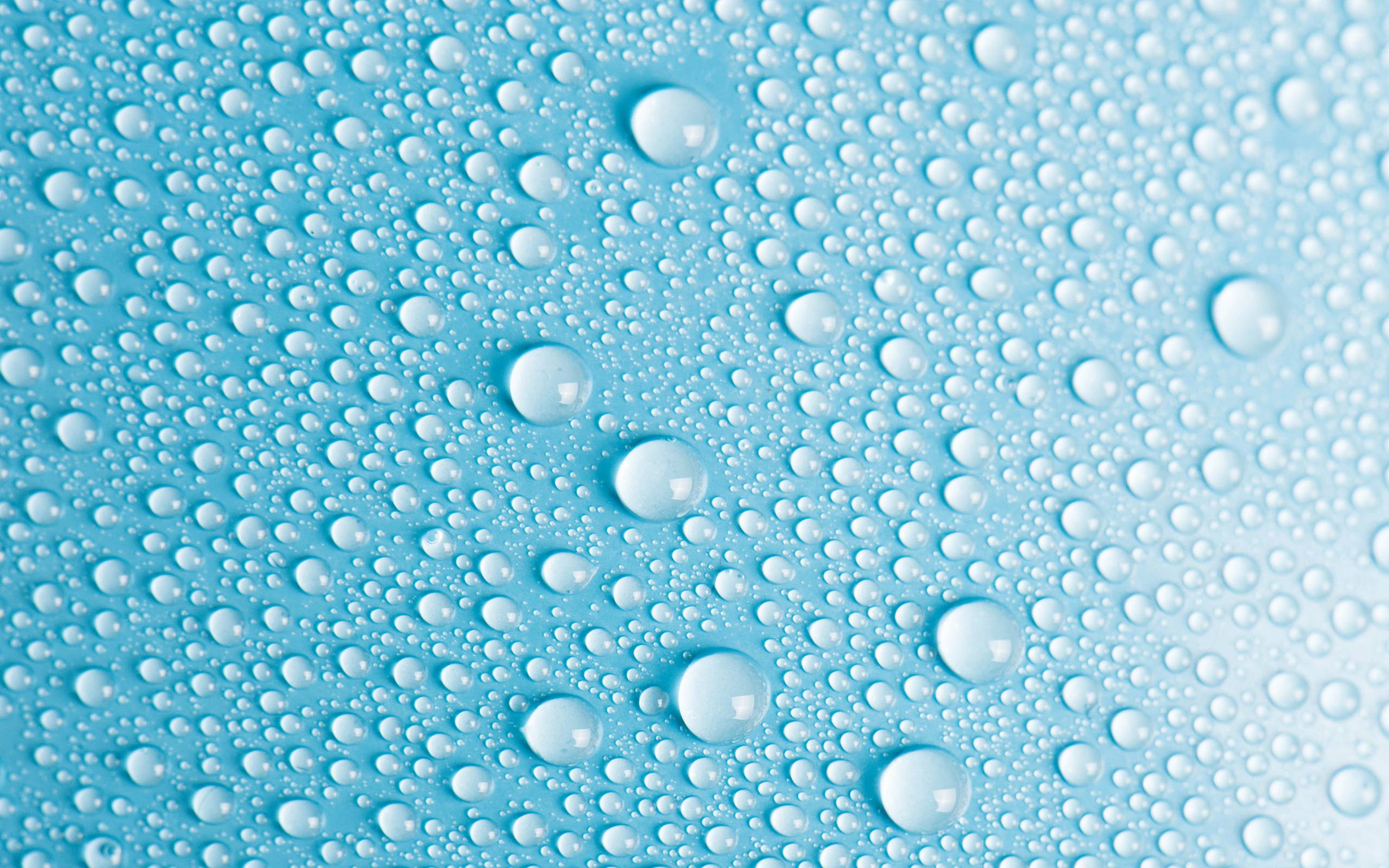
When water _________, dew forms.
a)
Melts
b)
Evaporates
c)
Condenses
d)
Precipitates
6.
When you are building a sand castle on the beach, what feature are you standing on?
a)
abyssal plain
b)
continental shelf
c)
seamount
d)
continental rise
7.
Which of the following describes a trench?
a)
it rises above the water
b)
flat, low lying area of the ocean floor
c)
a stretch of underwater mountains
d)
deep cuts in the ocean floor, canyon-like
8.

What is letter C pointing to?
a)
abyssal plain
b)
seamount
c)
mid-ocean ridge
d)
continental shelf
9.

Letter D is pointing to the...
a)
continental slope
b)
continental shelf
c)
trench
d)
mid-ocean ridge
10.
_____________ is the measure of how salty the ocean's water is.
a)
salinity
b)
solution
c)
coral
d)
plankton
11.
When a cold front is approaching, what happens?
a)
warm air is pushing under cold air causing humid weather and lower temperatures
b)
warm air is pushing under cold air causing humid weather and higher temperatures
c)
warm air rises, cools, and causes rain and thunderstorms
d)
cold air is pushed over warm air causing rain and thunderstorms
12.
In a high pressure area, the weather will likely be
a)
cooler and clear skies
b)
warm but cloudy
c)
cold and rainy
d)
snowy and clear
13.

This is the symbol for which type of front?
a)
cold front
b)
warm front
c)
occluded front
d)
stationary front
14.

This is the symbol for which type of front?
a)
cold front
b)
warm front
c)
stationary front
d)
occluded front
15.

Which type of front is near Seattle?
a)
cold front
b)
warm front
c)
occluded front
d)
stationary front
16.

Which front is located near San Diego?
a)
cold front
b)
warm front
c)
occluded front
d)
stationary front
17.
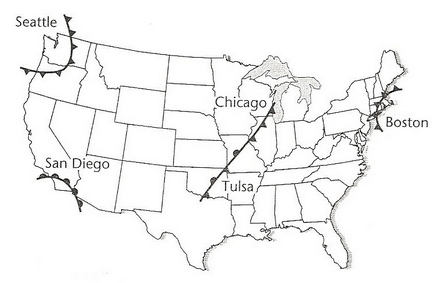
Which type of front is located near Chicago?
a)
warm front
b)
cold front
c)
occluded front
d)
stationary front
18.
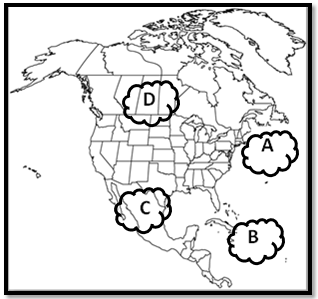
Which type of air would you find at air mass C?
a)
cold, dry
b)
warm, humid
c)
warm, dry
d)
cold, humid
19.
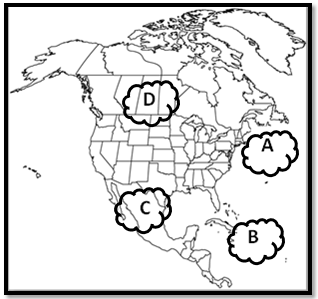
Which type of air would you find at air mass B?
a)
cold, dry
b)
warm, humid
c)
warm, dry
d)
cold, humid
20.
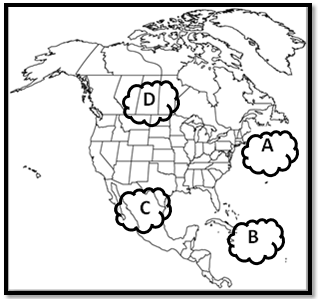
Which type of air would you find at air mass D?
a)
cold, dry
b)
warm, humid
c)
warm, dry
d)
cold, humid
21.
What is a boundary area where air masses meet but do not mix?
a)
low pressure system
b)
super cell
c)
front
d)
high pressure system
22.

What type of storm front is this?
a)
warm front
b)
cold front
c)
stationary front
d)
occluded front
23.

What type of storm front is this?
a)
warm front
b)
cold front
c)
stationary front
d)
occluded front
24.
What characteristics are used to classify air masses?
a)
temperature and humidity
b)
pressure and temperature
c)
latitude and longitude
d)
wind speed and location
25.

Which abbreviation of an air mass can be identified as dry and cold?
a)
cP
b)
mP
c)
cT
d)
mT
26.
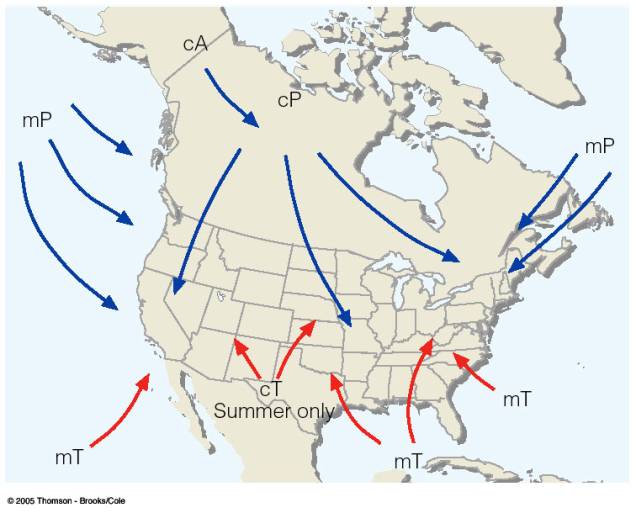
Which abbreviation of an air mass can be identified as warm and moist?
a)
cP
b)
mP
c)
cT
d)
mT
27.
Which abbreviation of an air mass can be identified as cold and moist?
a)
cP
b)
mP
c)
cT
d)
mT
28.
4. An air mass is...
a)
A pocket of air with the same temperature and moisture throughout.
b)
A pocket of convection
c)
A pocket of evaporation
29.
When a warm air mass gently slides on top of a cold air mass, and you have drizzly rain and then warmer weather, what type of front is it?
a)
warm front
b)
cold front
c)
occluded front
d)
stationary front
30.
When a warm air mass is trapped between two cooler air masses, it is called a/an -
a)
warm front
b)
cold front
c)
occluded front
d)
stationary front
31.
A mixture of gases that surrounds Earth is
a)
altitude.
b)
the atmosphere.
c)
thermosphere.
d)
climate.
32.
The __________ is the layer of the atmosphere where we live.
a)
Troposphere
b)
Mesosphere
c)
Stratosphere
d)
Thermosphere
33.
The stratosphere is the home of the ________ ____________ .
a)
purple minions
b)
ozone layer
c)
space aliens
d)
human beings
34.
The coldest layer is the
a)
troposphere.
b)
stratosphere.
c)
mesosphere.
d)
thermosphere.
35.
Convection is the transfer of thermal energy in a __________ motion.
a)
big
b)
circular
c)
up and down
d)
backward
36.
What percent of our atmosphere is nitrogen?
a)
21%
b)
78%
c)
1%
d)
Less than 1%
37.
Which two layers have DECREASING temperature when altitude increases?
a)
Stratosphere and thermosphere
b)
Stratosphere and troposphere
c)
Troposphere and Thermosphere
d)
Mesosphere and troposphere
38.
Why do ocean breezes blow towards the water during the night?
a)
Air over the beach heats up, rises, and is replaced by ocean air.
b)
Air over the water heats up, rises, and is replaced by beach air.
c)
Cool air is less dense and it moves towards the shore.
d)
The density causes ocean air to sink.
39.
An iron being pressed onto a shirt is an example of what type of heating?
a)
Conduction
b)
Convection
c)
Radiation
d)
Convergent
40.
Our ozone protects us from harmful UV rays. Where is it located?
a)
Troposphere
b)
Mesosphere
c)
Thermosphere
d)
Stratosphere
41.
How does the air move in a sea breeze?
a)
wind moves from north to south
b)
wind moves from ocean to the land
c)
wind moves from the land to the ocean
d)
wind moves from south to north
42.
In a sea breeze, the air is warmer above the _____.
a)
land
b)
ocean
c)
sky
d)
beach
43.
What causes global winds and convection in the atmosphere?
a)
continental deflection
b)
the rotation of the Earth
c)
Moon's gravity
d)
unequal heating of the Earth by the sun
44.
Which term is best described as the movement of air from land to sea?
a)
global winds
b)
sea breeze
c)
land breeze
d)
local winds
45.
Land and water absorb and release the sun’s heat in different ways. One result of this is a sea breeze. Which statement is true of sea breezes?
a)
They originate in the day and blow toward the land.
b)
They originate in the day and blow toward the water.
c)
They originate in the evening and blow toward the land.
d)
They originate in the evening and blow toward the water.
46.
What is the darkest inner part of the shadow cone called, where a total eclipse can be viewed.
a)
Total
b)
Umbra
c)
Penumbra
47.
In order to have an eclipse, the Moon, Sun and Earth have to be?
a)
Below each other
b)
Above each other
c)
In alignment
48.
A lunar eclipse can occur only during the _________________.
a)
Full moon
b)
New moon
c)
Waxing moon
49.
A solar eclipse can occur only during the _________________.
a)
Full moon
b)
New moon
c)
Quarter moon
50.
Which type of eclipse occurs when the Moon comes directly between Earth and the Sun?
a)
Lunar eclipse
b)
Solar eclipse
51.
Most places on Earth experience about how many high and low tides in 24 hours?
a)
2 high and 2 low tides
b)
4 high and 4 low tides
c)
1 high and 1 low tides
52.
What type of tide occurs during a new and full moon?
a)
Neap tides
b)
Spring tides
c)
Normal tides
53.
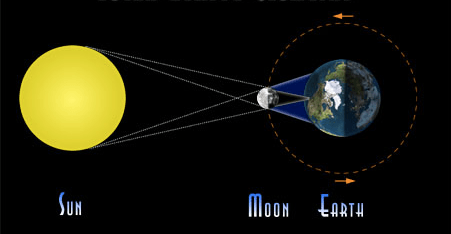
Which type of eclipse is shown in this picture?
a)
Solar Eclipse
b)
Orbit
c)
Lunar Eclipse
d)
Total Eclipse
54.
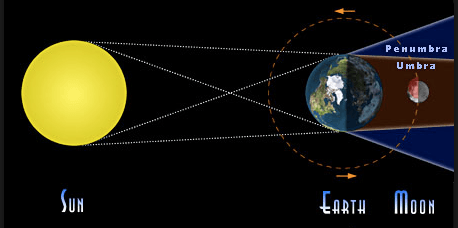
Which type of eclipse is shown in the diagram?
a)
Solar Eclipse
b)
Lunar Eclipse
c)
Total Eclipse
d)
Partial Eclipse
55.
Why do the Sun and Moon appear to be the same size in the sky?
a)
The Sun is 400 times bigger, but the Moon is 100 times closer.
b)
The Sun is 100 times bigger, but the Moon is 400 times closer.
c)
The Sun is 400 times bigger, but the Moon is 400 times closer.
d)
The Moon is 400 times bigger, but the Sun is 400 times closer.
56.
A[n] ___________ tide occurs when the sun, Earth, and the moon are nearly in a line.
a)
spring
b)
high
c)
low
d)
neap
57.

Which body has the greater effect on Earth's tides?
a)
Sun
b)
Saturn
c)
Moon
d)
Venus
58.

What moon phase is this picture?
a)
This is the full moon phase.
b)
This is the waxing gibbous moon phase.
c)
This is the waning gibbous moon phase.
d)
This is the first quarter moon phase.
59.

What moon phase is this picture?
a)
This is the waning crescent phase.
b)
This is the waxing gibbous phase.
c)
This is the waning gibbous phase.
d)
This is the new moon phase.
60.

What is this moon phase?
a)
This is the waxing crescent phase.
b)
This is the full moon phase.
c)
This is the waxing gibbous phase.
d)
This is the last quarter moon.
61.

What moon phase is this picture?
a)
This is the full moon phase.
b)
This is the waxing crescent moon phase.
c)
This is the waning gibbous moon phase.
d)
This is the waning crescent moon phase.
62.

What moon phase is this picture?
a)
This is the new moon phase.
b)
This is the waxing crescent moon phase.
c)
This is the waxing gibbous moon phase.
d)
This is the waning crescent moon phase.
63.
How many phases does the moon go through?
a)
4
b)
8
c)
10
d)
16
64.
As the moon's shape appears to get smaller, we say that the moon is _.
a)
swelling
b)
waxing
c)
waning
d)
disappearing
65.
Phases of the moon in which the moon appears to be getting larger are referred to as _.
a)
waxing
b)
waning
c)
new
d)
eclipse
66.
The cycle of the moon lasts about a _.
a)
day
b)
year
c)
week
d)
month
67.

The moon is a natural ______ of Earth.
a)
comet
b)
axis
c)
satellite
d)
space probe
68.
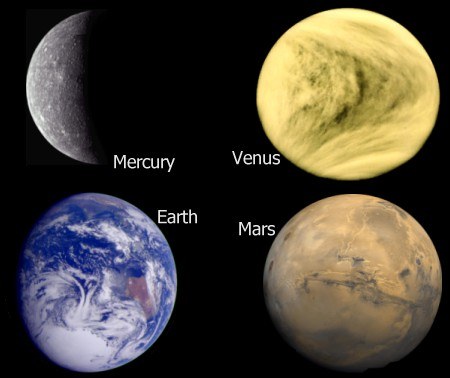
Earth and the other planets closest to the Sun are made mostly of _______
a)
gas
b)
metal
c)
water
d)
rock
69.

Earth's ________ on its axis causes day and night.
a)
rotation
b)
revolution
c)
phase
d)
comet
70.
One of the main differences between the outer and inner planets is __________.
a)
The inner planets all have water
b)
the inner planets are much bigger than the outer planets
c)
the outer planets are gas planets
d)
the outer planets have rings, and the inner planets don't
71.
Where is the asteroid belt found?
a)
between earth and mars
b)
Between Uranus and Neptune
c)
Between Mercury and Venus
d)
Between Mars and Jupiter
72.
Select the order from smallest to largest.
a)
Sun, Milky Way, solar system, universe
b)
Sun, Milky Way, universe, solar system
c)
Sun, solar system, Milky Way, universe
d)
Sun, solar system, universe, Milky Way
73.
Why does Earth have different seasons?
a)
because of the distance between Earth and the sun
b)
because of the speed of Earth as it rotates on its axis
c)
because of the amount of light blocked by the moon on its axis
d)
because of the tilt of Earth on its axis as it moves around the sun
74.
Which best explains why the moon has phases?
a)
The moon’s position changes in relation to the sun and Earth.
b)
The sun’s position changes in relation to the moon and Earth.
c)
The Earth casts a shadow on the moon as it rotates.
d)
The moon rotates along its axis
75.
What are meteors sometimes called?
a)
shooting stars
b)
moons
c)
cows
d)
frorgs
76.

Objects made of ice, gas and dust and orbit our sun are called:
a)
Asteroids
b)
Comets
c)
Meteroids
d)
Meteors
77.
One similarity between asteroids, comets and meteoroids is that they all:
a)
are made of rock
b)
come from the Asteroid Belt
c)
come from the Oort Cloud
d)
orbit the sun
78.
These objects that orbit the sun are nicknamed, "dirty snowballs."
a)
Comets
b)
Asteroids
c)
Meteors
d)
Meteroids
79.

What model does this represent?
a)
Geocentric
b)
Heliocentric
80.

This image shows the:
a)
Geocentric Solar System
b)
Heliocentric Solar System
81.
This person was the first to use a telescope to make observations in the sky -
a)
Aristotle
b)
Ptolemy
c)
Copernicus
d)
Galileo
82.
This person developed the heliocentric theory and was considered the founder of modern astronomy.
a)
Aristotle
b)
Copernicus
c)
Ptolemy
d)
Galileo
100 %

