
 Worksheets
6th Grade Review
Total questions: 77
Worksheet time: 59mins
Name
Class
Date
1.

What heat transfer method is used to get the heat energy from the Sun to the Earth?
a)
conduction
b)
convection
c)
radiation
2.
How long does it take the Earth to make one rotation?
a)
24 hours
b)
12 hours
c)
8 hours
d)
48 hours
3.
What term means one complete turn of the Earth around the sun?
a)
renovation
b)
revolution
c)
rotation
d)
revelation
4.
What gas is most seen in the atmosphere
a)
Carbon Dioxide
b)
Nitrogen
c)
Oxygen
5.
What is the primary source of energy for the Earth?
a)
Coal
b)
Wind power
c)
Natural gas
d)
The sun
6.

Warm air rises and the cool air sinks demonstrates this type of heat transfer.
a)
conduction
b)
convection
c)
radiation
d)
Insolation
7.
Which of the following is a nonrenewable resource?
a)
Solar energy
b)
Wind energy
c)
Biomass
d)
Oil/ petroleum
8.
Which of the following is not a fossil fuel?
a)
coal
b)
oil
c)
uranium
d)
natural gas
9.
Resources that can be replaced in 100 years or less are called......
a)
exaustable
b)
renewable
c)
nonrenewable
d)
recyclable
10.
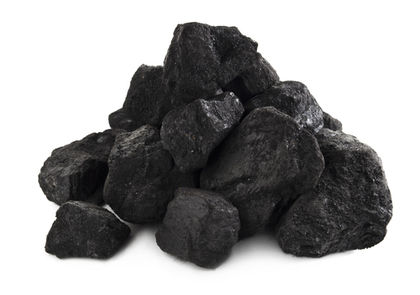
Coal is a __________ energy resource.
a)
Renewable
b)
Nonrenewable
11.
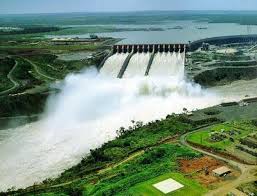
Hyrdo Power is a __________ energy resource.
a)
Renewable
b)
Nonrenewable
12.
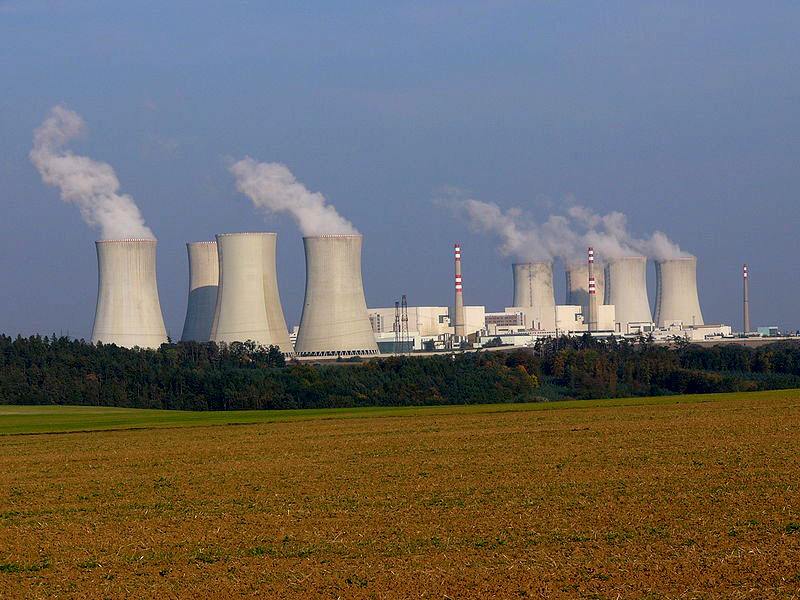
Nuclear Power is a __________ energy resource.
a)
Renewable
b)
Nonrenewable
13.
Which is the best example that something has kinetic energy?
a)
a. a car parked on a steep hill
b)
b. a tennis ball rolling across the court
c)
c. a picture hanging on the wall
d)
d. a piece of coal before it's burned
14.

What kind of energy is in an acorn hanging from an oak tree?
a)
Potential
b)
Kinetic
15.
Which energy transformation occurs in a toaster?
a)
chemical to electric
b)
electric to thermal
c)
kinetic to chemical
d)
thermal to potential
16.

A battery converts what type of energy to another?
a)
sound to kinetic
b)
light to heat
c)
mechanical to electrical
d)
chemical to electrical
17.
___________________ is the type of heat transfer that occurs in fluids, such as warm air rising and cold air sinking; creating wind.
a)
Convection
b)
Conduction
c)
Radiation
d)
insulation.
18.
The handle of a metal spoon warms up when it is placed in a hot bowl of soup because of
a)
Convection
b)
Conduction
c)
Radiation
d)
insulation.
19.
What is the greenhouse effect?
a)
The warming of a planet due to trapped radiation.
b)
The cooling of Earth due to air pollution.
c)
The heating of a solid, such as a rock.
20.
Which of the following lists the layers of the atmosphere from lowest to highest altitude?
a)
Thermosphere, Mesosphere, Stratosphere, Troposphere
b)
Stratosphere, Troposphere, Mesosphere, Thermosphere
c)
Troposphere, Stratosphere, Mesosphere, Thermosphere
d)
Thermosphere, Stratosphere, Ionosphere, Exosphere
21.
This layer is where weather occurs
a)
Troposphere
b)
Stratosphere
c)
Mesosphere
d)
Thermosphere
22.

What part of the water cycle does this picture show?
a)
condensation
b)
precipitation
c)
evaporation
23.
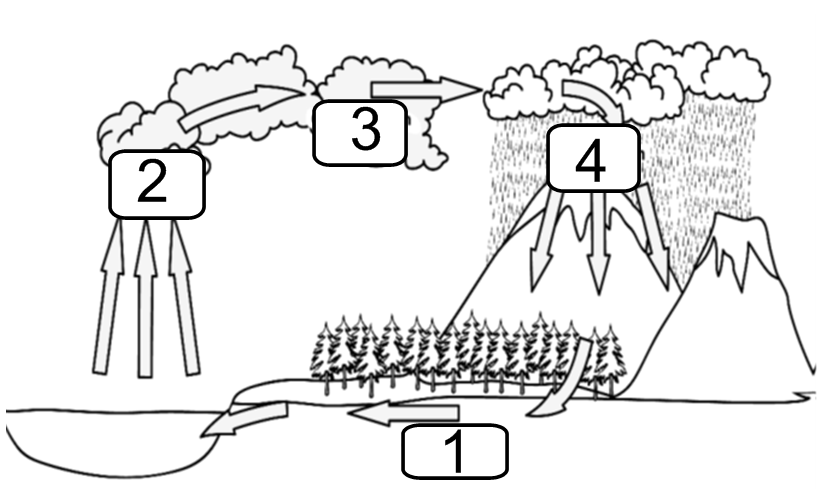
Which stage does the #2 show in the diagram?
a)
condensation
b)
evaporation
c)
precipitation
d)
run off
24.

What general direction will weather fronts move in the United States?
a)
from east to west
b)
from west to east
c)
from north to south
d)
from south to north
25.

Which type of front is near Seattle?
a)
cold front
b)
warm front
c)
occluded front
d)
stationary front
26.
What type of weather does a low pressure system bring?
a)
stormy, cloudy weather
b)
clear skies
27.
Which of the following is NOT required for a hurricane to form
a)
low pressure
b)
rotation
c)
radiation
d)
warm water
28.
What are valence electrons?
a)
electrons on the first orbital always
b)
nucleus
c)
the outermost shell
d)
the number of electrons on the outermost orbital
29.
What charge does the nucleus have and why?
a)
positive - the neutrons do not have a charge
b)
positive - the neutrons and protons are positively charged particles
c)
neutral - the neutral charge dominates the positive charge
d)
neutral - electrons cancel out the positive charge of the atom
30.

The number in the upper corner of an element tile (7 for nitrogen) is called _____
a)
the proton number
b)
the atomic number
c)
the electron number
d)
the mass number
31.
The smallest particle of any particular type of matter is known by which of the following terms?
a)
Compound
b)
Atom
c)
Chemical
d)
Element
32.
The chemical combination of two or more different kinds of atoms in fixed amounts is called a(n)
a)
orbit
b)
compound
c)
mixture
d)
element
33.
The air we breathe contains different individual gases (mostly nitrogen and oxygen). Which of the following correctly describes the air we breathe?
a)
compound
b)
liquid
c)
element
d)
mixture
34.
A physical change is?
a)
It changes the object into something different
b)
Objects or substances undergo a change that does not change their chemical composition
c)
it is just like a chemical reaction
d)
Paper burning
35.
A chemical change is?
a)
a shoe lace cut in half
b)
doesn't change anything
c)
changes the look of an object
d)
change that results in the formation of new chemical substances
36.
What property of water allows it to be such a versatile solvent that it is often called the "universal solvent?"
a)
Purity
b)
Polarity and cohesion
c)
High heat capacity
d)
Expansion upon freezing
37.
Why can water have no net charge but have slight charges in different parts of the molecule?
a)
The oxygen end is slightly negative and the hydrogen end is slightly positive
b)
The hydrogen end is slightly negative and the oxygen end is slightly positive
c)
The hydrogen and oxygen ends change in polarity
d)
Because it is hydrophobic
38.
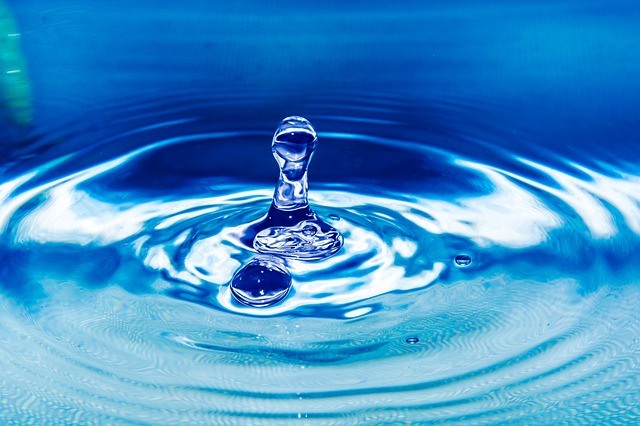
Which is NOT a unique property of water?
a)
Frozen water floats on liquid water.
b)
Water covers most of the Earth’s surface and retains a large amount of heat.
c)
Water molecules stick to each other through hydrogen bonds.
d)
Water cools very rapidly.
39.
What kind of properties can only be observed when a substance changes into a different substance?
a)
physical properties
b)
chemical properties
c)
liquid properties
d)
real properties
40.
Is melting butter for popcorn a chemical or physical change?
a)
chemical
b)
physical
41.
Which of the following is a Chemical Property?
a)
Radicallity
b)
Color
c)
Boiling Point
d)
Reactivity
42.
Which of the following is a Physical Property?
a)
Combustion
b)
Electronegativity
c)
Color
d)
PH Level
43.
This type of weathering occurs when rock is physically broken down into smaller pieces of rock.
a)
mechanical weathering
b)
chemical weathering
c)
erosion weathering
d)
deposition
44.
This type of weathering occurs when rocks weaken then break down due to chemical changes in the composition of the rock.
a)
mechanical weathering
b)
chemical weathering
c)
erosion weathering
d)
deposition
45.
Weeds growing into the cracks in a sidewalk and the sidewalk begins to crumble is an example of:
a)
mechanical weathering
b)
chemical weathering
46.
97% of Earth's water is __________ water.
a)
Fresh
b)
Salt
47.
The harmful effects of water pollution include _________________.
a)
wearing of buildings
b)
food poisoning and diseases
c)
soil erosion
d)
breathing problems
48.
What is an example of agricultural runoff?
a)
fertilizers and pesticides draining into water source
b)
oil and gasoline draining into water source
49.
The state of the atmosphere at any given time is called
a)
climate
b)
weather
c)
forecast
d)
precipitation
50.
the two primary gasses that make up the atmosphere are
a)
oxygen and carbon dioxide
b)
nitrogen and carbon dioxide
c)
ozone and oxygen
d)
oxygen and nitrogen
51.
The layer of the atmosphere that is closest to the Earth's surface and contains all weather is called
a)
ionosphere
b)
stratosphere
c)
troposphere
d)
mesosphere
52.
This gas makes up 78% of the atmosphere
a)
oxygen
b)
nitrogen
c)
ozone
d)
carbon dioxide
53.

Warm air rises because --
a)
it has a higher dew point than the cool air
b)
it is less buoyant than coolair
c)
it contains less water vapor
d)
it is less dense than cool air
54.
What happens to air pressure as you go higher in the atmosphere?
a)
It increases.
b)
It decreases.
c)
It stays the same.
d)
It increases and then decreases.
55.
This layer is where satellites are found.
a)
thermosphere
b)
exosphere
c)
stratosphere
d)
mesosphere
56.
Define climate
a)
Temperature and precipitation
b)
Long term average of weather
c)
Difference of weather from day to day
d)
Short term average of weather
57.
This protects us from harmful UV rays from the sun
a)
Troposphere
b)
Stratosphere
c)
Greenhouse Effect
d)
Ozone Layer
58.
They are highest clouds in the sky. They look curly, white and feathery. Usually mean good weather.
a)
Cumulus
b)
Cumulonimbus
c)
Cirrus
d)
Stratus
59.
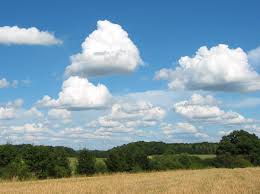
what type of cloud is shown?
a)
cumulus
b)
cirrus
c)
stratus
60.
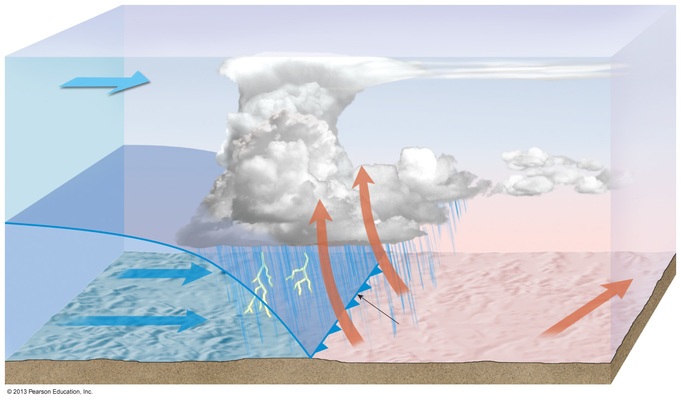
What type of storm front is this?
a)
warm front
b)
cold front
c)
stationary front
d)
occluded front
61.
Which type of front is associated with the front not moving in either direction?
a)
Cold
b)
Warm
c)
Stationary
d)
Occluded
62.
Biotic factors of a watershed are:
a)
Living
b)
Non-living
63.

The land area that supplies water to a river system is called a
a)
water table
b)
trailer
c)
house
d)
watershed
64.

Our watershed is part of a larger watershed called -
a)
Gulf of Mexico
b)
Mississippi Valley Watershed
c)
Chesapeake Bay Watershed
d)
Abemarle Sound
65.
How have humans impacted watersheds?
a)
Industrial pollution
b)
Transportation
c)
Farm waste
d)
All the above
66.
What can make lakes disappear?
a)
condensation
b)
transpiration
c)
eutrophication
d)
photosynthesis
67.
What are the streams and small rivers that feed into a main river called?
a)
watersheds
b)
tributaries
c)
divides
d)
reservoirs
68.
When salt and fresh water mix, what is the new water substance called?
a)
Brackish Acid
b)
Fresh Water
c)
Salt Water
d)
Brackish Water
69.

What is an estuary?
a)
A little body of water.
b)
water in a gaseous form.
c)
Places where fresh water and streams flow into the ocean.
d)
the presence of an unwated msterial in a given place.
70.
Name the planets in order from the one closet to the Sun
a)
Mercury, Venus, Earth, Mars, Jupiter, Saturn, Uranus, Neptune
b)
Neptune, Uranus, Saturn, Jupiter, Mars, Earth, Venus, Mercury
c)
Mercury, Earth, Mars, Venus, Saturn, Jupiter, Uranus, Neptune
d)
Mercury, Venus, Earth, Mars, Jupiter, Saturn, Uranus, Neptune, Pluto
71.
What are the terrestrial planets?
a)
Jupiter, Saturn, Uranus, Neptune
b)
Mercury, Venus, Earth, Mars
c)
Mercury, Earth, Mars, Neptune
d)
Jupiter, Saturn, Earth, Neptune
72.
What are the gaseous planets?
a)
Jupiter, Saturn, Uranus, Neptune
b)
Mercury, Venus, Earth, Mars
c)
Jupiter, Saturn, Uranus, Mars
d)
Mercury Venus, Earth Neptune
73.
Seasons are caused by . . .
a)
The rotation of the Earth
b)
The revolution of the Earth
c)
The Earth's magnetic poles
d)
The tilt of Earth's axis
74.

What Moon phase is this?
a)
Waxing Crescent
b)
Waning Gibbous
c)
Waning Crescent
d)
Waxing Gibbous
75.

What Moon phase is this?
a)
Old Moon
b)
Far Side of the Moon
c)
New Moon
d)
Waxing Gibbous
76.
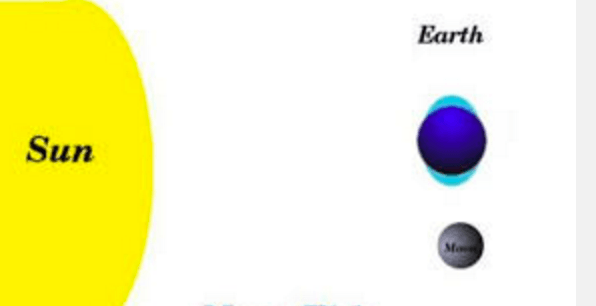
Which moon phase is shown in this diagram?
a)
new moon
b)
1st quarter
c)
full moon
d)
last quarter/3rd quarter
77.

What is a difference between spring and neap tides?
a)
Spring tides occur when the earth and sun are IN LINE with the new or full moon.
b)
Spring tides occur when moon in 3rd or 1st quarter phases
c)
Spring tides are LOWER than neap tides
d)
Spring tides occur in Spring and neap tides can occur in any season
100 %

