
 Worksheets
Earth Sci - Semester I Review
Total questions: 68
Worksheet time: 1hrs 11mins
Name
Class
Date
1.
This layer of Earth is solid Iron and Nickel
a)
Outer Core
b)
Mantle
c)
Inner Core
d)
Crust
2.
All living things on earth are part of the....
a)
Biosphere
b)
Lithosphere
c)
Hydrosphere
d)
Atmosphere
3.

This is part of the....
a)
Geosphere
b)
Atmosphere
c)
Hydrosphere
d)
Cryosphere
4.

What is a convection current?
a)
Rock heats in the lower mantle, hot rock rises, cools at the crust, cool rock sinks, it gets reheated and rises again
b)
Rock heats in the lower mantle, hot rock sinks, it cools down, and sinks some more
c)
The transfer of heat through touch
d)
The process of sea floor spreading
5.

What is the outermost layer of the Earth called?
a)
Crust
b)
Mantle
c)
Outer Core
d)
Inner Core
6.

What layer of the Earth is found beneath the crust?
a)
Crust
b)
Mantle
c)
Outer Core
d)
Inner Core
7.
What is the outer core composed of?
a)
Basalt
b)
Granite
c)
Solid Metals
d)
Molten (liquid) Metals
8.

What are two types of weathering?
a)
Chemical and robotic
b)
chemical and mechanical
c)
mechanical and robotic
d)
robotic and biological
9.
What is a constructive force?
a)
A natural process that builds up land
b)
A natural process that destroys land
c)
A natural process that breaks up rocks and sediment
d)
This ain't the answer!
10.
What is a destructive force?
a)
A natural process that destroys land
b)
A natural process that creates land
c)
A natural process where areas that are normally dry is covered in water
d)
This ain't the right answer!!!
11.
Which is an example of conduction?
a)
Steam is rising from a cup of hot coffee.
b)
A hot biscuit is warming the plate it is on.
c)
The sun is shining through a window and warming a table.
d)
Grilling a hot dog over a campfire.
12.
You are stirring your hot chocolate with a metal spoon, and notices that the spoon is getting hot. This is most likely caused by which type of heat?
a)
conduction
b)
convection
c)
radiation
d)
insulation
13.
Which is an example of radiation?
a)
boiling a pot of noodles for dinner
b)
getting hot from lying in the sun
c)
feeling warm while taking a hot
shower
d)
burning yourself after touching a
hot plate
14.
What is the formula for density?
a)
density = mass x volume
b)
density = mass / volume
c)
density = mass + volume
d)
density = mass - volume
15.

Which box has a higher density?
a)
Box A
b)
Box B
c)
cannot be determined
d)
they are the same
16.
The 0 degree line of latitude is the ___________.
a)
Equator
b)
Prime Meridian
c)
International Date Line
d)
Contour line
17.
The 0 degree mark of longitude is known as the ___________ ______________ measure from Greenwich England.
a)
Equator
b)
Prime Meridian
c)
International Date Line
d)
Contour Line
18.
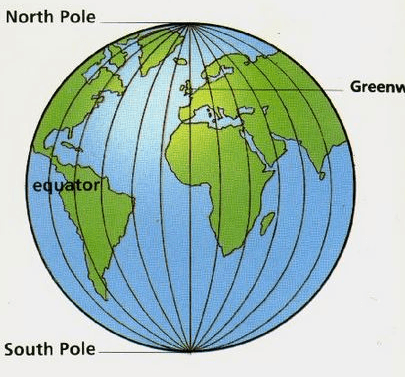
a)
The map show the lines of longitude.
b)
The map shows the lines of latitude.
19.
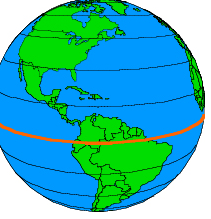
a)
The map shows lines of longitude.
b)
The map shows lines of latitude.
20.

Latitude and longitude are measured in ________.
a)
inches
b)
feet
c)
degrees
d)
grams
21.

Which mineral property is being shown here?
a)
luster
b)
hardness
c)
cleavage
d)
streak
22.
______ is the way a mineral reflects light.
a)
Luster
b)
Streak
c)
Hardness
d)
Fracture
23.
A naturally formed, inorganic solid with a crystalline structure
a)
density
b)
streak
c)
mineral
d)
non silicate mineral
24.

A mineral breaks into pieces like are shown in the picture. How would you describe its breakage?
a)
Fracture
b)
Cleavage
c)
Glassy
d)
Waxy
25.

This rock formed when small pieces of sediment squished together. What type of rock is it?
a)
Metamorphic
b)
Igneous
c)
Sedimentary
d)
Molten
26.

This rock formed from molten rock that cooled and solidified. This rock has large crystals. What rock is it?
a)
Metamorphic
b)
Igneous
c)
Sedimentary
d)
Sediment
27.

This rock formed when rocks above it pressed down on it. The huge amounts of heat and pressure realigned and recrystallized the minerals. What type of rock is it?
a)
Metamorphic
b)
Igneous
c)
Sedimentary
d)
Lava
28.
What does it mean for a rock to be extrusive?
a)
Have layers
b)
Have Rounded Edges
c)
Form from Lava
d)
Form By Sediment
29.
What does it mean for a rock to be intrusive?
a)
Made by lava
b)
Made by magma
c)
Made by erosion
d)
Made by heat and pressure
30.
The process when soil or rock are left or placed in a new location.
a)
Erosion
b)
Weathering
c)
Mass movement
d)
Deposition
31.
What is the process that presses sediments together?
a)
Erosion
b)
Deposition
c)
Compaction
d)
Cementation
32.

What is this a picture of?
a)
plate tectonics
b)
continental drift
c)
pangea
d)
glacier scaring
33.
One of the main proofs used for continental drift was that
a)
the continents fit together like puzzles
b)
common animal fossils found on separated continents
c)
tropical plant fossils found in frozen areas
d)
all of these
34.
Plates are moving apart at
a)
divergent boundaries
b)
transform boundaries
c)
convergent boundaries
d)
strike-slip faults
35.
Most of the earths features such as mountains, and earthquakes occur
a)
in the center of the plates
b)
in the subduction zone
c)
in the trenches between plates
d)
at the edges of the plates
36.
The area where one plate moves under the other plate is called the
a)
subversion zone
b)
subtraction zone
c)
subhematoma zone
d)
subduction zone
37.
When a oceanic plate meets a continental plate
a)
the oceanic plate always subducts
b)
the continental plate always subducts
c)
mountains are formed
d)
rift valleys are formed
38.
Boundaries that are moving together are
a)
convergent
b)
divergent
c)
transform
d)
strike-slip faults
39.
New earth crust is made
a)
in the deep ocean trenches
b)
far from the mid-ocean ridge
c)
where two continental plates make mountains
d)
from the magma that comes from the mid-ocean ridges
40.
The mid-ocean ridges are made from
a)
transform boundaries
b)
convergent boundaries
c)
divergent boundaries
d)
strike-slip boundaries
41.
A divergent boundary has what type of stress?
a)
Normal
b)
Tension
c)
Mid-ocean ridge
d)
Shearing
42.
What type of stress is experienced at a convergent boundry?
a)
Compression
b)
Tension
c)
Shearing
d)
Convergent
43.
What type of boundary experiences shearing stress?
a)
Transform
b)
Convergent
c)
Divergent
d)
Strike-slip
44.
The Richter scale measures:
a)
the amount of radon gas released
b)
the strength of an earthquake based on energy released
c)
the strength of an earthquake based on a seismogram
d)
the weight of tectonic plates
45.

Where is the epicenter for this earthquake located based on triangulation?
a)
A
b)
B
c)
C
d)
D
46.

Where is the epicenter located?
a)
A
b)
B
c)
C
d)
There is no epicenter
47.

Where is the focus located?
a)
A
b)
B
c)
C
d)
There is no focus
48.

The formation of the Hawaiian Islands is one example of
a)
volcanoes forming over a hot spot
b)
volcanoes forming along plate boundaries
c)
the Ring of Fire
d)
continental drift
49.

What type of volcano is created from repeated explosive eruptions?
a)
Composite
b)
Cinder Cone
c)
Shield
50.

What type of volcano forms from only quiet eruptions?
a)
Composite
b)
Cinder Cone
c)
Shield
51.

What type of volcano is shown above?
a)
Composite
b)
Cinder Cone
c)
Shield
52.
A large hole left by the collapse of a volcanic mountain is called a
a)
Crater
b)
Caldera
c)
Vent
d)
Volcano
53.
A dead volcano is called what?
a)
active
b)
dormant
c)
extinct
54.
A sleeping volcano is called what?
a)
active
b)
dormant
c)
extinct
55.
What are fast moving clouds of gas, ash, and rock bombs that are products from an explosive eruption?
a)
ash fall
b)
effusive debris
c)
magma
d)
pyroclastic flows
56.
The process by which water, ice, wind or gravity moves weathered rock and soil from one place to another.
a)
weathering
b)
erosion
c)
deposition
d)
dumptruck
57.

How does freezing water cause the weathering of rocks? The freezing water—
a)
keeps the rocks in place
b)
makes the rocks last longer
c)
expands cracks and breaks rocks
d)
causes rocks to fall in landslides
58.
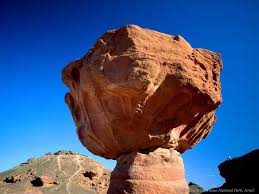
The process that breaks down rocks and other materials on Earth's surface is called
a)
Weathering
b)
Erosion
c)
Deposition
d)
Decomposition
59.
The name rock is given when it is broken down into smaller pieces.
a)
texture
b)
weathering
c)
sediment
d)
erosion
60.
Planting different crops from year to year in a field is called ______
a)
contour farming
b)
terracing
c)
no-till farming
d)
crop rotation
61.
A decomposer?
a)
Eats dead plants or animals and breaks down to put nutrients in the soil
b)
Eats plants or other animals for food
c)
Makes its own food
d)
Machine that gathers trash
62.
What is soil?
a)
A mixture of minerals
b)
A mixture of water, minerals, gases and organic matter
c)
A type of rock
d)
A type of bacteria
63.
Many layers of sediment and yearly erosion can form a flat area near a river called a ___________.
a)
floodplain
b)
delta
c)
sea cave
d)
beach
64.
loop like bends in a river
a)
waterfalls
b)
flood plains
c)
meanders
d)
oxbow lakes
65.
____________ ccurs when rocks and stones become frozen to the base or sides of the glacier and are taken from the ground or rock face as the glacier moves
a)
Abrasion
b)
Rotational slip
c)
Plucking
d)
Freeze-thaw
66.
The chucks of rock and other sediment moved by a glacier are called ______.
a)
moraine
b)
delta
c)
till
d)
abrasion
67.
Sediment that enriches soil that was blown in from another area is called _____
a)
loam
b)
loess
c)
silt
d)
deflation
68.
Deflation occurs as...
a)
wind removes large particles
b)
wind removes smaller particles
c)
glacier scrape rock
d)
glaciers pick up till
100 %

