wayground logo

Free Printable Worksheets

Font size

S
M
L
XL
Worksheets

Functions

Total questions: 40

Worksheet time: 2hrs 23mins

Name
Class
Date
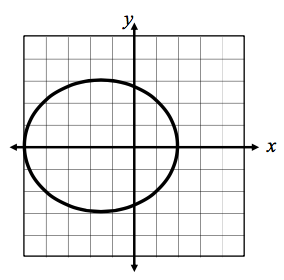
1.
Does the graph represent a function?
a)
Yes, because the vertical line test shows there are no repeating input values
b)
No, because the vertical line test shows there are repeating input values
2.

Which graph is NOT a function? (It does NOT pass the vertical line test.)

a)

Graph 1

b)

Graph 2

c)

Graph 3

d)

Graph 4

3.
Is this graph a function or not a function? 
a)
Function 
b)
Not a Function 
4.
In the given relation, what domain value corresponds to the range value -2?
{(-1,2), (-2,4), (2,5), (0,-2), (2,0)}
a)
-2
b)
0
c)
2
d)
4
5.
What test is used to determine if a graphed relation is a function?
a)
The Vertical Line Test
b)
The Horizontal Line Test
c)
The Diagonal Line Test
d)
The Litmus Test
6.
Which graph is a function?
a)
A
b)
B
c)
C
d)
D
7.
Which set of values is a function?
a)
(9,5) (10,5) (9,-5) (10,-5)
b)
(3,4) (4,-3) (7,4) (3, 8)
c)
(6,-5) (7, -3) (8, -1) (9, 1)
d)
(2, -2) (5, 9) (5, -7) (1, 4)
8.

Is the relation a function? Why or why not?

a)

Yes, because the x-value 11 has two y-values paired with it.

b)

Yes, because each x-value has only one y-value paired with it.

c)

No, because the x-value 11 has two y-values paired with it.

d)

No, because each x-value has only one y-value paired with it.

9.
a)
Function
b)
Not a Function
10.
a)
Function
b)
Not a Function
11.
a)
Function
b)
Not a Function
12.
a)
Function
b)
Not a Function
13.
For the function {(0,1), (1,-3), (2,-4), (-4,1)}, write the domain and range.
a)
D: {1, -3, -4,}
R: {0, 1, 2, -4}
b)
D:{-4, 0, 1, 2}
R:{-4, -3, 1}
c)
D:{0, 1, 2, 3, 4}
R:{1, -3, -4}
14.
Does the graph represent a function?
a)
Yes, because the vertical line test shows there are no repeating input values
b)
No, because the vertical line test shows there are repeating input values
15.
Identify the range of the following relation:
a)
{-6, 14, 2, 28}
b)
{-6,14, 0, 32, 2, 38, 4,44}
c)
{-6, 0, 2, 4}
d)
{14, 32, 38, 44}
16.
a)
{1, 2, 3, 4, 5}
b)
{-1, 1, 2, 3}
c)
{1, 2, 3, 5}
d)
[1, 5]
17.
Is this relation a function?
a)
Function
b)
Not a Function
18.
a)
{-2, 3, 7}
b)
{-2, 3}
c)
{1, 2, 2, 3, 4}
d)
{1, 4}
19.
Does this mapping diagram represent a function?
a)
No, because there are repeating input values
b)
Yes, because there are no repeating input values
20.
a)
A
b)
B
c)
C
d)
D
21.

Which graphing does NOT represent a function?

a)

F

b)

G

c)

H

d)

J

22.
a)

Function

b)

Not a Function

23.
Is this graph a function or not a function? 
a)
Function
b)
Not a Function
24.
All of the y values or outputs are called what?
a)
Domain
b)
Range
c)
Relation
d)
Function
25.

You plan to go snowboarding. The resort charges $15 an hour in addition to $25 to rent a board.

Write an equation that represents the cost to go snowboarding for the day.

HINT:

Use "x" to represent hours and "y" to represent the total cost.

a)

y = 15x - 25

b)

15x + 25y = 100

c)

25x + y = 15

d)

y = 15x + 25

26.
a)

A

b)

B

c)

C

d)

D

27.
All of the x values or inputs are called what?
a)
Domain
b)
Range
c)
Relation
d)
Function
28.

Is the graph of the equation increasing, decreasing, both or neither?

a)

Increasing

b)

Decreasing

c)

Both

d)

Neither

29.

Is the graph of the equation increasing, decreasing, both or neither?

a)

Increasing

b)

Decreasing

c)

Both

d)

Neither

30.

Is the graph of the equation increasing, decreasing, both or neither?

a)

Increasing

b)

Decreasing

c)

Both

d)

Neither

31.

Is the graph of the equation increasing, decreasing, both or neither?

a)

Increasing

b)

Decreasing

c)

Both

d)

Neither

32.

Is the graph of the equation increasing, decreasing, both or neither?

a)

Increasing

b)

Decreasing

c)

Both

d)

Neither

33.

Is the graph of the equation increasing, decreasing, both or neither?

a)

Increasing

b)

Decreasing

c)

Both

d)

Neither

34.

Is this function increasing, decreasing, both or neither?

a)

Increasing

b)

Decreasing

c)

Both

d)

Neither

35.

Is this function increasing, decreasing, both, or neither?

a)

Increasing

b)

Decreasing

c)

Both

d)

Neither

36.

Is this a linear or nonlinear function?

a)

Linear

b)

Nonlinear

37.

Is the graph of the equation a linear or nonlinear function?

a)

Linear

b)

Nonlinear

38.
Is the equation linear or nonlinear?
a)
Linear
b)
Nonlinear
39.
Is the equation linear or nonlinear?
a)
Linear
b)
Nonlinear
40.
Is the following equation linear or nonlinear? 
a)
Linear 
b)
Nonlinear