
 Worksheets
Evolution & Classification
Total questions: 46
Worksheet time: 32mins
Name
Class
Date
1.

Which animal is directly connected to the oldest ancestor?
a)
Birds
b)
Mammals
c)
Lampry
d)
Turtle
2.
Which animal is has the closest ancestor with mammals?
a)
Reptiles
b)
Birds
c)
Lampry
d)
Ray-finned fishes
3.
The science of describing,naming,and classifying organisms is
a)
dichotomous key
b)
taxonomy
c)
bacteria
d)
classification
4.
They are eukaryotic living things that have cell walls and make their own food.
a)
plants
b)
food
c)
animals
5.

According to this cladogram, sharks are MOST closely related to which organism?
a)
Amphibians
b)
Ray finned fish
c)
Crocodiles
d)
Birds
6.

Which two orgainsms have hair?
a)
Sharks & Ray Finned Fish
b)
Primates & Rodents
c)
Birds & Crocodiles
d)
Rabbits & Birds
7.

According to this cladogram, birds are LEAST related to:
a)
Amphibians
b)
Sharks
c)
Ray Finned Fish
d)
Crocodiles
8.

What is a dichotomous key used for in science?
a)
To organize biomes
b)
Identify organisms
c)
Identify bacteria only
d)
None of these
9.
What is the most specific level of classification?
a)
Family
b)
Domain
c)
Species
d)
Carolus Linnaeus
10.
Cells that do not have a true nucleus are called....
a)
eukaryote
b)
prokaryote
c)
unicellular
d)
multicellular
11.
The scientific name for an organism is made from the:
a)
class and family name
b)
genus and species name
c)
domain and kingdom name
d)
kingdom and phylum name
12.
Term given to describe the 2 name naming system is:
a)
dichotmous key
b)
binomial nomenclature
c)
2 scientific names
d)
binomial key
13.
Cells that have a true nucleus are called....
a)
eukaryotes
b)
prokaryotes
c)
unicellular
d)
multicellular
14.
The grouping of organisms based on a set of criteria that helps organize, communicate, and retain information.
a)
Clade
b)
Taxonomy
c)
Classification
d)
Cladogram
15.

Based on this classification scheme, the European otter and the leopard are in the same?
a)
kingdom but in different orders
b)
order but in different families
c)
genus but in different species
d)
family but in different genera
16.
The domain Eukarya includes the kingdoms
a)
Protista, Plantae, Fungi, Animalia
b)
Eubacteria
c)
Protista, Plantae, Bacteria
d)
Archaea, Bacteria
17.
The theory of Natural Selection was developed by
a)
Darwin
b)
Lemarck
c)
Gould
d)
Weissman
18.
The theory of Acquired Characteristics was developed by
a)
Darwin
b)
Lamarck
c)
Gould
d)
Weissman
19.

What do phylogenic trees do?
a)
Help you visualize how species are related.
b)
Provide windbreaks in your yard.
c)
Provide DNA details.
d)
Show the distribution of organisms
20.

According to the chart which species is closest related to the dog?
a)
Lion
b)
Fox
c)
Coyote
d)
Wolf
21.
According to the chart, which level of classification does the whale have similarities with the moth?
a)
Domain
b)
Kingdom
c)
Phylum
d)
Class
22.
According to the chart, which level of classification does the coyote begin to have differences with the seal?
a)
Species
b)
Genus
c)
Family
d)
Order
23.
According to the chart, which Domain do all of these organisms belong in?
a)
Archaea
b)
Bacteria
c)
Prokarya
d)
Eukarya
24.
How do adaptations help animals?
a)
to hide from predators
b)
to hunt for food
c)
to survive in their habitats
d)
All of these are correct
25.

The physical appearance of an organism is scientifically known its
a)
genotype
b)
phenotype
c)
genes
d)
generation
26.

characteristic or trait that helps an organism survive in its environment
a)
skills
b)
speciation
c)
natural instinct
d)
adaptation
27.

Charles Darwin noticed that birds of the Galapagos Islands were very similar in size and shape but their beaks were very different. What is the explanation for birds having different beaks?
a)
gathering food
b)
building nest
c)
fighting
d)
scaring predators
28.

A student discovers an arachnid with a segmented abdomen, long legs, and a tail with no stinger. The student uses the dichotomous key below to identify it. Which arachnid has the student found?
a)
Whip Scorpion
b)
Wind Scorpion
c)
Daddy long legs
d)
Scorpion
29.

An illustration and a dichotomous key are given. What is the correct classification for this organism?
a)
Class Insecta
b)
Order Amblygygi
c)
Order Araneae
d)
Order Scorpiones
30.

The 8 levels of classification, most broad to most specific.
a)
Domain, Genus, Family, Order, Class, Phylum, Kingdom, Species
b)
Domain, Species, Kingdom, Genus, Phylum, Family, Class, Order
c)
Domain, Kingdom, Phylum, Class, Order, Family, Genus, Species
d)
Order, Kingdom, Species, Domain, Phylum, Family, Class, Genus
31.
Members of this kingdom live in unusual conditions such as deep ocean trenches or volcanoes
a)
Eubacteria
b)
Protista
c)
Fungi
d)
Archaebacteria
32.
Which of the following organisms are LEAST closely related?
a)
organisms that share a domain
b)
organisms that share a family
c)
organisms that share a genus
d)
organisms that share a species
33.
When using a dichotomous key to identify organisms, what do we look at?
a)
physical features
b)
weather patterns
c)
environment
d)
diet
34.

A dichotomous key for trees is provided. Hikers found a tree that has large brown cones and single sharp needles. What species of tree have the hikers found?
a)
Juniper
b)
Pine
c)
Spruce
d)
Fir
35.

An offspring will receive how many alleles from each parent to determine a specific trait?
a)
one
b)
two
c)
three
d)
five
36.
Having two of the same genes for the trait (sometimes called purebred).
a)
homozygous
b)
hetrozygous
c)
protein
d)
chromosome
37.
Having two different genes for a trait (sometimes called hybrid).
a)
protein
b)
homozygous
c)
heterozygous
d)
genotype
38.

Study of embryos of various organisms to show a common ancestor because of similarities in development
a)
natural selection
b)
embryology
c)
speciation
d)
evolution
39.
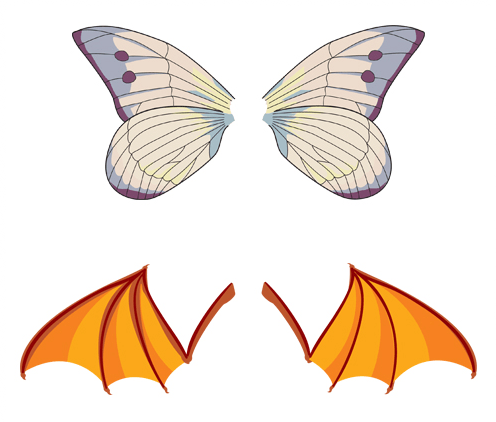
How would you describe this evolution?
a)
Homologous structure
b)
Analogous structure
c)
Structural adaption
d)
Functional adaption
40.
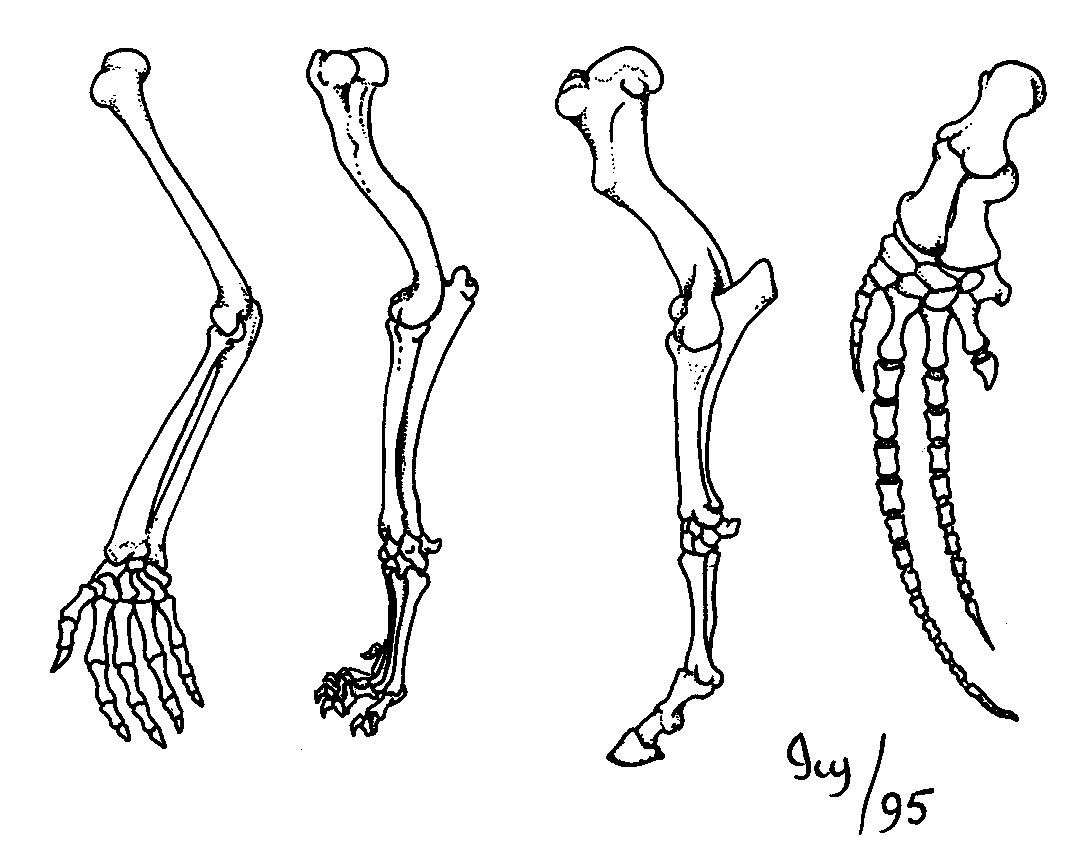
Structures with the same parts have different functions; suggests that organisms share a common ancestry
a)
vestigial structures
b)
homologous structures
c)
adaptive radiation
d)
fossil
41.
The ability of an organism to survive and reproduce is known as...
a)
Adaptation
b)
Trait
c)
Fitness
d)
Variation
42.
"Survival of the Fittest" describes which theory
a)
a) natural selection
b)
b) evolution
c)
c) heredity
d)
d) string theory
43.

Horse breeding for specific desired traits is an example of which type of evolutionary evidence?
a)
Artificial selection
b)
Embryology
c)
Fossils
d)
Biochemical molecules
44.

All of these finches have different shaped beaks, they are an adaptation to gain access to:
a)
Water
b)
Food
c)
Shelter
45.

The similarities of the bones in the diagram provide evidence that---
a)
The organisms shown lived in the same natural envionrment
b)
The organisms shown may have developed from a common ancestor
c)
The organisms shown have the same genetic diseases
d)
All vertebrate species have identical forelimbs
46.

The hind leg bones in a whale are examples of:
a)
homologous structures
b)
analogous structures
c)
fossils
d)
vestigial structures
100 %

