
 Worksheets
Geology KHMS
Total questions: 79
Worksheet time: 2hrs 27mins
Name
Class
Date
1.

This rock formed when bits of other rocks became pressed into a solid. What type of rock is it?
a)
Sedimentary Rock
b)
Metamorphic Rock
c)
Igneous Rock
2.

This rock was formed when magma cooled very slowly inside the Earth. What specific type of rock is it?
a)
Intrusive Igneous Rock
b)
Extrusive Igneous Rock
c)
Foliated Metamorphic Rock
d)
Clastic Sedimentary Rock
36.
When you watch a volcano erupt molten rock, you are seeing _____
a)
Lava
b)
Magma
c)
Mineral Crystals
d)
Igneous Rocks
4.
When you are describing the sizes of the mineral grains in a rock, you are detailing the rock's _____
a)
Texture
b)
Composition
c)
Sedimentation
d)
Igneous-ness
5.
What are the 3 major types of rocks?
a)
Igneous, Metamorphic, Sedimentary
b)
Metamorphic, Igneous, Cementation
c)
Brown, Red, Gray
d)
Streak, Hardness, Breakage
6.
What process is used to form sedimentary rocks?
a)
Lava cools and hardens to form a rock.
b)
Bits of sand and gravel form layers that turn into rock from pressure.
c)
Extreme heat and pressure from inside the Earth turn rocks into new rocks.
d)
Magma trapped under the Earth's surface cools and solidifies.
7.
Which of the words below describe mud, sand, and tiny bits of rocks that cement together to form a type of rock?
a)
stalactites
b)
magmas
c)
metamorphs
d)
sediments
8.
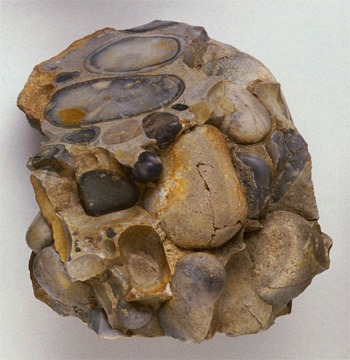
This rock was formed by smaller pieces of rock that settled at the bottom of a lake millions of years ago. What type of rock is this?
a)
Sedimentary
b)
Igneous
c)
Metamorphic
9.
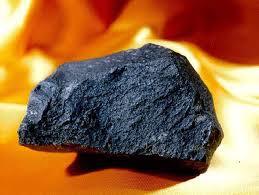
This rock was found near the mouth of a volcano. What type of rock is this?
a)
Sedimentary
b)
Igneous
c)
Metamorphic
10.
What is sedimentary?
a)
Formed by heat and pressure
b)
Formed by heat and cooling
c)
Layered rock formed by compaction
d)
All of the above
37.

When sediments are pressed together tightly, this is called ____________.
a)
Compaction
b)
Cementation
c)
Weathering
d)
Erosion
12.
The process in which dissolved minerals crystallize and glue sediment together.
a)
compaction
b)
deposition
c)
organic rock
d)
cementation
13.

The process when rocks break into smaller pieces due to exposure to natural elements is called
a)
erosion
b)
weathering
c)
sediments
14.
The movement of weathered material (sediment) is called?
a)
weathering
b)
erosion
c)
deposition
15.
This rock was formed when molten rock cooled into a solid. What type of rock is it?
a)
Igneous Rock
b)
Metamorphic Rock
c)
Sedimentary Rock
16.
What is deposition?
a)
Dropping off sediment
b)
Movement of sediment
c)
Breaking down of sediment
17.
Extreme Heat and Pressure creates a _________ rock.
a)
Igneous
b)
Metamorphic
c)
Sedimentary
d)
Mineral
18.
True or False: Once a rock is sedimentary, it cannot become an igneous rock.
a)
True
b)
False
38.

Each rock type can follow only one pathway of the rock cycle.
a)
True
b)
False
20.
which of the following does NOT cause magma to form?
a)
an increase in pressure
b)
a rise in temperature
c)
change in the composition in rock
d)
a decrease in pressure on rock
21.
process by which new rock is made from old rock
a)
rock
b)
texture
c)
rock cycle
d)
composition
22.
naturally occurring solid mixture of one or more minerals and organic matter
a)
deposion
b)
erosion
c)
rock
d)
rock cycle
23.
process by which sediment is removed from its source
a)
deposition
b)
erosion
c)
rock
d)
texture
24.
Metamorphic rock in which minerals are NOT arranged in bands
a)
stratification
b)
non-foliated
c)
extrusive igneous rock
d)
strata
25.
During the rock cycle, what forms when the magma cools?
a)
igneous rocks
b)
sedimentary rock
c)
metamorphic rock
d)
foliated rock
26.
When temperature and pressure change, what can happen to the minerals in rocks?
a)
they stay the same
b)
they change into coal
c)
they change into minerals that are less stable
d)
they change into minerals that are more stable
27.
How would an igneous rock turn into a sedimentary rock?
a)
Melting
b)
Erosion and Weathering
c)
Heat and Pressure
28.
Metamorphic rocks with grains arranged randomly.
a)
Non-Foliated
b)
Foliated
c)
Clastic
29.
Rocks that are made from particles from other rocks and remains of plants and animals
a)
Sedimentary
b)
Metamorphic
c)
Igneous
30.
Metamorphic rocks that have grains arranged in parallel layers
a)
Extrusive
b)
Foliated
c)
Organic
d)
Non-Foliated
31.

Cooling & crystalization produce
a)
igneous rocks
b)
metamorphic rocks
c)
sedimentary rocks
32.

Heat & pressure
a)
metamorphism
b)
volcanism
c)
magmarism
d)
lithification
33.

Rocks are formed by
a)
minerals
b)
other metals
c)
small particles
d)
sediments
34.
The three groups of rocks are classified by
a)
How they form
b)
Color
c)
Grain size
d)
Chemical Composition
35.
True or False: Once a rock is sedimentary, it cannot become an igneous rock.
a)
True
b)
False
36.
When you watch a volcano erupt molten rock, you are seeing _____
a)
Lava
b)
Magma
c)
Mineral Crystals
d)
Igneous Rocks
37.
When sediments are pressed together tightly, this is called ____________.
a)
Compaction
b)
Cementation
c)
Weathering
d)
Erosion
38.
Each rock type can follow only one pathway of the rock cycle.
a)
True
b)
False
39.
A mineral's resistance to being scratched is called?
a)
streak
b)
luster
c)
hardness
d)
heft
40.
A mineral is a living object
a)
True
b)
False
41.

Which mineral property is being shown here?
a)
luster
b)
hardness
c)
cleavage
d)
streak
42.
The ratio of an objects mass to its volume is called
a)
Fluorescence
b)
Streak
c)
Ore
d)
Density
43.
Dull, silky, waxy, pearly, and earthy are terms that best describe which property of minerals?
a)
luster
b)
color
c)
streak
d)
cleavage
44.
Which of the following properties does the Mohs scale measure?
a)
Luster
b)
Hardness
c)
Density
d)
Streak
45.
_________ is how easily something can be scratched.
a)
specific gravity
b)
luster
c)
hardness
46.
___________ is the color of powdered mineral.
a)
Luster
b)
Streak
c)
Fracture
47.

By definition, a mineral has which of the following characteristic(s)?
a)
definite chemical composition
b)
crystal structure
c)
naturally occuring
d)
all of the above
48.
The solid, geometric form of a mineral produced by a repeating pattern of atoms
a)
crystal
b)
density
c)
element
d)
fracture
49.
The thinnest layer of the Earth is?
a)
Mantle
b)
Lithosphere
c)
Athenosphere
d)
Crust
50.
The asthenosphere makes up the?
a)
Upper portion of the mantel
b)
The lower portion of the crust
c)
Just the Athenosphere
51.
What happens to pressure as we move from the crust to the inner core?
a)
Pressure Decreases
b)
Pressure Increases
c)
Nothing
52.
What happens to temperature as we move from the crust to the inner core?
a)
Decreases
b)
Increases
53.
What is the name of the layer that contains the uppermost mantle and crust
a)
Asthenosphere
b)
Mesosphere
c)
Lithosphere
d)
Transosphere
54.
This layer of Earth is the thickest part
a)
crust
b)
outer core
c)
mantle
d)
inner core
55.
What are the two types of crust
a)
continental and oceanic
b)
ocean and upper
c)
lower and upper
d)
pizza and subway
56.
Scientists determine what Earth’s interior looks like by using:
a)
Volcanoes
b)
Seismic Waves
c)
Continental Drift
d)
Convection Currents
57.
Which layer of the earth has the lowest temperature?
a)
Crust
b)
Mantle
c)
Outer Core
d)
Inner Core
58.
Which layer of the earth is under the highest pressure?
a)
Crust
b)
Mantle
c)
Outer Core
d)
Inner Core
59.
Less dense materials rise to the top.
a)
True
b)
False
60.
Heat transfer within a fluid takes place by...
a)
convection currents
b)
radiation
c)
conduction
d)
density
61.
A deep well or mine shaft goes through which layer or layers of Earth?
a)
crust only
b)
mantle only
c)
crust and mantle
d)
mantle and core
62.
Geologists' main evidence about the structure of Earth's interior comes from
a)
temperature measurements in deep mines
b)
observations of other planets
c)
exploration of caves
d)
rock samples and seismic waves
63.
Name the three types of heat transfer.
a)
conduction, convection, radiation
b)
lithosphere, conduction, x-rays
c)
ROY G BIV
d)
waves, sunlight, heat
64.
What is the hottest layer?
a)
Crust
b)
Mantle
c)
Core
65.
The Geosphere is...
a)
All liquid water on Earth
b)
A 100km thick layer of gases
c)
frozen water on earth
d)
Earths entire solid body
66.
What is the hydrosphere?
a)
all the waters on the earth's surface, such as lakes and seas, and sometimes including water over the earth's surface, such as clouds
b)
the rigid outer part of the earth, consisting of the crust and upper mantle.
c)
the regions of the surface, atmosphere, and hydrosphere of the earth that is able to support life and is occupied by living organisms
d)
layers of air surrounding Earth
67.
Landforms such as volcanoes, mountains, beaches and canyons all belong to this sphere
a)
Atmosphere
b)
Hydrosphere
c)
Biosphere
d)
Geosphere
68.
What is a "system"?
a)
an underground layer of rock that holds groundwater
b)
visible mass of tiny water droplets or ice crystals
c)
a group of parts working together within a boundary
d)
an event the causes changes throughout the region where it occured.
69.
All living things on earth are part of the....
a)
Biosphere
b)
Hydrosphere
c)
Lithosphere
d)
Atmosphere
70.
Why are most of the systems in the Earth open?
a)
Matter and energy can be transferred in and out
b)
Only energy can be transferred in and out
c)
Only Matter can be transferred in and out
d)
Neither matter nor energy can be transferred in or out
71.
Hydro =
a)
Sphere
b)
Earth
c)
Life
d)
Water
72.
Geo =
a)
Earth
b)
Sphere
c)
Life
d)
Water
73.
What is Earth's largest system?
a)
Biosphere
b)
Geosphere
c)
Hydrosphere
d)
Atmosphere
74.
Particles in an atom that are neutral and have no charge are
a)
negatrons
b)
electrons
c)
neutrons
d)
protons
75.
What is Pangaea?
a)
The name of a German Scientist
b)
the name of the supercontinent that existed millions of years ago
c)
another name for continental drift
d)
the name of an ancient fossil
76.
Plate movement is caused by ______________.
a)
the rotation of the Earth
b)
ocean tides
c)
convection currents in the mantle
d)
the moon's gravity
77.
What does the theory of continental drift state?
a)
The continents were once joined in a super-continent and have moved over time
b)
Continents are stationary and do not move
c)
The Earth is broken into lithospheric plates that move due to convection currents
d)
none of the above
78.
Which of the following occurs because of convection currents?
a)
Tectonic plates on the crust move.
b)
The mantle increases in size.
c)
Pressure in the crust increases.
d)
Pressure in the crust decreases.
79.
What is the order of the layers?
a)
inner core, lithosphere, mesosphere, outer core, asthenosphere
b)
asthenosphere, lithosphere, mesosphere, outer core, inner core
c)
lithosphere, asthenosphere, mesosphere, outer core, inner core
d)
crust, core, mantle
100 %

