
 Worksheets
Standard 6 - Universe
Total questions: 84
Worksheet time: 2hrs 45mins
Name
Class
Date
1.
A[n] ______________ tide occurs when the sun is at right angles to the line between Earth and the moon.
a)
high
b)
neap
c)
low
d)
spring
2.
A[n] ___________ tide occurs when the sun, Earth, and the moon are nearly in a line.
a)
spring
b)
high
c)
low
d)
neap
3.
A neap tide is a tide with the greatest difference between low and high tides
a)
true
b)
false
4.
What do we call a tide that has largest range; highest high and lowest low?
a)
gravity
b)
wind
c)
spring
d)
neap
5.
In general, tides occur...
a)
each hour
b)
2 times a day
c)
each month
d)
twice a month
6.

What type of tides would this arrangement of earth-moon-sun create?
a)
neap tide
b)
spring tide
c)
new moon tide
d)
full moon tide
7.

Which phase of the moon is represented in this diagram?
a)
new moon
b)
first quarter
c)
full moon
d)
last quarter/third quarter
8.
Waning phases are when the light is being:
a)
Gained
b)
Lost
9.
Waxing phases are when the light is being:
a)
Gained
b)
Lost
c)
Staying the same
d)
Neither
10.

What is it called when you are able to see half the moon and the light on the moon is decreasing?
a)
New moon
b)
1st quarter
c)
Full Moon
d)
3rd quarter
11.

What is it called when more than half of the moon is lit on the right side and light is increasing?
a)
Waxing cresent
b)
Waxing gibbous
c)
Waning gibbous
d)
Waning cresent
12.
What phase of the moon does a solar eclipse occur?
a)
New moon
b)
1st quarter
c)
Full moon
d)
3rd quarter
13.
What moon phases do spring tides occur?
a)
new and full
b)
1st & 3rd quarters
14.
How many days does it take for the moon to complete a full cycle?
a)
27
b)
29.5
c)
28
d)
20
15.

Does this picture represent a waxing or waning moon?
a)
waxing
b)
waning
16.

The hemisphere where you live
a)
equator
b)
southern
c)
northern
d)
eastern
17.

In winter, the axis of the earth is pointed away or toward the sun?
a)
towards
b)
up
c)
down
d)
away
18.

In summer, the axis of the earth is pointed away or toward the sun?
a)
towards
b)
up
c)
down
d)
away
19.

Which season is taking place in the Southern Hemisphere in Position 1?
a)
Winter
b)
Spring
c)
Summer
d)
Fall
20.

Which season is taking place in the Northern Hemisphere in Position 1?
a)
Winter
b)
Spring
c)
Summer
d)
Fall
36.

Which moon phase is visible at position 4?
a)
new moon
b)
1st quarter
c)
full moon
d)
3rd quarter
22.
The phases of the moon, IN ORDER, are:
a)
new moon-->waxing gibbous-->1st quarter-->waxing crescent-->full moon-->waning crescent-->3rd quarter-->waning gibbous
b)
new moon-->waning crescent-->1st quarter-->waning gibbous-->full moon-->waxing gibbous-->3rd quarter-->waxing crescent
c)
new moon-->1st quarter-->waxing crescent-->waxing gibbous-->full moon-->waning gibbous-->waning crescent-->3rd quarter
d)
new moon-->waxing crescent-->first quarter-->waxing gibbous-->full moon-->waning gibbous-->3rd quarter-->waning crescent
23.

Name this phase of the moon.
a)
waning crescent
b)
waxing crescent
c)
waning gibbous
d)
waxing gibbous
24.

Name this moon phase.
a)
new moon
b)
1st quarter moon
c)
last quarter moon
d)
waning gibbous
25.

What is this moon phase?
a)
waning crescent
b)
waxing crescent
c)
waning gibbous
d)
waxing gibbous
26.

Name this moon phase.
a)
1st quarter
b)
3rd/last quarter
c)
new moon
d)
waxing crescent
27.

Name this moon phase.
a)
waxing crescent
b)
waxing gibbous
c)
waning gibbous
d)
waning crescent
28.
During the phases of the Moon, the Moon appears to change shape. This change in appearance is due to the Moon...
a)
physically changing size and shape.
b)
moving closer and then farther away from Earth.
c)
reflecting a different amount of light due to alignment with Earth and the Sun.
d)
having craters on its surface.
29.
What part of the moon do we see from Earth?
a)
all of it
b)
the same side
c)
none of it
d)
only one quarter
30.

Name the phase of the moon that comes BEFORE this moon phase.
a)
waxing gibbous
b)
waning gibbous
c)
waning crescent
d)
waxing crescent
31.
As the moon's shape appears to get smaller, we say that the moon is _.
a)
swelling
b)
waxing
c)
waning
d)
disappearing
32.
What causes the phase of the Moon to change each night?
a)
The Moon changes its acutal shape throughout the course of the month.
b)
The alignment between the Earth, Moon, and Sun determines the amount of light reflected by the Moon.
c)
The season of the year determines the phase of the Moon.
d)
The closer the Moon is to Earth, the more light the Moon reflects.
33.
The cycle of the moon lasts about a _.
a)
day
b)
year
c)
week
d)
month
34.

Does this picture represent a waxing or waning moon?
a)
waxing
b)
waning
35.
How much of the moon is almost always in the sunlight?
a)
Waxing Gibbous
b)
1st Quarter
c)
Half
d)
Full moon
36.
Which moon phase is visible at position 4?
a)
new moon
b)
1st quarter
c)
full moon
d)
3rd quarter
37.
As the moon's shape appears to get smaller, we say that the moon is _.
a)
swelling
b)
waxing
c)
waning
d)
disappearing
38.
Which moon phase is when you can't see the moon at all?
a)
Waning crescent
b)
Full moon
c)
Waxing gibbous
d)
New moon
39.
The cycle of the moon lasts about a _.
a)
day
b)
year
c)
week
d)
month
40.

Name this moon phase. (NO MOON SEEN)
a)
New moon
b)
waxing crescent
c)
waning crescent
d)
full moon
41.

Name this phase of the moon.
a)
waning crescent
b)
waxing crescent
c)
waning gibbous
d)
waxing gibbous
42.

Name this moon phase.
a)
new moon
b)
1st quarter moon
c)
last quarter moon
d)
waning gibbous
43.

What is this moon phase?
a)
waning crescent
b)
waxing crescent
c)
waning gibbous
d)
waxing gibbous
44.

What is this moon phase?
a)
new moon
b)
1st quarter
c)
full moon
d)
3rd quarter
45.

Name this moon phase.
a)
waxing crescent
b)
waning crescent
c)
waxing gibbous
d)
waning gibbous
46.

Name this moon phase.
a)
1st quarter
b)
3rd/last quarter
c)
new moon
d)
waxing crescent
47.

Name this moon phase.
a)
waxing crescent
b)
waxing gibbous
c)
waning gibbous
d)
waning crescent
48.
How many days does it take for the Moon to rotate around Earth
a)
27 Days
b)
30 Days
c)
27.3 Days
d)
15 Days
49.
Which phase of the moon occurs after the full moon?
a)
Waxing gibbous
b)
Waxing crescent
c)
New moon
d)
Waning Gibbous
50.
Which phase of the moon occurs after the new moon?
a)
Waxing gibbous
b)
Waxing crescent
c)
Full moon
d)
New moon
51.
Where does the moon get its light from?
a)
earths light
b)
Mars light
c)
Sunlight
d)
Jupiter
52.
How much of the moon ALWAYS has sunlight on it?
a)
all of it
b)
half of it
c)
one-fourth of it
d)
it changes
53.
One complete revolution of the Earth around the sun takes about
a)
one rotation
b)
half a year
c)
one year
d)
one season
54.
The Earth takes about __________________ hours to complete one rotation of its axis.
a)
12
b)
24
c)
14
d)
28
55.
Day and night is caused by the _____________ of earth on its axis.
a)
revolution
b)
orbit
c)
rotation
56.
The earth orbits around...
a)
The sun.
b)
the moon
c)
other planets
d)
the Milky Way
57.
How long after a new moon will it take to see another new moon?
a)
12 days
b)
29.5 days
c)
27.3 days
d)
365 days
58.

What happens when the area in which you live tilts away from the sun?
a)
It is summer.
b)
It is spring.
c)
It is winter.
d)
It is fall.
59.

Why does the area around the equator stay the same temperature all year?
a)
The equator rotates slower than the poles.
b)
The equator remains the same distance from the sun.
c)
The equator always receives direct sunlight.
d)
The equator has 18 hour days.
60.
Day and night is caused by the _____________ of earth on its axis.
a)
revolution
b)
orbit
c)
rotation
61.
On two days each year, around June 22 and December 22, the noon sun is overhead at either 23.5° north or south. Each of these days is known as a __________.
a)
equinox
b)
solstice
c)
vacation
d)
day
62.
What would seasons be like if Earth's axis were straight up and down?
a)
Seasons would be the same.
b)
Seasons would be more extreme.
c)
There would be no seasons.
63.
1. What is gravity?
a)
A type of rock
b)
A type of plate boundary
c)
When two objects are attracted to each other.
64.

At position A, which hemisphere would have summer?
a)
Northern hemisphere
b)
Southern hemisphere
65.

What is this moon?
a)
Full Moon
b)
Waxing Gibbous
c)
First Quarter Moon
d)
Waxing Crescent
66.
Tides are caused by
a)
strong winds that blow over ocean waters.
b)
the interaction of Earth, the moon and the sun.
c)
the shifting of the plates on the ocean floor.
d)
variations in the salinity of ocean water
67.
In general, tides occur...
a)
each hour
b)
2 times a day
c)
each month
d)
twice a month
68.

Wha type of tide would this arrangement of earth-moon-sun create?
a)
full moon tide
b)
new moon tide
c)
neap tide
d)
spring tide
69.

Which moon phase is shown in this diagram?
a)
new moon
b)
first quarter
c)
full moon
d)
last quarter/3rd quarter
70.

The difference in levels of ocean water at high and low tides is the _________________.
a)
low tide
b)
tidal range
c)
high tide
d)
slack water
71.
What position must the Moon be in to produce a solar eclipse?
a)
The Moon must be in a direct line between Earth and the Sun.
b)
The Moon must be in the first quarter with Earth tilted on its axis.
c)
Earth must be between the Moon and the Sun.
d)
The Moon and Earth must both be tilted on their axes in the same direction
72.
Which of these affects tides the most?
a)
Mars
b)
the Sun
c)
the stars
d)
the Moon
73.

What event is shown in the figure?
a)
lunar eclipse
b)
solar eclipse
c)
tide formation
d)
sun spots
74.
Spring tides occurs during a ___________moon and a __________________moon.
a)
New, Full
b)
1st Quarter, 3rd Quarter
c)
Waxing Gibbous, Waning Crescent
d)
1st Quarter, Full
75.
A __________________ tide occurs during a_______________________ moon and a __________________________moon.
a)
Spring, 1st quarter, 3rd/last quarter
b)
Moon, 1st quarter, 3rd/last quarter
c)
Neap, 1st quarter, 3rd/last quarter
d)
Beach, 1st quarter, 3rd/last quarter
76.
A lunar eclipse is when:
a)
The shadow of Earth falls on the moon
b)
The shadow of the moon falls on the Earth
c)
The shadow of the sun falls on the moon
d)
The suns light shows red on the moon
77.
14 days after a new moon is the _________ which is _______% visible.
a)
1st quarter, 50%
b)
3rd quarter, 50%
c)
Full moon, 0%
d)
Full moon, 100%
78.

Which moon phase is visible at position 4?
a)
new moon
b)
1st quarter
c)
full moon
d)
3rd quarter
79.

Which type of eclipse is shown in this picture?
a)
Solar Eclipse
b)
Orbit
c)
Lunar Eclipse
d)
Total Eclipse
80.

Which type of eclipse occurs when the Earth casts a shadow on the moon?
a)
Tilt
b)
Lunar Eclipse
c)
Solar Eclipse
d)
Partial Eclipse
81.

Which type of eclipse is shown in the diagram?
a)
Solar Eclipse
b)
Lunar Eclipse
c)
Total Eclipse
d)
Partial Eclipse
82.

During which phase of the moon is a lunar eclipse possible?
a)
Crescent moon
b)
Full moon
c)
New moon
d)
Half moon
83.
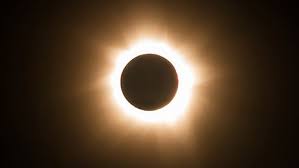
During a solar eclipse...
a)
The sun is blocked
b)
The Earth is blocked
c)
The moon is blocked
d)
You are blocked
84.
The order of a lunar eclipse is..
a)
Sun-Earth-Moon
b)
Earth-Sun-Moon
c)
Moon-Sun- Earth
d)
Earth-Moon-Sun
100 %

