
NEW
Font size
S
M
L
XL
 Worksheets
Sexual/Asexual Reproduction Pre-Test
Total questions: 50
Worksheet time: 34mins
Name
Class
Date
1.
female sex cell
a)
zygote
b)
egg
c)
sperm
d)
meiosis
2.
male sex cell
a)
egg
b)
zygote
c)
sperm
d)
diploid cell
3.
joining of egg and sperm
a)
diploid cell
b)
haploid cell
c)
asexual reproduction
d)
fertilization
4.
process by which one diploid cell divides into four haploid cells
a)
mitosis
b)
meiosis
c)
homologous chromosomes
5.
two chromosomes that have genes for the same traits in the same order
a)
homologous chromosomes
b)
meiosis
c)
mitosis
d)
fertilization
6.
sexual reproduction produces offspring that is identical to the parents
a)
true
b)
false
7.
Requires only one parent
a)
sexual
b)
asexual
8.
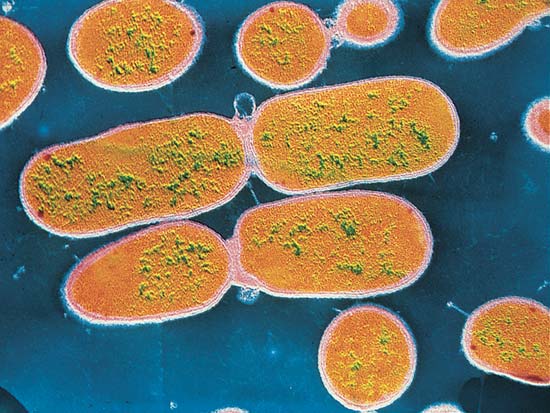
The offspring from asexually reproduced organisms are?
a)
Different than their parents
b)
Identical to parents
c)
Like a combination from both parents
d)
A different species
9.

Prokaryotes (bacteria) reproduce asexually via -
a)
spore formation
b)
bud creation
c)
vegetative propagation
d)
binary fission
10.

All of the offspring of an organism have the same genetic material, which is identical to the parent organism. From this, we can conclude that this organism -
a)
makes its own food
b)
is unicellular
c)
live in a marine habitat
d)
reproduces asexually
11.

When comparing the offspring of sexually and asexually reproducing organisms, we would expect the genetic material (DNA) of the sexually reproducing organism to -
a)
contain fewer mutations
b)
be lesser in quantity
c)
be simpler overall
d)
show more variation
12.
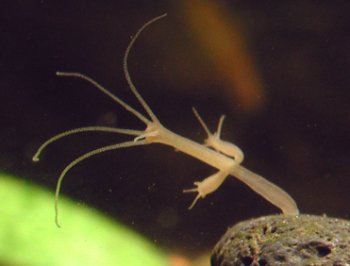
This is when a new organism grows by cell division on the body of its parent. The bud, or offspring is identical to the parent. The bud, when large enough, can break off of the parent and live on its own. Examples of this include yeast, hydra and potatoes.
a)
Regeneration
b)
Vegetative propagation
c)
Fission
d)
Budding
13.
Which is a type of Asexual Reproduction
a)
Sexual
b)
Binary fission
c)
Cells
d)
organism
14.
This occurs when an offspring grows from a piece of its parent. Examples include Sea Stars, Sea urchins, sea cucumber, sponges, and planarians
a)
Vegetative propagation
b)
Budding
c)
Regeneration
d)
Fission
15.
A child’s sex is determined by the sex chromosomes of which person?
a)
grandfather
b)
grandmother
c)
mother
d)
father
16.
What types of cells are found only in organisms that reproduce sexually?
a)
blood cells
b)
neurons
c)
skin cells
d)
gametes
17.
Which is the greatest benefit of sexual reproduction?
a)
capable of reproducing by meiosis
b)
ability to reproduce without a mate
c)
ability to produce genetically different offspring
d)
capable of producing offspring genetically identical to parent
18.
Requires only one parent
a)
sexual
b)
asexual
19.
In general, asexual reproduction is used by _______ organisms.
a)
simple
b)
extinct
c)
complex
20.
This produces 2 identical cells.
a)
mitosis
b)
meiosis
21.
This is why everyone is different from their parents and siblings.
a)
mitosis
b)
meiosis
22.

Which process increases the variability of genetic information?
a)
Mitosis
b)
Meiosis
23.
Which of the following cell types is formed by meiosis?
a)
muscle cells
b)
skin cells
c)
sperm cells
d)
blood cells
24.

If two organisms reproduce sexually, then their offspring will exhibit a genetic makeup that is -
a)
identical to only one parent
b)
identical to all of its siblings
c)
a unique combination of traits
d)
the recessive traits of each parent
25.

Prokaryotes (bacteria) reproduce asexually via -
a)
spore formation
b)
bud creation
c)
vegetative propagation
d)
binary fission
26.

When comparing the offspring of sexually and asexually reproducing organisms, we would expect the genetic material (DNA) of the sexually reproducing organism to -
a)
contain fewer mutations
b)
be lesser in quantity
c)
be simpler overall
d)
show more variation
27.

Which best describes the process shown?
a)
mutation in which the DNA content of the gene is ltered
b)
segregation of sister chromatids
c)
condensation and segregation of the alleles
d)
crossing-over which alleles are exchanged
28.

Which type of offspring come from two parents?
a)
All offsprings
b)
Uniform offspring
c)
Asexual reproduction
d)
Diverse offspring
29.
Asexual reproduction can reproduce which offspring?
a)
Diverse offspring
b)
Both diverse and uniform offspring
c)
Uniform offspring
d)
Asexual offspring
30.
Why does diverse offspring look similar to its parents and uniform looks identical to its parent?
a)
Diverse offspring inherits DNA from one parent, making it look similar to its parents and uniform offspring inherits different parts of DNA, making it look identical to its parents
b)
Diverse offspring inherits different parts of DNA, making it look similar to its parents and uniform offspring gets DNA from one parents making it look identical
c)
Diverse offspring inherits a little amount of DNA, making it look similar to its parents and uniform offspring inherits a lot of DNA, making it look identical to its parent
d)
Diverse offspring inherits a lot of DNA, making it look similar to its parents and uniform offspring inherits a little amount of DNA, making it look identical to its parent
31.

An asexual offspring needs:
a)
Fertilization
b)
Some fertilization
c)
Wings to fly
d)
No fertilization
32.

Which process and type of resulting cells are represented?
a)
mitosis, gametes
b)
mitosis, body cells
c)
meiosis, gametes
d)
meiosis, body cells
33.
The passing of physical characteristics from parent to offspring
a)
Heredity
b)
Chromosome
c)
Genes
d)
Chemistry
34.
A mode of reproduction by which an organism arises from a single organism and inherit the identical genes of that parent
a)
Asexual Reproduction
b)
Sexual Reproduction
c)
Genetic Variation
d)
Alleles
35.
A mode of reproduction in which an organism arises from two organisms and inherits half of its DNA from each parent
a)
Sexual Reproduction
b)
Asexual Reproduction
c)
Cloning
d)
Fragmentation
36.
An allele whose trait always shows up if the allele is present
a)
Dominant Allele
b)
Recessive Allele
c)
Mixed Allele
d)
Strong allele
37.

The genetic material of an offspring of sexually reproducing organisms is best described as–
a)
identical to that of the other offspring
b)
a copy of the genetic material of the mother
c)
a copy of the genetic material of the father
d)
genes from both parents, in unique combinations
38.

Fishermen work hard to catch and remove all the starfish that get into their “underwater farms” where they raise clams & oysters. In the past, they put the starfish into their boats, cut them up with knives, and then throw the pieces of starfish overboard. They thought this would kill the starfish. What they did not know was that each piece of starfish will grow into a whole new animal. What type of asexual reproduction is taking place?
a)
Regeneration
b)
Vegetative propagation
c)
Budding
d)
Fission
39.

The male typically deposits a spermatophore on the ground or in the water and the female picks this up. The female salamander then lays its eggs on a stick or rock near water or on land. There are several different species of salamanders with different colorful patterns.
Which type of reproduction is taking place?
Which type of reproduction is taking place?
a)
Asexual reproduction with uniform offspring
b)
Sexual reproduction with diverse offspring
c)
Asexual reproduction with diverse offspring
d)
Sexual reproduction with uniform offspring
40.

This occurs when an offspring grows from a piece of its parent. Examples include Sea Stars, Sea urchins, sea cucumber, sponges, and planarians
a)
Vegetative propagation
b)
Budding
c)
Regeneration
d)
Fission
41.

Is the following asexual or sexual reproduction?
A labradoodle is a type of dog that is crossed between a labradoor retriever and a poodle. The labradoodle puppy takes on the traits of both of its parents. Female dogs have a pregnancy period of almost 70 days.
A labradoodle is a type of dog that is crossed between a labradoor retriever and a poodle. The labradoodle puppy takes on the traits of both of its parents. Female dogs have a pregnancy period of almost 70 days.
a)
Sexual
b)
Asexual
42.

A white cat had a litter of kittens that were orange, grey, and black and white spotted. Is this the result of sexual or asexual reproduction? And how would you characterize the offspring listed above?
a)
Sexual reproduction with uniform offspring
b)
Asexual reproduction with diverse offspring
c)
Sexual reproduction with diverse offspring
d)
Asexual reproduction with uniform offspring
43.
This is when uniform offspring grow from a part of a parent plant. Parent plants sends out runners. Where the runner touches the ground, roots can grow. A new plant is produced even if the runner is broken apart Each new plant is uniform and identical to the parent.
a)
Vegetative propagation
b)
Regeneration
c)
Budding
d)
Fission
44.
This occurs when an offspring grows from a piece of its parent. Examples include Sea Stars, Sea urchins, sea cucumber, sponges, and planarians
a)
Vegetative propagation
b)
Budding
c)
Regeneration
d)
Fission
45.

Meiosis makes sperm and egg cells. In humans, sperm and egg cells each have _____ chromosomes. Therefore a fertilized human egg cell (sperm and egg cell combined) would create a cell with _____ chromosomes.
a)
23, 46
b)
46, 23
c)
2, 4
d)
50, 100
46.
In sexual reproduction the female produces ___ cells.
a)
Femalex
b)
Quack
c)
Egg
d)
Sperm
47.

Bacteria reproduce this way.
a)
budding
b)
fragmentation
c)
binary fission
d)
vegetative propagation
48.

This picture is an example of asexual reproduction by...
a)
budding
b)
spores
c)
vegetative propagation
d)
runners
49.
Which type(s) of reproduction involves NO genetic diversity?
a)
asexual
b)
sexual
c)
both
50.
Starfish can asexually reproduce by producing offspring from a broken piece of the parent organism. This is an example of...
a)
budding
b)
fragmentation
c)
binary fission
d)
vegetative propagation
Reset

