
 Worksheets
Atmosphere Test Review
Total questions: 84
Worksheet time: 3hrs 37mins
Name
Class
Date
1.
What causes wind?
a)
differences in pressure
b)
differences in oxygen
c)
differences in thermosphere
d)
differences in gravity
2.
Why does warm air rise and cold air sink?
a)
warm air is warmer
b)
cold air is colder
c)
warm air is less dense than cold air
d)
cold air is less dense than warm air
3.

What kind of breeze is this & what time of day/night would it form?
a)
Land breeze - daytime
b)
Land breeze - nighttime
c)
Sea breeze - daytime
d)
Sea breeze - nighttime
4.
Which statement correctly defines wind?
a)
Wind is the movement of air from areas of low pressure to areas of high pressure
b)
Wind is the movement of air to a colder area in the atmosphere.
c)
Wind is the movement of air from areas of high pressure to areas of low pressure.
d)
Wind is the movement of air pushed around and bouncing off Earth's surface.
5.
Where does the initial source of energy come from that creates winds?
a)
the moon
b)
the sun
c)
the Earth's surface
d)
the rotation of the Earth
6.
Land and water absorb and release the sun’s heat in different ways. One result of this is a sea breeze. Which statement is true of sea breezes?
a)
They originate in the day and blow toward the land.
b)
They originate in the day and blow toward the water.
c)
They originate in the evening and blow toward the land.
d)
They originate in the evening and blow toward the water.
7.

Which diagram shows the formation of a land breeze?
a)
diagram Y
b)
diagram X
c)
neither
d)
both
8.
Which statement correctly describes the properties of cold air?
a)
less dense and less pressure than warm air
b)
more dense and more pressure than warm air
c)
more dense and less pressure than warm air
d)
less dense and more pressure than warm air
9.
Cool air moving across land and warm air rising up from the ocean will result in:
a)
land breeze
b)
sea breeze
c)
warm breeze
d)
no breeze
10.
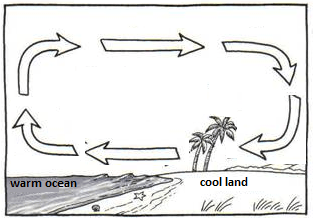
What kind of breeze is this and when would it form?
a)
Land breeze - daytime
b)
Land breeze - nighttime
c)
Sea breeze - daytime
d)
Sea breeze - nighttime
11.
Why do land breezes occur at night?
a)
Land cools off slower than water, so the air above water is cooler.
b)
Water cools off faster than land, so the air above land is warmer.
c)
Land heats up slower than water, so the air stays cooler during the day.
d)
Water cools off slower than land, so the air above water is warmer.
12.
Which best describes why winds at the beach change direction between day and night?
a)
because the temperatures over land and over water change
b)
because warm air over land sinks and stays in place over land
c)
because cool air rises and is replaced by warm air from the ocean
d)
because cool air sinks and stays in place over land
13.
What causes wind to blow?
a)
Differences in longitude
b)
Shock waves from clouds
c)
Differences in air temperature and pressure
d)
The rotation of the earth
14.
What creates the air pressure difference between the equator and the poles?
a)
The length of the seasons
b)
The shape of the earth
c)
the duration of the solar year
d)
The amount of direct sunlight each area receives
15.
How are the winds in the northern hemisphere different from winds in the southern hemisphere?
a)
Winds int he northern hemisphere are deflected right; winds int eh southern hemisphere are deflected left
b)
winds in the northern hemisphere are deflected south; winds in the southern hemisphere are deflected north
c)
winds in the northern hemisphere are deflected eart; winds in the southern hemisphere are deflected west
d)
winds in the northern hemisphere are deflected left; einds in the southern hemisphere are deflected right
16.
if you wanted to find the jet steam, where would you go?
a)
the area around the poles
b)
the area around the equator
c)
10 km above the earth's surface
d)
1 km above the earth's surface
17.
If you wanted to visit an area with very little wind, where might you go?
a)
The doldrums around the equator
b)
the jet streams in the northern and southern hemisphere
c)
the North or South Pole
d)
the area around the Mediterranean Sea
18.
How do jet streams influence the weather?
a)
by creating clouds
b)
by increasing the moisture in the atmosphere
c)
by moving weather from one area to another very quickly
d)
by drying out the atmosphere
19.
What causes warm air to rise?
a)
the fact that it's less dense than cold air
b)
The fact that it weighs more than cold air
c)
The fact that it has higher pressure than cold
d)
the fact that its more dense than cold air
20.
The reason why global winds flow from east to west and west to east, but not north to south, or south to north.
a)
Bernoulli's principle
b)
Coriolis effect
c)
high pressure
d)
low pressure
21.
When Earth's rotation causes the wind to curve
a)
cloudy
b)
Coriolis effect
c)
high pressure
d)
low pressure
22.
When heat rises cools then sinks
a)
high pressure
b)
convection current
c)
low pressure
d)
stratospheric pressure
23.
What is the definition of CONDUCTION?
a)
When heat is transferred from objects like rays of light or electromagnetically.
b)
a hot liquid or air that expands, becomes less dense, and rises or becomes more dense, and sinks.
c)
When heat transfers from objects that are touching.
d)
When heat transfers through the heater or AC in your house.
24.
What is the definition of CONVECTION
a)
When heat transfers through waves.
b)
When heat transfers from objects that are touching.
c)
a hot liquid or air that expands, becomes less dense, and rises or becomes more dense, and sinks.
d)
Heat traveling from the sun
25.
What kind of heat transfer happens when the sun is heating your body?
a)
Conduction
b)
Radiation
c)
Convection
d)
Density
26.
Which of the following is an example of convection?
a)
A hair dryer is drying up your hair.
b)
When the AC or heater changes the temperature.
c)
When a car engine turns hot after being turned on.
d)
When you are making soup and the water is rising and lowering.
27.
What heat transfer happens when you burn your hand by touching a fire?
a)
Radiation
b)
Conduction
c)
Convectio
d)
I don't know!!!!!!!!!!!
28.
When a pot is touching a stove that is on, what heat transfer is happening?
a)
I don't know??????
b)
Radiation
c)
Conduction
d)
Convection
29.

The way the heat is moving from the hot coffee is called...
a)
convection
b)
radiation
c)
insulation
d)
conduction
30.
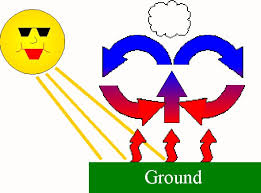
Warm air rises and the cool air sinks demonstrates this type of heat transfer.
a)
conduction
b)
convection
c)
radiation
d)
Insolation
31.

The baby chickens are kept warm from the heat lamps demonstrates this type of heat transfer.
a)
conduction
b)
convection
c)
radiation
32.
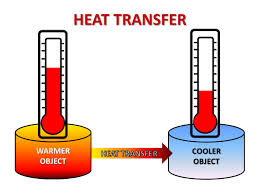
Heat transfers from an area of ____temperature to an area of ___ temperature.
a)
high to low
b)
low to high
c)
high to high
d)
It can travel high to low and low to high.
33.
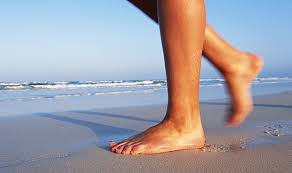
Walking on the warm sand sand with your bare feet demonstrates this type of heat transfer.
a)
conduction
b)
convection
c)
radiation
34.

The Gulf Stream is a current that brings warm ocean water from the south to the north. What type of heat transfer is this?
a)
conduction
b)
convection
c)
radiation
d)
Insolation
35.
Ironing a shirt is an example of...
a)
condensation
b)
conduction
c)
convection
d)
radiation
36.
Warm air is __________ dense than cold air and rises creating convection currents.
a)
more
b)
less
37.

Johnny accidentally grabbed the handle of the hot pot.
a)
conduction
b)
convection
c)
radiation
38.

A group of friends gather around a fire to stay warm.
a)
conduction
b)
convection
c)
radiation
39.
Transfer of thermal energy through "space"
a)
conduction
b)
convection
c)
radiation
40.
Transfer of thermal energy through "flow"
a)
conduction
b)
convection
c)
radiation
41.
Transfer of thermal energy through "touch"
a)
conduction
b)
convection
c)
radiation
42.
The cause of weather systems on earth is
a)
conduction
b)
convection
c)
radiation
43.
The layers of the atmosphere in order from bottom to top are
a)
troposphere, stratosphere, mesosphere, thermosphere, exosphere
b)
troposphere, mesosphere, atmosphere, thermosphere
c)
mesosphere, thermosphere, troposphere, stratosphere, exosphere
d)
thermosphere, stratosphere, mesosphere, troposphere, exosphere
44.
The layer of the atmosphere containing the ozone layer is
a)
troposphere
b)
stratosphere
c)
thermosphere
d)
mesosphere
45.
The layer of the atmosphere containing our weather is
a)
thermosphere
b)
stratosphere
c)
troposphere
d)
mesosphere
46.
The layer of the atmosphere containing the ionosphere and auroras is
a)
troposphere
b)
mesosphere
c)
stratosphere
d)
thermosphere
47.
The layer of the atmosphere where meteors burn up
a)
mesosphere
b)
thermosphere
c)
troposphere
d)
stratosphere
48.
The layers of the atmosphere that get colder as altitude increases are
a)
thermosphere and troposphere
b)
meosphere and troposphere
c)
stratosphere and thermosphere
d)
thermosphere and mesosphere
49.
The layers of the atmosphere that get hotter with increased altitude are the
a)
thermosphere and mesosphere
b)
troposphere and mesosphere
c)
thermosphere and stratosphere
d)
stratosphere and mesosphere
50.
The hottest layer is the
a)
themosphere
b)
stratosphere
c)
mesosphere
d)
troposphere
51.
This gas makes up 78% of the atmosphere
a)
oxygen
b)
nitrogen
c)
ozone
d)
carbon dioxide
52.
What is the function of the ozone layer?
a)
to allow UV rays to get to Earth
b)
to block UV rays from getting to Earth
c)
To keep oxygen in
d)
to allow meteors to get to Earth
53.
What protects us from dangerous ultraviolet radiation from the sun?
a)
Ozone
b)
Water Vapor
c)
Solids in the Atmosphere
d)
Carbon Dioxide
54.
The two most common gases in the atmosphere.
a)
Nitrogen and Oxygen
b)
Oxygen and trace gases
c)
Carbon Dioxide and Nitrogen
d)
Nitrogen and trace gases
55.
This is the layer where airplanes fly.
a)
Troposphere
b)
Stratosphere
c)
Mesosphere
d)
Thermosphere
56.
What happens to the density (thickness)/air pressure of the air as you increase in altitude?
a)
density increases
b)
density decreases
c)
density stays the same
d)
density disappears
57.
The higher you go, the air becomes _____ _____.
a)
More dense
b)
Less dense
58.
The coldest layer.
a)
troposphere
b)
thermosphere
c)
exosphere
d)
mesosphere
59.
Satellites orbit this layer of the atmosphere.
a)
Stratosphere
b)
Exosphere
c)
Thermosphere
d)
Troposphere
60.
What does the earth's atmosphere do?
a)
help to regulate the temperature on Earth
b)
Help UV rays to reach the Earth's surface
c)
Creates meteors in the sky
d)
Keep ocean waters cold
61.
As altitude increases, the temperature always increase
a)
True
b)
False
62.
Which layer of the atmosphere has the greatest air pressure?
a)
Troposphere
b)
Stratosphere
c)
Thermosphere
d)
Exosphere
63.
Which layer of the atmosphere has the least air pressure?
a)
Troposphere
b)
Stratosphere
c)
Thermosphere
d)
Exosphere
64.
Holes in the ozone layer cause what?
a)
Oxygen to escape the troposphere
b)
Harmful UV rays to reach Earth's surface
c)
Heavier rain clouds to form in the holes
d)
Aurora Borealis lights to shine brighter in certian areas
65.
In which layer of the atmosphere are clouds found?
a)
troposphere
b)
stratosphere
c)
mesosphere
d)
thermosphere
66.

What layers of the atmosphere have temperatures that increase with height?
a)
troposphere and stratosphere
b)
stratosphere and thermosphere
c)
mesosphere and troposphere
d)
thermosphere and mesosphere
67.

As you go higher in the troposphere what happens to the air?
a)
it gets hotter and thinner
b)
it gets hotter and thicker
c)
it gets colder and thinner
d)
it gets colder and thicker
68.

What fuels the water cycle
a)
water
b)
wind
c)
sun
d)
us
69.
The ionosphere is part of the thermosphere?
a)
True
b)
False
70.

Where does weather occur?
a)
thermosphere
b)
troposphere
c)
stratosphere
d)
ionosphere
71.
The five layers of the atmosphere in order from the ground up
a)
stratosphere, troposphere, exosphere, mesosphere and thermosphere
b)
troposphere, mesosphere, thermosphere, exosphere and stratosphere
c)
thermosphere, exosphere, mesosphere, stratosphere and troposphere
d)
troposphere, stratosphere, mesosphere, thermosphere and exosphere
72.
Which type of air rises faster?
a)
cold
b)
warm
c)
stormy
d)
clam
73.
Warm air rising and cool air sinking are examples of parts of this method of heat transfer.
a)
Conduction
b)
Convection
c)
Radiation
74.
Increased levels of CO2 and methane gas in the atmosphere will cause global temperatures to increase. These gases absorb and store heat in the atmosphere. What is this called?
a)
Acid Rain
b)
Green House Effect
c)
Lapse Rate
d)
Smog
75.
What is the atmosphere?
a)
oxygen
b)
carbon dioxide
c)
mixture of gases
d)
water vapor
76.
Auroras are caused by electrically charged particles in the
a)
exosphere
b)
ionosphere
c)
troposphere
d)
mesosphere
77.
densest layer; contains 90% of the atmosphere's mass
a)
troposphere
b)
thermosphere
c)
stratosphere
d)
mesosphere
78.
Thermal energy transferred by circulation of liquid is:
a)
thermal conduction
b)
radiation
c)
convection
d)
convection current
79.
One reason for for global warming may be
a)
decreasing global gases
b)
increasing global gases
c)
increasing greenhouse gases
d)
decreasing greenhouse gases
80.
What causes wind?
a)
differences in gravity
b)
differences in oxygen
c)
differences in density
d)
differences in air pressure
81.
In the Northern Hemisphere, winds traveling north appear to curve to the east due to:
a)
trade winds
b)
polar vortex
c)
polar easterlies
d)
Coriolis effect
82.
Global winds that blow from west to east are ________________
a)
easterlies
b)
westerlies
c)
trade winds
d)
doldrums
83.
Global winds that blow northeast from 30 degrees north latitude and southeast from 30 degree south latitude are called________________
a)
trade winds
b)
northerlies
c)
easterlies
d)
westerlies
84.
What percent of the Earth's atmosphere is oxygen?
a)
78%
b)
33%
c)
35%
d)
21%
100 %

