
 Worksheets
Envirothon
Total questions: 87
Worksheet time: 1hrs 17mins
Name
Class
Date
1.

Water gets into the cracks of rock and freezes, causing the rock to break. What is this an example of?
a)
erosion
b)
weathering
2.

What is the name of a soil that is:
85% Sand
10% Silt
5% Clay
85% Sand
10% Silt
5% Clay
a)
Sand
b)
Silt loam
c)
Loamy sand
d)
Sandy loam
3.
Identify the soil horizon:
Consists of topsoil (mostly sand and some clay) rich in humus (O horizon) and leached soil deficient in humus and minerals.
Consists of topsoil (mostly sand and some clay) rich in humus (O horizon) and leached soil deficient in humus and minerals.
a)
O horizon
b)
A horizon
c)
B horizon
d)
C horizon
4.
Identify the soil horizon:
Deepest layer; consists of broken and solid, unweathered bedrock.
Deepest layer; consists of broken and solid, unweathered bedrock.
a)
O horizon
b)
A horizon
c)
B horizon
d)
C horizon
5.
Identify the soil horizon:
Subsoil reddish brown in color; made mostly of clay; rich in minerals and nutrients
Subsoil reddish brown in color; made mostly of clay; rich in minerals and nutrients
a)
O horizon
b)
A horizon
c)
B horizon
d)
C horizon
6.
What is a cross section in which layers (a.k.a. horizons ) of soil and bedrock can be seen.
a)
Soil picture
b)
Soil model
c)
Soil profile
d)
Soil section
7.
What is the name of a soil that is:
30% Sand
10% Silt
60% Clay
30% Sand
10% Silt
60% Clay
a)
Clay
b)
Silt loam
c)
sand
d)
Sandy loam
8.
This is the largest soil particle.
a)
sand
b)
silt
c)
clay
9.
This is a medium sized soil particle.
a)
sand
b)
silt
c)
clay
10.
A part of soil, plant or animal material; dark colored.
a)
couscous
b)
Talus
c)
Hermes
d)
Humus
11.
Identify the soil horizon:
Consists of topsoil (mostly sand and some clay) rich in humus (O horizon) and leached soil deficient in humus and minerals.
Consists of topsoil (mostly sand and some clay) rich in humus (O horizon) and leached soil deficient in humus and minerals.
a)
O horizon
b)
A horizon
c)
B horizon
d)
C horizon
12.

_______ is the type of soil used most often with plants and on farms. It is a mixture of clay, sand, and silt.
a)
loam
b)
humus
c)
soil
d)
dirt
13.
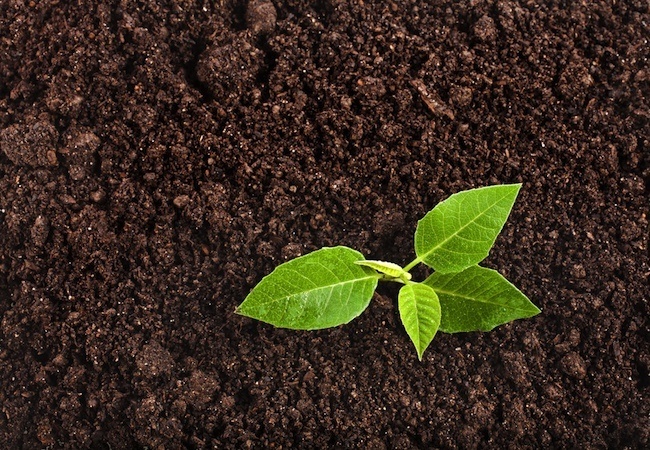
Which of the following is NOT one of the three types of soil?
a)
clay
b)
sand
c)
silt
d)
mud
14.
Which type of soil can hold the greatest amount of water?
a)
sand
b)
silt
c)
clay
d)
loam
15.
Which soil particle is the smallest?
a)
sand
b)
silt
c)
clay
d)
gravel
16.

What is HUMUS made from?
a)
Chick-Peas
b)
The remains of decayed plants and animals
c)
Beans
d)
Cheese
17.
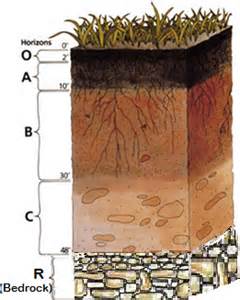
Which horizon is made up of partially weathered rocks?
a)
Horizon A
b)
Horizon B
c)
Horizon C
d)
Horizon D or R
18.
Erosion and weathering are different processes that involve some of the same causes, such as wind, water, and ice. How is erosion different from weathering?
a)
Erosion is slower than weathering
b)
Erosion is faster than weathering
c)
Erosion breaks rocks and weathering moves rocks
d)
Erosion moves rocks and weathering breaks rocks.
19.
There is a relationship between landforms and the movement of water. Given this relationship, which of the following landforms is the result of weathering?
a)
canyon
b)
desert
c)
forest
d)
mountain
20.
Erosion can be caused by which of the following?
a)
Ice
b)
Water
c)
Wind
d)
All of the above
21.
True or false: Plants can cause weathering.
a)
True
b)
False
22.
What force causes all types of mass movement?
a)
convection
b)
temperature
c)
gravity
d)
compaction
23.

Which TWO locations is the water moving the fastest?
a)
A and B
b)
A and D
c)
B and C
d)
B and D
24.

Which TWO locations will have the most deposition?
a)
A and D
b)
A and B
c)
B and C
d)
B and D
25.

Chemical weathering is the other important type of weathering. Chemical weathering may change the size of pieces of rock materials, but definitely changes the composition. So one type of mineral changes into a different mineral. Chemical weathering works through chemical reactions that cause changes in the minerals.
True or false: chemical weathering causes rocks to change into new types of rocks.
True or false: chemical weathering causes rocks to change into new types of rocks.
a)
True
b)
False
26.

Carbon dioxide (CO2) combines with water as raindrops fall through the atmosphere. This makes a weak acid, called carbonic acid. Carbonic acid is a very common in nature, where it works to dissolve rock. Pollutants, such as sulfur and nitrogen from fossil fuel burning, create sulfuric and nitric acid. Sulfuric and nitric acids are the two main components of acid rain, which speeds up chemical weathering.
This statue was probably destroyed by _____.
This statue was probably destroyed by _____.
a)
Wind
b)
Humans
c)
Acid Rain
d)
Animals
27.

What is mechanical weathering?
a)
Process through which rocks are physically broken into smaller pieces.
b)
Rocks are broken down through chemical changes.
c)
Rocks are worn away from acid in plant roots.
d)
Rocks broken down by machinery.
28.

The diagrams shows a natural process that weathers rock.
Which statement best explains why this process results in weathering?
Which statement best explains why this process results in weathering?
a)
frozen water acts as a solute
b)
water expands when it freezes
c)
the mass of water increases when it freezes
d)
frozen water dissolves most types of rock
29.
What is responsible for the formation of sand dunes?
a)
Wind
b)
Water
c)
Gravity
d)
Ice
30.
What is a type of mass movement by gravity?
a)
dune
b)
loess
c)
glacier
d)
mudslide
31.

a)
Tree Stick
b)
Biltmore Stick
c)
Ruler
d)
Log stick
32.

a)
Suunto
b)
Compass
c)
Clinometer
33.

a)
Loggers Tape
b)
Diameter Tape
c)
Clinometer
34.

This tool is used to plant tree seedlings.
a)
Dibble bar
b)
Tree planter
c)
metal bar
35.

a)
Slope
b)
clinometer calculations
36.

a)
Tree slice
b)
Tree Increment Borer
c)
Tree cookie
37.

What tree is this?
a)
American Elm
b)
Cottonwood
c)
Sycamore
d)
Silver Maple
38.

What tree is this?
a)
Shagbark Hickory
b)
White Pine
c)
White Oak
d)
Sycamore
39.

What tree is this?
a)
Shagbark Hickory
b)
Pin Oak
c)
Cottonwood
d)
American Elm
40.

What tree is this?
a)
White Pine
b)
Bradford Pear
c)
White Oak
d)
Sycamore
41.

What tree is this?
a)
Pin Oak
b)
Sycamore
c)
Silver maple
d)
American Elm
42.

What tree is this?
a)
Cottonwood
b)
White Oak
c)
White Pine
d)
Silver Maple
43.

What tree is this?
a)
Silver Maple
b)
Bradford Pear
c)
Pin Oak
d)
Cottonwood
44.

What tree is this?
a)
Bradford Pear
b)
White Oak
c)
White Pine
d)
Shagbark Hickory
45.

What tree is this?
a)
Cottonwood
b)
Pin Oak
c)
White Oak
d)
White Pine
46.
Which tree is commonly found in Riparian Buffers?
a)
Sycamore
b)
Bradford Pear
c)
White Oak
d)
Post Oak
47.
Which tree is invasive and commonly used in decorative landscape?
a)
Silver maple
b)
Bradford Pear
c)
American Elm
d)
White Pine
48.
Which tree has been found to be a habitat for bats, as they hide under the bark?
a)
Shagbark Hickory
b)
Sycamore
c)
White Pine
d)
Cottonwood
49.
What is the difference between Poison Ivy and Virginia Creeper?
a)
Poison Ivy has 3 leaves, Virginia Creeper has 5.
b)
Poison Ivy causes an itchy rash, Virginia Creeper does not.
c)
Poison Ivy is native, Virginia Creeper is not.
d)
Only A & B
50.
The most recent growth section of a forest is called...
a)
Young Forest
b)
Mature Forest
c)
Shrub Habitat
d)
Early Succession
51.
Large trees with open cavities are called...
a)
Mast-Bearing trees
b)
Den Trees
c)
Mature Forest
d)
Succession
52.
The height at which you should measure diameter of a tree is...
a)
4 feet
b)
4.5 feet
c)
5 feet
d)
10 feet
53.
The process of change in an ecosystem is...
a)
Selective Cutting
b)
Mast-bearing trees
c)
Succession
d)
Den Trees
54.
Which of these are reasons to plant trees?
a)
Lower temperature and increase oxygen
b)
Improve appearance and prevent erosion
c)
Provide habitats and improve soil health
d)
All of these
55.
The number of rings on a tree determines its...
a)
height
b)
weight
c)
age
d)
number of boards
56.
Trees that produce nuts or fruits are known as...
a)
Mast-bearing trees
b)
Den trees
c)
Early Succession
d)
Mature forest
57.
The amount of flowing dirt in the water is
a)
pH
b)
suspended sediment
c)
biodiversity
d)
dissolved oxygen
58.

Cooler water temperatures are better because
a)
Cold water holds more dissolved oxygen
b)
Cold water makes it harder for bacteria to grow
c)
Both are reasons why cool water is beneficial
59.

Water with high turbidity
a)
is cloudy and hard to see through
b)
is clear
60.
Temperature, turbidity, and suspended sediment are all
a)
chemical indicators of water quality
b)
physical indicators of water quality
c)
biological indicators of water quality
d)
not indicators of water quality
61.

The presence of pollution intolerant macroinvertebrates like stonefly and caddisfly indicates
a)
good quality water
b)
poor quality water
62.
Fertilizer causes the level of _____ to increase.
a)
nitrates
b)
phosphates
c)
pH
d)
both nitrates and phosphates
63.

How could pesticides get into lakes and streams?
a)
too much could be used
b)
it could be sprayed too close to a stream
c)
rain could wash pesticides into a stream
d)
all of the above
64.
A clean stream will have:
a)
a large number of diverse (varied) species
b)
lots of algae blooms
c)
a large amount of nitrates
d)
high pH
65.
The highest point of an aquifer is called
a)
the water table.
b)
the saturated zone.
c)
permeable rock.
d)
impermeable rock.
66.
Bucks shed their antlers every year.
a)
False
b)
True
67.
Deer have four stomachs, this makes them a
a)
ruminant
b)
ungulate
c)
browser
d)
grazer
68.
Deer are found in their largest herds in
a)
February
b)
April
c)
June
d)
October
69.
The maximum number of organisms that can live in an area for the entire year
a)
carrying capacity
b)
limiting factor
c)
population gradient
d)
exponential growth
70.
Wildlife was nearly wiped out by the early 1900s by
a)
overhunting
b)
disease outbreaks
c)
natural predator overpopulation
d)
poor breeding
71.

Identify this animal.
a)
elk
b)
white-tailed deer
c)
moose
d)
mule deer
72.

Identify this animal.
a)
bobcat
b)
lynx
c)
mountain lion
d)
coyote
73.

Identify this animal.
a)
white-winged dove
b)
mallard duck
c)
bobwhite quail
d)
rock pigeon
74.

Identify this animal.
a)
elk
b)
white-tailed deer
c)
moose
d)
mule deer
75.

Identify this animal.
a)
bobcat
b)
lynx
c)
mountain lion
d)
coyote
76.

Identify this animal.
a)
bobcat
b)
lynx
c)
mountain lion
d)
coyote
77.

Identify this animal.
a)
badger
b)
beaver
c)
muskrat
d)
nutria
78.

Identify this animal.
a)
eastern fox squirrel
b)
mink
c)
rat
d)
weasel
79.

Identify this animal.
a)
eastern fox squirrel
b)
red fox
c)
muskrat
d)
weasel
80.

Identify this animal.
a)
badger
b)
red fox
c)
muskrat
d)
weasel
81.

Identify this animal.
a)
opossum
b)
otter
c)
muskrat
d)
weasel
82.

Identify this animal.
a)
mink
b)
otter
c)
muskrat
d)
weasel
83.

Identify this animal.
a)
opossum
b)
beaver
c)
badger
d)
raccoon
84.

Identify this animal.
a)
white-winged dove
b)
mallard duck
c)
bobwhite quail
d)
rock pigeon
85.

Identify this animal.
a)
prairie chicken
b)
ring-necked pheasant
c)
mallard duck
d)
wild turkey
86.

Identify this animal.
a)
prairie chicken
b)
ring-necked pheasant
c)
mallard duck
d)
wild turkey
87.

Identify this animal.
a)
american crow
b)
ring-necked pheasant
c)
mallard duck
d)
ruffed grouse
100 %

