wayground logo

Free Printable Worksheets

Font size

S
M
L
XL
Worksheets

Cell Energy Review

Total questions: 88

Worksheet time: 2hrs 50mins

Name
Class
Date
1.

During cellular respiration, what do animals/people need to use in ADDITION to glucose to make ATP? (a)  

Choose from the below words
sunlight
meat
water
oxygen
2.

During photosynthesis, what gas do plants release into the air?

a)

oxygen

b)

carbon dioxide

c)

water

d)

nitrogen

3.

Photosynthesis is important for plants because....

a)

plants need air to breathe

b)

it makes the plants green

c)

it is the process by which plants make their own food

d)

without it the Earth would all be a desert

4.

The energy that starts the process of photosynthesis comes from....

a)

sunlight

b)

transpiration

c)

cellular respiration

d)

germination

5.

The process by which cells use oxygen to produce energy from glucose is called?

a)

photosynthesis

b)

transpiration

c)

cellular respiration

d)

germination

6.
Which of the following is necessary for photosynthesis?
a)
Sunlight
b)
Glucose
c)
Oxygen
d)
Soil
7.

Which of the following is a ONE of the products of photosynthesis?

a)

Water

b)

Sunlight

c)

Glucose

d)

Carbon dioxide

8.

Which of the following organisms use cellular respiration to make ATP.

a)

Plants only

b)

Animals only

c)

Plant and animals

d)

Glucose

9.

Plants obtain energy for photosynthesis by absorbing (a)   through chloroplasts in the leaf cells.

Choose from the below words
Water is absorbed through the flowe
Soil is absorbed by the roots
Oxygen is absorbed though the stem
Sunlight is absorbed by chloroplast
10.

Which of the following is ONE of the products during cellular respiration?

a)

Protein

b)

Oxygen

c)

Carbon dioxide

d)

Glucose

11.
Which of the following are needed for cellular respiration?
a)

Chlorophyll and sunlight

b)

Water and carbon dioxide

c)

Oxygen and Glucose

d)

Money and a ride to Walmart

12.
What is glucose?
a)

A Gas

b)

Energy

c)

Sugar

d)

A protein

13.

True or False: AEROBIC respiration uses oxygen

a)

True

b)

False

14.
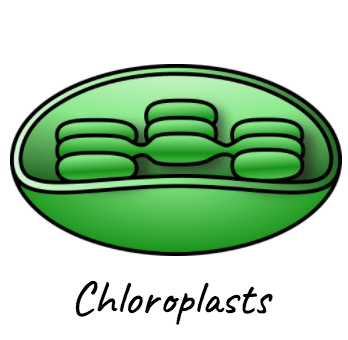
Chloroplasts are...
a)
A type of pigment used for photosynthesis
b)
The location inside a plant cell where photosynthesis happens
c)
The location where cellular respiration happens
d)
Green beans
15.

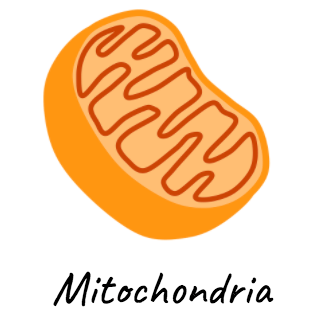
Mitochondria are (a)   .

Choose from the below words
The location in cells where photosy
Kidney beans
The location in cells where cellula
A type of pigment used for cellular
16.

What is the purpose of cellular respiration?

a)

To turn energy from the sun into glucose

b)

To turn oxygen into glucose

c)

To turn ATP into glucose

d)

To turn glucose into energy in the form of ATP
17.
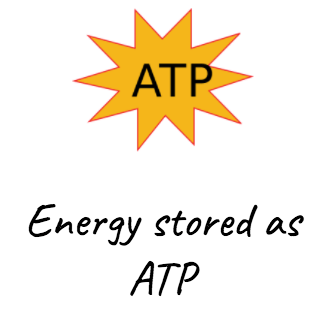
ATP is...
a)
A form of energy the cell can use that is produced by cellular respiration
b)
A kind of sugar produced in photosynthesis
c)
A battery
18.

Match the NAME of the chemical to its chemical formula

a)

O2

1.

Oxygen

b)

CO2

2.

Carbon Dioxide

c)

H2O

3.

Water

d)

C6H12O6

4.

Glucose

19.
Plants can...
a)
Only use photosynthesis
b)
Only use cellular respiration
c)
Use photosynthesis and cellular respiration
20.

Animals can...

a)

Only use photosynthesis

b)

Only use cellular respiration

c)

Use photosynthesis and cellular respiration

21.
Reactants are...
a)

Substances present at the beginning of a chemical reaction

b)

substances present at the end of a chemical reaction

22.
Products are...
a)

Substances present at the beginning of a chemical reaction

b)

substances present at the end of a chemical reaction

23.

Cellular respiration and photosynthesis are related because (a)   .

Choose from the below words
They both make glucose
They both require oxygen
The products of one reaction are th
They both make carbon dioxide
24.

What chemical reaction is this?

a)

Photosynthesis

b)

Cellular Respiration

25.

What chemical reaction is this?

a)

Photosynthesis

b)

Cellular Respiration

26.

True or False: ANAEROBIC respiration uses makes ATP without oxygen and creates lactic acid as a byproduct which causes our muscles to feel tired

a)

True

b)

False

27.

What are the 2 REACTANTS of cellular respriation?

a)

Glucose and Carbon Dioxide

b)

Glucose and Oxygen

c)

Water and Carbon Dioxide

d)

ATP and Sunlight

28.

What are the 3 PRODUCTS of cellular respiration?

a)

Glucose and Carbon Dioxide and Water

b)

Glucose and Oxygen and Water

c)

Water and Carbon Dioxide and ATP

d)

ATP and Sunlight and Oxygen

29.

What are the 3 REACTANTS of photosynthesis ?

a)

Glucose and Carbon Dioxide and Water

b)

Sunlight, Water and Carbon Dioxide

c)

Water and Carbon Dioxide and ATP

d)

ATP and Sunlight and Oxygen

30.

What are the 2 PRODUCTS of photosynthesis ?

a)

Glucose and Oxygen

b)

Sunlight, Water and Carbon Dioxide

c)

Water and Carbon Dioxide and ATP

d)

ATP and Sunlight and Oxygen

31.

True or False: PLANTS use and need the oxygen produced during Photosynthesis (a)  

Choose from the below words
False
True
32.

In the chemical reaction below what are the REACTANTS ​ (a)   ​​ and the product is ​ (b)  

Choose from the below words
H2 + O2
H2O
33.
What is ATP?
a)
An electron carrier produced during photosynthesis.
b)
The main energy molecule used by the cell.
c)
The lipid found in the cell membrane.
d)
A protein.
34.
Identify the molecule.
a)
ADP
b)
NADH
c)
ATP
d)
Glucose
35.

What happens when a phosphate group is removed from a ATP molecule?

a)

ATP becomes ADP and energy is released.

b)

Phosphate groups can not be removed from ATP

c)

ATP becomes NADH and energy is stored.

d)

None of the above

36.
Autotroph
a)
Consumer
b)
Organism that breaks down dead material for energy.
c)
An organism that consumes others for energy.
d)
An organism that makes its own food.
37.
Which of the following are examples of autotrophs?
a)
Plants and animals
b)
Mushrooms and Lichens
c)
Plants and algae
d)
Amoebas and Fungi
38.
Heterotroph
a)
Organism that makes its own food.
b)
Organisms that consumes others for energy.
c)
Algae
d)
Organisms that perform chemosynthesis.
39.
The process in which light energy is converted to chemical energy.
a)
Cellular Respiration
b)
Chemosynthesis
c)
Decomposition
d)
Photosynthesis
40.
Process in which inorganic compounds is used to make glucose in the absences of light energy.
a)
Photosynthesis
b)
Cellular Respiration
c)
Chemosynthesis
d)
Decomposition
41.
Where do the light  dependent reactions occurs?
a)
Mitochondrion
b)
Stroma
c)
Thylakoid
d)
Golgi Apparatus
42.

What is needed for the light dependent reactions to occur?

a)

Water, Light, ADP, NADP

b)

Carbon dioxide. light, ATP

c)

Water and Oxygen

d)

None of the above

43.

What is produced during the light dependent reactions?

a)

ADP, NADPH, Carbon dioxide

b)

ATP, NADPH, Oxygen,

c)

High energy sugars, ADP, NADP

d)

Water and oxygen

44.
Where do the light independent reactions occur?
a)
Thylakoid
b)
Stroma
c)
Mitochondrion
d)
Golgi bodies
45.
What is needed for the light independent reactions to occur?
a)
Light, ADP, NADPH
b)
Water, oxygen and light
c)
Carbon dioxide, ATP, and NADPH
d)
None of the above
46.
What is NADP+
a)
Electron carrier used in photosynthesis;becomes NADPH
b)
Electron carrier used during cellular respiration; becomes NAD+
c)
Gas produced during photosynthesis
d)
High energy sugar
47.
What is produced during light Independent reactions?
a)
Water, ATP, and CO2
b)
High Energy sugars, ADP, NADP+
c)
Carbon dioxide and ATP
d)
None of the above
48.
What factors affect the rate of photosynthesis?
a)
Light intensity
b)
CO2 availability
c)
Water availability
d)
All of the above
49.
What is the structured labeled E? (green pancake)
a)
Thylakoid
b)
Stroma
c)
Granum
d)
Chlorophyll
50.
A stack of thylakoids is called a
a)
Stroma
b)
Chlorophyll
c)
Thylakoid lumen
d)
Granum
51.
Space outside the thylakoid is called
a)
Stroma
b)
Granum
c)
Thylakoid lumen
d)
Chlorophyll
52.
What is chlorophyll?
a)
Light absorbing Green pigment in the thylakoids
b)
Orange and yellow pigments
c)
Electron carriers
d)
None of the above
53.
The calvin cycle is another name for..
a)
Light Independent reactions
b)
Light dependent reactions
c)
Cellular respiration
d)
Glycolysis
54.
If you reduce the amount of carbon dioxide that a plant receives what would happen?
a)
Nothing would happen because carbon dioxide levels do not affect the rate of photosynthesis.
b)
The amount of sugars produced during photosynthesis would increase.
c)
The amount of sugars produced during photosynthesis would decrease.
d)
The same number of sugars will be produced but without carbon dioxide.
55.
What organelle in the cell performs photosynthesis?
a)
Mitochondria
b)
Chloroplast
c)
Golgi bodies
d)
ER
56.
What organelle performs cellular respiration?
a)
Mitochondrion
b)
Chloroplast
c)
ER
d)
Golgi Bodies
57.
The conversion of food to energy molecules the cell can use.
a)
Chemosynthesis
b)
Photosynthesis
c)
Cellular Respiration
d)
Decomposition
58.
Which of the following shows the correct sequence of events during cellular respiration.
a)
Glycolysis, Electron transport chain, Krebs cycle
b)
Krebs cycle, Electron Transport Chain, Glycolysis
c)
Light dependent reactions, Dark Reactions
d)
Glycolysis, Krebs Cycle, Electron Transport Chain
59.
Where does glycolysis occur?
a)
Mitochondrion
b)
Cell membrane
c)
Cytoplasm
d)
Chloroplast
60.
T/F Almost all organism perform cellular respiration.
a)
True
b)
False
61.
T/F Plants perform cellular respiration.
a)
True
b)
False
62.
What are the beginning molecules need for glycolysis to occur?
a)
Glucose and ATP
b)
Glucose, oxygen, ATP
c)
NADH, ATP, Oxygen
d)
None of the above
63.
What is produced during glycolysis?
a)
FADHand NADH
b)
NADPH, ATP, CO2
c)
36 ATP, NADH, FADH2
d)
4 total ATP, 2 pyruvic acid molecules
64.

Where does the krebs cycle take place?

a)

Cytoplasm

b)

matrix of the mitochondrion

c)

Chloroplast

d)

Cytosol

65.
What is needed for the krebs cycle?
a)
NADPH and ATP
b)
CO2, light, water
c)
ATP, Glucose and oxygen
d)
Pyruvic acid, NAD+, ADP
66.
What is produced during the krebs cycle?
a)
FADH2, NADH, ATP, CO2
b)
Pyruvic acid and ATP
c)
CO2 and NADH
d)
Pyruvate, NADP, ADP
67.
Where does the electron transport chain occur?
a)
Inner Membrane of the mitochondrion
b)
Cytoplasm
c)
Matrix of the mitochondrion
d)
Chloroplast
68.
What is produced during the electron transport chain?
a)
FADH, NADP, ATP
b)
CO2, Water 2 ATP
c)
36 ATP and water
d)
20 ATP and water
69.
 Identify the chemical equation: 6CO2 + 6H20+ light -> C6H12O6 + 6O2 
a)
Chemosynthesis
b)
Photosynthesis
c)
Cellular Respiration
d)
Decomposition
70.
Identify the chemical equation: 6O2 + C6H12O6 -> 6CO2 + 6H2O + Energy (36 ATP)
a)
Photosynthesis
b)
Chemosynthesis
c)
Cellular Respiration
d)
Decomposition
71.

Label the function of each organelle:

72.

Process X represents ​ (a)   which occurs in the ​ (b)   . Process Y represents ​ (c)   which occurs in the ​ (d)   . Do both plant and animals cells complete cellular respiration? ​ (e)  

Choose from the below words
photosynthesis
chloroplast
cellular respiration
mitochondria
Yes, they do.
No, they do not.
73.

At which point on the graph does the enzyme denature?

74.

When looking at an onion cell under the microscope, in lower power you will see ​ (a)   cells and they will be ​ (b)   . In high power, you will see ​ (c)   cells and they will be ​ (d)   .

Choose from the below words
more
smaller
less
larger
75.

Match the following:

a)

active transport

1.

requires ATP

b)

passive transport

2.

does not require ATP

c)

diffusion

3.

molecules move from high to low

d)

endocytosis

4.

molecules move from low to high

76.

Label each organelle:

77.

The process by which plants use sunlight to convert carbon dioxide and water into glucose and oxygen is called ​ (a)  

Choose from the below words
digestion
transpiration
respiration
photosynthesis
78.

Why is Molecule A able to diffuse across the cell membrane but Molecule B is not?

4 lines
79.

Organize the levels into the least complex to the most complex:

a)

organelle

b)

cell

c)

tissue

d)

organ

e)

organ system

1)
2)
3)
4)
5)
80.

If you eat meat for dinner, the organic molecules in the meat would be found in new molecules of...

a)

glucose

b)

protein

c)

starch

d)

fatty acids

81.

The chemical formula for cellular respiration: ​​ (a)   + ​ (b)   → ​ (c)   +​ (d)   ​ + (e)  

Choose from the below words
C6H12O6
O2
CO2
H2O
ATP
82.

The chemical formula for photosynthesis: ​ (a)   + ​ (b)   ​ +​ (c)   → ​ (d)   +​ (e)  

Choose from the below words
CO2
H20
sunlight
C6H12O6
O2
83.

Organelle A in this diagram represents the ​ (a)  

Choose from the below words
chloroplast
mitochondria
vacuole
84.

In living cells, chemical processes, such as synthesis, all require the action of (something to speed a reaction up)

a)

Specialized antibodies

b)

hormones

c)

biological catalysts

85.

​ (a)   are self feeders that use ​ (b)   materials from the environment such as ​ (c)   and synthesize ​ (d)   materials for their own purposes such as ​ (e)   .

Choose from the below words
Autotrophs
inorganic
carbon dioxide
organic
glucose
Heterotrophs
Carnivores
86.

​ (a)   must consume (eat) other ​ (b)   in order to get nutrients they need to live. Examples of heterotrophs are ​ (c)   and fungus.

Choose from the below words
Heterotrophs
organisms
animals
plants
algae
Autotroph
87.

Match the following

a)

Abiotic

1.

non-living

b)

Biotic

2.

living

c)

Heterotrophic

3.

consuming others

d)

Autotrophic

4.

making its own food

e)

Synthesize

5.

build a molecule

88.

Match the following

a)

Nucleus

1.

Contains DNA

b)

Mitochondria

2.

Does cellular Respiration; energy

c)

Cell Membrane

3.

Controls what enters and leaves cell

d)

Ribosomes

4.

Synthesize (build) proteins

e)

Chloroplast

5.

Carries out photosynthesis