
 Worksheets
Soil and Carbon cycle
Total questions: 55
Worksheet time: 35mins
Name
Class
Date
1.
Decayed organic material in soil is called______.
a)
Litter
b)
Silt
c)
Humus
d)
Clay
2.
Topsoil which contains the HUMUS is the soil layer best for growing plants.
a)
True
b)
False
3.
There is an unlimited supply of fertile soil.
a)
True
b)
False
4.
Soil's one of the Earth’s most valuable resources. Everything on Earth depends on soil somehow.
a)
True
b)
False
5.

What type of soil contains the largest particles of rock?
a)
silty
b)
bedrock
c)
sandy
d)
clay
6.

To grow, plants need water, light, and ______ from the soil.
a)
nutrients
b)
bedrock
c)
worms
d)
roots
7.

What is the best type of soil for plants? It is made up of the three soil types.
a)
plants
b)
loam
c)
humus
d)
dirt
8.

Soil is made ________ in nature.
a)
quickly
b)
slowly
c)
higher
d)
lower
9.

Water gets into the cracks of rock and freezes, causing the rock to break. What is this an example of?
a)
erosion
b)
weathering
10.

Soil is made of
a)
weathered rocks and minerals
b)
dead plants and animals
c)
air and water
d)
all of the above
11.
You dig a small hole in the soil and the next day it rains. The hole fills with water, but does not empty even after several days of dry weather. What is the soil mostly made of?
a)
clay
b)
sand
c)
humus
d)
silt
12.
Which type of soil can hold the greatest amount of water?
a)
sand
b)
silt
c)
clay
d)
loam
13.
Many plants cannot grow in sandy soil. Why is this true?
a)
Sandy soil does not hold enough water.
b)
Air cannot pass through sandy soil.
c)
Roots cannot easily push through sandy soil.
d)
Sandy soil has too many nutrients.
14.
Which of the following is the largest particle in soil?
a)
sand
b)
silt
c)
humus
d)
clay
15.
When plants, animals, and other organisms die, they break down and become part of the soil. What is this part of the soil called?
a)
sand
b)
silt
c)
clay
d)
humus
16.
Ellen grabs a topsoil sample in her hand. She rolls it into a ball. The soil feels gritty and the ball falls apart. What part of the topsoil most likely made the topsoil feel gritty?
a)
clay
b)
sand
c)
silt
d)
humus
17.

_______ is the type of soil used most often with plants and on farms. It is a mixture of clay, sand, and silt.
a)
loam
b)
humus
c)
soil
d)
dirt
18.
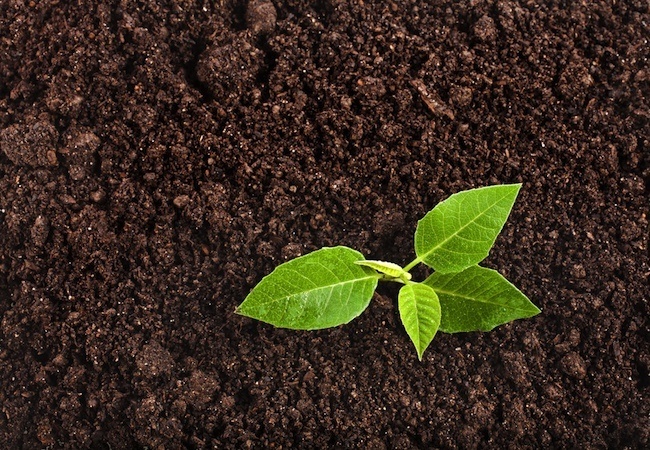
Which of the following is NOT one of the three types of soil?
a)
clay
b)
sand
c)
silt
d)
mud
19.

Are there minerals in soil?
a)
Yes
b)
No
20.
Which factor has the most to do with the type of soil found in a particular area?
a)
number of humans living in the area
b)
type of rock found in the area
c)
average daily temperature
d)
length of daylight
21.
How could you test a soil's ability to support life?
a)
look at the color of the soil
b)
check for worms or insects
c)
add water and see how fast it drains
d)
plant seeds and monitor their growth
22.
Which soil particle is the smallest?
a)
sand
b)
silt
c)
clay
d)
gravel
23.
How would you describe the texture of "sandy" soil?
a)
sticky
b)
gritty
c)
smooth
d)
slimy
24.

What is a soil problem all farmers face?
a)
soil hardening
b)
soil erosion
c)
soil spoiling
d)
soil pollution
25.
Many plants cannot grow in sandy soil. Why is this true?
a)
Sandy soil does not hold enough water.
b)
Oxygen cannot pass through sandy soil.
c)
Roots cannot easily push through clay soil.
d)
Sandy soil has too many nutrients.
26.
When plants, animals, and other organisms die, they break down and become part of the soil. What is this part of the soil called?
a)
sand
b)
silt
c)
clay
d)
humus
27.
When there are not enough plants to hold topsoil in place, water and _______ carry the topsoil away, leaving the subsoil exposed
a)
sunlight
b)
birds
c)
magnetic fields
d)
wind
28.

_______ is the type of soil used most often with plants. It is a mixture of clay, sand, and silt.
a)
loam
b)
humus
c)
mud
d)
dirt
29.

Humus is.....
a)
the dead parts of plants and animals in soil.
b)
A food we eat with pretzels.
c)
The tiny particles inside of soil
d)
The roots that come off of a plant and live in soil.
30.
Which soil particles have the largest pore spaces between sediments?
a)
Clay
b)
Silt
c)
Sand
31.
Which soil particles have the smallest pore spaces between sediments?
a)
Clay
b)
Silt
c)
Sand
32.
In which soil type would water drain easily?
a)
Sand
b)
Silt
c)
Clay
33.
In which soil type would water have difficulty draining?
a)
Sand
b)
Silt
c)
Clay
34.
What processes contribute to soil formation?
a)
Temperature and pressure
b)
Compaction and cementation
c)
Heating and cooling
d)
Weathering and erosion
35.
Which type of soil "holds" water?
a)
Sand
b)
Silt
c)
Clay
d)
Loam
36.
What type of soil is best for gardening?
a)
Sandy soil
b)
Silt soil
c)
Clay soil
d)
Loam soil
37.

Fertile soil is rich in _________.
a)
Conservation
b)
Bedrock
c)
Water
d)
Nutrients
38.

What is HUMUS made from?
a)
Chick-Peas
b)
The remains of decayed plants and animals
c)
Beans
d)
Cheese
39.
Which answer best defines photosynthesis?
a)
the movement of carbon dioxide and oxygen between organisms and the air
b)
Tiny holes in the leaves of a plant that allow gases to enter or leave the plant
c)
the process in which plants use energy from the sun to make their own food
d)
a gas in the atmosphere that plants use to make food
40.
The carbon dioxide - oxygen cycle cannot occur under water.
a)
True
b)
False
41.
What does a plant to with Carbon Dioxide?
a)
It uses the nutrients from the soil to process food.
b)
Uses it along with water and light to go through photosynthesis.
c)
It breaks down the oxygen in order to survive and releases it into the air.
d)
It removes toxins from the plant.
42.
What gas is released by plants during photosynthesis?
a)
sulfur
b)
carbon dioxide
c)
oxygen
d)
hydrogen
43.
What is the purpose of photosynthesis?
a)
make glucose
b)
make ATP
c)
make light
d)
release carbon dioxide
44.
What are the products (what's made) during photosynthesis?
a)
glucose and oxygen
b)
water, light, and carbon dioxide
45.
What is the gas we breath out that plants use for photosynthesis?
a)
sulfur
b)
carbon dioxide
c)
oxygen
d)
hydrogen
46.
What are the products of photosynthesis?
a)
water and carbon dioxide
b)
oxygen and glucose
c)
oxygen and carbon dioxide
d)
oxygen and water
47.
Which gas is removed from the atmosphere during photosynthesis?
a)
hydrogen
b)
oxygen
c)
nitrogen
d)
carbon dioxide
48.
Which statement about photosynthesis is correct?
a)
Plants get the energy they need for photosynthesis from water.
b)
Plants get the energy they need for photosynthesis from soil.
c)
Plants get the energy they need for photosynthesis from sunlight.
d)
Plants do not require energy to perform photosynthesis.
49.
The main source of energy for all life comes from ____.
a)
the Earth
b)
the moon
c)
the sun
d)
the food we eat/make
50.
Plants need ________ for photosynthesis
a)
oxygen
b)
soil
c)
carbon dioxide
d)
sugar
51.
Which plant structure is extremely necessary for photosynthesis to take place?
a)
leaves
b)
flower petals
c)
anthers
d)
pistils
52.
What gas is released by plants during photosynthesis?
a)
sulfur
b)
carbon dioxide
c)
oxygen
d)
hydrogen
53.
Animals use oxygen for _____________.
a)
breathing
b)
creating food
c)
making glucose
d)
transpiration
54.
Plants use _____________ to make their own food during photosynthesis.
a)
water
b)
energy from the Sun
c)
CO2
d)
water, energy from Sun, CO2
55.

If all the trees on Earth were destroyed, what would be the effect on humans?
a)
there would be a lack of food
b)
there would be a lack of oxygen
c)
there would be a lack of fresh water
d)
there would be a lack of carbon dioxide
100 %

