
 Worksheets
The Lithosphere
Total questions: 60
Worksheet time: 2hrs 56mins
Name
Class
Date
1.
Boundaries like the San Andreas Fault where plates slide past each other are _.
a)
subduction zones
b)
divergent boundaries
c)
convergent boundaries
d)
transform boundaries
2.
Which type of boundary has plate moving apart?
a)
Divergent
b)
Convergent
c)
Transform
3.
Which type of boundary has plate moving together?
a)
Divergent
b)
Convergent
c)
Transform
4.
Which type of boundary has plate moving past each other?
a)
Divergent
b)
Convergent
c)
Transform
5.
Which of these layers is ALL solid iron and nickle?
a)
inner core
b)
outer core
c)
crust
d)
mantle
6.
Which of the following occurs because of convection currents?
a)
Tectonic plates on the crust move.
b)
The mantle increases in size.
c)
Pressure in the crust increases.
d)
Pressure in the crust decreases.
7.
Mountains form from ...
a)
plates sliding past one another
b)
collision of plates
c)
plates moving away from each other
8.
This layer of Earth is the thickest part
a)
crust
b)
outer core
c)
mantle
d)
inner core
9.
What is the process that is thought to move the tectonic plates?
a)
Earth's rotation
b)
tidal forces from the Sun and Moon
c)
convection currents
d)
magnetism
10.
Wind, water, and ice breaking down rock is called
a)
Erosion
b)
Deposition
c)
Compaction
d)
Weathering
11.
What do geologists call the Earth’s crust and upper mantle?
a)
mesosphere
b)
lithosphere
c)
asthenosphere
d)
atmosphere
12.
Which of the following best describes the basic structure of Earth’s core?
a)
The solid inner core surrounded by a liquid outer core
b)
The liquid inner core surrounded by a solid outer core
c)
Both the inner core and outer core are solid
d)
Both the inner core and outer core are liquid
13.
What is the process of breaking down rocks or other material into smaller pieces?
a)
erosion
b)
weathering
c)
compaction
d)
cementation
14.
What is the top layer of the Earth's surface called?
a)
Mantle
b)
Innercore
c)
Outercore
d)
Crust
15.
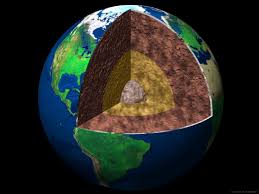
Which layer of Earth is located above the outer core?
a)
crust
b)
inner core
c)
mantle
d)
lithosphere
16.
A break or crack in the Earth's crust is called a...
a)
plate
b)
fault
c)
fold
d)
crack
17.

Name this plate boundary.
a)
divergent
b)
convergent
c)
transform
d)
transformers
18.

Name this plate boundary.
a)
divergent
b)
convergent
c)
transform
d)
allegiant
19.
A dense ball of solid iron and nickel.
a)
crust
b)
inner core
c)
mantle
d)
outer core
20.
carbon dioxide and water combine to form carbonic acid
a)
true
b)
false
21.

The process when rocks break into smaller pieces due to exposure to natural elements is called
a)
erosion
b)
weathering
c)
sediments
22.
This type of weathering occurs when rocks weaken then break down due to chemical changes in the composition of the rock.
a)
mechanical weathering
b)
chemical weathering
c)
erosion weathering
d)
deposition
23.
How does freezing water cause the weathering of rocks? The freezing water—
a)
keeps the rocks in place
b)
makes the rocks last longer
c)
expands in the cracks and breaks rocks
d)
causes rocks to fall in landslides
24.
Is the Outer core solid or liquid?
a)
solid
b)
liquid
25.
The scientific theory that the Earth's crust is made of moving plates.
a)
quakes
b)
seismic
c)
plate tectonics
d)
rotation
26.

Name the boundary
a)
convergent boundary
b)
divergent boundary
c)
transform boundary
d)
sergent boundary
27.
Why does cooler material sink while warmer material rises?
a)
Cooler material is more dense.
b)
Hot material is more dense.
28.
This layer of Earth is the thickest part
a)
crust
b)
outer core
c)
mantle
d)
inner core
29.
What causes tectonic plates to move as warm magma rises and cooler magma sinks?
a)
An oceanic current
b)
A conventional current
c)
A convection current
d)
A magnetic current
30.

the fertile, upper part of the soil
a)
clay
b)
sand
c)
silt
d)
topsoil
31.
The very top layer of soil is mostly made of
a)
Solid rock
b)
Clay and mineral deposits
c)
A mixture of minerals and organic material
d)
Mostly organic material (humus)
32.
Decayed organic material in soil is called______.
a)
Litter
b)
Silt
c)
Humus
d)
Clay
33.

Which layer of soil is on the bottom?
a)
topsoil
b)
subsoil
c)
bedrock
d)
bottomsoil
34.
Acid rain wearing away the face of a marble gravestone or statue is an example of?
a)
mechanical weathering
b)
chemical weathering
35.

How do plants weather rocks?
a)
during photosynthesis
b)
when roots grow into cracks of rocks and expand the rock
c)
when the plant moves water from the roots to the leaves
36.

Which of the following is NOT one of the three layers of soil?
a)
topsoil
b)
undersoil
c)
subsoil
d)
bedrock
37.
When plants, animals, and other organisms die, they break down and become part of the soil. What is this part of the soil called?
a)
sand
b)
silt
c)
clay
d)
humus
38.
Organic matter is made of materials that….
a)
Were once living
b)
Were once nonliving
c)
Were once living and nonliving
39.
Which of the following is NOT an organic material
a)
Worms
b)
Decayed animals
c)
Rocks
d)
Decayed plants
40.
Topsoil which contains the HUMUS is the soil layer best for growing plants.
a)
True
b)
False
41.
How is humus formed?
a)
Weathering and erosion
b)
Decomposition of organsims
c)
Chickpeas, seasoning, and water. Serve with pita or crackers.
42.

Soil is made of
a)
weathered rocks and minerals
b)
dead plants and animals
c)
air and water
d)
all of the above
43.

Which layer of soil has the BIGGEST pieces of rock in it?
a)
topsoil
b)
subsoil
c)
bedrock
d)
midsoil
44.

Are there minerals in soil?
a)
Yes
b)
No
45.

What is the layer of soil just below the topsoil?
a)
soil
b)
subsoil
c)
topsoil
d)
terrace farming
46.

Which layer of soil are these roots growing in?
a)
subsoil
b)
topsoil
47.
The texture of soil depends mainly on
a)
the types of plants that grow in the soil.
b)
the size of the particles in the soil.
c)
the color of the soil.
d)
the number of worms in the soil.
48.
Why is topsoil darker than all other levels of soil?
a)
It contains all the darker colored minerals
b)
It contains volcanic rock
c)
It contains more organic matter
d)
It contains bits of burned trees
49.
The hottest layer
a)
crust
b)
inner core
c)
mantle
d)
outer core
50.
The coolest layer
a)
crust
b)
inner core
c)
mantle
d)
outer core
51.
The thinest layer
a)
crust
b)
inner core
c)
mantle
d)
outer core
52.
The thickest layer
a)
crust
b)
inner core
c)
mantle
d)
outer core
53.
The most dense layer
a)
crust
b)
inner core
c)
mantle
d)
outer core
54.
This layer is completely liquid
a)
crust
b)
inner core
c)
mantle
d)
outer core
55.
This layer is completely solid due to the intense pressure it is under
a)
crust
b)
inner core
c)
mantle
d)
outer core
56.
The layer that produces Earth's magnetic field is the ____________.
a)
crust
b)
mantle
c)
outer core
d)
inner core
57.
The two layers of our Earth where convection currents occur are _______________________________.
a)
the inner core and the outer core
b)
the outer core and the mantle
c)
the inner core and the mantle
d)
the mantle and the crust
58.
These are horizontal layers of soil and other materials.
a)
crust
b)
plates
c)
topsoil
d)
strata
59.
This layer of soil tends to be light brown in color and less rich in minerals and humus.
a)
topsoil
b)
subsoil
c)
bedrock
d)
mantle
60.
Lithospheric plates can be moved due to __________________________ within the mantle.
a)
convection currents
b)
conduction
c)
potential energy
100 %

