
 Worksheets
Chemical Bonds
Total questions: 96
Worksheet time: 1hrs 22mins
Name
Class
Date
1.
Covalent bond forms between....
a)
Nonmetals
b)
Metals
c)
Nonmetal and a Metal
d)
Metal and a Nonmetal
2.
What is the chemical formula for dinitrogen trioxide?
a)
N2O3
b)
NO2
c)
N3O
d)
N2O4
3.

Cr3N
a)
chromium nitride
b)
chromium (I) nitride
c)
chromium (II) nitride
d)
chromium (III) nitride
4.

chromium (III) nitrate
a)
Cr3N2
b)
Cr2N
c)
Cr2NO3
d)
Cr(NO3)3
5.

calcium oxide
a)
Ca2O2
b)
Ca2O
c)
CaO
d)
CaO2
6.

barium phosphide
a)
Ba3(PO4)2
b)
BaP
c)
Ba3P2
d)
Ba2P3
7.

Ru2S
a)
Rubidium sulfate
b)
Rubidium sulfite
c)
Rubidium (II) sulfide
d)
Rubidium sulfide
8.

SeCl4
a)
selenium chloride
b)
monoselenium tetrachloride
c)
selenium tetrachloride
d)
monoselenium chloride
9.

As4O10
a)
arsenic oxide
b)
quadarsenic decoxide
c)
tetraarsenic decoxide
d)
arsenic decoxide
10.

carbon monoxide
a)
CO
b)
CO2
c)
C2O
d)
COH
11.

P2O5
a)
phosphorus oxide
b)
phosphorus (II) oxide
c)
diphosphorus pentoxide
d)
phosphorus pentoxide
12.

Which of these is covalent?
a)
NaCl
b)
Pb(NO3)2
c)
CO2
d)
AlCl3
13.
Which of the following has a full valence shell?
a)
Oxygen
b)
Neon
c)
Barium
d)
Carbon
14.
Ionic bonds can be formed between two nonmetals.
a)
True
b)
False
15.
What is the most common ion for Calcium?
a)
Ca+2
b)
Ca+
c)
Ca-2
d)
Ca-
16.
What is the ionic compound formed between K and F?
a)
KF
b)
K2F
c)
KF2
d)
K2F2
17.
Nitrogen will ____ valence electrons when forming an ionic bond.
a)
gain 1
b)
lose 1
c)
gain 3
d)
lose 3
18.
Beryllium will ____ valence electrons when forming an ionic bond.
a)
lose 4
b)
gain 4
c)
lose 2
d)
gain 2
19.
The formula of sodium sulfate is Na2SO4. How many elements does it contain?
a)
2
b)
3
c)
4
d)
7
20.
What is the kind of bond between two non metals called?
a)
Ionic
b)
Covalent
c)
Lattice
d)
Metallic
21.
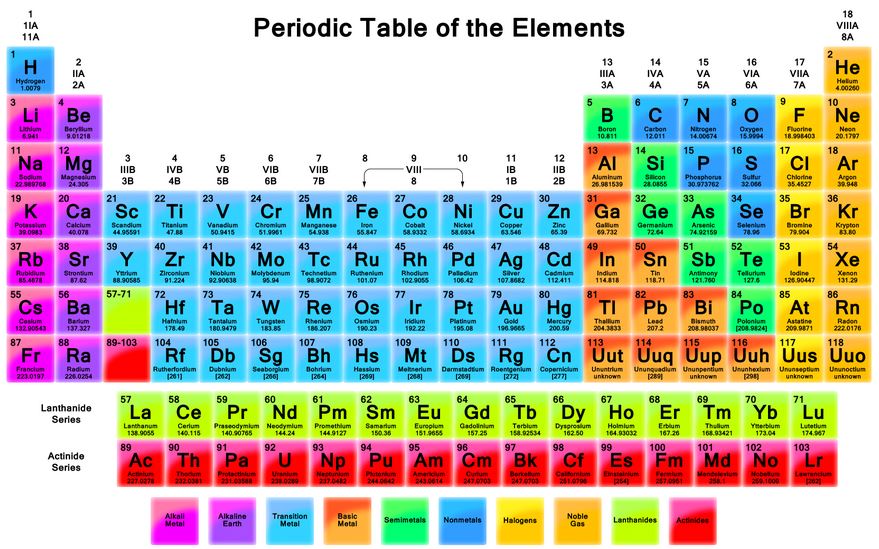
Elements on the LEFT side of the periodic table will most likely form:
a)
Positive ions
b)
Negative ions
c)
Neutral Ions
d)
None of these
22.
What is the name for an ion with a positive charge?
a)
Anion
b)
Cation
c)
Dogion
d)
Ion
23.
What is the name for an ion with a negative charge?
a)
Anion
b)
Cation
c)
Dogion
d)
Ion
24.
What is the name for sulfur after it gains two electrons?
a)
Sulfur ion
b)
Sulfate
c)
Sulfide
d)
Sulfite
25.
If an atom loses two electrons what charge will it have?
a)
+ 2
b)
- 2
c)
+1
d)
-1
26.
If an atom gains one electron what charge will it have?
a)
-2
b)
-1
c)
+1
27.
What usually forms the positive ion?
a)
Metal
b)
Non Metals
c)
None
28.
What happens when the sodium atom loses an electron?
a)
It become negatively charged
b)
It become positively charged
c)
none
29.
What usually forms the negative ion?
a)
nonmetals
b)
metal
c)
none
30.
Covalent compounds
a)
Share electrons
b)
transfer electrons
c)
contain a sea of electrons
d)
conduct electricity
31.
What is the number of valence electrons for Oxygen?
a)
8
b)
6
c)
2
d)
1
32.
What is the number of valence electrons for Silicon?
a)
1
b)
2
c)
6
d)
4
33.

How many valence electrons in this structure?
a)
6
b)
5
c)
4
d)
7
34.
What type of compound is CaF2?
a)
covalent
b)
ionic
c)
polar
d)
metallic
35.
What do we call an atom that has given up or gained electrons?
a)
An ion
b)
An iron
c)
A different atom
d)
A metalloid
36.
Name the following compound: CaBr2
a)
calcium bromide
b)
calcium bromine
c)
carbon bromine
d)
none of these
37.
How many electrons are needed in the outer energy levels of most atoms for the atom to be chemically stable?
a)
2
b)
4
c)
6
d)
8
38.
What kind of chemical bond is formed when an exchange of electrons occurs?
a)
covalent
b)
hydrate
c)
ionic
d)
magnetic
39.
What is the name of the compound with the formula NaCl?
a)
chlorine sodiate
b)
sodium chlorate
c)
sodium chloride
d)
sodium dichloride
40.
Why do the noble gases NOT form compounds readily?
a)
They have empty outer energy levels.
b)
They have no electrons.
c)
They have seven electrons in the outer energy levels.
d)
Their outer energy levels are completely filled with electrons.
41.
What is the name of a binary compound made up of lithium and chlorine?
a)
chlorine lithiate
b)
chlorine lithium
c)
lithium chloride
d)
lithium chlorate
42.
What is the correct formula for magnesium oxide?
a)
MgO
b)
MgO2
c)
Mg2O2
d)
Mg2O
43.
An element's _____ indicates how many electrons the element must gain, lose, or share to become stable.
a)
atomic number
b)
mass number
c)
oxidation number
d)
valence number
44.
If an atom has 7 protons and 7 electrons what charge will it have?
a)
-2
b)
-1
c)
0
d)
+2
45.
What are valence electrons?
a)
sum of the protons and neutrons
b)
protons minus electrons
c)
electrons in the inner shells
d)
electrons in the outer shell
46.
What is the name of CCl4?
a)
carbon tetrachloride
b)
monocarbon tetrachloride
c)
tetracarbon monochloride
d)
carbon chloride
47.
Disulfur trioxide
a)
S3O2
b)
SO
c)
S2O3
d)
S2O
48.
What is the charge of Hydrogen?
a)
+1
b)
1
c)
2
49.
What is the charge of Lithium?
a)
+1
b)
1
c)
2
50.
What is the charge of chloride?
a)
-1
b)
1
c)
+2
d)
+1
51.
What is the charge of Neon?
a)
0
b)
+1
c)
-1
d)
1
52.
What is the charge of Bromide?
a)
-1
b)
1
c)
+1
d)
+2
53.
How many valence electrons does Bromide have?
a)
1
b)
7
c)
6
d)
8
54.
How many valence electrons does calcium have?
a)
2
b)
4
c)
6
d)
7
55.
How many valence electrons does Manganese (II) have?
a)
2
b)
4
c)
6
d)
8
56.
How many valence electrons does Platinum (IV) have?
a)
4
b)
2
c)
1
d)
7
57.
Which of the following is an ionic compound:
a)
CH4
b)
I2
c)
LiBr2
d)
CO
58.
What would be the proper chemical formula for combining Al3+ and Cl- :
a)
AlCl3
b)
Al3Cl
c)
AlCl
d)
Al3Cl3
59.
Name the following ionic compound: BeCl2
a)
beryllium chlorine
b)
beryllium II chloride
c)
beryllium chloride
d)
beryllium dichloride
60.
name the following ionic compound: NaF
a)
nitrogen fluorine
b)
sodium fluoride
c)
nitrogen fluoride
d)
sodium fluorine
61.
Name the following ionic compound: Cs2S
a)
cesium sulfide
b)
cesium sulfate
c)
cesium II sulfate
d)
cesium II sulfide
62.
Which of the following combinations would need roman numerals in the name?
a)
potassium + fluorine
b)
beryllium + oxygen
c)
boron + iodine
d)
silver + oxygen
63.
copper(II) chloride
a)
CuCl2
b)
CuCl
c)
Cu2Cl
d)
Cu2Cl2
64.
What is the correct formula for Zinc(II) Bromide?
a)
ZnBr2
b)
ZNBr
c)
ZnBr
d)
Z2Br
65.
What is the correct formula for Sodium Oxide?
a)
NaO
b)
NaO2
c)
Na2O
d)
Na2O2
66.
The name of FeCl₂ is
a)
iron chloride
b)
iron (II) chloride
c)
iron (I) chloride
d)
iron dichloride
67.
When naming you always change the ending of the second element to ________.
a)
-ate.
b)
-ite.
c)
-ide.
d)
-ine.
68.
When naming ionic compounds you always write the name of the _______ element.
a)
first
b)
second
c)
non-metal
d)
halogen
69.
The number that tells you if an ion has lost or gained electrons
a)
atomic number
b)
oxidation number
c)
mass number
d)
electron number
70.
Na + and S -2
a)
Na2S
b)
NaS2
c)
Na2S2
d)
NaS
71.
K + and N-3
a)
KN
b)
KN3
c)
K3N3
d)
K3N
72.
Mn +4 and O -2
a)
Mn2O
b)
MnO
c)
MnO2
d)
Mn4O2
73.
Al +3 and P -3
a)
Al3P3
b)
AlP
c)
P3Al3
d)
Pal
74.
Li + and O -2
a)
LiO
b)
LiO2
c)
Li2O
d)
Oil
75.
What is the chemical formula for Magnesium Iodide?
a)
MgI
b)
MnI
c)
MgI₂
d)
Mg₂I
76.
What is the formula for Lead (III) Oxide?
a)
PbO
b)
Pb2O3
c)
PbO2
d)
Pb3O2
77.
Phosphorous trichloride
a)
PCl3
b)
P3Cl
c)
P3Cl3
d)
PCl
78.
Bromine monoflouride
a)
Br1F1
b)
BrF
c)
Br2F
d)
BrF2
79.
Disulfur trioxide
a)
S3O2
b)
SO
c)
S2O3
d)
S2O
80.
P2O5
a)
Phosphorus oxide
b)
Pentaphosphorus dioxide
c)
Diphosphorous pentoxide
d)
Phosphoric oxygen
81.
SeF4
a)
Tetraselenium fluoride
b)
Selenium fluoride
c)
Selenium tetraflouride
d)
Selenium (IV) fluoride
82.
PBr5
a)
Phosphorus bromide
b)
Phosphorus pentabromide
c)
Pentaphosphorus bromide
d)
Phosphorus bromine
83.
Name the following compound:
BF3
BF3
a)
boron fluoride
b)
boron difluoride
c)
monoboron trifluoride
d)
boron trifluoride
84.
What is the correct name for C4H6?
a)
Carbon hexahydride
b)
Pentacarbon pentahydride
c)
Hexacarbon tetrahydride
d)
Tetracarbon hexahydride
85.
What is the correct name for NO?
a)
Mononitrogen monoxide
b)
Nitrogen monoxide
c)
Mononitrogen dioxide
d)
Nitrogen oxide
86.
What is the formula for Tricarbon Octahydride?
a)
Ca3O
b)
C2H8
c)
C3H8
d)
Ca3H8
87.

As4O10
a)
arsenic oxide
b)
quadarsenic decoxide
c)
tetraarsenic decoxide
d)
arsenic decoxide
88.
What is the formula for magnesium chloride?
a)
MgCl
b)
Mg2Cl
c)
MgCl2
d)
Mg(ClO3)2
89.
The chemical formula for an ionic compound of potassium and oxygen is
a)
KO.
b)
K2O.
c)
K2O2.
d)
KO2.
90.
Write the formula for copper (I) phosphide
a)
Cu3P
b)
CuP
c)
Cu1P
d)
CuP3
91.
What is the name of N2O3
a)
Nitrogen trioxide
b)
Dinitrogen oxide
c)
Dinitrogen trioxide
d)
Nitrogen oxide
92.
What is the chemical formula for Tetrasulfur pentoxide?
a)
SO
b)
S4O
c)
S4O5
d)
S5O4
93.
What is the name of C3Cl8 ?
a)
Carbon octachloride
b)
Tricarbon octachloride
c)
Carbon trichloride
d)
Octacarbon trichloride
94.
What is the chemical formula for Nitrogen triiodide?
a)
NI
b)
N3I
c)
NI3
d)
None of these
95.
What is the name of Br6F10 ?
a)
Bromium fluoride
b)
Hexabromine fluoride
c)
Bromium decafluoride
d)
none of the above
96.
What is the chemical formula for Fluorine trisulfide ?
a)
S3F
b)
FS3
c)
FS
d)
none of the above
100 %

