
 Worksheets
Evolution Review
Total questions: 58
Worksheet time: 48mins
Name
Class
Date
1.
Almost all adaptations started off as?
a)
selective breeding
b)
physiological
c)
structural
d)
mutation
2.
When every organism of a species has died.
a)
Evolution
b)
Natural Selection
c)
Extinction
d)
Artificial Selection
3.
In natural selection, the selective agent is the
a)
humans
b)
mutations
c)
breeders
d)
environment
4.
Lamarck’s ideas about evolution include the concept that differences among the traits of organisms arise as a result of
a)
continual increases in population size.
b)
the actions of organisms as they use or fail to use body structures.
c)
an unchanging local environment.
d)
the natural variations already present within the population of organisms.
5.
Charles Darwin called the ability of an organism to survive and reproduce in its specific environment
a)
diversity.
b)
evolution
c)
adaptation.
d)
fitness.
6.
Which gas was believed to be absent from early Earth's atmosphere
a)
Hydrogen
b)
Nitrogen
c)
Oxygen
d)
Carbon
7.
a group of similar organisms that can mate with each other and produce fertile offspring
a)
evolution
b)
species
c)
variation
d)
fossil
8.
Who would have stated "acquired traits" such as a giraffe needing a long neck so they stretch it over time
a)
Darwin
b)
Lamarck
c)
Malthus
9.

This salamander did not use its eyes so it lost its vision, Who said if you don't use it you lose it?
a)
Darwin
b)
Lamarck
c)
Malthus
10.
What do we call differences among heritable traits?
a)
Variation
b)
Adaptation
c)
Evolution
d)
Speciation
11.
The process in which organism with variations most suited to their local environment survive and leave more offspring.
a)
Natural Selection
b)
Survival of the Fittest
c)
Common Descent
d)
Phenotype
12.

According to the data, the unknown bacterial species is most closely related to
a)
Species I
b)
Species II
c)
Species III
d)
Species IV
13.
Who created the theory of evolution?
a)
Charles Darwin
b)
Charles Derwin
c)
Charlie Darwin
d)
Chris Darwin
14.
What is survival of the fittest?
a)
It is where the fittest die out and therefore reproduce and pass on their genes
b)
It is where the fittest die out and therefore can't reproduce and pass on their genes
c)
It is where the fittest don't die out and therefore can't reproduce and pass on their genes
d)
It is where the fittest don't die out and therefore reproduce and pass on their genes
15.
Which types of organisms developed first due to the early environmental conditions on Earth?
a)
prokaryotic and aerobic
b)
prokaryotic and anaerobic
c)
eukaryotic and aerobic
d)
eukaryotic and anaerobic
16.
The Miller-Urey experiment of 1953 was designed to test the hypothesis that lightning supplied the energy needed to turn atmospheric gases into organic molecules such as amino acids. Which of the following describes why the Miller-Urey theory is widely accepted today?
a)
Amino acids spontaneously form from molecules in the atmosphere today
b)
Organic molecules are present today in extremely high concentrations
c)
The process of synthesizing organic molecules from a mixture of gases has been successfully modeled in the laboratory
d)
No other alternative hypotheses have been introduced
17.
What is the classification level directly below domain?
a)
Phylum
b)
Genus
c)
Species
d)
Kingdom
18.
How do scientists organize living things?
a)
by looks
b)
by shared characteristics
c)
by size
d)
by differences
19.
An organism made up of one cell
a)
Multicelluar
b)
Eukaryotic
c)
Unicellular
d)
Prokaryotic
20.
Tigers, Jellyfish, Gorillas and Sponges are all part of kingdom _______.
a)
Animalia
b)
Plantae
c)
Fungi
d)
Bacteria
21.

You would find mushrooms in which kingdom?
a)
Plantae
b)
Protists
c)
Fungi
d)
Animalia
22.

Which kingdom do humans belong to?
a)
Plantae
b)
Fungi
c)
Animalia
d)
Protista
23.
What are the three domains within classification?
a)
Green, Blue, Red
b)
Autotrophic, Heterotrophic, Both
c)
Archea, Eukarya, Bacteria
d)
Marine Organism, Land Organism, or Both
24.
Which of the following is NOT a characteristic that all organisms share?
a)
All organisms must use resources for energy.
b)
All organisms must produce food.
c)
All organisms respond to stimuli.
d)
All organisms reproduce.
25.

This domain is characterized by ancient bacteria that can live in extreme environments, such as hot springs.
a)
Archaea
b)
Bacteria
c)
Eukarya
d)
Prokarya
26.
When DNA is contained in a nucleus, the cell is
a)
eukaryotic
b)
prokaryotic
c)
unicellular
d)
multicellular
27.
This kingdom is unicellular and prokaryotic.
a)
Bacteria
b)
Protista
c)
Fungi
d)
Animalia
28.
Eubacteria...
a)
are eukaryotic
b)
live in normal conditions
c)
are non-living
d)
are multicellular
29.
All of the following have a nucleus except...
a)
Bacteria
b)
Animalia
c)
Plantae
d)
Protista
30.
In which kingdom do I belong if I am unicellular, autotrophic, and eukaryotic?
a)
Archaebacteria
b)
Protista
c)
Animalia
d)
Plantae
31.
Which kingdom is a part of the domain Bacteria?
a)
Archaebacteria
b)
Animalia
c)
Eubacteria
d)
Protista
32.
Choose which scientist corresponds best with the statement:
use or disuse
use or disuse
a)
Darwin
b)
Lamarck
33.
Choose which scientist corresponds best with the statement:
variations within populations
variations within populations
a)
Darwin
b)
Lamarck
34.
Choose which scientist corresponds best with the statement:
acquired characteristics are inherited
acquired characteristics are inherited
a)
Darwin
b)
Lamarck
35.
Choose which scientist corresponds best with the statement:
organisms overproduce
organisms overproduce
a)
Darwin
b)
Lamarck
36.

What came into existence after the dragonfly?
a)
Spider
b)
Worm
c)
Ant
d)
Butterfly
37.

What do the similarities of the structures suggest?
a)
a common ancestor
b)
grow at different rates
c)
evolved slowly
d)
lived a long time
38.

Which two species are most related?
a)
B&C
b)
A&B
c)
A&C
d)
C&B
39.
What does Darwin's theory of evolution suggest?
a)
species change over time
b)
extinct species are not related to living species
c)
different species can interbreed
d)
animals that look alike are most closely related
40.
Which type of cell came first?
a)
Eukaryotic
b)
Prokaryotic
c)
Protists
d)
Both Eukaryotic and Prokaryotic were about the same
41.

Which layer is the oldest
a)
B
b)
A
c)
E
d)
C
42.
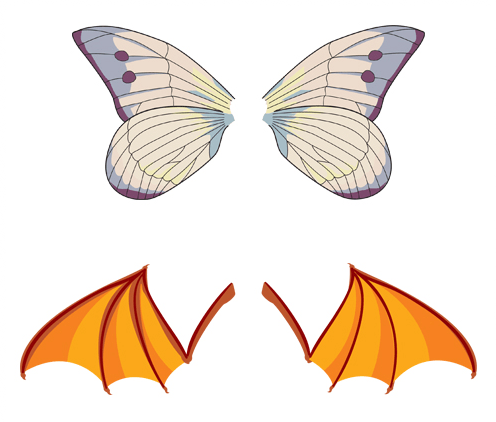
How would you describe this evolution?
a)
Homologous structure
b)
Analogous structure
c)
Structural adaption
d)
Functional adaption
43.
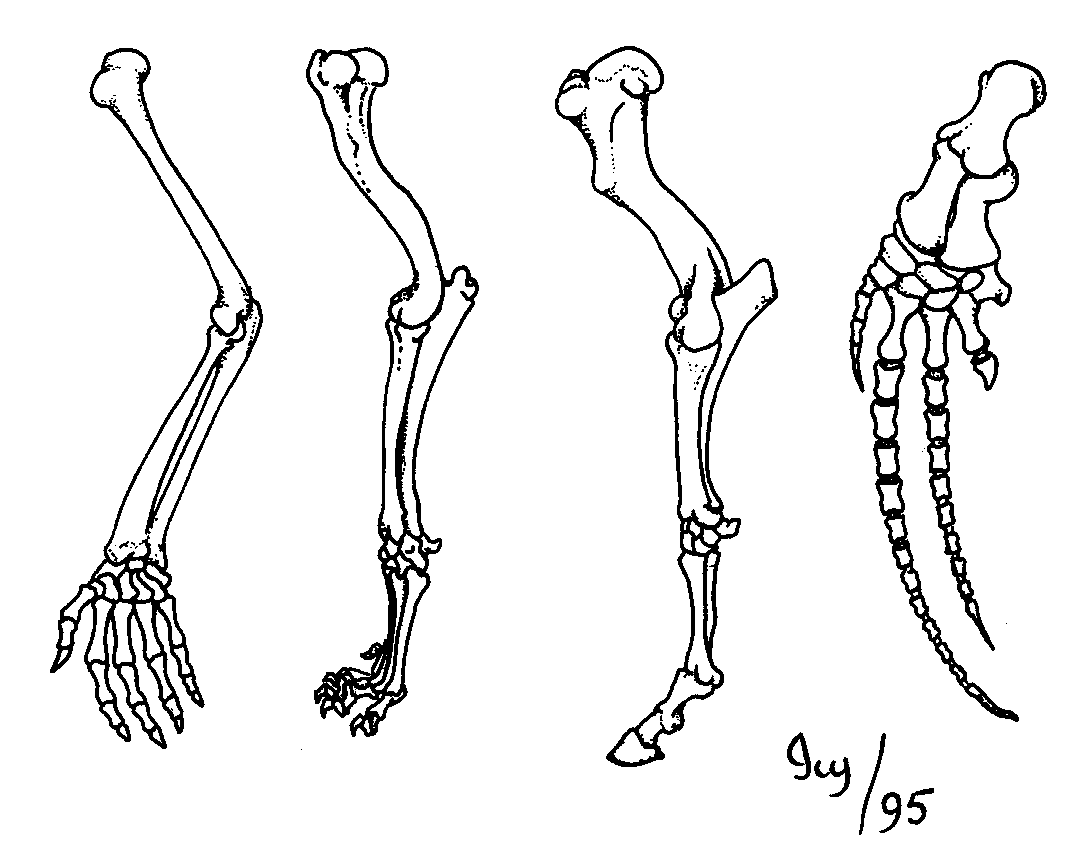
Structures with the same parts have different functions; suggests that organisms share a common ancestry
a)
vestigial structures
b)
homologous structures
c)
adaptive radiation
d)
fossil
44.

If an organism has a vestigial structure, that structure likely once had a function in a(n)
a)
close relative
b)
early ancestor
c)
unrelated organism
d)
embryological stage
45.
The process by which populations slowly change over time is called__________
a)
selective breeding
b)
adaptation
c)
sepeciation
d)
evolution
46.
Scientists compare organisms' DNA to support the theory that all species share a common _________________
a)
separation
b)
ancestor
c)
population
d)
environment
47.
A characteristic that can be passed from parent to offspring through genes is called a _________
a)
resistance
b)
selective breeding
c)
genetic change
d)
trait
48.

Two organisms that are closely related would have
a)
very similar DNA sequence
b)
exactly the same DNA sequences
c)
no proteins in common
d)
completely different DNA sequence
49.

Study of embryos of various organisms to show a common ancestor because of similarities in development
a)
natural selection
b)
embryology
c)
speciation
d)
evolution
50.
Scientists think that dolphins and whales may have evolved from a common ancestor. What evidence supports this hypothesis?
a)
They swim the same way.
b)
They eat the same food.
c)
They live in the same area of the ocean.
d)
They have similar anatomies.
51.
What process is most responsible for the extinction of most species of plants and animals that have lived on Earth?
a)
gene mutation
b)
environmental changes
c)
selective breeding
d)
decrease in reproduction
52.
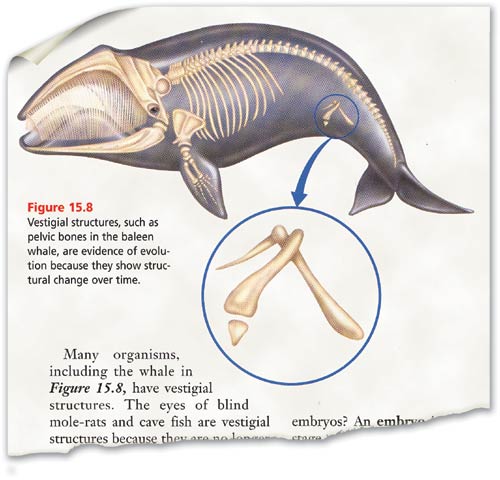
Which of the following is an example of a vestigial structure?
a)
the wings of a red-tailed hawk
b)
the hind limbs of a house cat
c)
the fins of sharks
d)
the tailbone of a human
53.

The diagram shows fossils in different rock layers. Which of these statements about the age of these fossils is most likely correct?
a)
Fossil A and C are the same age
b)
Fossil B is older than fossil C
c)
Fossils A is older than fossil B
d)
Fossil D is older than fossil C
54.
One of the accepted scientific theories describing the origin of life on Earth is known as chemical evolution. According to this theory, which of the following events would need to occur first for life to evolve?
a)
onset of photosynthesis
b)
origin of genetic material
c)
Synthesis of organic molecules
d)
formation of the plasma membrane
55.
When DNA is contained in a nucleus, the cell is
a)
eukaryotic
b)
prokaryotic
c)
unicellular
d)
multicellular
56.
This kingdom is unicellular and prokaryotic.
a)
Bacteria
b)
Protista
c)
Fungi
d)
Animalia
57.
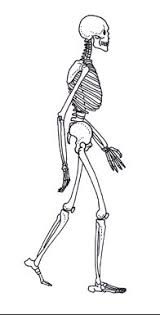
The ability to walk upright on two legs is called:
a)
bipedalism
b)
quadropedalism
c)
bicyclepedalism
d)
tripedalism
58.
Three physical changes in the process of human evolution are
a)
Opposable thumb, free hands and Bipedalism
b)
Bipedalism, decrease of the brain/skull and increase of jaw/teeth
c)
Increased hand size, increase of the brain/skull and decrease of jaw/teeth
100 %

