
 Worksheets
Q3 Review
Total questions: 64
Worksheet time: 2hrs 15mins
Name
Class
Date
1.

The diagram shows a balance used to measure a burning candle in a sealed glass ball before and after the burning is complete.
a)
The total mass of the system is constant.
b)
Energy is converted to mass when the candle is burned.
c)
Smoke particles have more mass than the molecules of candle wax.
d)
The total mass of the system is decreased.
2.
Translate the following into a word equation: 2 AlCl3 + 3 H2O --> Al2O3 + 6 HCl
a)
two aluminum trichloride reacts with three water molecules to produce dialuminum trioxide and six hydrogen chloride molecules
b)
two aluminum chloride reacts with three water molecules to produce dialuminum trioxide and six hydrogen chloride molecules
c)
two aluminum chloride reacts with three water molecules to produce aluminum oxide and six hydrogen chloride molecules
d)
two aluminum trichloride reacts with three water molecules to produce aluminum oxide and six hydrogen chloride molecules
3.
What is the molar mass of Mg3(PO4)2 rounded to the tenths place?
a)
262.9 g/mol
b)
262.8 g/mol
c)
230.85 g/mol
d)
230.9 g/mol
4.
Identify the set of coefficients that would correctly balance the following equation:
___ K + ___ B2O3 → ___ K2O + ___ B
___ K + ___ B2O3 → ___ K2O + ___ B
a)
2, 1, 1, 3
b)
6, 1, 3, 3
c)
6, 1, 3, 2
d)
6, 2, 3, 3
5.
Identify the set of coefficients that would correctly balance the following equation:
__ NH3 + __ I2 → __ N2I6 + __ H2
__ NH3 + __ I2 → __ N2I6 + __ H2
a)
2, 3, 1, 3
b)
3, 3, 1, 3
c)
2, 3, 3, 1
d)
2, 2, 1, 3
6.
What type of reaction is taking place above:
3 NaBr + H3P → Na3P + 3 HBr
3 NaBr + H3P → Na3P + 3 HBr
a)
Single displacement
b)
Decomposition
c)
synthesis
d)
double displacement
7.
What is the molar mass of Mg3P2 rounded to the tenths place?
a)
134.8 g/mol
b)
134.86 g/mol
c)
134.90 g/mol
d)
134.9 g/mol
8.
What is the mass of one mole of Al2(SO4)3?
a)
75.04 g
b)
342.14 g
c)
75.04 mol
d)
342.14 mol
9.
What is the molar mass of Mg3N2?
a)
191.6 g/mol
b)
76.64 g/mol
c)
38.32 g/mol
d)
100.95 g/mol
10.
What coefficient should be used to make the following equation balanced?
N2+O2--> _NO
N2+O2--> _NO
a)
1
b)
2
c)
3
d)
4
11.
Balance this equation
_Zn+_HCl -->_ZnCl2 +_H2
a)
1,1,2,1
b)
1,1,1,2
c)
1,2,1,1
d)
2,1,1,1
12.
WO3 + H2 --> W + H2O
What coefficient goes in front of H2 after you balance it?
What coefficient goes in front of H2 after you balance it?
a)
1
b)
2
c)
3
d)
4
13.
N2 + H2 → NH3
Balance the equation above
Balance the equation above
a)
N2 + 3H2 → NH3
b)
N2 + 3H2 → 2NH3
c)
N2 + 3H2 → N2H6
d)
N2 + 2H2 → 2NH3
14.
How many Hydrogen are in 4H2O?
a)
6
b)
8
c)
2
d)
4
15.
How many Hydrogen are in 4H2O?
a)
6
b)
8
c)
2
d)
4
16.
2H2 + O2 ----> 2H2O What is the product?
a)
------>
b)
2H2O
c)
2H2+ O2
17.
2H2 + O2 --------> 2H2O What are the reactants?
a)
----->
b)
2H2O
c)
2H2 +O2
18.
How many Magnesium are in 10 MgCl2?
a)
10
b)
5
c)
20
19.
How many atoms are there TOTAL in:
H2SO4
H2SO4
a)
6
b)
5
c)
7
d)
3
20.
Number of N in (NH₄)₂CrO₄
a)
1
b)
2
c)
8
d)
16
21.
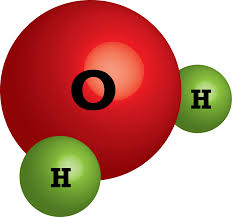
How many atoms of Hydrogen are in this compound
a)
1
b)
2
c)
3
d)
4
22.
How many O's are in Al₂(SO₄)₃
a)
4
b)
12
c)
7
d)
24
23.
Number of H in 3 (NH₄)₂CrO₄
a)
4
b)
2
c)
8
d)
24
24.
What is the molar mass of table salt (NaCl)?
a)
116.886 g/mol
b)
35.453 g/mol
c)
22.990 g/mol
d)
58.443 g/mol
25.
What is the molar mass of NaOH?
a)
39.997 g/mol
b)
38.989 g/mol
c)
23.998 g/mol
d)
57.004 g/mol
26.
What is the molar mass of B2(CO3)3?
a)
81.632 g/mol
b)
94.842 g/mol
c)
38.822 g/mol
d)
201.648 g/mol
27.
Which is heaviest - a mole of copper or a mole of lithium?
a)
mole of copper
b)
mole of lithium
c)
they have the same mass
28.
A mole of helium contains _____ atoms.
a)
2
b)
4.00
c)
6.02 x 10²³
d)
8
29.
Molar mass tells you
a)
the grams in an atom
b)
the atoms in a mole
c)
the moles in a gram
d)
the grams in a mole
30.
What is the molar mass of vanadium?
a)
23 g/mol
b)
23 mol/g
c)
50.94 g/mol
d)
50.94 mol/g
31.
Calculate the Molar Mass of SO3
a)
48
b)
80.1
c)
144
32.
Calculate the Molar Mass of CaCl2
a)
75.4
b)
111
c)
17
33.
Calculate the Molar Mass of Na3PO4
a)
257
b)
220
c)
164
34.
Calculate the Molar Mass of Mg(NO3)2
a)
134
b)
148
c)
122
35.
Determine the molar mass for CCl4
a)
158 g/mol
b)
47 g/mol
c)
189 g/mol
d)
82 g/mol
36.
Find the molar mass of C8H18.
a)
114 g/mol
b)
26 g/mol
c)
66 g/mol
d)
338 g/mol
37.
What is the law of conservation of mass?
a)
Matter changes when reacted or changed.
b)
The mass of all reactants are changed during a physical or chemical change
c)
The mass of the reactants is the same as the mass of the products
d)
The mass of the products is different than the mass of the reactants.
38.
What is the Law of Conservation of mass?
a)
Mass is created in a chemical reaction
b)
Mass is created in a physical change
c)
New chemicals formed from a chemical reaction have a larger overall mass than the original reactants
d)
Mass is never created or destroyed
39.
Is this balanced?...
Al + O2 --> 2Al2O3
Al + O2 --> 2Al2O3
a)
Yes!
b)
NO!
40.
Balance this equation...
HgO --> 2Hg + O2
HgO --> 2Hg + O2
a)
It is balanced
b)
2HgO --> Hg + O2
c)
2HgO --> 2Hg + O2
41.
Balance this equation-
__P4 + __O2 --> __P2O3
__P4 + __O2 --> __P2O3
a)
it is already balanced
b)
2, 1, 3
c)
1, 2, 3
d)
1, 3, 2
42.
What coefficient must be placed in front of phosphorus to balance the following chemical equation
____P4 + 3 O2 --> 2 P2O3
____P4 + 3 O2 --> 2 P2O3
a)
1
b)
2
c)
3
d)
4
43.
What coefficient must be placed in front of fluorine to balance the following chemical equation?
1 CF4 + 2 Br2 --> 1 CBr4 + ___ F2
1 CF4 + 2 Br2 --> 1 CBr4 + ___ F2
a)
1
b)
2
c)
3
d)
4
44.
What coefficient must be placed in front of the hydrochloric acid to balance the following chemical equation?
2 Al + ____ HCl --> 3 H2 + 2 AlCl3
2 Al + ____ HCl --> 3 H2 + 2 AlCl3
a)
1
b)
6
c)
2
d)
12
45.
What is a coefficient?
a)
The small number on the right of the chemical symbol.
b)
The large number to the left of a formula.
46.
Which problem is balanced?
a)
PbO2 + 2H2
b)
SO2 + H2O --> H2SO4
c)
2 Na + 2 H2O --> 2 NaOH + H2
47.

What is a reactant?
a)
The chemical substances that begin the reaction.
b)
What comes from the reaction.
48.
At the end of chemical reactions, what is the total mass of the reactants compared to the total mass of the products?
a)
the product is doubled
b)
the product is half the mass of the reactants
c)
the mass is the same
d)
the mass changes depending on the reaction
49.
Which side of a chemical equation os the product side?
a)
Left (before the yields sign)
b)
Right (after the yields sign)
50.
Number of H in 3(NH₄)₂CrO₄
a)
4
b)
6
c)
8
d)
24
51.
Balance this equation
_Al +_HCl --> _H2 +_AlCl3
_Al +_HCl --> _H2 +_AlCl3
a)
2, 6, 3, 2
b)
it is already balanced
c)
4, 12, 3, 4
d)
2, 1, 4, 5
52.
Balance this equation-
__P4 + __O2 --> __P2O3
__P4 + __O2 --> __P2O3
a)
it is already balanced
b)
2, 1, 3
c)
1, 2, 3
d)
1, 3, 2
53.
Balance this equation.
_CF4 + _Br2 -- _CBr4 + _F2
_CF4 + _Br2 -- _CBr4 + _F2
a)
2,1,2,1
b)
1,2,2,1
c)
1,2,1,2
d)
2,2,2,2
54.
Balance this equation.
_SnO2 +_H2-->_Sn +_H2O
_SnO2 +_H2-->_Sn +_H2O
a)
1,1,2,1
b)
1,2,1,1
c)
1,2,1,2
d)
1,2,2,1
55.
Balance this equation:
Li + Cl2 -> LiCl
Li + Cl2 -> LiCl
a)
2Li + Cl2 -> 4LiCl2
b)
2Li + Cl2 -> LiCl2
c)
2Li + Cl2 -> 2LiCl
56.

The blue numbers in the image below represent ________
a)
I don't know, and don't want to try
b)
coefficients
c)
subscripts
d)
none of the answers are correct
57.
Balance this equation...
Sb2S3 + O2 --> Sb + SO2
Sb2S3 + O2 --> Sb + SO2
a)
It is balanced
b)
Sb2S3 + 3O2 --> 2Sb + 3SO2
c)
Sb2S3 + O2 --> 2Sb + SO2
d)
I don't know...Oh well!
58.
Which of the following shows the correct way to balance the chemical equation?
Fe + O2 -> Fe2O3
Fe + O2 -> Fe2O3
a)
4Fe + 3O2 -> 2Fe2O3
b)
2 Fe + 3O2 -> Fe2O6
c)
4 Fe + O6 -> 2Fe2O3
d)
None of the options are correctly balanced.
59.
What are the coefficients for the balanced equation?
___ Al + ___ HCl --> ___ AlCl3 + ___ H2
a)
2,2,2,3
b)
2,1,6,3
c)
2,6,2,3
d)
3,6,2,3
60.
Two elements react to form one product is an example of which type of chemical reaction?
a)
combustion
b)
decomposition
c)
synthesis
d)
single replacement
61.
What kind of reaction is this:
4Fe + 3O2 → 2Fe2O3
4Fe + 3O2 → 2Fe2O3
a)
Synthesis
b)
Decomposition
c)
Single Replacement
d)
Double Replacement
62.
What kind of reaction is this:
2H2O2 →2 H2O + O2
2H2O2 →2 H2O + O2
a)
Synthesis
b)
Decomposition
c)
Single Replacement
d)
Combustion
63.
What kind of reaction is this:
2C3H7OH +9O2 -> 6CO2 + 8H2O
2C3H7OH +9O2 -> 6CO2 + 8H2O
a)
Double Replacement
b)
Combustion
c)
Single Replacement
d)
Decomposition
64.
What kind of reaction is this:
Fe + CuSO4 -> Cu + FeSO4
Fe + CuSO4 -> Cu + FeSO4
a)
Double Replacement
b)
Decompostion
c)
Single Replacement
d)
Combustion
100 %

