
 Worksheets
Body Systems Final
Total questions: 53
Worksheet time: 32mins
Name
Class
Date
1.
Controls what enters and leaves the cell
a)
Mitochondria
b)
Cell Membrane
c)
Cell Wall
d)
Nucleus
2.
What tool do you use to view the cells?
a)
metric ruler
b)
centrifuge
c)
microscope
d)
pipette
3.
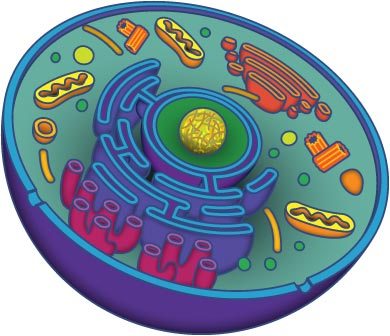
All living things are made up of...
a)
cells
b)
cell tissues
c)
organ
d)
organ systems
4.
All cells come from___________ cells.
a)
pregnant
b)
pre-existing
c)
paternal
d)
pin size
5.
An organism made of one cell is called
a)
unicellular
b)
multicellular
6.
also known as the "powerhouse"
a)
cell membrane
b)
storage
c)
cytoskeleton
d)
mitochondria
7.

What is the fluid inside a cell called?
a)
Endoplasimic Reticulum
b)
Orange Juice
c)
Water
d)
Cytoplasm
8.

What is known as the brain of a cell
a)
cell wall
b)
Cell membrane
c)
Nucleus
d)
Nuclues
9.
Cells, Cells, are made of ______________.
a)
tissue
b)
organelles
c)
organs
d)
boxes
10.
Releases salivary amylase into mouth which helps break down carbs.
a)
esophagus
b)
stomach
c)
epiglottis
d)
salivary glands
11.
The crushing and mashing of food is what type of digestion?
a)
Chemical
b)
Mechanical
12.
What is the function of the digestive system?
a)
To break down food
b)
To cool you down
c)
To help you breathe
d)
To pump blood through your body
13.
What is an accessory organ?
a)
An organ that does not touch food and helps with chemical digestion
b)
An organ that touches food and helps with chemical digestion
c)
An organ that does not touch food and helps with mechanical digestion
d)
An organ that does touch food and helps with mechanical digestion
14.
Molecules of food being broken down into nutrients is what type of digestion?
a)
Mechanical
b)
Chemical
15.
What organ is responsible for absorbing nutrients from food?
a)
Large Intestine
b)
Stomach
c)
Small Intestine
d)
Rectum
16.
Churns and mixes food, produces acid to kill pathogens & pepsin to digest proteins.
a)
stomach
b)
liver
c)
gall bladder
d)
pancreas
17.
Where waste is stored before it is eliminated from the body.
a)
rectum
b)
epiglottis
c)
esophagus
d)
pancreas
18.
What organ makes bile and filters blood?
a)
Gall bladder
b)
Small Intestine
c)
Pancreas
d)
Liver
19.
What organ absorbs water to create solid waste?
a)
Small Intestine
b)
Stomach
c)
Large intestine
d)
Pancreas
20.
Where does digestion begin?
a)
Mouth
b)
Stomach
c)
Small Intestine
d)
Large Intestine
21.
What organ stores bile?
a)
Liver
b)
Gall bladder
c)
Pancreas
d)
Stomach
22.
What is the main organ in the circulatory system?
a)
vein
b)
lung
c)
heart
d)
aorta
23.
The heart is divided into how many parts.
a)
2
b)
4
c)
8
d)
1
24.
Arteries carry oxygen rich blood away from the heart.
a)
True
b)
False
25.
Which system permits blood to circulate and transports nutrients around the body?
a)
Nervous
b)
Respiratory
c)
Circulatory
d)
Digestive
26.
PLATELETS ARE CELL FRAGMENT THAT
a)
HELP YOUR BLOOD CLOT
b)
CARRY OXYGEN IN THE BLOOD
c)
FIGHT INFECTION
d)
EXCHANGES GASES IN THE LUNGS
27.
The circulatory system works with the __________ system to obtain energy from nutrients that we eat.
a)
respiratory
b)
digestive
c)
skeletal
d)
nervous
28.
THE TYPE OF BLOOD VESSELS THAT RETURNS BLOOD TO THE HEART
a)
ARTEY
b)
VEIN
c)
CAPILLARIES
d)
BLOOD VESSEL
29.

This type of vessel carries blood TO the heart:
a)
vein
b)
nerve
c)
muscle
d)
artery
30.

Where in your body can you find blood vessels?
a)
around the heart
b)
in hands & feet
c)
in your head
d)
virtually everywhere
31.

Veins have special ________________ to stop blood from flowing backward.
a)
gravity
b)
valves
c)
arteries
d)
ventricles
32.
attaches bone to bone
a)
tendon
b)
ligament
33.
1. Your skeletal system is in charge of making your blood and giving you shape.
a)
True
b)
False
34.
attaches muscle to bone
a)
tendon
b)
ligament
35.
how many bones are in the human body?
a)
200
b)
206
c)
205
d)
204
36.
7. A ______is where two or more bones come together and allow for movement.
a)
Compact bone
b)
Joint
c)
Spongy bone
37.
9. Your nose is made of a flexible tissue called______.
a)
Cartiladge
b)
Spongy bone
c)
Compact bone
38.
our hip joint would be considered which type of joint?
a)
hinge
b)
ball and socket
c)
ball
d)
fixed
39.
which one of these IS a function of the skeletal system
a)
vitamin D production
b)
fat storage
c)
movement
40.
What are the 3 types of muscle tissue?
a)
Thigh, Calf, & Shoulder
b)
Traps, Forearm, & Abs
c)
Hamstring, Biceps, & Triceps
d)
Smooth Muscle, Cardiac Muscle, & Skeletal Muscle
41.
Muscle always work ___________
a)
in pairs.
b)
alone.
c)
in groups of three.
42.
When a muscle contracts, it _______
a)
gets longer
b)
gets shorter
c)
gets thinner
d)
grows hair
43.
What is a muscle strain?
a)
soreness because of overuse, which means there is a small torn on that muscle
b)
tight and sore muscle
c)
gradually weakening of muscles
d)
lose muscle
44.
The main purpose of the muscular system is to....
a)
Keep the heart beating
b)
Move the body
c)
Hit the dab
d)
Transfer oxygen
45.
Which muscle type is found in your stomach, bladder, and intestines?
a)
Skeletal
b)
Smooth
c)
Cardiac
d)
Straight
46.
Which type of muscle is found in your heart?
a)
Skeletal
b)
Smooth
c)
Cardiac
d)
Straight
47.

Name this muscle.
a)
Tricep
b)
Trapezius
c)
Bicep
d)
Tres Major
48.
Skin color is due to a pigment called
a)
Keratin
b)
Melanin
c)
Chromatin
d)
Epithelium
49.
What is the purpose of the skin?
a)
protection
b)
body temp maintenance
c)
excretion an
d perception of stimuli
d perception of stimuli
d)
all of the above
50.
What causes goose bumps?
a)
Cold
b)
Heat
c)
Frighte
d)
Option 1 and 3
51.
What is the top layer of the skin called?
a)
Dermis
b)
Hypodermis
c)
Epidermis
d)
Subcutaneous
52.
6. The opening in the eye is known as...
a)
The iris
b)
The pupil
c)
The Retina
53.
5. The cells in your tongue that process taste are called...
a)
Olfactory bulbs
b)
Taste buds
c)
Nerves
100 %

