
 Worksheets
4th Period Rock Cycle Test
Total questions: 60
Worksheet time: 55mins
Name
Class
Date
1.
Areas along tectonic plate edges are usually prone to volcanic eruptions. Areas like this in the ocean can develop large islands during volcanic activity. Out of which rock are these islands most likely formed?
a)
igneous rock, formed when liquid magma erupts onto Earth's surface where it cools and hardens
b)
igneous rock, formed when sediments from volcanic eruptions collect and cement into layers
igneous rock, formed when sediments from volcanic eruptions collect and cement into layers
c)
metamorphic rock, formed when sediments from volcanic eruptions collect and cement into layers
metamorphic rock, formed when sediments from volcanic eruptions collect and cement into layers
d)
metamorphic rock, formed when liquid magma creates high temperatures and pressures on Earth's surface
metamorphic rock, formed when liquid magma creates high temperatures and pressures on Earth's surface
2.
Process other than heat that causes metamorphism.
a)
foliated
b)
pressure
c)
deformation
d)
nonfoliated
3.
What are the 3 major types of rocks?
a)
Igneous, Metamorphic, Sedimentary
b)
Metamorphic, Igneous, Cementation
c)
Brown, Red, Gray
d)
Streak, Hardness, Breakage
4.
Where would you most likely find a metamorphic rock?
a)
Deep in the Earth
b)
on the ocean floor
c)
next to a river
d)
in a volcano
5.
True or False: Once a rock is sedimentary, it cannot become an igneous rock.
a)
True
b)
False
6.
a natural, nonliving substance that makes up rock
a)
mineral
b)
rocks
c)
plasma
d)
lava
7.
Lava which cools on Earth's surface forms an
a)
metamorphic rock
b)
intrusive igneous rock
c)
extrusive igneous rock
d)
foliated metamorphic rock
8.
a rock that formed from layers of sediments
a)
metamorphic
b)
igneous
c)
sedimentary
d)
magma
9.
True or False: There is only one way for the rock cycle to flow.
a)
False
b)
True
10.
What two processes make sediment?
a)
Weathering
b)
Erosion
c)
Weathering & Erosion
11.
The rising of regions of the crust to higher elevations. It causes the rate of erosion to increase
a)
Subsidence
b)
Deposition
c)
Rift Zone
d)
Uplift
12.

Wind and water have eroded this rock to show the layers of sediment that were laid down millions of years ago. What type of rock is this?
a)
Sedimentary
b)
Igneous
c)
Metamorphic
13.

This rock was molten magma that slowly cooled under the ground. What type of rock is this?
a)
Sedimentar
b)
Igneous (intrusive)
c)
Metamorphic
d)
Igneous (extrusive)
14.

This rock was found near the mouth of a volcano. What type of rock is this?
a)
Sedimentary
b)
Igneous (extrusive)
c)
Metamorphic
d)
Igneous (intrusive)
15.
process by which new rock is made from old rock
a)
rock
b)
texture
c)
rock cycle
d)
composition
16.
What do scientists call the rock that is formed when magma cools below the surface
a)
extrustive igneous rock
b)
intrustive igneous rock
c)
erupitve rock
d)
volcanic
17.
which of the following does NOT cause magma to form?
a)
an increase in pressure
b)
a rise in temperature
c)
change in the composition in rock
d)
a decrease in pressure on rock
18.

Which rock forms from heat and pressure?
a)
igneous
b)
metamorphic
c)
sedimentary
d)
all rocks
19.
A natural mixture of minerals.
a)
erosion
b)
magma
c)
alloys
d)
rock
20.

This rock started as molten magma. What type of rock is this?
a)
Sedimentary
b)
Igneous
c)
Metamorphic
21.

Each rock type can follow only one pathway of the rock cycle.
a)
True
b)
False
22.

This rock was molten lava that cooled quickly as it came out of a volcano. What type of rock is this?
a)
Sedimentary
b)
Igneous
c)
Metamorphic
23.

This rock is made from tiny pieces of other rocks that settled to the bottom of a valley millions of years ago. What type of rock is this?
a)
Sedimentary
b)
Igneous
c)
Metamorphic
24.
This rock was molten lava that cooled quickly as it came out of a volcano. What type of rock is this?
a)
Sedimentary
b)
Igneous
c)
Metamorphic
25.
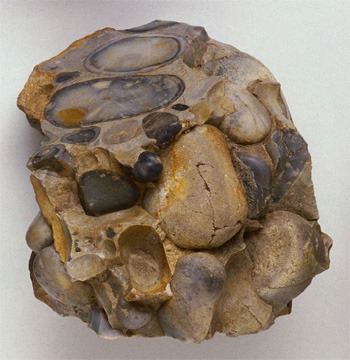
This rock was formed by smaller pieces of rock that settled at the bottom of a lake millions of years ago. What type of rock is this?
a)
Sedimentary
b)
Igneous
c)
Metamorphic
26.

This rock started as molten magma. What type of rock is this?
a)
Sedimentary
b)
Igneous
c)
Metamorphic
27.

This rock was another type of rock that was heated and compressed over time. What type of rock is this?
a)
Sedimentary
b)
Igneous
c)
Metamorphic
28.

This rock cooled on the outside of a volcano and contained air bubbles when it was forming. What type of rock is this?
a)
Sedimentary
b)
Igneous
c)
Metamorphic
29.

This rock was formed by lots of fossils that settled on top of each other over time. What type of rock is this?
a)
Sedimentary
b)
Igneous
c)
Metamorphic
30.
The process by which sediment is moved from one place to another. Can be caused by water, wind, ice, and gravity.
a)
Rock Cycle
b)
Uplift
c)
Deposition
d)
Erosion
31.
True or False: Igneous Rocks form from Sediment
a)
True
b)
False
32.
What does it mean for a rock to be extrusive
a)
Have layers
b)
Have Rounded Edges
c)
Form from Lava
d)
Form By Sediment
33.
The name rock is given when it is broken down into smaller pieces.
a)
texture
b)
weathering
c)
sediment
d)
erosion
34.
rock altered, changed, by pressure and heat
a)
sedimentary rock
b)
metamorphic rock
c)
igneous
d)
erosion
35.
An igneous rock can become ______.
a)
metamorphic
b)
sedimentary
c)
igneous
d)
all of these
36.
A metamorphic rock can become ______.
a)
igneous
b)
metamorphic
c)
sedimentary
d)
all of these
37.
The process by which igneous rocks are formed...
a)
heat and pressure
b)
melting and cooling
c)
compaction and cementation
38.
The process by which metamorphic rocks are formed...
a)
heat and pressure
b)
compaction and cementation
c)
melting and cooling
39.
Rock that forms when minerals form from solutions or sediment from older rocks get pressed and cemented together.
a)
Sedimentary Rock
b)
Metamorphic Rock
c)
Igneous Rock
40.
Rock that forms when pressure, temperature, or chemical processes change existing rock.
a)
Igneous Rock
b)
Sedimentary Rock
c)
Metamorphic Rock
d)
Rock Cycle
41.
This rock was formed when molten rock cooled into a solid. What type of rock is it?
a)
Igneous Rock
b)
Metamorphic Rock
c)
Sedimentary Rock
42.
Sedimentary rock made from fossils are called...
a)
organic
b)
chemical
c)
stratified
43.
What causes magma to form?
a)
A rise in temperature
b)
A change in the rock's composition
c)
A decrease of pressure
d)
All of the above
44.
Which of the following are nonrenewable resources?
a)
Plants and animals
b)
Wind and water
c)
Sunlight and water
d)
Coal and petroleum
45.
True/False: A decrease in temperature would cause magma to form.
a)
True
b)
False
46.
Regional and contact metamorphism create what type of rock?
a)
Igneous
b)
Sedimentary
c)
Foliated
d)
Metamorphic
47.
Sediment being dropped off and laid to rest
a)
Deposition
b)
Erosion
c)
Weathering
d)
Lithification
48.
A naturally occurring solid mixture of minerals and organic matter is a
a)
mineral
b)
rock
c)
composition
d)
pebble
49.
Sediment being moved from one area to another is called
a)
erosion
b)
deposition
c)
weathering
d)
compaction
50.
True/False: Igneous rocks can only turn into metamorphic rocks.
a)
True
b)
False
51.
What is the MAIN way rocks are classified?
a)
Their color and shapes
b)
How they form
c)
Mineral bands
d)
Where they form
52.
Magma cooling and hardening below Earth's surface forms an
a)
Intrusive igneous rock
b)
Extrusive igneous rock
c)
Foliated metamorphic rock
d)
Organic sedimentary rock
53.
Lava which cools on Earth's surface forms an
a)
metamorphic rock
b)
intrusive igneous rock
c)
extrusive igneous rock
d)
foliated metamorphic rock
54.
Wind, water, and ice breaking down rock is called
a)
Erosion
b)
Deposition
c)
Compaction
d)
Weathering
55.
A metamorphic rock changes into an igneous rock by what two processes?
a)
Melting and cooling
b)
Extreme heat and pressure
c)
Compaction and cementation
d)
Weathering and erosion
56.
Coal is an example of a _______ sedimentary rock.
a)
Chemical
b)
Organic
c)
Clastic
d)
Intrusive
57.
Which type of igneous rock forms above ground?
a)
Intrusive
b)
Organic
c)
Extrusive
d)
Foliated
58.
Which type of rock forms from extreme heat and pressure?
a)
Igneous
b)
Sedimentary
c)
Organic
d)
Metamorphic
59.
Which type of rock results from melting and cooling of magma?
a)
Igneous
b)
Metamorphic
c)
Sedimentary
d)
Extrusive
60.
What type of rock forms from stratification?
a)
Intrusive
b)
Igneous
c)
Sedimentary
d)
Metamorphic
100 %

