
 Worksheets
Heat & Temperature
Total questions: 60
Worksheet time: 2hrs 9mins
Name
Class
Date
1.
What is the basis of convection?
a)
cold rises, heat sinks
b)
heat
c)
cold
d)
hot rises, cold sinks
2.
What is the basis of conduction?
a)
when heat transfers from objects that are not touching
b)
heat rises
c)
coldsinks
d)
when heat transfers from objects that are touching
3.
What kind of heat transfer is happening when the sun heats your body?
a)
conduction
b)
convection
c)
density
d)
radiation
4.
Heat energy traveling through space by waves is an example of _____
a)
convection
b)
density
c)
radiation
d)
conduction
5.
Heat is energy
a)
false
b)
true
6.
Heat always travels from _____ to ______ objects
a)
hot to cold
b)
cold to hot
c)
cold to cold
d)
hot to hot
7.

This is a lava lamp. When the light bulb heats the wax, the wax rises. When the wax cools, it falls. This cycle of rising/falling is an example of:
a)
Conduction.
b)
Convection.
c)
Radiation.
8.

The baby chickens are kept warm from the heat lamps demonstrates this type of heat transfer.
a)
conduction
b)
convection
c)
radiation
9.

Warm air rises and the cool air sinks demonstrates this type of heat transfer.
a)
conduction
b)
convection
c)
radiation
d)
Insolation
10.

The Gulf Stream is a current that brings warm ocean water from the south to the north. What type of heat transfer is this?
a)
conduction
b)
convection
c)
radiation
d)
Insolation
11.
Ironing a shirt is an example of...
a)
condensation
b)
conduction
c)
convection
d)
radiation
12.
A chair is placed several feet from a fireplace. The fireplace has a glass screen. The side of the chair facing the fireplace gets warm because of
a)
conduction
b)
convection
c)
radiation
13.
You're holding hands with your best friend. Your friend's hands are REALLY warm and yours are really cold. After a few minutes, this has changed. How might you explain what happened?
a)
The cold energy from your hand transferred to your friend's hand through conduction.
b)
The heat energy from your friend's hand transferred to your hand through conduction.
c)
The cold energy from your hand transferred to your friend's hand through convection.
d)
The heat energy from your friend's hand transferred to your hand through convection.
14.
Is Iron a Conductor or Insulator?
a)
Conductor
b)
Insulator
15.
Which is NOT an insulator.
a)
Wool
b)
Plastic
c)
Copper
d)
Glass
16.
Is Wood a conductor or Insulator?
a)
Conductor
b)
Insulator
17.
What is NOT an example of an insulator in the kitchen?
a)
An oven mitt
b)
Pots and pans
c)
A wooden spoon
d)
A plastic measuring cup
18.
A metal spoon that gets warm when used to stir hot soup is an example of:
a)
Conduction
b)
Convection
c)
Radiation
19.
Mittens help keep your hands warm in winter because:
a)
They are conductors of heat.
b)
They are fuzzy.
c)
They are conductors of electrical energy.
d)
They are insulators.
20.
At what temperature does water boil at in Celsius?
a)
212
b)
32
c)
100
d)
112
21.
At what temperature does water freeze at in Celsius?
a)
32
32
32
b)
100
c)
212
d)
0
22.
Going from a gas to a liquid is called?
a)
Condensation
b)
Evaporation
c)
Freezing
d)
melting
23.
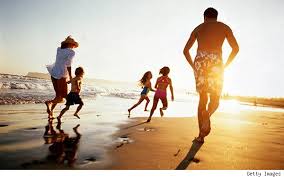
The sun shines down on this family as they play on the beach.
a)
conduction
b)
convection
c)
radiation
24.

A group of friends gather around a fire to stay warm.
a)
conduction
b)
convection
c)
radiation
25.
Which of the following has the highest heat capacity?
a)
aluminum
b)
iron
c)
water
d)
copper
26.
All energy on earth begins
a)
with the heat produced by pressure inside the earth
b)
photosynthesis by producers
c)
with the sun
d)
with the magma inside the earth
27.
The only state of matter that has a fixed shape is ____.
a)
gas
b)
liquid
c)
solid
d)
plasma
28.
What happens to particles as they cool down?
a)
They slow down
b)
Nothing
c)
They don't move
d)
They speed up
29.
Everything has heat
a)
True
b)
False
30.
When things are hot molecules are moving...
a)
Fast
b)
Slow
c)
They are not moving
d)
They are moving but not fast or slow
31.

What happens to the matter(ice cream) when you increase the heat?
a)
freeze
b)
evaporates
c)
melt
32.

What happens to the ice cube when heat is applied?
a)
melts
b)
freezes
c)
nothing happens
33.
What happens when you add heat to a liquid
a)
it melts
b)
it evaporates
c)
it freezes
d)
it condenses
34.
What does a liquid do when it is heated quickly?
a)
boils
b)
evaporates
c)
freezes
d)
melts
35.
When a gas cools, it
a)
melts
b)
freezes
c)
condenses
d)
evaporates
36.
What happens when an object heats up?
a)
gains energy and and expands
b)
loses energy and condenses
c)
it floats
d)
nothing
37.
What state of matter has the fastest moving particles?
a)
solid
b)
liquid
c)
gas
38.
What state of matter has the slowest moving particles?
a)
solid
b)
liquid
c)
gas
39.
Which takes up more space, a liter of water or a liter of ice?
a)
water
b)
ice
c)
they are the same
40.
Which best explains why a hot air balloon floats?
a)
The heated air expands to fill the balloon. The air in the balloon is now lighter than the surrounding air, causing the balloon to rise.
b)
The heated air expands to fill the balloon. The air in the balloon is now heavier than the surrounding air, causing the balloon to rise.
c)
The heated air contracts to fill the balloon. The air in the balloon is now denser than the surrounding air, causing the balloon to rise.
d)
The heated air contracts to fill the balloon. The air in the balloon is now lighter than the surrounding air, causing the balloon to rise.
41.
A student places a cup of cold water on a counter in a hot room. After a short time, the student notices that the water in the cup is no longer cold. Which best explains why the water in the cup is no longer cold?
a)
The coldness of the water transferred to the air, making the water in the cup warmer.
b)
The coldness of the water was conducted to the cup, making the water in the cup warmer.
c)
The heat from the air transferred to the water in the cup, making the water in the cup warmer.
d)
The heat from the air caused the cold water in the cup to condense, making the water warmer.
42.
Which is the best example of conduction?
a)
boiling a pot of water
b)
feeling heat from a fireplace
c)
a hot air balloon rising and falling
d)
touching a hot handle and getting
43.
Manuel was having trouble opening a new glass jar of pickles. His father told Manuel to hold the metal lid of the jar under running hot water for a few seconds, then try again. Then the lid opened easily. What is the most likely reason Manuel’s father suggested using hot water to loosen the lid?
a)
Glass contracts when it is heated.
b)
Metals expand when they are heated
c)
Metals are easier to grip when they are warm.
d)
Hot water reduces friction between metal and glass.
44.
How do we measure temperature?
a)
In Degrees
b)
In Inches
c)
In Centimeters
d)
In Pounds
45.
We measure temperature in degrees...
a)
Fahrenheit
b)
Celsius
c)
Both
d)
Nothing
46.
Freezing point is...
a)
32 degrees Fahrenheit
b)
0 degrees celsius
c)
all of the above
47.
Body temperature is 98.6 degrees Fahrenheit.
a)
True
b)
False
c)
Maybe
48.
Condensation is the change of state from _______ to ______ as a result of losing heat energy.
a)
Solid, Liquid
b)
Solid, Gas
c)
Liquid, Gas
d)
Gas, LIquid
49.
Solid particles are...
a)
tightly packed.
b)
loosely bonded and flowing.
c)
free to fly in all directions.
d)
so hot that the electrons are removed from the nucleus.
50.
Gas particles are...
a)
tightly packed.
b)
loosely bonded and flowing.
c)
free to fly in all directions.
d)
so hot that the electrons are removed from the nucleus.
51.
Gas particles have the _______ energy.
a)
most
b)
middle amount of
c)
least
52.
Liquids have...
a)
A definite shape and volume
b)
A definite shape but no definite volume
c)
No definite shape but a definite volume
d)
No definite shape or volume
53.

What is the change from a Solid to a Gas due to the gaining of energy?
a)
Condensation
b)
Vaporization
c)
Sublimation
d)
Deposition
54.

Which one is a gas?
a)
a
b)
b
c)
c
55.

Which one is a solid?
a)
a
b)
b
c)
c
56.
In the 1650's...
a)
The first sealed liquid thermometer was perfected
b)
Daniel Gabriel Fahrenheit developed the first measuring scale for temperature
c)
Anders Celsius developed the centigrade scale
d)
The digital thermometer was introduced
57.
In 1742...
a)
The first sealed liquid thermometer was perfected
b)
Daniel Gabriel Fahrenheit developed the first measuring scale for temperature
c)
Anders Celsius developed the centigrade scale
d)
The digital thermometer was introduced
58.
In 1714...
a)
The first sealed liquid thermometer was perfected
b)
Daniel Gabriel Fahrenheit developed the first measuring scale for temperature
c)
Anders Celsius developed the centigrade scale
d)
The digital thermometer was introduced
59.
In the 1970's
a)
The first sealed liquid thermometer was perfected
b)
Daniel Gabriel Fahrenheit developed the first measuring scale for temperature
c)
Anders Celsius developed the
d)
The digital thermometer was introduced
60.
The infrared thermometer was introduced to consumers for home use
a)
1714
b)
1742
c)
1970's
d)
1990's
100 %

